


 Over the past two years, even as the pandemic created intense challenges for the travel industry, loyalty programmes have proven to be a steady beacon of commercial strength and opportunity for their parent companies.
Despite not having the same opportunity to engage in the typical sense, it was clear that there was still strong interest among both loyalty programmes and their members to maintain their relationships with one another. And now, as travellers return to the skies and roads across Asia, there is a unique opportunity for these brands to capitalise on this trend and further realise the potential of their loyalty programmes through ancillary revenue opportunities.
Here are three key insights to help travel brands fuel innovation and travel recovery and beyond by leveraging their loyalty programmes:
The pandemic didn’t slow appetite for loyalty programmes
Once considered cost centres, loyalty programmes are now lauded as profit powerhouses. Loyalty programmes have steadily gained prominence in the last decade, but most notably over the past two years. After generating significant revenue – especially during a time of low travel demand – travel rewards programmes have established a newfound reputation within both their parent companies and the travel industry at large as drivers of revenue.
Furthermore, in spite of travel restrictions, travel brands maintained strong engagement between their loyalty programmes and their members during the pandemic. Now, there is a real opportunity in Asia to accelerate engagement further to gain an edge in the recovery. The millions of loyalty programmes members are the first to fill seats, and they’ll be the most frequent travelers in the future, too.
The increasing commercial importance of loyalty programmes to their parent companies since the pandemic has unlocked additional resources and accelerated the pace of innovation. And I expect this is a trend that will continue well beyond the travel recovery.
Loyalty currency retailing unlocks immediate revenue opportunities
With the emerging travel recovery in Asia, travel brands have a unique opportunity to bring their loyalty programmes to new heights. Loyalty currency retailing – selling points/miles to programmes members –represents an untapped market and opportunity to stimulate ancillary revenue for the airline industry in the Asia-Pacific region.
While mileage sales and promotions are a fixture in North American markets – and contributed heavily to the region’s rebound – there is a growing demand for mileage retailing across Asia. For airlines that leverage currency retailing today, we’ve found Asia-Pacific members are not only buying more points/miles, but also buying more often than members in the rest of the world. This is a positive sign that the market demand is there and all travel brands need to do is tap into their own potential.
Members who buy loyalty currency become more valuable
The bottom line will always exist, but the true value in loyalty programmes and their retailing opportunities lies in their name: cultivating real and authentic loyalty. Immediate ancillary revenue is great, but building member relationships and programmes satisfaction are what will drive long-term growth, revenue, and retention. One strategy for cultivating this authentic loyalty is through points/miles retailing.
Across our extensive global network of loyalty partners, we’ve found members who buy miles have higher lifetime value. After one mileage purchase, a member will spend 31 per cent more across their programmes in the subsequent 12 months. To stay competitive in travel recovery, finding those touchpoints and opportunities to foster programmes engagement will make all the difference for a travel brand and their key consumers.
As airlines navigate travel recovery it may feel like change is the only constant, but there’s a silver lining: uncertainty opens up space for innovation and experimentation. Loyalty programmes in Asia have a unique opportunity right now to create value and revenue by embracing new products and solutions designed to tackle the challenges of today and the ones to come.

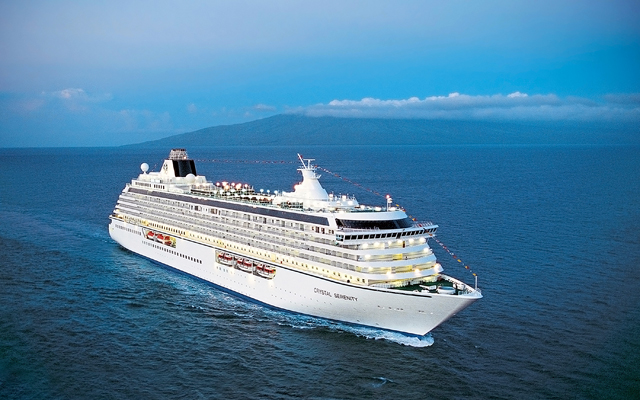











The Crystal Cruises brand along with luxury vessels Crystal Serenity and Crystal Symphony are now part of A&K Travel Group, and plans are underway to return the ships to service in 2023 after extensive refurbishment.
In a press release, Manfredi Lefebvre d’Ovidio, co-chairman of A&K Travel Group, Crystal Cruises and Abercrombie & Kent, said he is “thrilled to start this new chapter and to be back in an industry that has always had, and always will have a special place in my heart”.
The Lefebvre family acquired control of Sitmar Cruises 35 years ago and pioneered a new way of cruising, but the business was eventually sold away.
“Selling the cruise business that belonged to my family for a quarter of a century was a difficult decision, as I knew I would miss this industry immensely. Therefore, when the opportunity arose to acquire Crystal Cruises, I did not think about it twice,” d’Ovidio said.
Geoffrey Kent, co-chairman of A&K Travel Group and Crystal Cruises, and founder, co-chairman and CEO of Abercrombie & Kent, commented: “The idea of combining the unparalleled onboard service that Crystal Cruises is known for, with the extraordinary tailor-made experiences Abercrombie & Kent has been successfully providing for our guests for the past 60 years, fills me with excitement, enthusiasm and pride.”
Crystal Cruises and Abercrombie & Kent will report to Cristina Levis, CEO of A&K Travel Group.