TTG Asia
Asia/Singapore Saturday, 20th December 2025
Page 1427

The Royal Sands Koh Rong, Cambodia

0

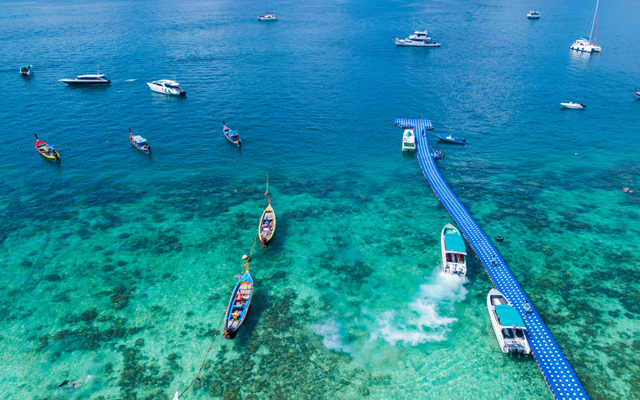
Location This five-star property is nestled along a 550m-long stretch of private beach that overlooks the translucent turquoise waters on the south-western coast of Koh Rong. Private boats to the island take one hour from the mainland port of Sihanoukville.

Koh Rong Island

Rooms The 67 freestanding villas take in ocean view and beachfront villas – some with private plunge pools – and two- and three-bedroom options. All are spacious and fitted with super king-size beds, sofas and an impressively large bathroom, with separate toilet and shower, as well as an outdoor rain shower.

A simple yet stylish theme runs throughout with contemporary designs given a Khmer twist, adding to the luxuriously calm atmosphere that sits at the resort’s core.

Ocean View Villas

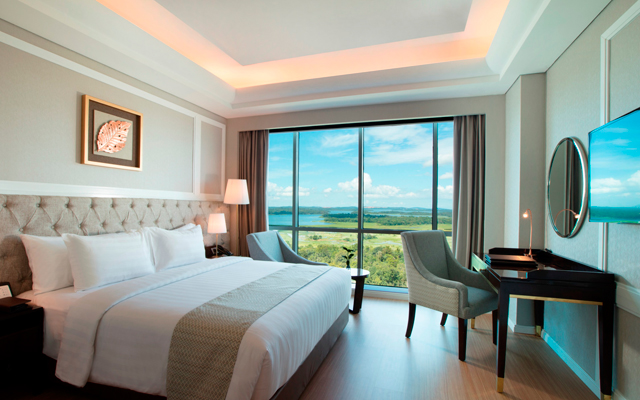
I stayed in the Ocean View Villa, which, in line with the rest of the accommodation, has a bright feel, thanks to light pouring in through the floor-to-ceiling windows. Lying in bed in the morning and looking out at the pristine beach views was heavenly, as was sitting on the private terrace to watch sunset.

A minibar is provided, as is complimentary fruit, safety box, plasma TV, Wi-Fi and coffee machine.

F&B Part of Royal Sands’ beauty is its isolation. However, that makes eating off-site difficult, with the closest option a 20-minute drive away, and anything else much further. Thankfully, guests have two options, each with expansive menus.

The Chill is perfect for lunch, snacks, sundowners or a more relaxed dinner overlooking the ocean. This poolside restaurant also serves beverages throughout the day and evening. The Ocean Restaurant also affords stunning views and serves an extensive buffet breakfast as well as more fine dining evening options.

Facilities A spacious infinity pool overlooks the ocean, with bamboo cocoons perfect for relaxing in nestled above private Jacuzzis.

Swimming Pool

A spa, yoga sala and gym cater to those wanting to indulge in some wellness while away. A range of activities take in snorkelling, kayaking, island hopping, diving, fishing, stand-up paddle boarding, mountain biking and trekking.

Service The staff were exemplary of Cambodian hospitality: welcoming, passionate and always on hand to help, as well as offer recommendations for activities.

Verdict
Royal Sands Koh Rong is a truly welcome addition to the island, offering the ultimate luxurious paradise island escape for those seeking simple yet sophisticated solace.

No. of rooms 67
Rates From US$540
Contact
Tel: (855) 2390 0791
Email: reservations@theroyalsandskohrong.com

Jakarta hotel pays tribute to Kartini Day with kebaya show

0

The Sultan Hotel & Residence Jakarta – in collaboration with Alleira Batik and GAIA Indonesian Premium Tea – held a kebaya and batik fashion show on April 18, to celebrate the 139th Kartini’s Day that would fall on April 21.

The fashion show was held in The Lagoon Lounge and lobby area, which saw several of the hotel’s female team members donning elegant kebaya outfits and sashaying down the runway.

Since 1964, Kartini Day has been celebrated by all Indonesian provinces, to commemorate the birthday of national independence hero Raden Adjeng Kartini.

The objective is to honour Raden Adjeng Kartini’s struggle to realise the equal opportunity between men and women in the modern era. This celebration has a profound meaning of women’s emancipation and is a reminder to all levels of Indonesian society to continue to fight for gender justice.

Update: Raden Adjeng Kartini’s name was incorrectly stated in an earlier version of the story. It has since been corrected. 

New hotels: Six Senses Duxton, Bangkok Marriott Hotel The Surawongse and more

0

Six Senses Duxton, Singapore
Six Senses Duxton, the first city hotel from the Six Senses family, has opened in Singapore’s Chinatown area with 49 guestrooms tucked within a row of traditional shophouses. No two rooms are the same, with each featuring designs from across eight different themes such as Nutmeg, Shophouse, Opium and Pearl. Regardless of room choice, each space is furnished with a Naturalmat organic mattress, bathroom amenities by The Organic Pharmacy, flatscreen TV with satellite channels, and Bose Bluetooth speaker. Yellow Pot, the hotel’s on-site restaurant, has two semi-private dining rooms. The property’s sister hotel, Six Senses Maxwell, will be opening later this year and will boast a spa.


Bangkok Marriott Hotel The Surawongse, Thailand
Located on Surawong Road, the new-build Bangkok Marriott Hotel The Surawongse comprises 197 guestrooms and 106 deluxe suites across 32 storeys. Facilities on the property include four dining options, the Quan Spa, fitness centre, as well as an outdoor infinity pool. Event planners can make use of the property’s 1,555m2 of versatile event space spread across two ballrooms, nine meeting rooms, a colonial-style courtyard and an outdoor garden.


Four Points by Sheraton Seoul, Gangnam, South Korea
The second Four Points hotel has opened in Seoul’s Gangnam district with 199 rooms and two penthouse suites. Each room is furnished with a 49-inch ultra HDTV, complimentary Wi-Fi and an egg chair. Facilities include a gym, sauna, the all-day dining restaurant Evolution and The Lounge & Bar, which boasts the brand’s signature craft beer programme. Over 106m2 of meeting and event spaces are available on the second floor.


Soravit on Granville, Hong Kong
Billing itself as the “first Thai-themed hotel in Hong Kong” is the 76-key Soravit on Granville. All rooms and suites features custom-made Thai silk linens and traditional Thai wood furniture, and are categorised into the Superior, Deluxe, Premier and Executive. Room sizes range from 18m2 up to 35m2, the latter of which boasts a separate living area and large work desk. The hotel also features a collection of artwork from two Thai artists, Tippanet Yaemmaneechai and Sirikoy Chutataweesawas. The only on-site restaurant, Queen’s Dining, serves up dishes from south-eastern China, Thailand and Vietnam.

A city coming of age

0

No longer viewed as the boring sibling of adjoining Kuala Lumpur, the state of Selangor is steadily coming onto visitors’ radar, driven by a new crop of hotels, competitive rates, and a strong roster of ecotourism and man-made attractions.

New hotels, many of which boast “excellent” locations, are what made Selangor a much more compelling sell nowadays, opined Arokia Das, director, Luxury Tours Malaysia.

I-City Theme Park, one of Selangor’s key attractions

The recently opened New World Petaling Jaya Hotel, which sits adjacent to the iconic Paradigm Mall in Petaling Jaya, is a prime example, according to Arokia.

Other new upscale hotels like Sunway Clio Hotel and Sheraton Hotel Petaling Jaya are also located close to big shopping malls, making them good lodging options for Asian tourists, he added.

Arokia is also pinning hopes on the upcoming DoubleTree by Hilton@i-City as a new four-star option for i-City Theme Park visitors. Park-goers currently prefer to stay in Sunway or Subang areas due to the absence of international branded properties in the vicinity, Arokia posited.

Meanwhile, Selangor’s cheaper room rates has always been an attractive proposition for the state.

Said Arokia: “On average, the contract rate savings for a five-star hotel (in Selangor) is around 20 per cheaper than that of a similar star category in the city centre (in Kuala Lumpur).”

Furthermore, the recent expansion of i-City Theme Park, which saw the launch of Red Carpet 2 in August 2017, has further raised Selangor’s attraction as a theme park destination, pointed out Adam Kamal, general manager at Tour East Malaysia.

The two-storey, 2,787m2 Red Carpet 2 is a bigger extension of Red Carpet – Malaysia’s first interactive wax museum located at another part of i-City – featuring some 100 wax figurines of famous personalities and sculptures of superheroes.

Sunway Lagoon, the other key theme park in the state, also introduced Nickelodeon Lost Lagoon – the first Nickelodeon themed attraction in Asia – two years ago.

Adam remarked: “With two major theme parks, there is reason for tourists, especially millennials who want an experiential holiday, to extend their stay in Selangor by one night. Both theme parks are also close to Kuala Lumpur, which makes it suitable for day trippers from the city.”

Asutra Convex is currently developing a tour programme by Light Rail Transit, starting from the Subang Jaya stop in Selangor and ending at Kuala Lumpur City Centre stop, to highlight unique sites in between the two points for sightseeing.

1 Utama E, the new 55,000m2 extension to the 1 Utama shopping centre completed in January, welcomed two sports tourism centres, the FlowRider surf centre and the AirRider indoor skydiving, alongside an enhanced roster of restaurants, cafes, bars and bistros.

Azizi Borhan, managing director, Asutra Convex, expects these new mall-based attractions to entice tourists as it allows them to experience surfing and simulated skydiving in a safe environment.

Beyond the theme parks and  shopping malls in the city, Selangor still has lots to offer for those keen to explore its countryside, Azizi stated.

“Our tours to Carey and Ketam Islands are selling well. Also, day visits to homestays in Selangor are well received by Korean, Japanese and Singaporean FIT tourists who are interested to experience local food cooked by villagers and their way of life.”

According to statistics from Tourism Selangor, the state attracted more than 7.4 million domestic and international tourists last year, a two per cent increase over 2016. Tourists from China, Singapore, Japan, Indonesia and India make up the top five foreign markets to Selangor.

Maldives hoteliers deal with worries

0

The spectre of political instability is looming over the Maldives’ hotel sector, which faces a potential oversupply as the addition of new resorts now outstrips demand.

In the wake of the February state of emergency, concerns of political stability in the Maldives are now weighing on industry leaders’ minds as any unrest and violence arising from the upcoming presidential elections scheduled for September could prolong tourism fallout.

Overwater villas at Coco Budu Hithi

Krishan Balendra, deputy chairman at John Keells Holdings, one of the biggest operators of resorts in the Maldives, believes visitors to the destination will grow in numbers and the new supply of rooms would be easily absorbed – but only if there is political stability.

Mark Wong, vice president Asia Pacific, Small Luxury Hotels of the World, which has four resorts in the Maldives, warns that if tourist arrivals fail to reach the target of 1.5 million this year – a real possibility given the recent political crisis – operating resorts will be under pressure to reduce rates or launch aggressive price-driven promotions.

Arrivals rose to 1.4 million in 2017, nearly doubling growth to eight per cent from 4.2 per cent in 2016. The number of beds increased to 40,572 last year from 34,105 in 2015.

Some estimate the number of rooms would rise by over 30 per cent by 2020-2021, which according to tourism ministry figures would add to the over 200 resorts in operation.

At the lower-scale of the market, there are over 450 guest houses, set to grow to around 650 in the next two to three years, each with six to 20 rooms.

Despite the threat of oversupply, many new high-end resorts are still being opened, perhaps a reflection of hotelier’s beliefs that the luxury market in the Maldives will continue to thrive.

Dilip Rajakariar, CEO – Minor Group, said: “Maldives tourism authorities have created a solid positioning in the luxury sector and this has been very successful over the last few decades,” he said, while acknowledging that “we all need to be continuously proactive in-order to remain competitive in today’s world”.

While more marketing is required to address differing price points in the market, Sunny Umar, CEO of Maldives Getaways, said that an airport expansion and more new flights including those by budget carriers would help increase arrivals.

Mario Hardy, CEO at PATA, agrees there is an oversupply of rooms based on PATA’s five-year forecast. “However, this could change with the right diversification of products and a well-targeted marketing campaign,” he said.

This echoes views in the industry, such as from Maldivian Association of Travel Agents & Tour Operators, urging a renewed campaign from the tourism authorities to address all price points in the accommodation sector.

To take on the challenge of hotel surplus, Andrew Ashmore, group head of sales & marketing at Coco Collections, urged: “Differentiation is a must as the Maldives cannot rely on its old traditional European markets as before.”

He is however confident that the opening of the new, expanded runway by end 2018, which will be able to accommodate the Airbus A380, would stimulate more arrivals.

Indonesia to turn former mine areas into tourism destinations

0
The man-made Kaolin Lake in Bangka, Belitung

The Indonesian government is breathing new life into Tanjung Gunung and Sungailiat by declaring these former mining areas on the eastern coast of Sumatra’s Bangka Island as tourism special economic zones.

This will be the second and third such zones in the Bangka-Belitung (Babel) Province after Tanjung Kelayang on Belitung Island, which is currently undergoing an accelerated development.

Bangka Island is currently developing more tourist infrastructure; Kaolin Lake in Bangka, Indonesia pictured

The development of tourism is deemed vital to Bangka following the downturn of the mining industry, which used to be a major economic contributor to the island.

Arief Yahya, Indonesia’s minister of tourism, said the economic development in Babel Province between 2012 and 2016 was relatively stagnant with farming, forestry and fishery as the dominating sectors, while mining declined from 15.4 per cent in 2012 to 12 per cent in 2016. During this time, the transportation sector was on the rise.

Arief said: “Babel has to transform its economy from mining to tourism, and this transformation has to start from the commitment of its CEO (the governor) to become the agent of change.”

Johan Riduan Hasan, owner of the 385ha Tanjung Gunung Tourism Resort, said the property’s developer Pan Semujur Makmur is investing 1.6 trillion rupiah (US$121.5 million) in the preliminary development of the area. There are plans to transform Tanjung Gunung into a business events destination, with meetings and convention facilities to be built there.

Meanwhile, the 273ha Sungailiat East Coast Tourism Resort plans to promote its beaches, and culture and religious tourism. Development plans include hotels, marine tourism, sports and agrotourism amenities.

Erzaldi Rosman Djohan, governor of Babel, said the regional government would also ease licensing processes and provide incentives for investors.

Arief Yahya further shared that the central government and financial authorities also encouraged homestay investments a with loan scheme of one per cent downpayment, and flat five per cent interest for 20 years.

Reinventing existing travel products key to engaging ‘Experience Generation’

0
Millennials

In order to improve relationships with travellers, companies should strive to understand data about their target markets and reconsider their traditional products, urged speakers at Digital Travel APAC 2018 in Singapore.

This is especially important for the “Experience Generation” – the millennials in particular – who are increasingly pursuing “experiences rather than material goods”, and responding to these customer profiles can associate the brand with positive experiences, said Akira Mitsumasu, vice president, marketing & strategy, Japan Airlines.

Millennials are big on experiences and this segment will keep growing, hence the need for companies to think about enhancing customer experiences

“We should move away from the product that we started out with, and reinvent ourselves to discover more parts of the customer journey and how to become part of this new value chain. Airlines are no longer just about seats, inflight entertainment and lounges, but about the purposes of travel,” he elaborated.

For example, having learned from its data that its passengers often search for pet-friendly flights, Japan Airlines introduced a pet charter into its offerings.

AccorHotels has also diversified from its core business of hotels, and adopted new business models through the acquisition of private rental platform onefinestay, shared Emilie Couton, the group’s vice president of digital marketing, Asia-Pacific.

Couton added that being at these “touchpoints” for customers not only increases interaction with them, but also “increases the stickiness of the relationship” between brands and buyers.

Russell Young, managing director Asia-Pacific of Sojern, said: “It’s no longer about reinventing the wheel with new technology, but to enhance the customer experience by improving what already exists.”

Experience Singapore zoo through immersive night walks

0
XXXX

To appeal to new and repeat visitors alike, the Singapore Zoological Gardens will introduce a night walk experience with festive content in July.

The new self-guided walk, named Rainforest Lumina, will feature an illuminated one-kilometre-long trail through the rainforest, allowing visitors to experience a visual and aural experience of tropical wildlife.

The night walk aims to visitors a special and differentiated experience

“Night Safari has been so immensely popular (that it is) often oversubscribed, so a complementary night-experience product works very well (to attract) repeat visitors,” shared Singapore Tourism Board’s (STB) deputy chief executive Melissa Ow at the board’s Tourism Industry Conference on April 16.

Rainforest Lumina will be unveiled in conjunction with the zoo’s 45th anniversary celebrations. More details will be revealed closer to the opening date.

Ow elaborated that this new attraction will help Wildlife Reserves Singapore – which operates the zoo, River Safari, Night Safari and Jurong Bird Park – extend its customer reach across different market segments.

Short-term condo rentals could soon be allowed in Singapore

0
XXXXX

Singapore’s Urban Redevelopment Authority (URA) have launched a public consultation exercise on a proposed regulatory framework for the use of private residential properties as short-term accommodation (STA).

“After studying the issue for some time, we think it is possible to allow such STAs in private residential properties, but subject to appropriate regulations and safeguards,” said minister for national development Lawrence Wong on Facebook, adding that the government has been “very cautious” about allowing STAs in Singapore.

URA has suggested an 80 per cent consent rule in order for condos to be able to offer Airbnb-style home-sharing

In the proposed regulatory framework for public consultation revealed on April 16, the URA spelt out the qualifying criteria for homes to be used for short-term stays, conditions and requirements for homeowners, as well as the roles and responsibilities of stakeholders, such as management corporations (MCSTs) and STA platforms.

This means that owners of private residential properties could soon be allowed to lease out their apartments for Airbnb-style short-term stays under a new category.

For condominiums governed by management councils, the URA is proposing that owners holding on to at least 80 per cent of the share value agree to the change of use.

The endorsement by the management councils will be valid for two years and needs to be renewed with an updated vote count each time. If the level of consent falls below 80 per cent, the earlier endorsement will not be renewed.

Currently, private residential properties are subject to a minimum stay duration of three consecutive months.

URA welcomes members of the public to review the consultation document and share their views on the proposed framework here.

Members of the public can also share their views on the REACH Portal. The closing date for submission is May 31, 2018.

Riot police to keep tourists at bay during Boracay closure

0

The Philippine government earlier this week announced that it will deploy riot police to keep travellers out and head off potential protests ahead of Boracay’s six-month closure to tourists, AFP reported.

A lockdown plan was laid out by the authorities on Tuesday, which will see the deployment of more than 600 police, including a 138-member “crowd dispersal unit”, to keep out all foreign and Filipino tourists from the once idyllic beach destination.

Boracay will be closed for six months to fix sewage and environment-related problems

Entry to the famed island, located 300km south of Manila, will be limited to a single small sea port.

Media access to Boracay during the shutdown period will also be strictly controlled, with accreditation required by the Department of Tourism.

Meanwhile, Boracay residents will be obligated to carry new identification cards and will be banned from boating and night swimming, according to the report.

The threat of closure first emerged in February when Philippine president Rodrigo Duterte branded Boracay a “cesspool” and ordered a shutdown of the famed island to save it from further degradation.

However, the Philippine travel trade has warned that the government’s sudden decision to close Boracay would heavily impact hundreds of hotels, restaurants, tour operators and other businesses.

Industry leaders had also lobbied for a phased rehabilitation instead of an abrupt shutdown, which could threaten the livelihoods of the nearly 20,000 workers directly or indirectly employed in the island’s tourism sector.

Boracay is expected to be closed for six months starting April 26.