TTG Asia
Asia/Singapore Tuesday, 7th April 2026
Page 1147

Why relevance is key to future-proofing travel brands

0
Stacy: Relevance is key driving force for brand loyalty in current climate of heightened competition

The travel industry in Asia-Pacific continued to remain resilient through the first quarter of the year, despite slowing economic growth in the region. Yet, some early signs of a slowdown have begun to emerge. Against a backdrop of mounting fears of a global recession and falling consumer confidence, it is no wonder that the region has adopted a modest 2019 industry forecast. For travel marketers, this means harder work is required to win share of wallet in a tightening market.

In an environment of flattening demand and rising competitiveness, travel marketers need to shift their thinking. They must commit their limited resources to the most valuable groups of customers – not only those who spend the most now, but those with a high lifetime value, who are likely to spend the most in the future.

While some of the insights into customer value are readily available through booking channels and loyalty behaviour, a bigger commitment to achieving deep understanding of the customers through other touchpoints is required. Only then can travel brands deliver truly relevant marketing and future-proof themselves in the face of adversity.

Deeper commitment to knowing your customers

Travel brands amass a vast amount of traveller data on a daily basis – search, booking, loyalty, customer service, and even data from other brands through established partnerships. However, this data can be limiting in that it aims to provide an understanding of the highly complex customer through just a few facets of the individual.

Such data is insufficient for determining a customer’s lifetime value and travel marketers need to commit to broad information gathering to truly understand their vibrant individual customers. This has led to second-party data sharing becoming more common in Asia-Pacific, as travel brands look to partners to get a panoramic view of customers’ behaviours and intentions. For instance, Changi Airport group looks at both second- and third-party data from multiple sources, in addition to first party data collected through point-of-sale at retail stores, Wi-Fi and CRM. Similarly, Malaysia Airlines has established second-party partnerships, especially with credit card companies through its loyalty programme.

This kind of data exchange allows travel brands to tailor personalised marketing campaigns based on in-depth audience insights, while leveraging the value of real-time data to identify shifting behavioural trends of their customer base.

Navigating Asia-Pacific’s uneven loyalty landscape

Travel loyalty programmes exist to influence behaviours in favourable ways. However, in Asia-Pacific’s uneven loyalty landscape, where markets stand at different points of the maturity curve, travel marketers face the daunting task of keeping existing loyal customers in mature markets engaged, while also accurately isolating and targeting high-value travellers in emerging markets.

In this era of digital-based competition and heightened customer control, relevance has become a key driving force for brand loyalty.

Studies show that customers who donate the most data are the ones that expect greater personalisation in the marketing messages they receive. Combine this with the emerging trends of last-minute bookings and mobile-first experiences, and travel marketers must be able to strategically leverage on data from various touchpoints to understand each individual’s preferences at a higher granularity.

Knowing more about each customer can also help travel marketers prioritise the most valued ones. For instance, loyalty members can be scored based on the points they have, the types of trips that are earning these points from, their level of activity, where points are being channelled to and how often they cancel. These insights can then point towards the indicators used in customer relationship building.

In the pursuit for sustained attention of existing loyalty members, travel marketers must not neglect potential customers. Not every valuable customer is necessarily already part of the loyalty programme, and travel brands that use a wider array of inputs are better poised to unlock future value.

Increasing brand stickiness

Marriott reported the symbiotic relationship between growing loyalty members and greater owner benefits for the year of 2018, proving that loyalty programmes can grow through exciting destinations, accommodations and service offerings that are new, better and more relevant to customers’ needs and preferences.

As the travel sector faces a world of renewed expectations, travel marketers must understand that digital capabilities and advantages that were once differentiators are now readily available to all. For brands to remain relevant, it is also imperative that existing capabilities and technologies are used to reinvent service offerings that address the pain points of travellers. For example, Delta pioneered the use of RFID technologies to track baggage. It has helped to alleviate the issues of lost or delayed baggage, while conferring travellers globally with greater control of their flight experience.

The proliferation of travel options across Asia-Pacific has also altered the notion of brand stickiness. Many travel programmes do a great job with providing different ways for members to redeem miles or points, but more often than not, they aren’t tailoring other elements of the programme, such as messaging, which feel generic and sometimes totally irrelevant. Being able to tailor the types of upgrades customers value is one of many examples of how loyalty messaging could be made more relevant.

It remains to be seen if travel in Asia-Pacific will be hit with a recessionary chill in the coming months. However, as savvy travel brands know, this is an opportune moment to future-proof. Travel brands must focus on maintaining brand relevance in a region where travellers are ever-evolving. Though the addition of data-driven elements to marketing efforts may add additional layers of complexity in the short-term, it may very well be the difference between success and failure in the long-term.

IHG names Steve Carroll as SVP for capital investments & transactions

0

InterContinental Hotels Group (IHG) has appointed Steve Carroll as senior vice president, capital investments & transactions Europe, Middle East, Asia & Africa (EMEAA) and Greater China.

In his new role, Carroll will be responsible for asset management, including dispositions, restructuring and actively managing investment positions, with a focus on IHG’s EMEAA and Greater China regions.

He will continue to work closely with IHG’s development teams to drive growth through its strategic approach to M&A and capital transactions, as well as IHG’s Americas team, to take advantage of cross regional opportunities and capital flows.

Carroll has been with IHG for more than five years, having rejoined the business in 2014 as vice president, corporate finance, acquisition and mergers.

Aviation roundup: Cebu Pacific, Air Astana and more

0

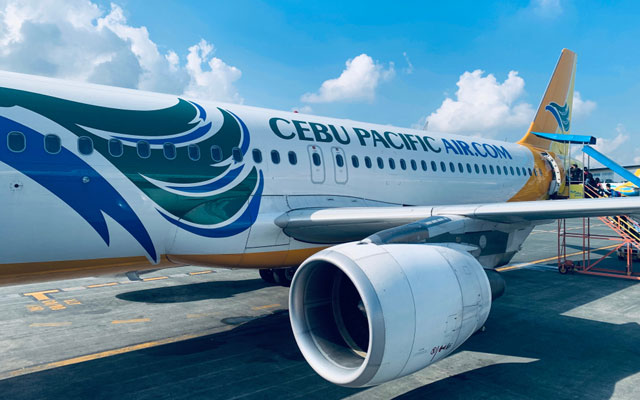
Cebu Pacific to launch Puerto Princesa-Hong Kong direct flight

Cebu Pacific will be the first airline to fly direct between Puerto Princesa, Palawan, and Hong Kong when the service begins on November 17, 2019.

The four-times-weekly service will operate on Tuesdays, Thursdays, Saturdays and Sundays. 5J5306 departs Puerto Princesa at 15.35 on Tuesdays, Thursdays and Sundays; and at 16.05 on Saturdays. The return flight 5J5307 departs Hong Kong at 19.30 on Tuesdays, Thursdays and Sundays; and at 20.00 on Saturdays.

Air Astana looks to Asia to expand network

Air Astana is keen to expand its Asian network over the next two years following the delivery of a new fleet of Airbus A321LR aircraft. New destinations under consideration include Shanghai, Singapore and Tokyo.

The new A321LRs will also gradually replace the airline’s Boeing 757 aircraft on existing long-haul services to Asian destinations, including Bangkok, Hong Kong, Kuala Lumpur and Seoul.

The Airbus A321LR, which is a long-range version of A321neo, features 16 business class seats and 150 economy class seats.

Korean Air introduces new routes

Korean Air will launch new flights to Clark, the Philippines, from October 27. The flight will depart from Incheon at 07.55.

The airline will also launch new flights to Zhangjiajie, Nanjing and Hangzhou, which are routes distributed as a result of the previous Korea-China aviation talks. Incheon-Zhangjiajie will be operated three times a week, Incheon-Nanjing four times a week, and Incheon-Hangzhou twice a week.

China Eastern join forces with Virgin Atlantic, Air France and KLM

China Eastern will be entering into a joint venture with Virgin Atlantic, Air France and KLM, providing more joint commercial propositions for customers between Europe and China.

China Eastern currently has a joint venture with Air France and KLM by working together on a portfolio of flights between China, Paris and Amsterdam. With Virgin Atlantic joining the existing partnership between China Eastern, Air France and KLM, the enlarged cooperation will offer strengthened customer benefits including increased travel options and optimised connectivity across Europe and China, further facilitated by a developed joint network, as well as competitive joint commercial propositions.

The China to UK markets are expected to be pivotal at a time where China Eastern and Virgin Atlantic services linking London to Shanghai are part of the mutualised offer. China Eastern plans to seek to codeshare for the first time on Virgin Atlantic services between London and Shanghai. This will open up a range of customer benefits, including the opportunity for customers to earn and redeem miles across both carriers on flights between China and the UK.

The China Eastern-Air France-KLM’s current joint venture schedules for the summer 2019 season are as follows:

China Eastern will run twice-daily services between Shanghai Pudong and Paris Charles de Gaulle; four-times weekly services between Shanghai Pudong and Amsterdam Schiphol; thrice-weekly services between Kunming and Paris Charles de Gaulle; and thrice-weekly services between Qingdao and Paris Charles de Gaulle.

Air France will operate twice-daily services between Paris Charles de Gaulle and Shanghai Pudong; as well as thrice-weekly services (and four-times weekly services) during peak periods between Paris Charles de Gaulle and Wuhan.

KLM will offer 12-weekly services between Amsterdam Schiphol and Shanghai Pudong.

Services for the summer 2019 season between London and Shanghai by China Eastern and Virgin Atlantic are as follows:

China Eastern will operate a daily service from Shanghai Pudong to London Heathrow; and thrice-weekly services from Shanghai Pudong to London Gatwick, which will be changed to a daily service during the winter 2019 season.

Virgin Atlantic will run a daily service to Shanghai Pudong from London Heathrow.

Wyndham promotes Ben Schumacher to operations head

0

Ben Schumacher has been appointed to Wyndham Hotels & Resort’s senior leadership team in the region in his new role as head of operations.

Based in Singapore, Schumacher will lead the hotel operations for both franchised and managed hotels across the region.

Having first joined Wyndham in 2016 as a franchise services manager, Schumacher has been directly responsible for the successful opening of more than 15 hotels in the past few years, including playing an instrumental role in supporting operations in South Korea over the past 12 months. Alongside his team, Schumacher currently services more than 130 franchised hotels within the South-east Asia and Pacific Rim region.

Before joining Wyndham Hotels & Resorts, he undertook several senior operational roles within the hotel industry, and was part of pre-opening teams across Australia and New Zealand for various Hilton Hotels.

Headwinds hit Thailand tourism

0

A defiantly strong currency and global economic uncertainty are among the key factors battering Thailand tourism, leading to a tempered outlook among the country’s travel business community stepping into 4Q2019.

The inbound tourism sector is especially feeling the heat from a robust Thai baht, which has risen against major currencies like the British pound, US dollar and Chinese yuan this year, dissuading price-sensitive travellers to the kingdom as the currency conversion rates work against their favour to impact their trip budgeting, say industry stakeholders.

Rising Thai baht has hit the country’s inbound tourism industry

The surging baht has also prevented a full recovery of China, Thailand’s top visitor source market, which has not returned to its dramatic growth figures since the Phuket boat incident last year.

Olivier Berrivin, managing director, international operations – Asia at Best Western Hotels & Resorts, said: “We’re still feeling the drop of Chinese arrivals compared to last year, but the volume is still quite substantial and we expect things to remain stable throughout the upcoming high season. China still represents 58.1 per cent of total international arrivals to Thailand, followed by Russia, Japan, South Korea, Vietnam and India.”

He added: “In addition, the ongoing situation in Hong Kong, with no clear end in sight, leaves a big question mark over what the impact might be next year. Last but not least, both the ongoing trade war between the US and China and uncertainty linked to Brexit will most likely have some unexpected consequences.”

The baht’s strength is also a worry for Shreyash Shah, director of business development, Chada Hotel Group, which together with the spate of new hotels offering cut-throat opening prices, have made him “skeptical” of the business outlook for 2020.

Likewise, Hamish Keith, CEO of Exo Travel Group, is approaching the coming months with a sense of caution, as Europe – a key market for the Bangkok-based DMC – is “looking difficult” against a backdrop of a strong baht.

Thailand’s appreciating currency, meanwhile, is working to the advantage of other regional destinations, noted Berrivin.

“The strength of the Thai baht has made some people rethink their travel plans for the upcoming festive season, and destinations like Bali, Danang, Nha Trang and Phu Quoc are benefiting, with higher pick-up rates than the same period in 2018. We understand that the Thai government is considering options to adjust the baht’s value, but it might be too late to reverse a trend that is already well underway,” he lamented.

But it’s not entirely bleak for Thailand tourism, even as growth from major feeder markets have tapered off this year, industry leaders remarked.

Said Berrivin: “The dip is not as bad as some people seem to think, and the Chinese market remains our top contributor, at least in the budget/economy segments. The Indian market has shown a promising increase in terms of arrivals and even if it’s not up to Chinese levels just yet, I think it’s a market that has a tremendous potential and must be developed further to reduce our dependency on the other major producer.”

For Shah, looking into new markets such as opening Koh Lanta to Indian group series is one way that Chada Group, which is based in southern Thailand, has adopted to offset losses in its traditional markets, drawing on the surge in direct air connections between India to Phuket this year.

Ultimately, Thailand’s “strong underlying fundamentals”, including its diverse supply of hotels, product and experiences, still make the kingdom “an attractive destination”, said Keith. “We are focusing more on the non-beach areas as well as experiential and luxury products in the country.

“We are still seeing growth for Thailand, just not fast growth,” he added.

GTEF 2019 spotlights role in driving Macau’s tourism economy

0
Pansy Ho at GTEF 2019

In its eighth edition this year, the Global Tourism Economy Forum (GTEF) – which recently took place in Macau from October 13-15 – boasted an enhanced programming that saw the addition of the inaugural World Tourism Investment and Finance Conference (WTIFC), targeting worldwide leaders, and the UNWTO Tourism Tech Adventure: SportsTech, a competition in tourism and sports.

Commenting on the WTIFC, GTEF vice-chairman and secretary-general, Pansy Ho, said: “The idea of convening a collaborated event dedicated to the investment aspect of tourism is a remarkable opportunity to enhance practicality and actionable value for our attendants. Macau has been a magnet for foreign investment, especially for tourism industry in last two decade after connectivity was increasingly integrated.”

She added: “This explains why more and more big countries come to this forum, i.e. the EU picked the destination in 2018 to meet with a few big provinces in China and commercial units under China Chamber of Tourism for cooperation.

“We also enrich our content with business matching, i.e. more than 200 sessions were made this year, with the signing of some investment agreements. The investment forum sparked off conversation; we’ve got feedback to get it going and will elevate (the event) to international level with more participation in future.”

In her concluding remarks, Ho said: “GTEF was founded upon the mission of connecting East-West tourism interests. Through our collaboration, we are getting down to real business here, consolidating Macau’s potential to become a tourism capital hub in fuelling regional tourism growth.

“Through GTEF, I hope we have also showcased how Macau itself is another living proof of the transformational power of tourism. In Macau, not only have we continued to reinvest, but to reinvent. Blessed by our national policy, Macau is ready to take on another wave of development, as we continue to integrate into the Greater Bay Area framework, contributing our tourism experience to drive cross-industry collaboration with our neighbours, to share our culture and heritage with the world, and instil a sense of national pride among our people.”

Built on the concept of “a beautiful life” raised by Chinese president Xi Jinping, this year’s GTEF also centred discussions on global tourism economy under the theme of “Tourism and Leisure: Roadmap to a Beautiful Life”, offering insights on how diversified tourism offering can meet the ever-increasing needs of international visitors, enhancing happiness and the quality of life, ultimately creating a harmonious and beautiful life for humanity.

Looking ahead, Ho stated that GTEF’s will continue to pursue its strategic business model of partnering countries, while taking a nod from China’s development approach to lay out its direction for continual refinement and adjustment.

GTEF 2019 successfully gathered and engaged close to 2,000 participants, including ministerial officials of tourism and related fields, industry leaders, experts, scholars and participants from across the globe, along with delegations from partner countries Argentina and Brazil, as well as featured Chinese province Jiangsu.

Sri Lanka plans aggressive promo campaign at WTM London

0

Sri Lanka is pumping millions of rupees into an aggressive promotional campaign at the upcoming World Travel Mart (WTM) London to aid the recovery of its tourism industry, which took a beating after the Easter Sunday bombings in April.

Apart from being the chief sponsor of the World Travel Market (WTM) London, which runs from November 4 to 6, with a financial package of over 64.5 million rupees (US$350,000), Sri Lanka Tourism Promotion Bureau’s (SLTPB) chairman Kishu Gomes said that the NTO is forking out an additional 100 million rupees on booths for Sri Lankan exhibitors and other promotion activities at the event.

Sri Lanka will be doubling down on promotion efforts at upcoming WTM London to woo more European travellers; tourists at the Pinnawala Elephant Orphanage pictured

“As the chief sponsor of the event, we get to put up our branding at the entrance to the venue and also have a digital screen for advertisements and other promotional materials,” Gomes told TTG Asia.

Over 60 representatives from Sri Lankan travel companies and hotels will be taking part at WTM, with SLTPB covering 70 per cent of the costs for the booking and setting up of stands by Sri Lankan vendors at the event, added Gomes.

Meanwhile, officials from a host of foreign travel associations will be visiting Sri Lanka to provide solidarity and help boost the country’s tourism in the aftermath of the Easter Sunday crisis which led to a sharp fall in tourist arrivals. This year, Sri Lanka is expected to clock under two million visitor arrivals, down from 2.3 million last year.

At Sri Lanka’s invitation, delegations from the Universal Federation of Travel Agents Association and Travel Agents Association of India have already visited Sri Lanka, the Ministry of Tourism said. Associations from Italy, Belgium and the UK are also planning to visit Sri Lanka in the coming months.

A delegation headed by Norbert Andreas Fiebig, president of the German Travel Association, and nine committee members recently visited Sri Lanka. This will be followed by a group of 60 German travel agents next year.

Additionally, over 400 industry leaders and media representatives from India will be visiting Sri Lanka when the Travel Agents Association of India holds its annual convention in Colombo from November 11 to 13.

Accor steps up expansion in the Philippines with nine hotels in pipeline

0

Following Marriott’s announcement in September to triple its portfolio in the Philippines within the next five years, Accor has also embarked on a rapid expansion drive in the country.

Accor will expand its portfolio in the Philippines with nine new hotels signed this year, boosting its presence in the country from eight hotels with 2,127 rooms to 22 hotels with over 5,500 rooms by end-2024.

Accor’s recent signing of nine new hotels will increase the group’s total pipeline to 14 new hotels in the Philippines, including the world’s first Pullman Living and Novotel Living properties (above) in Manila

The nine new hotels signed represent an additional 2,155 rooms, increasing the group’s total pipeline to 14 new hotels in the Philippines with over 3,400 new rooms.

The 14 new properties will see the introduction of six brands into the Philippines, including Pullman Living, MGallery, Swissôtel, Novotel Living, and Ibis Styles, adding to existing brands like Raffles, Fairmont, Sofitel, Mövenpick, Novotel and Mercure in the country.

Accor expects to add two more hotels with a combined 500 rooms by the end of 2019, according to Andrew Langdon, Accor’s senior vice president of development – Asia.

Sabre acquires airline retail platform Radixx for US$110 million

0

Sabre Corporation has acquired Radixx, an airline retailing provider that specialises in services for LCCs, for approximately US$110 million.

Sabre expects the acquisition to help the travel technology company offer retailing, distribution and fulfilment capabilities to serve this rapidly expanding market.

Sabre’s acquisition of Radixx will boost technological options for the LCC market

Radixx will operate as a standalone subsidiary through Sabre’s Airline Solutions business.

“By combining Radixx technology and expansive LCC customer base with Sabre’s expertise, scale and global service capabilities, this acquisition will result in a better alternative for low cost carriers that might have otherwise felt their PSS and other technology options were limited,” said Sean Menke, CEO of Sabre.

“This acquisition also allows Sabre to quickly expand its footprint both geographically and in terms of scope of service with an important and rapidly growing segment of the airline industry.”

Radixx estimates that it will generate approximately US$20 million in revenue this year.

A technology provider to low cost and retail-focused carriers, Radixx supports all airline business models with its travel e-commerce platform and boasts a diverse customer base in key LCC markets, including Europe, South America, Asia-Pacific and Africa.

Regent Seven Seas floats out new spa and wellness brand fleetwide

0
Regent Splendor's Regent Suite spa

Regent Seven Seas Cruises will debut a new spa brand, Serene Spa & Wellness, across its five-ship fleet from December 2019, offering exclusive treatments integrating techniques and ingredients from destinations around the world.

The menu of services include Elemis facial therapies, body treatments, massages, manicures, pedicures, luxury Kérastase salon services, fitness classes, and personal training, plus a series of wellness tours and nutritionally mindful cuisine selections served in restaurants on board.

In addition to traditional spa services, globally inspired techniques and treatments offered exclusively at Serene Spa & Wellness include The Regent Massage, Around The World Massage, Sea Lavender & Samphire Body Polish, Deep Sea Heat Mask & Massage, Calming Rose Facial, Kérastase Elixir Ultime 24-Carat Indulgent Ritual, and Regent Manicure and Pedicure.

Guests will also be able to savour world cuisine with Serene Spa & Wellness Selections in the restaurants across Regent’s fleet which will feature dishes influenced by a myriad of global fares, including plant-based cuisine.

Additionally, Serene Spa & Wellness Tours will offer curated shore excursions designed to enhance wellness through immersive experiences. Guests can soak in a thermal spring in Rome, experience a tai chi class on a beach in Palma de Mallorca, or attend a yoga class overlooking the seaside town of Taormina.

Exclusive to Seven Seas Splendor and Seven Seas Explorer is the Serene Spa & Wellness hydrothermal suite which will feature spa treatments, a multisensory aromatherapy steam room, chill room, infrared sauna and experiential showers.

Serene Spa & Wellness will launch on each Regent ship during these voyages and dates: Seven Seas Explorer (December 7, 2019); Seven Seas Mariner (January 6, 2020); Seven Seas Voyager (January 7, 2020); Seven Seas Navigator (January 23, 2020) and Seven Seas Splendor (February 6, 2020).