TTG Asia
Asia/Singapore Wednesday, 14th January 2026
Page 999

Airbnb trims workforce by 25%, refocuses business on home sharing

0

Airbnb is the latest travel and tourism casualty in the Covid-19-led business crisis, with 1,900 staff out of a global total of 7,500 being laid off.

The decision was revealed on May 5 in an open letter by co-founder and CEO Brian Chesky, published on the Airbnb Newsroom website.
Airbnb will refocus its business on home sharing

In the letter, Chesky acknowledged that decisions on layoffs were never “off the table” and the redundancy measure had to be taken as “Airbnb’s business has been hit hard, with revenue this year forecasted to be less than half of what we earned in 2019”.

He wrote: “We are collectively living through the most harrowing crisis of our lifetime, and as it began to unfold, global travel came to a standstill.”

Despite raising US$2 billion in capital and dramatically cutting costs across the company, Chesky said two “hard truths” – uncertainty around when travel will return and how travel will be when it does return – had made it necessary for the layoffs.

“While we know Airbnb’s business will fully recover, the changes it will undergo are not temporary or short-lived. Because of this, we need to make more fundamental changes to Airbnb by reducing the size of our workforce around a more focused business strategy,” he explained.

Along with the layoffs, Airbnb will reduce its investment in activities that do not directly support the core of its host community. As such, operations on Transportation and Airbnb Studios will be suspended while investments in Hotels and Lux will be scaled back.

The company has conducted “a comprehensive review of every team member and made decisions based on critical skills, and how well those skills matched our future business needs”.

“The result is that we will have to part with teammates that we love and value. We have great people leaving Airbnb, and other companies will be lucky to have them,” he wrote, adding that efforts were made to “take care of those that are leaving”.

Affected staff in the US will receive 14 weeks of base pay, plus one additional week for every year at Airbnb. Tenure will be rounded to the nearest year. Outside the US, afffected employees will receive at least 14 weeks of pay, plus tenure increases consistent with their country-specific practices.

Airbnb is also dropping the one-year cliff on equity for all staff hired in the past year so that everyone departing is a shareholder. Additionally, all departing staff is eligible for the May 25 vesting date.

The company will continue to cover affected staff’s health insurance – 12 months in the US and through the end of 2020 for staff elsewhere. Four months of mental health support through KonTerra will also be provided.

To help departing staff with new job opportunities, Airbnb will be launching a public-facing job website; creating an Alumni Placement Team with recruiters providing support to departing employees in job searches; providing four months of career services through RiseSmart, a company that specialises in career transition and job placement services; encouraging all remaining employees to opt-in to a programme to assist departing teammates find their next role; and allowing everyone leaving to keep their Apple laptops so that they can use it to find new work.

Chesky explained that with employees across 24 countries that have with their own laws and practices around employment, information around the layoff would not be immediately available.

However, he wrote that the final working day for departing employees based in the US and Canada would be May 11.
Younger Chinese travellers to drive post-crisis travel to Vietnam

0

Chinese youths aged between 20 to 29 years old are likely to drive post-crisis travel to Vietnam once international travel resumes in the South-east Asian country, finds a survey by hospitality consulting group C9 Hotelworks and Delivering Asia Communications.

This follows the restart of domestic travel, as Vietnam was the first in South-east Asia to lift social distancing restrictions.

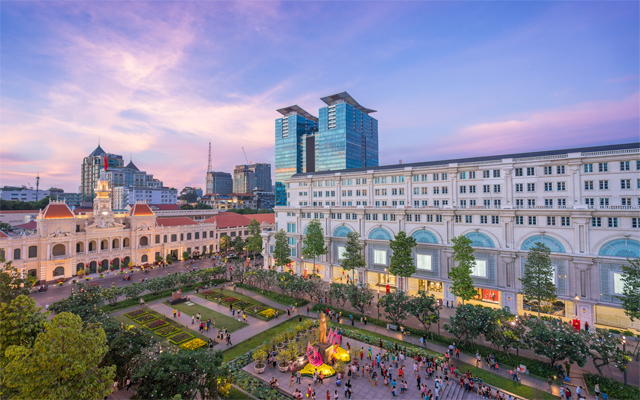
Nguyen Hue, downtown of Ho Chi Minh City, Vietnam

Carried out among 1,000 respondents across first-tier cities in China, the study in late April then honed in on the responses of the 450 respondents who gave a positive answer when asked if they would travel to Vietnam. One-third of these 450 respondents fell within the 20 to 29 age bracket.

The influence of this particular segment was also reflected in the preferred platforms for booking hotels among the 450 respondents, noted David Johnson, CEO, Delivering Asia Communications. Half of them expressed a preference for Ctrip, while 18 and 11 per cent of them were keen on booking through WeChat and Alibaba Group’s travel service platform Fliggy.

Other findings also seemed to reflect a strong influence of the age bracket. A significant majority (81 per cent) of the 450 respondents said they did not want to participate in group tours when visiting Vietnam.
Additionally, budget accommodation proved most popular (preferred by 39 per cent of respondents), while five-star accommodation came in second (the choice of 25 per cent of respondents).

The preference for budget accommodation also came through in the amount the 450 respondents planned to spend on a trip to Vietnam, where most (54 per cent) indicated they were looking at spending US$710 per trip, followed by 36 per cent of respondents, who said they would set aside US$1,400.

Interestingly, the study reflected the World Travel & Tourism Council (WTTC)’s predictions that recovery in the months ahead will begin first with staycations and domestic travel, followed by short- and long-haul travel, which the council stated in a press statement dated April 30.

After all, only about half or some 490 of the initial sample of 1,000 respondents said they would travel overseas this year. This means that the 450 who were looking to travel to Vietnam, a shorthaul destination, made up 90 per cent of these respondents.

Besides the favourable exchange rate between the RMB and the dong, the post-crisis ‘fear factor’ – likely to be manifested in a preference for short-haul, door-to-door flights and avoidance of extended air travel – are factors that are expected to make Vietnam a favoured destination among Chinese outbound travellers, noted said Bill Barnett, managing director, C9 Hotelworks.

When asked when they intended to travel to Vietnam, many of the 450 respondents (more than 30 per cent) did not indicate a fixed month. Among those who did, October and August proved the most popular, with more than 20 per cent and over 10 per cent of the 450 respondents saying they would travel in the two months respectively.

They also indicated a preference for well-known, established destinations like Ho Chi Minh City (preferred by 26 per cent of the 450 respondents), Hanoi (19 per cent), Nha Trang/Cam Ranh (17 per cent) and Halong Bay (13 per cent). Among emerging destinations, Sapa stood out, with eight per cent of the 450 respondents indicating interest in visiting.

While traditional activities such as sightseeing proved popular among the 450 respondents (32 per cent indicated interest), a growing number seemed to be interested in nature activities, with 25 per cent of the 450 respondents keen on such activities in Vietnam.

According to Johnson, this might be due to the change in values tied to travel following the Covid-19 crisis.

Barnett added that the study was done with the intention of guiding travel players to meet the needs of this very specific group of post-crisis travellers, and may not reflect sentiment in the broader travel market.

Virtual tour series shines the spotlight on Wuhan

0

Tour operator Walks has kicked off their Spotlight Series of online tours with a sojourn to Wuhan, China, aiming to provide insights into the ancient city beyond that of the skewed narrative painted by international media.

The first run of the Wuhan tour (US$10), which delves into the city’s highlights, cultural attractions and history, was held on April 30. Two more timeslots are available on May 7 and 14, at 19.00.

Walks’ online tour of Wuhan aims to dispel misleading notions about the city where the coronavirus first broke out

Over the 40-minute tour, a local host will take guests on a journey to uncover famous spots such as the Yangtze River, East Lake and Wuhan University – billed as one of the oldest and most beautiful in China – as well as the city’s local food and snack culture.

Stephen Oddo, CEO, Walks, said in a press statement that he hopes the tour would show new sides of Wuhan, expand mindsets and overturn preconceptions, calling this “the heart of what travel is all about”.

He added that the current global travel restrictions, in fact, allows Walks to “expand (their) mission to reach more guests: both would-be travellers, and those who may not be able to travel for other reasons”.

Rome will be the next featured destination in the series, with tours of the city slated for May 8, 15 and 22 at 12.00. Each time slot will feature a different Roman era in progressive order, brought to life by renowned archaeologist and television host Darius Arya.

Upcoming tours in Walks’ Spotlight Series will feature US National Parks, including Denali National Park and Preserve, Alaska, and an insider’s experience on Venice’s preservation. The tours will be led by storytellers from all walks of life, including tour guides, local artisans, winemakers, chefs and volunteers working on travel sustainability, shared Oddo.

Walks is also offering a regular slate of live, virtual tours where guests can trace the fall of the Roman Empire, explore the highlights of the New York City Metropolitan Museum, and even gain insight into Italian wine. These tours, priced at US$10, replace the physical walking tours they held before travel restrictions kicked in.

For each virtual tour they sign up for, guests receive a US$25 Walks voucher, with a two-year validity.

GHM’s president Hans Jenni to step down

0

Hans Jenni will be stepping down from his position as president of luxury hotels company General Hotels Management (GHM), according to a recent press statement from the group.

Jenni co-founded GHM with Amanresorts creator Adrian Zecha in 1992. Under their leadership, the company grew its brands The Chedi and Anh Luh, establishing properties known for their contemporary Asian design across various destinations, including China, India, the Middle East and Europe.

More recently, the company opened the 123-key The Chedi Andermatt, which sits 1,447m above sea level in the heart of the Swiss Alps, in Jenni’s homeland Switzerland.

Other existing properties under GHM include The Chedi Luštica Bay Hotel at the coastal town of Luštica Bay in Montenegro, as well as Ahn Luh Qiandao Lake, sited within the Hangzhou Qiandao Lake scenic area.

Over the years, GHM has also counted properties such as The Datai, Langkawi; The Lalu Sun Moon Lake, Taiwan; and The Nam Hai, Vietnam, in its portfolio.

Jenni will continue to be based in Asia, and has plans to divide his time between Manila and Singapore.

Radisson Blu Resort Cam Ranh rolls out packages to tee off to

0

Radisson Blu Resort Cam Ranh in Vietnam has partnered with the nearby KN Golf Links golf course, designed by famed golfer Greg Norman, to roll out a stay and golf package, in a bid to attract golfers to the new course.

Available for bookings and stays till November 30, 2020, the package includes lodging at the resort’s deluxe room, and one tee time per room night.

KN Golf Links on Long Beach at Cam Ranh Bay

The package also comes with access free Wi-Fi, daily breakfast and complimentary soft drinks from the in-room minibar. Guests who stay for four nights or more can also given a complimentary one-hour massage at the resort’s spa.

Transportation between Cam Ranh International Airport and the resort, and the resort and the golf course is included as part of the package. Also included are one pyramid of range balls per round; green, caddy and shared buggy fees; as well as all taxes.

Priced from VND 3,880,000 (US$165) per golfer per night, the package also features complimentary access to the Vietnamese resort’s fitness centre. A non-player second guest can accompany the golfer at a special rate.

Located on Long Beach on Vietnam’s south-central coast, about a five-minute drive from the resort, the 27-hole KN Golf Links opened its grounds to golfers last October. It comprises the Links Course and the garden-style, nine-hole Oasis Course.

Meanwhile, the recently-opened Radisson Blu Resort Cam Ranh boasts 292 contemporary rooms and suites – all with ocean views – including 36 private pool villas. Dining outlets at the resort include Vietnamese seafood restaurant Blu Lobster and beach bar Waves.

Flexi bookings to take off in future travel: Skyscanner

0

Flexible flight, accommodation and tour bookings may become a basic expectation of consumers looking into post-pandemic travel, with comprehensive travel insurance earning higher priority in the purchasing process, advised Skyscanner.

This information comes at a crucial time as travellers are raring up for potential travel later this year, with stirrings in the domestic travel sector already being detected across the region.

Flexible flight bookings and travel insurance will take on increased priority post-pandemic: Skyscanner

A recent Skyscanner survey of more than 6,700 users on its website between April 17 and 19 showed that 52 per cent of consumers in Asia-Pacific “believe it will be safe to travel internationally later this year”, with 82 per cent confident in domestic travel, shared Gavin Harris, commercial director, strategic partnerships at Skyscanner.

This bubbling travel intent serves as a call to action for companies to promote flexible bookings.

Jon Thorne, director, user satisfaction at Skyscanner, stressed: “This is an important consideration right now as timelines on imposed travel restrictions remain uncertain. Guidance could change very quickly and so having flexible cover for your future plans is advised right now. Many airlines are adopting flexible booking policies to enable customers to plan a trip but have the peace of mind that if restrictions are still in place, they will not lose out.”

He raised the example of Singapore Airlines waiving all rebooking fees for tickets issued on or before March 15, 2020, for travel up to May 31, 2020. While currently a temporary measure, such policies may become a mainstay in travel bookings as they can inspire confidence in travellers.

“There will be more interest in flexible flights, airlines and OTAs that have fair cancellation and rescheduling policies. Travellers are expecting airlines and OTAs to be more flexible after the crisis and charge less – or waive the fees – for rescheduling or getting a refund,” said Thorne.

Additionally, consumers are expected to pay closer attention to travel insurance, and are “considering insurance policies more than they used to”, he predicted.

As the industry prepares for the slow but eventual pickup of travel, Skyscanner is working with airlines and OTAs to support them and update offerings in line with the changing arrangements, said Thorne.

The company has also extended free trials of its Travel Insight products for airlines, tourism boards and other travel businesses to analyse global flight search data and understand ongoing traveller sentiment in order to predict future demand and allocate capacity.

Hertz could file for bankruptcy

0

Hertz Global Holdings is preparing to file for bankruptcy if the company fails to rework its debt, reported Bloomberg.

Hertz, which also operates the Thrifty and Dollar brands, was in talks with lenders to avoid defaulting on debt related to leases for its rental cars, after unprecedented travel restrictions due to the coronavirus crushed demand for car rentals.

Hertz is said to be in discussions with creditors to rework debt

The company is reportedly struggling to reach a deal with its creditors, and is preparing to file for Chapter 11 court protection, according to the report, citing anonymous sources. However, a filing is not set in stone, added the sources.

A Chapter 11 filing would permit Hertz to stay in business while it works out a plan to pay its creditors and turn the business around, said the report.

Hertz has hired an adviser to help with a forthcoming bankruptcy filing, according to a report by The Wall Street Journal.

Founded in Chicago in 1918, Hertz was operating 12,400 locations worldwide as of February.

China domestic travel shows green shoots of recovery

0

Air travel and flight capacity within China are showing first signs of recovery, according to press statements from travel analytics companies ForwardKeys and Cirium.

While this could mean travel players in specific locations in China can look forward to a rebound in the coming months, international air recovery remains uncertain.

China’s domestic air travel is slowly picking up in the wake of the coronavirus

ForwardKeys was cautious to speak of international travel recovery with the continued restrictions of flights in and out of China.

Cirium, however, painted a more positive picture, citing the return in China’s domestic air travel capacity as a “beacon of hope” for global aviation recovery, said Rob Morris, head-consultancy, Ascend by Cirium.

ForwardKeys’ data showed that Chinese domestic air travel has been in a slow but steady recovery since it hit the lowest point in mid-February.

In line with a slight restart to the economy and an increase in domestic air capacity, air travel within the country rose by 62.9 per cent during the week starting February 23, compared to one week prior.

Between the first week of March and the third week of April, domestic air travel rose by another 19.5 per cent from what was still a low figure in end-February.

Cirium’s analysis that domestic airline capacity was recovering in China corroborated with ForwardKeys’ observations. From a peak year-on-year drop of 71 per cent on February 24, capacity was down by just 33 per cent on April 22, said the company in the press statement.

China’s passenger aircraft also accounted for 40 per cent of the 1,000 such aircraft that returned to service between the start of March through to April 22.

Destinations that have been leading China’s domestic air travel recovery include commercial centres Guangdong, Zhejiang, Shanghai, Sichuan and Yunnan.

With the lifting of the 14-day quarantine requirement on travel between Beijing and low-risk areas in China on April 29, ForwardKeys said that it expects a more significant uplift in domestic air travel in the weeks ahead.

The announcement on the capital is welcome news to tourism players in Beijing, who have been seeing extremely weak air travel since the strictest travel restrictions were imposed on the city. Beijing continues to face the most stringent travel limitations across the country today.

Oliver Ponti, vice president insights, ForwardKeys, said that the domestic recovery is a positive sign for hoteliers with “properties and clientele in the right parts of (China)”, who can now “look forward to welcoming guests again”.

Moving forward, ForwardKeys expects inbound domestic travel to Shenzhen and Hainan Island to be indicative of recovery trends, considering that flight arrivals picked up in both areas early on, in the third week of February.

For Morris, the recovery in domestic air capacity marked a “beacon of hope for the (global) aviation industry”. He remained optimistic even as he acknowledged that flight cancellations in China remain high, and recovery in domestic flight capacity flattened in April.

Ponti, however, was more cautious. He pointed out that international air traffic to and from China was “still falling”, as restrictions remained on flights in and out of the country. Destinations looking forward to the return of tourists from the country still have to wait, he added.

Currently, Chinese airlines are allowed one flight to each outbound country per week, while foreign air carriers are allowed one flight to China each week, according to Civil Aviation Administration of China stipulations.

ForwardKeys estimated that this means only 130 international flights will land in China each week, and a maximum of 5,000 people each day will enter and leave the country.

Whether China’s domestic air travel recovery will be indicative of international recovery will become clearer once travel restrictions are lifted. Cirium, however, noted that flight capacity in Asia is showing signs of recovery, rising by 10 per cent between April 14 and 22.

Analysis of flight capacity in the US and Europe is less encouraging with the regions still under lockdown, said the company in the press release, though global flight capacity change seemed to be reaching a trough as at April 22.

Nonetheless, capacity growth has some way to go. Cirium data indicates that 16,800 passenger aircraft – more than 60 per cent of the global fleet of 26,300 – were still parked across the world on April 22.

Morris emphasised that consumer confidence post-lockdown and the extent of government support would influence airline capacity growth ahead.

ICAO sets up task force to rescue global aviation

0

The UN ICAO’s governing council has established a new Covid-19 Aviation Recovery Task Force to coordinate government and industry efforts for the post-pandemic recovery of the international aviation sector.

The task force will leverage government and industry data toward solutions to the immediate challenges being felt sector-wide, and the priorities to be addressed to reboot the network for a post-Covid world, and make it more resilient and responsive in the process, the ICAO said in a press statement.

ICAO establishes new task force to rescue international air travel and facilitate the resumption of operations

The new body comprises ICAO council members and high-level aviation industry representatives including the directors general of all major air transport industry associations. UN entities such as the WHO and the UNWTO, as well as the heads of several national and regional aviation administrations, are also represented.

“As we know, air connectivity is critical to economic and sustainable development in every region of the world. Consequently, an effective recovery of international air transport is essential to support the post Covid-19 pandemic worldwide economic recovery,” ICAO council president Salvatore Sciacchitano said at a meeting of the task force on Wednesday.

“We are not talking of a recovery after an international air transport crisis. International air transport has faced several crises in the past from which it was able to regain its position thanks to timely initiatives by ICAO. The progress achieved over the course of decades could be entirely erased if international air transport does not resume soon and effectively.”

The council expects the first outcome by the task force by end-May.

New DMC launches in SE Asia

0

A Dutch duo has launched a new DMC in South-east Asia on Tuesday (May 5) – rebranded from Asia DMC Thailand – and opened offices in two new destinations, Vietnam and Myanmar.

The brainchild of tourism industry veterans André van der Marck and Gerben Bloemendaal, Travel Exclusive Asia has offices in Bangkok, Chiang Mai, Saigon and Yangon.

Travel Exclusive Asia has launched in South-east Asia, with presence in Vietnam and Myanmar; ancient temple in Bagan, Myanmar pictured

Travel Exclusive Asia offers tailor-made journeys in Thailand, Vietnam and Myanmar – with more countries to follow soon, according to van der Marck.

“This was the perfect time for both of us to really focus on this project, which was in the making since 3Q last year, and to launch now is a positive, impactful sign that we will be ready as your partner once business comes back, which it surely will,” stated van der Marck.

Previously the managing director of Asia DMC Myanmar, Bloemendaal opened Travel Exclusive Asia’s Vietnam and Myanmar offices in March 2020.

Van der Marck, already with a longstanding hospitality career under his belt, partnered Asia DMC to open his own DMC in Thailand in 2016. By mid-2019, he completed a successful management buy-out to operate under the Asia DMC brand, leading up to Travel Exclusive Asia’s debut.

Both van der Marck and Bloemendaal, who have each spent over two decades working the South-east Asian scene, saw a gap that they could plug in the world of DMCs, as well as a current base of partners that they could build on.

“Travel Exclusive Asia is all about creating meaningful, bespoke and very different journeys in each of our destinations, and in doing so, serve our customers in a reliable, fast and trustworthy fashion,” van der Marck shared.

“(We felt) real honesty to our partners was missing; (it’s our desire to really serve the B2B market) and not play the B2C game behind the scenes, to dare to partner with different people and industries.”

In addition, Bloemendaal added: “Sustainability and giving back to the planet is a must nowadays, and we will be doing this in very innovative ways.”

One such example is their partnership with Netherlands-based, purpose-driven travel social enterprise Local Happinez, which strives to foster cultural interactions and genuine discussions between travellers and local communities, and ensure benefits for all locals involved.

Travel Exclusive Asia’s van der Marck (left) and Bloemendaal aim to provide unique, different experiences to guests and business partners

All products will be sourced by the Travel Exclusive Asia team and tried before launching, with the goal of creating different, memorable journeys for all guests that truly allow them to experience a destination.

Although they don’t foresee any business in 2020 – van der Marck stated they expect to grow from 2021 onwards – they retain an optimistic outlook. “For now, there is no MICE and the ‘new normal’ for MICE is the way forward. We are close to having found all the answers on that.”

Sharing that it was back to business for them, van der Marck added: “We were not in crisis at all (from the pandemic), but doing extremely well. So we went ahead and sped up our launch. (We want to) do it now, do it well and be ready when the crisis is over.”