TTG Asia
Asia/Singapore Tuesday, 13th January 2026
Page 995

Covid-19 a catalyst for Vox innovations

0

Rome-headquartered tour content specialist Vox Group has sped up its innovation during the ongoing travel and tourism hibernation, and is ready to launch two new self-guiding products in mid-2020 that will answer to new travel considerations post-Covid-19.

Speaking to TTG Asia in an exclusive interview, John Boulding, CMO of Vox Group, revealed that Vox Connect and Vox City Walks, ready for release in June and July respectively, will allow travellers to maintain safe distancing while taking in enriched tour content as well as put critical market data into the hands of tourism industry players.
Boulding: Self-guiding technology is perfect for travellers wanting safe distancing as travel rebounds

The Vox Connect app sits on the traveller’s phone and the tour guide’s phone, allowing a connection via Wi-Fi and Internet that facilitates the streaming of video and audio.

Explaining how Vox Connect can enrich a traditional guiding experience, Boulding said: “A tour guide can point out a building that was featured in a James Bond movie, for instance, and play a James Bond soundtrack while explaining the (architecture).”

Vox City Walks, which will debut this July – or August at the latest – in Rome, Milan, Venice and Florence, is a flexible walking tour that provides a vast variety of city sights with pre-recorded audio introduction in multiple languages, plus the option of interaction with real-live guides covering the circuits featured in the programme.

“Our Rome circuit, for example, will have eight guides who can be tracked by GPS. The app user will be able to locate the guides and hop on that circuit at any joining point on the route. They can hop off any time they want to do their own things,” he explained.

A timetable will be provided for every joining point on the route map, allowing users to know when the guide will arrive next. A navigation feature helps the user to find his way to a selected joining point where he will meet a guide dressed in Vox uniform.

Travellers can join Vox tour guides on the circuit at any time they like

Vox City Walks is ready for replication through suitable business partners elsewhere in the world.

Describing the pandemic as “a game-changer” for the travel and tourism industry, Boulding said weakened businesses are now forced to change the way they operate in this new environment.

He recalled a resistance among industry peers whenever he spoke of Vox digital touring products in the past 30 months that he has been with the company.

“They’d say to me that their customers are older and do not use technology. I wasn’t sure if that was true then, but it certainly isn’t now. The city lockdowns have sped up technology adoption. Even the older people are now using their smartphones for information, entertainment and communication,” he said, adding that the industry is now more receptive of touring technology.

Boulding, who expects travel to change as a result of the pandemic, with one of the causes being legislation that prohibits “crazy, crushing crowds at popular attractions” and another being people’s desire for safe distancing, believes that travellers in the future will welcome self-guiding options.

“Many people departing their home as individuals, especially during the early days of travel recovery, are not going to want to be in a group. Self-guiding tech is perfect for them. You have your own smartphone and earphones – not a shared device that has been in someone else’s hands and ears – and you can distance yourself from other explorers while taking in the sights,” he said.

He added that self-guiding technology could also allow airlines, hotels, car rental companies to up-sell a standalone commodity.

“The market is going to be hyper-competitive once travel returns. If a hotel is not full, it will be obliged to sell every single bed off to anybody. It will be a commodity game where the lowest price wins. But if the hotel were to enhance its product with a self-touring option, which is very inexpensive because it is digital, it can sell to the customer a stay that comes with unlimited sight-seeing and audio guiding in their own language,” he opined.

Another critical advantage of Vox digital products is the data they generate, such as in-app usage that tells of where people went, what they saw, what time they got there and how long they stayed; and app store data, such as which countries the app was downloaded from.

“Every company needs new data and such intelligence will help businesses plan for recovery,” he said.

TUI Group slims down for survival, targets 30% reduction in overheads

0

At its half-year results announcement on May 13’s morning, TUI Group revealed plans to initiate a 30 per cent cost-cutting programme to ride out the Covid-19 business crisis, a move that will see the global company cutting investments, size and presence around the world.

In a breaking report by TTG UK, TUI Group’s chief executive Friedrich Joussen, said: “TUI should emerge from the crisis stronger. But it will be a different TUI and it will find a different market environment than before the pandemic. This will require cuts: in investments, in costs, in our size and our presence around the world.

TUI Group will move into its “asset right” strategy even more quickly

“We must be leaner than before, more efficient, faster and more digital.

“We will implement our “asset right” strategy, which we launched in 2019, even more purposefully and quickly. We will become more digital at all levels – in particular, we will accelerate the expansion of digital platforms in new markets and for our activities in the destinations.”

The company’s move to “permanently reduce” overhead cost base will have an impact on potentially 8,000 roles globally.

“In order to return to the successful development of the past years after the crisis, we must now implement the realignment quickly,” said Joussen.

Joussen: TUI must be leaner than before, more efficient, faster and more digital

The group received a bridging loan of €1.8 billion (US$1.9 billion) in March to cushion the unprecedented effects of the pandemic until normal business operations can be resumed. In April, the banks providing TUI’s existing credit line of €1.75 billion also gave their approval for the contractual integration of the new credit.

TUI added that the loans received are to be repaid within a short period of time “and the high level of debt is to be rapidly reduced again”.

Philippine beaches a magnet for first wave of returning Chinese travellers

0

The first wave of Chinese travellers to hit the Philippines’ shores once travel restrictions are lifted are likely to head to beach destinations such as Boracay, Bohol and Cebu, according to a recent study by C9 Hotelworks and Delivering Asia Communications.

Social distancing protocols enforced at these locations, which are likely to stick around post-pandemic, have increased the appeal of these already popular destinations, concluded the two companies.

Most survey respondents named Boracay (46 per cent) as the Philippine destination they would most likely visit when travel is possible, followed by Manila (23 per cent), Bohol (21 per cent) and Cebu (6 per cent)

The analysis that beach destinations would be popular because of increased controls echoed Bernadette Romulo-Puyat, secretary, Department of Tourism (DOT)’s comments in a May 12 article by the government news agency, that “safety”, rather than “food, culture and immersion” would be a primary consideration for travellers post-Covid-19.

Conducted in the first week of May among 1,150 respondents from five first-tier cities in China, the study drew out the preferences of the 700 or so respondents (61 per cent) who said they were looking to travel to the Philippines this year and beyond.

Of the shortlisted travellers, about 630 were planning to travel to the country in 2020.

When asked which destination in Philippines they would be most likely to visit, most shortlisted respondents (46 per cent) indicated Boracay, followed by Manila (23 per cent), Bohol (21 per cent) and Cebu (6 per cent).

Sightseeing remained the most preferred activity in the Philippines, with 37 per cent of the shortlisted respondents indicating an interest in it, followed by nature-related activities at 16 per cent.

The significance of the survey was brought home by the fact that China has consistently been the Philippines’ second-largest inbound market for the past three years, behind South Korea. Visitor arrivals of the two countries formed 45 per cent of the 8.2 million visitors to the Philippines in 2019, with China alone contributing 1.7 million (21 per cent).

More than half of the shortlisted respondents came from the 20 to 29 age bracket. Their preferred channel for booking hotels, besides the well-established Ctrip (almost 60 per cent), were Alibaba Group’s travel service platform Fliggy (16 per cent), hotels’ websites (12 per cent), and WeChat (6 per cent).

Interestingly, of the shortlisted respondents, of which 58 per cent were female, and more than 60 per cent were workers or employees in companies, 82 per cent preferred to visit the Philippines as independent travellers, without relying on group travel.

This means that the FIT, young, tech-savvy female traveller with some extent of spending power (being workers) is a market that the DOT and tourism players in the country could zoom in on.

Other findings that revealed the preferences of the shortlisted Chinese respondents for travel to the Philippines were uncovered. For instance, more than half of the shortlisted travellers said they wanted to stay for five days or more in the country. Most (47 per cent) were willing to fork out US$1,400 per trip.

August (more than 10 per cent) and October (nearly 30 per cent) were popular months among those who gave a specific date for their travel plans to the Philippines.

In terms of accommodation, shortlisted respondents said they would prefer to stay at four-star (39 per cent) and budget hotels (28 per cent) in the South-east Asian nation, rather than top-tier, five-star hotels (just 21 per cent).

Despite the popularity of beach destinations, restrictions remain on these places and domestic and international flights travel have yet to resume across the Philippines. Boracay, one of the key destinations in the country, has only just moved from extended community quarantine (ECQ) to general community quarantine (GCQ) status on Apr 27.

Meanwhile, the Central Visayas region, which includes Cebu and Bohol, have extended the GCQ from the original deadline of May 15 to May 31, with Cebu City in particular being placed under a modified ECQ between May 16 and 31, according to government news agency reports.

In light of the fast changing tourism landscape, shaped by changing restrictions, David Johnson, CEO, Delivering Asia Communications, recommends that hotels turn from “strategic planning cycles” to “fast-to-market digital strategies”.

Meanwhile, Bill Barnett pointed out that the challenging of having to build social connections, which he calls the “heartbeat of hospitality”, even amid physical distancing, is the new norm for tourism and travel players in the Philippines.

According to the survey report, long-haul travel is expected to resume only next year, with this year’s travel to the Philippines coming mainly from domestic and regional markets, particularly as the DOT works airlines to reduce domestic flight prices.

Indian aviation leaders urge structural reforms in taxes, charges

0

Stakeholders of India’s aviation sector are demanding that the government make a long-term correction to cost structures, particularly bringing Aviation Turbine Fuel (ATF) under the ambit of Goods & Sales Tax (GST) and reducing infrastructure charges at airports, as the pandemic-induced travel and tourism crisis deepens.

Aviation leaders claim that the current cost structures have made it difficult for Indian carriers to survive, and that the short-term relief alone – in the form of exemption from airport charges and temporary excise duty waivers – are insufficient.

Long-term cost restructures in aviation are needed for Indian airlines to survive this crisis

Ajay Singh, chairman and managing director of SpiceJet, said governments around the world are doing their best to ensure airlines do not collapse.

“While we need short-term help from the government, this is also an opportunity for them to look at structural reforms that we have sought for several years. Among those demands are getting ATF under GST. It is important that our cost structures are lower than or aligned with (competing airlines like) Emirates and Fly Dubai, among others,” said Singh.

Including ATF under the GST regime will allow airlines to take tax credit on paid taxes, thus bringing down cost.

Kanika Tekriwal, CEO and founder of JetSetGo Aviation, noted that ATF contributes about 40 per cent to an airlines’ operating cost.

She added that airlines are “going through a difficult time managing their cash flows” as a result of extensive flight suspensions.

Meanwhile, Singh urged the Indian government to consider correcting “anomalies” in infrastructure charges at airports. Citing an example, Singh said airports would charge airlines about Rs 4.5 billion (US$59.6 million) a year to store fuel in tanks that “probably costs something like Rs 250 million to build in New Delhi”.

WTTC lays out health protocols to regain traveller confidence

0

As part of WTTC’s efforts to restore consumer confidence in travel, the council has released standardised protocols for hospitality and retail operations worldwide to be adhered to presently as well as post-Covid-19.

Drawn up using existing medical evidence and World Health Organisation (WHO) and Centre for Disease Control and Prevention (CDC) recommendations, the protocols were designed to “provide consistency” for destinations, countries, travel providers, and travellers themselves, shared WTTC in a press statement.

WTTC wants its health and safety protocols to be adopted by governments to enable a coordinated approach to recovering travel and tourism; tourists exploring Wat Phra Kaew, Bangkok

Measures laid out for the hospitality and retail sectors include retraining staff in infection control and new policies, employing technology to reduce contact (such as making digital menus compulsory, using digital maps and queue management to advise guests on areas to avoid in retail) and removing unnecessary items from hotels.

WTTC said similar standards for aviation and cruise sectors are being developed and will be released in due course.

Guidelines for each sector will be categorised across five pillars: restarting operations; ensuring the traveller experience is safe and secure; rebuilding trust and confidence; innovation; and implementing enabling policies, including advocating for financial aid.

Gloria Guevara, president and CEO, WTTC, said: “We have learnt from the past… where the lack of coordination among governments and with the private sector caused long-lasting travel disruption, higher costs and a longer recovery time.”

According to Guevara, the “global private sector has aligned (themselves with)” the new protocols, and the ball is now in the governments’ courts to adopt them. While awaiting governments’ action, WTTC is engaging in ongoing discussions with key private sector stakeholders to promote maximum buy-in and guide practical implementation.

WTTC had previously shared that it was developing these protocols in consultation with global and regional travel bodies, such as the International Air Transport Association, Cruise Lines International Association. The intention was to put forth the protocols to governments worldwide, so that the standards can be translated into public policies that would allow travel to restart even before a vaccine is widely available.

Sri Lanka ponders opening of borders in July

0

Sri Lanka – similar to Maldives – is considering reopening its air and sea borders in July to foreign tourists.

However, Sri Lanka Tourism’s chairperson Kimarli Fernando said arrivals would be mostly overseas Sri Lankans returning to visit relatives and friends. In anticipation of this, the government is planning to aggressively promote domestic tourism in nine provinces to help fill hotels and resorts.

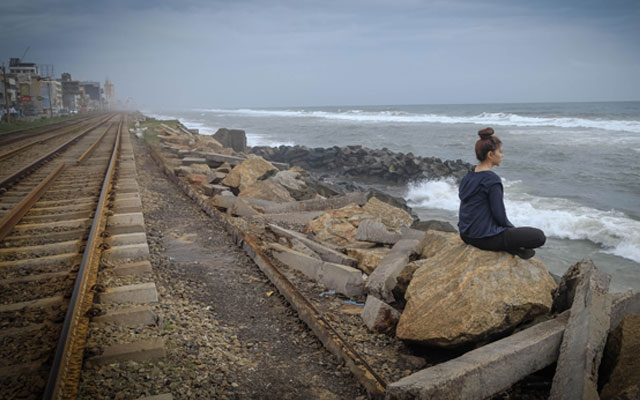
Sri Lanka Association of Inbound Tour Operators has issued a set of guidelines for DMCs to follow once tourism gets underway; coast of Colombo pictured

She was speaking at a webinar on Monday hosted by the Cinnamon group of hotels, titled Charting a course for Sri Lanka’s tourism future, in conjunction with several other tourism stakeholders.

To reassure travellers, Fernando shared that hotels will have to go through a new certification process to ensure their properties are compliant with globally accepted health and safety standards. Also in the works is the Visit Sri Lanka Year campaign in 2022.

Another positive sign Fernando shared was that several airlines have expressed an interest in resuming flights to Colombo, and were actively seeking partnerships with tourism authorities.

Anita Mendiratta, UNWTO’s special advisor to the secretary-general, shared that according to latest projections, there will be a 60 per cent drop in global tourism travel, yet Asia will be the first region to recover. Business travel and people travelling to meet their loved ones overseas would be the first to take off.

Dillip Rajakarier, CEO, Minor Hotels Group, believes that tourism will take 12 to 18 months for a full recovery.

“We are looking at cash flows and how to sustain during this period,” he said, adding that in light of the situation, buffet-type meals will also not be offered for a long time to maintain social distancing.

Meanwhile, the Sri Lanka Association of Inbound Tour Operators has issued a set of guidelines for DMCs to follow once tourism gets underway. For instance, group photographs will be discouraged, while local guides on the tour bus will have to speak from behind a screen.

Second TTG Conversations webinar to seek clarity around the return of offline business events

0

The future format of physical business events as life returns to a new normal will be debated at the second edition of the TTG Conversations webinar series, to be held on May 21 from 15.00 to 16.00.

Titled, Setting the stage for a return in business events, the hour-long session will feature panellists: Ian Cummings, global vice president, commercial, CWT Meetings & Events; Kerry Healy, vice president sales Asia Pacific, ACCOR; and Vincent Yap, director, integrated marketing solutions, Pico Art International.

Cummings, Healy and Yap will share their views on how offline business events will evolve

Panellists will paint a picture of the state of recovery in meetings and tradeshows, discuss how new necessities – from heightened awareness of personal and public hygiene to physical distancing – will impact the way business events are conducted in time to come, and share what the new considerations will mean for event suppliers and specialists.

The session will be moderated by Karen Yue, group editor of TTG Asia Media.

Registration for TTG Conversations: Setting the stage for a return in business events is now open. Capacity is limited and registrations are on a first come, first served basis.

TTG Conversations joins the company’s stable of widely-read and established trade titles, such as TTG Asia, as well as the many knowledge sessions of IT&CM Events and CTW Events that take place several times a year.

The debut session was held on April 29, focusing on the value of virtual meetings and considerations needed in transitioning physical events online. A recording can be viewed here.

Making memories: familial interactions during trips matter

0

Singapore has been in what I call a tender lockdown since April 7. The government has ordered suspension of most business operations and closure of workplaces and schools. People are asked to stay home to break the chain of Covid-19 transmissions. They have stopped short of making it a crime for us to leave home.


This is a strange period. Streets are empty and silent by 20.00. Never have I stayed home for such long stretches, leaving only for a quick grocery run, knowing I have to be back within an hour.

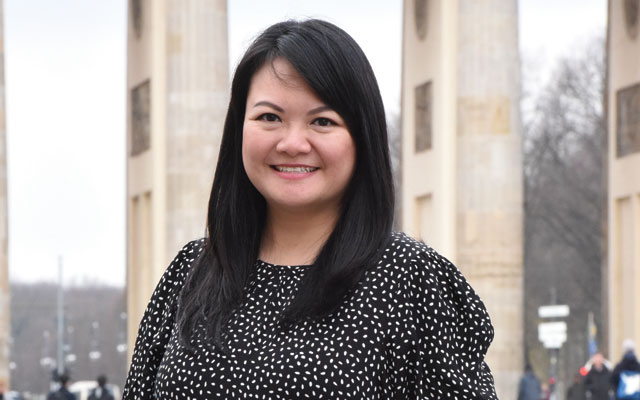
Even stranger is the absence of travel, not just for work but for leisure as well. My last work trip was to Berlin in March this year, while my last family vacation was to Perth in – gasp – October 2018!

Last year was extremely busy for me and with hindsight, I made the poor choice of postponing our holidays multiple times.

My firstborn, who is now five years old, went on his first holiday with us when he was 10 months old. We flew to Bali and spent several wonderful days at the serene Kamandalu Ubud.

From then on, he became our travel buddy and joined us twice every year somewhere in Asia-Pacific.

I never realised how much he appreciated travel until one day, during the second week of our movement restriction, he asked wistfully: “When Covid-19 is over, can we take an airplane to go somewhere?”

He reminded me how much travel is a part of our life, and how no pandemic will dull the wanderlust in our heart.

As I typically travel for work once a month and for a week on average each time, family vacations are an invaluable opportunity for me to spend waking moments making up for all the lost time with my loved ones.

The value of family time must surely be amplified now, as we find ourselves with more time on hand to reflect on how we had neglected the ones closest to us during the good and crazy, busy times. I know I have, and I intend to maintain the lost connections I have rekindled in the past month. If anything should change in my travel behaviour post-Covid-19, it would be to plan more travels with the extended family.

My firstborn’s wish to resume travels soon certainly overturns the common belief that children never remember and appreciate vacations, and that money is better spent on other things. He remembers how we tried to stop curious deers in Nara from nibbling at his pants, the poop-inspired cartoon character we posed for a photo with at an indoor playground in Seoul, the colourful sprinkles on the chocolate discs I got for him at the Fremantle Markets, and the instant noodles his grandpa made for him at Uncle Alan’s house (the jolly owner of the Airbnb apartment we rented in Perth).

His memories clearly show that it is the interactions with family members on a trip that leave the deepest imprint.

Travels will not resume swiftly, with countries battling the pandemic at different paces. Some travel restrictions are likely to remain. So, it is unlikely I can fulfil my firstborn’s wish any time soon. But once the Singapore government lifts the movement restrictions, I will be glad to resume a different kind of travel – first by exploring my own backyard and supporting local tourism players. There will be plenty for us to do together.

This time, we will have our youngest to join us in making new discoveries. I wonder what memories will stick for him?

Marco Polo Davao to close amid virus crisis

0

The 22-year-old Marco Polo Davao, the first and only five-star hotel in Mindanao, will cease operations on June 15, as it becomes the latest casualty of the Covid-19 pandemic.

The closure of the Davao City hotel is a big blow to the Hong Kong-based Marco Polo Hotels, as its Philippine presence will be restricted to two eponymous hotels in Ortigas in metro Manila, and in Cebu.

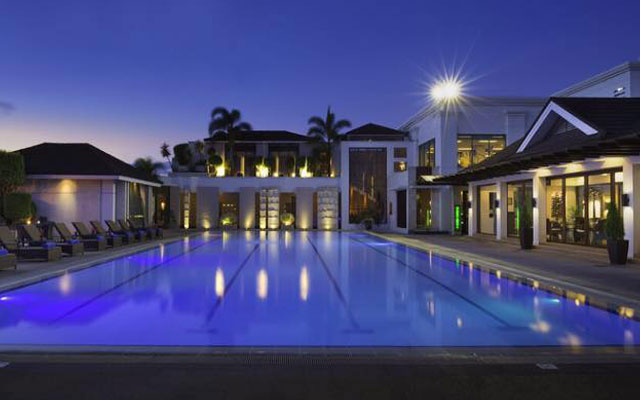
Marco Polo Davao shuts down amid virus pressure

Pearl Peralta-Maclang, Marco Polo Davao director of sales and marketing, explained that the decision to cease operations “goes beyond the financial losses and the uncertainties surrounding the future of the hotel industry”.

She added: “The welfare of the associates played a major factor. It is fortunate that the company has the capabilities to take care of its 270 employees – their separation pay are based on the retirement policy of the company and the rest in accordance with the law.”

The writing on the wall tells of an uncertain future for the hotel industry since Davao City was put on lockdown two months ago. Most hotels and resorts shut down, borders were closed, and an executive order was issued limiting social gatherings to a maximum of 25 pax until December.

Amid the lockdown, Marco Polo Davao remains open to cater to business process outsourcing (BPO) workers, but BPOs in Davao are fewer than those in metro Manila and the hotel has no foreign market to rely on.

Peralta-Maclang said that with “indefinite cessation” of business, the hotel might reopen if the market signals are positive.

Virtual tours open new doors for Indonesia’s tourism sector

0

A raft of Indonesian travel companies are making strides in reaching new demographics by investing in virtual tours, a concept which has flourished as coronavirus-related lockdowns confine people to their homes.

Wisata Kreatif Jakarta (WKJ – the Jakarta Creative Tour), for example, is offering virtual travel experiences of two Indonesian destinations, Jakarta and Yogyakarta, as well as overseas destinations like Paris, Amsterdam, Brussels, Rome, Seoul, and Mecca.

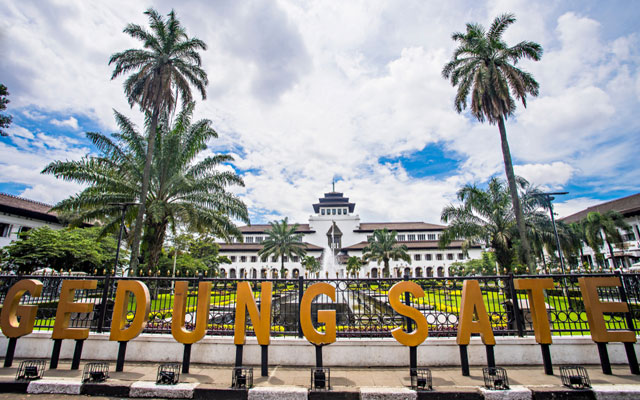
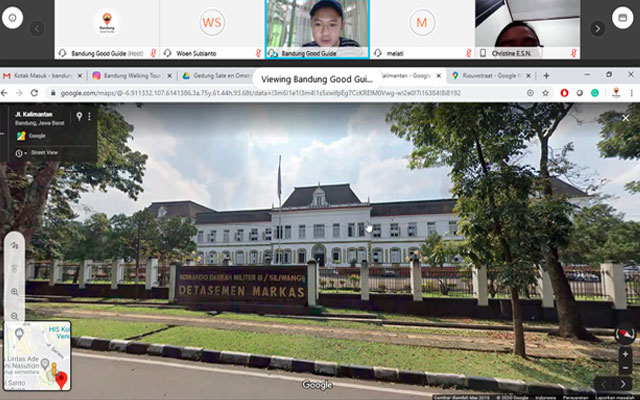
Travellers around the globe can now sojourn to Badung to view local attractions like the iconic Gedung Sate (above), thanks to virtual tours rolled out by the city’s tour operators

Similarly, Jakarta Good Guide (JGG) in April launched the Jakarta City Center virtual package, a series of webinars where hosts take guests on a virtual walking tour around Menteng, Hotel Indonesia Circle, and National Monument, through tech tools like Zoom, Google Maps and Google Earth. The guide also displays photos, videos, and audio related to the places.

Huans Sholehan, marketing manager of JGG, said that its inaugural virtual tour received a surprisingly positive response, which inspired the company to create a new package, the Cikini route. Now, JGG already has 27 routes.

He said that there are at least 20 participants joining the company’s tours daily, with higher numbers on weekends.

Seeing the keen interest in virtual tours, JGG is expanding its online travel menu, with different themes such as coffee, monuments, ramadan, and mosques. The firm is also in the midst of crafting a special route for corporations to take their employees on virtual tours.

Also elbowing its way into the e-action is Bandung Good Guide (BGG), which currently offers over 15 virtual experiences. The agency is now promoting a new exclusive tour dubbed Urban Legend Route, which traces the history and myths surrounding Bandung.

Fitria Nur, co-founder of BGG, said the virtual tours have helped them reach new markets. “Previously, most of our tour participants were from Jakarta and Bandung. With virtual tours, we get guests from Bali, Semarang, and Yogyakarta,” she added.

Bandung Good Guide’s virtual tours bring homebound travellers to explore the Indonesian city

Likewise, Jaya Wisata is also attracting a new demographic with the launch of its Cirebon virtual tours in May.

Its director, Imas Kurniawati, shared that compared to clients of its physical tours who are usually above 35 years old or in their 40s, most participants of its virtual tours are in the age group of 20-35 years. “They are mostly young people from big cities like Jakarta, Bandung, and Surabaya, who are still hungry for new things and are curious,” Imas said.

To attract more younger fans, Imas will be launching several new virtual tour packages featuring West Java’s lesser-known destinations, such as Kuningan, Majalengka, and Indramayu.

Imas said that although the income raked in from virtual tours pales in comparison to that from physical tours, it helps to keep the revenue flowing nonetheless and ensure the survival of travel businesses.

She elaborated: “We don’t know how long this crisis will last, or the extent of the damage to the industry and the wider economy. But these virtual tours are giving us hope that there is still a light – as long as we stay positive, creative, and willing to learn.”