TTG Asia
Asia/Singapore Saturday, 20th December 2025
Page 981

Australia marks runway back to international tourism

0

Australia’s inbound tourism operators could be back in business as early as July, according to a proposed Tourism Restart Timetable recently released by the Australian Chamber of Commerce and Industry’s Tourism Restart Taskforce.

The aspirational timeline charts the immediate restart and recovery of domestic and international travel, hospitality and business events, with travel between Australia and New Zealand resuming as early as July, and regional travel to countries with bilateral health agreements earmarked for September.

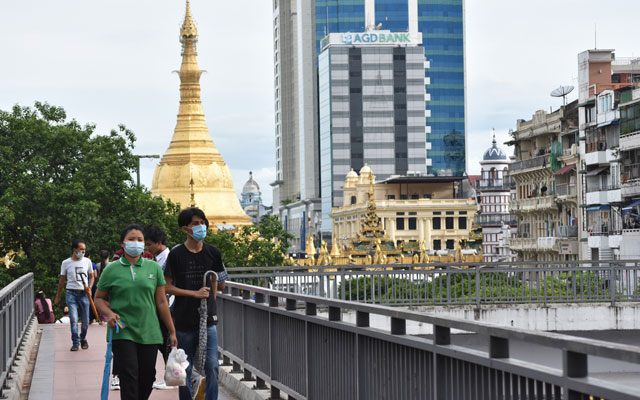
Australian tourism operators hope to kick-start regional travel with partner countries by September; skyline of downtown Sydney pictured

While currently under review by the government, Australian Tourism Export Council (ATEC) managing director, Peter Shelley, told TTG Asia the plan provides a much needed “peg in the sand” for inbound operators.

“The best thing we can do as an industry is head towards a restart date — even if we have to push the start date back a month or two, it’s better than simply hoping for something to happen,” he said.

ATEC is a member of the Tourism Restart Taskforce and the association is also working closely with members – including accommodation, attractions, tours and transport, and food and wine experience providers – to ensure they can operationalise national health and safety protocols and implement Covid-ready plans “that go beyond simply providing a pump of hand sanitiser”.

For Shelley, the reopening of international borders will rely on whether individual and group travel can be effectively “managed” by inbound tourism operators, who will have a critical role to play in tracking the customer journey for the duration of their visit.

“A managed travel approach will give government, operators and travellers the confidence to start building the runway back to longhaul travel. We are only at the very beginning of exploring this process,” he said.

Tourism Restart Timetable by Australian Chamber of Commerce and Industry’s Tourism Restart Taskforce

Meanwhile, discussion surrounding the proposed trans-Tasman travel bubble between Australia and New Zealand is gaining momentum.

Ann Sherry, co-chair of the Australia and New Zealand Leadership Forum, said public and private sector players in both countries are reassessing the value chain of travel – from pre-departure and check-in, to the inflight experience, arrival and immigration – and harmonising regulations.

“In the same way that security was ramped up after 9/11, travel has now changed to focus on health,” she said in a webinar earlier this week.

“We’re looking to build systems, structures, safeguards that are replicable and scalable. We want to set the pre-conditions for making this (bubble) work more broadly.”

Sherry stated that “a lot of progress has already been made” and that key recommendations will be presented to government in early June.

WTTC rolls out global safety stamp to rebuild tourism

0

WTTC has launched the world’s first global safety and hygiene stamp, which will allow travellers to recognise governments and businesses around the world which have adopted health and hygiene global standardised protocols, so as to restore consumer confidence.

The initiative has received the backing of UNWTO. Eligible businesses such as hotels, restaurants, airlines, cruise lines, tour operators, restaurants, outdoor shopping, transportation and airports, will be able to use the stamp once the health and hygiene protocols, outlined by WTTC, have been implemented.

WTTC’s Safe Travels stamp certifies that destinations and businesses have met a host of global protocols

Destinations will also help to award the stamp of approval to local suppliers.

Gloria Guevara, WTTC president & CEO, said: “We have learned from past crises that global standard protocols and consistency provides confidence for the traveller. Our new global safety stamp is designed to help rebuild consumer confidence worldwide.”

She added that Saudi Arabia, which is chair of the G20 tourism group, as well as popular destinations such as Cancun, Portugal, and the cities of Barcelona and Seville, are among the first destinations to back the stamp and implement global standard protocols to recover faster.

Zurab Pololikashvili, UNWTO secretary-general, said: “We are united in the common goal of tourism’s come-back to generate benefits going far beyond our sector. Trust and tourism will catalyse consumer demand, investments and jobs, thus generating opportunities for all.”

PATA, FeedsFloor work to digitally connect travel trade

0

PATA has signed a partnership with FeedsFloor that will provide a digital platform for its members and industry players to continue connecting with each other and conducting business during the global health crisis.

“The Covid-19 pandemic has forced the travel and tourism industry to adapt, adjust and innovate in the so-called ‘new normal’. As a membership association, our primary activity is to assist our members in expanding their networks, establish new relationships and consolidate existing business partnerships,” said PATA CEO Mario Hardy.

PATA partners FeedsFloor to enable travel trade to continue connecting with each other amid the pandemic

“While physical events will always remain an important activity for the Association, the partnership with FeedsFloor will assist us in providing a virtual platform for our members and industry colleagues to learn, network, and trade as we deal with the current situation.”

He added that the association is collaborating with FeedsFloor to plan “an exciting new event with the aim to unify the travel trade community through the infinite possibilities of the digital experience”.

FeedsFloor CCO Mohamed El-Masri said the partnership will allow the company “to assist as a digital enabler in bringing the travel community closer together, empowering its members to reach beyond borders and connect to potential partners and clients digitally”.

Headquartered in Copenhagen, Denmark, FeedsFloor is a technology firm that has developed a digital showroom platform and provides white label partnership solutions for exhibitions, trade organisations and business communities across industries all over the world.

New hotels: 1 Hotel Haitang Bay, Sanya, Alma, and more

0

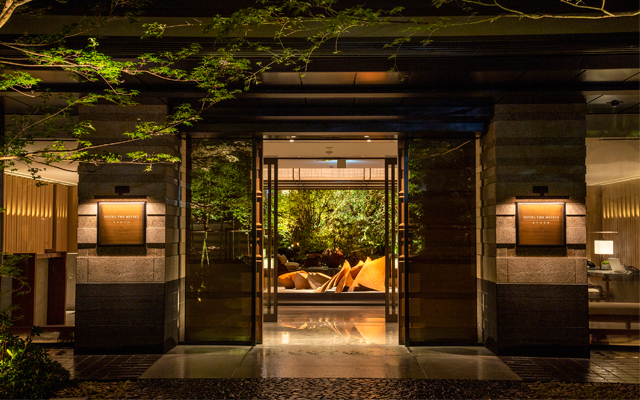
1 Hotel Haitang Bay, Sanya, China
Sitting on Hainan island’s shoreline, 1 Hotel Haitang Bay, Sanya is the first Chinese resort from US-based luxury brand 1 Hotels. The property boasts 294 rooms, suites and villas, ranging from 62m2 to 1,300m2. Hotel facilities include seven F&B venues – all-day dining concept 1 Kitchen, Chinese fine-dining restaurant Green House, noodle restaurant Noodle House, lobby lounge Drift, rooftop lounge Sky Bar (opening soon), poolside bar The Sandbox, and The Juice Bar. Other amenities are 630m2 of meeting facilities, 4,000m2 of garden venues, a Feature Pavilion, sunlit Sky Deck, natural farm, fitness centre, spa, and five swimming pools.

Alma, Vietnam
Opening in Vietnam’s Cam Ranh peninsula on May 31, Alma is a 196-pavilion and 384-suite resort that commands 29ha of beachfront. The luxury property offers nine room types, including one-, two- and three-bedroom ocean view suites spanning from 71 to 165m2; and two- and three-bedroom ocean view and ocean front pavilions, ranging from 144 to 224m2.

On show are 14 F&B venues, including a food court with an array of local and international cuisine, a classical bar, pool bar and beach bar, and mini supermarket. Other drawing cards include a science museum, 12 swimming pools, a 6,000m2 waterpark, 13-treatment room spa, art gallery, cinema, convention centre, amphitheatre, youth centre with VR games, kids’ club, water sports centre, gym, yoga room, and an 18-hole putting green.

Hotel Ease Causeway Bay, Hong Kong
Hong Kong-based hospitality group Tang’s Living Group continues to expand its hotel portfolio with the opening of the 98-key Hotel Ease Causeway Bay. Situated at 39 Morrison Hill Road in the Wan Chai district, the hotel is a five-minute walk from MTR station, and a step away to shopping malls such as Times Square, Hysan Place, SOGO, as well as the Hong Kong Convention and Exhibition Centre, the UNESCO-awarded Blue House Cluster, and the dynamic Happy Valley.

Grand Nikko Tokyo Bay Maihama, Japan
Rebranded from the Tokyo Bay Maihama Hotel Club Resort, Grand Nikko Tokyo Bay Maihama is now operated by Okura Nikko Hotel Management. Located in Maihama, a popular leisure destination, the property is the second Grand Nikko-branded luxury hotel in Japan, after Grand Nikko Tokyo Daiba. All rooms in the 703-key hotel come with their own balcony. Facilities include 11 banquet rooms, two wedding halls, and a chapel.

Hotel JAL City Bangkok, Thailand
This new property marks the debut of the Hotel JAL City brand outside of Japan. Hotel JAL City Bangkok, the 13th JAL City property to be operated by Japan-headquartered Okura Nikko Hotel Management, is rebranded from the Hotel Verve Bangkok.

Located on Sukhumvit Road in Bangkok’s Thonglor district, the hotel comprises 324 guestrooms, which feature in-room TVs offering nine Japanese TV channels, including commercial channels. All bathrooms are equipped with bathtubs. Spacious 56m2 rooms that are suitable for long stays offer bathrooms with separate shower booths and a separate toilet. On-site facilities include a 148-seater restaurant, and three function rooms, offering 23 to 232m2 of meeting space. Guests will also be able to use the rooftop swimming pool at the adjacent Hotel Nikko Bangkok.

Airline debt to balloon by 28%: IATA

0

IATA has released an analysis showing that the airline industry’s global debt could rise to US$550 billion by year-end, representing a US$120 billion increase over debt levels at the start of 2020.

Providing a breakdown, IATA said that US$67 billion of the new debt is composed of government loans (US$50 billion), deferred taxes (US$5 billion), and loan guarantees (US$12 billion).

Heavy new debt levels will weigh down recovery of airlines: IATA; a row of mothballed aircraft parked at airport runway amid Covid-19 pictured

Elsewhere, US$52 billion is from commercial sources including commercial loans (US$23 billion), capital market debt (US$18 billion), debt from new operating leases (US$5 billion), and accessing existing credit facilities (US$6 billion).

Financial aid is a lifeline to weather airlines through the crisis, said IATA, adding that during the restart period later this year, the industry’s debt load will be near US$550 billion – a massive 28 per cent increase.

“Government aid is helping to keep the industry afloat. The next challenge will be preventing airlines from sinking under the burden of debt that the aid is creating,” said Alexandre de Juniac, IATA’s director general and CEO.

In total, governments have committed to US$123 billion in financial aid to airlines. Of this, US$67 billion will need to be repaid. The balance largely consists of wage subsidies (US$34.8 billion), equity financing (US$11.5 billion), and tax relief/subsidies (US$9.7 billion). This is vital for airlines which will burn through an estimated US$60 billion of cash in 2Q2020 alone, said IATA.

“Over half the relief provided by governments creates new liabilities. Less than 10 per cent will add to airline equity. It changes the financial picture of the industry completely. Paying off the debt owed governments and private lenders will mean that the crisis will last a lot longer than the time it takes for passenger demand to recover,” said de Juniac.

The US$123 billion in government financial aid is equal to 14 per cent of 2019’s total airline revenues (US$838 billion). The regional variations of the aid dispersion indicate that there are gaps that will need to be filled.

IATA stressed that there are still large gaps in the financial aid needed to help airlines survive the Covid-19 crisis. The US government has led the way with its CARES Act being the main component of financial aid to North American carriers, which in total, represented a quarter of 2019 annual revenues for the region’s airlines. This is followed by Europe with assistance at 15 per cent of 2019 annual revenues and Asia-Pacific at 10 per cent. But in Africa, the Middle East and Latin America, average aid is around one per cent of 2019 revenues.

“Many governments have stepped up with financial aid packages that provide a bridge over this most difficult situation, including cash to avoid bankruptcies. Where governments have not responded fast enough or with limited funds, we have seen bankruptcies. Examples include Australia, Italy, Thailand, Turkey, and the UK. Connectivity will be important to the recovery. Meaningful financial aid to airlines now makes economic sense. It will ensure that they are ready to provide job-supporting connectivity as economies reopen,” said de Juniac.

The kind of aid provided will influence the speed and strength of the recovery, said IATA, urging governments still contemplating financial relief to focus on measures that help airlines raise equity financing.

“Many airlines are still in desperate need of a financial lifeline. For those governments that have not yet acted, the message is that helping airlines raise equity levels with a focus on grants and subsidies will place them in a stronger position for the recovery,” said de Juniac.

He added: “A tough future is ahead of us. Containing Covid-19 and surviving the financial shock is just the first hurdle. Post-pandemic control measures will make operations more costly. Fixed costs will have to be spread over fewer travellers. And investments will be needed to meet our environmental targets.

“On top of all that, airlines will need to repay massively increased debts arising from the financial relief. After surviving the crisis, recovering to financial health will be the next challenge for many airlines.”

Virtual advisory clinic buoys M’sian tourism players

0

Tourism Productivity Nexus (TPN) has recently piloted a virtual advisory clinic, offering one-on-one consultations to assist tourism industry players in tackling challenges posed by the pandemic.

Supported by Malaysia Productivity Corporation (MPC), the tourism virtual advisory clinic (T-VAC) provides personalised advice and implementable recommendations in the areas of finance, business operations and industry structure.

A virtual advisory clinic has been set up to assist affected Malaysian tourism workers; a shot of a less busy road near the iconic Malaysia KLCC this April amid the movement control order

The launch also marks the completion of T-VAC’s pilot project which saw 147 companies from the local tourism industry joining a fortnight-long series of advisory sessions, conducted by 10 appointed advisors.

The online initiative is aimed at building capability and capacity to manage issues, barriers and challenges to ensure these workers emerge stronger after the crisis, shared Abdul Latif Abu Seman, director general, MPC.

He added that the virtual advisory clinics are “an innovative approach in consultation services to connect with the industry players directly and optimise the cost of operations significantly”.

Uzaidi Udanis, chairman at TPN, said some of the main issues raised during the pilot project involved cash flow problems, the application process for the government stimulus package, ways to leverage digital marketing, as well as advice on retaining and retraining staff.

The overall performance of the pilot project indicated 93 per cent customer satisfaction, with nearly all participants indicating interest to attend future virtual consultations.

T-VAC has reopened its programme to receive new applications for the next online consultation which will commence sometime in June.

State restrictions clip Indian aviation’s wings

0

With India resuming domestic flights, stringent measures taken by state governments like mandatory quarantine and need for Covid-negative certification are acting as deterrents for demand to take off.

Nearly 630 flight cancellations were recorded on May 25, the first day of flight resumption after two months, according to local media. The wave of cancellations were due to air carriers’ operational issues and state-implemented restrictions. Indian states and union territories including Karnataka, Punjab, Chhattisgarh, Assam, Jammu and Kashmir have mandated either institutional or home quarantine for arriving passengers.

As India’s domestic flights resume on May 25, travellers left in lurch amid wave of cancellations, as states wary to open destinations for travellers, a passenger checking out from an airport upon arrival in Guwahati, Assam, India on May 26, 2020 pictured

“The cancellation of so many flights on the first day, and some on the second day, is problematic. This shatters the confidence of flyers who are travelling against all odds,” said Arun Anand, managing director, Midtown Travels.

A South India-based tour operator who declined to be named said the Indian aviation minister should have taken the state governments in confidence before restarting the flights. “Many passengers were left lurching after booking the air tickets, with many state governments announcing mandatory quarantine and airlines cancelling flights. Such a negative approach won’t help to instill confidence among domestic travellers,” he added.

Goa, one of the Indian states with few Covid-19 cases, has stated that travellers need to present a Covid-negative certificate or undergo a swab test upon arrival.

“We can hope for some restrictions to lift once the Covid-19 graph starts declining,” said Sarbendra Sarkar, founder and managing director, Cygnett Hotels and Resorts.

However, some states like Maharashtra have declared passengers travelling in the state for less than one week will be exempted from isolation upon sharing details of their return journey.

“State governments have to manage their own coronavirus cases, and to maintain safety, it is within their rights to impose quarantine. However, some states deciding to exempt travellers coming for less than a week from quarantine is a positive signal,” said Anand.

MITA seeks moratoriums for tour bus operators

0

Malaysian Inbound Tourism Association (MITA) is calling on credit and leasing companies to offer a moratorium to its tour bus operator members.

There are 9,000 tour buses in Malaysia which are financed by credit and leasing companies, according to its president, Uzaidi Udanis.

Tour bus operators are chalking up huge losses amid Malaysia’s lockdown, says MITA’s Uzaidi Udanis

He shared: “Some members have 100 tour buses and they have to pay these credit and leasing companies RM10,000 (US$2,300) monthly per bus. It is an impossible situation when tour buses have not been utilised for tour purposes since the movement control order was imposed on March 18.

Uzaidi added that the association will be holding a meeting on Thursday (May 28) with the Special Task Force to Facilitate Business (PEMUDAH) which reports directly to the prime minister. “We will be updating PEMUDAH on the plight of tour bus owners as well as tourism industry players who have not received the stimulus package from the government in the hope that they will bring our issues to the Cabinet,” he said.

He added: “This will be a follow-up to an appeal we made to the minister of housing and local government, Zuraida Kamaruddin, three weeks ago asking the Ministry to intervene and to urge the credit and leasing companies to give a flexible repayment scheme.”

Amid the coronavirus lull, MITA and Malaysia Tourism Council are also working with the National Disaster Management Agency to transfer Malaysians arriving from overseas from the airports to the designated quarantine centres within the Klang Valley approved by the government.

Said Uzaidi: “On average, 40 buses a day are used, which is a very small number, and the revenue from this cannot match the income generated from the tourism business.”

Mövenpick BDMS Wellness Resort plugs 50% off staycation deals

0

Bangkok-based Mövenpick BDMS Wellness Resort is offering Thai residents half-priced voucher packages for advance purchases, ahead of its opening on September 1, 2020.

As part of a collaboration with Accor, the discounted voucher packages will be on sale until June 8, 2020, with the flexibility to book stays until December 23, 2020.

Mövenpick BDMS Wellness Resort (above) offers “pay now, staycation later” deal to local residents

Three options are available. For a two-night stay in a Deluxe Room (3,900 baht/US$120 net), guests can enjoy one free night for one paid night, a healthy lifestyle breakfast for two pax, all mini-bar soft drinks (first consumption), and a complimentary daily Mövenpick Chocolate Hour at 17.00.

Under the Deluxe Bangkok Getaway package (4,200 baht net), valid for stays starting from one night, it will include healthy lifestyle breakfast for two pax, F&B credit of 500 baht per day (inclusive of room service), daily BTS pass for 2 guests, all mini-bar soft drinks (first consumption), and complimentary daily Mövenpick Chocolate Hour at 17.00.

Lastly, the Wellness Suite Package (4,900 baht net), valid for stays starting from one night, will feature healthy lifestyle breakfast for two pax, F&B credit of 1,000 baht per day (inclusive room service), daily BTS pass for 2 guests, all mini-bar soft drinks (first consumption), and complimentary daily Mövenpick Chocolate Hour at 17.00.

All rooms feature a balcony and wellness equipment, such as sleep therapy speakers and yoga mats.

STB, Zouk throw virtual parties

0

Singapore Tourism Board (STB) has teamed up with iconic nightclub Zouk Singapore to organise Zouk Phuturescapes, a series of virtual parties for audiences around the world, in the last weekend of May.

Taking virtual parties to the next level, Zouk Phuturescapes will engage audiences at home through a curated line-up of local and international DJs and musicians, as well as innovative technology elements such as AR filters and 3D virtual backgrounds.

Amid its pandemic-induced shutdown, Zouk Singapore will keep the groove going with a string of virtual parties, in collaboration with STB; interior of Phuture pictured (Photo credit: Zouk Singapore)

STB assistant chief executive (marketing group) Lynette Pang said that the virtual parties will serve up “a mix of content curation, immersive technology, audience engagement, and innovative marketing” as well as “showcase the best of Singapore’s entertainment and nightlife”.

Zouk Group CEO Andrew Li said: “Through Phuturescapes, we hope to unite our global community on a safe and readily accessible platform for all to tune in, dance along together, engage with one another, and collectively look forward to the day guests from around the world can be welcomed into the club again.”

Comprising three virtual parties, Phuturescapes will kick off in the US on May 29, followed by Asia and Australia on May 30, and the UK on May 31. Up to 1,000 guests can register for each party, hosted on video conferencing platform Zoom. The parties will also be streamed live on both brands’ Facebook and YouTube pages.

The parties will feature both local and international DJs and musicians. International headliners include American DJ Diplo and British DJ Christina Novelli. On the local front, popular artists such as Zouk’s resident DJs LeNERD and Che’Molly, as well as DJ KoFlow, rapper Yung Raja and singer-songwriter Jasmine Sokko, will perform. Local talents such as rapper ShiGGa Shay and model-presenter Hanli Hoefer will emcee the parties.

To add an interactive element to the parties, STB and Zouk worked with VICE to create AR filters on Instagram, one of which will feature an avatar of Diplo against a 3D virtual background of Gardens by the Bay.

Audiences will be able to capture content of themselves enjoying the parties, layer the AR filters over the content for a fun touch, and post on Instagram. VICE has also created virtual backgrounds of various tourism icons, which audiences can use during the Zoom party.