


Rugby, history, and movie magic: Tourism NZ kicks off 2021 with a trio of new experiences

For travellers who have dreamt of “hobnobbing” with rugby legends, reliving the journey of New Zealand’s first discoverer, or getting lost in the fantastical world of cinematic magic, a trio of new experiences launched by Tourism New Zealand for 2021 is set to spark their wanderlust.
All Blacks Experience: Pay homage to the world’s rugby legends
Located at Auckland’s SkyCity, the All Blacks Experience will appeal to visitors who have always wondered what it takes to be the world’s greatest rugby players. Featuring four interactive hands-on zones, visitors can test their rugby skills and discover if they are born to kick, pass and train like the legends of the All Blacks, Blacks Ferns, and others who wore the reputable black jersey.
For rugby fans who’ve always wondered how it feels to be on the receiving end of the iconic Haka, watching the All Blacks perform right before one’s eyes is the ultimate way to feel the passion of these rugby greats and appreciate the role that this traditional war dance plays in mentally and physically preparing the team as they go into battle on the rugby field.
Manea Footprints of Kupe: Explore the history of Aotearoa
Twenty years in the making, Manea Footprints of Kupe, an interactive Cultural, Heritage, Tourism and Education Centre, immerses visitors in the history of New Zealand or Aotearoa. The attraction is housed in Opononi, Hokianga, which is the place Kupe, the country’s first discoverer, called home for four decades. Manea aims to communicate Kupe’s journeys across New Zealand, as well as the Māori story.
Through a 75-minute interactive guided tour led by Kupe’s descendants, history lovers will be exposed to an authentic cultural engagement that includes protocols, pōwhiri (welcome ceremony), storytelling, waiata (song) and karakia (prayers). A 20-minute 4D movie and live theatre performance that bring to life Kupe’s journeys wrap up the cultural jaunt.
Weta Workshop Unleashed: Explore film-making and celebrate creativity
Weta Workshop Unleashed is a visual feast that invites guests of all ages to step into a fantastical film effects facility, inspired by Wellington’s Academy Award-winning Weta Workshop. Located at Federal Street in Auckland, this attraction is not for the faint-hearted. Think resident creatures, one hyper realistic giant and a galactic robot.
A 90-minute guided tour led by the Unleashed crew promises to take visitors into the worlds of three original movie projects of the horror, sci-fi and fantasy genres. This newest attraction is a celebration of creativity and making – from conceptual design to creature sculpting, weapons-making to world-building, and everything else in between.
Crystal Endeavor set for summer debut
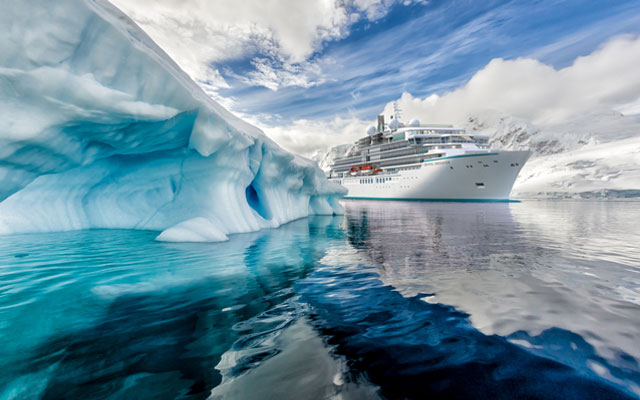
Crystal Endeavor, the German-built vessel for Crystal Expedition Cruises, is on track to debut this summer, following the resumption of work on the vessel at the MV Werften shipyard in Germany.
The luxury expedition ship’s original launch date last August was pushed back after the global pandemic forced a shutdown of the shipyard.
Currently, Crystal is reviewing the ship’s published summer itineraries, with planned destinations including the Norwegian Fjords and Scottish Isles, France, Spain and Portugal, the Atlantic Isles and Western Africa, Brazil and Argentina, and Antarctica.
Set to navigate some of the world’s most remote areas, Crystal Endeavor will offer three categories of exploration: Remote Expedition, visiting far-flung destinations and uninhabited locales; Cultural Discovery, with a focus on the region and its people; and Destination Exploration, highlighting the natural wonders and beauty of the destinations.
The 20,000 gross-registered-tons vessel will accommodate 200 guests with all-suite guestrooms; six dining venues; a salon and spa, and fitness centre. Expedition-specific amenities and spaces will include enrichment areas, mud rooms, a helicopter lounge and a seven-person submersible, allowing for deep-water explorations up to 980 feet in several areas of the world.
Crystal has cancelled Crystal Endeavor voyages through May 1, 2021.
Fresh virus outbreak hits Thai domestic air travel
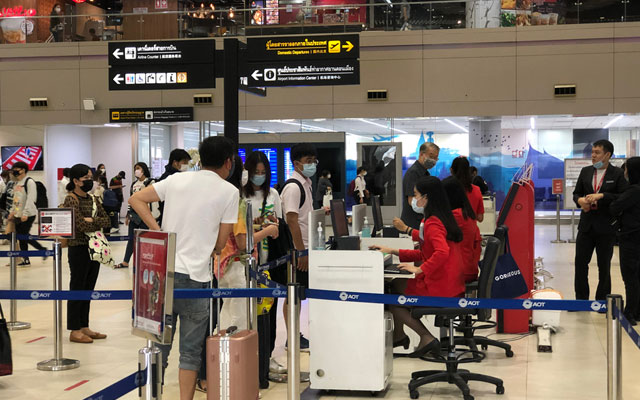
A second wave of Covid-19 has put the brakes on the recent budding recovery in air travel demand in Thailand, with domestic air travel plunging by 60 per cent since the start of 2021, reported the Bangkok Post.
That figure was drawn from 20 airports, which are under the purview of the Department of Airports (DoA) nationwide, said the report, quoting Apirat Chaiwongnoi, acting director-general of the department.
The number of domestic passengers passing through the 20 airports also dropped from an average 30,000 a day before the New Year to 12,000, he said.
After the long New Year weekend, the number of daily flights operated into and out of the 20 airports was down 40 per cent to 100 on average, compared to the 160 flights on average pre-holiday.
Airlines have scaled back their flights in the face of declining demand, with some asking the DoA to extend remedial measures, including landing fee discounts, which expired on December 31, according to the report. Apirat said discussions to support the sector will take place soon, it added.
The report also quoted a source from the Transport Ministry as saying that heavy cancellations of flights had begun to be lodged with authorities from January 6.
Travel trade pushes for greater aviation safety after Sriwijaya Air crash
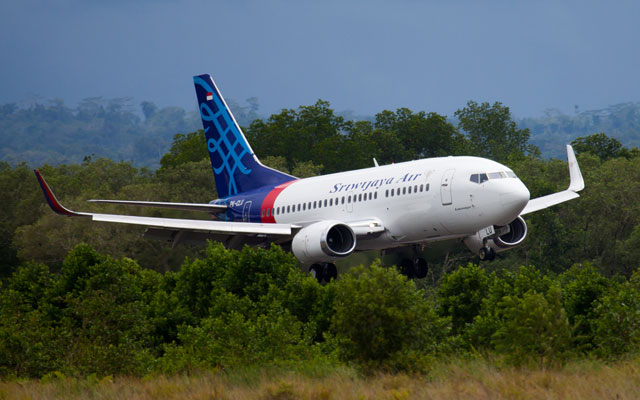
Renewed attention has been cast on Indonesia’s air safety standards, after a Sriwijaya Air plane carrying 62 people crashed into the Java Sea on Saturday, shortly after taking off from Indonesia’s capital Jakarta on a domestic flight.
The Boeing 737-500 jet’s last contact with air-traffic controllers was at around 14.40 local time, four minutes into its 90-minute journey to Pontianak, capital of West Kalimantan province. It had on board 12 crew and 50 passengers, including seven children and three infants. All were Indonesian nationals.
Indonesia’s transport minister Budi Karya Sumadi told a press conference that the SJ 182 plane crashed around Male Island and Lancang Island, part of the Thousand Islands chain, situated 11 nautical miles from the Soekarno-Hatta International Airport. The registered aircraft crashed when it was about to climb to an altitude of 13,000 feet above sea level.
Indonesian authorities on Sunday have found the plane’s black boxes and have pulled other wreckage and body parts from the crash site. However, the search appears to offer no hope of finding any survivors.
Following the accident, the travel trade has called for the tightening of the regulatory framework concerning aviation safety.
Budijanto Ardiansjah, director of My Duta Tour, said that the government must scale up safety requirements. “The aircraft’s eligibility test also needs to be tightened, one of which is by limiting the life of the aircraft. The government must have zero tolerance regarding maintenance (lapses) because this (concerns) the lives of passengers,” he added.
Meanwhile, Adjie Wahjono, operation manager of Aneka Kartika Tours, fears that the accident will further dent demand for air travel, already a shunned mode of transport due to virus fears amid Covid-19.
To beef up confidence among the flying public, Adjie urged the government to improve transportation safety and infrastructure as well as implement stronger regulation of maintenance facilities and procedures.
India replaces China as the Maldives’ top source market amid pandemic
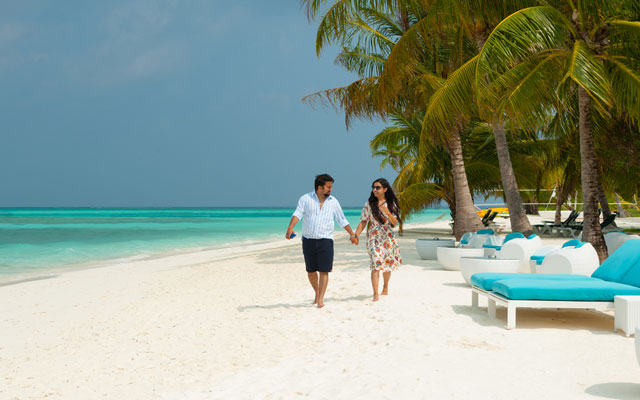
A resurgence of Covid-19 has not thwarted the travel plans of India’s super-rich, who are escaping the pandemic-ravaged region by flocking to the Maldives, with India emerging as the island country’s biggest source market last year.
Last year, 62,905 Indian tourists holidayed in the Maldives, accounting for 11.3 per cent of the total market share, according to the Indian High Commission in Male.
In second place was Russia, followed by the UK. For many years, China has been the mainstay of the Maldives’ tourism economy, but Chinese visitorship dropped sharply in 2020 as China put in place outbound travel restrictions to stem the Covid spread.
Incoming travellers from India to the Maldives largely comprise Bollywood celebrities and luxury jet-setters opting for stays at high-end resorts.
Five Indian cities have flights to the country’s capital city of Male, with five airlines operating there, under the air travel bubble established between the two countries, according to a Times of India report.
As one of the few countries which remains open to foreign tourists amid the pandemic, the Maldives has seen a steady climb in international arrivals since its reopening last July after a four-month closure. The island nation initially reopened with no testing or quarantine mandates, but changed tack in September to require all incoming travellers to present negative Covid-19 test results and complete an online health declaration form.
Even as countries worldwide battle a virus resurgence, the Maldives recorded 96,411 tourist arrivals in December 2020 – a drop from the 171,348 recorded in the same period in 2019, but still a creditable showing in the midst of the pandemic, according to industry officials. December’s figures were more than double that of November arrivals of 35,200.
In fact, the surge in tourist arrivals caught some Maldivian resorts and guesthouses unprepared. “The industry didn’t anticipate such a rush and some resorts reported a shortage of some consumables including liquor and some choice wines,” said the head of a destination marketing company. “There was no stockpiling of goods as resorts didn’t want to overstock, not expecting such a rush.”
The country recorded a total of 555,399 arrivals in 2020, lower than the 1.7 million in 2019, but much higher than the targeted 500,000 for the year. For 2021, the authorities are targeting 1.5 million arrivals.
“Despite the pandemic, Maldives tourism has done well. We expected a good last quarter for tourism, but the results were beyond expectations in December,” noted Maldives Marketing and Public Relations Corporation managing director Thoyyib Mohamed.
According to the former president of the Maldives Association of Travel Agents and Tour Operators, Abdulla Ghiyas, resorts ran at almost full occupancy at 60-70 per cent, given than a portion (ranging from 10 to 20 per cent) of the room inventory has to remain closed and kept for health and Covid-19 emergencies. “Some resorts have allocated a higher portion for health use,” he said, adding that while December was a good month for the country’s tourism, January is also turning out to be positive with 20,000 arrivals in the first week alone.
The Maldives has reported 14,040 Covid-19 cases and 48 deaths, with most of the cases confined to Male, isolated from resort islands, where a few cases have been recorded.
New World adds fourth hotel to Vietnam portfolio
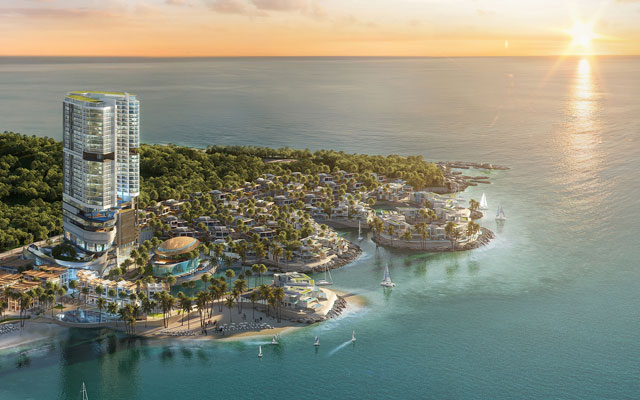
New World Hotels & Resorts has been appointed by KDI Holdings to manage the 306-room New World Nha Trang Hotel, slated to open in 2023.
New World Nha Trang Hotel will join the brand’s portfolio as the fourth property in Vietnam, following the announcements of New World Saigon Hotel and resort properties opening in Hoi An and Phu Quoc this year.
The hotel will be located within Vega City, the 44ha integrated resort complex housing the iconic Opera House, Vega Continental Shopping Centre, the Dance of Lights show, the Vega Coral Park, and a beach club.
Each guestroom and suite, at a minimum size of 42m², will feature balconies with sweeping views of Nha Trang Bay, Hon Rua Island and Co Tien Mountain. A trio of free-standing, beachfront villas will offer two to four bedrooms furnished with a walk-in closet, living room, separate dining area, private pool and outdoor shower.
A total of 1,450m² of ocean-view facilities will be dedicated to events and meetings, including five individual meeting rooms, a 566m² pillarless ballroom and a special bridal suite designated for destination weddings.
Recreational amenities will abound on-site, with an outdoor infinity pool, spa, fitness centre, movement studio, kids’ club and beach club. The property will also feature four restaurants and lounges, including an all-day café, specialty restaurant and bar, poolside bar and lobby lounge.
Virus resurgence stalls air travel recovery in November 2020
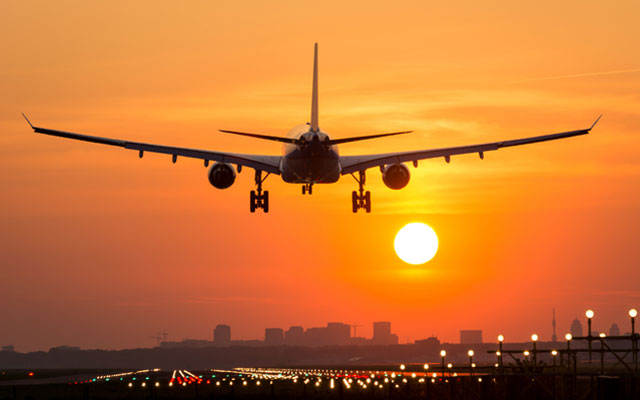
Global air passenger demand recovery, which had been slowing since the Northern hemisphere’s summer travel season, came to a halt in November 2020, according to a release by IATA.
Total demand (measured in revenue passenger kilometers or RPKs) was down 70.3% compared to November 2019, virtually unchanged from the 70.6% year-to-year (YoY) decline recorded in October. November capacity was 58.6% below previous year levels.
International passenger demand in November was 88.3% below the previous year, slightly worse than the 87.6% YoY decline recorded in October. Capacity fell 77.4% below previous year levels. Europe was the main driver of the weakness as new lockdowns weighed on travel demand.
Recovery in domestic demand, which had been the relative bright spot, also stalled, with November domestic traffic down 41.0% compared to the prior year (it stood at 41.1% below the previous year’s level in October). Capacity was 27.1% down on 2019 levels.
Alexandre de Juniac, IATA’s director general and CEO, said: “The already tepid recovery in air travel demand came to a full stop in November. That’s because governments responded to new outbreaks with even more severe travel restrictions and quarantine measures.
“This is clearly inefficient. Such measures increase hardship for millions. Vaccines offer the long-term solution. In the meantime, testing is the best way that we see to stop the spread of the virus and start the economic recovery. How much more anguish do people need to go through – job losses, mental stress – before governments will understand that?”
Asia-Pacific airlines’ November traffic plunged 95.0% compared to the year-ago period, which was barely changed from the 95.3% decline in October. The region continued to suffer from the steepest traffic declines for a fifth consecutive month, with capacity dropping 87.4%.
European carriers saw an 87.0% decline in traffic in November versus a year ago, worsened from an 83% decline in October; while capacity withered 76.5%.
Middle Eastern airlines’ demand plummeted 86.0% in November year-to-year, which was improved from an 86.9% demand drop in October; while capacity fell 71.0%.
North American carriers had an 83.0% traffic drop in November, versus an 87.8% decline in October; while capacity dived 66.1%.
Latin American airlines experienced a 78.6% demand drop in November, compared to the same month last year, improved from an 86.1% decline in October year-to-year. This was the strongest improvement of any region. November capacity was 72.0% down, with routes to/from Central America emerging as the most resilient as governments reduced travel restrictions, especially quarantine requirements.
African airlines’ traffic sank 76.7% in November, little changed from a 77.2% drop in October, but the best performance among the regions. Meanwhile, capacity contracted 63.7%.
In domestic passenger markets, Australia’s domestic traffic was down 79.8% in November compared to the same month a year ago, improved from an 84.4% decline in October, as certain states opened up. But it continued to significantly lag other domestic markets.
India’s domestic traffic fell 49.6% in November, an improvement over a 55.6% decline in October, with greater improvement expected as more businesses reopen.
Art comes alive with Blue Tree Phuket’s reopening
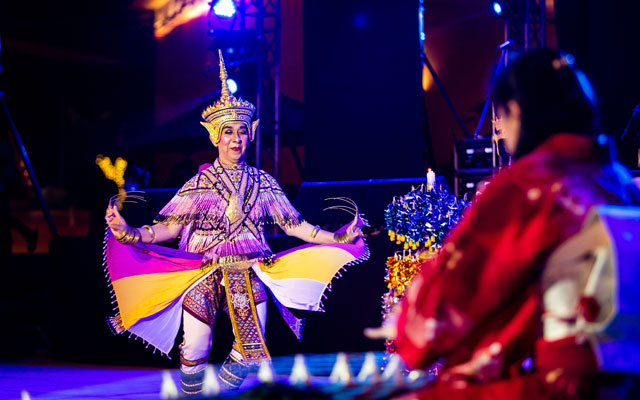
Leisure and entertainment destination, Blue Tree Phuket, kicked off its reopening in December with a three-day arts extravaganza that sets the stage for its drive to position Phuket as a destination for music, fashion, arts and crafts and food.
The Living Art Festival 2020, held from December 17 to 19, 2020, featured concerts, street art, street performances, workshops, art films, panel talks, and fashion shows – all delivered by top Thai artists such as Prateep Kochabua, Mueangthai Busamaro, Jarupong Juntarapech, Paretas Hutanggura, Synth X Factor, EKA Soundz, DJ Nicola Vega and DJ Fen.
A welcoming destination for all ages, Blue Tree Phuket on the popular Thai island’s west coast takes in array of amenities, such as the signature four-storey Tree House Restaurant & Beach Club, a kid’s club, walking and jogging trails, retail and lifestyle outlets. These facilities surround a 17,000m2 lagoon that is also a playground for adrenaline junkies.
Bright start to 2021 for Sanya tourism
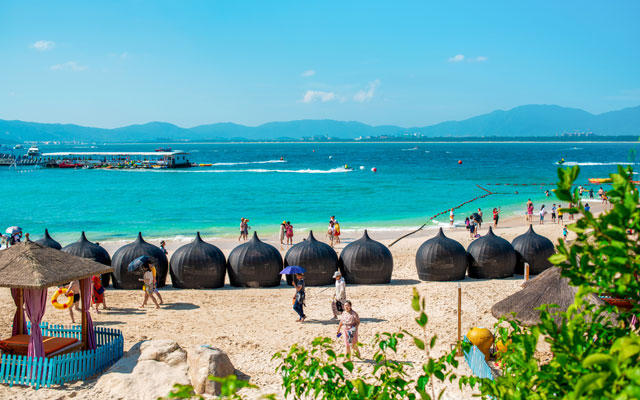
Building on its strong recovery momentum of 2020, Sanya, a resort city in south China’s Hainan province, is seeing its tourism sector get off to a promising start as it ushers in the new year.
Between January 1-3 of 2021, Sanya received 407,400 tourists for the New Year holiday, ringing up RMB$964 million (US$149.1 million) in revenue, according to a press release by Sanya Tourism Promotion Board.
Since China brought Covid-19 largely under control last March, Sanya has seen its tourism sector rapidly recover in 2H2020. Last year, a total of 15.412 million passengers travelled through Sanya Phoenix International Airport, stated the release.
Sanya’s tourism sector began its steady recovery in May 2020, buoyed by the Chinese government’s policy to establish the Hainan Free Trade Port.
Overnight tourist figures and total revenue has remained stable since 3Q2020, given a boost by the coincidence of Mid-Autumn Festival and National Day during Golden Week. During that period, Sanya saw a 12.69 per cent increase year-on-year (YoY) in tourists, while total tourism revenue skyrocketed by 39.33 per cent YoY.
Sanya Tourism Promotion Board has created a series of promotional themes targeting different tourist segments, such as the recently-launched Wonderland Sanya, which seeks to attract young travellers to explore Sanya’s unique and vibrant possibilities across the five angles of food, travel photography, culture, outdoor activities, and luxury hospitality.







Santiburi Koh Samui, a beachfront resort in Thailand, is offering local residents a 50 per cent discount on a wide range of suites and villas, plus an array of extras, for reservations made before March 31, 2021.
Under the Blissful Vacay promotion, applicable for stays before June 30, 2021, guests will enjoy rates as low as 3,900 baht (US$129), including daily breakfast for two, afternoon tea, in-room fresh fruit, early check-in and late check-out (subject to availability).
For active guests, the resort is also offering unlimited use of non-motorised water sports equipment, complimentary tennis court hire, and shuttle services to the Santiburi Samui Country Club, which features an 18-hole championship golf course.
Complimentary roundtrip transfers to and from the airport is also available for those who book a three-night stay or longer. Additionally, the resort is offering 25 per cent discounts on all F&B and spa treatments on-site.
For family groups, up to two children aged 13 and below can stay, play, and dine for free.
The Blissful Vacay promotion can be used in combination with discounts offered under the government-sponsored We Travel Together campaign, for stays made before April 29, 2021. All bookings are flexible and can be changed up until 48 hours prior to check-in.