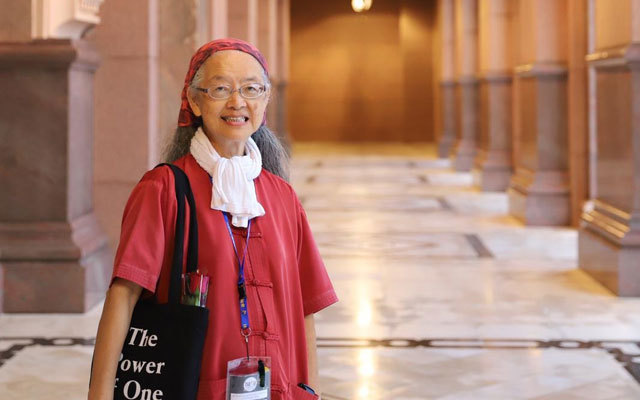
Director of Hong Kong-based Via Vai Travel, Sef Lam, has succumbed to cancer on February 11 after a long battle. She was 72.
Lam established her company in 1985, specialising in retailing tickets, hotel stays and tour packages to expatriates in Hong Kong as well as cultural trips to various parts of the world.
Heartfelt messages poured in from her industry colleagues and friends.
Hong Kong Association of Travel Agents (HATA) chairman, Ronald Wu, said: “Sef has been a staunch and devoted supporter of HATA since joining the association in 1989, as well as a regular participant of HATA events and activities. We are very appreciative of her constructive guidance and suggestions on a regular basis to the Executive Committee for the betterment of the association and the industry at large. Sef will be sorely missed.”
Hertz Hong Kong manager, Jo Law, said Lam would be remembered for her mentorship, kindness and fairness.
Via Vai Travel manager Florence Chan told TTG Asia that Lam was a boss who took care of colleagues. She recalled that Lam had sent her to attend World Travel Market in London despite being new to the company. “She said the trip would be a big help to my career,” shared Chan.
Rosa Ocampo, TTG Asia Philippine correspondent, also shared fond memories of Lam, collected during her work in Hong Kong in the early 1990s. “Sef was every reporter’s dream. Frank and forthright, she always replied emails quickly wherever in the world she was. (She was) my saviour in meeting deadlines. The reporter-source relationship deepened into friendship. Sef invited me to travel with her to Nepal and Bhutan. She showed me the lesser-known areas of Hong Kong. She and her family were my only visitors in the three years of my stay in Peru. I joined her family reunion in Surigao.
Ocampo continued: “Sef was the consummate travel consultant who enjoyed discovering the world and its inhabitants and sharing her joy with others. Unknown to many, she was also a philanthropist, having donated and loaned treasured works of art to museums, funded students’ education and training, donated to cause-oriented groups and charities, the consummate giver as much as the consummate friend.”
Lam is survived by her husband, two sons and daughters in-law, and a granddaughter.
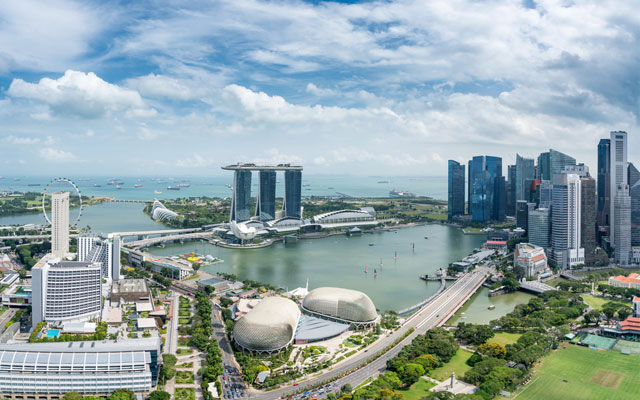
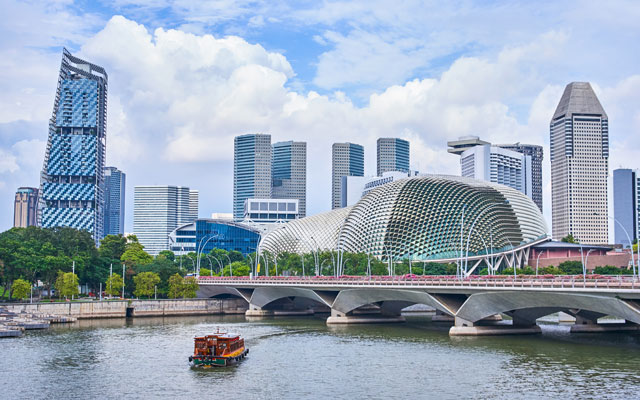
Hoteliers in Singapore have heaved a sigh of relief at the government’s commitment to continue providing Job Support Scheme (JSS) assistance to the beleaguered tourism industry this year, saying that the monetary support for salaries and training will allow the hotel industry to direct their attention to recovery strategies.
Kwee Wei-Lin, president of the Singapore Hotel Association (SHA), noted that the “government’s expeditious support through a series of budget provisions in 2020 (had allowed member hotels) to protect hotel jobs and keep our members afloat despite the global crisis”.
Labour-intensive hotels welcome the government’s extended job and wage support
SHA represents 160 member hotels across the city-state, which altogether employs an essential workforce of 40,000 colleagues.
“With sustained border closures, global tourism remains depressed for the immediate future. SHA is appreciative that the government recognises the sustained threat to our hard-hit industry. The extension of JSS, SGUnited Jobs & Skills Package and Wage Credit Scheme will help to mitigate job losses while members concentrate on ensuring the survival of Singapore’s hotel industry and prepare for the return of international travellers when borders finally reopen,” said Kwee.
She expressed that although Singapore “has set the gold standard for managing the pandemic”, the future of tourism remains uncertain as international travel restrictions remain and key source markets continue to struggle with Covid-19 containment.
“Without international tourism, Singapore’s hotels remain in critical condition since local demand for staycations will not be sufficient to alleviate financial challenges in the months ahead,” she said.
Echoing voices of appreciation from hoteliers, Mike Williamson, general manager, Conrad Centennial Singapore, said the government’s support over the past year has been instrumental in pulling the industry through the “challenging period”.
“It is through this foresight that we will be in a better position for recovery in the near future,” he remarked.
Roy Liang, regional general manager, Malaysia, Singapore and Vietnam with Oakwood, opined that the extended JSS will help businesses retain their workforce without needing excessive measures to keep the business afloat and allow companies to divert resources to operations.
“The wage support will help to boost employees’ morale in these challenging times,” Liang added.
Eric Piatti, general manager of Dusit Thani Laguna Singapore, told TTG Asia: “With the six-month extension of the Jobs Support Scheme (JSS), it will not only allow us to continue providing our employees with job security, but also sustain a certain service level and help maintain our readiness for the recovery.”
Hoteliers appear to be heeding the government’s call for affected industry sectors to emerge stronger from the crisis through restructuring.
Choe Peng Sum, CEO of Pan Pacific Hotels Group (PHHG), said the company will maintain its focus on workforce transformation by rethinking traditional roles and structure – an exercise that commenced last year. Job redesign and clustering arrangements, supported by training, reskilling and upskilling of workforce.
“We will also focus on digital and technology innovation to expand our capabilities in e-commerce and online offerings. We have already introduced online food order and delivery last year for our 18 (F&B) outlets in Singapore, which has become a stable revenue source. This year, we will launch an e-shop to cater to the increasing demand for online purchases. Beyond this, we will advance our capabilities in hybrid meetings and events to provide strong viable options and solutions for corporate clients and wedding guests,” Choe detailed in an interview.
The Singapore-headquartered PPHG has also digitalised customer touch points at three of its properties here in 2020. Parkroyal Collection Marina Bay, Pan Pacific Singapore and Parkroyal on Beach Road now sport a digital concierge. The same will be introduced to PPHG’s five remaining hotels and serviced suites in Singapore this year.
“Additionally, we will be growing our technology capabilities to incorporate keyless check-ins and other contactless solutions for our guests,” he added.
Kwee shared that SHA members’ growth and recovery strategy will focus on generating incremental revenue streams and growing domestic demand for hotels in other ways.
“For example, to increase the capacity for weddings and work-related events when it is safe to do so, along with more social events such as birthday celebrations, all with adherence to safe management measures, to stimulate business for hotels. Grants for job redesign and upskilling of the hotel workforce will facilitate our industry’s transformation for the post-pandemic era,” she said.
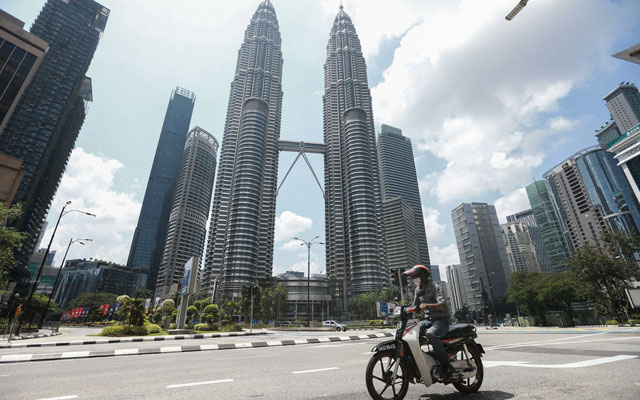
Malaysia has extended the movement control order (MCO) for states with a high number of Covid-19 cases, namely, Selangor, Johor and Penang, as well as the nation’s capital, Kuala Lumpur, until March 4.
This is the third extension of the MCO, which was supposed to end on February 19.
Continued ban on inter-district and interstate travel will put more hotels at risk of closures
The 10km radius travel limit nationwide will be lifted from February 19. However, inter-district and interstate travel are still banned – a move which “will hamper any chance of survival for the tourism industry,” said Malaysian Association of Hotels CEO, Yap Lip Seng.
“The government must take immediate action to address the issue, and to listen to the stakeholders on the ground that had suffered for almost a year now, with no end in sight,” he added.
“Having lost all international business while borders are still closed, the tourism and hotel industry depend solely on domestic tourism and as long as interstate travel is still not allowed, it does not have even the slightest chance of survival.
“The industry will be forced to cut more jobs and even consider closures. The government must implement immediate measures specifically for the tourism and hotel industry.”
Yap Sook Ling, managing director of Asian Overland Tours & Travel, called on the government to provide targeted assistance for the industry, including increasing wage subsidies to RM1,200 (US$297) monthly per employee earning below RM4,000 monthly, and extending it beyond March.
Malaysia on Tuesday reported 2,720 new Covid-19 cases and eight deaths, totalling 269,165 infections and 983 deaths so far.
Bohol, which edged its way to the Philippines’ top three leisure destinations since reopening in mid-December, has launched a massive tourism campaign on Wednesday to jumpstart domestic arrivals.
It alternates with Palawan for the second and third places, after tourists’ top favourite Boracay.
Bohol’s marketing campaign to woo back tourists include deep discounts on tourism products
The initiatives include discounts of up to 70 per cent offered by 20 hotels, resorts and tour operators under the Balik sa Bohol (Return to Bohol) online sale, which will be held from February 21 to March 14.
Vouchers have a minimum validity of one year but sellers are flexible with extension of the validity via the website, traveloco.ph/balikbohol.
Bluewater Resorts vice president sales and marketing, Margie Munsayac, said that “Bohol is really foremost a leisure destination” but they also “encourage small and intimate MICE and social events” which can “secure better perks than the Return to Bohol online sale depending on the season, number of persons, size of the events” which are subjected to capacity limits based on safe distancing measures.
Munsayac also said that part of the marketing tack for Bohol are “new developments to ensure that the products, destination and protocols are in place so travellers can feel confident about making Bohol as their primary destination once they decide to travel”.
New developments include a soon-to-launch ad campaign targeted at families instead of just individual divers to debunk the misconception that diving is exclusively for privileged adults, said Panglao mayor Leonila Montero.
Set to debut too are new countryside tourism circuits anchored not just on sun and sand, but also nature, agri-tourism, historical and heritage sites, given that Bohol has a plethora of architectural heritage houses and the most number of heritage churches in the Philippines, said Bohol Provincial Tourism Council chair Lucas Nunag.
To celebrate the 500th year of Christianity in the Philippines this year, Bohol governor Arthur Yap said that festivities will include a tour of national heritage churches and other historical sites with accompanying cultural performances. “We’re also thinking of featuring markets along the way for local delicacies, local crafts and products,” he added.
Yap said that out of the 14 national heritage churches damaged by the earthquake several years ago, only four remain unrepaired but they’re all scheduled for repair.
Both the Department of Tourism and Tourism Promotions Board are already lending support to Bohol by heavily marketing and promoting it in the travel trade and social media as a multi-faceted destination offering not just white sand and marine activities, but also art, music, nature, eco-tourism, and a long history dating back to the Spanish.
Currently, only Panglao and Anda are open to tourists. “But we are just waiting for the other towns to open. We don’t want to force all towns to open unless they are ready,” said Yap.
Apart from investing in its own Covid-19 test laboratories, Yap also said that Bohol has relaxed travel restrictions and harmonised them with the national government rules and protocols. The province is already accepting saliva tests in place of the Covid-19 PCR swab tests and quarantine is not required, among other things.
Yap said that tourists are required to produce a negative PCR test result taken within 72 hours of travel, and confirmed booking at a Department of Tourism (DoT)-accredited hotel. Tourists must also register through the Bohol Tourist Registration portal via tourism.bohol.gov.ph, and for those going on tour, a confirmed tour booking through a DoT-accredited tour operator must be presented.
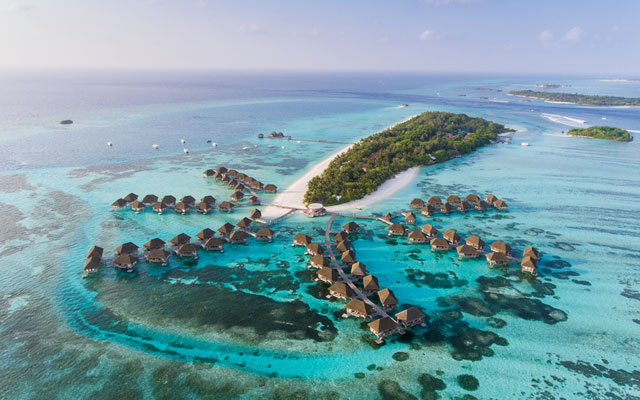
The Maldives, unfazed by the Covid-19 pandemic that has wreaked havoc on the travel industry, is planning to promote the destination aggressively at overseas trade exhibitions and roadshows through the year.
Initially, the NTO is preparing to participate at trade events and roadshows in Russia and India next month, said Maldives Marketing and Public Relations Corporation (MMPRC) managing director Thoyyib Mohamed.
The Maldives drives up promotions with planned participations in more than 40 events this year
The MITT trade show in Moscow, a B2B and B2C event, will take place from March 16-18; coinciding with roadshows in Moscow, Kazakhstan, St. Petersburg and Yekaterinburg. Meanwhile, India’s South Asia Travel and Tourism Exchange will be held on March 22 along with a roadshow.
There are no quarantine requirements for incoming travellers in both Russia and India, apart from having to furnish a negative Covid-19 PCR report on arrival – the same rule applied for arrivals in the Maldives, said Mohamed.
Since reopening its borders on July 15, 2020 after a four-month pandemic closure, the Maldives has seen a steady climb in tourist arrivals which peaked in December, with the island recording more than 96,000 arrivals – a 170 per cent increase – during the month.
Tourist arrivals this year from January to February 12 totalled 129,507, as compared to 233,974 in the same 2020 period; while arrivals for the shortened 2020 year was 555,494, as compared to 1.7 million in 2019. This year’s tourist arrival target is set at 1.2 million.
This year, Russia, India, Ukraine, Kazakhstan and Romania are the top source markets; while in 2020, India led the way followed by Russia, Italy, the UK and Germany. Meanwhile, China, for years the Maldives’ biggest generating market, was in sixth place largely due to outbound travel restrictions.
Suresh Dissanayake, assistant vice president – sales & marketing, Heritance Aarah, Adaaran Resorts, said arrivals were steadily picking up and they expect a better season than in 2020. “We also hope to take part in some of the overseas exhibitions,” he added.
According to MMPRC’s fairs, roadshows and events calendar for 2021, the NTO will be participating in more than 40 events in the US, China, India, Russia, Italy, the Middle East, Spain, Poland, Thailand, Singapore, South Africa, the Philippines, Malaysia, France, Australia, Japan and Brazil.
As of February 13, the Maldives recorded 17,716 Covid-19 cases and 58 related deaths. Unlike most countries, tourism is flourishing in the Maldives during the pandemic period as all the tourist resorts are situated on isolated islands distant from the capital city, Male – also an island – where most of the infections and deaths have occurred.
A four-part video series that sheds light on Switzerland’s best leisure and business events offerings will debut on February 19, with a fresh episode out every Friday.
The Travel Spark with Switzerland series, hosted by TTG Asia Media group editor Karen Yue, will feature speakers from Switzerland Tourism, Switzerland Convention & Incentive Bureau and Swiss Travel System, who will take the audience through the sought-after destination and inspire travel ideas for when travel is possible again.
Travel Spark with Switzerland will kick off on February 19
The first episode, Travel Spark: Inspiring incentives in Switzerland, will be presented by Dominique Oi, MICE manager for Southeast Asia, Switzerland Convention & Incentive Bureau. Oi will discuss how various sights, experiences and venues in the destination can elevate a corporate incentive programme.
Travel Spark: Weaving around Switzerland, to be released on February 26, will see Melanie Brunner, sales & marketing manager for Southeast Asia, Swiss Travel System, sharing tips on how to make Switzerland’s comprehensive public transport network work for leisure and corporate groups.
This will be followed by Travel Spark: One big Swiss playground on March 5. Presented by Oliver Guggisberg, project manager for South East Asia, Switzerland Tourism, the episode details various fun experiences that can be found across Switzerland.
The series concludes on March 12 with Travel Spark: A taste of true Switzerland, presented by Jennifer Chin, project manager, Leisure & MICE for Southeast Asia, Switzerland Tourism. Chin will discuss Switzerland’s rich history and the resulting opportunities for unique destination experiences.
The Travel Spark with Switzerland series is part of TTG Asia Media’s Travel Spark by TTG programme, which aims to spark off travel and events desire and ideas, and show how trade buyers and their customers can return to travel and events in this new era.
Marriott International’s president and CEO, Arne M Sorenson, has passed away unexpectedly on February 15. He has been battling pancreatic cancer since he was diagnosed in May 2019.
Sorenson became the third CEO in Marriott’s history in 2012, and the first without the Marriott surname.
Recognised as a visionary leader, Sorenson put the company on a strong growth trajectory that included the US$13-billion acquisition of Starwood Hotels & Resorts. During his tenure, Sorenson was tireless in driving the company’s progress, creating opportunities for associates, growth for owners and franchisees and results for the company’s shareholders.
Known for his leadership on difficult national and global issues, Sorenson steered Marriott to make significant progress on diversity, equity and inclusion, environmental sustainability and human trafficking awareness.
“Arne was an exceptional executive – but more than that – he was an exceptional human being,” said J W Marriott, Jr., executive chairman and chairman of the Board.
“Arne loved every aspect of this business and relished time spent touring our hotels and meeting associates around the world. He had an uncanny ability to anticipate where the hospitality industry was headed and position Marriott for growth. But the roles he relished the most were as husband, father, brother and friend. On behalf of the Board and Marriott’s hundreds of thousands of associates around the world, we extend our heartfelt condolences to Arne’s wife and four children. We share your heartbreak, and we will miss Arne deeply.”
Tourism, aviation and aerospace sectors – worst-hit by the Covid-19 pandemic and resulting travel restrictions – will get a further six-month extension to the Singapore government’s Jobs Support Scheme (JSS).
In this programme, the government will cover part of the wages paid out by qualified companies, with subsidies ranging from 10 per cent to 30 per cent.
Singapore’s tourism and aviation sectors will continue to benefit from wage subsidies this year
Payout for 30 per cent of wages paid from April to June 2021 will be issued in September, while another 10 per cent paid from July to September will come in December.
The wage support will apply to the first S$4,600 (US$3,476) of gross monthly wages paid to each Singaporean or permanent resident employee.
In addition, some schemes in support of career growth, training and attachment opportunities will also be extended.
The extended JSS is part of an S$11 billion COVID-19 Resilience Package announced for Budget 2021 this afternoon. It is also the fourth extension for the scheme since its introduction in February 2020.
Deputy prime minister Heng Swee Keat said the extended JSS will cost the government S$700 million, and adjustments will be made based on the projected recovery of the different sectors. Other sectors that qualify for the extended JSS include food services, retail, marine and offshore as well as arts and entertainment.
Since its launch, JSS has subsidised 25 to 75 per cent of wages paid for 10 months and supported over 150,000 employers for up to 17 months.
In all, JSS has cost the government more than S$25 billion.
Commenting on the latest JSS arrangements, Singapore Airlines (SIA) CEO Goh Choon Phong said the government measures, which include vaccination priority for the aviation industry, “will help to bolster the SIA Group’s plans to navigate the disruptions caused by the Covid-19 pandemic, while remaining nimble and flexible to seize all opportunities as international routes re-open and travel sentiments improve”.
Goh added: “The initiatives will also help our employees to retain their knowledge and competencies, and acquire new skills if necessary, ensuring that they are future-ready during this critical period.”
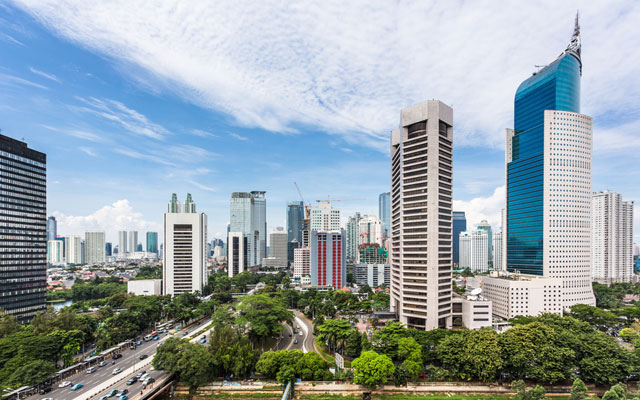
The ongoing pandemic has forced the closure of several small-scale hotels in Indonesia, and it might not be long before the bigger ones follow, should the crisis drag on.
Indonesia Hotel and Restaurant Association (IHRA) Yogyakarta Chapter reported that of its 400 members, 100 hotels have halted operations, 50 have gone bust, while 172 are still operating but “almost dying”.
Hotels in Indonesia continue to reel from the pandemic, with more hotel owners putting their properties up for sale
OLX, an online buying and selling site in Indonesia, reported that a number of hotels in Jakarta, Bali, Bandung, Cirebon, Pasuruan and Yogyakarta have placed sales offers on the marketplace.
Deddy Pranawa Eryana, chairman of IHRA Yogyakarta chapter, said the pandemic’s damage on the sector is growing, more than a year on. “We are bleeding. Our cash flow is already severe,” he added.
The situation has been made worse by the government’s absence of concrete plans to manage the pandemic, coupled with its ever-evolving policies on travel restrictions, said Deddy.
A long-term plan and policy is needed for hoteliers to determine their business and recovery strategies, he said, adding that while majority of the severely affected hotels were small-scale properties, it could hit big players too if the current situation continues.
Over in Bali, hotels are struggling too, according to Fransiska Handoko, Bali Hotels Association’s (BHA) vice chairman. “We are all afraid hoteliers won’t (survive) until the end of the year,” she said.
At press time, BHA is conducting a survey on hotel durability during the pandemic, so Fransika was not able to reveal numbers.
To keep the hotel sector afloat, BHA has appealed to the government to disburse the second-stage grant. “The government’s tourism grant last year had helped hotels to finance operations for approximately two to three months, most of which could last until the end of 2020,” she said.
In the meantime, Sutrisno Iwantono, chairman of IHRA Jakarta chapter, wants the Jakarta city government to temporarily exempt taxes for land, building and advertising; allow hotels and restaurants to keep service charges; as well as cut water and electricity tariffs.
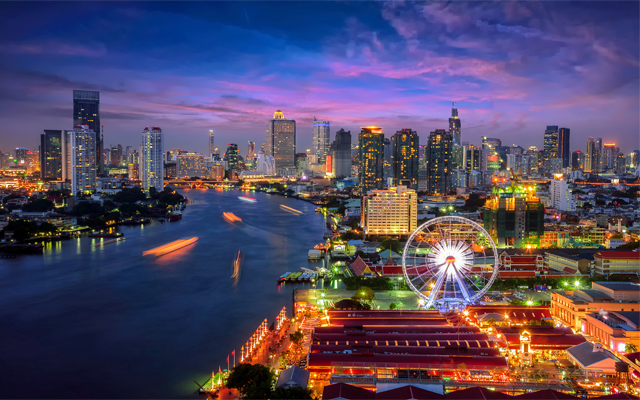
Bangkok cityscape. Bangkok night view in the business district. at twilight
The majority of Thais are ready to welcome foreign tourists back to the country, but not without a 14-day quarantine requirement.
According to a survey in 4Q2020 by the Tourism Council of Thailand (TCT), 60 per cent of locals and 50 per cent of tourism operators want Thailand to reopen borders to international tourists, starting first with China and then other low-risk countries.
Local residents and tourism operators in Thailand ready to welcome international tourists again
In addition, 39 per cent of Thais and 50 per cent of operators surveyed said they would welcome foreigners from low-risk countries on VIP tours with no quarantine, for short stays of 7-10 days.
The TCT surveyed 785 tourism-related entrepreneurs and 1,444 Thais from November 11 to December 10, 2020, regarding their opinion on the policy of opening the country for accepting tourists.
Polling 1,020 tourism-related operators from November 11 to December 29 last year, the report also found that the tourism confidence index of tourism-related operators had dropped to 62 in 4Q2020, compared to 88 during the same period in 2019 – which represents a significant decline in performance over previous years.
An index value below 100 means that the tourism situation has worsened compared to the same period in the previous year, whereas an index higher than 100 means that the tourism situation has improved over the same period in the previous year.
Despite the addition of public holidays to boost tourism, the expected confidence index for 1Q2021 is equal to 53, a vast drop from 4Q2020 due to the impact of the current outbreak situation in Thailand.











Marriott International’s president and CEO, Arne M Sorenson, has passed away unexpectedly on February 15. He has been battling pancreatic cancer since he was diagnosed in May 2019.
Sorenson became the third CEO in Marriott’s history in 2012, and the first without the Marriott surname.
Known for his leadership on difficult national and global issues, Sorenson steered Marriott to make significant progress on diversity, equity and inclusion, environmental sustainability and human trafficking awareness.
“Arne was an exceptional executive – but more than that – he was an exceptional human being,” said J W Marriott, Jr., executive chairman and chairman of the Board.
“Arne loved every aspect of this business and relished time spent touring our hotels and meeting associates around the world. He had an uncanny ability to anticipate where the hospitality industry was headed and position Marriott for growth. But the roles he relished the most were as husband, father, brother and friend. On behalf of the Board and Marriott’s hundreds of thousands of associates around the world, we extend our heartfelt condolences to Arne’s wife and four children. We share your heartbreak, and we will miss Arne deeply.”