


Meliá Koh Samui steps up to feed elephants
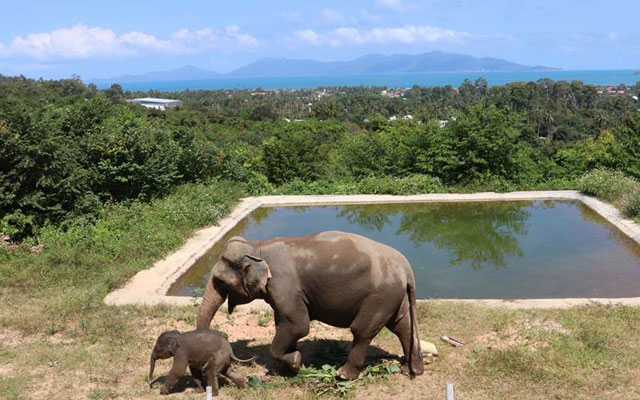
Thai-based beachfront resort Meliá Koh Samui has provided land for a community farm to help feed elephants rescued from exploitation activities.
Located 200m from Meliá Koh Samui on the north-eastern tip of Koh Samui island, the 250m2 farm supports 200 banana trees, as well as additional elephant fodder such as napier and sweet grass.
The formation of the farm was spurred by news that ethical elephant sanctuary Samui Elephant Haven was struggling to feed its herd of 21 elephants in the wake of a tourist drought due to the pandemic.
“These magnificent animals need to eat 10 per cent of their body weight in food daily, which is up to 400kg per elephant,” said the resort’s general manager, Ernesto Osuna. “With the sanctuary trying to survive on only five per cent of the funding necessary, its herd has been getting only a fraction of its normal food intake.”
To educate guests about the plight of rescued elephants and encourage them to visit and support the sanctuary, Meliá Koh Samui has unveiled an elephant mascot Coco to provide information about the Haven and as a host for educational activities about the elephants at the resort’s kids club.
UNWTO unveils startup competition winners

Startups from around the world have been recognised for their contributions to sustainable and responsible tourism in the UNWTO SDGs Global Startup Competition.
Supported by the United Nations Innovation Network, the competition attracted some 10,000 initial proposals. This was narrowed down to 25 winners across 18 countries. Shortlisted finalists were judged according to criteria which included the potential of the startups to contribute to a specific goal, their ability to be scaled-up, and the maturity of both the product and the team behind it.
The 25 winning startups, selected by a jury made up of leaders from across the tourism sector, offer distinct solutions for advancing the Sustainable Development Goals (SDGs). The Americas led the way in submitting winning proposals, with nine of the competition winners coming from the region. Europe provided eight winners, Asia and the Pacific six, and Africa and the Middle East one winner each.
“The winners show the power of new ideas for transforming our sector”, said UNWTO secretary-general Zurab Pololikashvili in recognising tourism’s potential to contribute to all SDGs. He added: “By embracing innovation, we can realise this potential and build a better future for people and planet through tourism.”
Lisandro Menu-Marque, director-general of international business development for Globalia and Wakalua, said: “The collaboration of institutions, governments and corporations will help host and scale up many of these projects through the Wakalua Hub, to make tourism a much more sustainable, responsible and socially impactful sector, all with the support of the UNWTO.”
Globalia is a key ally of UNWTO in its shift to lead the positive transformation of the sector, working together to identify and promote innovation through several competitions over recent years.
The winning startups will be given expert support and backing to develop further, including through guided mentorship programmes from Amadeus, Google, IE University and FarCo, and tailored mentorship sessions from Mastercard and ClarkeModet.
The winners will also be invited to take part in a pitching event, to be hosted by Wakalua within the framework of Spain’s International Tourism Fair. Another pitching event will take place at the Tourism Tech Adventures Forum, due to be held in Qatar in collaboration with Qatar Airways and Qatar National Tourism Council, another partner for the project.
Furthermore, the winners will benefit from access to all UNWTO’s collaborators for the competition, opening the door for potential game-changing pilots and networking opportunities with Amazon Web Services, Globant, BBVA, the Inter-American Development Bank and IDB Lab, Telefonica, Plug and Play, the Advanced Leadership Foundation, Impact Hub, mentorDay and the destination partners for the competition.
The winners and the SDG that the startup will help advance are as follows:
• SDG1 – No poverty
Etnica (Guatemala)
• SDG2 – Zero hunger
Ifarm Agritech (Kenya)
• SDG3 – Good health and well-being
BlueDot (Canada)
• SDG4 – Quality education
Immersion India (India)
• SDG5 – Gender equality
Sisterwave (Brazil)
• SDG6 – Clean water and sanitation
ECOLOO Greentech Malaysia SDN BHD (Malaysia)
Zero Mass Water (United States of America)
• SDG7 – Affordable and clean energy
BeFC (France)
Enexor BioEnergy (United States of America)
Swimsol (Austria)
• SDG8 – Good jobs and economic growth
Clio Muse Tours PC (Greece)
Community Homestay Network (Nepal)
• SDG9 – Industry, innovation and infrastructure
DefinedCrowd (United States of America)
FREED GROUP (aka TravelFlan) (Hong Kong)
• SDG10 – Reduced inequalities
Travaxy – accessible travel (Israel)
• SDG11 – Sustainable cities and communities
Metrica6 (Spain)
Tobadaa (Egypt)
• SDG12 – Sustainable consumption and production
Lumitics (Singapore)
• SDG13 – Climate action
ClimateTrade (Spain)
Opus 12, Inc. (United States of America)
Safety Line (France)
• SDG14 – Life below water
Seven Clean Seas (Singapore)
• SDG16 – Peace, justice and string institutions
Impulse Travel (Colombia)
• SDG17 – Partnerships for the goals
Nibi (Colombia)
Siliconbali (Portugal)
Qatar Airways brings touch-free entertainment onboard

Qatar Airways is set to become the first global airline to offer passengers completely touchless technology for its in-flight entertainment system across its Airbus A350 fleet, as part of the airline’s latest Covid-19 safety measures.
The Zero-Touch technology, introduced in partnership with the Thales AVANT IFE system, will enable passengers to pair their personal electronic devices with their seat-back IFE screen by connecting to Wi-Fi and scanning a QR code displayed on the screen.
They can then use their devices to navigate and enjoy more than 4,000 options on offer through the airline’s Oryx One in-flight entertainment system, limiting the frequency of onboard surface contact and providing greater peace of mind throughout the duration of their journey.
Qatar Airways will soon also offer passengers in Business and Economy the option to pair their personal Bluetooth headphones with the onboard seatback IFE system in all cabins on the Boeing 787-9 fleet.
Bali plans travel corridor for vaccinated travellers

Bali’s vice governor has proposed for the central government to establish a free Covid-19 corridor, as well as prioritise vaccination for tourism frontliners, in his latest bid to revive the island’s battered tourism sector.
With the reopening of international travel borders recently, Tjokorda Oka Artha Ardhana Sukawati had proposed for the free Covid-19 corridor to be forged with low-risk countries that have implemented mass vaccination, such as China.
As Covid-19 infection rates in Indonesia remains high, Tjokorda hopes that the central government would prioritise tourism workers in Bali to get vaccinated first to boost the confidence of international travellers.
Such priority matters, even with Covid-safe protocols in place across the destination, said Tjokorda, who is also the chairman of Indonesia Hotel and Restaurant Association Bali chapter.
The Bali administration has also proposed for the central government to extend a soft loan totalling 9.9 trillion rupiah (US$712 million) to help tourism players in Bali revive their business.
In response, Sandiaga Uno, minister of tourism and creative economy, said that he had delivered Bali’s soft loan proposal to the minister of finance and coordinating minister for the economy.
He added that he had lobbied related officials to prioritise Jakarta and the country’s major destinations, namely, Bali, Batam, and Bintan, to get vaccinated first because they were the entry points for tourists.
The minister said that talks between his office and the Ministry of Foreign Affairs, Ministry of Health, and Ministry of Law and Human Rights to make a free Covid-19 corridor was at its final stages. Under the plan, incoming travellers will be exempted from quarantine.
He elaborated: “The plan is that tourists who are allowed to come are those who have been vaccinated at their home countries. (Upon arrival in Indonesia), they have to take an antigen test (and test negative) before they can (proceed to) do activities.”
Accor to open dual-branded hotel in Qatar
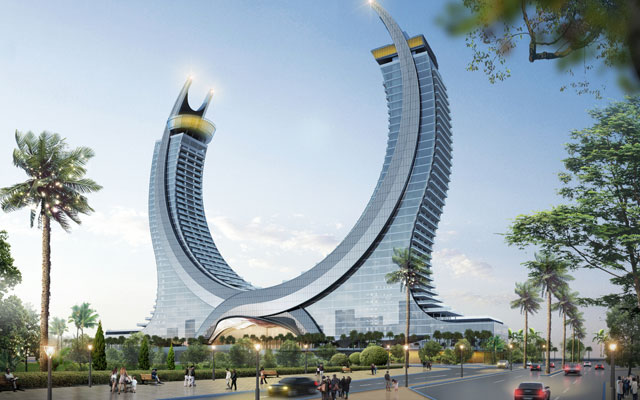
Accor has inked a partnership with Katara Hospitality to debut its Raffles and Fairmont brands in Qatar, in the form of a dual-branded property.
Set to open in 2022, the Fairmont Hotel and Raffles Hotel & Residences will sit within the Iconic Towers in Lusail, a twin-towered building featuring traditional scimitar swords, an emblem of Qatar.
Besides a five-star hotel with 361 rooms and suites to cater to business travellers, there will also be a six-star hotel with 132 suites and 49 branded apartments to become home to permanent residents.
Entertainment and recreational facilities, including specialist boutiques, VIP movie theatres, signature restaurants and a private Cigar Lounge are to be complemented by banqueting and conference spaces, as well as office dedicated areas.
CP Land, undeterred by Covid-19, plows on with growth plans
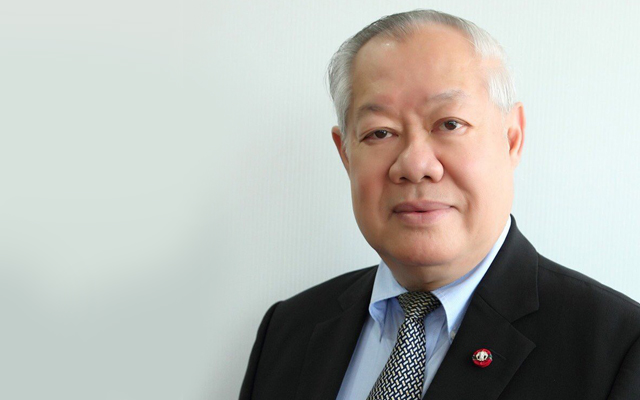
Bangkok-based CP Land, a property arm of CP Group, is set to build at least five hotels this year, despite travel demand generally remaining subdued.
About 500 million baht (US$16.6 million) has been allotted for the five projects, specifically to fill up the budget segment.
All planned properties will be operated under Fortune D Plus, a new sub-brand separating from existing tags such as a mid-sized brand called Fortune and a budget segment known as Fortune D.
CP Land president and CEO, Sunthorn Arunanondchai, said four properties will be constructed on the company’s own land in Khon Kaen, which is close to Khon Kaen International Convention and Exhibition Center, Mukdahan, Nong Khai, and Nakhon Phanom.
For the last project, three locations are being considered: Surat Thani, Hat Yai, and Chiang Khan in Loei.
Each project will be small-scaled, and comprise 75 rooms. “We are not looking at large-scale projects due to over-investments. A large-scale project could take five to ten years to break even,” said Sunthorn.
Since its onset in early 2020, the pandemic has continued to take a toll on Thailand’s tourism and hospitality industry. Being part of the largest conglomerate CP Group, CP Land alone logged a total profit of 700 million baht (US$23.4 million) in 2019, but found itself in the red last year, recording its first loss in 25 years.
Many other hotels across Thailand are also feeling the pandemic’s brunt, especially those in major tourist destinations. Already, some hotels in places like Pattaya, Phuket and Hat Yai have gone up for sale.
CP Land is “eyeing the opportunity” to acquire those hotels if feasible, Sunthorn said, adding that the group “has no problems with finances”.
He projects that domestic travel will bounce back by 2H2021, but international markets might not resume until 2023.
To stay afloat during the crisis, hotels in the group slashed room rates by more than 50 per cent, while eight hotels in Bangkok and provinces shifted to sell street food in front of the properties.
Hospitality veteran Iwan Sitompul passes away
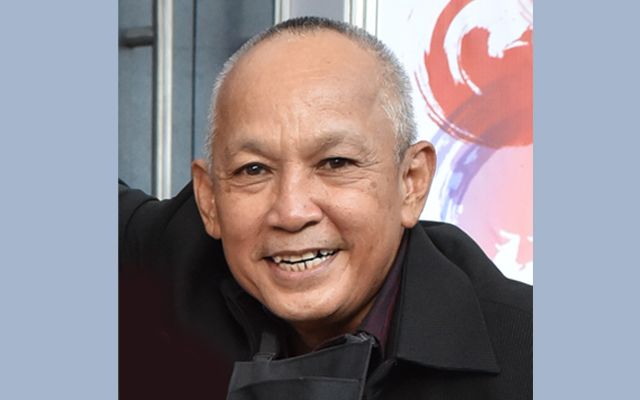
Indonesian hospitality veteran, Iwan Sitompul, has passed away on February 13 in Bali, after a long struggle with an illness. He was 69. As consultant and co-founder of IwanHerman Hotel Consult, Iwan has carved out a name for himself as a prominent hospitality marketer in the country.
A familiar face at major trade shows like ITB Berlin, WTM London and ASEAN Tourism Forum, Iwan has actively engaged with buyers while representing various brands including Plataran Hotels & Resorts, Heritage International Hotel Management and Cocotinos Hotel Sekotong Lombok.
New hotels: Duxton Reserve Singapore, Citadines Berawa Beach Bali, and more
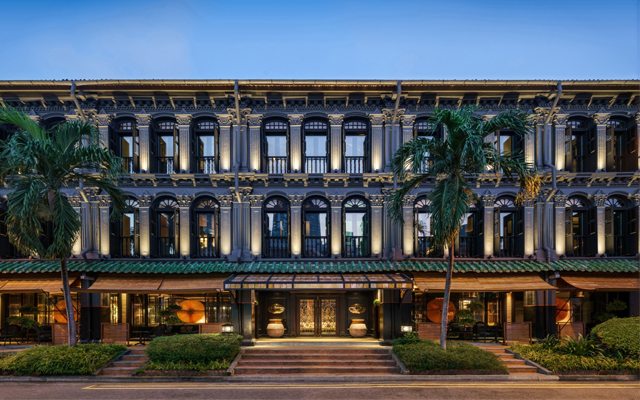
Duxton Reserve Singapore, Singapore
Autograph Collection Hotels has debuted in Singapore with the opening of Duxton Reserve Singapore, Autograph Collection. Owned by The Garcha Group, the boutique hotel is situated in the island’s city centre of Tanjong Pagar, and the heart of Chinatown. Keeping in line with Autograph Collection’s emphasis on ‘neighbourhood’ and ‘sense of place’, Duxton Reserve Singapore was created within eight sustainably restored 19th-century shophouses. Designed by British interior designer, Anouska Hempel, the hotel boasts 49 guestrooms and suites. The culinary highlight of the hotel is the modern Chinese restaurant, Yellow Pot, helmed by chef Sebastian Goh. Anouska’s, a glamourous bar, is an ode to Bond girl turned designer Hempel, serving up the actress’ favourite drinks from around the world spanning the disco era of the 70s and 80s.
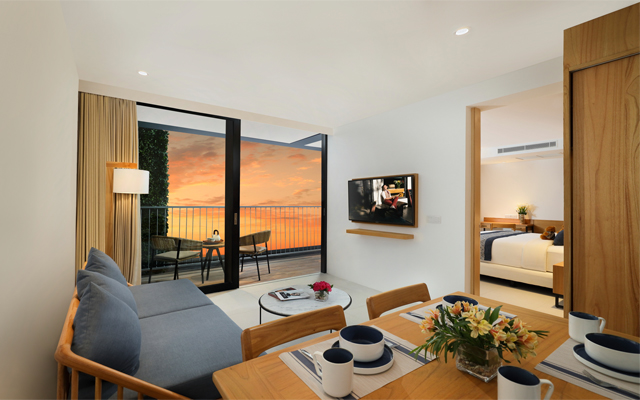
Citadines Berawa Beach Bali, Indonesia
Ascott has opened Citadines Berawa Beach Bali in the heart of Canggu, a destination on the south coast of Bali, Indonesia. The 224-unit serviced residence is a stone’s throw away from Berawa Beach and is surrounded by a plethora of cafes, restaurants, retail and recreational options. It is also a 30-minute drive from the Ngurah Rai International Airport, and a 20-minute drive to Seminyak, a landmark tourist destination with high-end shops, bars, and restaurants.
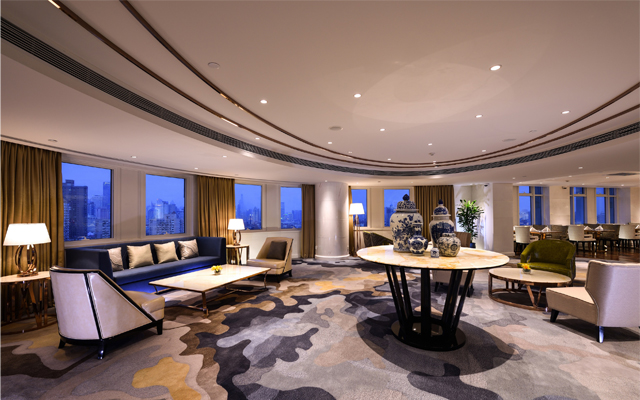
Radisson Collection Hotel, Xing Guo Shanghai; China
An urban oasis amid the bustle of Xujiahui, Shanghai’s downtown business district, Radisson Collection Hotel, Xing Guo Shanghai is the brand’s inaugural property in China and its first hotel in an Asia-Pacific gateway city. The 16-story hotel features 185 rooms and suites, ranging from 30 to 54m2, each boasting air purification systems and smart room sensors, and even robots that deliver fresh fruit juice straight to the door! Guests have a choice of four restaurants and bars, including a Chinese restaurant that focuses on Cantonese cuisine and Shanghainese specialties, and a chic lounge for handcrafted cocktails and fine wines. Events can be hosted at a choice of eight venues, including a ballroom and pavilion, and the fitness centre features state-of-the-art equipment.
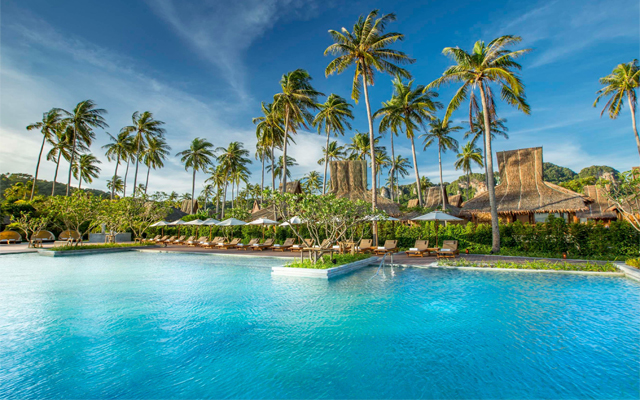
SAii Laguna Phuket and SAii Phi Phi Island Village, Thailand
SAii, the upper-upscale lifestyle brand from S Hotels and Resorts, has opened its first two resorts in Thailand: SAii Laguna Phuket and SAii Phi Phi Island Village, both nestled on the shores of the country’s southern islands.
SAii Laguna Phuket is a waterfront resort that has undergone an extensive renovation including the creation of an events hall, a seafront restaurant, and an enhanced beachfront bar. The property is nestled on the shore at Bangtao Beach, as part of Laguna Phuket, the integrated resort at Bangtao Bay.
Situated on a 800m beachfront, SAii Phi Phi Island Village has completed a series of improvements to its accommodation and amenities. The open-plan lobby, freeform pool, natural spa and sea-facing restaurants have all been upgraded, and the Hillside Pool Villas have been refreshed and remodelled, with the addition of a two-bedroom option – the resort’s top room category. The resort is further dedicated to preserving the environment through its interactive Marine Discovery Centre.
Both SAii Laguna Phuket and SAii Phi Phi Island Village have introduced a series of wellness and F&B concepts. Mr Tomyam focuses on Thai-inspired dishes with live kitchens and alfresco seating; while Miss Olive Oyl is a Mediterranean-style seafood grill and bar. Lèn Be Well promises a personalised approach to wellbeing through five core pillars: Romance, Relax, Culture, Adventure and Family. Through these signatures, each SAii resort also offers a deep connection with its destination and environment.
Unlimited travel pass mooted to boost Thai domestic tourism

Thailand’s government is considering offering a subsidy for an unlimited travel pass for advanced air ticket purchases in order to boost domestic tourism and throw a lifeline to the battered aviation sector.
The proposal comes amid a slow redemption rate on airfare in the past seven months for the ongoing We Travel Together stimulus campaign.

According to Tourism Authority of Thailand (TAT) governor Yuthasak Supasorn quoted in a Bangkok Post report, there are 1.3 million airline seats left out of two million available seats – a weak performance when compared with the six million hotel room nights that were used.
In a meeting TAT held with airlines to discuss new strategies for the campaign to boost travel demand, an unlimited pass implemented under the same budget was one of several ideas being proposed.
Under the plan, the government will offer 2,000 baht (US$66) subsidy for unlimited passes or buffet tickets bought from local airlines. Buyers are afforded flexibility to make advanced purchases without setting a fixed travel date. They will also be inclined to fly more to maximise utility.
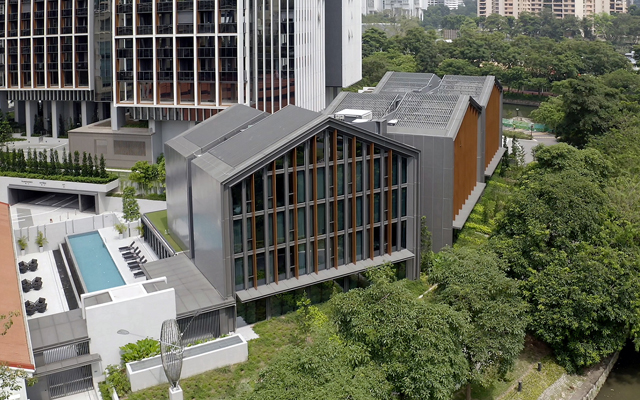
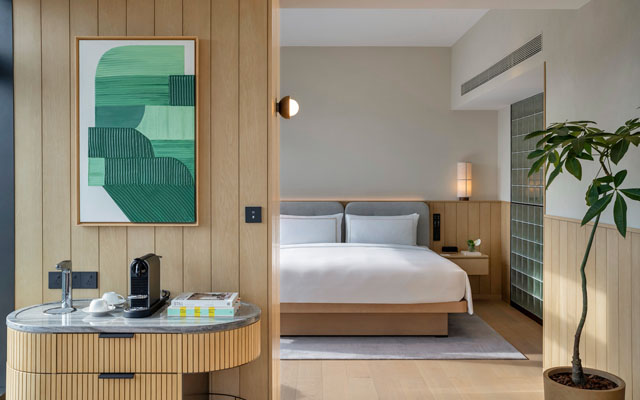






Accor is expanding its presence in the Philippines with the signing of Sofitel Cebu City, a 195-room luxury hotel which will debut in 2025.
Situated in the Cebu Business Park, the hotel will form part of the landmark mixed-use tower designed by architecture firm SOM.
The hotel’s entertainment amenities will include two restaurants, a lobby lounge, executive floor lounge and rooftop bar. Business travellers can benefit from a business centre, fitness centre, swimming pool and spa, while events come to life in the hotel’s meeting rooms and ballrooms.