


From drive-through laundry service to selling antiques – here’s what Malaysian hoteliers are doing for survival
Hoteliers in Malaysia have been quick to adapt and innovate in order to survive since the ongoing movement control order (MCO) was reimplemented, prohibiting hotels from accepting leisure guests.
Since then, a slight rolling back of restrictions now permits hotels to provide dine-in services at their F&B outlets, capped at two persons per table. However, the rule of travel within a 10km radius from home still applies, while interstate travel remains banned.
Under these trying circumstances, some local hotels are thinking outside the box to generate some much-needed income – looking beyond food takeaways and meal deliveries, which has become the norm during MCO 2.0.
The team at G Hotel Gurney in Penang, for example, has recently started offering a drive-through laundry service where guests can drop off their dirty linen for washing.

It is also selling its in-room amenity collection, hand sanitisers, face masks, anti-bacterial wipes, and Eloura eco-friendly toiletries repackaged as corporate giveaways.
G Hotel Gurney’s general manager, Michael Hanratty, shared: “As the crisis continues to evolve, we will get through this by being able to adapt and outlast the pandemic, and come out even stronger. It is no doubt that international tourism will not recover anytime soon, but we believe that the tourism industry in Malaysia will rise again.”
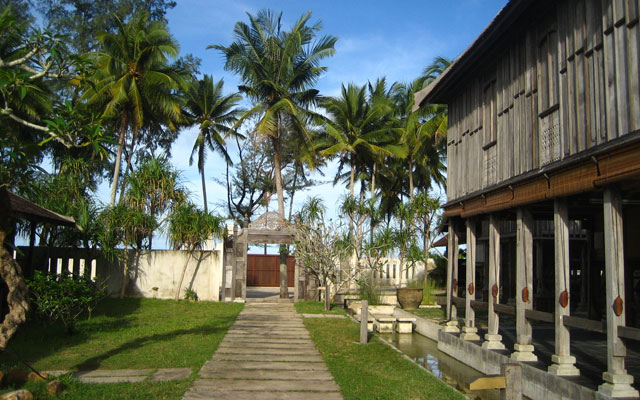
Terrapuri Heritage Village in Kampung Penarik, Terengganu, which houses a collection of 22 traditional Malay houses, ranging from 100 to 250 years old, has also had to pivot its business model to survive.
Its CEO, Alex Lee, who has a love for antiques, said the hotel is selling vintage furniture and handmade decorative items on its website and social media platforms, while also providing consultations on interior design and landscape gardening for a fee. Lee said: “We are just about surviving.”
Kingston Khoo, director of sales and marketing at Mutiara Taman Negara, said the resort is promoting buy now, stay later packages which are valid until the end of the year – a move which has helped pump up cash flow.

He said: “These are well-received because of the long validity period, attractive rates and flexible conditions.” Rooms are going for nearly 50 per cent off pre-Covid rates which were running at RM680+ (US$168) for a three-day/two-night all-inclusive package with activities.
Customers are also not required to fix a travel date, and are allowed to postpone or cancel their trip by giving a 24-hour advance notice.
Thai buyers drive Phuket’s luxury home sales boom

Phuket’s sizeable mega-villa property sector has experienced an unexpected surge in multi-million-dollar sales over the past year as Thai buyers sought refuge in the global Covid-19 crisis.
Over five billion baht (US$167 million) in primary and secondary high-end properties transacted at the height of the pandemic.

According to new market research from C9 Hotelworks, transactions in 2020 in top-tier real-estate hit its highest level in five years, despite flat trading levels in the broader marketplace. Expansive tropical island mansions with four, six or more bedrooms have struck a chord with wealthy Thais who have been unable to travel overseas and are fatigued by mounting air pollution issues in the nation’s capital.
Speaking about the transaction-charged revival in the island’s mega-villa sector, C9’s managing director Bill Barnett said that “country living and estate villas in the age of pandemic are a strong reaction driven by both internal and external factors.”
He added: “Thailand’s wealthy have been effectively stranded in the country for nearly a year and the impact has seen them revisiting and falling in love with Phuket. Resort real estate remains an emotional proposition and this is a contributing factor in reigniting luxury property sales.”
Aside from the Thai segment, there is more to the Phuket real estate backstory. There’s off plan and completed properties in the primary market, whereas secondary or resales has seen some deep discounting of large villas to overseas buyers. C9’s research has identified one source of these to be the global luxury marketplace Concierge Auctions, which has effectively harnessed competitive tension by means of an auction and induced demand though the perception of value creation.
Locations recording mega-villa trades are all on the West Coast of the island, namely, Millionaires Mile in Kamala, Layan and Nai Thon Beach, revealed C9 data. On the East Coast, Cape Yamu continues to perform strongly with the new Headland project. Phuket’s luxury footprint is now also firmly expanding over the Sarasin Bridge into a Greater Phuket catchment with the Aquella integrated golf course community underway.
Noting how proximity of projects is key to success and that there is often only one degree of separation between buyers in mega-villa estates, Barnett pointed out that “one of the most successful twining of projects last year has been the ultra-luxury Layan Residences by Anantara and Avadina Hills by Anantara. The synergy of having a hospitality overlay and hotel-style management to the developments has helped enormously”.
While forecasting how 2021 and beyond will see the Phuket luxury property market fare, Barnett voiced optimism for primary residences, saying that “we are seeing considerable interest from Bangkok high-net worth individuals and key regional capitals like Hong Kong and Singapore who are drawn to the island by clean air and space, quality international schools, and strong support infrastructure”.
He added: “We are on the cusp of seeing a series of new inland integrated communities such as Tri Vananda in Thalang come on stream and this is expected to shift a larger slice of demand towards luxury single family homes. Covid-19 has refocused an entire generation on the value of work-life balance and proven work from home is a viable ongoing alternative.”
Dusit headed for Kuwait

Thailand’s Dusit International has signed a hotel management agreement with Al Fajer International Holding Company, a Kuwait-based private real estate company, to operate the first Dusit-branded hotel in the country.
Slated to open in 4Q2023, Dusit Princess Mahboula Kuwait will comprise 180 rooms and 70 serviced apartments under the group’s upper-midscale Dusit Princess brand. The property will be located in the Mahboula district, an industrial and commercial coastal area just 25 minutes by car from both the city centre and Kuwait International Airport.
The new property will be equipped to cater to both transient and long-stay guests, including associates of local oil and gas companies seeking lodgings near their workplaces. The property’s serviced apartments have been specifically designed for families.
Alongside an all-day dining venue, a specialty restaurant, and a lobby lounge, the property will offer a swimming pool, a 900m² gym, and a spa. Four meeting rooms with capacity for 120 people, and a ballroom accommodating up to 350 guests, will cater to the local corporate and events market.
ASEANTA lays out tourism restart plan
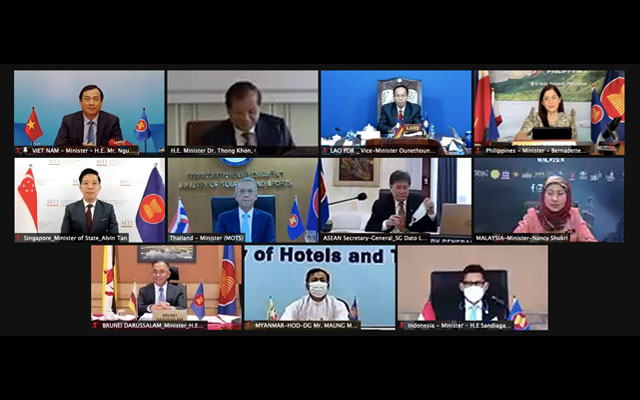
The ASEAN Tourism Association (ASEANTA) has called on South-east Asia leaders to take urgent action to reboot the travel and tourism industry in the region by Q2 this year, and save the tourism industry from collapsing under the weight of the pandemic.
During the recent 24th Meeting of the ASEAN Tourism Ministers, which took place virtually last week and was hosted by Cambodia, ASEANTA laid down a series of recommendations to the ministers, including continuing their respective governments’ support in a fair and equitable manner to ensure survival of the industry. This includes government guaranteed loan, tax reliefs, subsidies, incentives, and other relevant fiscal policies.
The association also called on the respective governments to prepare for the reopening of borders by laying down frameworks for cross-border travel, standard operating procedures (SOPs) for the whole tourism ecosystem, and guidelines on testing and vaccination by Q1 this year. That also covers the possible development of a common ASEAN health passport, with the potential integration of existing contact tracing or health declaration apps.
In addition, they urged the tourism ministers to facilitate the resumption of all types of travel – including business, leisure and VFR travel – by Q2 this year, in accordance with the ASEAN Travel Corridor Arrangement (TCA) framework.
The ASEAN TCA framework, which was issued last November by the South-east Asia leaders, aims to develop a common set of pre-departure and post-arrival health and safety measures, led by the Indonesian foreign affairs ministry. The development of ASEAN TCA would help restart cross-border travel by laying down a common set of requirements across countries.
Under the ASEAN TCA, ASEANTA proposed for business travel corridors to include the following safety measures: pre-departure and arrival testing, self-isolation for only one to two days until PCR test-on-arrival results are released, a controlled itinerary or allowance for business travellers to travel for leisure after as long as it’s sponsored by the company, and no quarantine for returning business travellers.
The association also floated the possibility of quarantine-free travel bubbles to allow leisure and VFR travel between low-risk countries, with no quarantine imposed on both incoming and returning travellers. The plan would entail the need for mutually recognised testing procedures, alongside common vaccine documentation for ease of verification.
Business travel alone will not be enough to restore intra-ASEAN traffic to healthy levels, ASEANTA said, noting that intra-ASEAN traffic is 35 per cent of the total international O&D passenger traffic in South-east Asia. It also pointed out that reciprocal green lane (RGL) arrangements have not generated significant volumes of air traffic, citing official data showing that Singapore received only around 835 inbound travellers from the South-east Asia region travelling under the RGL arrangements between June 8 to December 25 last year.
If reopening of borders is limited to essential business travel, passenger traffic between South-east Asian countries will likely remain at less than five per cent of normal levels for most of 2021, it added.
ASEANTA also emphasised the important role of the travel and tourism sector to South-east Asia’s economy. In 2019, the travel and tourism sector contributed US$380 billion or 12.1 per cent to South-east Asia’s GDP and created 42.3 million jobs or 13.3 per cent of total employment in the region.
Royal Caribbean extends Singapore sailings
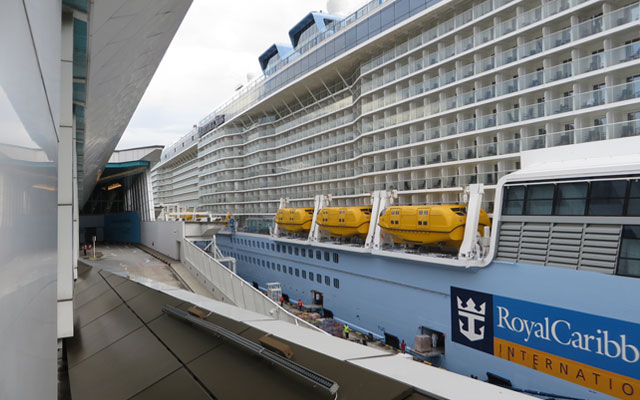
Royal Caribbean International (RCI) has extended the Singapore season for Quantum of the Seas by another three months until June 21, 2021.
With the success of its safe cruises pilot programme, which launched in December 2020, Quantum will continue to offer two-, three- and four-night Ocean Getaways to Singapore residents.
The additional sailings, kicking off on March 22, will continue to operate with stringent health and safety measures in place, such as mandatory Covid-19 testing, reduced sailing capacity and safe distancing measures.
The Singapore sailings has earned many repeat bookings among local cruisers, according to Angie Stephen, managing director, Asia Pacific, RCI.
For bookings made before April 30, changes and cancellations are allowed up to 48 hours before the cruise. Should a guest or any member of their travel party test positive for Covid-19 during the three weeks prior to their booked cruise, they will each get a 100 per cent credit towards a future cruise. As well, a full refund will be given if a guest, or any member of their travel party, tests positive during their voyage.
Royal Caribbean will continue to cover Covid-19-related costs up to S$25,000 (US$18,800) per person for onboard medical expenses, including quarantine fees, and travel costs to get home.
Move to house foreign workers in Malaysia hotels draws criticism
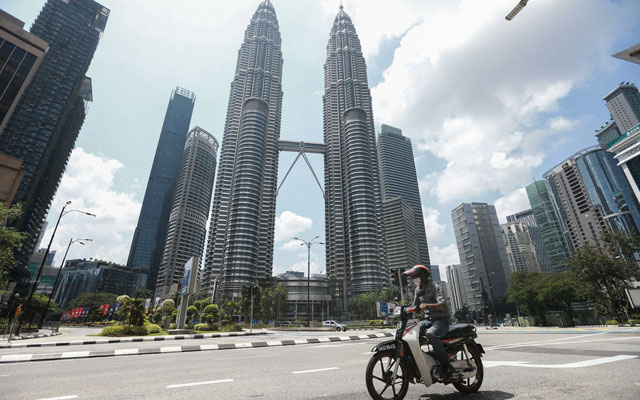
Hotel associations in Malaysia have hit out at a government-led initiative to temporarily house foreign workers at hotels to curb the escalating Covid-19 cases caused by cramped living conditions at workers’ dormitories.
The Ministry of Tourism, Arts and Culture Malaysia (MOTAC) said the initiative was “the best alternative at the moment” as it would also provide a lifeline to hotel operators suffering the brunt of the virus crisis.
The cost to rent a hotel room will be RM200 (US$49) per person per month, and there will be an additional RM20 charge to cover water and electricity. This is regardless of hotel category.
MOTAC’s initiative in collaboration with the Department of Manpower Peninsular Malaysia will be carried out in accordance to the Minimum Standards on Housing, Accommodation and Workers’ Standards Act (Act 446).
Applications have been opened to interested hotels that meet the requirements. However, instead of welcoming the initiative as a saviour to their struggling businesses, hotel associations have criticised the move, citing the low room rates and impracticality of the solution as reasons.
Malaysia Budget & Business Hotel Association (formerly known as Malaysia Budget Hotel Association) national deputy president, Sri Ganesh Michiel, explained: “The hotel rate fixed by the government is very low and hotels will be on the losing end. There is a high possibility that the workers, who had been living in hostels in the past, will damage the hotel rooms and the hotel will have to bear the (repair) cost.”
When asked what would be a good rate, he suggested RM50 per person, per night for hotels in the budget to mid-tier category.
Yap Lip Seng, CEO, Malaysian Association of Hotels, shared that the government’s initiative may not be in hotels’ best interests.
He said: “Various factors need to be taken into consideration (when housing foreign workers), including the expected high wear and tear as well as different needs of these workers, in comparison with normal hotel guests. Capacity of hotel rooms is also limited by bed set-up, while special control measures are needed to ensure physical distancing is practiced.”
Equity in vaccine distribution key to speedy global recovery: AAPA
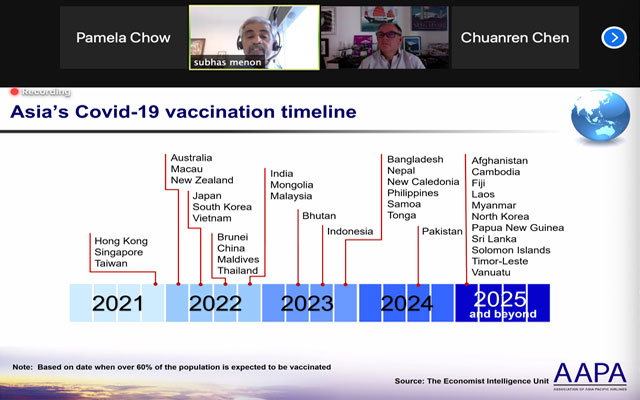
As the Covid-19 vaccine rollout promises a glimpse of travel rebound, the Association of Asia Pacific Airlines (AAPA) warns that global economic recovery may likely be hampered by inequality of immunisation in developing countries.
Its director-general, Subhas Menon, cautioned: “Everyone is pinning their hopes on the vaccine and mass immunisation. No one is safe until everyone is safe. Unfortunately, this is not the approach taken by many. It seems like – with regard to immunisation – while the developed world will be done and dusted by the end of the year, the developing and emerging world is on a very long and slow road to achieving the same result. Even large economies that have vaccine production like India, China and Russia are struggling to remain on the chart (of mass immunisation).”
Data from the Economist Intelligence Unit predicts that the first countries in Asia-Pacific to have vaccinated 60 per cent of their populations by end-2021 are Hong Kong, Singapore and Taiwan. Australia, New Zealand, Japan, South Korea, Vietnam, Brunei, Thailand, India, Malaysia and China are expected to follow in 2022; with Bhutan, Indonesia, Bangladesh, the Philippines and Pakistan potentially achieving the milestone in 2023-2024.
Countries such as Afghanistan, Cambodia, Laos, Myanmar and Sri Lanka may only reach the target in 2025 and beyond. Menon observed: “(These) tourism-dependent countries are all very far down the road to mass immunisation. WHO has recognised the situation and is raising its voice for something to be done about this, but we need the whole world to go back to the basics of interconnectivity and globalisation to find a way forward.
“Economic recovery cannot just hinge on the recovery of the developed world, nor can air travel recovery just proceed with travel (within) the developed world.”
He also clarified that while vaccination has not been proven to stem the infectiousness of Covid-19, mass immunisation can give a destination the ability to safely receive travellers, regardless if they have been inoculated. This would afford a country the flexibility to reject the “no jab, no fly” stance.
As the industry looks towards taking flight once again, AAPA is pumping research into an integrated smart app that will provide travel identification, health status authentication, border control authorisation and other information for travellers of the future. This “Travel Pass” may also provide access to testing centres as well as necessary certifications.
It joins a brimming roster of other smart solutions in the making, such as IATA’s Digital Health App and SITA’s Automatic Border Control, spotlighting the need for these systems to undergo tight audits and standardisation before market launch.
“A very important aspect of the travel pass is the standardisation of the format for (immunity) certification, as well as authentication and audit of test certificates and testing centres. We would need (the involvement of) WHO and ICAO – who are working on this as we speak – and a multilateral agreement will be required for governments to sign. This will be a necessary condition for any travel pass,” asserted Menon.
How the tours and activities industry can future-proof their business following a rollercoaster ride

It’s not often you see an industry that’s been around for decades and carved a place for itself, come of age. In the last three years or so, tours and activities is one such industry that has moved up the ladder and is now recognised as a major player in the travel business. A player worth an estimated US$180 billion annually, and as such, travel retailers and investors have shown a great deal of interest in this sector.
Then along came Covid.
Following a horrendous year, the travel industry is now feeling the very early signs of recovery, but as tourism starts to grow it will need to adjust to a world where everything we do, including all activities, will change. As travellers start to explore the world again, the desire to book tours, theme parks and trips will feature in their plans, however the likelihood is that they won’t be experienced in quite the same way as before. Heading into the new year and beyond, tour providers will need to make changes to future-proof their business and in order to do so they will need to focus on three key areas – product offering, pricing and sales channels.
Product
Many regional businesses compare prices with local competition. Two operators offering similar boat trips are likely to price their product at the same or possibly slightly lower level. But tours are about experiences and there are many opportunities to make your tour stand out at little or no extra cost – add a lunch or refreshment to the trip or a bit of theatre into the commentary and you have made a difference.
As tours and activities reopen for business, many will need to be managed in a very different way from what they have known before. Crowds are expected to be much smaller – and more controlled. In a coronavirus era, tours will be Covid-friendly, with smaller or private groups enjoying experiences in the open air. Theme parks may include mandatory temperature checks; visitors and guides in masks and seats spaced to allow for social distancing. Whether families, students, more mature or retired, know your market. Create products that these groups value and make the changes necessary to ensure trust and safety.
Pricing
In recent years, tour operators have penetrated the OTA industry, but while this has been a leap forward for many, they need to be cautious. Every business should understand its costs and profit margins, debts and so on. Selling product requires an understanding of the market, and tour operators are no different. However, they may struggle to market their product(s) to what could be a very diverse and disparate market. Distribution costs, fixed and variable costs and post-pandemic smaller group sizes are just a few areas that need to be factored into the cost of a tour, especially for operators that sell through third parties and not through direct sales channels.
Sales channels
According to a report last year by Arival, the percentage of bookings made online still sits below 30 per cent but continues to grow at a rapid rate. Walk ups will no longer work, and as people plan ahead and research the safety of tours, more sales channels will go digital.
New solutions are available, enabling tour providers to manage their inventory and sell directly online or through third parties – including OTAs.
They connect activity providers with travellers who have become accustomed to planning and securing their travel needs online. Some of the more advanced systems, such as our own reservation system TripAdmit Thrive, also enable operators to administer seasonal pricing variables.
Systems like these are designed to enhance online sales and distribution capabilities and are helping tour operators reach markets on a global scale. Great news for this multi-billion dollar industry whose shift to online is reminiscent of the early days of online hotel and airline booking.
The tours industry is fragmented, with the majority of businesses run by small teams of two to 10 people. These businesses are longing for travel to return to a sense of normality, as we all are, but in many ways, they are better equipped to deal with this crisis. With little monthly costs, many can sit tight and wait for the recovery to start. As most predict that this will be driven in the order of local, regional and international travel, tours and activities are best placed for each stage of the recovery.
Those businesses that are digitally focused, are adaptable and offer outstanding and safe experiences will succeed and secure their future when this crisis comes to an end. The operators that are also strategic in their product pricing will be the ones making a very healthy profit on top.
TTG Asia breaks for Lunar New Year

TTG Asia will be taking a break from February 12-15, 2021, for the Lunar New Year holidays. News will resume on Tuesday, February 16, 2021.
From all of us at TTG Asia Media, we wish all of our readers a happy and prosperous Lunar New Year!

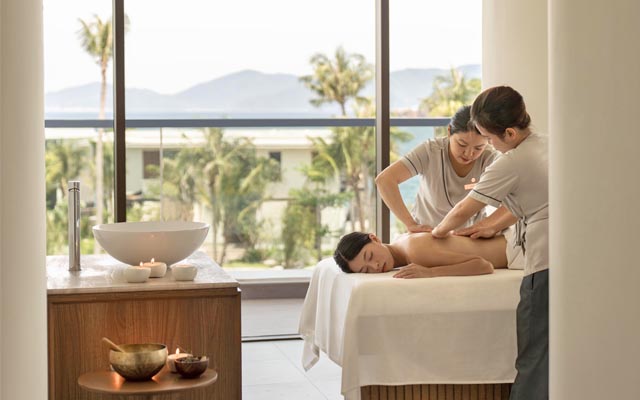






Following the global travel freeze brought on by the pandemic, people are yearning to travel again to reconnect with loved ones and to make new memories this year, revealed a new survey by IHG Hotels & Resorts.
Close to 60 per cent of survey respondents said they cancelled up to four leisure and business trips last year. More than half the travellers surveyed said they have now rebooked cancelled trips or plan to rebook them, with family vacations and visiting loved ones topping travel wishlists for 2021.
The rollout of vaccines is igniting hope and optimism, as respondents across all age groups, ranging from 18 to 55+, said spending time with family and friends is a primary motivator for travel this year.
When borders reopen, one in five respondents said they plan to make up for the lack of travel in 2020 by going on more trips in 2021. The same percentage said they hope to travel to a place on their bucket list in 2021, with that being true for one in three travellers aged 18 to 24.
Younger travellers were five times as likely to say that volunteering for a community in need would be a primary motivator for travel.
However, more than a third of all those surveyed, including 50 per cent of those 55 and older, said they plan to hold off travelling until the Covid-19 vaccine is more widely available.