


Pandemic shrinks Japan’s travel surplus by a fifth in 2020
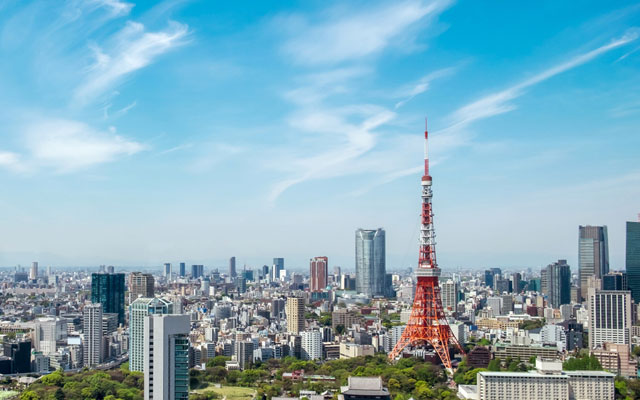
Japan’s travel surplus in 2020 shrank by almost one fifth year-on-year as a result of international travel bans implemented to stop the Covid-19 spread, marking the first year of decline since 2015.
The travel balance, which reflects the amount of money spent by international visitors to Japan versus Japanese spending abroad, dropped from a record ¥2.7 trillion (US$24.5 billion) in 2019 to ¥562 billion (US$5.3 billion) last year, according to government data. It did, however, remain in the black, escaping a return to deficit that Japan’s travel balance has experienced since data compilation began in 1996 until 2014.
A mere 4.1 million tourists visited Japan in 2020, the lowest level since 1998, as the country tightened up its borders in response to the pandemic. It marked a 87 per cent decline in arrivals from 31.9 million in 2019, which was a record high and the seventh consecutive year of growth, according to the Japan Tourism Agency.
The Japanese government had aimed to welcome 40 million tourists in 2020, a goal that had seemed within grasp as the number of arrivals had increased year-on-year up till 2019. Visitors from east Asian nations comprised more than 70 per cent of arrivals to Japan that year, with particularly high numbers from China (9.6 million), South Korea (5.6 million), Taiwan (4.9 million) and Hong Kong (2.3 million).
The hosting of the 2020 Olympic and Paralympic Games was expected to inject a further US$300 billion in income from tourism. Postponement of the event to 2021 has given Japan hope to recoup some of the benefits of hosting, but with the ability to welcome international spectators still unclear, the travel trade remains subdued about the prospects for Japan’s international tourism in 2021.
Hotels today must do more to deliver destination experiences: Far East chief

The pandemic has reinforced the need for destinations and tourism products to provide compelling reasons for consumers to brave tedious pre-trip procedures, opined Arthur Kiong, CEO of Far East Hospitality Management, whose company will open its latest luxury hotel in Singapore on March 1.
Speaking at a press conference on February 26, Kiong said tourism products today must offer a unique proposition and an experience that travellers cannot have at home.

He believes that his company’s soon-to-open The Clan Hotel Singapore satisfies these needs, adding that it as “not your typical hotel”.
Located within the Far East Square and Telok Ayer heritage precinct, the 324-key property offers guest touchpoints and services that tell the stories of the vicinity and local culture, all crafted by hotel associates with a passionate understanding of local history and with the support and contribution of local subject experts.
A prominent example of this arrangement is The Clan Collective, a network of local craftsmen, artists and influential figures who are widely regarded as keepers of culture and heritage in Singapore. Programme profiles currently include local hawker cuisine expert, Leslie Tay, who has curated the hotel’s The Clan Daily Special in-room dining menu; artist Grace Tan who is behind the lobby’s art installation, which comprises 150 painted aluminium panels suspended from the ceiling; and Ivan Yeo, whose family-run The 1925 Brewing Co. has crafted a white chrysanthemum lager just for the hotel.
Hotel guests also gain access to The Inner Circle Guide, a collection of recommendations across services, dining, nightlife and entertainment options. Their identity as guests of The Clan Hotel Singapore will earn them surprise perks and attention at participating merchants.

As a hotel located in the business district, Kiong noted that there are expectations that it has to be “an exclusive property with an international brand, it has to be functional, it has to be state-of-the-art, and it has to be exclusive”.
“But we decided we didn’t want another business hotel that is like every other. We wanted this hotel to serve an unmet need of the market (and that led us) to turn the product on its head. Instead of producing an exclusive hotel, we made this an inclusive product. Instead of having a state-of-the-art hotel, we made this nostalgic. Instead of an international hotel, we gave this hotel a very local flavour. Instead of a very functional hotel, we made this very experiential.”
“The pandemic has reinforced the ideas that we have for the hotel are down the right path,” Kiong stated.
While the hotel concept feeds the greater traveller desire for tailored, destination-specific experiences, some changes to the product had to be made to accommodate new health and safety considerations, he told TTG Asia.
Such changes included redesigning the hotel’s all-day dining restaurant to ensure greater space for social distancing as well as ditching a proposed cigar bar concept where patrons would have to “huddle” together. Technology has also been brought in to provide guests an option for self-check-ins, and sterilisation equipment for smart devices in guestrooms.
When asked about Singapore residents’ appetite for staycations – an alternative source of business in the absence of international tourist arrivals, Kiong revealed that a limited pre-opening offer that was “secretly” published on the hotel’s website on February 15 had garnered immense interest, with 200 bookings sold out swiftly.
“We are seeing a distinct demand from residents who want new hotels that are not a Stay Home Notice property (government appointed quarantine hotels). As long as border restrictions remain, there will always be an appetite for staycations. There are over 1,000 people taking staycations every day in Singapore, and we only need to capture a portion of that,” he replied.
However, he also acknowledged that the domestic staycation market will never be a replacement for international tourism business.
Indonesia unveils Covid-19 screening tool to support safe travels
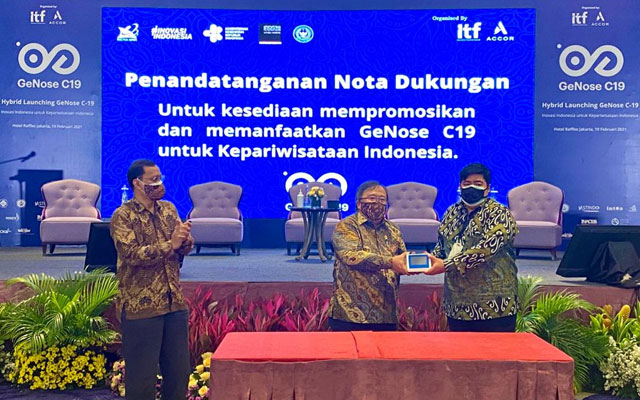
Indonesian tourism stakeholders have welcomed the launch of GeNose (Gadjah Mada Electronic Nose) C19, a Covid-19 detection tool, which will help facilitate safe travel.
The rapid test can analyse breath samples using artificial technology and detect the Covid-19 infection within two minutes. GeNose C19 was invented by science researchers at the Gadjah Mada University in Yogyakarta, who began the research in 2008 with the initial aim of developing a tool that can detect tuberculosis.
The tool was first launched and deployed at major railway stations in Jakarta on February 2, and the Ministry of Transportation has announced that Covid-19 screening for airline passengers using the device will be available by April.
Speaking at the launch of the tool for the travel-related industries in Jakarta last week, Bambang Brodjonegoro, minister of research and technology/head of National Research and Innovation Agency, said that GeNose C19 has an accuracy of between 93 and 95 per cent, and is a more comfortable and less invasive way of testing for Covid-19 compared to throat and nasal swabs.
Additionally, the tool is portable so it can be used at any public spaces. Costs for doing the GeNose C19 test is also relatively affordable at between 15,000 rupiah (US$1.07) and 20,000 rupiah per test. In comparison, an antigen and a PCR test – a current requirement to travel – costs 250,000 rupiah and one million rupiah, respectively.
“This device is not only suitable for tourist attractions, but also places where people meet like offices, markets and factories,” Bambang said.
At the launch event, a host of travel-related associations from airlines to retail signed a letter of support committing to the usage and promotion of the GeNose C19 in their respective sectors.
On the occasion, Accor Asia Pacific (AAPC) Indonesia also signed an MOU with the Ministry of Research and Technology not only for the use of GeNose 19, but also the promotion of research and innovation products, to support the national economic recovery.
AAPC Indonesia has ordered 100 pieces of GeNose 19, and Adi Satria, senior vice president operations and government relations, Accor Indonesia and Malaysia, said the tool would be made available at Accor hotels in Indonesia, to benefit both guests and the hotel staff alike.
As regular testing for all its employees are part of the new norm, Adi said that using GeNose C19, a more cost-effective mode of testing for Covid-19, will help the company “save operational costs”.
Angela Tanoesoedibjo, vice minister of Tourism and Creative Economy, said that her office will make its best efforts to implement GeNose 19 screening on a large-scale basis in tourist destinations and attractions, to support the safe resumption of tourism activities.
Meanwhile, Salman Anwar, chairman of the Jakarta Tourism Forum, expects that the Ministry of Tourism and Creative Economy will set aside a budget to help industry stakeholders invest in the device. He also hopes that the regional and city governments will ease regulations for venues which implement such screenings to organise events.
Discova sets sights on Asia with new sales team
Discova has formed a dedicated sales team who will focus on Asia both as a source and destination market, as it gears up to seize domestic and regional travel opportunities in the region.
The team located in various markets across Asia will be serving Discova’s partners and their travellers based in the region.
Andrew Turner, director of sales at Discova, said: “Discova is deeply rooted in Asia. We have been operating in Asia for over 25 years and have helped thousands of travellers from all around the world discover this amazing region. It is only natural that we are now expanding to serve partners and their travellers based in Asia. We believe Asia offers a great potential both from a domestic and regional tourism perspective.”
With domestic travel paving the way for tourism’s return, Discova has been expanding its product offering in key Asian markets including Thailand, Singapore, and Japan to meet growing domestic tourism demand.
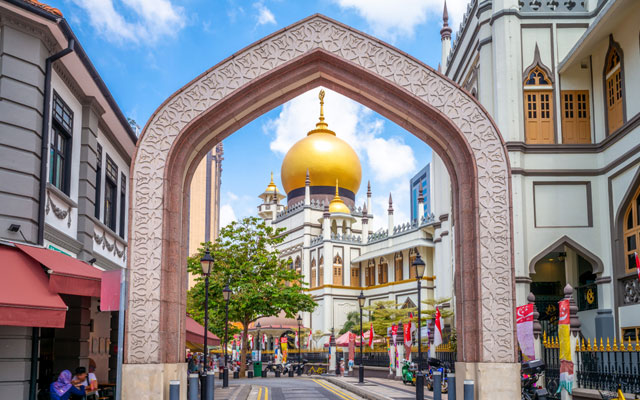
For example in Singapore, Discova has launched a new graffiti tour, offering Singaporeans the opportunity to rediscover the trendy Kampong Glam neighbourhood. Visitors are taken to the street art of the area by local graffiti artists and invited to draw graffiti on designated walls.
“Even though we sometimes sell our products directly to domestic travellers like expats in Thailand, we are primarily a B2B business and as such, we are focusing on serving domestic travellers through our partners,” said Turner.
The newly appointed Asia sales team is also gearing up to seize intra-Asia tourism opportunities when borders reopen in the region.
Turner explained: “Before Covid hit, our intra-Asia travel business was growing, and we believe this trend will be amplified in a post-vaccine world. Asia-based travellers will most likely avoid long-distance trips and prioritise short-haul flights and close destinations they are already familiar with. We want to tap into this growing market working together with our Asia-based partners.”
Having organised programmes in partnership with local schools and universities in Asia for international students from Australia, Europe and the US, Discova is now expanding its educational travel offering to Asia-based international schools and universities for Asia-based students.
“Asia-based international schools and universities are looking for opportunities to participate in community development projects in the region as part of their students’ curriculum. Thanks to our long-standing relationships with our communities across Asia, we are able to respond directly to the needs of those educational organisations,” said Turner.
As well, Discova is expanding its offering for corporates, including employee incentive or employee engagement activities.
Turner explained: “With employees encouraged to work remotely, there is growing demand from corporates in the region for employee engagement initiatives or activities which will bring people back together. Each initiative is tailor-made; we often engage directly with the human resources department of the company to build the employee engagement activity based on their requirements.
“Our focus on domestic and intra-Asia travel is part of our long-term growth plan in the region. It is particularly exciting because it encourages us to create new products for customers who are particularly savvy, having first-hand knowledge of the destination and the region they live in. Our domestic and intra-Asia travel products are very inspiring and will certainly appeal to international travellers when borders reopen.”
TripAdvisor tracks traveller sentiment with new analysis tool
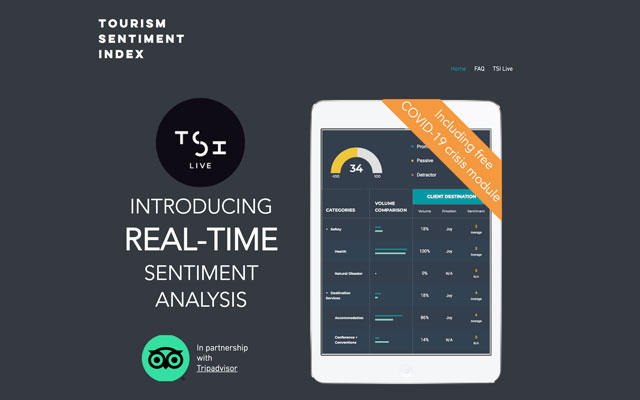
A new live data intelligence dashboard launched by Tripadvisor will allow destination marketers to gauge travellers’ sentiment towards destinations and travel, in order to drive their recovery strategies.
Powered by Tourism Sentiment Index, the offering is part of Tripadvisor’s wider suite of data intelligence products for DMOs, known as the Tripadvisor Insights Platform. The live dashboard provides clients with essential word-of-mouth insights about destinations, combining Tripadvisor’s each and traveller behaviour insights with Tourism Sentiment Index’s sentiment technology.
The Tripadvisor Insights Platform is a collection of measurement and insights tools intended to help partners in the travel and tourism industry manage their media campaigns and overall recovery activities. The solutions use Tripadvisor’s wealth of user behaviour data to measure performance, uncover competitive insights and track how destinations, accommodations, attractions and restaurants are performing over time.
The new sentiment dashboard for DMOs uplevels the service offering of the Tripadvisor Insights Platform by providing clients with daily actionable intelligence, using insights from across 50 tourism touchpoints – including air access, accommodations and attractions. The dashboard’s analytics are drawn from real-time conversations, across half a million platforms, including Tripadvisor.
Sentiment towards destinations and travel contribute to an overall score that reveals a destination’s popularity versus competitors, enabling them to update campaigns, product offerings and messaging faster and more effectively.
The sentiment dashboard also includes a crisis analysis module that tracks the impact of the pandemic in locations around the world by revealing emotional reactions to categories such as health services, government and economics.
“Recovery in the wake of Covid-19 is key this year. The Tourism Sentiment Index will equip DMOs with critical information and actionable insights that will allow them to better understand their travellers and the global landscape, resulting in more targeted and strategic marketing and media placement decisions”, said Sarah Mathews, Group Head of Destination Marketing APAC at Tripadvisor.
“Being able to put the right message out to the right traveller at the right time will give DMOs an advantage in campaign planning and execution, all with the goal of bringing the world back to travel safely.”
Staybridge Suites to debut in India come 2023
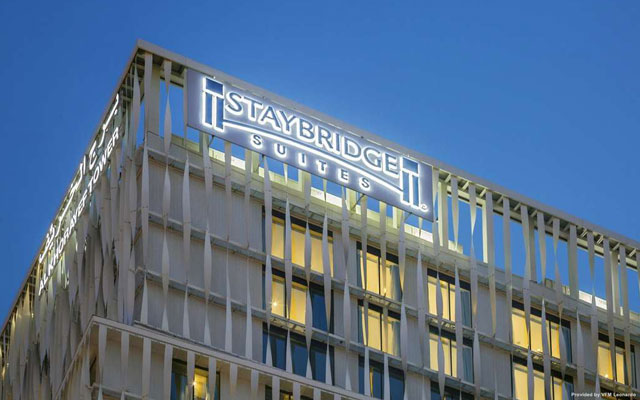
IHG Hotels and Resorts has signed a management agreement with NR Greenwood Construction to debut its extended stay brand, Staybridge Suites, in India.
Expected to open in 1Q2023, the Staybridge Suites Bengaluru Thanisandra will sit in the ‘Silicon Valley of India’, Bengaluru, which is also recognised as the second fastest-growing major metropolis in the country.
The Staybridge Suites brand offers amenities such as a fully equipped kitchen in suites, a dedicated outdoor space, daily complimentary hot breakfast, and an evening social event three nights a week.
Targeting both business and leisure travellers, Staybridge Suites Bengaluru Thanisandra will offer 170 suites featuring kitchenettes, a pair of meeting rooms, a 300m2 dining room, a business centre and a gym.
Malaysia Airlines to roll out digital travel health pass
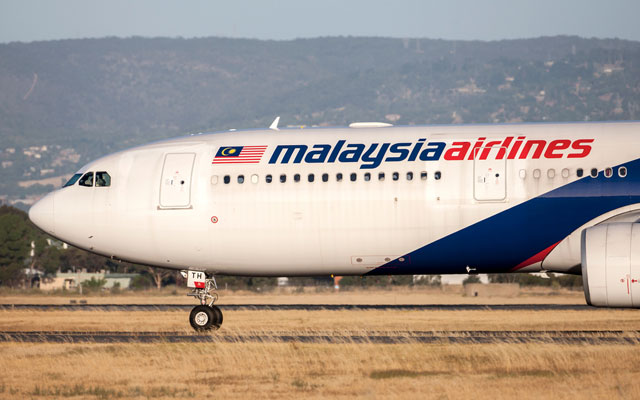
Malaysia Airlines (MAS) has plans to introduce the Digital Travel Health Pass to help streamline its passengers’ travel journey, in the latest effort by the airline to instil post-pandemic travel confidence.
The health pass, which will be integrated with the MAS mobile app, will allow passengers to easily make appointments with certified medical partners to carry out a Covid-19 RT-PCR test or include their Covid-19 vaccination certificate on their mobile phones.
In addition, passengers can verify their travel eligibility with the airline before their travels, making them aware and informed of the constantly developing travel policies worldwide.
The Digital Travel Health Pass will incorporate some modules of the IATA Travel Pass that have been developed on the basic principle to allow travellers to be in control of their journey while travelling around the world.
With that, passengers will be able to create a digital passport, verify their test/vaccination requirements and status, and share their “OK to Travel” status with the relevant authorities. This digital ID on the App will pave the way for MAS’ passengers to eventually take advantage of contactless technology options throughout the travel processes.
As part of the airline’s efforts to provide safe travels to its passengers amid the pandemic, the travel health pass is the one-step solution in ensuring all passengers can travel safely while maintaining that all the necessary precautions are taken in limiting the spread of the virus. Creating a contactless journey with travel documents stored securely on the platform, passengers will enjoy a safer, end-to-end seamless travel experience.
MAS said that it is working closely with the relevant authorities to roll out the health pass, with more details to be revealed “in the coming weeks”.
Fresh Covid spike thwarts Japan’s domestic air travel rebound
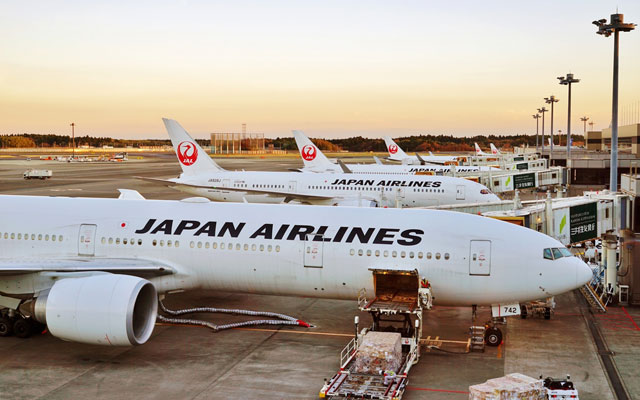
Japan’s domestic airlines have scaled back flight plans so far this year in response to the country’s third wave of Covid-19 infections.
In January and February, Japan Airlines (JAL) operated about 50 per cent of its normal domestic schedule, while All Nippon Airways (ANA) ran one- to two-thirds of its flights.
The move is further evidence that the country’s domestic flight rebound is being hampered by spikes in virus transmission, according to data from the Centre of Aviation.
In 2020, monthly domestic passenger volume in Japan dipped from almost 9 million in January to about 7.5 million in February, as news began to unfold about the novel coronavirus. It then plummeted to less than 1 million in May, marking a drop of 93 per cent year-on-year, the result of a freeze on international travel and a state of emergency declaration asking residents to stay home as much as possible from April 7 to May 6.
Since May, the number of domestic passengers per month rose sharply to exceed 2.5 million in July. Growth remained stagnant through August, the period of Japan’s second wave of infections, before reaching almost 5 million passengers in October, the last month for which data is available.
Japanese airline domestic capacity rate, too, appears related to the spread of Covid-19 in Japan. Following an initial plunge in March and April 2020 corresponding with the stay-at-home request, domestic capacity began to recover in June 2020, reaching more than 2.6 million seats. But this growth was lost in August, when a second wave of infections pushed capacity down to less than 2 million seats.
With the July 22 launch and subsequent promotion of Go To Travel, the government-sponsored domestic travel subsidy campaign, capacity began to recover. JAL and ANA announced plans to operate at about 85 per cent of their pre-pandemic schedule in December 2020, but the arrival of a third Covid wave and the suspension of Go To Travel on December 28, hurt the airlines again. Over the New Year period, JAL reported a 52 per cent reduction in domestic bookings year-on-year, while ANA reported a 58 per cent decline year-on-year.
Global airlines to continue burning cash through 2021: IATA

The airline industry is expected to remain cash negative throughout 2021, according to new analysis by the IATA, overriding a previous forecast that airlines would turn cash positive in the fourth quarter of 2021.
At the industry level, airlines are now not expected to be cash positive until 2022, IATA said in a statement.
Estimates for cash burn in 2021 have ballooned to the US$75 billion to US$95 billion range from a previously anticipated US$48 billion.
Factors that play into this estimate include a weak start for 2021, with it being evident that 1H2021 will be worse than earlier anticipated, due to governments tightening travel restrictions to combat new Covid-19 variants.
Forward bookings for summer (July-August) are currently 78 per cent below levels in February 2019 (comparisons to 2020 are distorted owing to Covid-19 impacts).
From this lower starting point for the year, an optimistic scenario would see travel restrictions gradually lifted once the vulnerable populations in developed economies have been vaccinated, but only in time to facilitate tepid demand over the peak summer travel season in the northern hemisphere. In this case, 2021 demand would be 38 per cent of 2019 levels. Airlines would burn through US$75 billion of cash over the year. But cash burn of US$7 billion in 4Q would be significantly improved from an anticipated US$33 billion cash burn in 1Q.
In the pessimistic scenario, airlines would burn through US$95 billion over the year. There would be an improving trend from a US$33 billion cash burn in 1Q reducing to US$16 billion in 4Q. The driver of this scenario would be governments retaining significant travel restrictions through the peak northern summer travel season. In this case, 2021 demand would only be 33 per cent of 2019 levels.
“With governments having tightening border restrictions, 2021 is shaping up to be a much tougher year than previously expected,” said Alexandre de Juniac, IATA’s director general and CEO.
“Our best-case scenario sees airlines burning through US$75 billion in cash this year. And it could be as bad as US$95 billion. More emergency relief from governments will be needed. A functioning airline industry can eventually energise the economic recovery from Covid-19. But that won’t happen if there are massive failures before the crisis ends. If governments are unable to open their borders, we will need them to open their wallets with financial relief to keep airlines viable.”








Sabah Tourism Board has launched a new online campaign in Thailand promoting book-now-travel-later deals, for travel through year-end.
Dubbed SABAHDeeKhrap, the ongoing campaign runs from February 22, 2021 till May 22, 2021, targeting Thailand residents, and in particular, the expatriates and millennials.
Accessible via hellosabah.my/sabah-dee-khrap, the campaign site features a wide range of products and packages in Sabah which include nature, adventure, wildlife, culture, diving, community-based tourism, beaches, as well as hotels and resorts.
In 2019, Sabah welcomed 4,738 Thais, representing an increase of 19.4 per cent from the previous year. Thai travellers to Sabah typically seek adventure activities and diving. Pre-Covid, Kota Kinabalu – the state capital of Sabah – was connected to Bangkok with a direct, thrice-weekly flight serviced by AirAsia Thailand.