

Tourist arrivals in the Maldives rebound to near pre-Covid levels
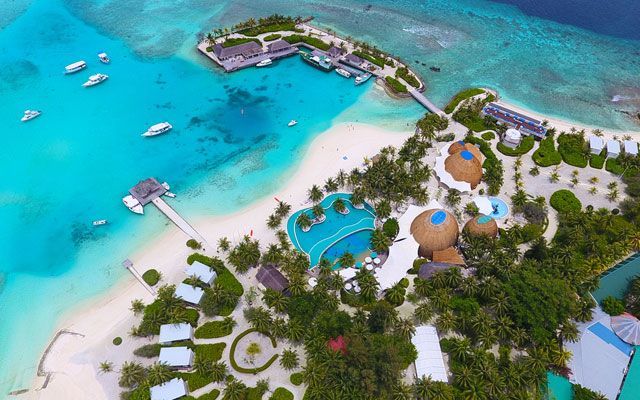
The Maldives has emerged as one of the tourism industry’s biggest success stories amid the ongoing Covid-19 pandemic, with the island nation seeing visitor arrivals rebound close to last year’s figures over the same period.
According to official data, some 339,962 tourists have visited the Maldives to date this year up till April 12, compared to the 382,762 arrivals from January 2020 through March 27, 2020, when borders were closed owing to the pandemic. The country reopened its borders to tourists on July 1, 2020 after a near four-month pandemic shutdown.
The ministry said that tourist arrivals have been increasing each month, with 92,103 tourist arrivals in January, 96,882 arrivals in February, and 109,585 arrivals in March. A total of 41,392 tourists visited the country during the first 12 days of April.
The uptick in arrivals puts the Maldives on track to reaching its target of 1.5 million arrivals for this year. The country recorded a total of 555,399 arrivals in 2020, lower than the 1.7 million in 2019, but much higher than the targeted 500,000 for the year.
There is no quarantine requirement for arriving tourists, who are only required to show a valid negative PCR test result upon arrival. Visitors are whisked away from the international airport by seaplane or luxury speedboat to their island resort many kilometres away from the capital city.
Amid the pandemic, India has emerged as the Maldives’ top source market, accounting for 23 per cent of the total tourist arrivals, followed by Russia, Ukraine and Germany. China, traditionally the country’s largest tourist source, has shown fewer arrivals due to restrictions placed on outbound travel.
Meanwhile, according to official sources, 57 per cent of the Maldives population of over 530,000 people have received the first Covid-19 jab. As of April 12, the country recorded 25,701 Covid-19 infections and 66 deaths.
Bespoke reboots digital focus with new online experiences
China’s specialist ground operator Bespoke Travel Company is recalibrating its live online strategy for international clients, who are only likely to return in 2022 when the Covid-19 pandemic is no longer considered a serious threat and borders reopen.
CEO Sarah Keenlyside said that while its online products were a “lifeline during the pandemic, some lost interest when lockdown restrictions were eased last summer and people were no longer confined at home”.
Keenlyside added: “We were pleased with the good response but we were stunned by the online fatigue. Now, we are ready to test the waters again. With people more used to online experiences, reviving our online push will keep interest going until international travellers can buy in-person tours.”
The Bespoke founder noted that the profit margin for its online products was better because of the higher volume and lower costs. “Revenue-wise, we had to keep the pricing reasonable and it was encouraging for our team to see money coming in, instead of having to make refunds to international clients,” she shared.
Apart from its key US market, Bespoke’s online products were popular in the Netherlands, Germany, Italy, Africa and Brazil.
Keenlyside said the in-depth talks would attract around 75 people and 50 for the activities, and took place very early or very late in China to cater to the overseas markets.
The online experiences included tai chi classes; a WeChat live-stream hutong tour in Beijing; a virtual cocktail-making event; subject matter expert talks; and a course on how to make and eat hand-pulled noodles, which were recorded and sent to participants.
Even though Bespoke decided to wind down its online product promotions following the online fatigue, there were requests from overseas educational institutes and corporates for customised programmes.
Bespoke is now looking at launching online products that combine a dining experience in a unique space in China with a subject matter specialist as guest speaker, and overseas clients can listen to the talk.
Macau set for Chinese tourist influx over May Day holiday

Mainland Chinese demand for travel to Macau has surged ahead of the upcoming May Day holiday, according to data by Trip.com Group.
Searches and bookings of Macau travel products by mainland China users of Trip.com Group’s platform Ctrip have risen significantly in recent weeks, following the strong recovery of domestic travel as evidenced over the Qingming Festival holiday earlier this month.

Trip.com Group data shows that, as of April 8, the total number of bookings for Macau travel products during the May Day holidays rose by 20 per cent compared to 2019, and is double the booking volume of the same period in April this year. In addition, the search volume for flights in and out of Macau rose to over 140 per cent higher than the previous month. The cost of air tickets in and out of Macau are rising rapidly too, with the average economy class fare having increased by over 50 per cent from early April.
While there are still three weeks before the May Day holiday, the number of bookings for Macau hotels on the Ctrip platform has doubled compared to the same period in 2019. Room night prices of high-end hotels have increased significantly too, with a price increase of about 30 per cent compared to the Qingming Festival holiday in early April.
Macau is currently the only outbound destination where mainland Chinese residents are not required to serve a 14-day quarantine on arrival and on their return. With no reported cases in Macau for over a year, travellers must present a valid negative Covid-19 test result taken within the last seven days upon arrival.
Wyndham to expand APAC footprint in 2021

Wyndham Hotels & Resorts is expected to open about 180 hotels across Asia-Pacific this year, an estimated 40 per cent increase in openings from the previous year.
The pipeline, comprising of directly franchised and managed hotels, will bring Wyndham’s total property count in Asia-Pacific to 2,000 hotels within the next three years.
Over 100 hotels are expected to open in Greater China this year, and the company’s expansion drive starts with the conversion of the 346-room Wyndham Xinyang Downtown, as well as the Microtel by Wyndham Tianjin, the first of seven Microtel hotels expected to open this year.
Other key openings anticipated this year include: Wyndham Beijing Airport, and China’s first La Quinta hotel in Weifang, Shandong province. The Wingate by Wyndham brand will be boosted by the launch of Wingate Beihai Yintan, located in Guangxi province. Meanwhile, in Taiwan, TRYP by Wyndham will launch in Linkou, New Taipei City.
Over in Thailand, Wyndham plans to open seven new properties in 2021 in popular destinations across Bangkok, Pattaya and Phuket. Key openings this year are expected to include Wyndham Bangkok Queen Convention Centre, Ramada Plaza by Wyndham Bangkok Sukhumvit 48, Ramada Plaza by Wyndham Sukhumvit 87, and Wyndham Garden Bangkok Sukhumvit 42 – all of which are located in Bangkok’s CBD.
They will be joined by Wyndham Atlas Wongamat Pattaya, Wyndham LaVita Resort Phuket and Wyndham Garden Platinum Kamala Phuket. Within the next three years, Wyndham intends to open as many as 20 hotels located in popular destinations such as Pattaya and Phuket.
Four new hotels are expected to be unveiled in Vietnam this year, including the recently-opened Wyndham Grand Flamingo Cat Ba, followed by the Wyndham Soleil Danang, as well as Wyndham hotels in Quang Binh and Phu Quoc. In total, Wyndham’s portfolio in Vietnam is forecast to almost triple by 2024, from seven to over 20 properties nationwide.
In South Korea, a string of new Wyndham and Wyndham Grand hotels are due to start operating in the coming years.
As part of its multi-brand strategy in Australasia, the company recently opened its LQ by Wyndham Remarkables Park Queenstown, which marked the debut of La Quinta in Asia-Pacific. In New Zealand, three new hotels are anticipated to open this year under the Ramada by Wyndham and Wyndham Garden brands in Wellington, Auckland and Christchurch. Other new launches ahead include two new TRYP by Wyndham hotels, which will mark the brand’s debut in New Zealand.
Over 15 hotels are in the development pipeline for Australia, including the arrival of new brands like the Wyndham and Wyndham Garden in South Australia; TRYP by Wyndham in Western Australia, Queensland, Victoria and South Australia; as well as the debut of Wyndham Grand in Adelaide.
Oakwood aims to double China portfolio by 2025

Oakwood is on track to double its portfolio of managed properties in China by 2025, with plans to open four new properties in China by end of this year and more signings expected to be announced in the coming months.
Since debuting in China over 20 years ago, Oakwood now manages eight properties with the imminent opening of Oakwood Premier Tonglu by May 2021 followed by three additional openings in Beijing, Foshan and Chongli, the host city for the 2022 Winter Olympics.
As part of its expansion plan in China, Oakwood has sealed a strategic alliance with Country Garden Commercial and Culture Tourism Group to open 100 Oakwood Beluxs properties across 50 cities by 2030.
This year, Oakwood will double its portfolio in China, bringing the total number of managed properties up to 12 by December 2021. The four openings are: Oakwood Premier Tonglu in Hangzhou (scheduled to open in May 2021), Oakwood Hotel & Apartments Daxing Beijing (September 2021), Oakwood Residence Foshan (soft opening in 4Q2021), and Oakwood Suites Chongli (December 2021).
Narita Airport tests biometric boarding process
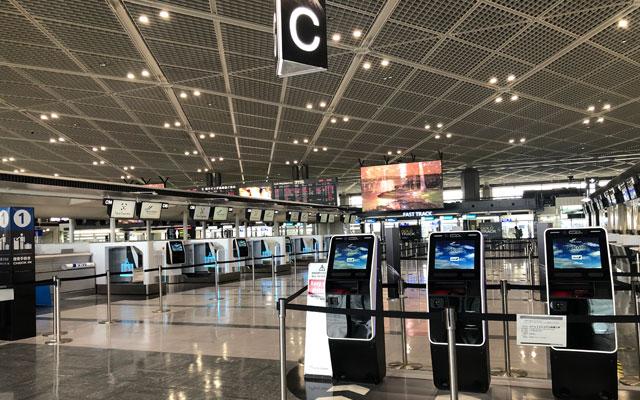
Narita International Airport Corporation (NAA) is trialling a new facial recognition technology which will allow passengers to complete check-in and boarding procedures using biometrics.
The deployment of biometric technology from Amadeus and NEC Corporation since April 13 eliminates the need for passengers at Narita Airport to continually present passports and boarding passes, while reducing the need for physical interactions – a critical move to restore traveller confidence amid the pandemic.
Passengers check-in at one of a number of new biometric kiosks where their facial images are captured and verified against their passports. Following after, they can drop off their luggage at an auto bag drop (ABD) unit, which is embedded with a camera that automatically recognises passengers as they approach it.
When passing through security and boarding, passengers’ faces are recognised when they approach Narita’s security e-gates and boarding e-gates, both equipped with cameras that automatically validate passengers’ identities and their permission to fly.
The new biometric process pioneered at Narita Airport is using the IATA One ID standard. Following successful trials, it will be adopted as the new standard for all international departures.
ICM Airport Technics, an Amadeus company, supplied the kiosks and ABD units fitted with biometric cameras and application software, that work in conjunction with NEC’s facial recognition system.
Indonesia tourism players take stronger technology approach to customer engagement
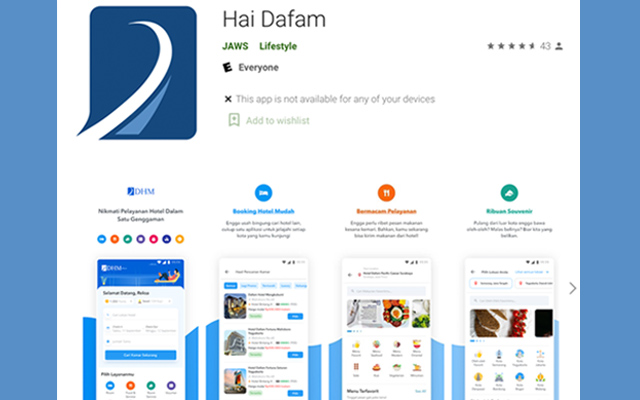
Travel trade stakeholders in Indonesia are increasing their online presence and app capabilities to better engage domestic customers and secure new sales in an increasingly challenging travel landscape.
Traveloka recently conducted live hotel tours, during which discounted rooms were sold. The initiative, according to John Safenson, vice president market management, helps to demonstrate the health and safety measures taken by industry players and rid fear of travel in a pandemic era.
Recognising that travellers today are more price-conscious, Traveloka has intensified its marketing work, throwing out special offers and door prizes to entice consumers.
Safenson told TTG Asia that travellers today seek promotions and discounts, and look for assurance in the form of flexible booking and payment terms.
Over at Dafam Hotel Management (DHM), an improved mobile app has been created to facilitate better communications with in-house guests and expand service offerings.
Andhy Irawan, CEO of DHM, said hotels must do more than sell rooms and services on property; they should also have the capability to bring external experiences to in-house guests. With that in mind, DHM worked with Jawara Solusi Nusantara (JAWS), a web and mobile application system provider, to launch the HAI Dafam mobile app.
Rizki Susetiadi, CEO of JAWS, said the new app allows in-house guests to make room and restaurant reservations as well as order room service. In the future, the app will include online shopping features, allowing hotel guests to order local cuisine or souvenirs and have their purchases delivered to their room.
Another industry partnership has surfaced to benefit the travelling community, this time between Indonesia AirAsia and the Indonesia Hotel and Restaurant Association (IHRA). Both entities have come together to create travel packages for both individual and group travellers through the new Super AirAsia app. Supporting this effort is the SNAP promotion, which dangles affordable travel deals to Medan and Lombok, with prices starting from 699,000 rupiah (US$48.35). These deals include round-trip airfares from Jakarta and two-night stay at IHRA participating member hotels.
While the promotion was initially aimed at boosting traffic to priority Indonesian destinations the airline operates in, Veranita Yosephine Sinaga, CEO of Air Asia Indonesia, soon found opportunities to expand it to other destinations. – Additional reporting by Mimi Hudoyo
Minor Hotels promotes Mark O’Sullivan to area GM

Minor Hotels has appointed Mark O’Sullivan as area general manager Bangkok.
This role will see O’Sullivan at the helm of numerous flagship properties including Anantara Siam Bangkok Hotel, Anantara Riverside Bangkok Resort and Avani+ Riverside Bangkok Hotel.

He first arrived in Bangkok in 2018 to take up the post of general manager at Anantara Riverside. During his tenure, he introduced several F&B concepts, as well as led the launch of Loy River Song, a luxury river cruise that transports guests from Bangkok to Ayutthaya.
Hailing from Ireland, O’Sullivan has over a decade’s worth of hospitality experience in Asia. He first joined Anantara in 2017 as general manager for Anantara Mai Khao Phuket Villas.
Prior to joining Anantara, the Irishman has cut his teeth at large global hotel brands such as Starwood and Hyatt, as well as boutique properties such as Club Coco and Brooks Hotel in his native Dublin.
Travelport+ hits the market with several buy-ins
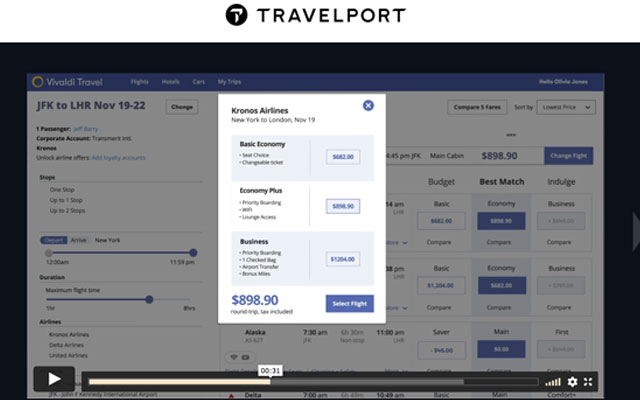
Travelport has launched its next-generation platform, Travelport+, as part of its new global strategy and commitment to accelerate industry innovation in multi-source content distribution, travel retailing and value generation.
It is built to contain a lightweight and highly functional microservices API, complete with NDC content; enhanced airline ticket exchange tools; a trip container to manage all aspects of the trip; and a sophisticated point of sale solution to address the needs of the professional travel agent.
Such improved retailing and merchandising capabilities as well as support from Travelport’s leading data and insights will enable Travelport+ users to deliver higher value trips.
“It’s a monumental moment in our history and in the development of our industry”, said Greg Webb, Travelport CEO.
“Travel hasn’t kept up with the evolution of modern digital retail and today, the buying and selling of travel is more complex than it needs to be. As Travelport is the only dedicated, global, travel distribution platform, we have made a multi-year investment to accelerate industry innovation in travel retailing. Bringing together the best of Travelport’s existing capabilities and tools, and driving innovation to deliver the unmet needs of our industry, Travelport+ truly changes the game in the speed of delivery of modern travel retail and offers a fundamental upgrade to travel technology,” Webb continued.
Travelport+ has acquired a number of agency and supplier partner buy-ins as part of the initial upgrade exercise, most of which are organisations based in the US and Europe.
Gabrielle Carr, COO, TAG, a global travel and event management company based in the US, said: “Upgrading to Travelport+ has been a game changer. The process was simple. It had an instant, positive impact on our business.”
Online business at UK-based Perfect Holidays has leapt by 30 per cent since the transition to Travelport+, shared managing director Faisal Butt.
Travelport+ will continue to be rolled out globally and users will be assisted by a specialised customer support team.
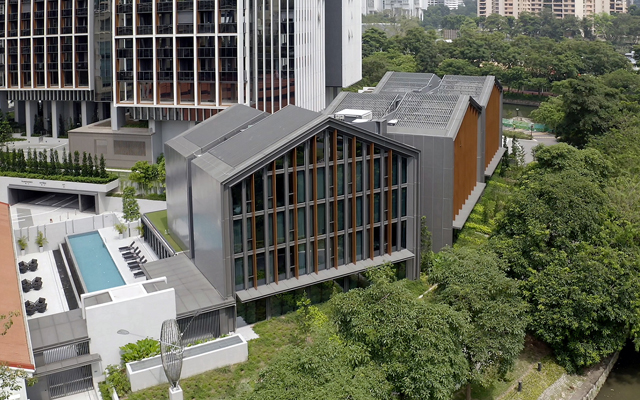







Walking, cycling and kayaking tours in Singapore are now allowed to take groups of up to 50 people, up from the previous limit of 20.
Effective since Wednesday (April 14), the move is part of the further easing of Covid-19 measures announced last month, the Singapore Tourism Board (STB) said in an update on Monday.
However, tours must still adhere to existing gathering size limits, with participants to be spilt into groups of no more than eight individuals, with at least 1m safe distancing and no intermingling between groups.
In addition, tour operators are no longer required to obtain approval for each tour itinerary, but can apply to STB to resume operations under a single application.
Tour operators and tourist guides who have previously received approval to resume tours from the Ministry of Trade and Industry do not need to seek approval again.
Even as restrictions are rolled back for tours, tour agencies must still comply with prevailing safe management measures, including mask-wearing for tour guides and participants. Operators are also required to rigorously clean and disinfect high-touch surfaces like tour equipment and vehicles used for transportation.