

Brought to you by Tourism Authority of Thailand
Feast your way through the Kingdom
Uttaradit, Northern Thailand

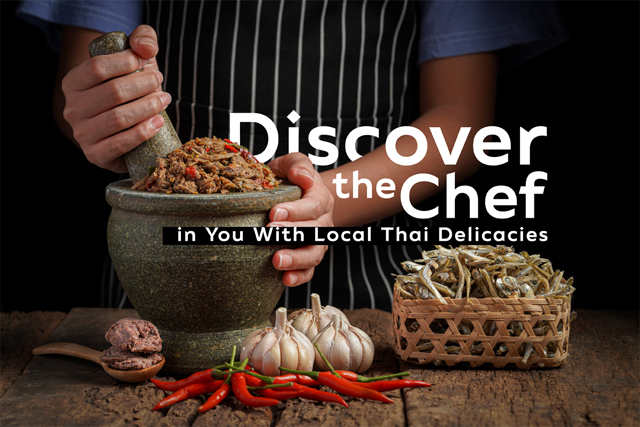
As a largely agricultural province, it is little wonder this delicacy of Laplae District in western Uttaradit is derived from thoughtful food preservation methods by the locals in presenting rice in various shapes and forms. Rice vermicelli is stuffed into Khao Kap (thin wrappers made from rice flour), and then cooked in an assortment of flavours. The infusion is said to bring out the true taste of this Laplae-styled cuisine.
Destination highlights:
Lamnam Nan National Park: A place of serenity cloaked in forests and long mountain ranges, the national park features a freshwater aquarium, and is home to many waterfalls, rapids and small islands that are suitable for scenic rafting and other relaxing activities. Campsite facilities are available.

Laplae Capital Gate: A popular landmark in the province, archaeological surveys date its construction to the reign of King Rama I.
Sirikit Dam: The largest earth dam in Thailand straddling the Nan River, offering breathtaking scenary and vast spaces to enjoy the atmosphere. Rent a boat to stop by for a meal at restaurants alongside the dam.
Loei, Northeast Thailand

Over here in Loei, fermented rice vermicelli is used in serving up a long-simmered pork broth accompanied by an assortment of vegetables, herbs and staple condiments – shrimp paste, lime and fresh crushed chilies – making it a welcome breakfast treat in the chilly mountainous region.
Destination highlights:
Suan Hin Pha Ngam: Time stands still as one gazes to limestone hills and karsts that have eroded over millions of years to form a picturesque backdrop for what is also known as the “Kunming of Loei”. A trail winds through the canyon, taking visitors to the relaxing Suan Hom and Phiang Din waterfalls.

Phu Tok: Here, the clouds come rolling in at sunrise, blanketing the mountain in a sea of fog. From this vantage point, visitors will have a panoramic view of Chiang Khan and the Mekong River.

Baan Kang Pla: Located in the outskirts of Loei city, this weaving group is popular for allowing visitors to experience the traditional art of weaving, as artisans use antiquated looms to produce fabric indigenous to the province. Not just another social enterprise, the weaving group also encourages interaction between villagers of this region, when they gather for large production orders for the gift shop.
Sukhothai, Central Thailand

Another rice derivative from fermented flour; the parcel is steamed to make a thin wrapper and folded in with mixed vegetables, topped with steamed egg and clear pork broth. A healthy and delicious dish renowned in Ban Na Ton Chan, a small district north of Sukhothai city.
Destination highlights:

Sukhothai Historical Park: Housed on archaeological grounds dating back to the Sukhothai Kingdom, this UNESCO World Heritage Site depicts the grandeur of the first capital city of Thailand. Visitors will be enthralled amongst the ruins of the royal palace and numerous temples, alongside ancient walls and moats. Expect to spend a full day at this facility.
Ganesha Gallery: Exhibits here portray a distinguishingly Brahman-Hindu influence, which entered Thailand during the early Sukhothai era. In addition to the viewings, visitors can participate in celadon ware painting, which makes for a great souvenir.
Loy Krathong experience: Make your calendars for November, because, where better to experience the festival of lights than at its birthplace? Besides the historical park being the main celebration venue, the entire province will be alight with krathongs (floating water lights) and sky lanterns – quite a sight to behold.
Samut Songkhram, Southwest Thailand

This local delicacy is conceived from seablite native to the salt marshes of Samut Songkhram. The plant is cooked multiple times in water to unsalt, then dressed in a delicious medley of Thai-style spicy sauce made from lime juice, fish sauce, and palm sugar. A ladle of thick coconut milk on top usually rounds up the whole ensemble.
Destination highlights:

Rom Hoob market: This attraction boasts a couple of other associated monikers: “umbrella market”, “railway market”, or even, “risky market”, for its location along the railway track. No matter your persuasion, go there for a one-of-a-kind experience for fresh produce, and watch how the food vendors and trains co-exist with precision.

Bang Pu seaside: Good for bird watching and viewing beautiful sunsets, it also offers a rest area, dining facilities, and ballroom dancing activity every Saturday from 5pm – 8pm.
Bang Nam Pheung floating market: The charms here are the lifestyles of the villagers by the canal, and the availability of well-known community products and local food favourites. Tourists can rent a sightseeing kayak or bicycle to experience the local way of life; after all, this community has won an award for Best Urban Oasis of Asia.
Chantaburi, Southeast Thailand

An iconic provincial cuisine made from pork belly or collar, it is simmered with Bai Chamuang (cowa fruit), which is native to Chantaburi, giving the dish a distinctive sour note and fragrance.
Destination highlights:
Red eagle watch: You haven’t been to Chantaburi if you never saw a red eagle there. Go on an eagle-spotting boat trip in the mangrove forests of the Welu River basin, available all year round, and they usually make their appearances at around 3pm.

Pink Rock Terrace: The bay of Kung Krabaen is coveted by nature lovers and photographers, when morning and late-afternoon ebb tides reveal brilliant hues of arkosic sandstones. Best visited from the months of February to June.
Chantaboon Waterfront Community: Buildings on this 300-year-old street date back to the Rattanakosin era, and feature a blend of Thai, Chinese, French and Vietnamese architectural designs. Many of them are transformed into boutique accommodation, local museums and hip cafes today, where a visit to UNESCO merit award winner for cultural heritage preservation, Baan Luang Rajamaitri, should not be missed.
Phuket

Aptly named after its village of origin, Sapam, this dish exudes Hokkien-Chinese influences by stir-frying thick egg noodles with seafood, pork, eggs and Chinese cabbage together. Another delicious rite of Phuket delicacy.
Destination highlights:

Laem Phromthep: Also known as Brahmas cape, it is located on Phuket’s southern-most tip. Visitors can savour breathtaking views of the Andaman Sea, and it is a popular observation point at sunset. A notable landmark is Kanjanaphisek Lighthouse, which gives a 360-degree unobstructed view of the cape, as well as an exhibition inside the lighthouse documenting its construction, amongst other maritime trivia.
Ban Bo Dan Hot Springs: Located in Tambon Na Toei on the Andaman coast, the water from the natural hot springs are laden with minerals, and are believed to relieve rheumatism, numbness and help reduce tension of both body and mind. Mineral baths are available daily.
Koh Si-Re: Make a trip to this destination for fresh seafood, and a glimpse into the lives of the oldest (and largest) community of sea gypsies (Chao Le) south of Mergui Archipelago. An additional attraction is the large reclining Buddha at the hilltop temple. The island is easily accessed from Phuket main island via a causeway.

Philippine tourism players lock horns with Congress over reallocation of US$206m bailout fund to infrastructure
The stars are conspiring for the tourism industry to get the 10 billion pesos (US$206 million) lifeline it desperately needs to stay afloat.
While the Senate Bill No. 1564 or the Bayanihan to Recover as One Act (dubbed “Bayanihan 2”) allotted that amount to bail out micro, small and medium tourism enterprises (MSMEs) with soft loans, the House of Representatives’ Bill No. 6953 diverted that fund to the infrastructure programmes of the Department of Tourism’s investment arm, the Tourism Infrastructure and Enterprise Zone Authority (TIEZA).
Bayanihan 2 was already passed in the House and Senate. It will soon undergo a bicameral conference hearing to reconcile the Senate and House versions before signing it into law.
But in an August 11 letter to house speaker Alan Peter Cayetano, TIEZA COO Pocholo Paragas declined the amount and instead appealed for the prioritising of financial assistance to the tourism industry.
“Without the direct financial support from the government, the tourism MSMEs cannot rebuild their businesses and pay for the salaries of their workers,” Paragas said.
Another ray of hope is the groundswell of public opinion against diverting the tourism fund into TIEZA’s infrastructure programmes, with government officials, politicians, lawmakers, former tourism secretaries, leaders of various industries and think tank groups, and the public in general throwing their support behind the embattled tourism sector.
At the Philippine Tourism Stakeholders Forum last week, Tourism Congress of the Philippines president Jojo Clemente said they will appeal to the bicameral committee. Tourism is on the brink and needed a lifeline urgently; infrastructure can come in later, he added.
Triple Star Travel and Tours general manager Bing Miranda lamented that tourism is considered as non-essential because many only see the hotels, tours, and glamour, but not its multiplier effect on the economy.
Stakeholders said that last year, tourism contributed to 13 per cent of the Philippines’ GDP; three trillion pesos to government coffers, and generated 5.7 million jobs directly.
Arrivals in the first seven months plunged 72.8 per cent to 1.32 million, from 4.8 million over the same period in 2019, causing a 71.5 per cent dive in tourism receipts to 81.05 billion pesos, from 284.82 billion pesos over the same period last year.
Tourism revenue from March to July was only 6.9 billion pesos, from 196 billion pesos over the same period last year, representing a whopping 190 billion pesos loss. Revenue would be much lower for the rest of the year.
Almost 70 per cent of tourism stakeholders are in the MSME category. As of April, of the more than one million registered MSMEs, 40 per cent of those which accounted for 70 per cent of the tourism workforce had already bitten the dust, according to Cesar Cruz, president of the Philippine Tour Operators Association.
Without the 10 billion pesos lifeline, Clemente questioned how jobs could be provided to the 5.7 million-strong tourism workforce when unemployment is on the rise, forcing a number of overseas Filipino workers to return to the country.
Secondary destinations are not spared. PAR Travel and Tours general manager, Pia Lourdes Partoza-Montano, said tourism sales in Davao are expected to drop by 80 to 90 per cent this year due to lack of business and that 35 per cent of travel agencies and tour operators were forced to shutter.
While the congressmen defended their preference for the 10 billion pesos to go towards tourism infrastructure, saying that the move will stimulate the economy and generate jobs, various quarters suspected that infrastructure projects are susceptible to corruption and pork barrel politics.
As former tourism secretary Narzalina Lim said: “To me, this is nothing but another shameless and brazen exercise to embed pork barrel in Bayanihan Act 2”, noting that the authors of the House bill also voted last month against renewing the franchise of ABS CBN, the oldest and largest television and broadcasting network in the country with 11,000 employees.
Lim stressed: “Vigilance is needed. We may find that the billions of pesos needed to implement Bayanihan Act 2 will go to the pockets of the unscrupulous who do not care a whit about the millions of suffering, hungry and desperate Filipinos.”
Malaysia travel players in hot pursuit of high-end pie
Tour operators in Malaysia are activating their creative juices to craft value-add packages and unique experiences to spur the high-income segment who usually holiday overseas to explore their own backyards.
Mayflower Holidays general manager, Abdul Rahman Mohamed, said his company is working with banks to tap their high-net-worth customers.
He shared: “These high-end customers expect to be pampered and with that in mind, we include added value offerings into the packages such as free spa treatments and late check-outs. The response has been encouraging.”
According to the Central Bank of Malaysia, the country’s GDP had contracted by 17.1 per cent in the second quarter, mainly due to the nationwide lockdown as part of Covid-19 containment efforts.
However, Abdul Rahman said that the high-end consumers “are not much affected, and they have money to spend.” The challenge, he added, is to satisfy the needs of this demanding segment which is “not easy to please.”
Also hoping to get a slice of the high-end pie is Apple Vacations & Conventions, as the interruption of outbound travel forces it to focus on the domestic market for now. Its group managing director, Koh Yock Heng, said: “Domestic high-end tourists will use an agent when they are looking for a unique holiday experience. Otherwise, they will travel on their own. It is also not about pricing, but experiences and content.”
As such, experiential tourism seems to be the way to go in winning the hearts of affluent travellers. “We have done sunset dinners in a paddy field and private dinners in traditional villages, with the villagers mingling with our clients and sharing lifestyle experiences,” said Koh.
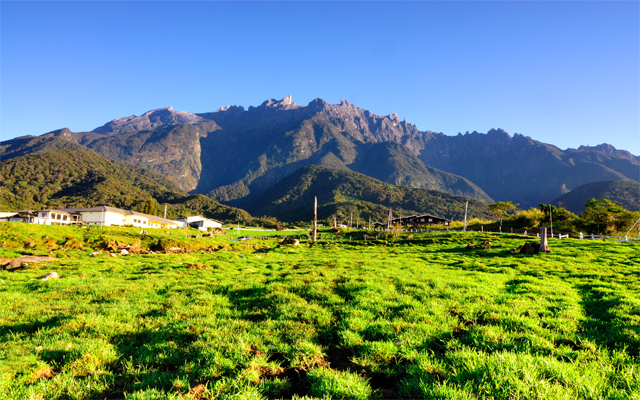
Other offerings by the agency include soft adventure packages to Mulu Caves, a UNESCO World Heritage site in Sarawak; Mount Kinabalu National Park, and Kinabatangan Wildlife Sanctuary in Sabah.
Sunflower Holidays managing director, Mint Leong, shared that there are dedicated personnel in its office to cater to the high-end segment, as they “tend to make last-minute bookings and changes to their itinerary.”
“Sometimes we get enquiries (from high-end clients) three days before the trip,” she said, adding that in this respect, they were different from their inbound counterparts who usually made their bookings ahead of time.
Virtual Bingo Tour
Why
The Covid-19 pandemic has spawned a whole generation of online tours that enable consumers to ‘visit’ destinations from the comfort and safety of their own homes. Many of these tours, however, feature pre-recorded walkthroughs with little audience engagement.
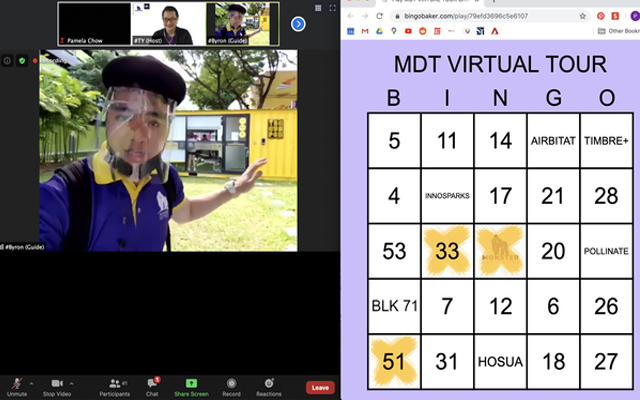
Seeing a gap in this space, Monster Day Tours has rolled out a series of Virtual Bingo Tours in Singapore, where tour guides stream live commentaries from both beloved and lesser-known places, and participants stand to win prizes by playing along with a Bingo card and trivia games.
What
The Virtual Bingo Tours are hosted on Zoom, with each ticket priced at S$10 (US$7). Participants can win a variety of mini-prizes, as well as a grand prize of S$1,000. The first tours, covering the one-north district, have been held twice a month since July and were sold out. The next tour will be held on September 5.
The following series will visit St John’s Island, with dates to be announced. More attractions, including behind-the-scenes visits, are being developed.
How
I joined the first Virtual Bingo Tour that explored the unique region of one-north. With my own Bingo card loaded on one half of my screen and the Zoom tour on the other half, I dove into the depths of Singapore’s “Silicon Valley”, led by Monster Day Tours’ co-founder, Byron Koh.
As Koh introduced the history of one-north and how it came to be the country’s hotbed for innovation, I kept my ears peeled for boxes on my Bingo cards that I could cross out. The cards were populated with a mix of key words – to be marked once they were mentioned – as well as numbers.
The numbers could be checked off during intervals, when a number wheel was spun or when co-founder and ‘moderator’ TY Suen dropped the group a trivia question. The first two respondents to send the right answer in the chat could each pick a number to be crossed out. At some junctures, we could even receive discounts from featured merchants.
By the second leg of the tour, Bingos were called across the chat. Every player who struck out a row of five boxes would be entitled to one spin on the mini-prize wheel, with prizes ranging from Grab and Starbucks vouchers, to even fresh fruit delivered to one’s doorstep.
Players who mark off three lines on their Bingo card will be entitled to one spin on the grand prize wheel. Unfortunately, none of the guests on our tour were quite so lucky.
Verdict
A tour in Singapore might ordinarily be a hot and humid affair in the sun, but from the comfort of my room, the two-hour Virtual Bingo Tour flew by too quickly. The Bingo game and trivia questions were excellent ways to keep participants immersed and engaged, while ensuring they kept up with the contents of the tour.
Both Suen and Koh, serving as our guides, were highly personable and enjoyable to have on the tour. Some segments were even reminiscent of a casual TV shopping experience as we grew curious about creations such as a recycling compactor and an environmentally friendly air-cooling unit.
The guides instructed participants to turn on their cameras, which was not explicitly stated before the session. Participants should ensure that their computer cameras have decent video quality, or inform Monster Day Tours beforehand if they are not comfortable with having their camera activated.
Rate: S$10
Contact:
Website: https://www.monsterdaytours.com/singapore-virtual-tours
Hotel Okura, Tokyo Management College partner to offer tourism and hospitality training

Hotel Okura has teamed up with Tokyo Management College (TMC), a practical vocational education institution in Chiba, Japan, to establish a Tourism and Hospitality Course curriculum at the college from April 2021.
Additionally, Hotel Okura is establishing an education and training programme in Japan for its overseas local staff, in cooperation with TMC and Tokyo Masuda Culinary School, a professional chef training institute located in Edogawa-ku, Tokyo.
This programme aims to strengthen and enhance the group’s global human resources and will allow its hotel staff to study under the new Tourism and Hospitality Course curriculum. It will also allow chefs preparing Japanese cuisine at Okura group hotels around the world to take classes at Tokyo Masuda Culinary School.
Hotel Okura plans to invest approximately 200 million yen (US$1.9 million) over the next 10 years in the partnerships with TMC and Tokyo Masuda Culinary School. The resulting study programmes will help to promote cultural exchange between Japan and other countries.
From April 2021, two-year Okura-branded Tourism and Hospitality Course accommodating 40 students will be offered. Hotel Okura will provide course content and instructors, and its group hotels will actively recruit students.
Hotel Okura will cover most of the tuition fees and related expenses of the Hospitality Service Programme for three selected employees of its overseas hotels and future hires every year. As well, the hotel group plans to provide opportunities for students to work at its hotels in Japan, so they can gain more practical knowledge and skills.
Under its partnership with Tokyo Masuda Culinary School, the school will provide cooking tuition in small group classes. Hotel Okura will cover most of the tuition fees and related expenses of the Japanese Cuisine Programme for three to five selected young chefs in its overseas group hotels every year. This programme will prepare them to play a key role supporting Japanese head chefs in Okura Hotels’ Yamazato restaurants as well as in Hotel Nikko’s Benkay restaurants overseas.
PATA, BBC’s new webinar series spotlights destination recovery efforts

PATA has partnered with BBC World News to launch the PATA Destination Insight Series, a webinar series examining how various destinations around the Asia-Pacific region and beyond is dealing with the impact of Covid-19 and their preparations towards recovery.
The webinar will consist of a high-level fireside chat with a BBC presenter, followed by a panel discussion offering a comprehensive, local perspective of each destination’s on-ground activities and preparations, from operations and logistics to marketing and communications.

PATA CEO Mario Hardy said: “As the travel and tourism industry looks to navigate the challenges of the current Covid-19 pandemic towards recovery, the PATA Destination Insight Series allows us to gain a better and more comprehensive understanding of various destinations and how we can work together towards this goal.”
The first episode of the series, which will take place on August 19 at 16.00 ICT, will focus on Azerbaijan, a country with rich culture, ancient heritage, amazing nature and warm hospitality. Azerbaijan Tourism Board (ATB) CEO, Florian Sengstschmid, will sit down with Rajan Datar, The Travel Show presenter, for a one-on-one interview to discuss the current status of travel and tourism in Azerbaijan and their plans for recovery.
As well, Datar will examine the current state of tourism in Azerbaijan from a local stakeholder perspective in a session joined by ATB deputy CEO Bahruz Asgarov, Azerbaijan Hotel Association general secretary Gunay Saglam, Pasha Travel COO Chingiz Mursalov, as well as Azerbaijan Airlines passenger airline’s director Jamil Manizade.
Future episodes of the PATA Destination Insight Series will be organised on the second Thursday of every month, with the next one scheduled for September 10.
To register for the webinar, visit here.
WTTC calls on world leaders to save tourism sector

WTTC has made an urgent call to the heads of state of the G7 countries, plus Australia, South Korea and Spain, for strong leadership and international collaboration to save the travel and tourism sector.
In an unprecedented move, 120 of the world’s major travel and global business leaders have signed a letter backing the call by WTTC.
Signatories include representatives from PATA; major airlines such as British Airways, Emirates, Etihad, Jet2, WestJet and Virgin Atlantic; top international hotel groups, such as Accor, Best Western, Hilton, Hyatt, InterContinental, Mandarin Oriental, Marriott, Meliá Hotels and Radisson; and major tour operators and travel companies, such as Abercrombie & Kent, American Express, Carlson Wagonlit, Expedia, Travelport, TUI and Uber.
WTTC said that despite travel and tourism’s crucial importance to the local and global economies, “there is no clear or internationally coordinated effort to protect this uniquely exposed sector”.
Gloria Guevara, WTTC president and CEO, said: “We have reached a stage where critical action is urgently needed. Any measures taken in silos moving forward will only worsen the plight of millions of ordinary people. We need to transcend politics and put the millions of livelihoods, which have been affected by Covid-19, front and centre.
“This is not a binary solution or a choice between health on the one hand, and jobs, the economy and travel on the other. We can make strong progress on all these fronts if we follow the expert advice from science and learn from the past and positive experiences of others.
“WTTC and the other signatories of the letter, sent to the leaders of the world, are committed to working together to help resolve the worst crisis of our generation, and bring back the millions of jobs impacted. However, the private sector cannot do this alone. It is vital that the leaders of these countries come together and prioritise rescuing the world from this unprecedented crisis, by acting in an effective and coordinated way to bring back more than 120 million jobs and livelihoods affected.”
In the letter, WTTC identified four measures which need concerted international framework and leadership to combat the coronavirus:
- Wearing a mask: This should be mandatory on all modes of transport throughout the entire traveller journey, as well as when visiting any interior venue and in locations where there is restricted movement which results in close personal contact and required physical distancing cannot be maintained. According to medical evidence, such measures can reduce the risk of the spread by up to 92 per cent.
- Testing and contact tracing: We need governments to invest and agree on extensive, rapid, and reliable testing, ideally with results available in as quick as 90 minutes, and at a low cost, before departure and/or after arrival (symptomatic and asymptomatic would-be travellers), supported by effective and agreed contact tracing tools. The application of one or multiple tests, with the second after five days, will help to isolate infected people.
- Quarantine for positive tests only: Quarantine for healthy travellers, which only serves to damage the economy, should not be necessary if testing is in place before departure and/or on arrival, and effective containment measures are taken five days later. This can replace blanket quarantine in a more targeted and effective way, significantly reducing the negative impact on jobs and the economy.
- Reinforcing global protocols and standardise measures: The adoption of global health and safety protocols will help rebuild traveller confidence and ensure a consistent, coordinated and aligned approach of the travel experience in addition to significantly reducing the risk of infection. We also support the Public Health Corridor Concept which promotes a clean and safe end-to-end journey.
WTTC stressed that its research has shown that even a modest resumption of travelling can have massive economic benefits and bring thousands of desperately needed jobs back; providing a critical boost for the travel and tourism sector and generating GDP for economies left floundering after being struck by the pandemic.
Taking tours online

When tourism activities in Malaysia came to a standstill during the almost-three-month-long movement control order period from March 18, imposed to stem the spread of Covid-19 in the country, tour and event specialist Laili Basir found his business rudely terminated.
Laili, who has been running traditional tours since 2010 and is the founder of Laili Basir Event Adventure, made the decision to use his expertise in a different way.

He moved online to sell virtual tours to anyone who is keen to experience destinations and attractions through their screen.
He told TTG Asia: “Selling virtual tours allowed me to build my customer base. I am certain that people would want to physically travel and visit those destinations at a later period, at their convenience. When they do, they can contact me for my tour services.”
While he started the initiative off with Whatsapp videos, he soon moved to the Malaysia Virtual Experience platform developed by Tourism Productivity Nexus as well as Zoom. These platforms allowed him to conduct pre-recorded virtual tours that showcase off-the-beaten-track destinations such as Semporna, Taman Negara National Park, Merapoh Caves and Ulu Baram in Sarawak, as well as extreme activities such as paragliding, free diving and rope swing, to a wider audience.
He said: “My intention is to offer the audience insider information that they will never find on Google or from travel agents.
“For instance, I provide live commentary during the viewing of my pre-recorded videos (and invite) participants to ask questions as they would on an live tour.”
While domestic travel is now possible and encouraged in Malaysia, Laili continues to conduct his virtual excursions as they provide his clients with an opportunity to learn about destinations before they commit to a paid physical tour sold by him.
Next on his cards is to offer virtual tours of Malaysia to foreign visitors keen on the country, through international travel platforms such as Airbnb Online Experiences.
“I am identifying unique experiences and destinations to offer which are currently unavailable on the platform,” he said.
Bali may not reopen to international tourists by September
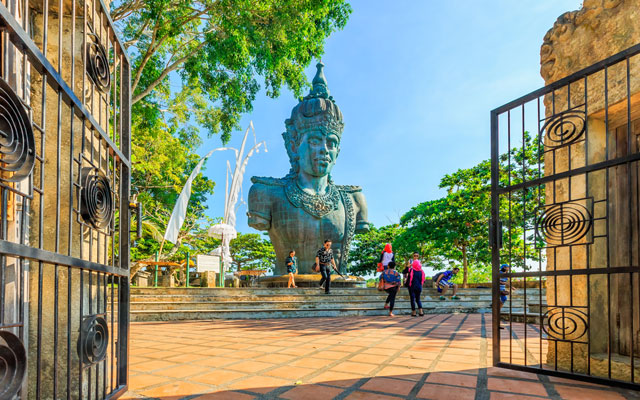
The Indonesian government is still considering whether to give Bali the green light to reopen to international visitors in September.
The travel ban on foreigners that the central government has set since April to curb the spread of coronavirus is likely not to be revoked by then, although the Bali administration has made known that the island is ready to receive international tourists from September 11.
Reopening the country to international tourists is a “very positive” move, but the government is seeking the right timing to do that, said state-owned enterprises minister Erick Thohir, who is also chairman of the national economic and Covid-19 recovery committee, during a web press conference on August 15.
He said that although Indonesia really needs foreign tourists, the government doesn’t want new Covid-19 clusters to emerge again.
According to a recent meeting among related ministers, including foreign affairs minister Retno Marsudi and coordinating minister of maritime affairs and investment Luhut Binsar Pandjaitan, safety remained the highest priority. Although the country was striving to get its economy back on track, the government did not want to go back to square one after its painstaking efforts to stem the Covid-19 spread, shared Erick.
“The reopening of destinations to foreign tourists is still under review. The vaccine may be available early next year,” Erick said.
Meanwhile, the country’s plan to establish travel bubbles hasn’t been burst. But the government is now exploring the possibility to include only Bali – or the island along with tourist destinations in other provinces – for the travel bubble scheme aimed at reviving its tourism industry.
The decision not to open the country as a whole is still under review, according to Hari Sungkari, deputy of infrastructure and destination development at the Ministry of Tourism and Creative Economy.
“It could be that the travel bubble will not involve a foreign country and the whole of Indonesia. It could be country A with Bali only, or country A with Bali and another region,” he said in a web press conference. “Or the bubble could be even smaller, that is, a point-to-point (travel bubble), in which (a destination) in a foreign country is (paired) with a destination in Indonesia.”
With talks for the project still underway, Hari expects that Indonesia will reach travel bubble agreements with partner countries only by year-end.
As travel bubbles will also require travellers to adhere to health and safety protocols, Indonesia Tourism Development Corporation will give them a fast track to enter its property, The Nusa Dua in Bali, said its director of business and development, Edwin Darmasetiawan.
Besides Bali, other tourist destinations that the government will propose for the travel bubble scheme were not disclosed by Hari. Ng Sebastian, owner of Incito Vacations, expressed hopes that the government would choose smaller islands, such as Lombok in West Nusa Tenggara, Belitung in Bangka Belitung Islands, and Bintan in Riau Islands.
The Covid-19 crisis has made the government’s target of attracting 18 million foreign tourists this year an impossible goal, said Hari. According to the government’s forecast, the number of foreign tourists in Indonesia will drop to around 2.8 to four million this year, from 16.1 million visitors in 2019.
Hari projects that the country would only realise its 18 million foreign tourist arrival target in 2024 or 2025, and that domestic tourism would recover to pre-pandemic levels only in 2023.

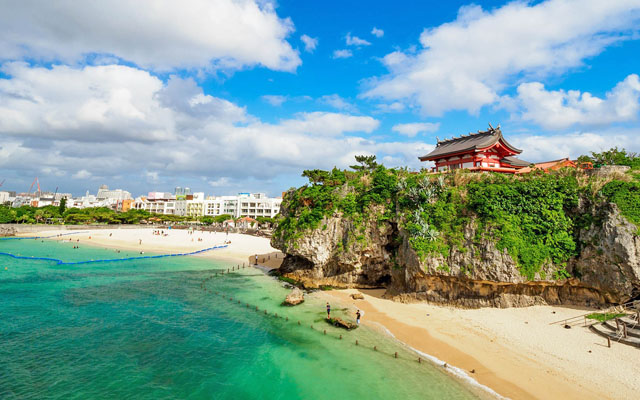






A fast-growing shift towards last-minute travel is emerging among local holidaymakers in Thailand amid Covid-19 uncertainty, found new data from SiteMinder.
According to the SiteMinder’s World Hotel Index, of all bookings made at Thai hotels in the last two weeks, just under 38 per cent are for stays during the month of August and over 35 per cent are for September. Less than 20 per cent of all bookings made at Thai hotels to date are for stays next year.
The findings mirror those found in SiteMinder’s recent Changing Traveller Report, which surveyed nearly 600 residents and found that 59 per cent would make their accommodation reservation less than a month before commencing their trip. The survey, conducted in July, also found that close to two in three Thais were already planning their next local trip, with 74 per cent intending to travel within the country before the end of the year.
SiteMinder’s regional vice president of Asia Pacific, Bradley Haines, said: “The rapid pace of change this year has presented hoteliers with the challenges of short-term planning and spontaneous or otherwise last-minute buying behaviour among their guests. The paths to purchase are now much shorter and it is important hoteliers adapt by ensuring they are bookable through a variety of sales channels, particularly on mobile and social media where consumers are spending more time than ever before.
“The ongoing crisis has instilled in many people a newfound appreciation for what their country has to offer, and that is clear here in Thailand. Residents are showing their openness to travelling locally through this period, which is allowing for local confidence to be built incrementally as life continues to normalise. The growing trend is critical to all local operators that have reopened.”
Local residents now constitute just over 95 per cent of the country’s hotel guests, according to the World Hotel Index, which is a stark contrast to the 29 per cent seen in August last year. Thailand’s hotel bookings currently sit at 39.77 per cent of 2019 volumes, representing a growth of 573 per cent since dropping to 5.91 per cent year-on-year – their lowest level in recent history – on April 12.