

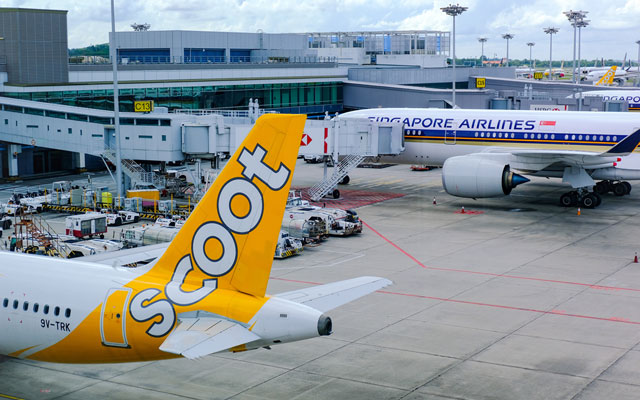
Hong Kong to ease quarantine rules for vaccinated visitors
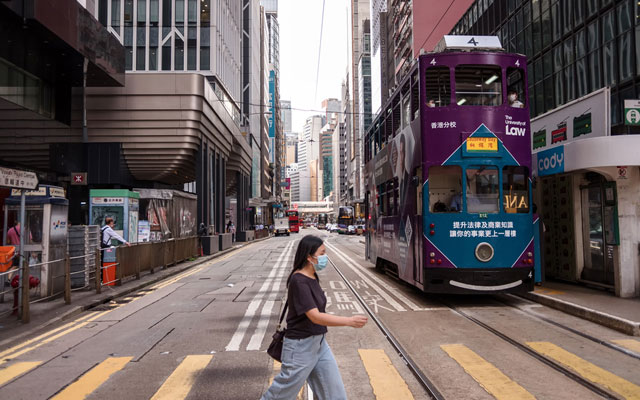
Hong Kong will reduce the mandatory quarantine period for fully vaccinated visitors by seven days from as early as end-April or early May.
Travellers from low-risk areas including Singapore, Australia and New Zealand who have received all required doses of a vaccine, need only serve a seven-day quarantine, instead of 14, at designated hotels.
Those from high- and medium-risk areas will serve a 14-day quarantine, instead of 21 days. All vaccinated visitors are required to self-monitor for another seven days after their quarantine, the Hong Kong government said in a release on Wednesday (April 14).
Meanwhile, Hong Kong residents returning to the city from abroad, with the exception of China, are still required to complete a 21-day quarantine.
The easing of quarantine rules come as Singapore and Hong Kong are finalising the details of the travel bubble, which will exempt travellers from the quarantine requirement. Discussions of the delayed Singapore-Hong Kong travel bubble resumed after Hong Kong brought the current wave of infections under control.
Hong Kong will make it mandatory for people leaving the city on these travel bubble flights to be vaccinated. However, Singapore will not impose the same vaccination requirement for incoming travellers from Hong Kong.
Veteran Indonesian travel journalist Daisy Hadmoko passes away

Daisy Hadmoko, Indonesia’s pioneer in travel journalism and founder of the country’s first B2B travel publication, Travel Indonesia Magazine, died from kidney failure on Wednesday (April 14) aged 90.
The Buddhist cremation ceremony takes place at the Grand Heaven crematorium in Jakarta today (April 16) and her ashes will be scattered at sea as per her wish.
Her husband passed away a long time ago. The couple had no children.
Through Travel Indonesia Magazine, Daisy supported the Indonesia directorate general of tourism to promote the development of the country’s tourism, a sector which was in its infancy when the magazine was first published in 1979, to the international audience.
As a veteran travel journalist, Daisy’s influence in tourism expanded beyond Indonesia into the South-east Asia and the Asia-Pacific region. She was a familiar face at major travel trade shows and conferences like ASEAN Tourism Forum, PATA Conference and Mart, and ICCA. Her reports offered valuable insights that kept the trade clued in on tourism developments within the region.
When Garuda Indonesia decided to publish an inflight magazine in 1981, Daisy was appointed publisher until 1992.
Daisy had also spearheaded media centres, coordinating the international media during international travel marts and conferences held in Indonesia, as well as Indonesia’s annual travel mart Tourism Indonesia Mart & Expo.
Daisy ceased publication of the Travel Indonesia Magazine in 2001 when she decided to retire.
She was the recipient of PATA Travel Journalism Award, ASEAN Tourism Association Special Award, and Indonesia’s Adikarya National Tourism Award.
Irish tours and activities booking solution readies for Asia expansion

Ireland-headquartered TripAdmit, which specialises in an end-to-end booking solution for tours and activities businesses, has set out on an Asian expansion, with Singapore as its launch pad.
Its core product, TripAdmit Thrive, comprises an online booking engine, price and inventory management system, online payment gateway, content and information management system, channel management solutions, and reporting and operations capabilities. TripAdmit Thrive is backed by a distribution network that includes hotels and airlines.
John Maguire, co-founder & CEO, told TTG Asia that the region is an attractive one, due to its growing appetite for tourism products and the presence of a large community of tours and activities providers that have been slow to digitise.
TripAdmit will take a progressive approach to its Asia expansion, with a careful selection of markets that are a best fit with its product and resources.
“(We have to consider) our product, the team that we have, and our network of contacts. When one enters a new market, having relationships and a network on the ground is important. For all that, Singapore makes the most sense for us,” Maguire explained, adding that he intends to move first into just one or two countries.
The company has made some new hires to support its expansion, including former Airbnb Experiences global market manager Matias Machesich, who is now international new business development manager with TripAdmit; and Carl Cromie, previously with GetTransfer, as director of travel partnerships.
The team is laying the groundwork for its Asian presence, with a focus on identifying different distribution partners as well as partners that it can “join up with, whether it is a reseller relationship or joint venture”.
Maguire sees opportunities to boost ancillary revenue streams for hotels in Asia that have had their traditional accommodation business affected by the pandemic.
Beyond hotels, Maguire believes that other tourism players such as travel agents, camp sites, accommodation sellers outside of hotels, and transportation companies could also benefit from upselling tours and activities.
“Traditionally, people see hotels and airlines as the masters of upselling ancillary products. But as the tours and activities industry digitises, it opens up connections to a wider travel industry,” he said.
TripAdmit will maintain its pricing model for Asia, which requires no upfront fees and charges begin only when the tours and activities provider starts generating revenue.
Museum of Ice Cream makes its way to Singapore

US-based experiential attraction Museum of Ice Cream (MOIC) will be opening its first international outpost in Singapore come August.
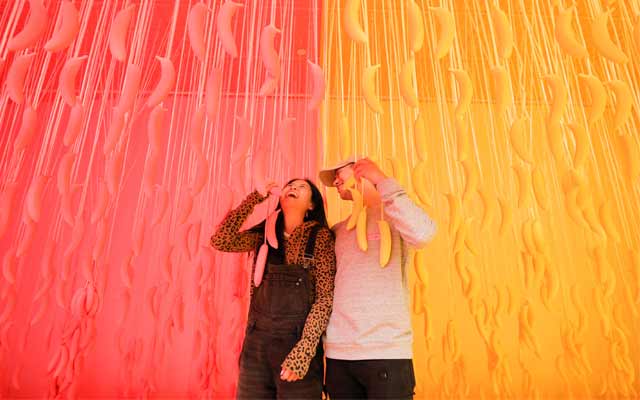
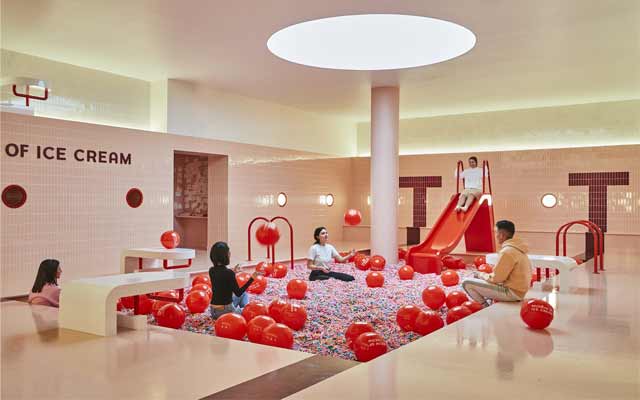
Set to be located in Dempsey, MOIC will feature 14 never-before-seen installations dedicated to the celebration and experience of enjoying ice cream. These include a fully functional, Singapore-inspired Dragon Playground; a pink and yellow jungle with 10,000 bananas; and the largest MOIC sprinkle pool ever created. Guests will also be able to enjoy five unique ice cream treats during the 60- to 90-minute guided experience.


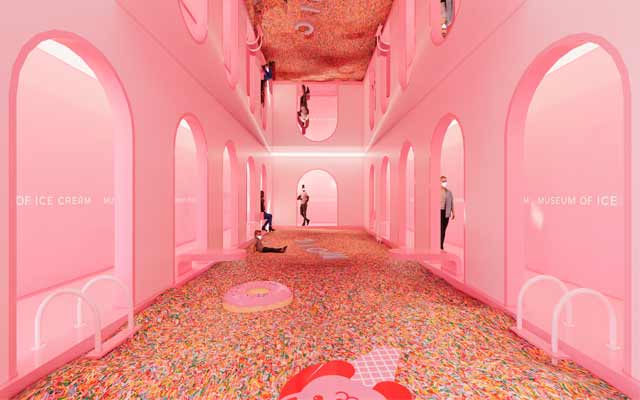
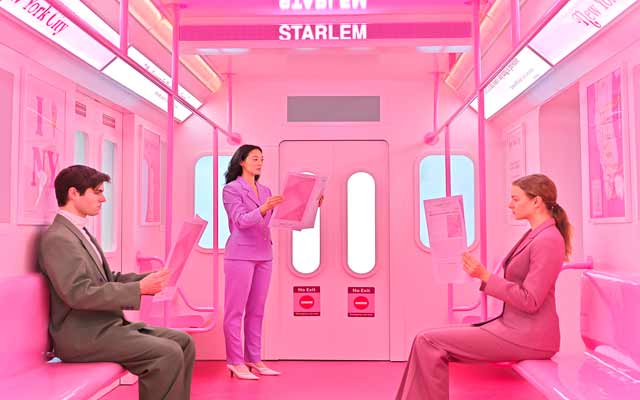

Maryellis Bunn, co-founder and creative director, said: “Ice cream is a universal symbol of joy that brings happiness to everybody, regardless of age and across all walks of life. Museum of Ice Cream is for the kid in all of us, and in a time when every little dose of positivity is needed, we hope to uplift spirits, and bring people together to make the world a happier place, one ice cream at a time.”
STB CEO Keith Tan said: “The Singapore Tourism Board is proud that Singapore is the first international location for the Museum of Ice Cream outside of the US. The opening of such innovative attractions adds vibrancy to our city, and underscores the tourism industry’s confidence in Singapore’s continuing appeal as a top travel destination.”
In keeping with safe management measures, the museum will put in place hygiene, safe-distancing, and logistical guidelines for its attraction, as well as retail and F&B spaces.
Reservations can be made at www.museumoficecream.sg.
Unwind with a wellness staycation at Parkroyal Collection Marina Bay
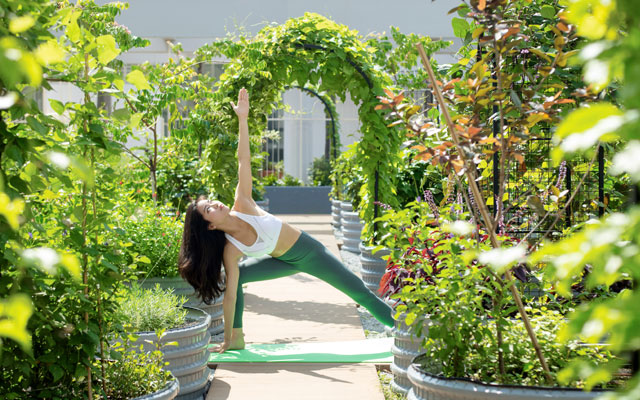
Pan Pacific Hotels Group brings the quintessential Club Med experience to residents in Singapore in an exclusive partnership that offers guests a unique wellness experience at Parkroyal Collection Marina Bay.
Embracing the key aspects to recharge and restore – fitness, rest and diet, the holistic staycation package at Parkroyal Collection Marina Bay is activated by Club Med’s signature Body & Soul programme.
The staycation experience includes a breakfast at all-day dining restaurant Peppermint, which serves up healthful farm-to-table cuisine. A guided urban farm tour brings guests to learn all about the diverse types of edible plants that are grown on-site for use in the various cuisines at the hotel.
Led by the Body & Soul team of instructors, a range of fitness classes including spin classes, bootcamps and zumba are on offer. Outside of class, the hotel’s recreational facilities such as the 24-hour fitness studio and swimming pool are available to complement the fitness regime.
Guests can also unwind with classes such as barre, yoga and mindfulness that seek to find inner peace, as well as restore balance and harmony.
Two options are available. The three-day, two night Body & Soul Experience (from S$455++/US$340) package includes a two-night stay in an Urban Room with breakfast for two at Peppermint; unlimited access to Body & Soul activities for one guest during the stay; one Body & Soul Welcome Kit; 20 per cent savings at St. Gregory, applicable on a la carte spa menu; as well as 20 per cent savings at Peppermint, Peach Blossoms and Atrium Lounge, applicable on a la carte menu.
The two-day, one-night Body & Soul Experience (from S$255++) package includes a one-night stay in an Urban Room with breakfast for two at Peppermint; unlimited access to Body & Soul activities for one guest during the stay; one Body & Soul Welcome Kit; 20 per cent savings at St. Gregory, applicable on a la carte spa menu; as well as 20 per cent savings at Peppermint, Peach Blossoms and Atrium Lounge, applicable on a la carte menu.
The offer is valid for bookings from now through September 15, 2021, for stays from now through September 30, 2021. A one-night penalty charge applies for cancellations within 48 hours of arrival. Bookings must be made at least three days in advance.
Malaysia resumes tourism fund to aid sector
The Ministry of Tourism, Arts and Culture Malaysia (MOTAC) has resumed a tourism fund dubbed Gamelan for tourism operators to avail of for promotions and marketing campaigns to revitalise the tourism sector.
The fund, first introduced in July 2019 with an allocation of RM5 million (US$1.2 million), was postponed last year due to the implementation of the movement control order and the country shutting its border to foreign arrivals.
The Ministry of Finance has approved the resumption of the remaining special allocation of RM3,086,180 for the Gamelan programme, for use through this year.
Tourism, arts and culture minister Nancy Shukri said that the tourism fund guidelines have also been improved to help reactivate the tourism, arts and culture sectors that have been adversely affected by the pandemic.
The allocation ceiling for each company requesting assistance has been increased from RM200,000 to RM300,000. For domestic and foreign promotions, it has been increased to RM20,000 and RM30,000, respectively.
Those involved in digital promotional activities such as participation in online travel exhibitions and virtual sales missions including webinars can apply for a matching grant.
The grant works on the basis of reimbursable financial assistance, with eligible companies allowed to claim 50 per cent of the total cost of their promotional project or the maximum amount allowed for each project category. Application and payment procedures have also been simplified.
Eligible companies include accommodation and product operators; integrated resorts; registered tourism agencies; travel, hospitality and shopping associations; and community-based tourism operators.
However, consideration of the application is subject to compliance with standard operating procedures issued by the Ministry of Health and the National Security Council, which are updated from time to time.
Uzaidi Udanis, president, Malaysian Inbound Tourism Association (MITA), said: “The reintroduction of the matching grant is timely as the Arabian Travel Market is just around the corner and it is an important trade show for Malaysian sellers wishing to tap the Middle East market.”
“(The grant) will assist (MITA members) to organise roadshows and training workshops on identifying, pricing and packaging new offerings in off-the beaten-destinations in Malaysia.”
Japan’s Hoshino Resorts looks to make inroads into the US
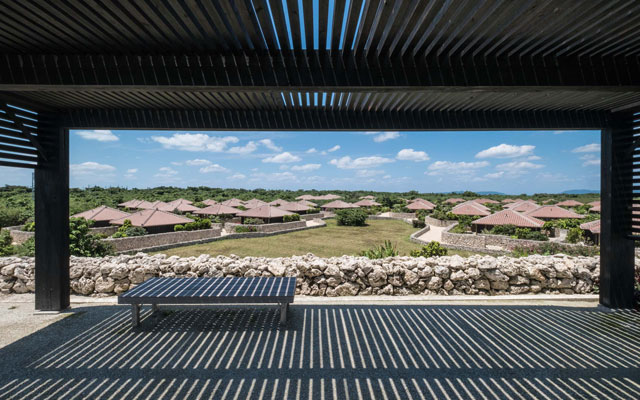
Japanese resort operator Hoshino Resorts is eyeing the North American market as part of ambitious overseas expansion plans, with the goal of opening a facility on the US mainland within the next five years.
The move follows the successful reopening of the company’s first US property, Surfjack Hotel & Swim Club in Honolulu, Hawaii, in 2020.
Representatives of the 107-year-old company have discussed plans with real estate developers and investors, while looking for a partner with whom to build the facility, according to its CEO Yoshiharu Hoshino. They have also inspected locations. One possibility is Saratoga Springs, a city of about 27,000 people in central New York State. With naturally occurring mineral springs, the site has been popular as a resort for the past 200 years.
In an interview on Bloomberg TV, Hoshino said a new US-based resort would attract Americans who want to experience some aspects of Japanese culture, but might be hesitant or unable to travel abroad.
In recent years, Hoshino Resorts has made clear its intention to expand overseas, with the opening of Hoshinoya Bali, Indonesia, in 2017; and Hoshinoya Guguan, Taiwan, in 2019. The company is also set to open Hoshino Resorts Kasuke Tiantai in China’s Zhejiang province come 2021.
“Hoshino Resorts has a goal of developing hot springs globally,” Asako Sato of the company’s global marking department told TTG Asia. “We believe by opening one in North America, we will be able to have a good start to spread the hotel category around the world.” The company, she added, is “always looking” for opportunities outside Japan.
The medium- to long-term decline of Japan’s population and the resultant shrinking of the country’s domestic tourism market, coupled with the impact of Covid-19, are thought to be among the reasons motivating Hoshino Resorts’ interest in North America. Hoshino predicted that travel and business at Hoshino Resorts would not return to pre-pandemic levels until 2023.
New hotels: Andaz Bali, Niccolo Suzhou, and more
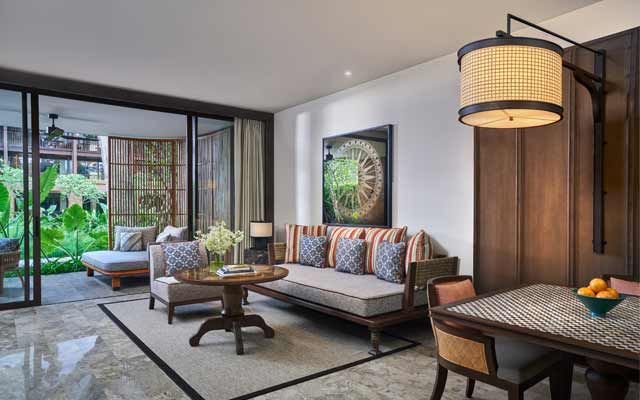
Andaz Bali, Indonesia
The opening of Andaz Bali marks the entry of the Andaz brand into Indonesia, as well as the brand’s first resort in Asia. Offering a modern take on the traditional Balinese village, Andaz Bali is located in the heart of Sanur, a quaint seaside village.
Set in low-rise clusters, the guest accommodations and facilities are spread across a lush tropical landscape. Andaz Bali features 149 guestrooms including 18 Garden Villas and four Beach Villas arranged in a series of courtyards. Starting at 66m2, the rooms, suites and villas are designed in contemporary Balinese style, using locally sourced materials. Each room boasts a private balcony overlooking the garden, ocean or lagoon. Steps from the beach, each of the 578m2 two-bedroom Beach Villas offers a verdant outdoor terrace for intimate gatherings and barbecues, a living room, a swimming pool and in-villa check-in.
The resort’s signature restaurant, Fisherman’s Club, is a modern take on a Jimbaran seafood dining experience with a beach club ambience. Taking inspiration from the shophouses in Denpasar’s Chinatown, Village Square features four intertwining restaurants on the ground floor with a private dining room and guestrooms on the upper floor. Dining options include Asian fare and Indonesian favourites from Wok Wok, meat fresh from the grill at Fire Fox, roasts from the eponymous Blue Oven, as well as coffee and desserts from Deli & Bakery.
Connected via a herb and flower garden, Shankha Spa in the adjacent Hyatt Regency Bali offers treatments inspired by Balinese healing traditions. It also houses a fitness centre, sauna, steam room, hot and cold plunge pools, yoga space, an adults-only pool and a small boutique and lounge. A trio of swimming pools await guests at Andaz Bali: an infinity beachfront pool, a children’s pool, and a pool that sits beneath a majestic tree. For gatherings and events, the resort offers four interconnected Studios that span a total of 236m2. Also available are a variety of outdoor venues including the beach, garden, Beach Villas and private courtyards.
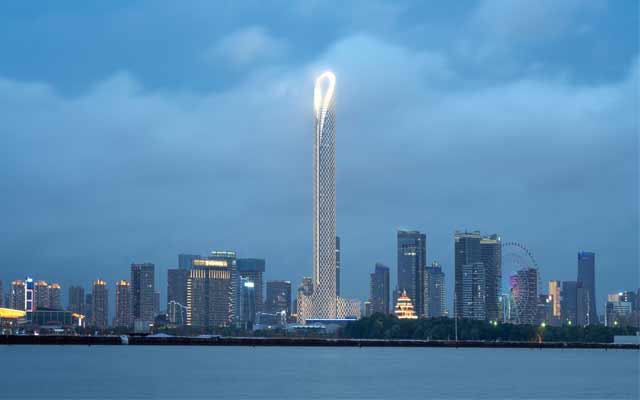
Niccolo Suzhou, China
As the fifth member of Wharf Hotels’ growing portfolio of Niccolo Hotels, Niccolo Suzhou has opened at the top of the majestic new super-skyscraper, the 450m-tall Suzhou International Finance Square. With panoramic views over neighbouring Jinji Lake and the Suzhou skyline, the hotel is home to 233 rooms and suites. F&B venues include Niccolo Kitchen for authentic western and oriental cuisine, a tea lounge, and a bar. The Niccolo Room, the hotel’s event space, along with The Conservatory, offers flexible meeting space for events. There is also the Sky Pool & Jacuzzi on the 117th floor, alongside a fitness studio and gym.
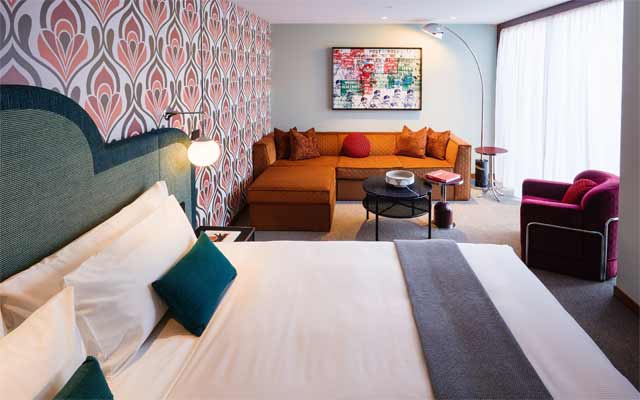
Ovolo South Yarra, Australia
Located next to the intersection of Toorak Road and Chapel Street in Melbourne’s cultural hub of South Yarra, Ovolo South Yarra boasts 123 rooms ranging from micro-hotel rooms to Rockstar Suites named after the era’s most iconic. Led by Melbourne chefs Shannon Martinez (Smith & Daughters, Smith & Daughters Deli) and Ian Curley (French Saloon, Kirk’s Wine Bar), Lona Misa is a vegan bar and kitchen located in the hotel. When booking direct, guests can savour sundowner drinks at social hour, midnight treats from the minibar, and complimentary breakfast. Other perks include fast Wi-Fi, 24-hour gym access and self-service laundry.
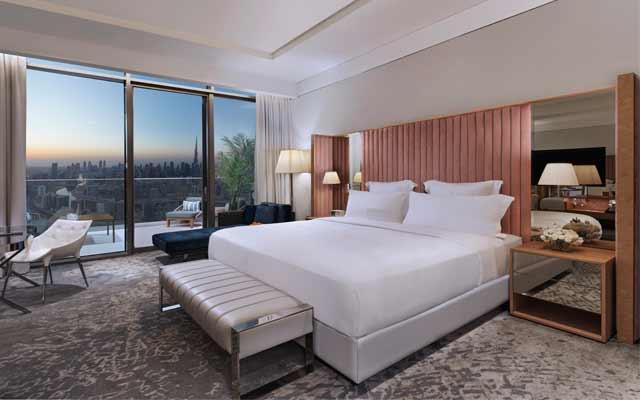
SLS Dubai, UAE
Accor has expanded its SLS Hotels & Residences brand to the Middle East with the opening of SLS Dubai. Developed in partnership with World of Wonders Real Estate, the new 75-storey property is one of Dubai’s tallest buildings. Located in the Downtown district, SLS Dubai features 254 rooms, 371 residential units, and 321 hotel apartments. F&B venues include Fi’lia, the entirely female-run restaurant; and Carna by Italian butcher Dario Cecchini’s contemporary steakhouse. The opulent Sky Lobby on the 71st floor offers panoramic views of the city’s skyline, while lounge area S Bar showcases both healthy and sinful menu options. On the 75th floor sits Privilege, a lounge and nightlife venue, featuring a pair of infinity pools. Café EllaMia serves a modern coffee experience, while 12 Chairs is a caviar bar exclusively reserved for select guests. Other amenities include a spa, plunge pools, a hair and nail salon, a gym and two outdoor terraces.
Singapore rolls back restrictions for local tours
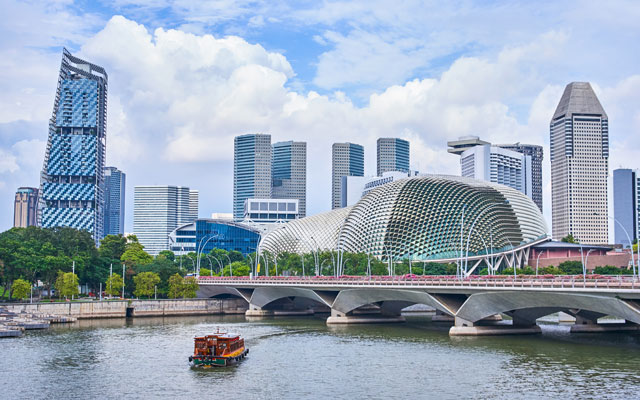
Walking, cycling and kayaking tours in Singapore are now allowed to take groups of up to 50 people, up from the previous limit of 20.
Effective since Wednesday (April 14), the move is part of the further easing of Covid-19 measures announced last month, the Singapore Tourism Board (STB) said in an update on Monday.
However, tours must still adhere to existing gathering size limits, with participants to be spilt into groups of no more than eight individuals, with at least 1m safe distancing and no intermingling between groups.
In addition, tour operators are no longer required to obtain approval for each tour itinerary, but can apply to STB to resume operations under a single application.
Tour operators and tourist guides who have previously received approval to resume tours from the Ministry of Trade and Industry do not need to seek approval again.
Even as restrictions are rolled back for tours, tour agencies must still comply with prevailing safe management measures, including mask-wearing for tour guides and participants. Operators are also required to rigorously clean and disinfect high-touch surfaces like tour equipment and vehicles used for transportation.







Singapore Airlines (SIA) and Scoot will stop carrying transit passengers on their flights from Singapore to Hong Kong until further notice, due to new regulatory requirements in Hong Kong.
SIA’s move will take effect from Saturday, while Scoot will stop carrying transit passengers from Singapore from April 30, the airlines said in statements on Thursday (April 15).
Both SIA and Scoot told Channel NewsAsia that their respective services from Hong Kong to Singapore remain unaffected, and that passengers originating from Hong Kong will be allowed to transfer through Singapore Changi Airport en-route to their final destinations.
SIA stated that affected customers may rebook or request a refund, while Scoot said that customers who have booked transfer flights to Hong Kong will be refunded, according to the report.
The move comes after SIA passenger flights departing from Singapore were banned from landing in Hong Kong from April 3 to April 16, after a passenger on SQ882 flying from Singapore to Hong Kong on March 31 tested positive for Covid-19 upon arrival. In addition, three passengers on the flight had breached quarantine requirements.
Meanwhile, Scoot passenger flights departing from Singapore will not be allowed to land in Hong Kong from April 16 to April 29, after TR980 arriving from Singapore to Hong Kong on April 11 carried two passengers who tested positive for Covid-19. Additionally, one passenger had also broke quarantine requirements.