Cross Hotels & Resorts, owned by Flight Centre Travel Group, has inked a hotel management agreement with Thailand’s Kasetsinn Co. to open Cross Pattaya Phratamnak this August.
Cross Pattaya Phratamnak is the group’s first property after the rebranding of its luxury label, X2 to Cross.
Representatives from Cross Hotels & Resorts and Kasetsinn Co. at the signing ceremony, led by Cross CEO Harry Thaliwal (third from left) and Kasetsinn managing director Thop Chandraprasert (third from right)
It will feature 78 guestrooms and suites, a spa, fitness centre, kids club, swimming pool, beach house, fine-dining restaurant and bar, and state-of-the-art meeting facilities.
Thop Chandraprasert, managing director of Kasetsinn Co., said in a press statement: “The hospitality industry is built on trust and we believe we have found the perfect partner with the strongest brand image to drive this amazing hotel to both the domestic and global marketplace. Cross Hotels & Resorts has an extraordinary portfolio of existing properties and I am honoured to be part of the family.”
Cross Hotels & Resorts currently operates 21 hotels across three brands – Cross, Cross Vibe and Away – in Thailand, Vietnam and Indonesia.
A new hotel management contract between Archipelago International and Jabal Omar Development Company (JODC) will bring the former’s Royal Alana and Alana brands to Saudi Arabia’s holy city.
The 581-key Jabal Omar The Royal Alana Makkah and 560-key Jabal Omar The Alana Makkah, both five-star properties, will sit within the prestigious Jabal Omar project, a few steps from the Holy Mosque in Makkah.
Jabal Omar The Royal Alana Makkah and Jabal Omar The Alana Makkah are located close to the Holy Mosque in Makkah
Commenting on the new partnership, Gerard Byrne, managing director, Archipelago Overseas, said: “We are fortunate to work with a partner like JODC who understands the value and importance of superior hospitality experiences that are specifically customised to the needs of guests from South-east Asia and in particular Malaysia, Indonesia and Brunei.
“South-east Asia is one of the fastest growing and strategically important source markets for the Kingdom and its Vision 2030 programme. Our positioning, brand equity and infrastructure in these markets means we can deliver for our partners and add significant value to projects, not only in the holy cities, but throughout the Kingdom and the region.”
Khaled Al-Amoudi, JODC’s CEO, affirms the company’s commitment to “(keeping) up with the ambitious vision of Saudi Arabia 2030 in supporting the hospitality sector and enhancing the spiritual experience of pilgrims, by expanding our partnerships with a group of international hotel brands at the Jabal Omar destination”.
Al-Amoudi added that the partnership between JODC and Archipelago will allow guests to “perform their rituals and return home with the most beautiful and unforgettable spiritual memories”.
Delhi has imposed a week-long lockdown from April 19 to contain a spike in Covid-19 cases, which has put the Indian capital’s health system “at a tipping point”.
Delhi chief minister Arvind Kejriwal said the move was necessary now to prevent “a bigger disaster” down the road.
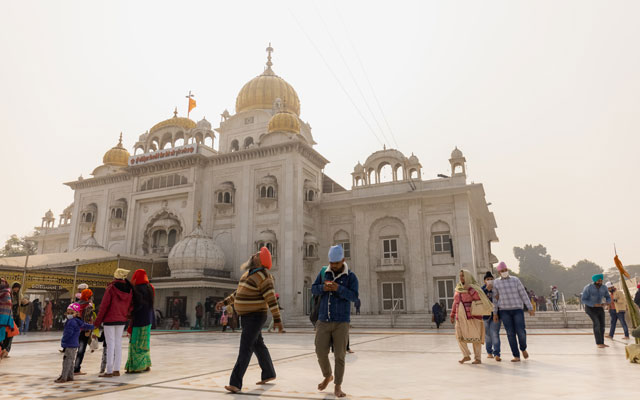
Delhi enters a week-long lockdown as new Covid-19 cases strain healthcare services; Gurdwara Bangla Sahib in New Delhi pictured
Delhi has had five consecutive days of more than 200,000 cases as of Monday. On Sunday alone, 25,500 fresh cases were reported, with almost one-third of those tested returning positive Covid-19 results.
Businesses are shut and movement is restricted to essential services throughout the lockdown.
Thirteen other states, such as Maharashtra and Tamil Nadu, have also recently imposed movement restrictions to combat fresh waves for Covid-19 infections. According to AFP data, India has recorded more than 1.4 million cases in the past week.
These restrictions are bruising India’s tourism and hospitality players, who have reported cancellations of room and banquet bookings at a time when many are still struggling to recover from the massive losses incurred since early 2020.
Meanwhile, against this challenging backdrop, the Indian government announced on Monday that it will expand the national vaccination programme to all adults from May 1. The programme, which started in January 2021, is presently available only to residents aged 45 and above.
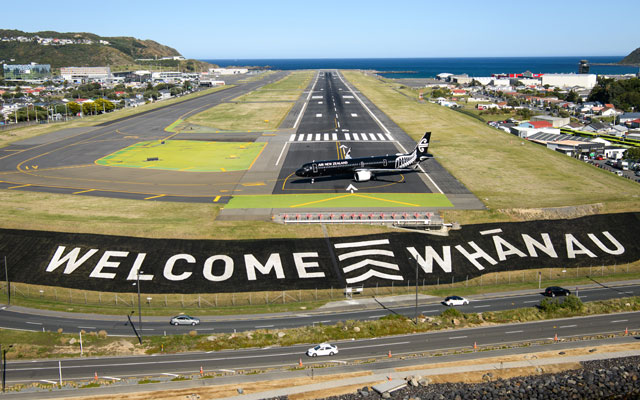
New Zealand welcomed back its first international visitors from Australia with a 250m by 12m “Welcome Whānau” (family) banner spread out on a grass embankment at the foot of Wellington Airport’s runway.
Wellington Airport extends warm Kiwi welcome to passengers arriving from first trans-Tasman bubble flights
The first flight from Sydney touched down in Wellington at 13.00 (NZDT) today (April 19), under a quarantine-free travel bubble reestablishing air links between Australia and New Zealand after a year-long separation due to the pandemic.
The mural initiative is a collaboration between Air New Zealand, WellingtonNZ and Wellington Airport, with support from New Zealand Māori Tourism and Tourism New Zealand.
Israel will begin reopening its doors to vaccinated groups of foreign tourists through a phased approach from May 23, 2021, more than a year since shutting its borders to stem the spread of Covid-19.
Tourism minister Orit Farkash-Hacohen and health minister Yuli Edelstein agreed on a framework for the phased reopening of Israel, based on advice from the Covid-19 task force set up by the Ministry of Tourism and Ministry of Health.
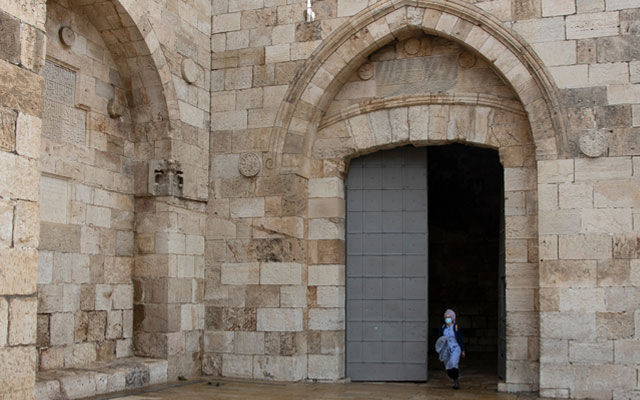
Israel to welcome select vaccinated foreigners from next month; a woman passing through Jaffa Gate in Jerusalem, Israel pictured
In the first stage, a limited number of groups will be allowed to enter Israel, under a pilot programme adhering to guidelines to be published by the ministries. The number will be increased based on the health situation and progress of the programme. Individual travellers will be allowed into Israel in the second stage, with health considerations determining the timeline.
All visitors will be required to undergo a PCR test before boarding the flight to Israel, and a serological test to prove their vaccination upon arrival at Ben Gurion Airport. In the meantime, discussions will continue with various countries to reach agreements for vaccine-certificate validation, so as to do away with the need for the serological test.
“Israel is the first vaccinated country, and the citizens of Israel are the first to enjoy this result. After opening the economy, it is time to allow tourism in a careful and calculated manner… We will continue to look at easing regulations in accordance to the health situation,” Edelstein said.
Farkash-Hacohen added: “Only opening the skies for international tourism will truly revive the tourism industry, including restaurants, hotels, (tourist) sites, tour guides, buses and others looking to work and provide for their families. I will continue to work for the full opening of tourism to Israel, which will greatly assist the Israeli economy and create (work) for many Israelis.”
Noella Ferns has been appointed as head of sales, Asia Pacific, by British Airways.
Based in Hong Kong, she will be responsible for all sales and commercial activity for the region, covering mainland China, Japan, Hong Kong, Singapore, Malaysia, Thailand and Australia.
She was previously the airlines executive vice president for Greater China and the Philippines, where she drove the airline’s commercial and external communications strategy in key Chinese markets including Beijing and Shanghai.
In total, Ferns has over 30 years’ experience at British Airways across senior management, sales and airport operations in Sydney, Hong Kong and Beijing.
The announcement of the trans-Tasman travel bubble earlier this month has triggered a massive spike in travel searches between Australia and New Zealand for stays over Anzac Day, The Queen’s Birthday and Christmas public holidays.
Agoda’s search data revealed an 850 per cent increase in searches by Australians looking for accommodation in New Zealand, and 470 per cent increase for New Zealanders searching for trips to Australia, following the announcement that the trans-Tasman travel bubble will commence today (April 19).
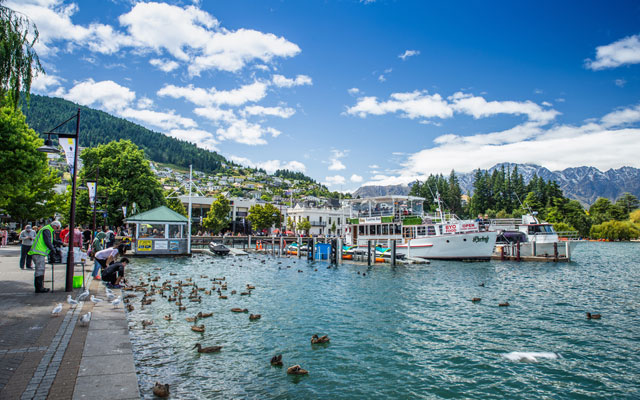
New Zealand’s Queenstown jumps to number one most searched international destination among Australian travellers on Agoda’s platform following Trans-Tasman travel bubble announcement; Lake Wakatipu in Queenstown pictured
While both markets experienced a boost for tourism in more off-the-beaten-track destinations by domestic travellers during the Covid period, big-ticket tourist spots of the Gold Coast, Sydney and Melbourne, plus Auckland, Queenstown and Christchurch are very much back in vogue for the Trans-Tasman travellers, respectively.
Following the announcement of the trans-Tasman route opening, Queenstown shot to the top spot for searches on Agoda.com by Australian origin travellers, knocking Bali into third spot, behind Thailand’s Pattaya. Auckland comes in seventh place, with neither New Zealand destinations having featured in the top ten international searches the week prior to the announcement on April 6.
Meanwhile, New Zealand origin international search data shows a massive swing towards Australia travel searches, taking five of the top ten international searches post the announcement, up from only two the week preceding.
“This surge in searches and bookings following the Australia and New Zealand governments’ announcement of the Trans-Tasman agreement, is reflective of a trend we have witnessed in both Australia as domestic borders reopened, and across Asia-Pacific as more markets discuss opening travel corridors,” said Zsuzsanna Janos, director Oceania at Agoda.
“The desire for immediate travel to international spots clearly highlights people’s pent-up desire and passion to travel again, as soon as there is a safe option to do so. But what’s also interesting is the return of longer-term travel planning, as per pre-Covid-19 times, which reflects a resurgence in travellers’ confidence.”
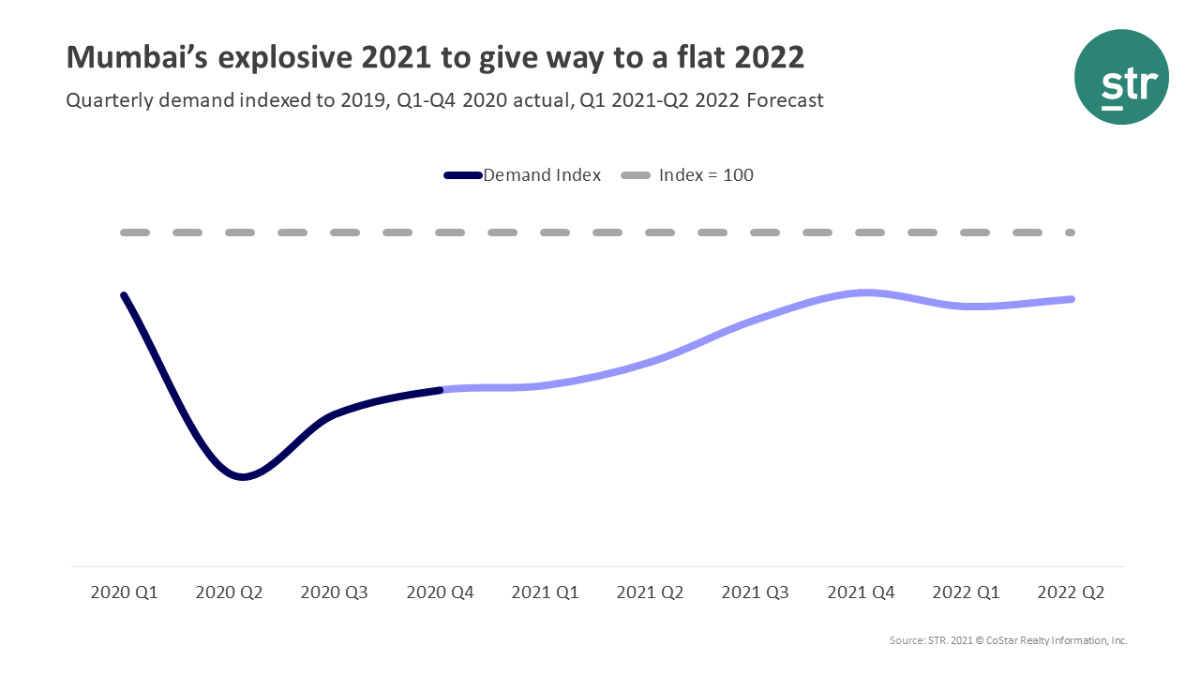
Hotels in India’s commercial capital of Mumbai, which has witnessed a rapid rebound post-Covid on the back of domestic demand, is projected to return to more moderate levels, as India battles a second Covid-19 wave, according to a recent market forecast from STR and Tourism Economics.
Driven by domestic business travel and quarantine guests, Mumbai recaptured 65 per cent of demand in February 2021 when compared with pre-pandemic levels. Group demand, which continues to lag in most markets worldwide, surpassed 70 per cent of pre-pandemic levels during the month.
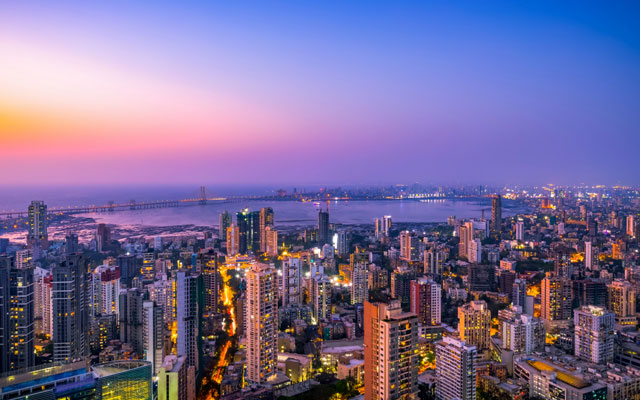
India’s Covid surge threatens to derail recovery of Mumbai’s hotel sector; Mumbai’s cityscape pictured
Preliminary data for March showed a slowing in Mumbai’s demand amid rising Covid-19 case counts and subsequent tightened restrictions.
“Although Mumbai has not escaped the impact of the pandemic, the market performed exceedingly well for a major metropolitan area in a world that has preferred rural, nature-based destinations,” said Vidhi Godiawala, STR’s business development manager for South and Central Asia. “Further bucking global trends, business and even group demand returned early to India’s financial capital, lending hope for a second swift recovery for hoteliers as the market contends with a second wave of Covid cases.”
Data from Tourism Economics showed that international arrivals contributed to only 23 per cent of nights spent in Mumbai, even before the pandemic. The market’s strong reliance on domestic guests helped drive demand more than halfway to its pre-pandemic highs prior to the new surge in Covid-19 cases.
“Domestic demand will drive recovery post-lockdown as international travel remains uncertain,” Godiawala said. “While 2021 may be shaping into a feast-or-famine year with the newest wave of cases representing a significant headwind to recovery, hoteliers can anticipate a more sedate 2022 as travel normalises and seasonal travel patterns return. The flatter trend heralds the end of the initial recovery boom, with demand growth expected to continue at a more moderate pace in the medium- to long-term.”
The Covid-19 pandemic has put Singapore hotels in an unusual jam, as 90 per cent of revenue had come from international tourists before borders were shut and travel was heavily restricted.
However, according to Kwee Wei-Lin, president of the Singapore Hotel Association, Singapore hotels have shown remarkable resilience by adapting themselves either to the government’s Stay-Home Notice quarantine hotel programme or domestic staycation business.
In this new episode of TTG Conversations: Five Questions video series, Kwee also talks about how industry agencies and associations came together to tackle the tourism crisis early on, critical lessons Singapore hoteliers have taken away from the predicament, changes to hotel operations and business going forward, and Singapore Hotel Association’s efforts to support members.
Once upon a time, Wonosobo and Banyumas in Central Java were favourites of European travellers who were drawn to the Baturraden mountains, Dieng Plateau and Hindu temples in the areas. Over time, the appeal waned, as these travellers were lured away by scenic train rides between Bandung and Jogjakarta.
However, completion of Trans-Java toll roads connecting major cities in the province at end-2018 has injected new life into two destinations. Domestic road trips across Java have flourished along with a growing presence of new hotels such as those managed by Indonesian company Dafam Hotels & Resorts in second- and third-tier cities across Central Java.
Go on offroad Jeep rides in Banyumas
With international borders shut during the pandemic, Indonesian residents took to touring their own backyard, allowing the domestic road trip segment to rebound as soon as movement restrictions were lifted and attractions were once again allowed to welcome visitors in mid-2020.
Encouraged by the strong domestic interest, the regency government and industry players are taking the opportunity to refresh their product offerings.
Building on Banyumas’ natural adventurous appeal, the regency government intends to use 200 billion rupiah (US$14,286) from the post-Covid-19 National Economic Fund for attraction development. It aims to leverage the area’s beloved Baturraden mountains and the 200 waterfalls within to attract visitors.
These efforts will complement the range of nature attractions managed by Palawi Risorsis, a subsidiary of Perhutani, a state-owned company of the Ministry of Environment and Forestry. They include the Pancuran Tujuh hot springs and adventure activities like trekking, offroad drives and camping.
With tourism in the government’s long-term vision, Achmad Husein, the regent of Banyumas, said the construction of a botanical garden in Baturraden will kick off development plans this year. Along with the gardens, water sports facilities in Purwokerto city and a floating market along Serayu River will materialise. Two docks have already been built along the river to facilitate this development.
Eco-printing activity at Banyumas
Visitors to Banyumas can also look forward to a new eco-printing facility that is part of the Bruwun Alas Village Education programme. Here, visitors can observe community members print cloth using dyes and leaves collected from around the village. They can even print their own cloth souvenir.
“These will give travellers alternative attractions beyond Baturraden (mountains),” said Achmad.
Over at Wonosobo and the neighbouring Temanggung area, local authorities are riding on the region’s newfound fame in coffee bean production, which has won international recognition through competitions.
Today, taking a tour of a coffee plantation and learning to pick coffee beans and then brew a hot cuppa is a fresh tourist offering.
Two Heart Coffee, a home industry and coffee shop located in the Posong area, about 20 minutes by car from Wonosobo city, beckons visitors with a chance to roast, brew and taste the famous Kopi Posong and sample local sweets while learning about the history of the local coffee industry.
After acquiring a caffeine boost, visitors can proceed to the Posong Recreational Park on the slopes of Sindoro Mountain. Opened in 2019, the park comprises a recreational area, camping and glamping grounds. It is loved for its sun rise and sun set views.
Zuniyanto, Posong Recreational Park manager, said glamping groups often arrive in the afternoon to take in views of the tobacco and tea plantations before catching the sunset glows and indulging in a barbecue dinner over a bonfire. Come morning, the group will watch the sun rise over the horizon, have breakfast and partake in activities such as team-building games or plantation tours.
Zuniyanto recalled that a 2017 film, Filosofi Kopi, had propelled Posong into the spotlight. With the opening of the park, a number of tour operators from Yogyakarta and Central Java streamed in with travellers from the Netherlands, Germany and Malaysia.
Pranoto Hadi Prayitno, director of Citra Gilang Tour, said recent tourism developments in Wonosobo and Banyumas are perfect for the domestic tourism markets.
“But they could eventually attract international travellers with new facilities developed with specific target markets in mind. The hot springs in Baturraden, for example, could attract the Japanese crowd if onsen-like facilities were created,” he suggested.
He also encouraged local travel companies to promote Wonosobo and Banyumas to regional markets through travel tradeshows, and avoid relying on traditional European markets as international travel resumes.
















Delhi has imposed a week-long lockdown from April 19 to contain a spike in Covid-19 cases, which has put the Indian capital’s health system “at a tipping point”.
Delhi chief minister Arvind Kejriwal said the move was necessary now to prevent “a bigger disaster” down the road.
Delhi has had five consecutive days of more than 200,000 cases as of Monday. On Sunday alone, 25,500 fresh cases were reported, with almost one-third of those tested returning positive Covid-19 results.
Businesses are shut and movement is restricted to essential services throughout the lockdown.
Thirteen other states, such as Maharashtra and Tamil Nadu, have also recently imposed movement restrictions to combat fresh waves for Covid-19 infections. According to AFP data, India has recorded more than 1.4 million cases in the past week.
These restrictions are bruising India’s tourism and hospitality players, who have reported cancellations of room and banquet bookings at a time when many are still struggling to recover from the massive losses incurred since early 2020.
Meanwhile, against this challenging backdrop, the Indian government announced on Monday that it will expand the national vaccination programme to all adults from May 1. The programme, which started in January 2021, is presently available only to residents aged 45 and above.