TTG Asia
Asia/Singapore Wednesday, 31st December 2025
Page 935

Trade’s petition against Bali’s closure till 2021 draws thousands of signatures

0

An effort by Indonesian travel companies is underway to try to gather 5,000 signatures for a petition calling on president Joko Widodo to allow Bali to reopen to international tourists from September 11.

This comes as the Bali governor I Wayan Koster confirmed over the weekend that Bali’s borders will remain closed through the rest of 2020.
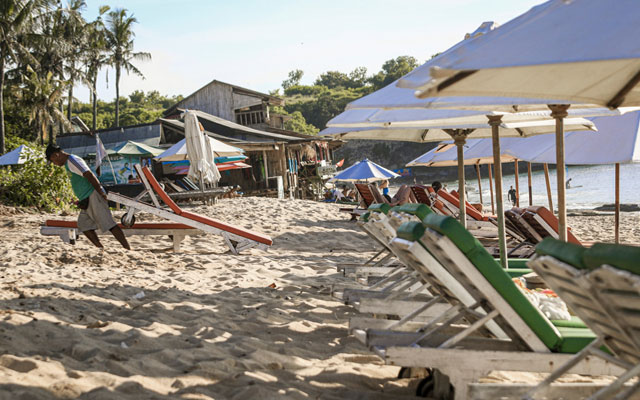
Bali’s borders will remain closed to international travellers till 2021; Balangan Beach in Bali, Indonesia pictured

In a statement issued last Saturday, Bali governor I Wayan Koster said: “Up to the end of 2020, Bali Regional Government will optimise its efforts to attract domestic travel in order to recover Bali’s tourism and economy.”

Koster said the decision for Bali to remain closed to foreign travellers through 2020 was made after discussions with the minister of tourism and creative economy; the minister of foreign affairs; as well as the minister of law and human rights, which oversees immigration.

He said that while the Covid-19 situation in Bali is better than in other parts of the country, major regions across Indonesia remain under the red zone classification.

If Bali were to reopen too soon and suffer a fresh wave of infections, it may end up tainting the image of Indonesia, including the island, which would be counterproductive to its tourism recovery, he added.

However, the travel trade is still holding out for the reopening of Bali’s borders in September. The Indonesia Inbound Tour Operators Association is slated to hold a hearing with the Parliament in Jakarta to convince the government on the importance of reopening Bali’s borders soon.

Meanwhile, trade members are preparing to file the petition appealing to Jokowi to allow Bali to open to international tourists from next month.

As of August 23, the petition has garnered about 3,200 signatures from travel companies across the country, mostly inbound tour operators in Bali, which make up 90 per cent of all travel companies on the island.

Pegasus Indonesia Travel CEO Jimmy Saputra, who initiated the petition, said that the Bali administration’s announcement in July that the island was ready to welcome foreign tourists from September 11 was like “a breath of fresh air” for struggling inbound tour operators who had been left out in the cold by the central government without any financial aid amid the Covid-19 crisis.

However, he added, they are now mired in anxiety after the government confirmed that Bali will remain closed to international tourists till 2021.

“We (travel companies) are dying, and the government has not given us any financial assistance. We are also categorised as a high-risk debtor by banks so none of them dare to give us credits,” he said.

Jimmy said that if Bali’s borders continue to remain closed to foreign tourists, many travel companies in Bali would risk going bankrupt. Rebooting operations would not be an option, he added, as they lacked the assets to do so.

With regards to the government’s concerns that reopening international borders could spark new waves of infection, he said that such risks could be minimised by implementing stringent hygiene protocols, and restricting entry to citizens from select low-risk countries, such as Russia, which now permits its citizens to travel to select destinations overseas.

After news broke that Bali is ready to welcome foreign tourists again from September 11, numerous Russian citizens had made bookings to travel to the island, according to Jimmy. His company, Pegasus, is slated to receive 574 Russian tourists this year, including 139 in September and 234 in October.

“Even if (the government decides) that the Russians (who were eligible for visa-free facilities prior to Covid-19) need to apply for a visa now, it is fine,” he said.

Adjie Wahjono, operation manager of Surabaya-based Aneka Kartika Tours, who had signed the petition to support Bali’s September 11 reopening, opined that given that Bali is an island on its own, that is an advantage. He added that if new Covid-19 cases were found in Bali, it would be easier for the government to curb the virus spread and to prevent the suspects from travelling to cities outside of Bali.

Another petition signatory, Pranoto Hadi Prayitno, the owner of Citra Gilang Tour, said that the arrivals of foreign tourists to Bali would gradually rebuild tourist’s confidence to visit other destinations in the country.

“Bali is the barometer of Indonesia’s tourism. The reopening of the island will automatically drive the wheel of the tourism sector in other regions,” he said. – Additional reporting by Mimi Hudoyo

Air India calls travel agents out for overpricing repatriation fares

0

APAC hotel pipeline remains robust through Q2

0

Vietnam goes big on green tours

0

Vietnam National Administration of Tourism (VNAT) have joined hands with Vietnam Tourism Advisory Board (TAB) and Swiss Sustainable Tourism Programme (SSTP) to launch a new section on the national tourism website collating the country’s best sustainable tourism options.

Users visiting the Green Travel section of the website will find articles dedicated to best practices for responsible travellers, guides on following Vietnamese customs and local etiquette, and pieces highlighting the country’s lesser-known destinations.

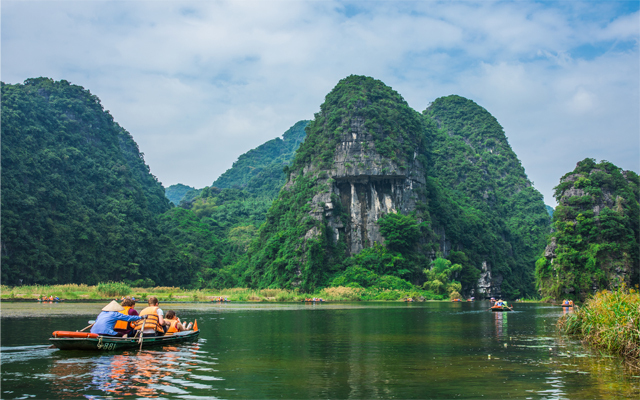
Travellers can find sustainable holiday options across Vietnam such as eco-tours by paddleboat in UNESCO-listed Trang An in Ninh Binh (above) on VNAT’s newly-launched microsite

To ease travellers’ search for sustainable tourism providers in Vietnam, the webpage features a catalog of reputable businesses across the country. Visitors can look up ethical, eco-friendly tours; find sustainable accommodations; and discover souvenirs that preserve Vietnamese culture and support local communities.

The section also offers hand-drawn infographics on sustainable travel in Vietnam, and in-depth stories for those interested in Vietnam’s ethnic minorities and traditional craft villages. A collection of leading tour operators offering sustainable experiences is also included.

In order to ensure the listed companies are standout examples of practicing socially and environmentally sustainable tourism, TAB sought the expertise of SSTP consultants to research the contents of the Green Travel section in accordance with the sustainability criteria established by SSTP for the tourism industry in Vietnam.

Tourism officials said the Green Travel section represents progress, and is a first step in Vietnam’s endeavours to support sustainable travel businesses and assist responsible travellers coming to Vietnam.

Over the coming months, the national tourism website will debut videos showcasing the country’s best sustainable tourism assets and outstanding experiences, and will host giveaways for sustainable Vietnamese products and holidays on its official social media channels.

Travel giant duo align to revive SE Asia’s travel scene

0

Following its tie-up with China’s Trip.com Group, AirAsia.com has partnered with Agoda to offer travellers access to a wider multi-product selection, providing greater choice and convenience.

Designed to spur travel activity in South-east Asia, the collaboration includes travel bundles, membership privileges as well as joint product marketing. Under the partnership, AirAsia.com will add over 600,000 Agoda properties to its inventory.

AirAsia.com partners with Agoda to beat the travel slump in South-east Asia

AirAsia.com users can now enjoy a more seamless ‘browse-to-buy’ experience on the website, and book their flights and hotels through Snap, the airline’s new flight and hotel combo booking platform.

Agoda CEO John Brown said: “The public’s appetite for travel is still strong, and we believe that our collaboration with AirAsia will help take the hassle out of travel by helping travellers to easily find great value deals as they venture out again. Equally important is the wider impact of this initiative between two of South-east Asia’s well-known and highly regarded travel brands, on the confidence of accommodation partners, hospitality providers and related aviation industry players.

“It’s imperative we work innovatively with our partners to find solutions and do our part to stimulate demand and help the wider travel and tourism industry.”

Qantas International CEO departs airline

0

Qantas International CEO, Tino La Spina, will leave the group as the airline braces for what is likely to be an extended grounding of international flights at least until mid-2021 in light of the Covid-19 crisis.

La Spina’s responsibilities will transfer to Qantas Domestic head Andrew David when he departs on September 1, Qantas said in a statement on Monday.

The change will see David taking on functional responsibility for Qantas International, in addition to his existing responsibility for Qantas Domestic and Qantas Freight. He will report to group CEO Alan Joyce.

Joyce said: “The Covid crisis is forcing us to rethink our business at every level. It’s increasingly clear that our international flights will be grounded until at least mid-2021 and it will take years for activity to return to what it was before. Under those circumstances, we’ve made the decision to consolidate the domestic and international business units under a single divisional CEO.

La Spina, who became CEO of International just over 12 months ago, was formerly Qantas CFO, and has spent 14 years with the airline.

Trips that matter

0
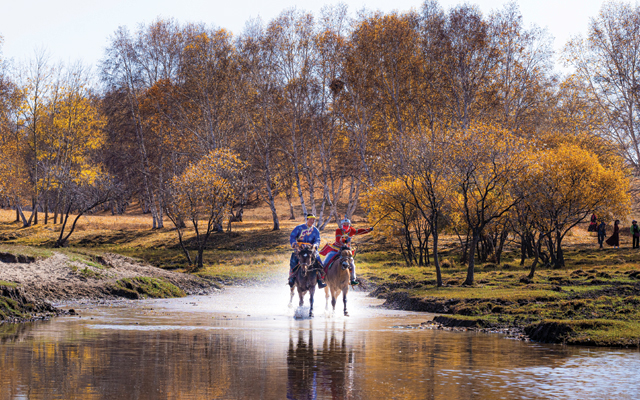
Horseback riding with a horse whisperer in Mongolia is an example of an authentic destination experience in demand today

Transformational travel was slated to be the new buzz-word in the luxury market pre-pandemic. But even with the travel freeze today, experts predict that demand will soar once tourism resumes, fuelled by greater keenness among high-end travellers on curated magical experiences away from the crowds.

Christopher Lund, head of hotels at Colliers International, said there would be a huge shift in focus to itineraries that go the extra mile in allowing travellers to escape and have meaningful experiences.

Horseback riding with a horse whisperer in Mongolia is an example of an authentic
destination experience in demand today

He noted: “There will be much more of a focus on experiences. Holidays where travellers can take something away, especially around eco-tourism, wellness and conservation, as these all conform with the social distancing that has now become the norm.”

Pre-pandemic, Asia’s luxury tourism players had already been going the extra mile to curate experiences that money cannot buy. From accompanying a private butler to his village, to helping plant coral reefs and meditating with monks, ultra-wealthy travellers no longer mind roughing it if it means securing an extra-special experience that pushes personal growth.

Andreas Grosskinsky, general manager at Destination Asia Indonesia, said for the last decade, luxury travel has been moving into the experiential arena, with more high-end travellers willing to splash out to enjoy authentic local experiences in style. That has changed with the pandemic, with guests becoming more willing than ever to trade in traditional luxury comforts for an incredible once-in-a-lifetime transformational experience.
Grosskinsky noted that “it’s taken some time to educate travel consultants on this”.

Tim Cordon, Radisson Hotel Group’s area senior vice president, agreed that transformational experiences will be in high demand, and that hotels and travel companies should work together to make the most of this trend.

Curating bespoke experiences for high-end guests is high on the agenda at The Pavilions Hotels and Resorts, which crafts a range of Curated Journeys for guests, covering a range of niches, including culinary, adventure, recreation, wellness and family.

Simona Chimenti, general manager at The Pavilions Bali, said: “The big next step is somewhere in between experiential and transformational travel. Guests want to mix with locals and get a real feeling of local life. It’s still luxury but there’s an emphasis on experiences. I call it laidback luxury.”

She added the desires of luxury travellers are changing from simply seeking five-star accommodation and high-end restaurants and transport, to experiencing each destination and the lives of the people who call it home.

Noted Chimenti: “The definition of luxury is shifting, it used to be about sitting in a golden cage and not going outside. Today, people are more interested in genuine service and creating memories to take back home and less about that standard luxury version.”

For example, The Pavilions Himalayas customises hikes for guests to meet monks at a monastery. At other properties in Asia, guests can go with their private butler back to his/her home village, and join a horse whisperer for a horseback adventure across Mongolia’s plains.

Chimenti said: “We really want to capture the essence of a destination and offer something that goes off the traditional beaten path.”

Climate change concerns are also shaping the transformational travel trend, with high-end clients wanting to leave as little impact on the environment as possible while helping to create a better world during their stay – another area Lund expects to see an uptick in demand within the luxury arena.

Five-star resort The Datai Langkawi gives transformational experiences an environmental twist. Located in a remote alcove at the foot of a 10 million-year-old rainforest, the resort has recruited naturalists and marine biologists to curate a series of nature-based experiences.

Spokesperson Celine Maginel said luxury travellers now sought more than the usual “bling bling”, and the property could inject something extra from its presence among nature and biodiversity.

The resort works with local NGOs and involves guests in conservation and community work. This includes helping to transport coral from onsite nurseries and joining local artists in upcycling waste.

Rascal Voyages has also tapped into the conservation movement, curating transformational experiences onboard its exclusive floating villas while embracing the shift away from traditional luxury.

CEO Stephen Ebsworth said: “We’re trying to move away from privilege and stuffiness.
“Exclusive, private, remote experiences that are close to nature will be well positioned for luxury travel in the near future.”

As part of offerings, Rascal Voyages operates bespoke exploration cruises that team up with environmental NGO Conservation International to deliver unforgettable experiences with three of the world’s best marine biologists. Guests can help to tag sea turtles, follow their migration path, and help marine biologists with their work.

During the first five exploration cruises, 25 new species of fish and a walking shark were discovered. Guests can even get to name any species they find.

Said Ebsworth: “By very definition, travel should be submerging visitors in an experience and be educational. People want to learn something and take that away.”

Singapore partially eases travel restrictions for general travel

0
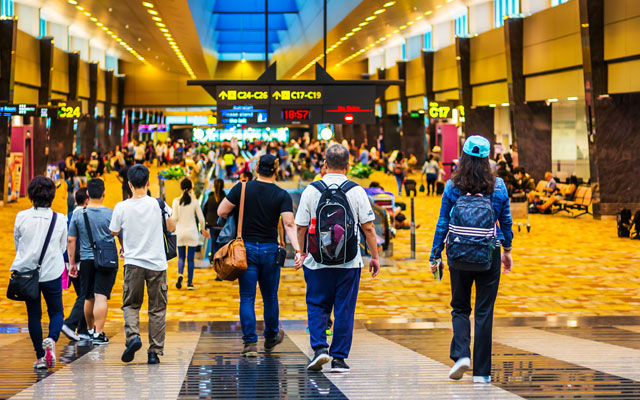
Passengers in Changi Airport

General travel, including leisure, to New Zealand and Brunei, will soon be allowed for Singaporeans, as the city-state’s multi-ministerial Covid-19 task force relaxes border restrictions from September 1.

At the same time, travellers entering Singapore from either Brunei or New Zealand will not need to serve a stay-home notice upon arrival, provided they had remained in the country two weeks prior to their trip and were able to secure an air travel pass between seven and 30 days ahead of their intended date of entry into Singapore. They will also need to clear a Covid-19 test upon arrival at Singapore Changi Airport.

Singapore takes initial steps to ease restrictions on general travel as Covid-19 infections come under control in more countries

Singapore’s Ministry of Health said in a release that travellers needing Covid-19 treatment while in Singapore would have to bear their medical bills.

Stay-home notice for travellers coming in from low-risk countries and regions, such as Australia (excluding the state of Victoria), China, Macau, Malaysia, Taiwan and Vietnam, will also be cut from two weeks to one. A Covid-19 test will be conducted towards the end of the stay-home notice.

The latest announcement represents a further easing of border restrictions set up since the Covid-19 outbreak to curb cross-border transmissions.

Singapore currently allows essential travel between Malaysia and some Chinese provinces, and is in discussion with Japan on a business travel green lane.

Education minister Lawrence Wong, who co-chairs the task force, said on Friday that Singapore remains cautious with her reopening strategy, and decisions will be based on “evidence and our risk assessment in these different countries”.

Wong also noted that while outbound restrictions have been relaxed on Singapore’s part, Singaporeans looking to head to Brunei and New Zealand for leisure would need clearance from the two countries.

He shared that Singapore is in talks with Brunei and New Zealand to work out reciprocal arrangements for travellers.

Gregg Wafelbakker, general manager, Asia, Tourism New Zealand, told TTG Asia earlier this month that New Zealand tourism officials were exploring options for safe travel zones with the Singapore government.

Following the multi-ministerial Covid-19 task force’s decision, Singapore Airlines (SIA) Group issued a statement to express support. It noted that the “recovery of air travel and airfreight is a necessary catalyst for the recovery of global trade and economies severely impacted by Covid-19”.

“Today’s announcement is an important step towards the gradual rebuilding of the Singapore air hub. The SIA Group will continue to work closely with the Singapore government and all stakeholders to support this,” the statement noted.

SIA Group emphasised that health and safety for all its stakeholders remain a priority. To that end, in-flight product offerings and end-to-end service delivery have been modified to take in health and safety measures.

“The SIA Group will continue to closely monitor the demand for international air travel, and be nimble and flexible in adjusting our capacity to match this,” it added.

Alibaba’s revenue soars on back of e-commerce, cloud computing demand

0

Hotel JAL City makes its way to Fukuoka

0

Okura Nikko Hotel Management will open the Hotel JAL City Fukuoka Tenjin come 2021, marking its third property in the city dubbed “Japan’s gateway to Asia”.

Slated to open in 2021, the Hotel JAL City Fukuoka Tenjin will be located in the central Tenjin district of Fukuoka, and managed by Fukuoka Tenjin Hotel Management GK.

Hotel JAL City Fukuoka Tenjin, slated to open in 2021, will be Okura Nikko Hotels’ third property in Fukuoka

The property will offer 280 guestrooms, ranging from 25m2 in size, as well as all-day dining facilities. It is currently under construction, and is expected to be completed by January 2021.

Based on Hotel JAL City’s brand concept of “smart simplicity”, the new hotel will provide check-in and check-out and room key functionality by means of guests’ smartphones. It will also address customer needs with a wide range of tailored services.