As Japan prepares to host the Olympic Games in July, albeit without inbound spectators, the country’s public and private sectors are taking steps to help restart inbound and outbound travel in the longer term.
Most of the activity is related to Covid-19 vaccines and travel passes that will allow travellers to move safely across borders.
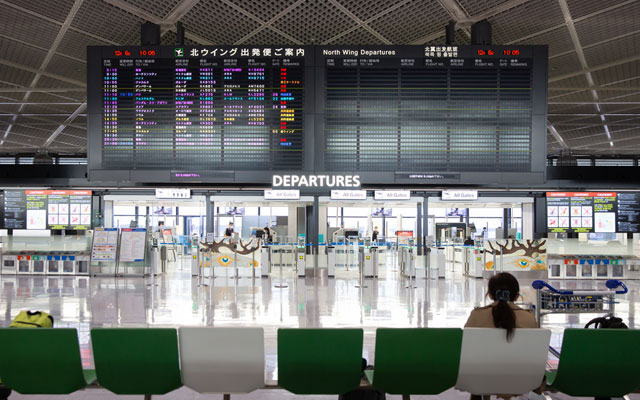
Japan to issue digital health certificates to citizens; Narita International Airport Terminal 1 in December 2020 pictured
Japan has been slower than many other wealthy nations in vaccinating its citizens. The country has been inoculating healthcare workers since mid-February, and is not slated to complete vaccines for everyone aged 65 or older until the end of June.
To encourage vaccine take-up among the working-age population, the government has said it will urge companies to allow staff to take paid leave to get the jabs, and to consider allowing national public servants to take holidays for the same purpose.
Japan will also be issuing digital health certificates to citizens who have been inoculated, according to Nikkei. Japan joins several countries which have embraced vaccine passports for their citizens, such as China, Denmark, and Israel.
The Nikkei report also added that the digital certificate can be managed on a mobile app and will be in line with international standards, allowing the individual to present proof of vaccination at immigration checkpoints.
In the public sector, All Nippon Airways (ANA) plans to trial the International Air Transport Association (IATA) Travel Pass app, which allows passengers to verify if they meet the Covid-19 testing requirements of their destination and share their test results with airlines and authorities.
“Through our trial, we hope to contribute to the development of the digital solution, which aims to make the travel experience more seamless, secure and contactless,” said Yuji Hirako, president and CEO of ANA and member of the board of governors of the IATA.
Still, the public in Japan remains conservative about overseas travel. Almost three quarters (74 per cent) of people surveyed in Japan in December 2020 said they thought Japanese people should refrain from overseas travel until at least July 2021, according to Statista Research Department. One tenth of the 3,948 respondents said they believed it might be possible for Japanese people to restart overseas travel between April and June 2021.
TTG Conversations: Five Questions video series returns for an April season with another strong line-up of travel and tourism industry thought leaders, with TCI Research’s Olivier-Henry Biabaud kicking off the first episode.
Biabaud will be joined by other opinion leaders such as Safe Travel Barometer’s Chetan Kapoor, Singapore Hotel Association’s Kwee Wei-Lin, and renowned architect, interior designer, hotelier and conservationist Bill Bensley.
In this season debut, out today, Biabaud reviews how residents are taking to the concept of tourism pre- and post-pandemic. While resident sentiments have remained largely the same and positive overall, Biabaud’s research team has picked up a recent “slight erosion” in tourism sentiments among residents in cities with a history of overtourism.
Biabaud, who specialises in measuring host community sentiments and their impact on tourism development and management, also discusses with series host Karen Yue the likelihood of host community sentiments impacting destination vaccine requirements for tourists and if destination managers and marketers should also track racial issues which could shape the destination’s image.
Past and upcoming episodes of TTG Conversations: Five Questions video series can be accessed on the TTG Asia Media YouTube channel.
As Indonesia moves through the early part of 2021, the impact from lost international demand on hotel occupancy levels is most obvious in Bali, which continues to trail the country’s regional markets in the recovery process, according to STR’s latest data.
Indonesia finished 2020 in similar shape as its regional peers. Domestic demand was strong enough to lift hotel occupancy from pandemic low points but not sufficient to overcome the void in international travel.
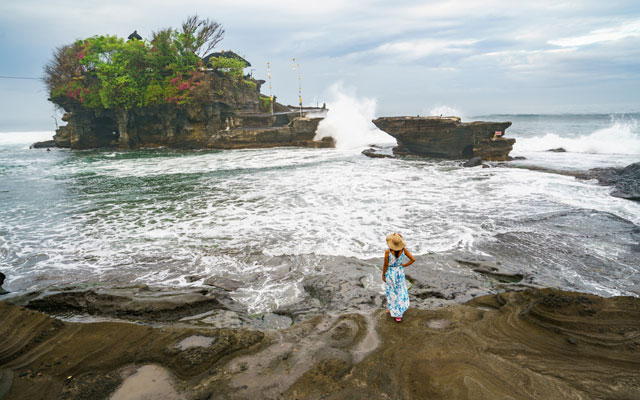
Impact of international tourist drought on Indonesia’s hotel sector most evident in Bali; a nearly empty Tanah Lot, Bali, in September 2020 pictured
Aside from a Singapore occupancy level lifted by quarantine demand, Indonesia was right in line with other Asia-Pacific countries at 36 per cent for the year.
Business was worse in Bali, however, with occupancy hanging below 20 per cent for much of the year. At the same time, Jakarta, Bandung, Medan, and Surabaya rose to greater levels thanks to those markets’ heavier reliance on domestic demand.
Occupancy levels for all cities started to pick up in June after the end of a three-month “emergency period” implemented by the Indonesian government. Occupancy spikes at the end of 2020 were aligned with New Year’s celebrations, while additional higher periods in Bandung correlated with national holidays such as the Islamic New Year and the Prophet’s Birthday celebrations.
To counter lower occupancy levels, Bali’s hoteliers have been able to somewhat rely on room rates to drive revenue per available room (RevPAR). For 2020, Bali’s ADR was 91 per cent higher than the national average.
Regardless, when indexing RevPAR to 2019 levels, Bali remains much further behind other key markets in the country. Because of the pandemic impact on 2020 data, 2019 serves as the benchmark as hoteliers measure their recovery.
The most recent preliminary data from February shows that Bali is still averaging daily occupancy below 35 per cent. While the country’s vaccine campaign, which began in mid-January, supplies reason for optimism, there is still no timetable for a reopening to foreign visitors. That eventual reopening will provide the boost that Indonesia’s hoteliers most need.
Vietjet has resumed regular international flights connecting Vietnam’s major hubs with Bangkok, Tokyo, Seoul, and Taipei, since last Friday (April 2).
Flights from Ho Chi Minh City to Bangkok are scheduled to depart every Friday, and the service from Hanoi to Seoul (Incheon International Airport) is scheduled to depart from April 15.
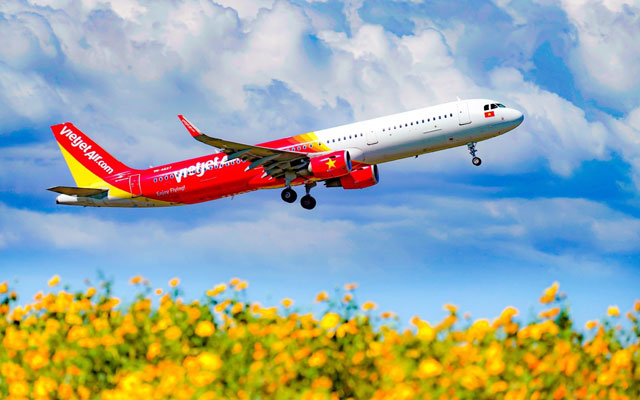
Vietjet restarts international flights on selected routes this month
Meanwhile, the flights from Hanoi to Tokyo (Narita International Airport) are scheduled to depart from April 6, while the services from Hanoi to Taipei are scheduled to depart from April 11.
All services from Vietnam will only serve passengers who meet the immigration regulations of the host countries and territories. These travellers are usually Vietnamese citizens studying, working, or visiting relatives overseas, or foreigners returning home from Vietnam.
Passengers are advised to seek detailed information at the embassies and diplomatic agencies of related countries to complete required procedures and paperwork to ease the immigration process on arrival.
The IATA has appointed Willie Walsh as director general, succeeding Alexandre de Juniac.
Walsh was confirmed as IATA’s 8th director general by the 76th IATA Annual General Meeting on November 24, 2020. He joins IATA after a 40-year career in the airline industry.
Walsh retired from the International Airlines Group in September 2020, after serving as its CEO since its inception in 2011. Prior to that, he was CEO of British Airways (2005-2011) and CEO of Aer Lingus (2001-2005). He began his career in aviation at Aer Lingus in 1979 as a cadet pilot.
Walsh is deeply familiar with IATA, having served on the IATA Board of Governors for almost 13 years between 2005 to 2018, including serving as chair (2016-2017). He will work from the association’s executive office in Geneva, Switzerland.
“My goal is to ensure that IATA is a forceful voice supporting the success of global air transport. We will work with supporters and critics alike to deliver on our commitments to an environmentally sustainable airline industry. It’s my job to make sure that governments, which rely on the economic and social benefits our industry generates, also understand the policies we need to deliver those benefits,” said Walsh.
This time last year, Covid-19 anchored holiday ships to their ports and sailing seasons met an abrupt end. In the tense months that followed, the cruise industry was left teetering in uncertain waters.
Relief could not have come sooner. On July 26, Dream Cruises broke through the fog with island-hopping itineraries out of Keelung in Taiwan. The move proved a success: more than 25,000 guests flocked to the decks of Explorer Dream over 22 sailings in two months, signalling to the industry that Asia’s markets were more than ready to restart cruising.
Taking cue, the company relaunched World Dream sailings in Singapore with a collection of Super Seacation itineraries in November 2020, when the Singapore Tourism Board started a pilot scheme for round-trips – but only open to local residents. Royal Caribbean International (RCI) also came on board with Quantum of the Seas. Both vessels sailed at a reduced capacity of up to 50 per cent.
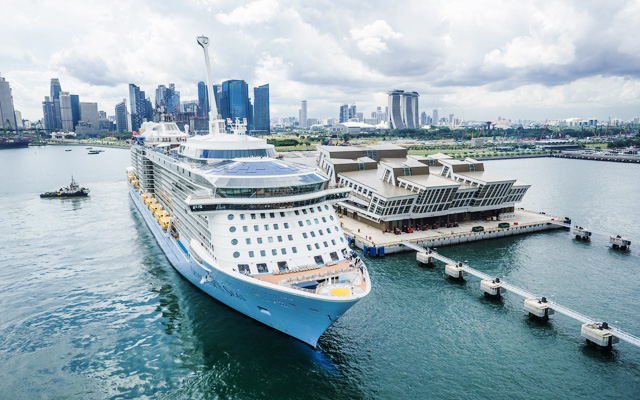
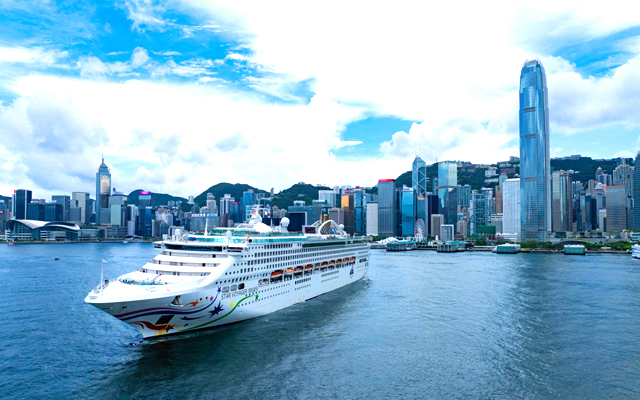
Quantum of the Seas
Navigating adversity
Market sentiment is so stable that, despite a snag in Quantum of the Seas’ maiden sailing – one passenger was tested positive for Covid-19 on board, which later turned out to be a false positive – demand for sailings remained largely unfazed.
Angie Stephen, managing director, Asia Pacific, RCI, shared: “Our bookings have shown that there is still a strong demand for cruising. We are seeing a lot of interest from new-to-cruise consumers as well as repeat cruisers. Bookings have been brisk over the past three months. We have extended the Singapore season for Quantum of the Seas until June 21 (2021).”
The false positive scare seems to have only scraped the industry, as Dream Cruises has also pulled through relatively unscathed. Michael Goh, president of Dream Cruises and head of international sales, Genting Cruise Lines, described: “(In) Singapore, we are all part of an interconnected and small cruise industry; the impact of one cruise line will often have an impact on another and the industry as a whole.
“Having said that, overall demand continues to be encouraging, especially during the school holidays and the various festive seasons. Riding on these, we have extended both our itineraries in Taiwan until October 1 and in Singapore until June 27.”
The key, explained Goh, has been the education of consumers and travel partners on safety and preventive measures as well as impressing how cruising has evolved with the changing landscape.
For instance, Dream Cruises has undertaken a higher frequency and increased levels of sanitisation and disinfection on board, online check-in, staggered registration and mandatory use of contact tracing through Singapore’s TraceTogether system.
Similarly, RCI has invited trade partners to experience the safe way of cruising on its Ocean Getaways.
This transparency and commitment to safety is “the most important factor in lifting consumer confidence in cruising”, expressed Joel Katz, managing director Australasia & Asia, Cruise Lines International Association (CLIA). He said: “The cruise industry’s new global health protocols are among the most extensive of any industry, (and) they help foster confidence among governments and travellers alike. The fact that cruises have been operating successfully in a carefully managed environment has done a great deal to build confidence.”
According to CLIA’s recent consumer research, 74 per cent of cruisers indicated that they were likely to cruise again in the next few years, and two out of three respondents were willing to cruise within a year. Katz added that this might inspire “a phased resumption in other countries”.
Already, this confidence has spilled into the luxury segment, as Regent Seven Seas reported “record booking days” for its 2023 World Cruise and 2022-2023 Voyage Collection launches, revealed Steve Odell, senior vice president & managing director Asia-Pacific, Oceania Cruises & Regent Seven Seas Cruises.
“Our 2021 wave offer has also performed well, demonstrating great success with Seven Seas Explorer for voyages around Australia, New Zealand, Asia, and the Mediterranean. Looking beyond 2021, we have already seen the incredible pent-up demand for future travel across Regent Seven Seas Cruises. A good example of this is our longer Grand Voyages, which are booking strong,” said Odell.
Saved by the syringe
As Covid-19 vaccinations are progressively rolled out across the globe, the road to recovery may be paved even sooner. Katz said: “The roll-out of vaccines will obviously play a huge part in the global response to the pandemic, and advances like this are very encouraging.”
Already, Crystal has taken the bold step. In February, it announced a mandate for all guests and crew to be fully inoculated at least 14 days prior to sailing, and in the meantime, paused its operations through May for its River fleet, June for its Ocean ships and August for Crystal Esprit. Its interim president and CEO, Jack Anderson, stated the importance of vaccinations is indicated by “a recent (survey) of cruisers that revealed more than 80 per cent of respondents would cruise if a vaccine were required”.
While it remains to be seen if other cruise players will follow suit, the next steps are clearer than ever. “Importantly, the cruise industry’s new health measures are designed to provide extensive protective protocols regardless of vaccination status,” clarified Katz.
RCI, for instance, has begun to devise global protocols based on recommendations from the Healthy Sail Panel – a taskforce of globally recognised medical and scientific experts – such as upgraded heating, ventilation and air conditioning systems.
More than promising a safe cruising experience, Dream Cruises has taken time to sharpen the cruise product. World Dream has become the first cruise ship in Asia-Pacific to receive certifications from both the United World Halal Development and the Global Vegetarian Certification Services.
Explorer Dream will return to Taiwan for more island-hopping voyages to Penghu, Kinmen and Matsu Island, with the Bohemian Voyage theme debuting to offer immersive activities such as glamping at sea, the Boho Bazaar and Tarot reading workshops.
TTG Asia Media has kicked off a buyers acquisition campaign for the inaugural Great ASEAN Travel Fest 2021, an online travel trade event focusing on promoting South-east Asian destinations and supporting players working towards business recovery.
Taking place on May 4 and 5 this year, the Great ASEAN Travel Fest 2021 will pack in scheduled meetings between buyers and destination sellers, unlimited walk-in meetings from 09.00 to 18.00 (GMT +8) every day, mini themed roadshows, and hosted sessions conducted by featured destinations.
The Great ASEAN Travel Fest 2021 will showcase the best of South-east Asian destinations and connect serious buyers with tourism sellers
Qualified travel trade buyers are entitled to up to 24 scheduled meetings to facilitate their sourcing needs.
Participation in eligible activities will earn buyers points. Top 10 buyers in the point leaderboard who also complete five scheduled meets will take home prizes.
A digital certificate of participation will also be issued at the end of the online event.
For more information, visit https://www.aseantravelfest.com/
In a pivot to court affluent travellers and cater to post-pandemic needs, FlyEast Philippines is offering luxury tours replete with security escorts, chartered planes and choppers, bespoke yachts and Rolls-Royces, alongside the most opulent meals and accommodations in the islands.
For travellers with safety concerns, security escorts can be arranged that don’t end in land, sea or air travel but can be extended in hotels and tours, said Yoav Golan, co-founder and chairman of FlyEast Philippines, a satellite branch of FlyEast Israel, in a recent webinar hosted by the Israel Chamber of Commerce and Industry.
Chartered planes and choppers are at guests’ disposal to reduce travel time from Makati to Tagaytay to 20 minutes from two hours by land, and from Makati to Banaue to an hour from nine hours by land, said Golan.
For 120,000 pesos (about US$2,500) a pop, a chopper flies guests from Makati to one of the country’s most exclusive restaurants, Antonio’s in Tagaytay, with a mesmerising view of Taal Volcano’s crater lake.
Private chartered planes stand ready to transport travellers to various places around the archipelago, while bespoke yachts are available for island hopping. As well, Rolls-Royces – a rarity in the Philippines – are on hand for land transfer at 80,000 pesos per four hours.
FlyEast’s range of accommodations on offer include the private island of Banwa, which at US$100,000 per night, is the world’s most expensive accommodation, according to Golan. Posh facilities include six villas with private butlers. There’s also Nay Palad Hideaway in Siargao at US$1,800 per night, and Eskaya’s presidential suite.
Other unique accommodations include the MacArthur Suite at the Manila Hotel where General Douglas MacArthur stayed, going for 500,000 pesos per night; Okada Manila’s villa for US$10,300 a night; and Conrad Manila’s presidential suite at US$5,400 per night.
Included in FlyEast’s exclusive dining list are the Nobu restaurant at the Nobu Hotel in the City of Dreams Manila, and Mirèio at Raffles Hotel in Makati.
Golan said, though, that travellers should manage their expectations about the term ‘luxury’. He cited as example the areas around the Banaue Rice Terraces, where accommodations are few and not five-starred. FlyEast uses Native Village Inn in Uhaj, which are nipa huts with shared toilets. While the mountain lodge has modest-sized rooms and lack luxe amenities like Jacuzzis, guests are treated to an amazing view of the rice terraces.
As the world leans more into wellbeing with the pandemic’s widespread impact, Banyan Tree will be launching 16 new Wellbeing Sanctuaries across its properties globally this year.
The Wellbeing Sanctuaries will combine club floors or resort wings, dedicated dining options, spas, and multifunctional practice spaces into one exclusive journey. Beginning this month, they will be launched first in China, and progressively in Indonesia, Malaysia, Mexico, Morocco, Thailand and Vietnam over the next 12 months.
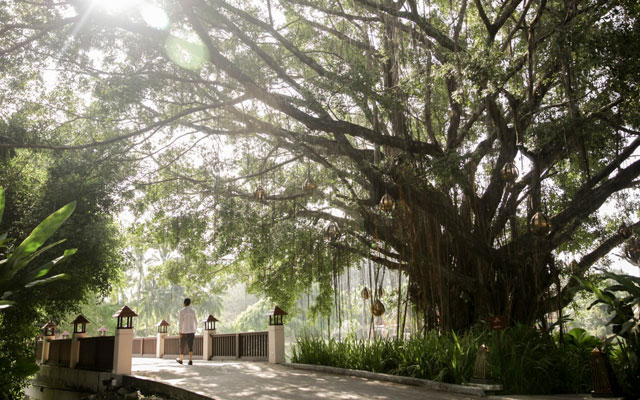
Guests can explore connecting with nature at one of Banyan Tree’s Wellbeing Sanctuaries
Catered for the wellbeing-curious, the Wellbeing Sanctuary concept enables leisure travellers to design and combine a leisure vacation with wellbeing elements in a flexible, and open way. Through a simple and structured, codified approach of eight pillars, guests may personalise their stay as well as create a personal practice to sustain even after returning home. Lastly, the journey is designed to inspire a greater connection between self, others and nature, with Banyan Tree’s enduring commitment to sustainability woven through the experience.
Every individual’s journey to wellbeing is different. Each Wellbeing Sanctuary provides the time and space for guests to choose their own activities throughout their stay with a unique credit system, in consultation with the property’s wellbeing host. Stays can be anywhere between two days and more, with a variety of activities to accommodate couples or families with different leisure and wellbeing preferences.
A stay at Banyan Tree’s Wellbeing Sanctuary includes accommodation at a wellbeing suite or villa designed for sleep enhancement; in-room amenities such as yoga mats, stretch bands and singing bowls for private practice; pre-sleep bath and body rituals; balanced healthy meals and mini-bar provisions using locally sourced ingredients; bodywork and spa therapy experience; access to 50 simple but impactful wellbeing activities, inspired by the destination; as well as personalised, take-home wellbeing guide for sustained learning.
Developed through two years of study and thousands of participant feedback, Banyan Tree’s wellbeing approach is codified through eight pillars: Sleep Well; Dietary Awareness; Interaction, Intimacy and Involvement; Physical Vitality; Cultivating the Mind; Learning and Development; Harmony with Nature; and Sustained Practices.
With the support of dedicated wellbeing hosts on-property, guests who book a stay at Banyan Tree’s Wellbeing Sanctuaries embark on a journey to come home to themselves, gaining deeper self-knowledge. Guests can also take home a personal wellbeing guide after their stay, which include tips on healthy living, home exercise and other recommendations for sustained practice in one’s daily life.
Most existing wellbeing offerings are primarily focused on the individual. At Banyan Tree’s Wellbeing Sanctuaries, exploring the relationships and connections within the self, and without, with others and nature, is core. In doing so, guests discover their own balancing points and find ways to improve their state of being in the now.
For example, the sensory detox White Room experience is a deep dive into the self, removing daily distractions in a guided, stress-free environment. In exploring relationships with others, guests may choose to have a conversation with a Buddhist monk, volunteer in a community setting, or go through a couple yoga session. In connecting with nature, one may choose a Conscious Grounding experience outdoors, or an Ocean Breath meditation session combining breathwork and movement.
Marriott International has launched the Marriott Bonvoy The BEST Shinhan Card, offered exclusively by Visa, enabling cardholders to accelerate the number of Marriott Bonvoy points they earn, which can be redeemed for free nights at the brand’s hotels around the world.
Touted as “the first hotel industry credit card in South Korea”, cardholders can earn Marriott Bonvoy points and enjoy member benefits that come with elite status.
For an annual fee of 267,000 won (US$236), with Marriott Bonvoy The BEST Shinhan Card, cardholders enjoy rich earn ratios and become a Marriott Bonvoy Gold Elite member upon sign-up.
Platinum Elite Status is also more achievable with cardholders enjoying 5,000 bonus points after spending 10 million won, and 10,000 bonus points after spending 20 million won. Cardholders will immediately be awarded Platinum status upon 60 million won spend in an accounting year.













As Indonesia moves through the early part of 2021, the impact from lost international demand on hotel occupancy levels is most obvious in Bali, which continues to trail the country’s regional markets in the recovery process, according to STR’s latest data.
Indonesia finished 2020 in similar shape as its regional peers. Domestic demand was strong enough to lift hotel occupancy from pandemic low points but not sufficient to overcome the void in international travel.
Aside from a Singapore occupancy level lifted by quarantine demand, Indonesia was right in line with other Asia-Pacific countries at 36 per cent for the year.
Business was worse in Bali, however, with occupancy hanging below 20 per cent for much of the year. At the same time, Jakarta, Bandung, Medan, and Surabaya rose to greater levels thanks to those markets’ heavier reliance on domestic demand.
Occupancy levels for all cities started to pick up in June after the end of a three-month “emergency period” implemented by the Indonesian government. Occupancy spikes at the end of 2020 were aligned with New Year’s celebrations, while additional higher periods in Bandung correlated with national holidays such as the Islamic New Year and the Prophet’s Birthday celebrations.
To counter lower occupancy levels, Bali’s hoteliers have been able to somewhat rely on room rates to drive revenue per available room (RevPAR). For 2020, Bali’s ADR was 91 per cent higher than the national average.
Regardless, when indexing RevPAR to 2019 levels, Bali remains much further behind other key markets in the country. Because of the pandemic impact on 2020 data, 2019 serves as the benchmark as hoteliers measure their recovery.
The most recent preliminary data from February shows that Bali is still averaging daily occupancy below 35 per cent. While the country’s vaccine campaign, which began in mid-January, supplies reason for optimism, there is still no timetable for a reopening to foreign visitors. That eventual reopening will provide the boost that Indonesia’s hoteliers most need.