Green shoots sprouting in India’s domestic tourism market has been curtailed by renewed restrictions to stem a resurgence in Covid-19 cases, leaving hospitality players bracing for a fresh blow to their businesses.
With destinations like New Delhi imposing a night curfew and Mumbai announcing a weekend lockdown, business sentiments have nosedived.
Renewed lockdowns and curfews derail India’s tourism recovery; tourists thronging Taj Mahal in April 2021 pictured
“The domestic market that had started to pick up is going to witness a downturn again,” said Sanzeev Bhatia, vice president and general manager, The Metropolitan Hotel and Spa in New Delhi.
“Restrictions like night curfews mean that besides a loss in room night business, the banqueting business will also take a hit. In fact, a lot of hotels are already seeing cancellations of some booked banqueting business.”
Maharashtra reported 63,294 new Covid-19 cases on Sunday (April 11), its highest spike since the onset of the pandemic. The state government is mulling imposing a full lockdown across Maharashtra from April 14.
“Whenever there is a rise in Covid-19 cases, the hospitality industry is targeted and victimised, (despite us) operating in the safest of environments and following all the mandated compliances,” said Sherry Bhatia, president, Hotel and Restaurant Association of Western India.
“A majority of the establishments have mounting debts and face threats of insolvency. With fear of losing jobs like last year, many workers have begun to leave for their homes again. After last year’s lockdown, the hospitality industry is in turmoil and is just not in a position to bear any more losses.”
However, a section of hospitality players remain bullish about the future prospects of the industry.
“After almost a year, the last couple of months saw domestic tourism enabling the hospitality sector to slowly get back on its feet. Though the recent increase in Covid-19 cases has created a dent in that growth, it is still faring well,” said Sarbendra Sarkar, founder and managing director, Cygnett Hotels and Resorts.
“We are better prepared to manage the situation. While all tourist spots and public places have been closed, people are still opting for staycations. Besides, the vaccination drive has instilled a sense of safety among people. While they are cautious, they have no fear of leaving their safe spaces.”
Private tourism stakeholders have decried a proposal by the Sri Lankan government to scrap current laws governing tourism policy, a move which would weaken the industry’s representation in various state-owned tourism organisations.
The government is proposing to set up a new Sri Lanka Tourism Authority which will merge three state institutions, all of which currently has representations from industry associations. The proposed new authority, however, will not have representations from the private sector. The decision to appoint a new authority was approved by the Cabinet last week.
Tourism stakeholders oppose government’s proposed changes to the Tourism Act of 2005
At a joint media briefing held in Colombo on Friday, officials of the Tourist Hotels Association of Sri Lanka (THASL) and the Sri Lanka Association of Inbound Tour Operators (SLAITO) said they were opposed to the change. They urged the government to focus on the present burning issues and not change the existing Tourism Act enacted in 2005, at a time when tourist inflows are at a record low owing to the Covid-19 pandemic.
Since the reopening of the airport for international travel in mid-January through end-March, Sri Lanka has welcomed less than 10,000 foreign visitors. In comparison, the country received an average of 160,000 monthly arrivals in the pre-Covid-19 period.
The new proposal aims to bring under one authority the different functions of the Sri Lanka Tourism Development Authority (involved in development), Sri Lanka Tourism Promotion Bureau (involved in promotions) and Sri Lanka Conventions Bureau (responsible for promoting MICE). Under current practice, representatives of the THASL, SLAITO and other related bodies are represented on the boards of these organisations, thus, having a say in their policies.
Industry stakeholders are irked that they have not been consulted on the proposed changes, which they say would be detrimental to the growth of the industry, given that the private sector voice is not represented in the proposed new authority.
THASL and SLAITO members are the main investors in the tourism industry and they are responsible for the majority of tourist arrivals to the country. In addition, they also pay the highest amount of taxes to the government.
“We are of the firm view that the tourism industry cannot be developed by merely changing the current Tourism Act, and a change should not be done, unless there is a real benefit to the stakeholders of the tourism industry in the long-term,” the two associations said in a joint statement.
The government has said the change is necessary to ensure the sustainability of the tourism sector. The proposed authority will consist of the chairperson of Sri Lanka Tourism; the director-general; secretaries to the Ministry of Tourism, Provincial Councils, Cultural Affairs, Environment and Wildlife or a nominee; and a representative of the Treasury and chairman of the Central Cultural Fund. There will be no private representation, unlike the current practice.
Industry officials said the proposed new organisation could also suffer due to a shortage of funds. Current funding for the state bodies comes under a set of taxes (including an embarkation tax for departing tourists) which brings in over 2 billion rupees (about US$10 million) annually. Of this, 70 per cent goes to the Promotion Bureau, while 14 per cent goes to the Development Authority. Under the proposed changes, only 66 per cent will be received by the new authority which has to use it for all activity – at a time when Sri Lanka is planning a massive international advertising and promotion blitz in late 2021-early 2022.
The current proposal is a return to the pre-2005 period when Sri Lanka had a single institution called the Ceylon Tourism Board with promotion and development arms. It was changed in a new 2005 Tourist Act enabling the private sector involvement in the operations of the separate entities representing promotions, development and conventions.
It’s a snowy December afternoon in Santa Claus’ Finnish homeland Rovaniemi. The sales director of Santa’s Hotel, Eveliina Korhonen, enters a cosy wood-panelled room that is the reception of Santa’s Igloos Arctic Circle, a glass-roofed igloo hotel nestled a stone’s throw away from Santa Claus Village, which lies right on the Arctic Circle.
Korhonen is bringing Singaporean travellers on a virtual tour of the hotel in Lapland, giving them a glimpse into the interiors of a glass igloo, ideal for spotting northern lights. The hotel houses 71 climate-controlled, glass-roofed igloos tucked in the snow, each kitted out with modern-day amenities. Korhonen demonstrates how guests can set the aurora alarm on their in-room tablets to alert them when the northern lights appear, so they do not miss out.
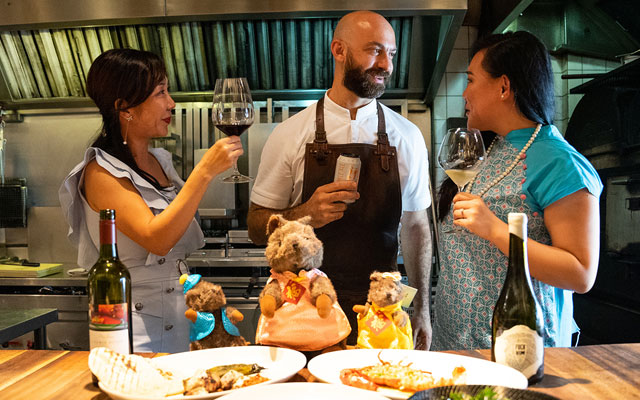
Chef Dave of Burnt Ends giving Singaporean viewers a taste of Western Australia, as part of Dynasty Travel’s Makan Makan Facebook Live series
The virtual tour is among Singapore travel agency Chan Brothers’ efforts to continue engaging with local travellers amid the pandemic. While trips to Finland to view the aurora borealis are off the cards for now, the agency has teamed up with Visit Finland to showcase key attractions in the destination to stay top of mind among their travellers.
The live broadcast, which can be viewed on Chan Brothers’ Facebook page, is part of its ongoing Travel Tales Come Alive series, where the agency partners with various NTOs and its overseas destination specialists to promote the destinations through live virtual tours, online cooking classes, and more.
Chan Brothers partnered with Visit Finland to inspire travel to Lapland via a Facebook Live session
Besides Visit Finland, Chan Brothers also works with NTOs like Tourism Western Australia, Tourism New Zealand, Hong Kong Tourism Board and Dubai Tourism to churn out virtual content via Facebook Live, complete with Q&A sessions with attractive prizes to be won, including a five-day Perth & Wild Seafood Experience for two worth S$4,000 (US$2,980).
The series also aims to highlight the Covid-safe measures in place at these destinations, including mask-wearing, social distancing and sanitisation of aircraft and tour buses.
“We have ramped up touchpoints and connections with our customers, followers and subscribers across a spectrum of digital platforms in an aim to spark positivity about travel through sharing safer, smarter and novel travel experiences,” shared Jeremiah Wong, senior marketing communications manager at Chan Brothers Travel.
He said that the overall responses to these engagement efforts have been “positive” and “encouraging”, with each Facebook Live session raking up to 8,000 views organically. “This goes to show that our organic audience base is actively engaging with our travel content and that wanderlust is truly alive,” he added.
Wong further shared that the agency is in talks with various other tourism boards and overseas partners on engaging local audiences creatively through its platforms.
“We are also working closely with our partners and suppliers in ensuring and heightening safety and health measures across all touchpoints of the holiday experience,” he said.
Other agencies are buzzing during this downtime too. With food being an integral part of travel, Dynasty Travel launched in February the Makan Makan video series, working with tourism boards to give viewers a taste of foreign cuisine at home.
The agency joined hands with Tourism Western Australia to showcase grill house Burnt Ends, Hong Kong Tourism Board to feature Kam’s Roast, and Japan National Tourism Organization to spotlight Okinawan diner Nirai-Kanai. Viewers stood a chance to win dining vouchers to the featured restaurant.
Citing the case of working with Tourism Western Australia, Alicia Seah, Dynasty Travel’s director, public relations & communications, shared: “Food plays a vital role in planning our tour itinerary – be it a visit to the wineries, cafes in the city centre or quaint restaurants along the coastal routes of Western Australia. So, we hope to bring a taste of Australia to our customers and viewers in the comfort of their homes.”
Travel Wander, on the other hand, is connecting with local travellers in a very active way. Last December, the company teamed up with Switzerland Tourism to host a virtual hiking event dubbed Ticino Swiss Virtual Challenge, where participants have to complete a walk, hike or run covering 24km within 20 days. Some 50 people took up the challenge, with successful participants receiving a customised digital badge as a keepsake.
The event was to encourage locals to continue to lead an active lifestyle, and to raise awareness about the agency’s Hiking in Ticino Switzerland trip which it plans to relaunch post-Covid, shared Mabel Cheang, lead executive, business development at Travel Wander.
Currently, the company is also working with the Tourism Authority of Thailand Singapore Office to create a Thai-themed walking and cycling programme catering to local residents. Additionally, in conjunction with the upcoming World Bicycle Day, Travel Wander plans to launch a special sports T-shirt. “This is something different from our usual travel-related projects so that we keep things fresh and interesting for our members,” explained Cheang.
The agency has also run a series of virtual trip presentations titled Weeknights with Wander Gals via Facebook Live, where Cheang alongside founder Sheryl Lim promotes various destinations, in collaboration with tourism boards like New Zealand Tourism, Jeju Tourism Organisation and Destination NSW, and its overseas partners from Iceland and Greenland.
Viewers have the opportunity to pose questions to a destination specialist from Switzerland Tourism during a Facebook Live session hosted by Travel Wander
“More often than not, many interesting information about the destination are shared – information that cannot be easily found online,” said Cheang. “It also gave the various destination leaders the opportunity to interact with travellers on an intimate level, albeit digitally. Our audience also appreciates the interaction as it gives them a better idea on how to plan future holidays.”
In preparation for the travel rebound, the agency has opened pre-registration for its tours at a deposit fee of only S$10 per person. “This allows us to study what trips are more popular so that when travel rebounds, we will be able to focus our energy and resources for trips that are in demand,” explained Cheang. “With this initiative, it has offered us invaluable insights on what local travellers desire, and allow us to communicate directly and effectively with them rather than casting a wide net.”
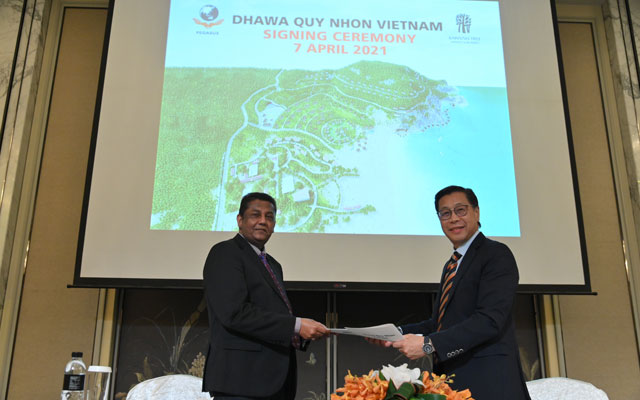
Banyan Tree Hotels & Resorts has signed a hotel management agreement with Pegasus Investment and Consultancy JSC to operate Dhawa Quy Nhon Vietnam, which is expected to be operational by 2023.
Dhawa Quy Nhon Vietnam will be managed by Banyan Tree Hotels & Resorts under its Dhawa brand. Inspired by paddy terraces, the 240-key resort will sit on 10.5ha of land and is sited on tiered platforms that leads towards the seafront.
Pegasus’ Abdul Rashid (left) and Banyan Tree Holdings’ Eddy See at the signing ceremony to operate Dhawa Quy Nhon Vietnam
With an estimated total investment value of S$100 million (US$74.5 million), Dhawa Quy Nhon Vietnam is the second phase of the Pegasus Education Tourism Development project, which will combine educational facilities with resorts and residences. The development’s first phase kicked off with the opening of outdoor experiential education campus Outward Bound Vietnam in 2016. Its third phase will comprise eco-residences.
Ho Kwon Ping, executive chairman of Banyan Tree Holdings, said: “As the world tourism gradually rebounds, this signing marks Banyan Tree Group’s continued growth and our second Dhawa resort signed in Vietnam. The Vietnam economy has proven its resilience in the face of Covid-19. This strategic partnership highlights the like-minded collaboration and entrepreneurship of two homegrown brands with strong overseas footprints.”
Greater understanding of the Covid-19 virus has allowed more airlines to establish sensible safe travel standards today, through partnerships with healthcare specialists, immigration authorities and government agencies.
However, communications between airlines and travellers are still fixated on pandemic-coping mechanisms and not enough attention is being paid to other critical travel aspects that have changed, such as traveller booking flexibility and service excellence.
In this new episode of TTG Conversations: Five Questions, we speak to Chetan Kapoor, co-Founder and chief strategy officer of Safe Travel Barometer.
Besides reviewing how airlines are delivering on safety promises amid a pandemic, Chetan also discusses how efforts have evolved with new information on the virus, airlines’ approach to health passports, and loopholes in Covid-19 testings and quarantine procedures that can weaken travel suppliers’ and immigration agencies’ attempts to limit infections.
Following the end of the government’s employment support scheme for the tourism industry last November, industry players have rallied together to create short-term job and business opportunities for travel agents and practitioners.
A proposal under the Job Creation Scheme put forth by 18 travel industry-related associations and unions, including the Travel Industry Council of Hong Kong (TIC) and the Hong Kong Hotels Association (HKHA), was accepted by the government recently.
Tour operators selling products at the inaugural travel fair organised by Hong Kong Japanese Operator Association
Last November, the government earmarked HK$6 billion (US$771.4 million) under the Anti-epidemic Fund to take forward the Job Creation Scheme, which is expected to create 30,000 temporary jobs in the public and private sectors over the next two years.
Under the scheme, tourism workers will be offered some 2,000 temporary jobs to assist in administrative tasks across 24 community vaccination centres (CVCs). The job openings target travel agents, hotel staff, tour guides/escorts, coach drivers and back office staff.
Currently, the government deploys manpower from various departments to run and manage operations at the CVCs, and the administrative support by the travel trade will allow for more flexible deployment of its manpower.
In order to conduct recruitments, a new company, the Tourism Industry CVC Administration Services, has been set up. The company will be granted a HK$2 million subsidy by the government.
According to convenor Michael Wu, the hiring process for the job openings started yesterday (April 7), and is expected to draw 7,000-8,000 applications.
So far, three job categories are waiting to be filled, namely, centre supervisors (46 vacancies with HK$40,000 monthly salary), assistant centre supervisors (92 vacancies with HK$30,000 monthly salary), and registration officers (1,600 vacancies with HK$1,300 daily salary). All appointees will undergo a short period of training and familiarisation before officially commencing work on May 1.
Each employment contract has a five-month term, with an estimated cost of HK$150 million for all 2,000 jobs combined.
Meanwhile, the first-ever mini travel mart to support the embattled tourism industry has been launched today (April 8) at a 650m2 event site in Kwun Tong. Jointly organised by Hong Kong Japanese Operator Association (HKTOA) and Inspire Hub, the four-day marketplace provides free booths for agents (15 booths) and practitioners (20 booths) to sell products.
HKTOA spokesman, Gianna Hsu, told TTG Asia the aim of the travel mart is to provide an avenue for the travel trade to earn some income during this challenging period. “As many practitioners have lost their jobs, we hope to drive more business opportunities for them. This mini-mart attracted more than 110 applications from the industry, and eventually, only 35 applicants were picked through a live lucky draw. It is estimated to draw around 1,000 visitors per day.”
Products on sale at the travel mart are mostly gourmet food sourced via the operator’s overseas networks. For instance, China Travel Service is showcasing a slew of premium tea brands and Japanese enzyme, while independent practitioners are selling everything from healthy dried fruit packets and soup packs to handmade jewelry and wellness products.
Admission tickets are available at HK$10 per person, while travel trade professionals enjoy free entry.
Thailand’s hotel and retail shares have plunged in the wake of a third Covid wave caused by the fast-spreading UK strain of the virus, which quickly spread from clusters of clubbers and partiers in Bangkok and Phuket.
Entertainment venues in 41 provinces have been ordered to shut down for the next two weeks starting today (April 9); while travel restrictions have also begun being implemented on a province-by-province basis.
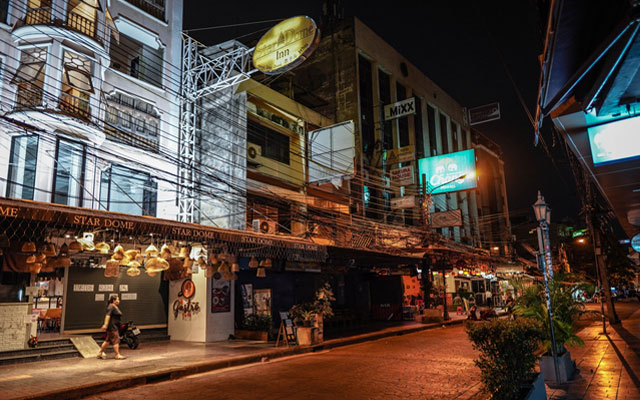
All entertainment venues in 41 Thai provinces, including Bangkok, ordered closed from Friday
Some provinces like Nan, Khon Kaen and Chiang Mai now require those who come from red zones like Bangkok and its surrounding areas to undergo a 14-day quarantine. Meanwhile, Trang province requires visitors to present a negative Covid-19 test result prior to travel.
Others, like Samui, have been more lenient, saying only travellers from the three worst-hit districts of Bangkok need quarantine and that travellers from elsewhere will only be sent to the hospital if they show symptoms of being ill on arrival.
The Thai government has added additional days to this year’s Songkran holiday to stimulate domestic travel, but many travellers have either started to cancel their plans amid the uncertainty, or been forced to, given the new provincial travel restrictions.
The travel sector is divided over whether travel restrictions should be implemented ahead of Songkran.
Marisa Sukosol Nunbhakdi, president of the Thai Hotels Association, opined that inter-provincial travel should be permitted over the holidays, in order to catalyse the economy. She added that this year’s frequent stops and starts in domestic tourism prompts the need for a more proactive inoculation plan.
“We cannot stop operations every time a new cluster causes the government to impose strict restrictions. The most urgent need right now is a proactive strategy for the country’s public inoculation,” she told the Bangkok Post.
Meanwhile, domestic airlines like Thai Lion Air and Thai Air Asia (TAA) are urging travel restrictions. TAA shared that while their average load factor is 80-85 per cent over the beginning of the Songkran holidays, they would rather prioritise long-term benefits over short-term revenue. “There won’t be a third wave if the government can stop it earlier,” Tassapon Bijleveld, executive chairman of Asia Aviation, TAA’s largest shareholder, told the Bangkok Post.
The Centre for Covid-19 Situation Administration (CCSA) has the authority to issue a countrywide travel ban, but has not done so thus far. Last month, prime minister Prayut Chan-o-cha stated that Songkran travel is needed for the economy, but urged travellers to be vigilant and careful of infecting their vulnerable elderly relatives.
Privatisation of vaccines
Stephan Vanden Auweele, chief hospitality group officer at Asset World Corporation (AWC), shared that many in the private sector would happily support the government’s vaccination drive, and that the cost of vaccines is minute compared to the potential business impact and fallout that the industry will have to shoulder.
“At the end of the day, if we could buy (vaccines), we would – but we cannot (currently). If the vaccines do become available, we’d be happy to support the government and to help the country and the restart of tourism. I think the private sector could play a bigger role if (the government) would allow us to come in,” he stated.
He also said that the Federation of Thai Industries is currently lobbying very hard to see private vaccinations. “It’s about joining forces rather than competing with each other. We’re all here for the same thing, to help the country and the people, and obviously, to get the (tourism industry) back on track,” he added.
So far, AWC’s hotels have not seen a lot of cancellations. “There has been a little bit of impact so far, but not on a massive scale. We don’t know if (the cancellations) will come, because the governors of various provinces are still (in the midst of issuing) statements. If travel restrictions are confirmed, people will not go to those destinations,” he elaborated.
The UK Covid-19 strain is reportedly more virulent and more deadly. Local media reported today (April 9) that three inmates in a Bangkok prison have died from Covid-19. The CCSA also stated that it is considering asking people to work from home for the remainder of April.
The country is currently grappling with the shortage of hospital beds to accommodate Covid patients, with local media reporting that the military is planning to set up 10 more field hospitals, and that some private hospitals in Bangkok have stopped doing Covid-19 testing as they have run out of test kits and beds.
Indonesia will persist in its efforts to prepare for the reopening of Bali, Batam and Bintan to international travellers, despite the recent terrorist attacks that took place in Makassar, South Sulawesi and Jakarta.
On March 28, a suicide bombing took place at a Roman Catholic cathedral in Makassar which wounded at least 20 people. Three days later, a lone-wolf terrorist attempted to attack the national police headquarters in Jakarta. A number of suspects have been arrested following police raids conducted in various cities across the country in a counter-terrorism crackdown. Indonesia authorities are also on heightened alert for possible terror attacks in the near future.
Enhanced security measures put in place at tourist destinations following terror attacks in Indonesia; police officers stand guard in front of Makassar Cathedral Church following a suicide bombing on March 28, 2021 pictured
Sandiaga Uno, Indonesia’s minister of tourism and creative economy, called on all stakeholders not to be deterred by the terrorist attacks, nor to allow them to foil the country’s tourism recovery plans.
“The tourism and creative economy sector depends greatly on national stability. Therefore, we must not be afraid as (instilling public fear) is what (the terrorists) are after,” he said.
Sandiaga added that since the incidents, the government has tightened security measures and increased the number of CCTVs at a number of tourist destinations.
Heightened security measures have also been put in place by travel and hospitality players, although they express confidence that the terrorist acts will not hamper the government’s efforts to partially reopen borders.
Ng Sebastian, owner of Incito Vacations, said: “(In the past,) terrorist attacks had a severe impact on travel, but now, people are more concerned about travelling to a Covid-19-free zone than a terrorism-free destination, as the pandemic is (considered) to pose a higher (safety) risk.”
Eduard Rudolf Pangkerego, COO at Artotel Group, said: “(Safety) is always a concern for corporate travellers. However, questions related to terrorism are no longer top on their list (of concerns), but rather, the current Covid 19 situation and the new protocols being applied in Indonesia.”
Eduard added that Artotel has beefed up security and precautionary measures at its properties across the country, while its hotel staff have been trained to activate emergency procedures as needed. Additional surveillance measures have also been undertaken in the wake of the terrorist attacks. In fact, even during the pandemic, Artotel has maintained its number of security personnel patrolling the premises of its properties.
Paul Tallo, chairman of the Indonesia Inbound Tour Operators Association, said his members have shared the latest situation in Indonesia and explained the safety precautions being taken by the government in the wake of the attacks to their respective business partners overseas.
Tour businesses in Malaysia are reaping little benefits from the resumption of interstate travel, limited to states that are under the recovery movement control order (RMCO), since March 10.
A major contributing factor is that the bulk of domestic travellers originate from Selangor and Kuala Lumpur, which are still under the conditional movement control order that prohibits its residents from travelling to other states.
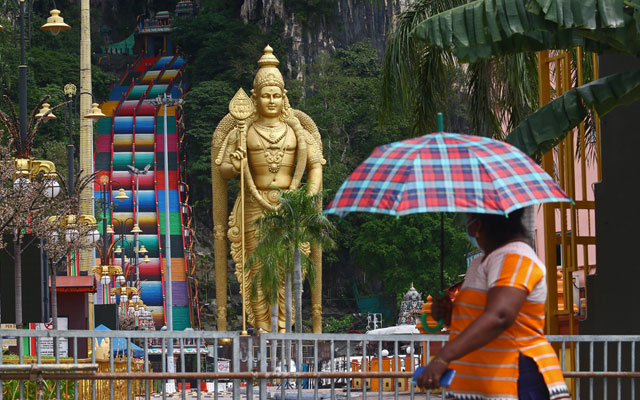
Interstate travel in Malaysia limited to between RMCO states; Batu Caves closed during MCO in January 2021 pictured
One of the conditions for interstate travel between RMCO destinations is that travellers must use a registered tour agency and a registered tour vehicle. Interstate travel on a personal capacity is still not allowed.
Mint Leong, managing director, Sunflower Holidays, shared that the agency has seen zero business since the resumption of interstate travel “as people from the Klang Valley are still not allowed to travel”.
She added: “Those staying in other states who are allowed to travel would use the services of travel agents from their home state, rather than get an agent from Kuala Lumpur to service them.”
Langkawi-based Mega Water Sports & Holidays director of sales and marketing, Sharmini Violet, shared that her company had received a small number of corporate group enquiries out of Kuala Lumpur for team-building activities in 4Q2021, “but no one has committed with bookings”.
She said: “Companies don’t dare make a booking now due to uncertainty as to when the government will lift the interstate travel ban for those living and working in Selangor and Kuala Lumpur.
“But when it is eventually lifted, we expect a boom in business. Currently, we are getting a trickle of bookings from FIT leisure travellers from Kedah and Perlis, and they usually request for one- or two-night packages.”
To support tour operators in Selangor and Kuala Lumpur, Malaysian Inbound Tourism Association (MITA) president, Uzaidi Udanis, held a discussion with the Selangor state government yesterday (April 8) on working together to identify and develop hidden gems in the state.
The inaugural joint workshop, due to take place on April 12, will train MITA agents on promoting and packaging of tourism products in Selangor.
Meanwhile, Tourism Selangor is initiating a campaign dubbed ‘Travel Selangor First’ to promote lesser-known destinations in the state and encourage those living in Selangor to explore their own backyard.
A significant surge in search activity for travel to Singapore originating from markets in and out of Asia-Pacific has emerged following discussions around bilateral travel bubbles.
According to recent data from Adara, there has been an increase in search activity for travel to Singapore coming from Australia, Indonesia, Malaysia and Taiwan through the last two weeks of March 2021 (March 1-14), compared to the first two weeks of the month (March 15-28).
This increase, as detected across Adara’s data consortiums, coincides with public announcements of plans to restore travel between these countries and Singapore.
The most significant travel search increase was detected from Australia, which was the first country to announce talks on a potential bilateral travel bubble with Singapore (around March 15). In the two weeks following the news, travel searches from Australia to Singapore saw a 34 per cent increase in market share, compared to the volume of all searches to Singapore across the same period.
Across March 15-28, travel searches and bookings from Australia to Singapore also increased, compared to the previous window (March 1-14).
Number of searches from Australia to Singapore increased by 32.4 per cent. In comparison, total number of global searches to Singapore decreased by 2.1 per cent.
Meanwhile, the number of bookings from Australia to Singapore increased by 2.9 per cent, while total number of global bookings to Singapore increased by 2.3 per cent.
Adara data also revealed a notable shift in travel searches and bookings from Singapore to Australia from March 15-28, compared to March 1-14.
Number of searches from Singapore to Australia increased by 28.3 per cent. In comparison, total number of global searches to Australia decreased by 8.1 per cent.
Meanwhile, number of bookings from Singapore to Australia increased by 9.2 per cent. On the other hand, total number of global bookings to Australia decreased by 7.2 per cent.
Across other countries that have also initiated discussions around travel bubble arrangements with Singapore, increases in travel searches have likewise been detected for the same window of time. For example, travel searches from Malaysia and Indonesia to Singapore both experienced a 19 per cent increase in market share, while that of Taiwan to Singapore saw a 14 per cent increase.
Beyond countries that have ongoing discussions around bilateral travel arrangements, Denmark and the UAE have also seen an increase in market share of global travel searches to Singapore at 26 per cent and 19 per cent, respectively.
The positive growth in travel searches originating from these source markets to Singapore is a preliminary indicator of pent-up demand for international travel. As arrangements solidify and more announcements materialise in the coming weeks and months, there remains more potential for intra-regional travel to gradually rebound, as pent-up travel demand accumulated across much of 2020 and the start of 2021 is released in waves.


















Banyan Tree Hotels & Resorts has signed a hotel management agreement with Pegasus Investment and Consultancy JSC to operate Dhawa Quy Nhon Vietnam, which is expected to be operational by 2023.
Dhawa Quy Nhon Vietnam will be managed by Banyan Tree Hotels & Resorts under its Dhawa brand. Inspired by paddy terraces, the 240-key resort will sit on 10.5ha of land and is sited on tiered platforms that leads towards the seafront.
With an estimated total investment value of S$100 million (US$74.5 million), Dhawa Quy Nhon Vietnam is the second phase of the Pegasus Education Tourism Development project, which will combine educational facilities with resorts and residences. The development’s first phase kicked off with the opening of outdoor experiential education campus Outward Bound Vietnam in 2016. Its third phase will comprise eco-residences.
Ho Kwon Ping, executive chairman of Banyan Tree Holdings, said: “As the world tourism gradually rebounds, this signing marks Banyan Tree Group’s continued growth and our second Dhawa resort signed in Vietnam. The Vietnam economy has proven its resilience in the face of Covid-19. This strategic partnership highlights the like-minded collaboration and entrepreneurship of two homegrown brands with strong overseas footprints.”