The organisers of Further East 2021 and the Japanese National Tourism Board (JNTO) have come together to bring unique digital and physical content to the high-end travel trade event when it takes place from November 15 to 18 this year.
Said to be the first NTO collaboration for the annual Further East event, the partnership will kick off with a cross-platform digital trade campaign throughout 1Q2021, including four newsletters to the invaluable Further East database, each showcasing a unique experience of Japan’s world-renowned hospitality offering; a week-long JNTO takeover of all Further East social channels; and targeted content in official publications, TTG Asia and TTG Asia Luxury.

In an interview with TTG Asia, Ito Kazuhiro, executive director, global projects department at JNTO, said the collaboration materialised on JNTO’s desire to “expand our relationships and partnerships with international organisations that can assist in the future market development of luxury travel and new markets”. He viewed this approach as critical, given that the Covid-19 pandemic had stifled promotional opportunities.

He said: “For Japan to continue to be a future luxury travel destination, our key objective is to further expand recognition of Japan’s allure to the Further East community and their clients, specifically in relation to its natural wonders, gastronomic experiences, traditional culture, lifestyle customs and history.
“Particularly in regional parts of Japan, there’s a myriad of hidden gems. Through Further East’s marketing channels, such as their newsletter and social media, we hope to increase brand awareness of Japan as a true luxury destination.”
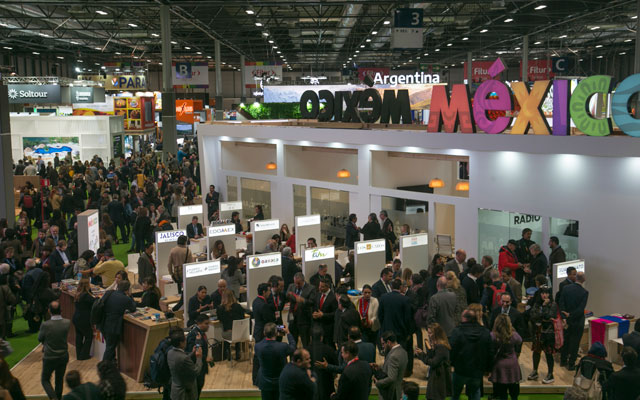
The mutually beneficial effort will see Further East supporting JNTO’s marketing goals through carefully curated experiences and installations at the physical event come November in Bali, Indonesia.
Sophia Asghar, sales manager of Further East, said: “Japan continues to be one of the most requested regions from our cohort of Further East buyers.”
While details of the physical installations are not available at press time, Asghar confirms that Further East “is excited to work with JNTO to increase the presence of Japanese products at the 2021 show”.
When asked for his views on luxury travel recovery potential for Japan, Kazuhiro acknowledged that it was a “difficult question” to answer. However, he noted that “counter measures against the spread of the virus, such as the availability of treatments and vaccinations were the top-ranking triggers that would encourage international travel”, as determined by JNTO research on post-pandemic trends and changing traveller needs.
He added: “Given that vaccinations have begun in an ever-increasing number of countries, this is encouraging. We believe what is most important is to act with the tools we have available at present and to prepare for the international luxury travel market to recover.”
To this end, JNTO remains keen on participating in other international luxury travel trade shows while marketing undiscovered destination content.
“In addition, discussions facilitated by Japan’s Ministry of Land, Infrastructure, Transport and Tourism on the development and facilitation of world-class accommodation facilities by public and private sectors are ongoing, and we believe this will improve our preparedness to welcome international luxury travellers to Japan in the near future,” Kazuhiro concluded.


Domestic travel across Malaysia will be prohibited from January 13 to 26 in a bid to arrest the rising number of Covid-19 infections, with potential for extension subject to risk assessments before the ban expires.
Besides a ban on interstate travel, social activities involving mass gatherings will also not be allowed in all states except for Sarawak and Perlis – two states that have recorded fewer number of new infections. Social gatherings in the two states will be subjected to strict standard operating procedures.
Face-to-face business events will be temporarily impacted too.
Residents of Penang, Selangor, Melaka, Johor and Sabah as well as the Federal Territories of Kuala Lumpur, Labuan and Putrajaya will face further inter-district travel restrictions as these regions are regarded as “high risk states” and healthcare services are almost stretched to their limits.
The Movement Control Order (MCO) enforced on these states and the Federal Territories will be similar to the strict conditions imposed from March 18 to May 4, 2020, where residents were only allowed to move within 10km of their home and only two people were allowed to travel to purchase groceries.
In a televised address to the nation, Malaysia prime minister Muhyiddin Yassin said the government had decided to take these strict measures to break the chain of transmission of Covid-19 infection, thus reducing the number of daily positive cases to a more manageable level.
He said that the country’s healthcare system was “at breaking point”.
“In the Klang Valley, the rate of ICU bed use for Covid-19 patients at the Kuala Lumpur Hospital and the University of Malaya Medical Centre had reached 100 per cent while at the Sungai Buloh Hospital it has reached 83 per cent. The rate of use of ICU beds for Covid-19 patients in Perak, Selangor, Melaka, Terengganu and Sarawak has exceeded 70 per cent,” he elaborated.
Malaysia reported 2,232 new Covid-19 infections on January 11, 2021, and four fatalities, bringing the death toll nationwide to 555.
While travel and tourism leaders expressed understanding for the need to curb infections, they also urged the government to appreciate the resulting impact on an already distressed industry.
Malaysian Association of Hotels CEO, Yap Lip Seng, said: “We need to stress on the need for the government to make the right decision in balancing lives (and) livelihood. With the…MCO implementations, businesses are again expected to lose all revenue streams.
“The government must support the industry and its people. With little or no revenue, businesses will not be able to retain its people, will not be able to pay salaries, and will have no option but to let go of its employees.”
Yap underlined the urgent need for a wage subsidy structure of 50 per cent for employees within a pay structure of RM4,000 (US$988) and 30 per cent for those earning up to RM8,000.
Malaysia Budget Hotel Association national deputy president, Sri Ganesh Michiel, also urged government understanding and assistance.
Meanwhile, Uzaidi Udanis, president of the Malaysian Inbound Tourism Association, advised members to adapt to the new situation, pivot their businesses towards digitalisation, and step up on hygiene procedures to rebuild customer confidence.