

Thailand plans to waive quarantine for vaccinated visitors from October
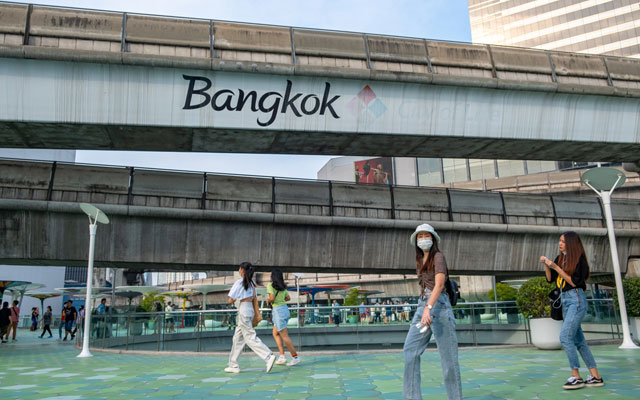
Thailand is considering scrapping its mandatory quarantine for vaccinated visitors to its capital Bangkok and other top tourist destinations from October, as it looks to rebuild its coronavirus-battered tourism industry.
Among the 10 provinces planned to welcome vaccinated tourists from October 1 are Pattaya, Phang Nga, Koh Samui, Krabi, and Bangkok, deputy government spokeswoman Traisulee Traisoranakul said on Friday (May 7), according to a Channel NewsAsia report.
The report also quoted Traisulee as saying in a statement that the new plan is expected to attract 3.5 million tourists this year, and generate 298 billion baht (US$9.5 billion) in revenue. However, she added, at least 70 per cent of residents in each of the 10 provinces must first be vaccinated for the plan to proceed.
Under current regulations, all foreign visitors to Thailand are required to undergo a 14-day quarantine in government-approved facilities.
Two government members join PATA Executive Board
The Pacific Asia Travel Association (PATA) has welcomed the election of two new government members to the PATA Executive Board.
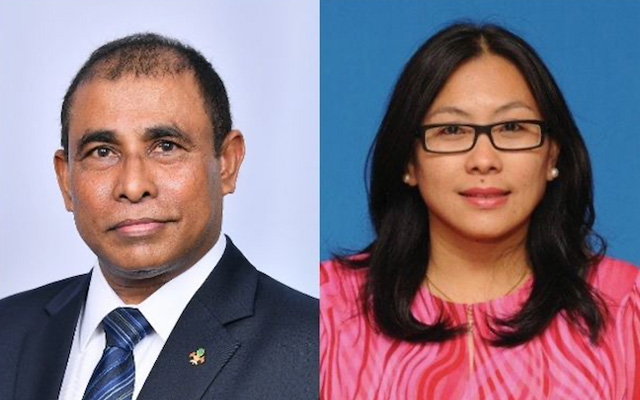
Abdulla Mausoom, minister of tourism, Republic of Maldives, and Noredah Othman, general manager, Sabah Tourism Board, Malaysia were both elected for a two-year term beginning April 29, 2021.
Before assuming minister on August 6, 2020, Mausoom served in the diplomatic corps of Maldives from February 2019 to August 2020. He was the High Commissioner of the Republic of Maldives to the Republic of Singapore and Non-Resident High Commissioner to New Zealand and Designated Non-Resident High Commissioner to Australia.
In his political affiliations, Mausoom previously served as Minister of Tourism & Civil Aviation and Minister of Environment, Energy and Water. Before joining the Cabinet in 2008, he was the Deputy Minister at the Ministry of Tourism and Civil Aviation.
He previously also sat on several boards such as the Maldives Association of Tourism Industry, and at one point in his career, was also general manager of the Sun Island Resort and Spa for four years from 2013.
Meanwhile, Othman wields over 30 years worth of tourism experience and is the longest-serving officer with Sabah Tourism Board. She is responsible for the marketing and promotion of the destination.
Othman has held various positions since October 1990 and served as deputy general manager (support services) from 2016. Prior to that, she was the senior marketing manager for the UK, Europe, Australia and the US markets from 2011 to 2015. She was the marketing manager for the UK, Europe and Australia from 2005-2010.
She started her career as a tourist assistant with the Sabah Tourism Promotion Corporation (STPC), the forerunner of STB, in 1990. Between 1991 and 2005, she held the position of assistant public affairs officer and later as communications manager. In 2015, Othman was awarded the PATA Foundation’s scholarship for Executive Development for Tourism (EDIT) Programme.
Tourism players despair as Malaysia tightens Covid curbs

Hopes for a domestic tourism recovery in Malaysia look dimmer by the day, as authorities impose stricter travel and mobility restrictions in response to an alarming spike in Covid-19 cases.
In the latest development, the government has placed the states of Kuantan and Pahang as well as several districts in Penang and Perak under a new movement control order (MCO) from today (May 10) until May 23.

They join several states and districts in Malaysia which are currently under MCO with varying timelines, including Kelantan (from April 29 to May 17), six districts in Selangor (from May 6 to 17), as well as Kuala Lumpur and parts of Johor, Perak and Terengganu (from May 7 to May 20).
As at 18.00 on Sunday, Malaysia registered 3,733 new cases and 26 deaths, bringing the total number of Covid-19 cases to 440,677.
The health director-general, Noor Hisham Abdullah, said Malaysia could hit 5,000 new cases daily in the next two to three weeks based on the current projected Rt value of 1.10.
As part of tighter measures to stem further spread of the virus, the government has prohibited interstate and inter-district travel nationwide without police permit from May 10 to June 6.
During this period, social, education and economic activities that involve gatherings are also not allowed. Other restrictions include a ban on dine-in services at eateries and a limit of up to 30 per cent of staff allowed to work in the office.
Malaysian Association of Hotels president, N Subramaniam, said that while the industry understands the rationale for restrictions, there is a need for authorities to strike a balance between lives and livelihoods.
He elaborated: “Hotels were already badly impacted with the extended interstate travel restrictions, and now, even travel between recovery MCO (RMCO) states has been suspended.”
“Since the beginning of Ramadan, hotels have adjusted their breaking fast buffets to the new norm, with added SOPs in place to ensure hygiene and safety of guests.
“The blanket ban on dine-in has left hotels in a predicament with only days to reorganise what was planned for the entire month. Hotels are not only left with excess supplies of perishables but also committed manpower for the period. The government did not offer any support or assistance, leaving hotels high and dry, with cancellations pouring in for room bookings planned for the Hari Raya holiday (on May 13).”
Subramaniam called on the government to reconsider other options apart from blanket bans to allow the industry to survive, as well as to speed up vaccination plans, especially for economic frontliners such as hoteliers.
Malaysia Tourism Council (MTC) president, Uzaidi Udanis, urged the government to include tourism players in discussions around Covid-related restrictions, and to draw up clear guidelines to effectively curb the virus spread. He cited countries such as Qatar, Taiwan and New Zealand which have successfully managed the virus while protecting the tourism industry.
MTC recently raised RM30,000 (US$7,300) through an online charity concert and donated the money to 100 tourist bus drivers to ease their financial burden. Uzaidi shared that the council plans to organise more online concerts in the near future, with proceeds to go towards tourism players such as travel agents, homestay operators, and budget hotel employees.
TTG Conversations: Innovator Chat with Sarah Mathews, TripAdvisor

The Covid-19 pandemic has upturned the tourism industry, with many businesses scrambling to make sense of new and evolving demands in domestic travel while keeping an eager eye on early signs of recovery.
Recognising the need for clarity and data-driven direction, TripAdvisor launched a slate of live data capabilities and safety search filters to guide the way forward.
Sarah Mathews, its group head of destination marketing APAC, shares that while outdoor and family-friendly adventures are on the rise, the continuously strong demand for urban escapes and dining means that businesses should stay on their toes when providing transparent health and safety information to customers.
In this episode of TTG Conversations: Innovator Chat, Mathews talks about the recent changes to TripAdvisor and what destinations have learned from its new Tourism Sentiment Index.
More travel agencies shutter, hotels face closure as Thailand’s tourism recovery stalls
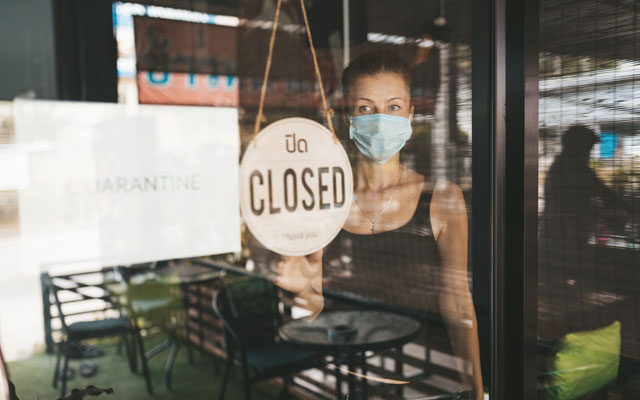
As a fresh wave of Covid-19 outbreak in Thailand continues to hamper the tourism industry’s rebound, more travel companies and tourist bus operators across the country have ceased operations.
The spate of closures signals that the pandemic has had a far more severe impact on the industry as compared to the financial crisis “Tom Yum Kung” in 1997 and previous episodes of political tensions over the years.
Earlier this week, the Thai Hotels Association stated that they would only be able to continue retaining their employees for one more month. It also warned that if the dire situation prevails, more hotel closures and staff layoffs are likely to follow.
Meanwhile, the Thai Restaurant Association (TRA) is strongly urging the government to lift the ban on dine-in services at eateries in six provinces – Bangkok, Chiang Mai, Chon Buri, Nonthaburi, Pathum Thani and Samut Prakan – that was enforced following a surge in virus cases after the Songkran Festival.
This followed an earlier order by the government that all restaurants and food shops in the provinces are allowed to open until 21.00 only to offer takeaways. The new measures will put hundreds of thousands of jobs at risk, TRA said.
Between April 2021 and now, some 10 to 15 per cent of the remaining 13,000 travel companies across Thailand have closed their doors.
“Many more tour companies, especially SMEs, are expected to ‘disappear’ in the near future,” Phuriwat Limthavornrat, managing director of P. Incentive Tour Event Co and president of the Association of Domestic Travel said on Thursday (May 6).
He estimated that some 60,000 to 70,000 tourism workers have lost their jobs since the pandemic, with many more layoffs to follow “soon”.
He added that the pandemic has wiped out all non-registered or illegally-run travel companies, while long-established firms with licenses have remained, but downsized staff.
According to president of the Thai Transportation Operators Association, Wasuchet Sophonsathien, more than 20,000 buses out of a total 40,000 to 50,000 buses have been mothballed due to a tourist drought.
As a result, tourist bus operators are suffering losses totalling an estimated 50 billion baht (US$1.6 billion) per month.
Wasuchet said that the tourism lull’s impact on transportation is generally less than that on hotels, based on asset value comparison. As such, bus service providers can afford to wait out the tourist drought for an additional four to five months.
The association is calling on the government for financial assistance as well as to lure foreign tourists back to the country as soon as possible to save the sector from collapse.
HK to welcome vaccinated travellers with reduced quarantine from May 12
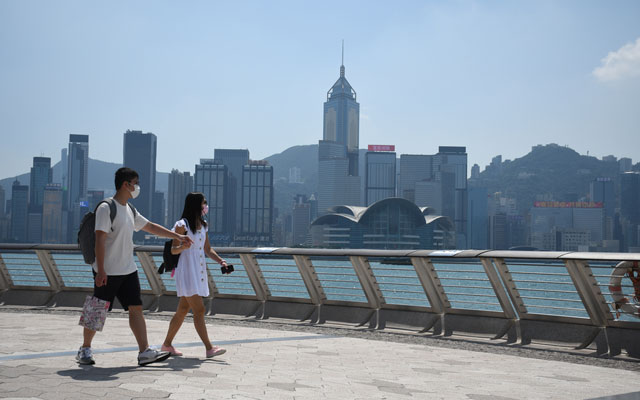
Hong Kong has finally put a date to her move to ease quarantine for fully vaccinated inbound travellers – and the relaxation of its strict inbound policy will begin on May 12.
This decision was announced today, after it first revealed its intention in mid-April to shorten mandatory quarantine for fully vaccinated visitors from low-risk countries to just seven days, down from 14.
This will benefit fully vaccinated travellers from countries such as Australia, New Zealand and Singapore. They will be required to self-monitor for an additional week.
Those from high- and medium-risk areas will serve a 14-day quarantine, instead of 21 days, in addition to another week of self monitoring.
Those coming from extremely high-risk areas will still have to fulfill a 21-day quarantine, even if they are inoculated against Covid-19.
InterContinental Parramatta to rise in Sydney come 2025
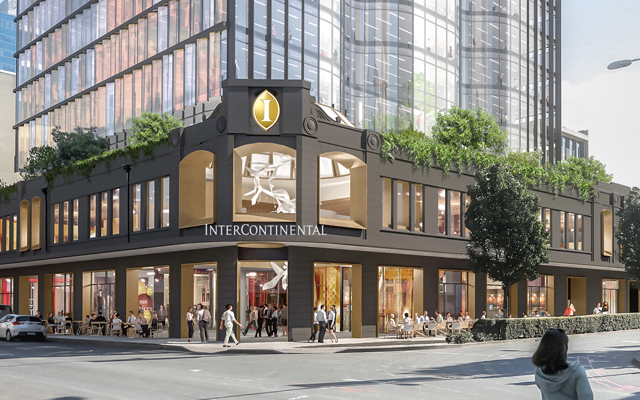
InterContinental Hotels & Resorts is set to arrive in Greater Western Sydney with the opening of InterContinental Parramatta, in partnership with owner Holdmark Property Group.
Scheduled to open in 2025, the new-build InterContinental Parramatta will be part of a mixed-use development that also includes offices and a ground floor retail precinct.
Located at the junction of two of Parramatta’s most bustling streets – Church and Macquarie Street – the 200-key hotel will feature a restaurant and rooftop bar, club lounge, pool, gym, wellness centre and more than 900m² of meeting space.
Vaccinations key to reviving international travel
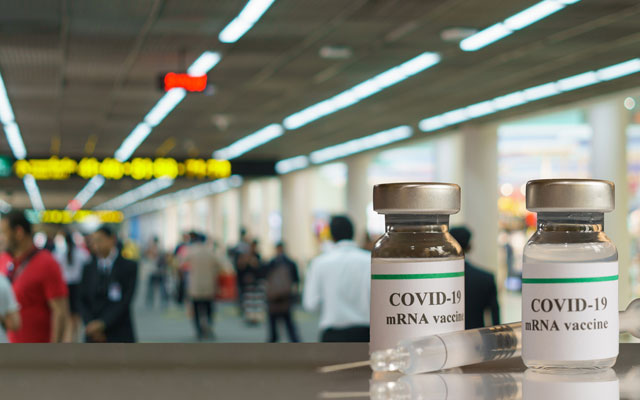
Destinations which are opening to vaccinated travellers have seen a significant lift in bookings, showing that vaccinations may hold the key to reviving international travel, according to ForwardKeys’ latest data.
Greece and Iceland, which have announced that they will welcome vaccinated visitors this summer, have seen inbound flight bookings pick up dramatically.
Three origin markets, namely, Israel, the US and the UK, where vaccination campaigns are particularly well-advanced, have seen outbound flight bookings climb more steeply than elsewhere.
Greece has seen a surge in interest and flight bookings from major outbound markets such as the US and the UK. The country tops the list of most popular destinations for British travellers this summer, with confirmed tickets for travel between July and September currently 12 per cent ahead of where they were at the equivalent moment in 2019.
Furthermore, analysis of the most resilient destinations in Europe this summer revealed that seven of the top ten cities are Greek. Leading the list is the island of Mykonos, with summer bookings currently standing at 54.9 per cent of what they were at the equivalent point, pre-pandemic.
It is followed by the Spanish island, Ibiza, where bookings are at 49.2 per cent. The next eight destinations in order of resilience are Chania (48.9 per cent), Thira (48.1 per cent), Kerkyra (47.5 per cent), Thessaloniki (43.7 per cent), Palma de Mallorca (41.2 per cent), Heraklion (36.6 per cent), Athens (33.2 per cent) and Faro (32.8 per cent).
The correlation between the announcement of relaxed travel restrictions and bookings is also demonstrated by flight tickets issued from the US to Iceland.
On March 26, its government announced that all vaccinated travellers would be exempt from entry restrictions and the level of issued tickets soared to 158 per cent of what they were during the equivalent week in 2019.
The correlation between vaccination rates and outbound travel is strong, as consumers gain confidence. Bookings to Europe from Israel, which has vaccinated over 60 per cent of its population, are currently at 63 per cent of 2019 levels and bookings from the UK, which has vaccinated over 52 per cent, are at 32 per cent of 2019 levels.
Olivier Ponti, vice president insights, ForwardKeys, commented: “Vaccinations appear to hold the key to reviving international travel, as countries that make clear promises to welcome vaccinated travellers are being rewarded by strong surges in flight bookings. We are seeing a revival of confidence in outbound travel from countries where there has been a successful rollout of Covid-19 vaccines too.”
“From a commercial perspective, the outlook is likely to be a little better than the numbers portray because travellers are booking longer durations. Furthermore, if restrictions are eased in both origin markets and destinations, there are grounds for further optimism because there is strong pent-up demand and, during the pandemic, people have shown themselves willing to make bookings at significantly shorter notice than they used to.”
Travel trade backs Sri Lankan’s ban on Indian arrivals
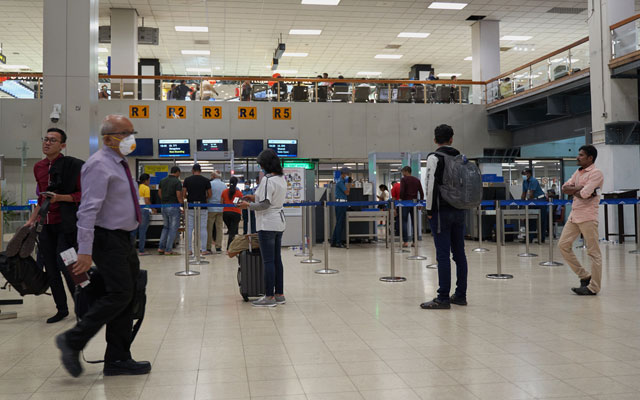
Sri Lanka’s recent move to ban travellers from India due to the exponential growth in Covid-19 cases there was inevitable as the safety of Sri Lankans remains a priority over economic interests, industry officials said.
Trevor Rajaratnam, former president of the Travel Agents Association of Sri Lanka, called the ban a “sensible” decision to avoid the virus spreading in Covid-19 certified hotels where Indian visitors would come into contact with other foreign guests and local staff.
On Thursday, Sri Lanka’s Civil Aviation Authority announced that due to the Covid-19 pandemic situation in India, passengers travelling from India will “not be permitted to disembark in Sri Lanka with immediate effect”. Indian travellers were welcome under a special travel bubble.
Since reopening its borders to tourism on January 21, 2021, Sri Lanka has seen only a trickle of arrivals. India has been Sri Lanka’s biggest source market in the pre-pandemic period. However, during the period from January 21 to end-April 2021, Kazakhstan emerged the country’s top source market, followed by Ukraine, Germany and then India.
Hiran Cooray, chairman of the Jetwing Symphony Group of Hotels, also welcomed the government’s move to ban Indian travellers. “Health is our number one priority,” he said, adding that it would also be wise for authorities to enforce a lockdown in Sri Lanka for one to two weeks given the sharp rise in the number of virus cases locally.
On Thursday (May 6), Sri Lanka hit a record daily toll of 1,939 Covid-19 infections and 14 deaths, taking the total to 117,529 cases with 734 deaths. The spike in cases has been attributed to Sri Lankans thronging shopping malls and street markets and travelling on crowded trains and buses during the long New Year holiday in mid-April.
A manager at a hotel situated in the central hill station of Kandy, a popular resort town, said they haven’t seen any Indian visitors since the pandemic started. He added that pre-Covid, Indian visitors usually accounted for 25 per cent or more of the total number of guests at the property.

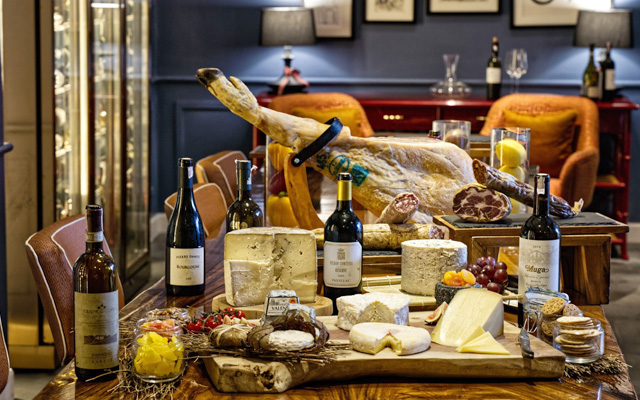






Thailand’s Dusit International has introduced a new group-wide wellness concept, Devarana Wellness, which aims to weave well-being elements into the entire stay experience at Dusit properties worldwide.
The new concept goes beyond Dusit’s traditional spa offering to deliver meaningful experiences focused on holistic well-being, and serves as a vehicle for the brand to tap into growing global demand for wellness experiences.
Taking its name from the Thai-Sanskrit word for “a garden in heaven,” and blending ancient Thai healing practices with innovative wellness concepts, Devarana Wellness has been specially created to deliver holistic wellness experiences based on three key principles.
These include ‘Pause’ (comprising yoga, meditation, breathwork, Thai herbal medicine, and activities that enhance emotional resilience); ‘Focus’ (comprising personalised food menus and fitness and movement activities for physical vitality); and ‘Growth’ (comprising workshops focused on sustainability, community outreach programmes, and special retreats for families, couples, and business and leisure travellers).
Other wellness initiatives being rolled out at Dusit properties worldwide include the offer of essential oils on arrival, the provision of premium beauty/grooming kits in guest bathrooms, and the screening of in-room video clips showing meditative sleep rituals.
Each property will focus on guests’ most shared concerns, including destressing, detoxifying, and enjoying a deep restorative sleep.