

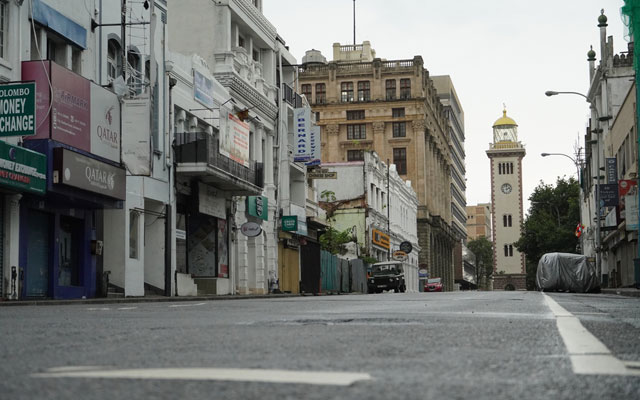
Sri Lanka’s hotel operators, whose businesses have been left crippled by the Covid-19 pandemic, will seek financial relief during a crucial meeting with representatives from the country’s main Central Bank on Tuesday (June 29).
“We are hoping for some relief from the Central Bank and the government to stay afloat as our financial obligations have gone beyond crisis levels,” said Sanath Ukwatte, president of The Hotels Association of Sri Lanka.
Among the proposed financial assistance to be discussed at Tuesday’s meeting is a three-year waiver of interest on loans; extension of the loan moratorium which ends in September; and a wage support scheme for hotel staff.
“We don’t have cash flows but we have to pay salaries and maintain the infrastructure,” Ukwatte said.
Despite inbound travel demand for Sri Lanka, the industry is not confident of the forthcoming winter season because the country is on the “red list” of destinations. Under the new traffic lights system for destinations, green countries allow for quarantine-free travel, amber countries require quarantine on return, while red-list destinations are no-go areas.
Ukwatte, who is also chairman of the Mount Lavinia Hotel, a 210-year-old colonial heritage hotel, said the government needs to protect the struggling tourism industry which has three million dependents out of Sri Lanka’s 21 million population. “The tourism footprint in the economy is greater than any other sector, and for this reason, the government needs to protect it before it collapses,” he said.
Since Sri Lanka reopened her borders to foreign holidaymakers on January 21, 2021 – with a temporary 10-day shutdown in May – tourist arrivals to the country have been low, with just 18,000 arrivals from January to mid-June 2021, according to official figures.
Currently, there are 116 ‘safe and certified’ hotels for tourists, while another 20 hotels have been transformed into intermediate care centres for local, suspected Covid-19 patients and a further 48 hotels into quarantine centres for Sri Lankans returning from abroad.
To supplement their income, most hotels in the capital Colombo are offering food deliveries using ride-hailing apps like Uber Food.
One such hotel is Jetwing Symphony Hotels. Chairman Hiran Cooray, however, said that while offering meal deliveries “keep staff occupied and kitchens clean”, the revenue derived from it is insufficient to cover wages.
He added that Sri Lanka’s tourism will only return to its former pre-pandemic glory if the country vaccinates 60 per cent of its population.
M. Shanthikumar, director at the Ramada Colombo, agreed that the food takeaway business is only to keep hotel staff occupied, but not enough to pay salaries and operational bills. He said restaurants and bars in hotel premises remain closed, as per existing health guidelines, and thus, a major component of their revenue is gone.
As of Saturday (June 27), Sri Lanka reported 251,751 Covid-19 cases and 2,905 deaths.









The pandemic has triggered greater demand for lengthier holidays of more than ten nights, according to a poll by GlobalData.
The data and analytics company noted that, with accidental savers on the rise and working from home making longer trips a possibility, extended vacations look set to boom post-pandemic.
A live GlobalData poll of 602 respondents revealed that over one in four (26 per cent) of respondents now prefer to take a leisure trip of ten-plus nights – the second-most popular length of trip behind stays of between four and six nights (28 per cent).
Gus Gardner, associate travel and tourism analyst at GlobalData, commented: “Many travellers are desperate to escape their lockdown locations and need a change of scenery. A lengthier trip gives the optimal amount of time to switch off and reset, which is likely to be driving the increase in demand.
“Furthermore, GlobalData analysis showed that in 2019, the average trip length was 4.45 days for domestic and 9.22 days for international trips, revealing demand for longer stays has risen considerably since the pandemic began.”
GlobalData noted that while some consumers have experienced a strain on their finances, others have become accidental savers due to less opportunity for recreational spending and reduced expenditure on commuting. These inflated funds may have contributed to the increased desire for longer stays, it added.
Gardner continued: “Travellers who have seen a considerable increase in savings are more likely to splash out on longer stays. Adding an additional night onto a trip generally results in the average cost per night decreasing, meaning the increased cost of a longer stay is minimal. Therefore, those with higher travel budgets will easily be swayed by the prospect of a longer holiday. The pandemic has fuelled the desire to travel and make up for lost time – longer stays are a great way to do this.”
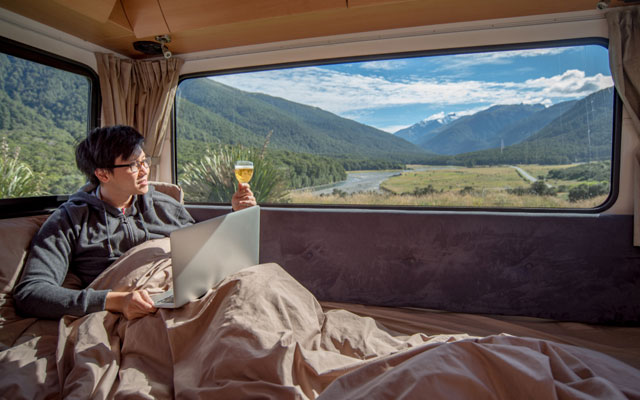
The rise of remote working, which could potentially change the way people travel, has also added to the appeal of an extended holiday.
Gardner added: “The pandemic has accelerated the work from home model, and the tourism industry could benefit. Those that are working from home, especially independent remote workers on a higher salary, no longer require a fixed location and only need somewhere quiet with internet. This new working model, which seems set to stay for some time, could further increase the desire to blend a traditional holiday with a ‘workcation’.
“For those seeking a different location, they may look to book a longer holiday, utilising some annual leave, whilst working remotely for the remaining days to maximise trip length. This new type of traveller could benefit accommodation sharing providers who can offer a home away from home.”