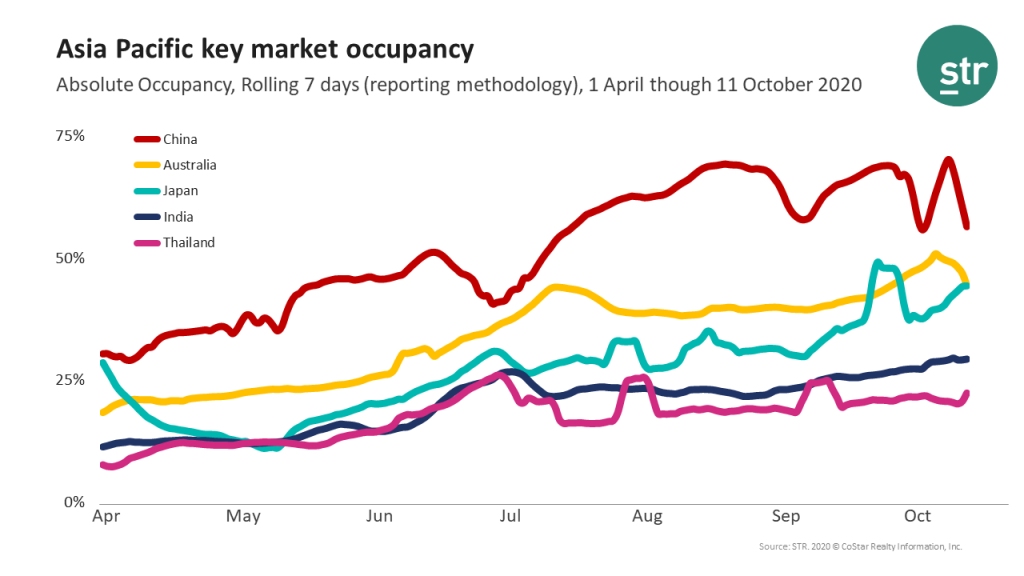
The Asia-Pacific hotel industry has reported continued performance improvement from Covid-19 low points thanks to strong domestic demand and holidays, according to a performance outlook presentation by Jesper Palmqvist, STR’s area director for the region during last week’s Hotel Investment Conference Asia Pacific 2020.
“Unlike the declines we’ve seen in the US after Labour Day or Europe after the summer holidays, Asia-Pacific markets have continued seeing growth,” Palmqvist said.
“For instance, in September, 70 per cent or better occupancy levels were registered in key China markets such as Sanya, Shenzhen, Chengdu and Xi’an. What is more noteworthy is that these markets are showing year-over-year growth in the metric, which is not common for most of the world right now.”
STR tracks improving hotel occupancy performance across key markets in Asia-Pacific
China’s demand has grown consistently over the months due to strong domestic demand and national holidays. On October 3, during the extended Golden Week period – a result of National Day coinciding with Mid-Autumn Festival – the market posted an 83 per cnet occupancy, almost reaching levels last seen in 2019.
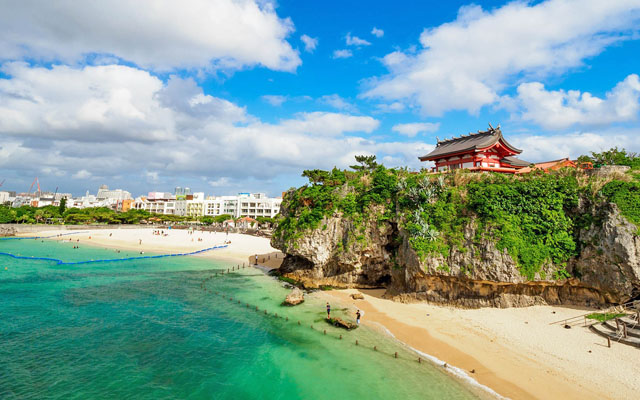
During Silver Week (September 19 to 22), Japan witnessed an occupancy boost driven mainly by domestic demand. The market posted its highest occupancy level on September 23 (67 per cent). Similar to other markets around the globe, regional and leisure destinations like Hokkaido and Okinawa have begun to see more substantial occupancy growth, while Tokyo and Osaka are starting to see gentle initial growth.
Hotel occupancy in New Zealand is also just 25 per cent shy of 2019 levels.
In many of the key markets in Asia-Pacific, weekends continue to produce the highest occupancy levels.
Resort locations in Vietnam have posted occupancy as high as 40 per cent during the weekends.
Weekdays in South Korea are still showing low occupancy levels (20-25 per cent) compared to weekends (60 per cent) in the market.
Hong Kong is another market displaying a similar trend as occupancy levels during weekends reached as high as 55 per cent along with weekdays rising to 40 per cent.
Palmqvist noted that “all eyes are on the success rate of the recently declared government agreement with Singapore for a quarantine-free travel bubble, expected to produce direct travel between the two markets before the end of year”.
Trapped within their borders, Chinese consumers are channelling their overseas travel budgets to more frequent and longer domestic holidays as well as premium accommodation with add-ons.
Speaking on a panel at the annual Hotel Investment Conference Asia Pacific 2020 last week, Shimao Group’s vice president, Tyrone Tang, shared his observations that domestic travel is no longer confined to public holidays, and instead is taking place every weekend.
Cub Med’s winter packages were snapped up in minutes; Club Med Beidahu pictured
Compared to pre-pandemic times, the Chinese are vacationing more within their home region, indicating a preference for nearby, accessible destinations. They are also travelling with children and parents.
“Travellers, especially those from the luxury segment, are willing to splurge on premium accommodation and meals in place of overseas travel,” Tang said, adding that Chinese customers with greater spending power have been driving the increase in hotel occupancy and room rates.
Fosun Tourism Group, overseas expansion, managing director, Alessandro Dassi, has also witnessed a strong preference for weekend getaways to luxurious retreats close by, adding that Club Med’s new resort near Beijing – Club Med Joyview Yanqing Beijing – have been a hit with city-dwellers.
Customers are now planning for their winter retreats, fuelling demand for ski packages. Club Med’s winter packages that were launched last week got snapped up within minutes, revealed Dassi, who predicted that ski destinations like Changbai Mountains in Jilin would “get a lot of success” with the snow-seekers.
Sharing findings from a recent Horwath HTL survey, project director, Yichen Zhu said five-star hotels are recovering better than four-star ones, as people with limited time to travel this year are choosing to make the best of their time with upgraded experiences. At the same time, high-end hotels often promise better health and safety measures along with a less crowded environment, all of which appeal to consumers today who prioritise personal safety.
Not only are travel patterns changing, Chinese consumers are altering their purchasing habits, noted Dassi.
“Customers are prioritising refundable rates and flexible booking terms as they want to make sure their money is safe should something happen (to disrupt travel plans),” he said, adding that hotels have also become more creative in their selling process by turning to live-streams to engage customers and push for sales.
With the growing acceptance of hotel vouchers among customers, booking platforms in China have also added on redemption features to their sites.
As the most prominent face of a destination, local population attitudes can shape visitor experience and satisfaction, as well as provide signals of continued support or rejection of future tourism developments.
Olivier Henry-Biabaud: important for destination authorities to understand the roots of tourism-phobia, and address them early
In this fourth article by TTG Asia Media for the PATA Crisis Resource Center, Olivier Henry-Biabaud, CEO of TCI Research, talks about an available tool to measure host community sentiments, and explains why it is critical for destination managers and marketers to have a clear understanding of how their residents regard tourism.
Henry-Biabaud also highlights some outstanding examples of tourism boards that have successfully roped in their local residents in the creation of effective tourism content and messaging.
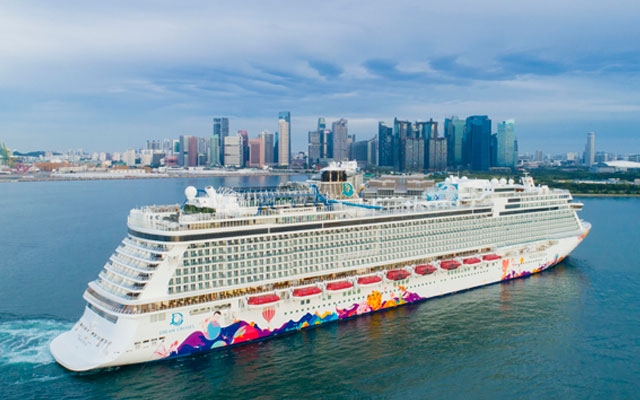
Dream Cruises will be the first cruise company to restart cruising service in Singapore with its megaship, World Dream. Intense health and safety measures, including thorough cleaning and sanitisation as well as a 14-day quarantine of all crew, have been taken ahead of her planned Super Seacation sailings on November 6.
World Dream is ready to set sail from Singapore on November 6
The crew will undergo a further series of mandatory Covid-19 testing as stipulated by the local authorities and are required to test negative before signing-up for active duty.
In the hotel industry, a hallmark of hospitality is being able to welcome and care for one’s guests as if they were family. In present times, amid the Covid-19 pandemic, that promise of care and concern becomes all the more critical for business continuity.
High standards of hygiene and cleanliness are now the baseline in service, and consumers look to health and safety protection to regain their travel confidence.
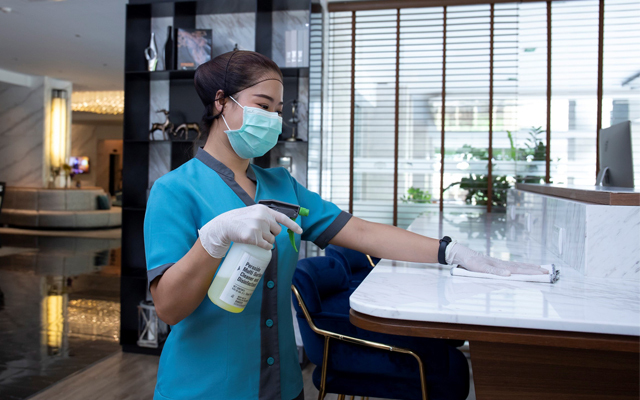
ONYX Hospitality Group works with ECOLAB to elevate the safety of its team members and guests
Marc Steinmeyer, president director of Tauzia Hotel Management in Indonesia, said that while hotels typically abide by high standards of cleanliness, an enhanced approach is now needed to “give guests greater ease of mind”.
But in the quest to establish the ultimate safe environment for cautious guests, could hoteliers risk compromising the warmth of hospitality and become too sterile for their own good?
Fransiska Handoko, government relations director with the Bali Hotels Association (BHA), thinks so.
“It is important to strike a balance,” said Fransiska. “We do not want to become sterile and turn Bali into a ‘hospital’ destination.”
Norbert Vas, vice president of business development, Archipelago International also warned against joining the “clean wars” among hotel today.
“There is the tendency for hotels to overemphasise the new normal hygiene standards in their advertising and promotional activities instead of focusing on their intrinsic qualities. Some hotels are competing to be the cleanest one of all. This is silly and will not help the industry,” he remarked.
Instead, he suggested that hotel marketing focus on reassuring travellers and reminding them of the many good things that travel brings.
Over at Pan Pacific Hotels Group, health and safety messages are presented differently. While it rolled out its Pan Pacific Cares promise, which emphasises a commitment to ensuring the safety and well-being of its guests and staff, the company has chosen to focus on the community outreach part of the programme.
CEO Choe Peng Sum said: “I am so proud of Pan Pacific Cares, and we take it very seriously. (Health and safety messaging) is important but it is overdone. You look up and you see every hotel group has their own programme. It is now a given, no more an advantage.
“(By focusing on Pan Pacific Cares’ community work) we want our customers to understand that with our ability to care for the community, the environment and our staff (even in challenging times), we can be trusted to take good care of them too.”
Besides being careful with messaging, hoteliers also advised against going overboard with technology replacements even as contactless standards are sought.
Craig Bond, executive vice president, operations, ONYX Hospitality Group, said: “We believe in deploying technologies and systems to empower our team members, not to replace them, as hospitality is a people-driven business.”
Bond cited wai, the traditional Thai greeting with palms clasped at the chest and with a slight bow, as an example of how warmth and welcome can still be conveyed without physical contact.
“We are seeing wai replacing handshakes in many countries, and we are glad that this uniquely Thai cultural export is offering some relief to our friends worldwide during this pandemic. Our team members have over time figured out a way to smile through their masks, offering acknowledgement, assurance and a sense of comfort to our guests through that subtle sparkle in their eyes,” he added.
Vas said told TTG Asia that “beautiful menus and personal conversations with waiters are being replaced by QR codes, while self-check-in and check-out are becoming more popular”. But beyond these changes, Vas sees no place for robotic replacements in the service line, saying that “people will get annoyed” once the novelty wears off. – Additional reporting by Karen Yue
Virtual reality has been hailed as a saviour for the travel and tourism industry during this time of pandemic, allowing destinations to continue engaging with travellers through a suite of immersive online content to whet their wanderlust appetite in anticipation of the travel rebound.
With the ability to bridge the gap between the online and offline world, “the future of social media and travel is in the virtual space where you can meet regardless of where you are in real-life,” said Laura Olin, COO and partner at Zoan, a Finland-based VR studio.
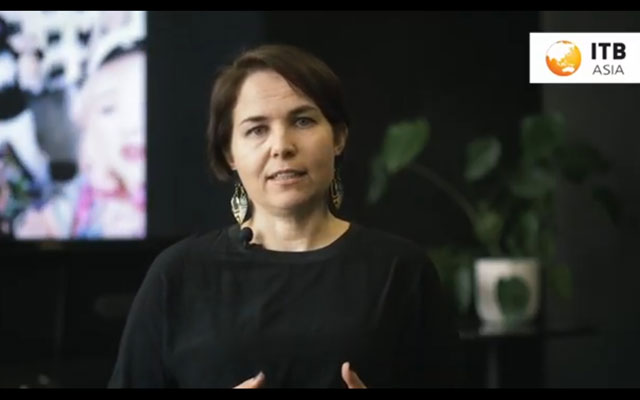
Olin: Virtual spaces allowing for human interaction beyond physical boundaries will shape future of travel
“Today’s teenagers are spending more time (on video games) like Mind Trap or Fortnite on social media. That is the future where we are (headed) to,” she added.
Speaking at the ITB Asia 2020 Virtual session, titled How Virtual Reality is Changing the Way We Experience Travel, Olin expressed: “You are not tied to any real-life restrictions, but you can explore anything: the history, the fantasy and the future. These are the same principles we are thinking about (in) the future of travel and travel marketing.”
She said that destination marketers in the city of Helsinki started embracing the medium in 2018, working together with Zoan to conduct virtual reality tours around Helsinki, showcasing its urban nature and attractions for tourists and conference delegates.
“(The idea) was very much on par with the sustainability goal that Helsinki as a city has because they don’t want to attract every single tourist from around the world to come, but they want to offer Helsinki in different formats to people who are interested in the city,” she said.
The city of Helsinki worked with VR studio Zoan to create the Virtual Helsinki, a digital twin of the physical capital
This year, the city of Helsinki partnered with Zoan to create the Virtual Helsinki, a digital twin of the Helsinki city centre built using 3D modelling, alongside a virtual concert broadcasted throughout Finland which saw 700,000 attendees and 10 million avatar interactions.
“What we are now working with Helsinki on is a ‘Metaverse’ 3D space that lets people explore Helsinki in different ways. For instance, this summer, we have made Helsinki Design Week and Amos Rex Museum exhibition available online for people to enjoy,” she said, adding that the next project will be the Helsinki Biennale next year.
“So this is really something that Helsinki has been putting a lot of focus on and they are seen as a forerunner throughout the world,” she added.
Destination marketers can tap on virtual content to reach wider audiences. Olin said: “(Suppliers are engaging with) not only those people who can afford to come to the place, but also those who may only have a computer and internet connection.”
During the 15-minute session, Olin also highlighted the commercial aspect of video games, saying: “You can actually make money in those spaces. They are free for anyone, but if you want to get the full experience, you need to swipe your credit card every now and then.”
In like manner, tourism businesses can capitalise on the rising digital uptake for profit. Olin said that Zoan is currently working with the city of Helsinki to discuss plans on how to monetise virtual travel experiences.
“Of course, the idea with destination marketing is for people to come and spend their money, but what if you have this virtual space and have some of the services available there? With micro-payments, people from around the world could (make purchases) without even visiting the city,” she said, adding that discussions around that idea are ongoing, with plans to “hopefully” launch pilot projects “soon”.
Hawaii is set to loosen entry restrictions for Japanese visitors in the hope that Japan, a critical inbound market, can support the island chain’s ailing tourism industry.
Under the plan, Japanese travellers can bypass a 14-day quarantine upon landing in Hawaii if they pass a body temperature test and submit a negative Covid-19 test result. This test must be carried out at a medical institution in Japan recognised by Japan’s Ministry of Health, Labour and Welfare within 72 hours of departure.
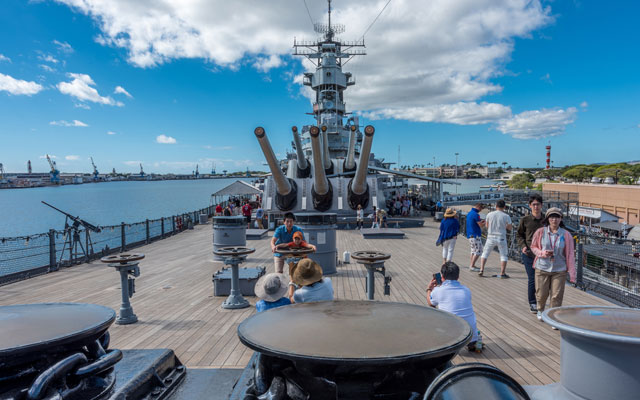
Hawaii’s plans to lift Covid restrictions for Japan travellers will provide much-needed lifeline for the US state’s battered tourism sector; tourists visiting the Battleship Missouri Memorial at Pearl Harbour, Hawaii pictured
On October 15, Hawaii began the plan for arrivals from continental US, as well as the Hawaiian counties of Honolulu, Kauai and Maui, but arrangements for Japan are still being worked out.
Hawaii’s Department of Health is in discussion with Japanese medical institutions to secure a list of trusted testing partners in Japan to offer Covid-19 tests. A department representative said it “looks forward to working collaboratively with all levels of the Japanese government to identify trusted testing partners and to make this pre-travel testing programme a success”.
Hawaii governor David Ige hopes for the US state to be open to Japanese tourists by the end of the year. The move is expected to provide a lifeline to travel-related businesses in Hawaii, which has long been a popular destination for Japanese travellers.
In 2019, Japan was Hawaii’s largest inbound market in visitor terms of spending, visitor days and arrivals. It ranked third overall, behind only the US West and US East coasts, according to the Hawaii Tourism Authority.
Moreover, Japan’s importance has been growing in recent years. Japanese visitors’ spending increased 4.8 per cent to US$2.25 billion in 2019, boosted by growth in visitor arrivals, which were up 5.8 per cent, and visitor days, up 4.7 per cent. In shopping, their average spending was surpassed only by visitors from “other parts of Asia”.
Japanese travellers also tend to be repeat visitors to Hawaii; 68 per cent of Japanese visitors in 2019 had been to Hawaii before.
Under Hawaii’s “pre-travel testing programme”, Japanese travellers returning to Japan from Hawaii must undergo a 14-day quarantine. In the meantime, Japan’s borders remain closed to leisure visitors from the US.
Aman founder Adrian Zecha has teamed up with Japanese hospitality group Naru Developments to launch a new hospitality brand, Azumi, that aims to offer a fresh take on the Japanese ryokan by combining the personable service typical of the traditional inn with global hotel standards.
The first Azumi property is slated to open on one of the islands in the Setouchi Region of Japan come spring 2021.
Each Azumi property will serve as a medium of expression for each locale and its climate
Zecha said that he was first acquainted with ryokans while living in Japan back in the 1950s as the Asia correspondent of TIME magazine. “My favourite ryokan was a retreat from the hustle and bustle of the city. It was owned and operated by one family and they were deeply rooted into the local community,” he said.
“The hospitality was just right – I was treated as something in between a guest and a dear family friend. This relationship with the family who owned the ryokan made the place an extension of my own home in Tokyo.”
Azumi aims to infuse the “time-honoured customs and hospitality” observed at ryokans into “a quality offering that appeals to the modern, global traveller”.
This balance between tradition and innovation will be integrated into all parts of the brand, from design and service, to wellness and cultural programming. For example, the team has worked closely over the past four years with Shiro Miura, a Kyoto architect, to find the right harmony between traditional design and modernised comfort for the brand.
The largest-ever tourism push to promote the Gold Coast urges Aussies to Come Back and Play, as part of Destination Gold Coast’s (DGC) latest campaign launched to further springboard economic recovery.
The A$3.5 million (US$2.5 million) promotion is the second iteration of DGC’s Come Back and Play campaign, which first launched in June encouraging Queenslanders to explore their own backyard.
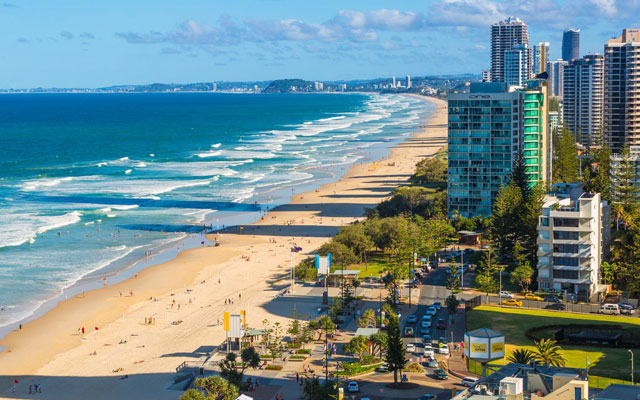
Recovery beckons for Gold Coast tourism as mammoth campaign debuts across Australia; Surfers Paradise in Gold Coast pictured
DGC chairman Paul Donovan said that the campaign aims to inspire Aussies to turn their holiday dreams into reality, ahead of the reopening of Queensland’s border slated for November.
“Come Back and Play represents the largest multimillion-dollar investment in the domestic market to entice high-spending travellers to indulge in a well-deserved holiday in Australia’s favourite playground,” he said.
Donovan added: “As restrictions are further relaxed and travel confidence continues to grow, we are investing responsibly in markets that we can dial up or down to ensure maximum benefit for every tourism dollar spent.
“The addition of interstate holidaymakers from key markets is anticipated to deliver a much-needed boost to revive Gold Coast’s A$6 billion tourism economy. We know many people will be looking to reconnect with family, friends and loved ones after what has been an incredibly challenging year.”
The eight-week campaign will be rolled out in bursts throughout Brisbane, regional Queensland, ACT and South Australia, followed by New South Wales (November 8), on free-to-air and subscription TV, radio, outdoor digital billboards, cinema placements, as well as digital and social media.
Featuring experiences from poolside relaxation to visiting iconic theme parks and nature-based experiences, the campaign aims to drive visitation through to summer.
Accor has rolled out 42 accommodation deals across 23 of its properties on the Gold Coast, as part of a partnership with DGC under the campaign.
The Come Back and Play campaign will be supported by a 32-page printed supplement to be included in metro publications across Brisbane, Sydney and Adelaide from November 8.
The Sentosa Development Corporation (SDC) has launched a campaign to encourage locals to Make Time for a Holiday, with over 50 diverse new offerings to be rolled out progressively.
Themed around Island Life, Heritage Discovery, Wellness Escape, and Nature Adventure, the offerings feature hybrid leisure experiences that integrate onsite and virtual elements, insider tours to hidden gems, alongside a slew of S$100 (US$74) holiday packages.
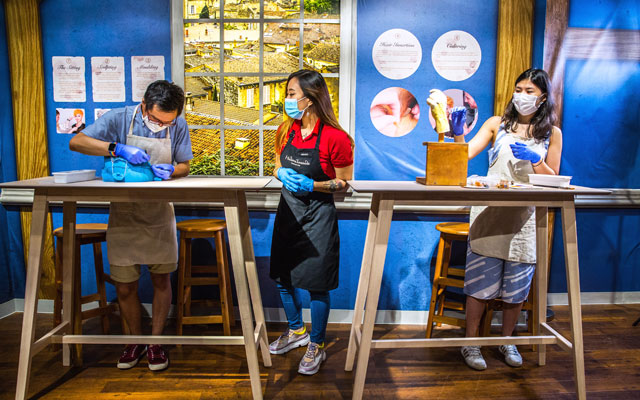
Visitors to the Madame Tussauds Singapore can now try their hand at wax painting and hair insertion
The launch comes after SDC commissioned a survey in August 2020 to examine how the Covid-19 pandemic has impacted Singaporeans’ views and attitudes towards leisure time, as part of efforts to understand and anticipate the needs of Sentosa’s guests.
Polling 1,061 Singapore citizens and permanent residents, the survey found that the majority (56 per cent) have not seen the need to take leave from work while working from home, despite the large majority (90 per cent) understanding that taking regular breaks increase productivity.
To encourage Singaporeans to take a break, SDC has teamed up with its tenants to launch a series of Sentosa Insider Tours. Designed to showcase a different side of Sentosa, the tours will offer insights into the workings of Sentosa’s attractions, as well as hands-on experiences that will bring guests closer to the island’s nature and heritage.
Among the Sentosa Insider Tours on offer is Behind the Magic (by Madame Tussauds Singapore), a 1.5-hour insider experience where guests can learn wax painting and how to do hair insertions from industry experts; as well as How we Defy Gravity (by AJ Hackett Sentosa), a two-hour interactive programme with a behind-the-scenes tour, showcasing the technical, educational and thrill aspects of the attraction, such as the construction of bungy cords and the science behind the Bungy Jump and Giant Swing.
Nature lovers can take part in the Marine ConservAction (by SDC), a one-hour programme where guests will understand the effects of litter on marine life and how we can do our part to protect the environment, while contributing to marine conservation through the hands-on experience of litter-picking along Sentosa’s beaches.
The various Sentosa Insider Tours will progressively be rolled out from October 2020 and over the coming months.
As part of a tie-up with the National Association of Travel Agents Singapore, SDC, together with five local travel agents, have also curated 10 guided tours featuring Sentosa’s array of leisure offerings, including attractions, nature and heritage experiences, as well as various dining options.
Guests on these guided tours can enjoy free transportation from their doorstep to the various offerings across Sentosa. Those who prefer to explore the island on their own can also choose from a range of free experiences such as the new Sentosa Geology Gallery at Sentosa Nature Discovery, which offers insights into Sentosa’s rock and geological formations, as well as various nature and heritage trails, among others.
Meanwhile, SDC, together with its tenants, have also rolled out a range of holiday packages priced at S$100, bundling various leisure experiences, with discounts of up to 50 per cent. For example, one can opt for a package inclusive of rides at HeadRock VR Sentosa and a 5-in-1 Madame Tussauds Singapore experience, complete with a complimentary treat at Co+Nut+Ink; or another featuring a 2.5-hour guided yacht tour to the Southern Islands, and a cable car ride.
In December, SDC will also launch its first sustainability-themed tour that enables guests to experience behind-the-scenes efforts on conservation and sustainability, and encourages them to embrace sustainable actions through experiencing Island Life at Sentosa. The tour will be the first of an upcoming series of sustainability-themed tours, as part of the progressive roll-out of Sentosa’s S$100 Getaway Deals.
Food and wine enthusiasts can now attend Masterclasses offered by SDC’s tenants where they can learn how to make the signature cocktails at Tanjong Beach Club (S$88 nett/per person), or garner insights on how to whip up a Risotto & Gnocchi Dish for free at Trapizza, the beachside casual Italian restaurant at Shangri-La’s Rasa Sentosa Resort & Spa.
Meanwhile, foodies can look forward to the return of the signature Sentosa GrillFest in its inaugural Home Edition. From October 29 to November 22, 2020, guests will be able to indulge in grilled treats from various dining establishments in Sentosa, as well as delights from local chefs as part of SDC’s partnership with the Singapore Chef Association for the event.
Guests can choose to enjoy these tasty treats through islandwide delivery, or make reservations to dine-in at participating dining establishments in Sentosa.
SDC said that more initiatives under the Make Time for a Holiday campaign will be rolled out “in the coming months”.














Dream Cruises will be the first cruise company to restart cruising service in Singapore with its megaship, World Dream. Intense health and safety measures, including thorough cleaning and sanitisation as well as a 14-day quarantine of all crew, have been taken ahead of her planned Super Seacation sailings on November 6.
The crew will undergo a further series of mandatory Covid-19 testing as stipulated by the local authorities and are required to test negative before signing-up for active duty.