Japan’s tourism industry has reported a bleak first few months of 2021 as residents stay home amid emergency or quasi-emergency measures in place to curb Covid-19 infections.
The ongoing downturn is a further blow to the sector, which has seen unprecedented numbers of business default since the onset of the pandemic. In fiscal 2020, 125 lodging businesses went bankrupt, up 66 per cent year-on-year, according to the Teikoku Data Bank.
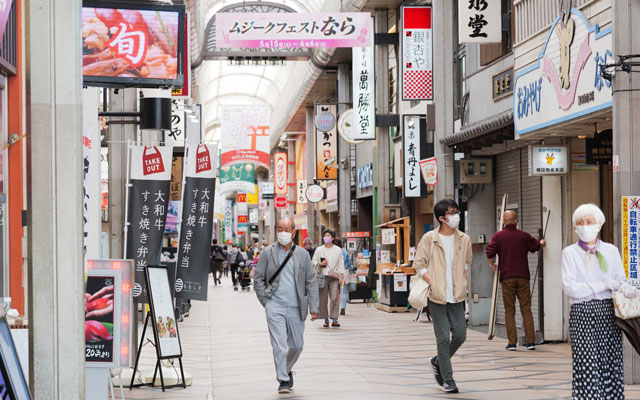
Travel bookings in Japan continue to take a hit from the pandemic; an unusually empty scene around Nara Station during a state of emergency in May 2021 pictured
In an online survey of almost 5,500 hotel operators by the Japan Tourism Agency (JTA), almost half said reservations had fallen by more than 70 per cent between January and May this year compared with the same period in 2019.
The normally peak period of consecutive national holidays from late April to early May, known as Golden Week, was also quiet; most hotels and inns reported only 50 per cent occupancy.
Travel agencies have been similarly affected. Around 80 per cent of the some 3,000 surveyed said reservations have fallen by more than 70 per cent so far this calendar year, compared with the same period in 2019.
The data shows a strong correlation between bookings and the rate of Covid-19 infections in the country.
Travel agencies saw a 81 per cent decline in reservations in January followed by a 84 per cent decline in February, thought to be the result of a state of emergency announced in January for Tokyo, Osaka and nine other prefectures. Hotels operators said reservations slid by more than 70 per cent in January and February.
Respondents enjoyed some respite in March, when bookings fell by 31 per cent for lodging businesses and 76 per cent for travel agencies, before the situation declined again in April and May.
The suspension of the national government’s domestic tourism financial subsidy campaign, Go To Travel, at the end of 2020 is partly responsible for the decline in reservations, according to the JTA report.
The slow but sure rise of veganism in recent years as consumers awake to the health and environmental benefits of going meat-free has resultantly set vegan tourism on the path of steady growth.
Veganism has been vaunted as the more sustainable food option that is good for both the people and the planet, as a plant-based diet requires only one third of the land needed to support a meat and dairy diet.
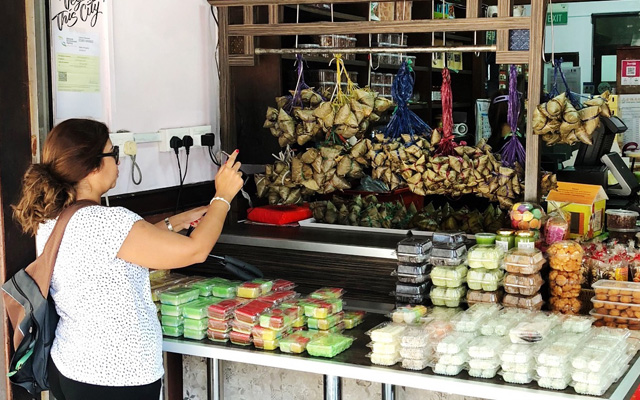
Singapore agency VegThisCity’s vegan food tours allow guests to support local businesses such as Peranakan heritage brand Kim Choo Kueh Chang (above) and connect with foodies from around the world
While the pandemic brought travel to a standstill, the global appetite for veganism has grown since 2020, driven in part by a groundswell for sustainability and climate action.
A GlobalData survey conducted in December 2020 showed that post-Covid, more global consumers are influenced by how ethical, environmentally-friendly and socially responsible a product or service is.
The report indicated that changing traveller perceptions amid the pandemic may prompt many more to switch to veganism, as reduction of meat consumption has a positive environmental impact.
Vegan vacations: the next big tourism trend?
As the popularity of veganism grows, tour operators across the world like Intrepid Travel are answering the eco-conscious call for more vegan-friendly travel options.
Since launching a series of vegan tours in mid-2018, the global tour operator based in Australia has seen a rise in interest for such tours held in India, Thailand and Italy. The company recorded an 80 per cent increase in bookings for its vegan tours between 2018 and 2019, shared Erica Kritikides, senior brand and product manager, Intrepid Travel.
Of these, more than 70 per cent of bookings were for its India vegan tour – which enjoys a popularity that Kritikides attributes to “the centrality of veganism within many regional Indian cuisines”.
Led by vegans or vegetarians, these vegan food tours run by Intrepid Travel comprise vegan-friendly cooking classes and all-vegan street food crawls, alongside culturally immersive activities.
Majority of guests (72 per cent) on such tours were female, mainly hailing from Australia, the UK and the US, with millennials making up over 50 per cent of all customers.
While the pandemic forced the company to pause its vegan tours, it is looking forward to how these tours could evolve when travel resumes.
According to Statista, nine per cent of the Asia-Pacific population identified as vegan in 2016. As a further sign of growing appetites for veganism, between 2017 and the start of 2020, searches for “vegan tours” on Google grew by 76 per cent, noted Kritikides.
“Increased interest in vegan tourism is undoubtedly linked to more mainstream acceptance of the vegan diet and a general trend towards a more plant-focused way of eating – both for its recognised health benefits, as well as for sustainability reasons, with awareness around meat production being a carbon-intensive agricultural process,” she explained.
“More people – especially millennials and Gen Y – are also recognising that vegan food can be delicious – and that there are some fascinating vegan culinary subcultures well worth exploring – and tasting – many of those found in Asia. Examples might be shojin ryori (Japanese monastic cuisine) or Jain cuisine in India – both of which are completely vegan.”
Eiktha Khemlani, founder of Singapore’s first and only plant-based food tour company VegThisCity, said that vegan tourism “ticks all the right boxes” for a growing segment of travellers looking to travel responsibly and sustainably.
“They want products and experiences that are animal-friendly, better for the planet and allow them to leave a positive impact on the local community,” she said.
Started in 2018, VegThisCity offers themed vegan and vegetarian food crawls around neighbourhoods like Joo Chiat and Chinatown.
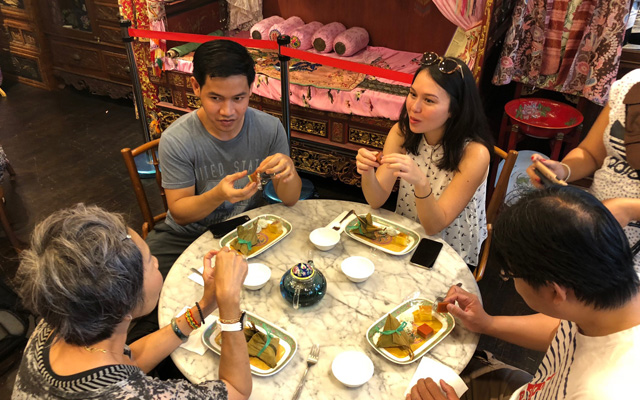
On VegThisCity’s History of Taste tour, guests get to savour traditional delicacies around Singapore’s Joo Chiat district and learn how families are keeping their food heritage alive (photo taken pre-Covid)
The company also runs collaborative dining events, virtual experiences and corporate tours, and works with global travel and event companies as the local operator for vegan walking tours in Singapore.
VegThisCity’s tours attract a wide range of both local and foreign vegans and curious foodies, including business owners exploring cruelty-free options.
To cater to the young ones, the company arranges child-friendly dishes and swap out cocktails and non-dairy lattes for fresh fruit smoothies and superfood popsicles.
“These experiences inspire conversations on food and the environment, and provide a platform for businesses and individuals to rethink traditional options and innovate in a more eco-friendly and sustainable way, no matter the industry,” said Khemlani.
With the plant-based movement taking root across the globe, interest in VegThisCity’s tours has been on the rise. From hosting once or twice monthly tours to weekly outings within the first 18 months of starting operations, it is a growth Khemlani attributes to the company’s varied and customisable offerings.
“(Vegan tourism) has been a growing segment for the past two years, especially now more than ever as people approach food with a greater emphasis on their personal health and want to know more about where and how food comes to their plate,” explained Khemlani.
“With organisations making greater investment on alternative food products, new advocacy documentaries on mainstream media and vegan food becoming more experimental – this is naturally fueling the foodie’s curiosity.”
“As a lifestyle, veganism adapts to the most pressing ethical, environment and health needs… Travellers also realise that they can travel responsibly and eat better without missing out on the best experiences each country has to offer.”
While the company was on track for steady growth, with advance bookings for the first half of 2020, travel curbs imposed due to the pandemic saw its tour bookings dip. Khemlani, however, saw an opportunity to reinvent the company’s guest engagement and experiences.
“Guests who cancelled their existing bookings with us were not only offered full refunds, but also, a complimentary virtual Singapore experience with our professional guides to entice them to rebook their food tour with VegThisCity once travel resumes,” she said.
“The feedback we received from this was very positive, with some international guests booking our virtual teasers as surprise gifts for friends, and our tour experiences as travel incentives for their work teams.”
Fairkonnect, India’s first vegan travel company which operates vegan tours in India and Sri Lanka, had also seen swelling demand for its tours before the pandemic.
“We had a nearly 150 per cent increase in our bookings in 2019 compared to years prior,” shared Shilpa Jujjavarapu, digital marketing manager, Fairkonnect.
In light of the pandemic, the company has lined up only one vegan tour in South India this December. The 11-day digital detox getaway in Bangalore and Pondicherry will bring guests to explore night markets and wildlife rehabilitation centres, as well as learn about sustainable fashion and the vegan food movement in South India.
The tour has garnered “quite a lot of interest”, said Jujjavarapu, adding that the agency hopes to be able to expand its trips again in 2022.
Pre-pandemic, interest in Fairkonnect’s vegan tours came from all across the globe, with solo travellers from North America and Europe generating the bulk of its business. Its tours see a wide age range, dominated by those in their late 30s.
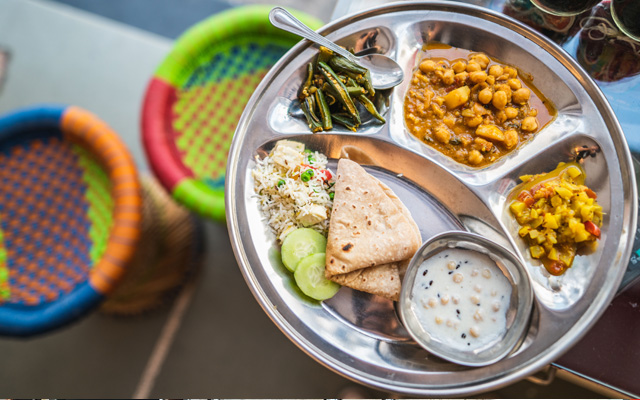
Intrepid Travel’s vegan food tour in India brings guests to sample authentic food on cuisine crawls around the country
Veganism as a lifestyle
Many vegan tour operators go beyond serving up an itinerary filled with plant-based menu options, to also include sustainable initiatives such as local community involvement.
For Fairkonnect, its sustainable vegan tours are as much about the food, as they are about connecting with various animal conservation initiatives and visiting environmental projects.
Currently, the company works with various organisations and holds workshops on its trips to educate travellers on conscious travel, animal conservation, environmental efforts and veganism.
“Our trips are curated to teach travellers about global issues and movements around sustainable fashion, veganism, climate change, zero-waste, animal conservation and how to travel while making a low environmental impact,” explained Jujjavarapu, adding that the company is also mindful about keeping its trips as zero-waste as possible.
With the growing tide towards environmentalism, Jujjavarapu hopes for the company to work with bigger outfitters and organisations to help them veganise their trips.
Further, Fairkonnect prides itself on supporting local communities with its vegan tours by working with local organisations, visiting local restaurants and patronising small businesses.
That sustainability ethos also guides VegThisCity’s tours. A shared meal in a private farm, a botanical art session with a social enterprise and a lavish vegan feast in a 100-year-old establishment are among some of the tour experiences designed to not only celebrate local multicultural cuisine in a fresh way and showcase local culture, but also empower local communities.
Khemlani also recognises that veganism is a lifestyle that goes beyond food, and that philosophy is reflected in the company’s line-up for the coming months – from showcasing locally-made vegan lifestyle products on its tours and collaborating on wellness programmes such as the upcoming Recharge Retreat with Grand Hyatt to organising multi-day vegan adventures and pop-ups within homes of local hosts.
While still currently a niche market, vegan tourism is ripe for growth. No longer just appealing to vegans and vegetarians, vegan vacations are gaining traction among a broader segment of health and environmentally conscious travellers.
Tour operator Responsible Travel, which offers a range of vegan and vegetarian holidays across the world including many parts of Asia, has seen a spike in demand generally for healthier and more sustainable holiday options, including food choices, shared its co-founder and CEO, Justin Francis.
“(Vegan holidays) are no longer only the preserve of yoga and wellness retreats. Any holiday can be a vegan holiday, or at least, inclusively so,” he said.
Post-pandemic, Francis predicts that demand for vegan tourism will continue on its upward trajectory, and that travel businesses will become much more inclusive of veganism and actively raise their game to offer the choicest vegan experiences.
Garuda Indonesia plans to sharpen its focus on domestic services in a bid to save the ailing national carrier amid continued Covid-19 headwinds, said state-owned enterprises minister Erick Thohir.
Speaking at a press conference in his office yesterday (June 2), Erick said: “One of our focuses ahead is for Garuda and (its subsidiary) Citilink to focus on the domestic market, and not the international market.”
Garuda Indonesia sets sights on domestic market to survive the pandemic
He said this business focus had been discussed with Garuda’s management pre-Covid, but has now become crucial as the pandemic continues to curtail international air travel demand.
Garuda’s recent report showed the company’s debt has snowballed to 70 trillion rupiah (US$4.9 billion) and continued to increase by a trillion rupiah per month.
Upping the focus on Indonesia’s large domestic market will help ease Garuda’s financial burden, as the carrier earns the bulk of its revenue from operating domestic routes.
Erick noted that the national tourism data prior to the pandemic showed that 78 per cent of traffic was domestic travel with an economic value of 1,400 trillion rupiah, while international traffic contributed 22 per cent and yielded 300 million rupiah in economic value.
He also said that as Indonesia is an archipelagic country, local residents had few choices but to travel by air or sea, providing huge opportunities for Garuda and Citilink to tap into this potentially lucrative segment.
Tourism players whom TTG Asia spoke to said that while Garuda’s plans to focus on the domestic market in the near-term makes sound business sense, it may not be financially viable in the long run.
Budi Tirtawisata, CEO of Panorama Group, said: “Looking at the commercial aspects and the (state) of the airline, it is a very reasonable option, at least for a certain period, until the (travel) market recovers.”
Adjie Wahjono, operations manager of Aneka Kartika Tours, said: “I don’t think this business plan is the (government’s) grand design for the airline (in the long run). For a vast, archipelagic country like Indonesia, where the tourism pockets are scattered on many islands, it will be too naïve for Indonesia not to have a flag carrier serving international routes.”
However, the minister’s strategy “makes perfect sense to survive the pandemic”, he added, noting IATA’s projection that global passenger numbers are expected to recover to only 52 per cent of pre-Covid levels by the end of this year, and that full recovery will only take place by 2023.
On the other hand, Adjie questioned the effectiveness of the plan to cover the whole country as Garuda’s fleet has been designed to serve major cities and not the ones with smaller airports.
Peltana Danson, director of Borneo Eco Tour, opined that Garuda should have focused on the domestic market since the start of the pandemic and maximise its LCC sister to stimulate traffic around the country.
On the other hand, Udhi Sudiyanto, owner of Antar Anda Tour and Travel, said that if the plan entails Garuda suspending all international services, the minister should reconsider the plan as it meant barring or hampering inbound tourism flows.
“It is probably fine to cut the longhaul flights, but Garuda should keep the profitable short (and medium) hauls,” he added.
He also said that what the airline needed to do was to operate more efficiently, particularly when it comes to managing operational costs.
Wyndham Hotels & Resorts has unveiled a new luxury brand, Registry Collection Hotels, marking the 21st brand in its portfolio.
The brand’s launch comes at a time when a growing number of independent luxury hotel owners are seeking out established partners to help them bounce back from the pandemic, said the company in a statement.
Grand Residences Riviera Cancun is the first property to join Wyndham’s Registry Collection Hotels
Geoff Ballotti, president and CEO, Wyndham Hotels & Resorts, said: “As the hospitality industry continues to rebound, independent luxury hotel owners around the world have approached our development teams seeking sales, marketing and reservations support under a proven and established luxury brand.
“The creation of Registry Collection Hotels was a natural fit, given Registry’s growing global recognition as the world’s largest luxury exchange programme with over 200 high-end luxury fractional resorts and the continued successful management of that programme by our partner Travel + Leisure Co. (formerly Wyndham Destinations).
“Registry Collection Hotels now fill an important space at the upper end of the Wyndham Hotels & Resorts portfolio, allowing us to very selectively provide support to independent hoteliers around the globe who meet the highest standards of luxury service and accommodations.”
The first property to join the collection is the 144-room, all-suite Grand Residences Riviera Cancun in Mexico. Nestled on a white sand beach close to the fishing village of Puerto Morelos, the resort features Hacienda-style accommodations, Bvlgari bath products and amenities such as an oceanfront infinity pool, spa, gym, kids club and three gourmet restaurants. The resort is owned and managed by affiliates of the Royal Resorts group of companies.
International tourist arrivals plunged by 83 per cent year-over-year in the first quarter of 2021 amid ongoing widespread travel restrictions, according to the latest data released by the UNWTO. However, the UNWTO Confidence Index shows signs of a slow uptick in confidence.
Between January and March 2021, destinations around the world welcomed 180 million fewer international arrivals compared to the first quarter of last year. Asia and the Pacific continued to suffer the lowest levels of activity with a 94 per cent drop in international arrivals over the three-month period. Europe recorded the second largest decline with -83 per cent, followed by Africa (-81 per cent), the Middle East (-78 per cent) and the Americas (-71 per cent).
Asia-Pacific recorded a 94 per cent drop in international arrivals between January and March 2021; a largely empty Soekarno-Hatta International Airport in Jakarta, Indonesia during Covid-19 pictured
This all follows on from the 73 per cent fall in worldwide international tourist arrivals recorded in 2020, making it the worst year on record for the sector.
UNWTO secretary-general Zurab Pololikashvili commented: “There is significant pent-up demand and we see confidence slowly returning. Vaccinations will be key for recovery, but we must improve coordination and communication, while making testing easier and more affordable if we want to see a rebound for the summer season in the northern hemisphere.”
The latest survey of the UNWTO Panel of Tourism Experts shows prospects for the May-August period improving slightly. Alongside this, the pace of the vaccination rollout in some key source markets as well as policies to restart tourism safely, most notably, the EU Digital Green Certificate, have boosted hopes for a rebound in some of these markets.
Overall, 60 per cent expect a rebound in international tourism only in 2022, up from 50 per cent in the January 2021 survey. The remaining 40 per cent see a potential rebound in 2021, though this is down slightly from the percentage in January.
Nearly half of the experts do not see a return to 2019 international tourism levels before 2024 or later, while the percentage of respondents indicating a return to pre-pandemic levels in 2023 has somewhat decreased (37 per cent), when compared to the January survey.
Tourism experts point to the continued imposition of travel restrictions and the lack of coordination in travel and health protocols as the main obstacle to the sector’s rebound.
The UNWTO World Tourism Barometer also shows the economic toll of the pandemic. International tourism receipts in 2020 declined by 64 per cent in real terms (local currencies, constant prices), equivalent to a drop of over US$900 billion, cutting the overall worldwide exports value by over four per cent in 2020. The total loss in export revenues from international tourism (including passenger transport) amounts to nearly US$1.1 trillion. Asia and the Pacific (-70 per cent in real terms) and the Middle East (-69 per cent) saw the largest drops in receipts.
IHG Hotels & Resorts, in partnership with Hotel Properties Limited, is set to open the first voco hotel in South-east Asia on Singapore’s Orchard Road.
voco Orchard Singapore is the premium brand’s first property in South-east Asia; voco Gold Coast pictured
Slated to launch in 2022, voco Orchard Singapore will be rebranded from the 423-key Hilton Singapore. Facilities will include four F&B venues, alongside 12 meeting rooms spanning more than 1,750m².
voco Orchard Singapore will be IHG’s 12th hotel in Singapore and its seventh brand in the country where it joins Regent, InterContinental, Crowne Plaza, Hotel Indigo, Holiday Inn and Holiday Inn Express.
Josun Palace, a Luxury Collection Hotel, Seoul Gangnam; South Korea
The Luxury Collection has debuted in South Korea with the opening of Josun Palace, a Luxury Collection Hotel, Seoul Gangnam. Located in the Seoul district of Gangnam, the hotel was originally built in 1914 as one of Korea’s first luxury hotels, Chosun Hotel. Each of the property’s 254 rooms and suites features a specialised private bar for guests who enjoy crafting their own cocktails and other drinks in-room.
Five F&B options are available on-site. For Cantonese fine dining, The Great Hong Yuan serves curated seasonal menus, while new Korean contemporary food is showcased in Eatanic Garden. All-day eatery Constans offers local and international menu favourites. Elsewhere, 1914 Lounge & Bar serves tea and light meals in the afternoons, and cocktails and spirits come evening. Josun Deli the Boutique features pastries and cakes, along with gourmet coffee and tea for an afternoon treat.
Facilities include the Josun Wellness Club featuring a heated indoor pool and a deck area, a fitness centre, and sauna facility. Josun Palace also offers bespoke function rooms and facilities for hosting events, including The Great Hall which seats up to 300 guests and has a foyer for pre-function cocktails. For more intimate gatherings, the hotel features the Royal Chamber, which seats up to 140 guests, and the Private Chamber which can accommodate up to 110 guests.
Centara Mirage Resort Mui Ne, Vietnam
Thailand’s Centara Hotels & Resorts has expanded its family-themed resort brand with the world’s second Centara Mirage opening in a popular beach destination in southern Vietnam. Located a few hours’ drive from Ho Chi Minh City, the 984-key Centara Mirage Resort Mui Ne is a Spanish Mediterranean themed waterpark resort. Family-friendly facilities include diverse dining; an observatory tower café; separate playgrounds and kids’ clubs for younger and older children; Cenvaree Spa; and Spa Candy, a wellness destination catering to children. The resort’s waterpark features a lazy river, water slides, splash pool, cliff jumping pool and kids’ pool.
Oakwood Premier Tonglu, China
Situated beside the picturesque Fuchun River, Oakwood Premier Tonglu features 45 hotel rooms alongside 154 serviced apartments. Its location just outside Hangzhou is in the region’s new cultural and creative hub for the digital technology industry, LIT City. On-site facilities include an all-day restaurant, steak house, swimming pool, fitness centre as well as meeting and event spaces.
Oakwood Hotel & Residence Bangkok, Thailand
Oakwood Hotel & Residence Bangkok marks the brand’s seventh property in Thailand, and fourth in the capital. Located near the iconic Chao Phraya River, the property houses 142 studios and one-bedroom apartments. Oakwood Hotel & Residence Bangkok sits a short distance away from popular shopping malls Asiatique The Riverfront and Iconsiam. On-site amenities include an outdoor swimming pool, fitness centre, sauna, two meeting venues, lobby bar, restaurant as well as a Residence Lounge.
Industry experts predict Asia’s younger generation will lead the tourism recovery charge as they seek unique soft adventure experiences abroad.
At PATA’s hybrid Adventure Travel Conference and Mart, this was predicted across the outbound Chinese, Indian and Malaysian markets, where experts note the trend has been emerging in domestic travel during the pandemic.
More younger travellers in Asia engaging in soft adventure activities domestically; Suluban Beach in Bali pictured
Dan Sandoval, co-founder of Perspective China, said the huge growth in domestic tourism in the country caused by Covid-19 travel restrictions has triggered a swathe of new products. This includes an explosion of adventure activities that travellers aged 25 to 44 are particularly keen to explore.
He noted: “We’re seeing a huge demand for products that didn’t traditionally exist. China was more of a conservative travel market but we’re seeing this huge shift towards experiences. This says there will be a huge demand for these as an international experience.”
For example, the surf scene has exploded in Sanya; while in Yunnan, safari-style camps are emerging, and are proving popular with the country’s younger generations.
Said Sandoval: “We will see a huge surge in people looking for these niche products in unique locations, especially this age group. This is a wonderful playland for the adventure and experiential travel industry.”
In India, a similar shift in demand from the 25 to 44 demographic is being driven by the “bragging factor”.
Deeya Bajaj, director of operations and business development at Snow Leopard Adventures, said: “Indian youth are now more willing to spend on experiences. There’s the bragging factor that comes from being able to do something unique rather than buying a luxury item.”
Sandoval noted a similar movement in China, where investing in a unique adventure holiday or travel experience is the new designer item.
He said: “There used to be a time when you’d brag about having a Louis Vuitton bag but that time, for the most part, is gone. Now, we’re seeing experiences are what people want to brag about.”
Bajaj said younger generations in India are showing a desire to try soft-adventure holidays and excursions in undiscovered destinations – all new experiences for the market.
She added: “They don’t want long or hardcore adventures. They want to go to offbeat places, but be comfortable. They’re excited to try new things, but they’re not as self-sufficient as American or European adventure travellers. There will need to be some handholding involved as the average Indian adventurer is trying these activities for the first time.”
In Malaysia, Jessica Yew, co-founder and director of Sticky Rice Travel, noted the devastating financial impact brought on by continued lockdowns and other restrictions has left younger generations with less disposable income to spend on travel.
However, she said the pent-up demand can be seen in the domestic market, with more Malaysians aged 25 to 44 opting for soft adventures. She said glamping, slow travel, as well as environmentally-friendly and community-based travel programmes are on the rise.
Yew said: “Travel is a lifestyle for this segment; it’s not a luxury item. A lot of people with the disposable income to travel live in the city and it forms part of their work-life balance. People in this age group are now looking for authentic experiences and soft adventures.”
She added that it is imperative the industry remains active on social media to capture this tech-savvy segment.
This sentiment is strongly echoed by Sandoval. With the lack of exposure to the outside world due to cancelled trade shows, limited fam trips and tourism and destination marketing companies slashing promotion budgets, China’s young is turning to social media to source travel information.
He advised: “Getting on the social media train is so important right now. Keep social media accounts active, you have to stay in people’s minds. Wave that delicious smelling platter in front of their faces so that when the cafeteria opens, you get a surge of people coming. It will be this segment who lead the charge, and you need to be ready.”
Sofitel Kuala Lumpur Damansara has appointed George Koumendakos as general manager, and Vivian Choa as director of sales and marketing.
In his new role, Koumendakos is responsible for the daily operations and strategic directions of the hotel. Koumendakos’ main priority is to ensure a safe and secure environment for his guests and colleagues, while driving more business opportunities in the domestic market.
From left: George Koumendakos, and Vivian Choa
A 35-year veteran of the hospitality industry, Koumendakos was most recently the general manager at Mövenpick Hotel Colombo, Sri Lanka.
Meanwhile, Choa is responsible for overseeing all sales, marketing, communications, and events management activities for the hotel, reporting to Koumendakos.
With over 20 years of experience in hotel sales and marketing, Choa most recently headed the sales and marketing team at Invito Hotel & Residence, overseeing the repositioning and rebranding of the hotel.
Other hotel groups Choa has worked for include Marriott International, Hilton Hotels & Resorts, and Starwood Hotels & Resorts.
Pent-up demand for immersive travel experiences with no set time limit could help slow travel become the next big tourism trend, predicts GlobalData.
The analytics company noted that with tourists opting for longer stays due to many being able to work remotely, and sustainability featuring more heavily in travel decisions, slow travel could be a global phenomenon in the next few years.
Slower travel methods could be the next big tourism trend as sustainability features more heavily in consumer decisions: GlobalData
Slow travel mainly refers to the speed of which a trip is taken, where travellers take a train through Europe instead of flying, for example. However, it also has a broader meaning of tourists staying in destinations for longer, emphasising a connection with local people, culture, food and music. This means that slow travel is also more sustainable for local communities and the environment.
Johanna Bonhill-Smith, travel and tourism analyst at GlobalData, said: “Various consumer trends already suggest that slow travel could take off post-pandemic.”
According to a GlobalData poll, a trip longer than ten nights is more highly desired (22 per cent) than a day visit (10 per cent) or short break away from one to three nights (14 per cent).
Bonhill-Smith added: “The added hassle and cost of additional Covid-19-related travel requirements such as PCR tests and potential quarantine periods means that short trips lose value, justifying a longer trip.”
The shift to more remote work operations brought on by the pandemic will also be another driving force to the growth of slow travel. In another GlobalData poll, over 70 per cent of global respondents opted to work remotely full time or have a mixture of both remote and office work.
Many offices are likely to be more flexible regarding working hours and the location of an employee as a result of the pandemic, meaning blending work and leisure will be easier for employees.
Sustainability is also at the forefront of consumers’ decisions. ‘Supporting social causes’ was identified as a key driver in product purchases for 25 per cent of global respondents in GlobalData’s 1Q2021 consumer survey, and for 45 per cent this was ‘nice to have’. Preference for products can reflect on service trends and this identifies that consumers may feel more inclined to support local communities post-pandemic, which is a gap that slow travel can fill.
Bonhill-Smith opined: “Competition is already intensifying between both niche and major travel intermediaries, suggesting that slow travel is sure to make its mark in post-pandemic travel. Travel intermediaries that offer ‘slow travel’ holidays range from niche operators such as Intrepid Travel and Responsible Travel to more mainstream providers such as Airbnb and Expedia Group.
“This niche trend reflects consumers’ growing desire for more experiential forms of travel, going above and beyond the hordes of tourists gathered for sun, sea and sand. Its potential growth could further rival the concept of mass tourism and the all-inclusive package holiday concept in travel’s recovery post-Covid-19.”





















Wyndham Hotels & Resorts has unveiled a new luxury brand, Registry Collection Hotels, marking the 21st brand in its portfolio.
The brand’s launch comes at a time when a growing number of independent luxury hotel owners are seeking out established partners to help them bounce back from the pandemic, said the company in a statement.
Geoff Ballotti, president and CEO, Wyndham Hotels & Resorts, said: “As the hospitality industry continues to rebound, independent luxury hotel owners around the world have approached our development teams seeking sales, marketing and reservations support under a proven and established luxury brand.
“The creation of Registry Collection Hotels was a natural fit, given Registry’s growing global recognition as the world’s largest luxury exchange programme with over 200 high-end luxury fractional resorts and the continued successful management of that programme by our partner Travel + Leisure Co. (formerly Wyndham Destinations).
“Registry Collection Hotels now fill an important space at the upper end of the Wyndham Hotels & Resorts portfolio, allowing us to very selectively provide support to independent hoteliers around the globe who meet the highest standards of luxury service and accommodations.”
The first property to join the collection is the 144-room, all-suite Grand Residences Riviera Cancun in Mexico. Nestled on a white sand beach close to the fishing village of Puerto Morelos, the resort features Hacienda-style accommodations, Bvlgari bath products and amenities such as an oceanfront infinity pool, spa, gym, kids club and three gourmet restaurants. The resort is owned and managed by affiliates of the Royal Resorts group of companies.