InterContinental Hotels Group (IHG) has signed a landmark deal with Techvance Properties Management to bring the Hotel Indigo brand to Kuala Lumpur, with the property at the base of the picturesque Bukit Nanas scheduled to open in 2023.
The 180-room Hotel Indigo Kuala Lumpur on the Park will be located close to KL Tower and KL Forest Eco Park, and its design will reflect the historical charm of local heritage buildings and the breadth of nearby modern architecture.
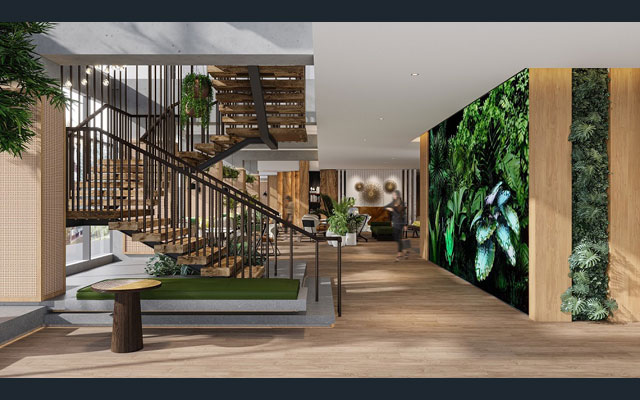
An interactive Green Wall will rise in the hotel lobby
The property will be built on sustainability promises, with environmentally friendly methods prioritised in its planning and the use of reclaimed materials in its construction, among others.
In line with IHG’s broader sustainability efforts, the hotel will also be plastic straw-free and opt for bulk amenities in all its guestrooms.
With greenery from one of the country’s oldest forest reserves woven throughout the hotel to bring the forest inside, memorable features include an interactive Green Wall in the lobby and a spot of quiet serenity amid the bustle of the city in a Secret Garden.
Serena Lim, vice president, development for South East Asia and Korea, IHG, said: “All of our guests, whether they are staying for leisure or business, will be offered a unique mix of rainforest relaxation alongside the delights of the city, which is just minutes away. We want to offer everyone who stays with us not only a memorable trip, but also an experience they will remember for many years to come.”
The Delivering Group has broadened its alliance of hospitality and tourism technology specialists with a new partnership with tailor-made online booking experts Book Tech.
Formerly known as Book Beach Club, and within hotels, beach clubs, marinas, nightclubs and resorts – to regain ownership of their customers through its ground-breaking interactive online booking platform and mobile app.
Book Tech offers F&B venues a customer-facing interactive online booking platform and mobile app
The Delivering Group co-founder Mark Simmons noted that hospitality and tourism companies across the region were increasingly looking to safe and efficient digital solutions to manage and communicate with their customers under the new normal brought about by the pandemic.
“However, many have struggled with the challenge of sourcing and partnering with so many different suppliers and platforms, all focusing on different touchpoints in the customer journey,” said Simmons.
With the addition of Book Tech to The Delivering Group’s technology alliance, which includes AI chat specialist HiJiffy and hotel technology consultancy CUBE, hospitality and tourism companies can “connect with the leading players in AI chat solutions, revenue management and distribution, online booking platforms, 24/7 customer engagement, sales and marketing, media communications and resourcing” all under one roof.
Book Tech CEO, Chris Adams said the new partnership was a logical progression for the company to bring AI technology and other digital services into its platform and broaden its exposure to Asian markets.
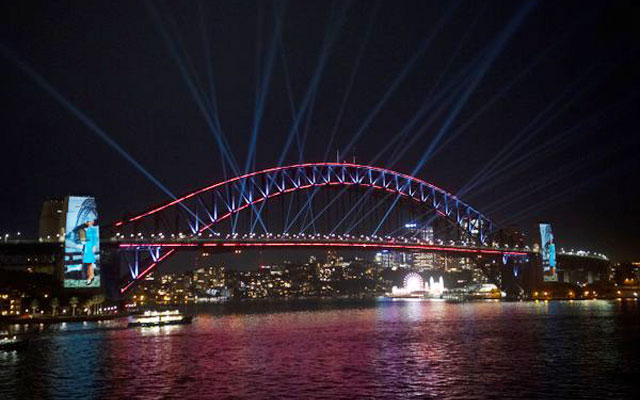
Sydney Harbour Bridge was transformed into a massive birthday cake complete with illuminated LED candles for Qantas Airways’ 100-year anniversary on Monday evening.
More than 1,300 LED tubes, 126 LED fixtures and 38 searchlights were used in the city’s birthday bash for the airline, which started off as Queensland and Northern Territory Aerial Services on November 16, 1920. The projection of 60 historic images and two, 65-metre-high birthday candles onto the southern and northern pylons completed the transformation.
Destination NSW’s surprise Centenary celebration for Qantas is part of a line-up of events that support the recovery of Sydney hospitality and tourism businesses
A low flying Qantas 787 ‘blew out’ the candles as it went over the Sydney Harbour Bridge.
New South Wales minister for jobs, investment, tourism and Western Sydney, Stuart Ayres, said: “Sydney has benefited immensely from 100 successful years of business for Qantas – from bringing visitors to the state and boosting our visitor economy to providing local jobs.
“What better way to mark such an important milestone for Qantas than with a celebration in the city it has chosen as its headquarters for the last 82 years involving another much-loved Sydney icon, the Harbour Bridge.”
Almost 200 passengers, including 100 Qantas staff, were on board the 100-minute flight which was a special Centenary Scenic Flight to mark the airline’s 100th year.
The candle-blowing moment was a surprise for those on the ground and on board the flight.
The activation, executed by Destination NSW, complements a new campaign of activity designed to support the recovery of Sydney hospitality and tourism businesses.
Destination NSW CEO, Steve Cox said the Qantas Centenary provided an opportunity to send out a message of hope, both to Sydney businesses and to residents of Sydney and New South Wales.
“This stunt was just the beginning of what will be a truly amazing line-up of events coming up across the city, and we are looking forward to welcoming visitors from across Australia to Sydney this summer,” said Cox.
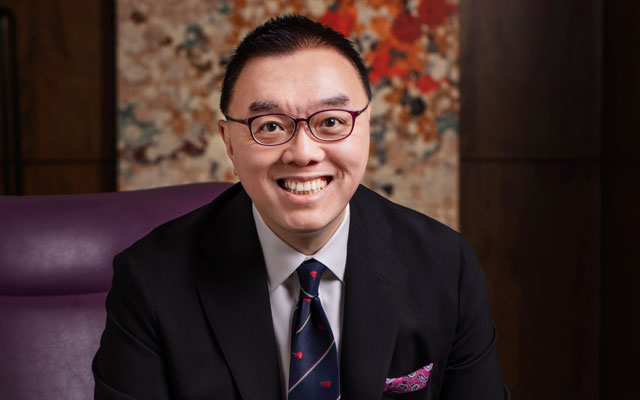
With Hong Kong’s visitor arrivals and hotel occupancy dipping to record lows this year owing to the pandemic, Hong Kong Hotels Association (HKHA)’s newly-elected chairman, Peter Wong, faces a formidable challenge ahead, stepping into his new role for a two-year term (2020-2022).
Possessing over 38 years of operations and management experience, Wong has been a member of the association’s executive committee since 2008. He is currently senior vice president – hotel division of Sun Hung Kai Properties and general manager of Royal Plaza Hotel. Having joined Royal Plaza Hotel in 2005 as general manager till now, Wong also oversees the other three hotels under Royal Hotels Hong Kong, namely, Royal Park Hotel, Royal View Hotel and Alva Hotel by Royal, as well as other partner hotels and new hotel opening projects owned by SHKP.
Hong Kong hoteliers in crucial need of government subsides to mitigate pressing financial woes: Wong
Since taking up the post in late August, one of Wong’s most urgent tasks has been to work with the association’s committee to extend support and assistance to its existing 141 members and the wider industry in riding out the pandemic at a time where travel remains largely at a standstill with an uncertain near-term outlook.
Stressing the need for industry cooperation over competition, he also urged the government to reopen borders between Hong Kong and mainland China and provide further support to impacted players.
“We urge the government again for further extension of the Employment Support Scheme or government subsidies of a similar scale, in order to provide support to hotels,” he said, noting that once the second round of ESS ends this month, about a quarter of 38,000 full-time hotel jobs will be at risk.
“Frankly, we hotels can’t survive solely on staycation traffic/local business without any inbound traffic,” he added. “Additionally, I know some owners have been relying on loans to continue running their business, thus, substantial government subsidies are badly needed to alleviate their financial anxiety.”
Highlighting the industry’s efforts in upholding good hygiene and safety standards, Wong said the association is “striving for further relaxation in the number of dine-in guests as well as hosting banquets and small-scale events”.
Aside from his new appointment at HKHA, Wong also serves as a management committee member of 90-member Federation of Hong Kong Hotel Owners, whose hotel holding company members collectively own more than 90 per cent of all hotel rooms in the city – a role which he said may help promote more collaboration with HKHA.
Out of HKHA’s 141 members, about 60 per cent is made up of non-brand hotels. “Some of them are new to the industry and don’t know much about the trade, so we can offer them some inputs,” said Wong.
The association will mark its 60th anniversary next year and Wong hopes to leverage the occasion to promote the history, development and achievements of Hong Kong’s hotel industry.
In a bid to tackle the acute labour shortage in the hospitality sector, it has partnered with the Education Bureau to host career talks and roadshows in secondary schools next year, which will see HKHA committee members sharing their career journey in order to inspire the next generation of leaders. To date, more than 10 schools have signed up. As well, a dedicated IT committee will be formed to consolidate smart technology development, with tech talent to be recruited from member hotels.
South-east Asian leaders have agreed to take steps towards the establishment of an ASEAN travel corridor arrangement framework to facilitate essential business travel within the region.
Such an arrangement would necessitate the development of a common set of safety measures to safeguard public health in the face of Covid-19, noted the leaders in a joint statement issued at the 37th ASEAN Summit, which took place on November 12 and was hosted virtually by Vietnam.
Indonesia pushes for regional travel bubble to come into effect by early 2021
Travellers will also be required to strictly abide by the prevailing public health regulations stipulated by the authorities of the receiving countries.
The ASEAN Coordinating Council, supported by the ASEAN Coordinating Council Working Group on Public Health Emergencies, has been tasked to coordinate and oversee the development of an ASEAN travel corridor arrangement framework.
This plan will build upon existing bilateral travel corridors set up between individual ASEAN member states, as well as those established with partners outside the region, said the regional grouping in a statement. For instance, Singapore has already established green lanes with ten countries, including ASEAN members Malaysia, Indonesia, Brunei and Vietnam.
The leaders further added that they do not preclude the application of the framework to other categories of travel in the future.
Indonesian president Joko Widodo is pushing for the regional travel bubble to come into effect by early 2021, according to Bloomberg. Earlier in June, Indonesia had proposed the move, which was backed by Thailand and Malaysia, but other countries have not signalled their support for the arrangement, said the report.
Indonesia is battling the largest coronavirus outbreak in South-east Asia, having recorded 463,007 infections and 15,148 deaths as of Saturday. This month, the country entered its first recession since the 1998 Asian financial crisis, after two successive quarters of economic shrinkage.
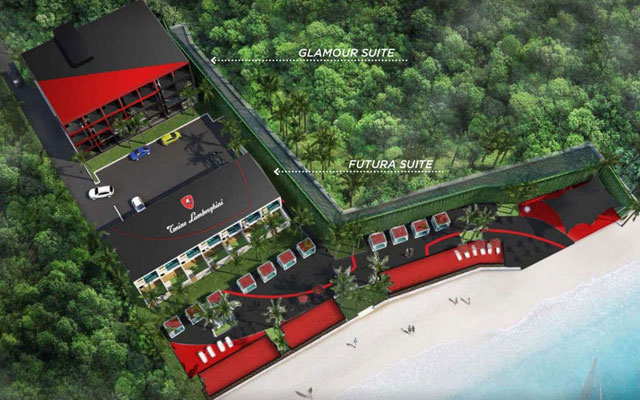
Italian luxury lifestyle brand Tonino Lamborghini has unveiled plans to launch its inaugural hotel project on the idyllic Thai island of Phuket, as part of a collaboration with developer Utopia Corporation.
Scheduled to open in 2023, Tonino Lamborghini Boutique Hotel Phuket will be a luxury resort nestled directly on the beachfront at Chalong Bay, on Phuket’s secluded southeast coast.
The 46-key Tonino Lamborghini Boutique Hotel Phuket is slated to open in November 2023
Designed by architect Alexander Wong, the hotel will feature a Glamour Lobby fitted with slatted rosewood LED screens, alongside a collection of 39 suites and seven villas, all of which are adorned with designer furnishings and abstract artworks.
Tonino Lamborghini Boutique Hotel Phuket will start construction in August 2021, with completion expected by July 2023. The hotel is expected to celebrate its grand opening in November 2023.
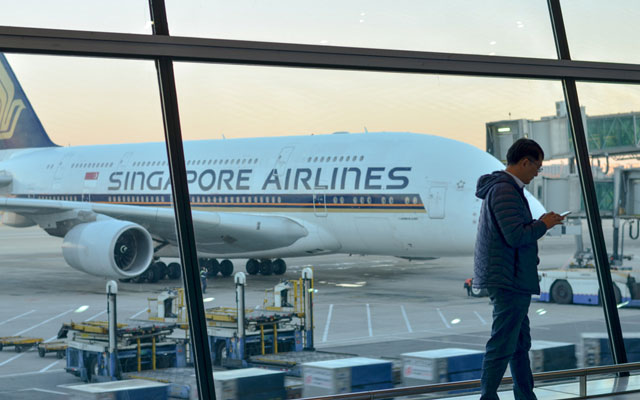
Singapore Airlines (SIA) has raised S$850 million (US$631 million) through a convertible bond issue, exceeding its original target of S$750 million owing to “strong investor interest”.
The five-year bonds will carry a coupon of 1.625 per cent, and can be converted into ordinary shares at a price of S$5.743. This represents a premium of 45.8 per cent over the closing price of S$3.94 last Thursday.
Offer for issuance of convertible bond “more than four times oversubscribed” with strong investor interest: SIA
The Hong Kong and Shanghai Banking Corporation is the sole bookrunner and lead manager of the issue.
SIA said in a statement that this issuance further strengthens its liquidity position, and bolsters its ability to navigate the challenges posed by the impact of the Covid-19 pandemic on the business.
Proceeds from the bonds will be used to fund operating and capital expenditure, and debt servicing, it added.
SIA CEO Goh Choon Phong said in the statement: “The placement was successfully executed with a highly competitive coupon and substantial conversion premium. Such attractive terms for the company underscore the strong confidence that investors have in Singapore Airlines, as well as our ability to successfully overcome the near-term challenges and emerge as a leader in the airline industry.”
The national airline said that positive discussions have also taken place on aircraft sale-and-leaseback transactions, and that it will continue to explore other means to further strengthen its liquidity as necessary.
Since the start of its 2020/2021 financial year, including Friday’s issuance, SIA has raised approximately S$12.2 billion. Including the new lines of credit, the carrier will continue to have access to more than S$2.1 billion in committed credit lines.
According to the airline, for the period up to July 2021, it retains the option to raise up to S$6.2 billion in additional mandatory convertible bonds that would provide further liquidity if necessary.
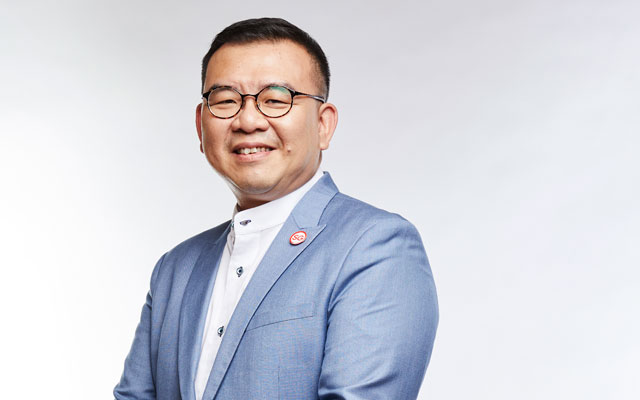
How does STB envisage the industry taking up more AR technology? What innovative ideas have you seen working well for Singapore?
We are already beginning to see the adoption of AR technology within the tourism sector. For example, the National Heritage Board (NHB) is partnering with SmartGuide to design digital trail guides using audio, geolocation and AR for three NHB heritage trails at Orchard Road, Little India and Balestier.
This project aims to encourage locals to discover our national heritage with entertaining multimedia content. The mobile app will also collect and evaluate data from the trail routes to provide a better understanding of visitor behaviour.
To showcase the potential uses of the AR content, STB’s in-house development team is developing a variety of prototypes to help visualise the possibilities of using AR, such as enhancing customer engagement at places of interest, augmenting tour experiences, gamifying exploration, and creating focal points for repeat visitorship and social media engagement.
What are some of the potential barriers to adoption of AR solutions among local players, and how is STB working to address such barriers?
One of the key hurdles that businesses face in creating this type of digital content is that it can be costly to develop and maintain. Our aim is to create 1,000 pieces of high-quality AR content, such as Singapore icons, cultural and heritage items, and make them available to industry partners over the next few years. The 3D models – with or without animation – will be developed and uploaded to the Tourism Information and Services Hub (TIH) for tourism stakeholders to access for free.
These assets can be used to create AR experiences within their digital channels such as apps and websites for customers, (and will be) released for use starting from next year. We look forward to industry partners also contributing to this pool of AR content.
Will there be any standardisation or regulation surrounding the production and use of AR assets?
For content creators who would like to leverage on TIH, our AR team will establish a set of standards for both technical format and quality. The intent of these standards is to enhance the reusability of AR content across the industry, and reduce friction in integrating different types of AR content.
For example, stakeholders will be able to download 3D models from TIH (with) assurance that the models conform to a set of standards, thus, reducing the time and cost of development.
With the necessity of contactless transactions and virtual engagement now, how can tourism businesses navigate the sentiment that technology cannot replace the human touch?
We are not against the adage. The key point of leveraging technology is to let it take over mundane and repetitive tasks, so that our precious manpower can be devoted to delivering impactful customer service.
Given the pandemic, we do not foresee mass leisure travel to resume soon. This is a good opportunity for our tourism and lifestyle businesses to explore new ways to allow consumers to experience Singapore from afar, stay top-of-mind, and build demand as the market recovers. AR technology allows our tourism stakeholders to add an extra dimension of interactivity.
Do you envisage some types of hybrid tourism products arising from this?
When recovery happens, AR can be used to bridge the online-to-offline divide as part of STB’s vision to create the end-to-end “One Singapore Experience” and deliver a seamless and memorable experience. Tourism businesses with strong AR capabilities will then be able to deeply engage customers from pre-arrival to post-arrival, delivering richer, more memorable experiences at our places of interest.
Earlier this year, STB launched a pilot of the Tourism Transformation Index (TXI) that allows businesses to self-assess their state of transformation.
How has the TXI aided the recovery of participating stakeholders thus far?
Several tourism businesses, such as Amara Hotels & Resorts and Park Hotel Group, have undergone the TXI assessment as part of our Lighthouse Account programme. Their TXI score will help us co-develop a digital transformation strategy to identify new opportunity areas and improve their business outcomes as they plan for recovery. The digital transformation strategy will be accompanied by a roadmap that guides the stakeholders on their next steps.
These key industry stakeholders will be examples for the rest of the industry to showcase the importance of transforming their businesses, especially considering the current challenges. We will be releasing the full-scale version of the TXI on our Singapore Tourism Analytics Network by the end of the year.
With international travel largely off the cards for now, how can local tourism players better tap into domestic demand?
It is in my view that our Singapore residents are very discerning, and our attraction operators will have to innovate either through technology or bundling with other experiences to surprise our domestic crowd. We hope that the SingapoRediscover Vouchers will give our industry an opportunity to do so, and maybe through this, develop new experiences and content that will place them in a better position when travel resumes.
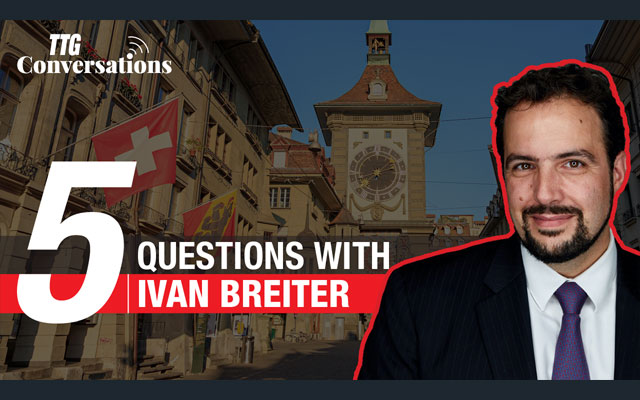
Despite ongoing travel restrictions, particularly on longhaul travel, Switzerland Tourism has not ceased its marketing and trade outreach efforts in Asia, pushing on with several activities to keep trade partners informed and ready for when travel is possible again.
In this new episode of TTG Conversations: Five questions video series, Ivan Breiter, director of South East Asia with Switzerland Tourism, the National Tourism Board of Switzerland, details how the organisation has approached destination marketing activities and messaging during a time of suppressed travel freedom, reflects on challenges Swiss travel and tourism suppliers face as traffic returns, and what Switzerland is doing to rejuvenate its offerings.
Thailand’s luxury hospitality sector is gearing up post-lockdown to attract domestic travellers who now seek exclusive escapades with a component of seclusion, valued-adds and heightened wellness experiences.
The pandemic has only served to enhance the existing demand for personalisation and bespoke experiences across the board — now with an added element of safety and seclusion that Thailand’s luxury hotels are going the extra mile to satiate.
Results-driven wellness experiences and health treatments are gaining intense interest among well-heeled Thai travellers
According to Bruno Huber, general manager at Mövenpick BDMS Wellness Resort, Thailand’s domestic destinations will need to reinvent themselves to stay attractive to the high-income group. “It will require a level of creativity from us in the hospitality industry to create new, aesthetically pleasing and authentic experiences that are engaging to combat the market’s short attention span,” he said.
This heightened expectation for creative offerings among high-end travellers is also echoed by Nick Downing, general manager at The Siam Hotel, who observed guests “more often than not requesting bespoke itineraries or ideas”.
Downing noted that balancing the expected personal touch and connection in luxury hospitality with safety protocols has become a fine juggling act – to that end, the hotel now reaches out to its guests pre-stay to find out their concerns relating to the coronavirus and how they wish for the hotel to address their unease.
With the halt on international tourism necessitating Thailand’s shift to rely on its own vast domestic market, hoteliers have had to evolve their strategies.
Vitanart Vathanakul, CEO of Royal Cliff Hotels Group, said differentiating between domestic and international market expectations is paramount.
“Everyone views luxury travel differently, so what Thais are looking for will be different from what the international clientele is expecting,” he told TTG Asia Luxury, adding that hotels with “strong preventative programmes combined with a high level of hygiene” will win customers’ trust.
The tussle for the local tourist dollar has also prompted some Thai luxury hoteliers to veer towards value-added packages that draw marketing buzz.
The key to unlocking opportunities in this climate lies in creating attractive staycation deals that “spread via word-of-mouth and are supplemented by targeted promotional campaigns,” opined Huber.
He cited the examples of “value-added service and food and beverage-driven experiences”.
For Rosewood Bangkok, the hotel is baiting consumers with a host of bundle deals, such as teaming up with sister property, Rosewood Phuket, to create a “dual destination” package, shared Thomas Harlander, its managing director.
“(It’s a challenge to create) products and services that exceed expectations in a highly competitive and saturated market such as Bangkok, (but) the response has been tremendous,” he shared. “We have also noticed that guests are putting a premium on their health and are willing to spend more on trusted brands and wellness services… I see real growth in the area of results-driven, luxury wellness retreats with a medical and holistic component.”
Among the biggest developments on this front in Thailand include the December 2020 launch of RAKxa by Minor Hotels, in collaboration with M.K. Real Estate Development and VitalLife Scientific Wellness Centre. Situated in Bangkok’s Green Lung, RAKxa has been billed as Thailand’s first fully integrated wellness and medical retreat.
The September launch of Anya Meditec by event and marketing services firm Index Creative Village also aims to bring hospitals to hotels, latching onto the healthcare trend in premium markets which allows travellers to receive medical services, such as sleep tests, without going to the hospital.
“It’s more than wellness – we have a complete team of doctors, nurses and medical technicians,” said Kreingkrai Kanjanapokin, founder and group CEO of Index Creative Village, on forming the “medical agency” spinoff.
Paul Hawco, corporate director of wellness at Dusit Hotels and Resorts, who is working towards the launch of an integrated wellness centre at mixed-use project Dusit Central Park in 2023, also pointed to the brand’s infusing of “micro-moments of well-being” into the stay experience – such as a mini massage upon arrival – as indication of how luxury wellness would evolve.
Karina Stewart, co-founder and chief wellness director at Kamalaya wellness sanctuary and holistic spa resort in Koh Samui, which offers personal coaching sessions with experts from a range of backgrounds, including former monks, onsite and via Zoom, said the resort has seen a rise in demand for pandemic anxiety treatments. She foresees a spike in wellness travellers, their stays lengthening, and wellness destinations driving demand post-lockdown.











Sydney Harbour Bridge was transformed into a massive birthday cake complete with illuminated LED candles for Qantas Airways’ 100-year anniversary on Monday evening.
More than 1,300 LED tubes, 126 LED fixtures and 38 searchlights were used in the city’s birthday bash for the airline, which started off as Queensland and Northern Territory Aerial Services on November 16, 1920. The projection of 60 historic images and two, 65-metre-high birthday candles onto the southern and northern pylons completed the transformation.
A low flying Qantas 787 ‘blew out’ the candles as it went over the Sydney Harbour Bridge.
New South Wales minister for jobs, investment, tourism and Western Sydney, Stuart Ayres, said: “Sydney has benefited immensely from 100 successful years of business for Qantas – from bringing visitors to the state and boosting our visitor economy to providing local jobs.
“What better way to mark such an important milestone for Qantas than with a celebration in the city it has chosen as its headquarters for the last 82 years involving another much-loved Sydney icon, the Harbour Bridge.”
Almost 200 passengers, including 100 Qantas staff, were on board the 100-minute flight which was a special Centenary Scenic Flight to mark the airline’s 100th year.
The candle-blowing moment was a surprise for those on the ground and on board the flight.
The activation, executed by Destination NSW, complements a new campaign of activity designed to support the recovery of Sydney hospitality and tourism businesses.
Destination NSW CEO, Steve Cox said the Qantas Centenary provided an opportunity to send out a message of hope, both to Sydney businesses and to residents of Sydney and New South Wales.
“This stunt was just the beginning of what will be a truly amazing line-up of events coming up across the city, and we are looking forward to welcoming visitors from across Australia to Sydney this summer,” said Cox.