Oakwood has appointed Christian R. Baudat to the dual role of general manager of Oakwood Suites Yokohama, and director of operations for Japan and South Korea.
In his new capacity, he is responsible for directing corporate initiatives, driving operational excellence and achieving financial performance for 14 properties across Japan and South Korea. He will lead Oakwood’s growth strategy by building a robust development pipeline, while strengthening the brand presence in these two key markets.
Prior to his Japan move, Baudat served as Rotana Hotels’ area vice-president in-charge of 16 properties in Abu Dhabi, Ai Ain, Oman and Morocco.
The Swiss national has acquired over three decades of hospitality experience during his professional journey across the Middle East, Singapore, Europe and Japan.
His hospitality career began as an F&B management trainee with Hilton Tokyo in 1985, eventually working his way up to general manager of Hilton Fukuoka Sea Hawk.
Oakwood has appointed Christian R. Baudat to the dual role of general manager of Oakwood Suites Yokohama, and director of operations for Japan and South Korea.
In his new capacity, he is responsible for directing corporate initiatives, driving operational excellence and achieving financial performance for 14 properties across Japan and South Korea. He will lead Oakwood’s growth strategy by building a robust development pipeline, while strengthening the brand presence in these two key markets.
Prior to his Japan move, Baudat served as Rotana Hotels’ area vice-president in-charge of 16 properties in Abu Dhabi, Ai Ain, Oman and Morocco.
The Swiss national has acquired over three decades of hospitality experience during his professional journey across the Middle East, Singapore, Europe and Japan.
His hospitality career began as an F&B management trainee with Hilton Tokyo in 1985, eventually working his way up to general manager of Hilton Fukuoka Sea Hawk.
The two-week deferment of the launch of the Singapore-Hong Kong air travel bubble (SG-HK ATB) have not only frustrated many would-be travellers, but have cast a shadow over hoteliers in the city as well.
Hotel groups like Wharf Hotels expressed disappointment at the postponement of the SG-HK ATB. Its president, Jennifer Cronin, revealed that between their three hotels – Marco Polo Hongkong Hotel, Gateway Hotel and The Murray, Hong Kong, a Niccolo Hotel – they had received approximately 100 room nights of bookings.
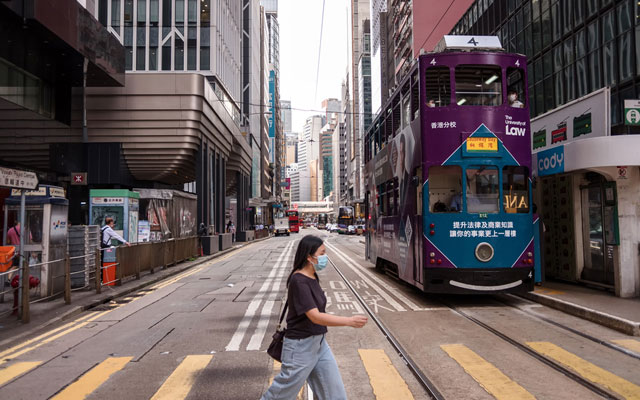
The Singapore-Hong Kong air travel bubble has been put on hold amid a surge in Covid-19 cases in Hong Kong
She added: “As a matter of fact, our cluster general manager for the three Marco Polo Hotels, Dalip Singh, has been developing some great travel stories exploring the hidden secrets of Hong Kong during our border lockdown this year, initially, for his Singapore compatriots.
“With his communications team, he created a Facebook page titled ‘Shiok Steady Singh’, to keep our Singapore visitors even more informed and provide them with a range of new options when they next visit.”
As the first travel bubble of its kind, the SG-HK ATB will serve as a “template for other ATBs to operate”, Cronin said, adding that “a Hong Kong-Japan ATB is highly sought after by our Hong Kong colleagues.”
However, while hoteliers are seeing a boost in bookings from the the SG-HK ATB, the bilateral pact has had little impact on the business of inbound tour operators in Hong Kong, given that Singapore has been a small source market dominated by FITs. As such, travel agents’ ultimate hope is for the city to form more bubbles with other regional countries in the near future.
Still, Holiday World Tours, managing director, Paul Leung, hailed the SG-HK ATB as a positive move to restart the regional tourism engine.
Despite receiving only a “handful” of group bookings, he said that the arrangement “sets a good example for other destinations to follow suit and open up more possibilities, if the concept is successfully run”. “Frankly, it’s way better than just giving subsidies to us,” he added.
Noting that the government is currently in talks with about 10 countries including Japan, Germany and France to establish ATB arrangements, he opined: “Frankly, I don’t see longhaul traffic from Europe and the US bouncing back next year. Hence, China is on the top of our wishlist given the volume of visitors, followed by South-east Asian countries.”
On the other hand, Destination China has seen nary a ripple of impact on its business since the announcement of the bilateral air bubble pact. Its general manager and owner, Gunther Homerlein, told TTG Asia: “Before Covid, the traffic between Hong Kong and Singapore was not that high. Frankly speaking, the cities don’t excite one another’s citizens that much.
“Travel bubbles are a start and it may help tourism, but it isn’t going to do much for corporate and business travel until there are several countries on board and there is a ‘green card’ or ‘travel code’ that allows business people to travel more easily and more frequently.”
According to the Hong Kong government’s release, the ATB has a built-in mechanism whereby the number of designated flights may be increased, decreased or even suspended, depending on the situation. If the latest seven-day moving average of the daily number of unlinked local cases exceeds five for either Singapore or Hong Kong, the ATB arrangement will be suspended after two days (including the day on which the exceedance of the threshold is announced) for a two-week period.
Norwegian Cruise Line (NCL) has launched a double promotion designed to benefit loyal cruisers and help trade agents secure future business.
One of them is its Best Deal of the Year where guests can enjoy 30 per cent off the total voyage fare for bookings made from now until December 10, 2020. The offer applies fleetwide across all cabins and travellers can choose from hundreds of voyages departing in 2021 or 2022.
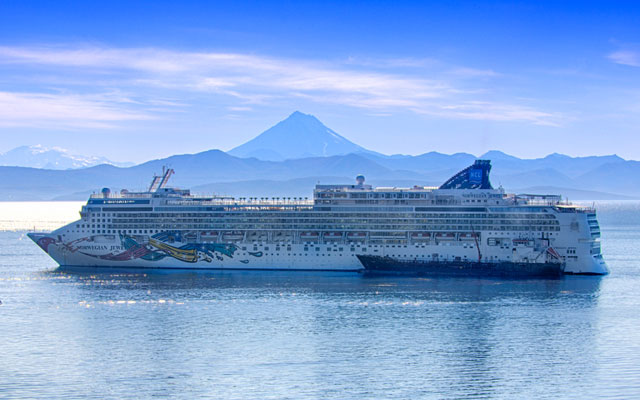
Norwegian Cruise Line launches double promotions designed to help trade agents secure future business
Secondly, NCL has also introduced CruiseFirst, its new flexible programme designed for loyal cruisers. With every purchase of a US$150 certificate, cruisers will receive an extra bonus of US$150 applied to their Latitudes account, the cruise line’s loyalty programme. The offer is combinable with other existing promotions such as the Best Deal of the Year, and deposits are valid for three years, allowing greater flexibility for customers.
Ben Angell, NCL vice president and managing director, Asia Pacific, said the CruiseFirst programme is designed to help its travel agent partners “secure future business, boost commissions and build stronger relationships with their clients”.
For the duration of the promotion, guests will also receive all five choices from NCL’s Free at Sea offer, including a beverage package, shore excursion credit, specialty dining package, and Wi-Fi package. On select sailings, they can also enjoy NCL’s ‘3rd and 4th guests sail at a reduced rate’ promotion, as well as the ‘Buy 1st Guest and Get the 2nd Guest 50% Off’ offer.
Itinerary highlights for NCL’s 2021/22 sailing season include the 11-day Hawaii cruise from Honolulu to Vancouver on Norwegian Jewel (departing April 29, 2021), 17-day cruise from Singapore to Sydney on Norwegian Spirit (departing December 6, 2021), and a 10-day cruise from Bali to Hong Kong on Norwegian Spirit (departing April 9, 2022), among others.
New World Hotels & Resorts has signed an agreement with Sun Group to rebrand and manage a new all-villa resort on Vietnam’s southern Phu Quoc island.
Formerly known as the Sun Premier Village Kem Beach Resort, the rebranded New World Phu Quoc Resort is scheduled to open its doors in 2021. Situated on the southwestern tip of Phu Quoc, the resort sits on nearly 60ha of tropical landscape facing acclaimed Kem Beach.
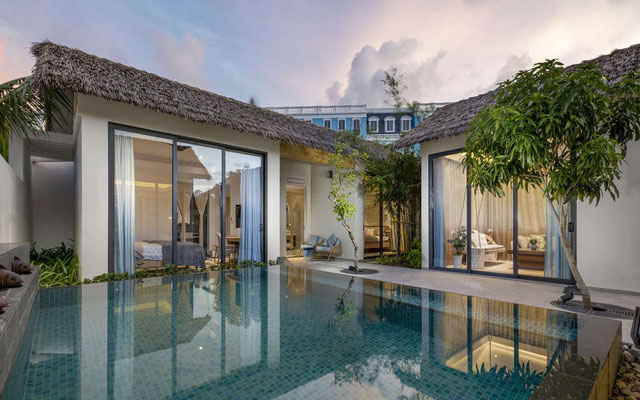
Partnership between New World Hotels & Resorts and Sun Group will unveil all-villa enclave, New World Phu Quoc Resort, at one of Vietnam’s finest beach destinations
Guests can select from 375 villas in seven configurations starting from 124m² in size to the grand 414m² Sun Beach Front Villa. Every thatched-roof villa, which is composed of three separate areas, houses a private swimming pool. Recreational options include an outdoor swimming pool, fitness centre and studio, a 16-treatment-room spa and kids’ club.
An all-day café, specialty restaurant, pool bar and beachside restaurant offer a variety of island, regional and international cuisines.
The New World Phu Quoc Resort will be the 11th property and second resort to join the brand’s portfolio across Asia, and also, the third in Vietnam after the New World Saigon Hotel and the upcoming New World Hoiana Hotel.
When it comes to the availability of Muslim-friendly online travel resources provided by NTOs globally, those in Asia-Pacific continue to set a shining example, according to a recent study by travel consultancy Pear Anderson.
Some 60 per cent of the top 10 ranked NTOs are from Asia-Pacific in Pear Anderson’s report titled How Online Ready are NTOs for Muslim Travellers in 2020?.
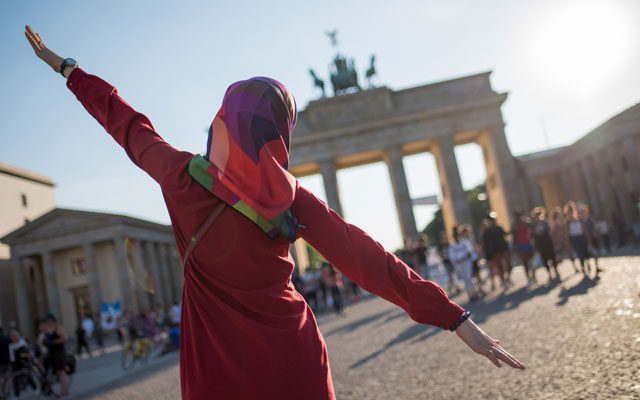
Germany scored its first points in the 2020 edition of the Pear Anderson’s How Online Ready are NTOs for Muslim Travellers in 2020? report; a Muslim traveller at the Brandenburg Gate in Berlin, Germany pictured
This is the second year of the report, which examines the online resources that NTOs from the top 50 most visited non-Muslim countries worldwide have created to support Muslim-friendly travel, including information about Muslim-friendly food, prayer spaces and hotels.
Of the top 50, 46 per cent now have some form of online resource available for Muslim travellers, an encouraging increase of 21.7 per cent from 2019.
Hong Kong, Taiwan, South Korea, Australia and Slovenia all saw significant increases to their scores in 2020, as they sought to create new content, and made it more accessible to Muslim travellers.
Six countries also scored their first points in the 2020 edition of the report: Germany, Greece, India, Macau, South Africa and the UK.
Hannah Pearson, director of Pear Anderson, said: “It’s exciting to see NTOs starting to put more focus on Muslim-friendly travel. However, European NTOs have a long way to go to catch up to their Asia-Pacific peers, who are dominating the top rankings.
“The Hong Kong Tourism Board and the Taiwan Tourism Bureau have put serious emphasis on developing Muslim-friendly online resources, and their efforts have paid off by scooping the top spot. Their jump in rankings shows that it’s not enough for an NTO to create Muslim-friendly online resources as a one-off project – there needs to be continuous innovation to keep the messaging fresh.”
The report also features cases studies from the Hong Kong Tourism Board and Tourism Australia, as well as industry best practices for online Muslim-friendly tourism resources.
Muslim travel spend is a significant and fast-growing sector, increasing to US$194 billion in 2019, according to the State of the Global Islamic Economy Report 2020/2021.
With rising concerns over climate change and increasing commitment from travel companies to become carbon neutral in the future, it is vital that airlines adapt to this emerging demand and harness technology to create new, greener ways of flying, says GlobalData.
According to GlobalData’s latest Covid-19 Recovery Consumer Survey, which was conducted in October, 43 per cent of respondents globally said that they are always or often influenced by how ethical/environmentally-friendly/socially responsible a product or service is. This means airlines that react quickest to the growing desire for sustainable travel will hold a competitive advantage over rivals, thereby, potentially becoming more appealing to nearly half of all travellers.
Shifting traveller demands mean airlines which invest in sustainable alternative fuels will be better poised to capitalise on post-pandemic demand
Ben Cordwell, travel and tourism analyst at GlobalData, commented: “Taking into account the global Covid-19 pandemic, there has been a dramatic shift in market needs and wants. Airlines that react quickest to these changing demands will have an opportunity to cement themselves as market leaders within the aviation industry and accelerate recovery.”
Sustainable aviation fuel (SAF) is a clean substitute for fossil jet fuels as it is produced from sustainable sources such as waste oils, agriculture residues, or non-fossil CO2. Hence, the adoption of SAF could attract a significant number of travellers who are growing increasingly concerned about the emissions that airlines are creating, by helping them to meet their own sustainability goals as individuals.
In the post-Covid landscape, increased health and safety procedures will be at the forefront of customer expectations and it has been suggested that a new ‘Gen-C’ tourist will emerge from the pandemic. This tourist will not be defined by traditional demographics, but a need for reassurances around health and safety. Airlines that can tap into this market will be most likely to experience a stronger recovery than their competitors.
Cordwell added: “There will likely be an increased demand for low-cost airlines as GlobalData survey states that 47 per cent of respondents globally believe that the economic situation in their country will worsen in the coming months. Furthermore, over a quarter (27 per cent) of respondents believe their own personal financial situation will worsen.
“This highlights the growing role that budget airlines will likely play in the aviation market over the coming years and full-service airlines will likely need to adopt similar pricing strategies to compete in an already hyper-competitive industry.”
Tourism leaders and stakeholders in Singapore have jumped on board a national initiative to reimagine tourism offerings for both domestic and foreign tourists, in preparation for the resumption of global travel.
Organised by Singapore Tourism Board (STB), the SingapoReimagine initiative comprises two engagement series launching next year. It will kick off with Reimagine Travel – Global Conversations, a line-up of forums to be held across the globe. It will begin in Singapore with a sharing session by STB alongside global partners, before making its way to other parts of the world.
On home ground, STB will also roll out Reimagine Travel in Singapore, a series of engagements with local partners and members of the tourism community to co-create ideas and stimulate greater demand for the SingapoRediscovers domestic tourism campaign.
The SingapoReimagine initiative works to encourage businesses to reimagine safety, technology and sustainability in their tourism products. For instance, Changi Airport Group has implemented an entirely touchless check-in experience, with its machines fitted with proximity sensors and biometric auto-clearance.
In August, Resorts World Sentosa introduced the Aqua Gastronomy dining concept to the S.E.A. Aquarium, transforming its Open Ocean Habitat into a multi-sensory restaurant. Elsewhere, popular nightclub Zouk Singapore adapted to the closure of nightlife establishments in the country by converting its venue into a pop-up dining concept, cycling spin studio and a cinema club.
STB CEO Keith Tan said: “Covid-19 is the biggest crisis we have ever faced in travel and tourism, but it also offers us an opportunity to reset and revive our industry. The journey to reimagine travel has already started in Singapore, and we want to continue this journey with our community in Singapore, and our partners here and around the world. We look forward to co-creating ideas and strategies with all of them, to make travel better.”
While the country’s doors remain firmly shut to international tourists, Thailand’s domestic travel wanderlust has turned Khao Lak into an Instagram hero.
According to research by C9 Hotelworks’ new Khao Lak Hotel Market Update, in the first two months of this year, occupancies in the resort destination soared above 80 per cent.
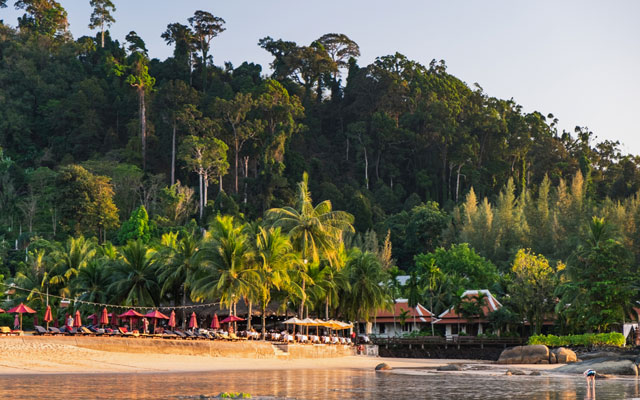
Surfing, culture, and Michelin-mania driving new faces to Phang Nga’s Gold Coast, says new tourism report; Nang Thong Beach in Khao Lak, Thailand pictured
With the Covid-19 lockdowns, occupancy plunged in April and May. But as domestic travel re-started mid-year on the back of the government-initiated We Travel Together incentive, the destination has slowly but surely gained traction from both fly and drive-in Thai markets.
Khao Lak’s surf scene has become a national social media sensation, with Pakarang Beach and Memories Beach Bar the epicentre of a photo tourism movement – bolstered further by Instagram favourite hotels, Michelin-starred Southern-Thai restaurants, and the rediscovery of Takua Pa Old Town.
Over the past five years, the expansive white sand oceanfront strip of destination hotels in Khao Lak has continued a march North towards Takua Pa. Fuelling much of this development is larger greenfield land parcels and a nearly completed four-lane highway expansion from the gateway airport in Phuket.
C9’s report indicates a hotel supply of 114 registered tourism establishments with 9,542 rooms and a further 2,283 keys in the pipeline. With 73 per cent of incoming supply being chain operated, the influx of global brands includes Pullman, Marriott, Sheraton, AVANI, and Holiday Inn.
Despite Thailand’s tourism downturn, some hotel owners are taking the opportunity to complete projects and launch their properties in the marketplace, signalling long-term optimism in the destination’s tourism potential.
Meanwhile, project delays in a number of properties in the pipeline due to the present situation is pushing out many openings to 2022-2023.
Talking about the evolving geographic changes in Khao Lak’s hotel scene, Bill Barnett, managing director of C9 Hotelworks, pointed out that “while the panoramic pristine seaboard continues to stretch upwards into an emerging tourism Gold Coast, there is an increasing grassroots ‘sense of place’ movement afoot.”
Looking beyond the end of surf season which runs from just after the Songkran holiday period through November, local hotels are pinning hopes that the government domestic travel incentive which is due to expire at the end of January will be extended to at least mid-2021 or until international tourists are allowed to revisit the country.
“The continued influx of social media bloggers and influencers heading South is already creating a ripple effect in demand, most notably with the Similan and Surin islands as day trips from Khao Lak. It may not be a typical high-season but for now, the domestic tourists are a welcome sight for stressed hoteliers and tourism businesses,” said Barnett.
He added: “Looking ahead, the current northwards expansion of Khao Lak’s strip of destination beach resorts is expected to usher in a new cycle of market maturity.
“As post-Covid-19 travel commences, Khao Lak and Phang Nga are well positioned as a destination, given a unique sense of space, nature and emergence of sports and cultural tourism elements.”
Despite the global pandemic, international hotel groups are reporting robust pipelines and new signings, while coming up with creative ways to bolster revenue sources, shared panellists at The Leaders’ Panel: The Future of Hotels Post Covid-19, part of TravelRevive.
Rajit Sukumaran, managing director, South-east Asia and Korea, InterContinental Hotels Group (IHG), shared: “In 3Q2020, we opened 80 hotels globally, showing there’s a lot of confidence in the industry. We know travel will return, and want to position ourselves well.”
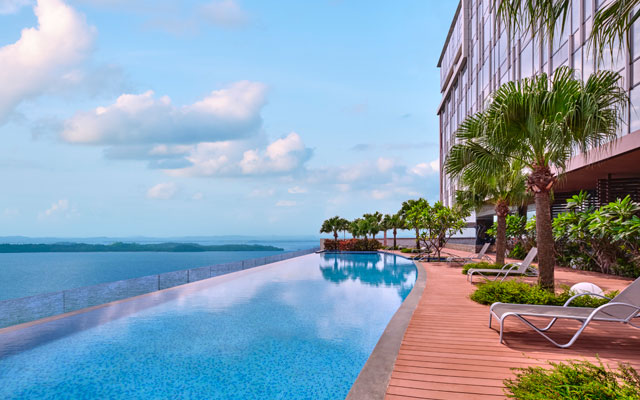
Despite downturn, Marriott added around 90 hotels to its Asia-Pacific portfolio, including the Batam Marriott Hotel Harbour Bay in Indonesia (above)
Similarly, Rajeev Menon, Marriott International’s president, Asia Pacific (excluding Greater China), shared: “This year, we opened around 90 hotels across Asia-Pacific, and we’ll continue to open. In terms of signing new deals, in 1H2020, this was up 30 per cent. This tells me that from a long-term perspective, there is confidence.”
In just Japan alone, Marriott opened 20 hotels, which Rajeev hailed as a “record”, but noted that these projects started a long time ago, which ultimately boils down to owners’ cash flow.
As for serviced apartment operator Oakwood, the company’s pipeline will see 14 properties open globally this year and the next. However, Dean Schreiber, CEO of Oakwood Worldwide, acknowledged that Oakwood already had a good base with longer-staying customers, so instead of closures during lockdowns, they had to work with owners to stay open.
He elaborated: “What is interesting is that independent owners are now seeing sanctuary in having a brand, which gets us more signings. In this period, aligning with a brand is easier (for business).”
However, amid border closures and travel restrictions, domestic travel – excluding the China market – has proved wanting in filling the gap left by international tourists. And while some hotel owners chose this downtime to renovate, others had to come up with innovative solutions to earn revenue.
Kwee Wei-Lin, senior vice president, hotels, Pontiac Land Group, and president of the Singapore Hotel Association, related how some hotel operators got creative. “They did hampers, takeaways, and even transformed into a temporary grocery shop – anything to survive another day.”
Rajeev mused: “A year ago, I wouldn’t have done takeaways from luxury hotels, but it’s things like these that will help us in the long run. The revenue we get from F&B is helping to keep business alive.”
For Oakwood, it had to brainstorm creative solutions for the short-stay crowd, such as rolling out work-from-home packages, shared Schreiber.
“Oakwood also sold the idea of space, where its apartments were self-contained and had a kitchenette, while still offering a ‘hotel-level’ pampering service,” he added.
Elsewhere, IHG worked with the government to convert a bulk of its 10 hotels in Singapore into quarantine facilities, while Marriott sealed a wide-ranging strategic partnership with superapp Grab that will see both companies progressively integrate their offerings.














Norwegian Cruise Line (NCL) has launched a double promotion designed to benefit loyal cruisers and help trade agents secure future business.
One of them is its Best Deal of the Year where guests can enjoy 30 per cent off the total voyage fare for bookings made from now until December 10, 2020. The offer applies fleetwide across all cabins and travellers can choose from hundreds of voyages departing in 2021 or 2022.
Secondly, NCL has also introduced CruiseFirst, its new flexible programme designed for loyal cruisers. With every purchase of a US$150 certificate, cruisers will receive an extra bonus of US$150 applied to their Latitudes account, the cruise line’s loyalty programme. The offer is combinable with other existing promotions such as the Best Deal of the Year, and deposits are valid for three years, allowing greater flexibility for customers.
Ben Angell, NCL vice president and managing director, Asia Pacific, said the CruiseFirst programme is designed to help its travel agent partners “secure future business, boost commissions and build stronger relationships with their clients”.
For the duration of the promotion, guests will also receive all five choices from NCL’s Free at Sea offer, including a beverage package, shore excursion credit, specialty dining package, and Wi-Fi package. On select sailings, they can also enjoy NCL’s ‘3rd and 4th guests sail at a reduced rate’ promotion, as well as the ‘Buy 1st Guest and Get the 2nd Guest 50% Off’ offer.
Itinerary highlights for NCL’s 2021/22 sailing season include the 11-day Hawaii cruise from Honolulu to Vancouver on Norwegian Jewel (departing April 29, 2021), 17-day cruise from Singapore to Sydney on Norwegian Spirit (departing December 6, 2021), and a 10-day cruise from Bali to Hong Kong on Norwegian Spirit (departing April 9, 2022), among others.