

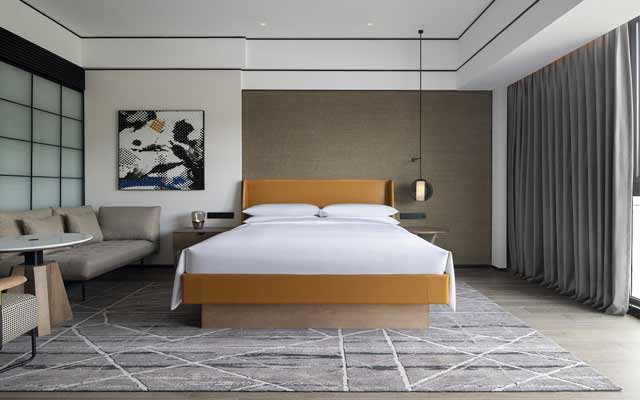
International travel largely on hold despite uptick in May: UNWTO
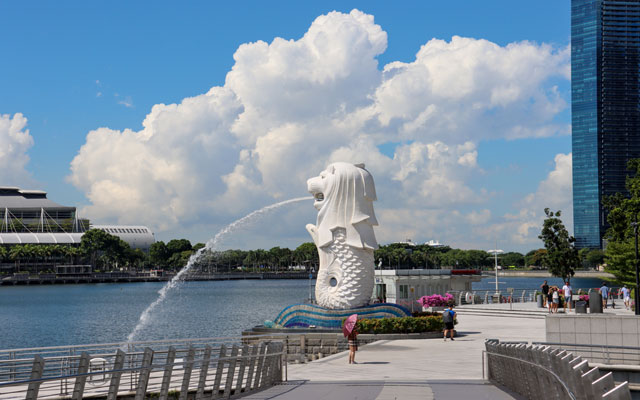
The pandemic’s effect on tourism continues into its second year, with international tourist arrivals between January and May falling 85 per cent below 2019 levels, representing a 65 per cent drop on 2020, according to UNWTO data.
Despite a small uptick in May, the emergence of Covid-19 variants and the continued imposition of restrictions are weighing on the recovery of international travel. Meanwhile, domestic tourism continues to rebound in many parts of the world.
The latest UNWTO data shows that over the first five months of the year, world destinations recorded 147 million fewer international arrivals (overnight visitors) compared to the same period of 2020, or 460 million less than pre-pandemic year of 2019.
However, the data does point to a relatively small upturn in May, with arrivals declining by 82 per cent (versus May 2019), after falling by 86 per cent in April. This slight upward trend emerged as some destinations started to ease restrictions and consumer confidence rose slightly.
“Accelerating the pace of vaccination worldwide, working on effective coordination and communication on ever-changing travel restrictions, while advancing digital tools to facilitate mobility will be critical to rebuild trust in travel and restart tourism,” said UNWTO secretary-general Zurab Pololikashvili.
By regions, Asia and the Pacific continued to suffer the largest decline with a 95 per cent drop in international arrivals in the first five months of 2021 compared to the same period in 2019. Europe (-85 per cent) recorded the second largest decline in arrivals, followed by the Middle East (-83 per cent) and Africa (-81 per cent). The Americas (-72 per cent) saw a comparatively smaller decrease.
In June, the number of destinations with complete closure of borders decreased to 63, from 69 in February. Of these, 33 were in Asia and the Pacific, while just seven in Europe, the region with the fewest restrictions on travel currently in place.
By subregions, the Caribbean (-60 per cent) recorded the best relative performance through May 2021. Growing travel from the US has benefitted destinations in the Caribbean and Central America, as well as Mexico. Western Europe, Southern and Mediterranean Europe, South America and Central America saw slightly better results in May than in April.
UNWTO expressed a mixed outlook for a rebound in international travel activity for the remainder of 2021. While international tourism is slowly picking up, recovery remains very fragile and uneven, it said.
Rising concerns over the Delta variant of the virus have led several countries to reimpose restrictive measures. In addition, the volatility and lack of clear information on entry requirements could continue to weigh on the resumption of international travel during the Northern Hemisphere’s summer season.
However, vaccination programmes around the world, together with softer restrictions for vaccinated travellers and the use of digital tools such as the EU Digital COVID Certificate, are all contributing to the gradual normalisation of travel.
In addition, domestic travel is driving the recovery in many destinations, especially those with large domestic markets. Domestic air seat capacity in China and Russia has already exceeded pre-crisis levels, while domestic travel in the US is strengthening further.
Indonesia travel veteran Ben Sukma passes on
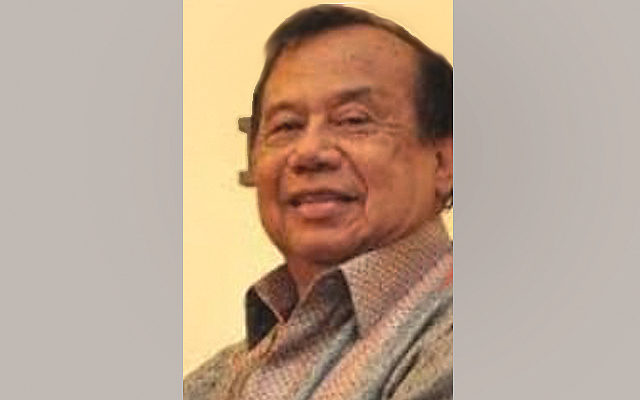
The Indonesia travel trade is grieving the passing of Ben Sukma, owner of tour agency Sukmawisata Medan and a prominent industry figure who had dedicated much of his career to developing and promoting Indonesian tourism, both through his company and his involvement in ASITA.
Ben spearheaded ASITA from 2003-2011, as chairman of Central Board of ASITA ’71, and continued to dedicate his time and energy towards the betterment of ASITA and Indonesia’s tourism sector till his demise today (July 22) at 05.00 in Medan due to an infection in his digestive system that he had been suffering from for some time. His last post was head of the Supervisory Board of Manners at ASITA ’71 Central Board.
Nanik Sutaningtyas, board member of ASITA East Java Chapter, described Ben as a “prominent industry figure with a lot of merits” who had always played an active role in developing international networks and promoting Indonesia overseas.
Artha Hanif, chairman of ASITA Central Board, said that Ben had always been concerned with the livelihoods of the ASITA members. “During this pandemic, for example, he always reminded the central board members not to be too focused on resolving (the association’s) disputes, but to find economic solutions to help the ailing businesses of members,” he said.
Ben was also known for being open and straightforward when vocalising his opinions. “However, he is also a true team-player. He might have strong opinions, but if the organisation decides against it, he would respect their decision,” he said.
Ben is survived by his wife and six children.
Gold in these hills
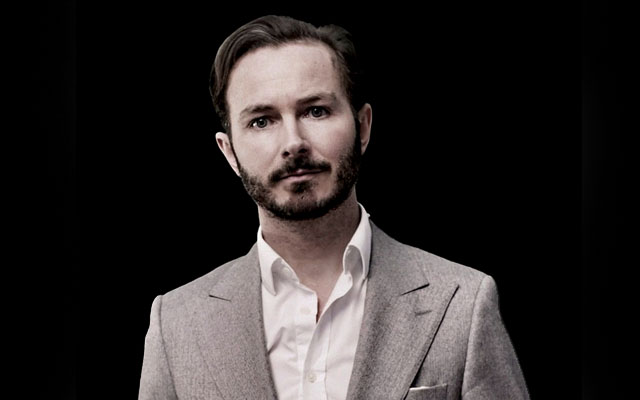
The Asia Pacific and the Global Travel Recovery report, produced by ILTM in partnership with Barton, has turned up some informative insights into luxury travel. What are some of the outstanding findings that present an optimistic future for this industry?
One of the major findings is that the High Net Worth (HNW) population contributes massive amounts of money to the global luxury travel universe. At the same time, Asia-Pacific’s HNW population growth can never be understated. It is not just China that is contributing HNW individuals, but other countries too.
(Japan is an) exception to that growth. Japan has a stagnant economy in comparison to Asia-Pacific as a whole, as well as a shrinking and aging population. But beyond the unusual situation in Japan, the rest of Asia-Pacific is seeing a growing economy, a growing population and a fast-growing HNW group.
What this means is that Asia-Pacific’s share of HNW spending is increasing quickly and strongly versus the rest of the world. These Asia-Pacific HNW travellers will travel to anywhere in the world and contribute to the global luxury travel ecosystem.
The study looks into the Outbound Luxury Travel Ecosystem, defined as the set of activities linked to travel that are particularly attractive to luxury travellers. Are these activities necessarily luxury? And why is it important for luxury travel stakeholders to understand what makes up this ecosystem?
The activities are not always luxurious. The most important thing about these activities assembled for the ecosystem is that they are things that HNW travellers like to do when they travel.
For example, we don’t just have Michelin-starred restaurants in the ecosystem; we have other types, the more casual ones. Similarly, music concerts that do not have tickets at a luxury price point may present content that are culturally attractive to HNW travellers.
It is important to understand the ecosystem from the travellers’ perspective and not from the industry’s perspective. Luxury travellers don’t want to be consuming luxury experiences non-stop. They want to partake in activities that aren’t necessarily aligned with luxury as well.
Can you give us a quick glimpse into areas/activities in the ecosystem that are attracting stronger spending from Asia-Pacific HNW travellers compared to global HNW travellers?
In terms of total spend from Asia-Pacific, airfares and lodging make up a chunk. Globally, US$1.4 trillion is spent on airfares and lodging, while Asia-Pacific’s contributes US$231.5 billion to that. China’s contribution to the global airfares and lodging spend is very large – 49 per cent of Asia-Pacific’s share (or US$114 billion).
In terms of regional travel within Asia-Pacific, US$37.4 billion is spent on inbound and outbound airfare and lodging. China’s share of that is US$16.9 billion – and that’s just one country on its own.
In terms of activities, many of those that we have identified in the report – particularly the cultural ones – are not available in the Asia-Pacific region. This makes the Asia-Pacific HNW contribution so much more important because it shows the travellers’ propensity to travel internationally (to experience those activities).
For example, Asia-Pacific contributes just over one-tenth of the global spend on cultural activities although many of these cultural organisations, such as the museums and galleries, are not in Asia-Pacific. That’s an impressive statistic.
Wellness activities are also drawing a chunky spend from Asia-Pacific’s HNW community. The Asia-Pacific wellness spend is now a fifth of the global total but wellness is still not something that the global travel community identifies with Asia-Pacific travellers. Brands in the West may not realise that wellness is something Asia-Pacific HNW travellers are interested in. There is almost a presumption that when Asia-Pacific HNW travellers visit Europe or North America, their top priority is culture and sightseeing. In fact, we have identified a big chunk of Asia-Pacific HNW travellers who are interested in wellness activities like fitness classes and health treatments.
Do you foresee the make up of this ecosystem changing post-pandemic?
Short-term post-pandemic, not much. We will need to wait and see what happens with the vaccination programmes and containment efforts. Border policies are still restrictive, and there will be long hangovers about who will be allowed into a country and who will be allowed to freely travel.
It is a shame, but arising from these restrictions would be the creation of travel corridors between well-vaccinated countries and countries with no variant exposures – within regions first before globally.
We could also see in the short-term a change in the types of activities to cater to travellers who have access to the destination.
In the mid- to long-term, I expect to see the Asia-Pacific region having a greater share in the global luxury travel ecosystem simply because countries will start to create their own activities (for regional travellers). Asia-Pacific’s HNW travellers will be looking to do activities in their region, not just in Europe or North America. There will also be a growing desire among HNW travellers from outside of Asia-Pacific wanting to do activities in the Asia-Pacific region.
Hopefully, by the end of 2022 and early-2023, we would see a greater return to normality in intercontinental travel for the mass market, not just for the HNW travel community.

Let’s talk about the distribution of HNW travellers in Asia-Pacific. The study notes that 29 per cent of the region’s HNW travellers hail from China – a market that is still shut to the rest of the world due to strict outbound travel restrictions by the Chinese government to prevent the import of Covid-19 cases upon their residents’ return. Isn’t this a major obstacle to the recovery of luxury travel and tourism for the rest of the region and beyond?
Yes, it is. You cannot underestimate the power of the Chinese. China has the fastest growing HNW population across the world and they have a great appetite for luxury. Until the pandemic hit, China had a rapidly growing appetite for luxury travel.
The Chinese population being restricted from travelling overseas has a big impact on the world. It isn’t just the travel industry that is impatient to get the Chinese back. Not too long ago, a Chinese person outside of China made one in three purchases of luxury goods. Now, it is more than that – almost approaching the level of one in two purchases. Brands need the Chinese to get back to travelling and spending.
However, that doesn’t mean the Chinese story is the only story; it is not. The world needs wealthy people from Japan, Singapore, Australia to be travelling again, etc.
For luxury tourism stakeholders hoping to make in-roads into the fast-emerging luxury travel source markets of Vietnam, India and the Philippines, what aspects of these travellers’ spending habits or personal passions should be noted for marketing success?
Well, we need to remember how global these HNW people are. In doing business internationally, many are picking up international habits, interests and preferences. They may maintain some level of local identity, such as certain things they prefer to eat, family approach or cultural attitudes, but they are in general behaving much more like an international group than a national group.
We cannot look at these fast-rising Asia-Pacific markets parochially. The behaviours of the general Vietnamese may not be reflective of the characteristics of HNW Vietnamese.
When we think of the interests and passions of Asia-Pacific’s HNW people, we need to remember that they are very similar to many wealthy people around the world. For instance, sports draw huge interest from many HNW people around the world, even those in fast-rising, newly wealthy countries.
HNW individuals across Asia-Pacific are also very keen on things like technology, engineering, education, philanthropy, real estate, art, language and food – much like the other HNW individuals across the world.
We have found more similarities between the wealthy people of the world than between the wealthy people and the rest of the population in the same country.
The report expects in-region travel will be at the heart of the recovery – an estimated 57.5 per cent of Asia-Pacific traveller’s outbound spend is spent within the region. Where does that leave Western destinations hoping to bring back Asia-Pacific visitors?
This is tricky. Western destinations will have to depend on travel corridors set up with Asia-Pacific (to resume arrivals).
As long as Covid cases remain stable and don’t shoot up, we could expect China to establish travel corridors with certain parts of Europe. China is a powerhouse source market, so destinations will want to do what they can to bring the Chinese travellers back. But before that happens, domestic travel will continue to be most significant in Asia-Pacific – just as it has been elsewhere in the world during this pandemic.
Thailand suspends domestic flights in Covid-risk areas
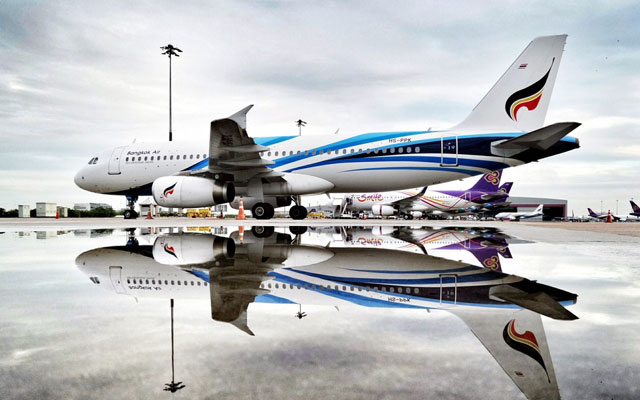
Airlines in Thailand have halted domestic flights through end of this month, as authorities further tighten travel restrictions in response to several consecutive days of record infections.
On Wednesday (July 21), Thailand recorded 13,002 new Covid-19 cases, up from 5,533 recorded on July 1. Daily death toll also doubled to 108, from 57 on July 1.
A professor from Mahidol University has warned that in the worst-case scenario, Thailand could record 32,000 daily cases over the next three months.
In response to the escalating situation, authorities have imposed the highest and strictest control measures on Bangkok and 12 other dark-red zone provinces, including a nighttime curfew and a ban on travel outside those areas. The new measures which kicked in yesterday (July 20) will last until August 2.
The Civil Aviation Authority of Thailand has announced that domestic flights to and from Bangkok and other provinces classified by the Thai government as at high-risk from Covid-19 will be suspended from today.
Six member airlines of the Thai Airlines Association (TAA) have announced flight changes and cancellations.
Nok Air has cut all flights to and from Don Mueang International Airport, from today until month-end. Meanwhile, THAI Smile has suspended services on all domestic routes from today until August 3.
Thai Vietjet Airlines and Thai Lion Air have also stopped serving domestic routes from today through August 1 and 3, respectively. Last week, Thai AirAsia announced that it will suspend all domestic services starting today until July 31.
Bangkok Airways has also paused some flights on the Bangkok-Koh Samui route from today. It will postpone flights planned to operate next month on other routes including those from Bangkok to Chiang Mai, Phuket, Sukhothai, Lampang, and Trat.
However, the airline will continue operating three daily Bangkok-Koh Samui services and four weekly Koh Samui-Phuket flights to support the Sandbox campaign.
Puttipong Prasarttong-Osoth, president of the TAA, which was formed early this year, has called on the government to provide financial support to help airlines tide through this period.
Currently, seven TAA members (including Thai AirAsia X) are grounding more than 170 planes but still need to pay as much as 900 million baht (US$27,380) per month for staff wages.
Said Puttipong: “Over a year-and-a-half since the outbreak of Covid-19, the seven airlines have done their best to deal with the crisis to stay (afloat). Now, we are calling on the government to process soft loans for (these airlines) as soon as possible as this will be (their) last breath.”
Malaysian tourism players extend helping hand to needy amid pandemic

Despite the trying times the prevailing Covid-19 situation has afflicted on tourism businesses in Malaysia, industry stakeholders have stepped up to lend a helping hand to the needy and less fortunate in society.
Asian Trails in Kuala Lumpur, for instance, has been passing the hat to raise funds for the less fortunate since the start of the pandemic. The tour agency’s latest efforts saw it raising RM2,500 (US$589) to purchase food items to help 523 orphans, refugees and the disabled in Selangor in May.
Abu Fadzil, head of operations and customer service at Asian Trails, shared: “We are doing our part to make the lives of the less fortunate a little easier. The pandemic, which has resulted in lockdowns, has affected businesses and people’s livelihoods in a very big way. In future, we plan to provide assistance to marginalised communities living in rural areas within and beyond Selangor.
He added that the agency plans to help the indigenous people in Taman Negara once inter-district travel is allowed.
Laili Basir Event Adventure, a tour company that specialises in tours in Semporna, Sabah, is assisting 500 families in the Bajau Laut (Sea Gypsy) community in Semporna to secure basic food supplies, to save them from making a grocery trip to town and being exposed to a higher risk of Covid-19 infection.
Company founder, Laili, shared: “We get donations from NGOs as well as our previous clients who have been with us on trips to Semporna and are sympathetic to our cause.”
The staff and business associates are also volunteering their time to provide basic education to 36 street children in Semporna town, in a collaborative effort with the villages at Kg Bangau Bangau.
Independent and group hotels are also doing their part to help the needy, despite their own internal cost-cutting measures to reduce operational expenses amid the travel standstill.
Cottage by the Sea by Frangipani Langkawi is helping the less fortunate by donating fruit and vegetables grown on its 0.4ha farm. Its founder, Anthony Wong, is also collaborating with local NGOs to identify lower-income families keen to learn the ropes at organic farming from Wong and his team. Wong said: “My philosophy is not to give them a fish to eat for a day, but to teach them how to fish.”
Hotels in Sunway City Kuala Lumpur have also embarked on a number of initiatives to help ease the burden faced by the country’s most at-risk communities.
Early this year, Sunway Resort, Sunway Pyramid Hotel and Sunway Clio Hotel – assisted by the Rotary Club Malaysia and ADAB Youth Garage, a Bangi-based NPO – donated more than 200 home items such as beds and furniture, amounting to over RM10,000, to flood victims in the worst-hit districts of Pahang.
Through Sunway Group’s community initiatives and partnership with the Selangor Youth Community, items were also donated to several orphanages.
Alex Castaldi, senior general manager of Sunway City Kuala Lumpur Hotels, shared that in another of the group’s initiatives, food items were donated to around 30,000 Malaysians during the holy month of Ramadan and Hari Raya. Beneficiaries include those in the lower-income category, Covid-19 frontliners, senior citizens and their caregivers, as well as prison inmates across the Klang Valley, Penang, Perak, Johor and Kelantan.
In conjunction with World Hand Hygiene Day in May, hotels in Sunway City Kuala Lumpur also donated 1,000 handmade bars of repurposed soap to inmates at Sungai Buloh Prison.
Dorsett Putrajaya welcomes new GM

Michael Tang has joined Dorsett Putrajaya in Malaysia as general manager.
In his current role, Tang has been tasked with ensuring the profitability and sustainability of Dorsett Putrajaya’s operation, a role he takes on during this challenging period of Covid-19.

The seasoned industry professional has over 25 years of hospitality experience, and is no stranger to group, having been the general manager of Upper View Regalia Hotel, Kuala Lumpur since 2018; a hotel owned and managed Mayland Group of Companies and affiliated to Dorsett.
The Malaysian first began his hospitality career in 1996 in his hometown in Penang with the Casuarina Beach Resort, where he learnt sales and marketing. In 2001, he took up his next sales position with Equatorial Cameron and was based out of Kuala Lumpur.
Other positions he has held include associate director of sales for Concorde Kuala Lumpur, then a stint in Berjaya Hotels & Resorts where he took charge of four of the group’s properties, and HPL Hotels & Resorts as director of sales & marketing.
Outrigger acquires trio of Thailand resorts
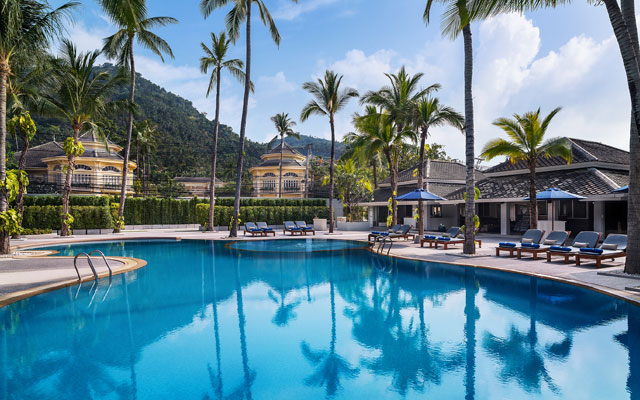
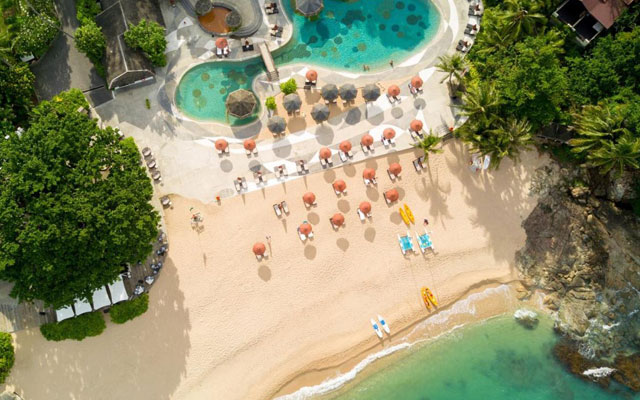
Outrigger Hospitality Group has completed its purchase of the Manathai Hotels and Resorts brand, inclusive of three beach resorts in southern Thailand.
The former Manathai Koh Samui, Manathai Khao Lak and Manathai Surin Phuket will be refreshed, before rebranding and reopening by year-end as Outrigger Koh Samui Beach Resort, Outrigger Khao Lak Beach Resort and Phuket Manathai by Outrigger, respectively. The three properties have a combined total of 372 keys.
The 148-key Outrigger Koh Samui Beach Resort is located on the quiet sands of Lamai Beach on the east coast of Thailand’s second-largest island, which is a 70-minute flight from Bangkok and 55 minutes from Phuket. The property includes 34 suites, a spa, three restaurants, a kids’ club and facilities for weddings and events.
In Khao Lak, a 75-minute drive north of Phuket airport, the 158-key Outrigger Khao Lak Beach Resort sits on Bang Sak Beach, a long stretch of fine sand coastline with uninterrupted views of the Andaman Sea. The property’s room portfolio includes 12 suites and villas. There are two restaurants, a bar, a pool with ocean views, and a kids’ club.
In Phuket, 30-minutes south of the international airport, the Phuket Manathai by Outrigger is a 66-room boutique property on the edge of the powder white sands of Surin Beach. Thirty-seven of the rooms are suites. The property features one main restaurant, a pool bar, and spa.
Preferred Hotel Group refreshes loyalty programme
Preferred Hotel Group has unveiled a series of enhancements to its I Prefer Hotel Rewards loyalty programme, including all-new membership tiers, expanded earning and redemption options, and a Refer-A-Friend bonus offer.
With the addition of the two new membership tiers – Explorer and Authority – member benefits for the existing Insider and Elite tiers have also been revised.
New Insider members (0-24,999 points) automatically receive Insider status upon enrolment, earning points for every eligible stay and accessing benefits, room upgrades, complimentary Internet, a Beyond Green Stay Benefit Bonus, and digital access to Preferred Travel Magazine.
The new Explorer tier (25,000-49,999 points) offers all Insider benefits, a welcome amenity, and 20 per cent bonus points earning per eligible stay.
Elite members (50,000+ points) will enjoy all benefits of Insider and Explorer memberships plus 50 per cent bonus points earnings, a digital anniversary gift, and a F&B offering.
The new Authority tier (invite-only access) includes all Insider, Explorer, and Elite benefits, in addition to complimentary daily breakfast for two, concierge lounge access, a dedicated reservation line, and the ability to gift Elite status to three friends per calendar year.
Additionally, members now also have the option to use their points to book Reward Nights. For as little as 15,000 points per night, members can book stays at a selection of participating properties across North America.
As well, through the loyalty programme’s new Refer-A-Friend bonus initiative, members can receive points by referring friends and family to I Prefer by sharing a unique referral link via social, email or messenger.
Members earn 1,000 bonus points for each new sign-up, with bonus points also extended to each new member. The 1,000-point bonus is also being offered to travel advisors who onboard new members to the programme.
First indoor skydiving experience unveiled at Lisboeta Macau
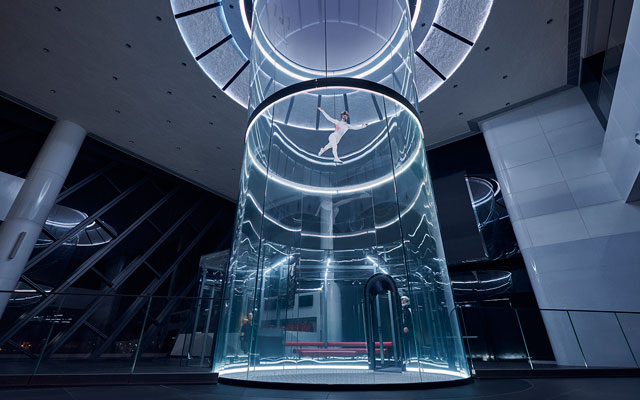
GoAirborne has soft opened its first indoor skydiving centre, featuring a 15m tall, competition standard wind tunnel, within the Lisboeta Macau integrated resort.
Guests will be able to experience the true free-fall sensation of skydiving from 3657-914m in the state-of-the-art facility that has been designed to suit everyone from first-timers to professional skydivers.
Upon arrival at GoAirborne, guests will complete a check-in to an experiential area where they will be outfitted with professional flight gears, and go through a pre-flight training session before their actual skydives.
Each GoAirborne experience lasts approximately 90 to 120 minutes, and is supervised at every step by highly trained and internationally certified tunnel instructors. This allows everyone from as young as four years old to experience going airborne in a safe, all-weather controlled wind tunnel that is fully air-conditioned.
First-timer packages available include The Teaser Package; The GoAirborne Package, where flyers double down on the fun; and the Trial Training Package. The wind tunnel is outfitted with high-speed cameras to record photos and videos that are available for visitors to purchase.
Starting from MOP4,000 (US$500), memberships are available for enthusiasts who want to try indoor skydiving as a sport, or professional flyers who are looking to improve and train under the coaching of GoAirborne world champion trainers. Members enjoy exclusive benefits as well as savings of more than 60 per cent.
Education tours, private parties and corporate activities will also be available for booking soon.







Sheraton Mianyang, China
Sheraton Hotels & Resorts has opened the Sheraton Mianyang, a 342-room hotel that is located in the heart of the Xianhai Scenic Area in Sichuan. The hotel features a purpose-built workspace with tables fitted with amenities such as built-in lighting, outlets, and charging stations. There are also flexible gathering spaces that are designed to facilitate collaborative working and connecting with others in a less formal setting.
Sheraton Mianyang is home to 342 guestrooms and suites ranging from 41-240m2. All guestrooms feature a height-adjustable worktable, integrated power and charging, and layered lighting. F&B options include the &More by Sheraton, part bar, part coffee bar, part market; all-day dining restaurant Daily Social, Chinese restaurant Yue, and all-day bar Unspoken serving creative cocktails and fine wine from around the world.
The hotel offers 1,200m2 of event space, including a 800m2 grand ballroom that can accommodate up to 600 guests and five meeting rooms. The ballroom is connected to an outdoor lush green terrace. Leisure facilities include a fitness centre, a heated swimming pool, a Jacuzzi and a sauna room, an outdoor children’s playground and an indoor kids’ club.
Hyatt Regency Tokyo Bay, Japan
Overlooking the scenic Tokyo Bay, the Hyatt Regency Tokyo Bay is located in Urayasu city in the Chiba Prefecture, just 30 minutes by train or car from central Tokyo. The property features 350 guestrooms, including 10 suites starting at 54-161m2 and 40 club rooms. Many guestrooms have ocean views with some offering a terrace. There are also guestrooms with three beds and kid-friendly rooms with amenities such as a tented bed.
With four restaurants and bars, the hotel features a range of culinary experiences. The Garden Brasserie & Bar is an all-day dining restaurant based on the concept of an European brasserie, while Sushi Ema is a traditional Edomae sushi restaurant. At Teppanyaki Fukitei, chefs prepare creative meals with premium Matsusaka beef, seafood and seasonal vegetables. The Rooftop Bar offers a resort-like atmosphere with a panoramic view of Tokyo Bay and is an ideal spot to enjoy a cocktail.
Along with the Garden Terrace suited for outdoor gatherings, Hyatt Regency Tokyo Bay offers two function rooms, each spanning 98m2 of event space. Leisure amenities include a 24-hour fitness centre and a stretching area for yoga and weight training. Guests can also enjoy a refreshing run on the jogging paths along the seafront.
The Inchcolm by Ovolo, Australia
Perched above Brisbane’s CBD, the all-suite hotel that is The Inchcolm by Ovolo was formerly the Ovolo Inchcolm and has undergone an evolution in the public spaces and guest experience to reflect its classic boutique hotel character. Guests who book direct will receive a complementary martini during martini hour, among other perks such as a sweets bar, fitness centre access, and Wi-Fi. The Inchcolm Bar features an all-day dining menu celebrating local produce alongside a carefully crafted cocktail menu, with full drink service available seven days a week from midday until late.
Park Inn by Radisson Bacolod, the Philippines
The 150-key Park Inn by Radisson Bacolod has debuted in Bacolod City, the capital of Negros Occidental province in the Philippines. The family-friendly hotel is located within the SM City Bacolod mall, providing guests with easy access to retail and F&B outlets, entertainment facilities, and the SMX Convention Center. The property features 150 rooms ranging from 25-49m2, including Superior Rooms, Deluxe Rooms and Junior Suites.
Leisure amenities include separate outdoor pools for adults and children, in-room spa services, a fitness centre, and jogging path. Guests can refuel at a choice of four restaurants and bars, including Arima, an all-day dining destination; Dash, the ground floor “Grab & Go” concept; Lobby Lounge, a casual café and juice bar; and Marapara Plaza, an alfresco venue that specialises in comfort food and cool drinks. For corporate travellers and meeting planners, the hotel features three function rooms covering 230m2.