


Tokyo hotels see Olympics boost

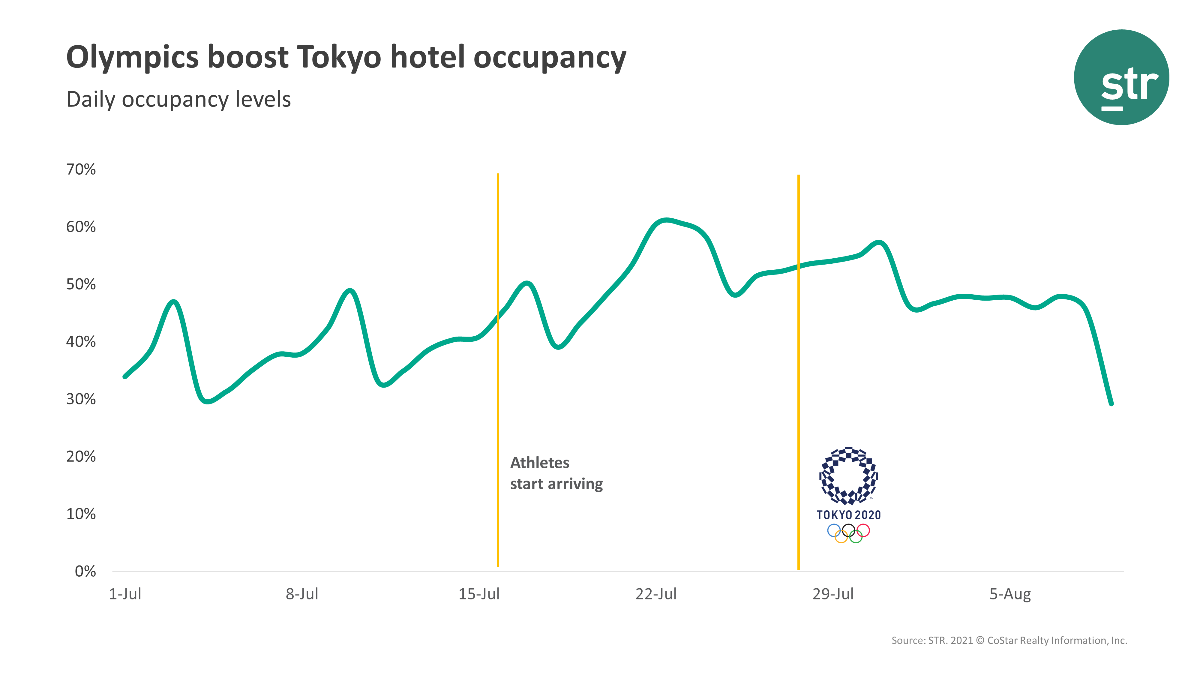
Tokyo’s hotel industry recorded its highest occupancy in 17 months when the country played host to the delayed summer Olympics, and saw a pair of days with levels that approached the peak of the state-funded Go To Travel subsidy campaign in 2020, according to data and analysis from STR.
Tokyo’s 47.2 per cent occupancy level for July was the market’s highest monthly level since February 2020. Daily occupancy reached 60.5 per cent and 60.6 per cent on the night before and the night of the opening ceremony (July 22-23). The last time Tokyo had passed the 60 per cent daily occupancy threshold was during the Go To Travel campaign on November 21, 2020.
Preliminary data for August shows that occupancy lessened over the course of the Olympics and slipped to 45.4 per cent on the night of the closing ceremony (August 8) and 29.2 per cent the night after (August 9).
 “This Olympics was obviously different because of the closed-door nature of the competition, but there was still a substantial performance lift as hotels housed media, staff and a number of high-profile teams that did not stay in the athlete village,” said Shiori Sakurai, STR’s business development manager.
“Aligned with our expectations and past Olympic Games, data shows an even greater lift in average daily rate as per contracts negotiated before the pandemic. However, there was no doubt a material lift to occupancy even with a number of no-shows due to the spectator restrictions and with the state of emergency in Tokyo.”
TTG Conversations: Five Questions with Donovan Soon, FDAT

Hotel architecture is getting greener, fuelled by developers’ own corporate social responsibility as well as need to align with customers’ growing preference for eco-friendly and nature experiences.
In this episode of TTG Conversations: Five Questions, Donovan Soon, director of FDAT, an award-winning architecture and design studio based in Singapore, discusses how environmental awareness is impacting sustainable architecture design, how sustainable hotel designs can shape the guest experience, and how his team has been able to work greenery and open spaces into typically enclosed hotel buildings.
Singapore removes more border restrictions

Singapore is continuing to ease arrival conditions for travellers, with an immediate removal of quarantine for travellers from Hong Kong and Macau as well as the launch of all-purpose Vaccinated Travel Lanes (VTL) with Germany and Brunei from September 8.
Under the new VTL scheme, announced by the Singapore Covid-19 multi-ministry task force on August 19, fully vaccinated travellers departing from Germany or Brunei may enter Singapore without having to serve Stay-Home Notice, otherwise known as a compulsory quarantine. Instead, these travellers must take several Polymerase Chain Reaction (PCR) tests, including a pre-departure test within 48 hours of the departure flight, an on-arrival test at Changi Airport, and post-arrival tests at designated clinics in Singapore on their third and seventh day of travel.

Children under the age of 12, who cannot be vaccinated yet, will not be able to travel under this scheme.
Travellers do not need to follow a controlled itinerary or have a sponsor, but they must have remained in Singapore or their country of departure – Germany or Brunei – in the last 21 consecutive days before they depart for Singapore.
They must also travel on direct and designated VTL flights from their country of departure to Singapore, which will serve only VTL travellers, said the Civil Aviation Authority of Singapore in a press release.
The designated flights from Germany will be operated by Singapore Airlines and Lufthansa, while the flights from Brunei will be run by Singapore Airlines and Royal Brunei Airlines.
According to a CNA report, there will be one daily VTL flight from Frankfurt or Munich, and three flights a week from Brunei.
Travel insurance with a minimum coverage of S$30,000 (US$22,007) for Covid-19-related medical treatment and hospitalisation costs must be purchased ahead of their trip to Singapore.
Travellers will also need to download and use the TraceTogether app in Singapore to enable contact tracing.
At the press conference, transport minister S Iswaran explained that Germany and Brunei were chosen to kick off the new scheme based on overall risk and operational assessment.
The VTL implementation would come with safeguards in place, and Singapore would draw lessons from the experience and enhance processes before any further expansion of the scheme.
Singapore market sees positive shift in outbound appetite

- Singapore outbound flight tickets, travel enquiries and tour bookings surge on the back of clearer government stance on travel resumption
- Europe and the US destinations are most in demand among Singapore travellers, with financially-stable, solo travellers and couples leading the recovery
- Premium flight cabins are getting a bigger share of leisure and VFR travellers compared to pre-pandemic times
Travel companies in Singapore are reporting a promising uptick in outbound travel interest and bookings over the past few weeks, with western destinations earning the bulk of attention, since the city-state government shared plans for an endemic transition on July 26.
Travel analytics firm ForwardKeys indicated a 68 per cent surge in flight tickets issued for departure from Singapore from July 26 to August 8 compared to the previous two weeks.
The UK, which added Singapore to its travel green list from May 17, claimed nearly a quarter of the departure share at 21 per cent, followed by the US at 16 per cent, France at seven per cent, and Germany at six per cent. The UAE, which also placed Singapore travellers on a quarantine-free green list, takes six per cent of the departure share.
The change in tone, according to travel specialists, is largely spurred by Singapore’s decision to begin an endemic Covid transition, which includes allowing fully vaccinated travellers from Australia, Austria, Canada, Germany, Italy, Norway, South Korea and Switzerland to serve their compulsory quarantine at home upon arrival in Singapore instead of a government-appointed facility. The flexible quarantine programme will come into effect on August 20.
Singapore made other milestone announcements on travel recovery – on November 11, 2020 when efforts to establish a Singapore-Hong Kong Air Travel Bubble were confirmed; on April 26, 2021 when both Singapore and Hong Kong officials agreed to revisit the delayed Air Travel Bubble arrangement; and on July 26 when intentions to begin a pandemic exit strategy were shared in parliament.
In comparing the performance of departure flight tickets issued out of Singapore following these three milestones, ForwardKeys found that the sharpest surge occurred two weeks after the November announcement; issued tickets out of Singapore leapt by 172 per cent. In the two weeks following the second and third announcements, issued tickets rose by 31 per cent and 68 per cent.
Ema Mandal, analyst from ForwardKeys Insights Team, explained that the November announcement could have attracted the biggest reaction because it sparked “the first hope for travel to resume (and) it made the biggest noise”.
“Taking into account that (the Singapore-Hong Kong Air Travel Bubble) was cancelled, I guess people were more cautious in booking their tickets after the following two announcements,” she said.

 For Nicholas Lim, Asia CEO of The Travel Corporation (TTC), the market reaction to the government’s latest pandemic exit decision is very “real and encouraging”.
While TTC had started to see interest stirring in overseas vacations among Singapore customers since May 2021, the government’s recent and clearer stance on travel resumption resulted in intensified enquiries and fresh bookings.
Sixty-five per cent of bookings out of Singapore are for Europe itineraries, 25 per cent for North America, and the rest for Latin/South America, revealed Lim, adding that most of the bookings are for travel in summer 2022.
Luxury travel specialist Scott Dunn Asia, which has also witnessed a spike in bookings out of Singapore, found Europe to be red hot. General manager Mike Harlow said that is because Europe is “mostly open, is closer to us than to places like the US, and the Singapore government has made comments that we may potentially open travel corridors there too”.
Singapore travellers are also planning bucket list trips to destinations like the culture-rich Caucasus and East Africa to see the gorillas and wildebeest migrations, added Harlow.
Asia-Pacific destinations are getting renewed attention too, noted, Liu Weichun, co-founder of KKDay, who noted a “massive increase” in searches for outbound tours this November and December to Japan, South Korea, Phuket (Thailand), Australia and New Zealand.
“Many people are looking forward to the possibility of resuming travel in the next few months,” Liu added.
Identifying the post-pandemic first-movers
According to ForwardKeys data, 54 per cent of departure tickets issued in the two weeks following the July 26 announcement were for leisure travel. The VFR+Expats segment – travellers staying more than 22 nights in a destination – makes up the next larger chunk, comprising 38 per cent. Business travel makes up only seven per cent.
The majority of tickets issued from July 26 to August 8 are for Economy class (70 per cent), while the rest are issued for First (2.8 per cent), Business (20.9 per cent) and Economy Premium (6.4 per cent) class cabins. In 2019, Economy class tickets made up a larger share at 74.7 per cent; First, Business and Economy Premium class cabins made up 0.3 per cent, 9.6 per cent and 15.4 per cent respectively.
Commenting on the choice of travel cabins, Mandal said: “While in pre-pandemic period Business and First class cabins were occupied mostly by business travellers, we now observe increased share of both leisure and VFR travellers flying in these premium classes, accounting for 88 per cent of all tickets issued with business and first classes.”
Jameson Wong, APAC director at ForwardKeys, added: “Capacity and availability aside, this clearly signals that the new norm travellers want space and comfort, and are willing to pay for them.”
Further defining the profile of consumers most eager to get back to travel, ForwardKeys data showed that 42 per cent of bookings are by solo travellers while 22 per cent are by couples. Most have also booked their flights directly with airlines – 83 per cent for the period of July 26 to August 8.
Travel specialists observed that customers who are able to immediately restart overseas vacation plans are those with financial stability and who possess better control over personal time.
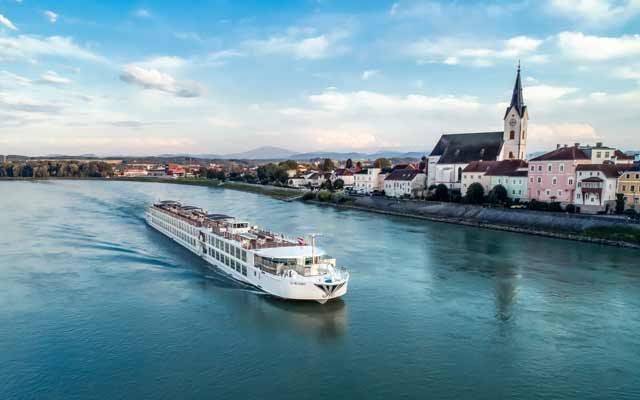
At TTC, itineraries offered under the company’s premium labels, Insight Vacations and Uniworld River Cruises, are attracting the bulk of post-pandemic first-mover travellers.
“The ones first returning to travel are those aged 40 to 60, are affluent and well-travelled. We expected this because this segment of consumers have been quite unaffected by the economic downturn. Younger travellers, including the youths, will take some time to resume their travels but when they do, we expect to see some very short booking windows, probably booking just a week before departure,” said Lim.
Scott Dunn Asia is scoring bookings for ski season, to France and Lapland, while some Singapore families are looking to extend their time in parts of Europe and the US, such as London and New York, for some leisure travel after settling their children back into schools there.
Harlow observed that post-lockdown trips are stretching out longer, “possibly due to the fact that it’s not as easy to venture out as it was before the pandemic hit, so once they are out, they’d prefer to spend a longer time exploring before returning home”.
Scott Dunn Asia’s travellers from Singapore are putting in at least 14 days in longhaul destinations now, compared to about 10 days pre-Covid. For the Maldives, which is gaining popularity among Singapore travellers desiring a shorter break, trips now last five to six nights, compared to three to four nights before the pandemic.
Harlow also told TTG Asia that multi-destination trips are falling out of favour “due to the various tests and entry requirements in place, and the danger of a destination suddenly going into lockdown that may affect the entire trip”.
KKDay’s Liu said families with young children could continue to be “conservative” about travelling, as vaccination for residents aged under 12 has yet to be approved by the government. For now, most of the post-pandemic first-mover travellers on the travel platform are couples and young adults.
Stepping up engagement
Encouraged by the ongoing improvement in Singapore’s outbound interest, KKDay has kicked off talks with partners, tourism boards and travel suppliers to explore innovative marketing programmes and activities to spur online bookings, shared Liu.
“We are optimistic that outbound bookings will gradually increase with the easing of travel restrictions in September,” she added.
Scott Dunn Asia has continued to work with partners on crafting exceptional experiences and has been fine tuning itineraries. However, Harlow is more reserved when asked about the possibility of a promotional blitz aimed at the Singapore market.
“While the outlook for borders re-opening and quarantine reduced or free travel is looking promising, it is not yet clear where these travel bubbles or corridors will be. Destinations in Asia and Australasia are still battling lockdowns and trying to vaccinate their population. That said, we have seen Europe and North America bounce back strongly for this summer and we’re confident that we are ready to inspire our guests wherever opens.”
TTC’s Lim regards Singapore as a “South-east Asian front-runner when it comes to market recovery at this stage”, and said that longhaul destinations would be closely watching Singapore’s outbound performance.
TTC will be investing in consumer marketing to support retail agents in Singapore. “Our agent partners are at various stages of recovery, so it has to be up to us as the principal to drive consumer awareness through increased marketing,” he added.
Emirates restores capacity across 29 cities

In line with the easing of travel restrictions in more countries and regions, Emirates will restore capacity across 29 cities on its network on over 270 flights as well as fine-tuning its schedules to boost frequencies and capacity as demand proliferates for international leisure and business travel.
By October, the airline will increase its services to 73 weekly flights to the UK, including six daily flights to London Heathrow; double daily A380 flights to Manchester; 10 weekly services to Birmingham; and daily services to Glasgow.

For Emirates customers wishing to travel to the UK, the airline has optimised schedules to create the best connection options from its network, particularly across major cities in Africa like Johannesburg, Cape Town and Lusaka, and in West Asia including Karachi, Islamabad, among other cities.
Emirates will also be adding additional frequencies to Houston, Boston and San Francisco over the course of August to accommodate for the seasonal influx of travellers. Capacity on its four weekly services to New York JFK has been expanded with the deployment of A380 since August 13.
The airline has increased flights to Johannesburg from daily to 11 weekly flights, with the addition of four linked flights with Durban, along with three weekly services to and from Cape Town. Customers flying in and out of Emirates’ three South African gateways can safely connect to an array of destinations in Europe, Middle East, West Asia and the US.
Flights to and from South Africa have also been scheduled to allow for convenient connections and additional access to Emirates’ four gateways in the UK, as well as Emirates’ extensive US network.
The airline has reinstated capacity on its flights to and from Lusaka (linked with Harare) and Entebbe with five weekly flights each.
Emirates will continue to expand its network, matching capacity with demand in line with market dynamics and operating conditions. The airline has resumed passenger services to over 120 destinations, recovering close to 90 per cent of its pre-pandemic network.
Singapore carriers to vaccinate all home-based frontline staff
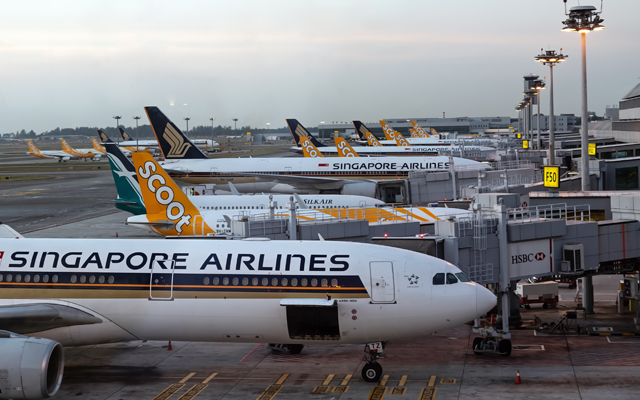
Singapore Airlines (SIA), Scoot and Jetstar Asia will require all Singapore-based frontline staff, including pilots and cabin crew, to be vaccinated against Covid-19.
For Singapore Airlines Group, SIA staff will need to fulfil this requirement by September 1 while Scoot employees have up till December 1 to do so. Jetstar Asia employees will be required to be vaccinated by October 1.
According to news reports, all Singapore-based SIA Group frontline ground staff have been vaccinated, while about 99 per cent of the group’s active pilots and cabin crew have also been inoculated.
Over at Jetstar Asia, almost 100 per cent of its employees have been vaccinated.
Airlines spokespeople have emphasised that the requirements are in line with a government advisory issued on July 2, which allows employers to make vaccination a requirement for staff in higher-risk settings.
While the same advisory said employers should not make Covid-19 vaccination mandatory, in line with Singapore’s national vaccination policy, exceptions are allowed where employees may be exposed to a higher risk of Covid-19 infection. Examples of such jobs or settings include aircrew, laboratory employees working on Covid-19 and frontline maritime employees.
The Ministry of Manpower has urged against penalising staff who decline vaccination. Instead, the individual should be redeployed to another position with lower risk of Covid-19 infection.
According to The Straits Times, Singapore Airlines Group is engaging a small number of frontline staff who have yet to be inoculated, so as to understand and address their concerns.
Braydon Holland returns to NCL as senior sales director Asia

Norwegian Cruise Line (NCL) has appointed Braydon Holland as senior director sales for Asia.
Reporting to Ben Angell, vice president and managing director NCL APAC, Holland is responsible for driving the sales strategy throughout the Asia region (China, Hong Kong, Singapore, Japan, India, Taiwan, South Korea, Thailand, Philippines, Malaysia and Indonesia).
From Club Med to Contiki to Star Cruises to Genting Hong Kong, Holland brings more than 28 years industry experience to his new role – including 20 years in cruise and nine years based in Asia.
When he was sales & marketing director for Star Cruises and NCL, he helped to grow the brand to become an established business in Australia and New Zealand. He then took on the role of vice president sales at Genting Hong Kong, where he led the sales performance for the multi-brand cruise division – including Star Cruises, Norwegian Cruise Line, Dream Cruises and Crystal Cruises – across the Asia Pacific.
Ready, get set, kart in Singapore
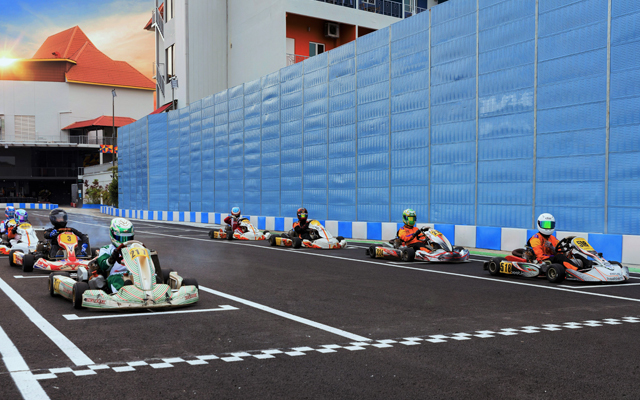
The Karting Arena in Singapore has opened its second track in Jurong, offer both professional and leisure karters a new space to fulfil their adrenaline rush while uncovering the Jurong district.
Karters can look forward to racing on a 700m long track with 11 technical turns. There are ample overtaking opportunities for karters to take on the wider straights while putting their skills to the test as they accelerate out of the corner to hit top speeds.
More room on the track means group events of up to 30 go-karts can take place at any one time.
Designed to host professional race events with a race control room, track cameras and a viewing gallery on the second storey, the open-air circuit offers an ideal vantage point to capture the excitement of racing while watching the karters in action.
Besides the new track design, a fresh fleet of renowned BirelArt petroleum-powered go-karts are available to ensure all karters will get to compete to the best of their ability.
The Karting Arena at Jurong is available for corporate and private bookings, with competitive F1 Grand Prix packages available.
Visit www.thekartingarena.com.
Marriott Bonvoy invites travellers to fly/cruise and dine vacations in the Maldives
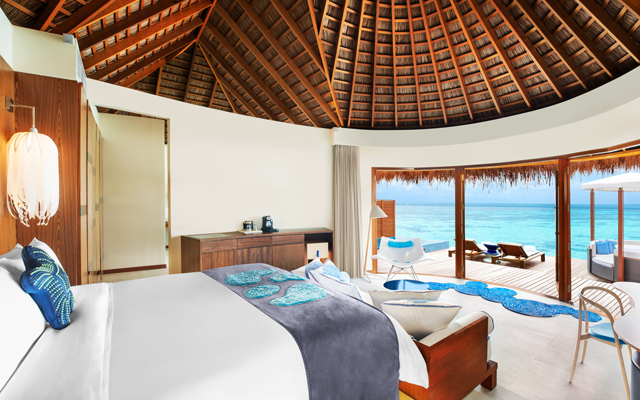
JW Marriott Maldives Resort & Spa, W Maldives, Sheraton Maldives Full Moon Resort & Spa and The Westin Maldives Miriandhoo Resort from the Marriott Bonvoy portfolio in the vacation paradise are dangling package deals that are crafted to appeal to families and lovebirds.
The deals include round-trip transfers from/to Velana International Airport and lavish dining options.
At JW Marriott Maldives Resort & Spa, the Fly & Dine package comes with a complimentary half-board package inclusive of daily breakfast and lunch or dinner at select venues as well as complimentary return shared seaplane transfers from/to Velana International Airport for two. A minimum booking of three nights is required.
At W Maldives, the Fly & Dine package includes daily buffet breakfast, daily three-course dinner in a designated restaurant for two, complimentary return shared seaplane transfers from/to Velana International Airport for two, complimentary in-room W MIX BAR for non-alcoholic beverages, and complimentary non-motorised activities and snorkeling gear when guests book for a minimum of three nights.
At Sheraton Maldives Full Moon Resort & Spa, the Cruise & Dine package includes accommodation in a premium water bungalow or water villa awaits guests, an extravagant five-course dinner at a designated dining venue paired with a selection of premium wines that accompany each course, a couple treatment at the award winning Shine Spa, as well as shared and scheduled round-trip transfers for two by speedboat.
At The Westin Maldives Miriandhoo Resort, the Fly & Dine package includes daily breakfast at Island Kitchen, daily two course lunch and three course dinner at Island Kitchen (International) or a meal credit at The Pearl (Japanese), complimentary return shared seaplane transfers from/to Velana International Airport for two, a daily wellness session, the use of snorkelling equipment and ocean kayaks for up to two hours as well as access to the Westin Kids Club®and WestinWORKOUT Fitness Studio.
For more information about the Fly/Cruise & Dine offer, click here







The Saudi Tourism Authority (STA) has opened a commercial office in Malaysia covering the South-east Asia region as part of its strategy to engage the travel trade to raise awareness of the destination in key source markets in the region.
The Malaysia office will be responsible for trade and consumer marketing activities, expanding the reach and relevance of Saudi’s tourism offer and working with tour operators, travel agents and other industry stakeholders to build awareness and drive conversion in line with STA’s strategy and mission.
STA’s new office is being set up with the support of aviation and destination marketing representative company, AVIAREPS Malaysia, as its in-market representative covering the South-east Asia region.
“We are confident that Saudi’s diverse offering will be appealing to all demographics from the region,” said Shazlin Ahmad, country manager for STA in Southeast Asia. “We have already begun outreach into the South-east Asia’s tourism trade ecosystem and the response has been very positive. We are actively seeking opportunities to co-invest with partners who are keen to add Saudi as an exciting new destination in their portfolio.”
Since opening its borders to international tourism in September 2019, Saudi rapidly established itself as the fastest growing tourism destination in the world, according to the World Travel and Tourism Council.
Despite the global shutdown of leisure tourism in the wake of the pandemic, STA continued to invest to prepare the destination for a return to normalcy. An international brand awareness campaign launched at the beginning of 2021 extends across 26 countries and 13 languages, with significant investment in outdoor, broadcast and digital advertising.
Saudi Arabia reopened to vaccinated international visitors at the beginning of August.
To support the tourism trade ecosystem, STA is introducing Saudi Expert, a comprehensive digital platform providing partner companies such as DMCs, tour operators and other stakeholders with data, insights, destination information and creative assets in real-time to help build their businesses.
STA now has representative offices in eleven markets serving 21 countries, with an eventual goal of having 15 offices around the world.