

Brought to you by Philippines Travel and Tourism Promotions Board Philippines
PPHG’s European entry sees good opening interest
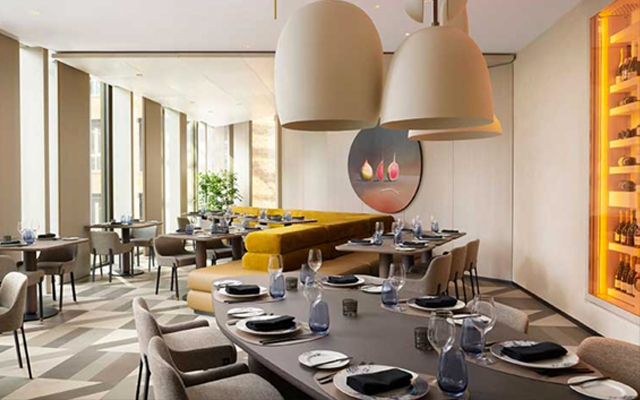
Pan Pacific London has opened on September 1, with bookings for guestrooms and event venues gaining “good pace” since sales kicked off in end-May.
According to a Pan Pacific Hotels Group (PPHG) spokesperson, interest has been particularly strong for weekend stays as well as for events and weddings.
“The hotel has seen (event) bookings all the way till September 2022 currently, with more enquiries coming in,” the spokesperson said.
The 237-key Pan Pacific London is PPHG’s flagship and first European property. It sits in a lively part of the city, at One Bishopgate Plaza and steps away from Liverpool Street Station, with high-end shopping in Spitalfields, the Barbican cultural hub and stylish Shoreditch right on the doorstep.
Guestrooms and suites are generously sized from 37m² to 119m², and feature a light colour palette and artistic custom headboards with calming depictions of oak, elder, elm and maple trees – all of which come together to create a soothing city retreat product.
The hotel also lays claims to the area’s largest hotel ballroom. The 464m² triple-height and pillar-free Pacific Ballroom boasts smart features. Event planners have access to eight other flexible event venues, spread across two floors. Pan Pacific London supports event clients with an Event Emporium, which carries an exclusive range of bespoke linens, crockery, and table decorations to help event designers bring their plans to life.
Restaurants and bars at the hotel pay tribute to PPHG’s Asian roots, with menus featuring familiar Singapore classics like chilli crab and prawn paste chicken at Straits Kitchen; dim sum at The Orchid Lounge’s Afternoon Tea selection; and signature cocktails inspired by Singaporean flavours and culture at Ginger Lily.
The hotel has also carved out a destination bar, Silverleaf at The Devonshire House.
In a nod to the swelling wellness movement, Pan Pacific London has a dedicated holistic wellness space, spanning 1,083m². It comprises an indoor infinity pool, a wellness lounge for early arrivals and guests waiting to catch their flight, an advanced gym, spa, relaxation pods, mindfulness studio and more.
The spokesperson told TTG Asia that the company’s interest in Europe remains strong, and will continue to “eye gateway cities for future growth”.
Besides London, PPHG has been strengthening its portfolio with a recent opening in Melbourne this April. Openings in Kuala Lumpur, Jakarta and Hanoi will follow.
Returning quarantine a major barrier to outbound travel recovery: agents
Two travel agents have painted starkly different pictures on the state of outbound travel in their market, with mandatory quarantines for returning travellers being the key differentiator.
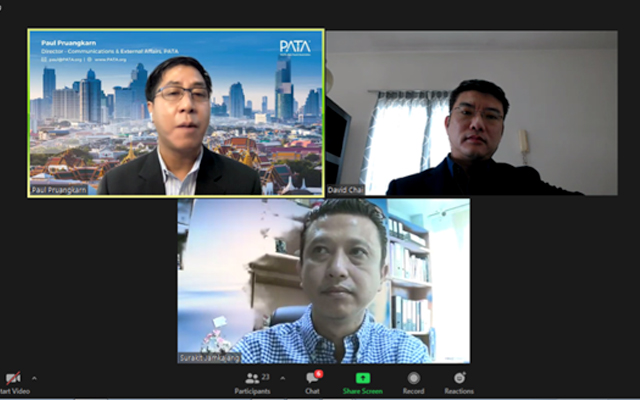
They were speakers at Virtual PATA Travel Mart 2021’s Buyer Insights Exchange session on August 3.
Since May 5 when the South Korean government lifted the mandatory two-week quarantine for fully vaccinated residents, travel agency TideSquare saw a pick up in FIT bookings, especially to the US where South Korean visitors are also not needed to serve quarantine upon entry. Availability of air capacity and reasonably priced airfares also helped to encourage travel recovery.
The agency’s head of international hotel contracting, partnerships and sourcing, David Chai, said his company receives around 10 to 20 overseas bookings a day, of which 70 per cent are to the US, and the remaining to Europe. From October onwards, the company will push packages for World Expo 2020 in Dubai, as it is one of the official travel partners of the event.
Chai said demand for honeymoon packages is also on the rise, as newly-weds catch up on their disrupted honeymoon. Guam and Hawaii are popular for such trips.
On the other hand, fellow speaker, Surakit Jamkajang, who is managing director of Bangkok-based One World Tour and Travel, said Thailand’s mandatory 14-day quarantine for returning travellers was stifling demand for outbound travel.
He was hopeful that these restrictions would be eased from mid-October, allowing Thais to return without barriers. When this happens, Japan, South Korea, China, Singapore and Bali will be top destinations for Thais.
Both Chai and Surakit are also of the opinion that more travellers will rely on travel agencies as opposed to OTAs for travel planning and booking in the immediate aftermath of post-pandemic lockdown.
Langkawi sets date for domestic tourism reopening
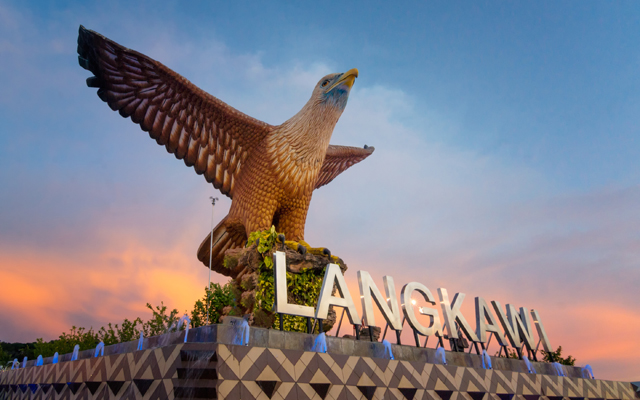
Langkawi will become the first destination in Malaysia to reopen to domestic tourists from September 16, subject to conditions that are still being worked out.
Details on whether travel to Langkawi island is open to all Malaysians or only to those who are fully vaccinated, have yet to be announced. Currently, the interstate travel ban is still enforced nationwide.
Prime minister Ismail Sabri Yaakob said on August 2 that other tourist destinations in the country will be allowed to operate once local vaccination rates reach 80 per cent.
Langkawi Business Association president, Anthony Wong, said: “It is indeed very good news for tourism stakeholders in Langkawi, as the destination has had to shut down since June 1. However, we have to be very cautious and heed all the standard operating procedures, as we don’t want any Covid-19 clusters, which may result in another lockdown.”
According to Wong, many tourism stakeholders in Langkawi are taking a wait-and-see approach. “Not all hotels will open up. Those that do, will take a slow approach, and open part of their inventory to meet initial demand,” he said.
Wong, who is also the managing director of Cottage by the Sea by Frangipani Langkawi, said he will initially open 20 to 30 rooms out of the total 115, depending on demand, and work with minimum staff. Operations will scale up as demand increases. Wong expects demand to peak in December.
Adam Kamal, secretary-general at the Malaysian Inbound Tourism Association, shared that the two-week lead time will give travellers the opportunity to plan their holiday and allow tourism stakeholders to prepare for the long awaited reopening.
He said: “Hotels can start sprucing up their rooms and operators can start servicing their vehicles and updating their products.”
However, he opined that operators outside of Langkawi might not be able to benefit much from the destination’s reopening, as hotels would likely “market directly to consumers and have pre-opening offers which are lower than the agents contracted rates”, while local Langkawi operators would dangle attractive offers via social media and email marketing, again, directly aimed at travellers.
ASEAN member nations mostly moving towards tourism resumption

ASEAN NTOs are pining for speedy and massive vaccination, booster shots and uniform vaccination certificates, regarding them as the best strategies for tourism recovery across the region, it emerged at the Philippine Tourism Forum late-August.
Oliver Chong, Singapore Tourism Board executive director, marketing planning Oceania, saw potential recovery from some longhaul markets taking place first simply because of vaccination rates in places like Europe and the US. However, it is still hard to predict when the borders in South-east Asia, China, North Asia and Australia will open, he remarked.
Chong said Singapore will begin her Vaccination Travel Lane on September 8, allowing travellers from Germany and Brunei to come for leisure, business and events without quarantine but subject to swab tests before and upon arrival, and on the third and seventh day of their 21-day stay.
Malaysia will reopen Langkawi for domestic tourism in mid-September with very strict procedures in place. Langkawi will need to arrive at phase four of the National Tourism Recovery Plan to qualify for an international tourism bubble pilot that is being formulated, said Yasmeen Yasim, senior director, tourism policy and affairs division, Ministry of Tourism, Arts and Culture Malaysia.
Meanwhile, over in Indonesia, there are plans to reopen a small part of Bali – Nusa Dua, Sanur and Ubud – and northern part of Bintan to international tourism, revealed Noviendi Makalam, policy analyst, Mininstry of Tourism, Creative Economy, Indonesia.
Vietnam will pilot a vaccine passport programme for international visitors to Phu Quoc island towards the end of 2021, said Tran Phu Cuong, director general, international department, Vietnam National Administration of Tourism.
Across the border, Cambodia intends to reopen some destinations towards end-2021, as the kingdom is one target with the national vaccination programme, shared Try Chhiv, director of International Cooperation and ASEAN Department, Ministry of Tourism of Cambodia. At press time, over 90 per cent of the population is now inoculated, and a booster shot is being rolled out. Herd immunity is expected to be achieved by end-October or early-November.
In the Philippines, the National Tourism Development plan has at least three Covid-19 impact scenarios – mild, harsh and severe, but Warner Andrada, Philippine Tourism Departments’ officer in charge, office of tourism development, planning, research and information management, shared that these are subject to further calculation each time the government changes the quarantine levels of destinations every two weeks or so, affecting tourism business and travel movements.
Stressing that the ASEAN tourism recovery is not a one-size-fits-all strategy, Satvinder Singh, deputy secretary-general for the ASEAN Economic Community, noted that some member states reported a sharp decline of almost 90 per cent in international arrivals in 1Q2021, compared to 2020’s 80.1 per cent across the region. ASEAN region suffered a 75.8 per cent loss in tourism receipts last year.
Travelport, Amazon Web Services launch global accelerator programme

Travelport has launched the Travelport Accelerator in collaboration with Amazon Web Services (AWS) to bring bright minds together to address the travel industry’s retailing challenges.
Explaining the move, Tom Kershaw, chief product & technology officer at Travelport, said: “No single person or business has the solution to all of travel’s retailing challenges. The most effective way to drive innovation, especially at pace, is to unite bright minds from diverse backgrounds and geographic locations and focus their energy on solving a specific problem.
“That’s precisely what Travelport Accelerator will do. We look forward to working with companies across the world, both large and small, to drive the modernisation of travel retailing for the benefit of the entire travel ecosystem.”
Travelport Accelerator will see tech startups and innovators looking to enter the travel space take aim at a series of different travel retailing challenges, such as data protection, hyper-personalisation, and customer acquisition. Once the challenge has been set, companies with existing technology and products that are relevant to the challenge and use cases outlined on the accelerator webpage are invited to apply.
A cohort of up to 10 companies will be selected to proceed to the next stage, which involves pitching solutions to a panel of judges from some of the world’s most renowned travel companies, including American Express Global Business Travel and Priceline. A group of up to three participants will ultimately be selected to move to the final round, solving the challenge in collaboration with Travelport and AWS. Each will be given access to Travelport+, Travelport’s next-generation travel marketplace.
Selected start-ups may receive up to US$100,000 in AWS Activate credit and each participant will receive mentoring from travel domain and technical subject matter experts with deep experience working on AWS.
The programme also offers collaboration opportunities with AWS travel customers and members of the AWS Partner Network (APN) looking for technology solutions to their most challenging problems.
David Peller, managing director, AWS Travel and Hospitality, said the programme gives travel innovators the potential to pitch their technology to some of the most influential leaders in the global travel industry and to influence the future of travel retailing.
The first challenge has been set, and it calls on participants to introduce cutting-edge digital marketing technology for travel companies, utilising behavioural and demographic traveller data to deliver highly targeted and personalised, real-time offers to customers. The solution must complement the advanced capabilities of Travelport+, which in a normal year will process hundreds of millions of travel transactions, and reduce the cost of customer acquisition and retention for Travelport’s customers.
Entry forms are available at www.travelport.com/accelerator. The deadline for submission is midnight Pacific Daylight Time (PDT) on September 22, 2021.
Travelport Accelerator is now part of Travelport Focus, a Travelport innovation hub supported by AWS.
South Korea makes e-visa mandatory for visitors

The South Korean government has from September 1 made it mandatory for visitors from 112 visa-free countries to obtain a Korea Electronic Travel Authorization (K-ETA) prior to their journey to the country.
The K-ETA, priced at 10,000 won (US$8.63) per traveller and valid for multiple entries over two years, is required before a flight ticket will be issued.
However, due to Covid-19 travel restrictions, only travellers from 49 countries are currently eligible for this programme. Countries that qualify include the US, the UK, Germany, Spain, France, Switzerland and more. No Asian countries have made it to the list, but the government is permitting Priority Entry (Business) applicants from the remaining 63 visa-free countries to apply for K-ETA.
Travellers can register their personal and travel information on the K-ETA website, available in Korean and English, or via the mobile app to find out if they are allowed entry beforehand. By registering, they are exempt from filing out an entry form and can shorten the entry process.
Tour groups are allowed to register up to 30 people at once.
Universal Beijing Resort trials operations ahead of September 20 opening

After more than three months of pre-opening stress tests, Universal Beijing Resort kicked off trial operations on September 1 with invite-only guests.
According to a Xinhua News Agency report, the trial operations involved testing out the theme park, the Universal CityWalk and two hotels – The Universal Studios Grand Hotel and NUO Resort Hotel. Another round of trial is expected, this time involving Universal Beijing Resort’s sponsors, partners and select customers.
These trials are expected to perfect operations before the attraction officially opens on September 20, which coincides with China’s Mid-Autumn Festival holiday from September 19 to 21.
Located in Beijing’s Tongzhou District, Universal Beijing Resort is Asia’s third and China’s first. It is also said to be the largest worldwide, spanning four square kilometres. On site are seven themed zones and 37 recreational facilities and themed attractions.
Tom Mehrmann, president and general manager of Universal Studios Beijing Park and Resort, expects the attraction to “increase the length of stay in Beijing and give people from all over China another reason to come to the city”.
Universal Beijing Resort has also been credited for its contribution to job creation, having created more than 10,000 jobs and established cooperative relations with over 30 academic institutions to provide opportunities for local talent.
We Can’t Wait To Welcome You
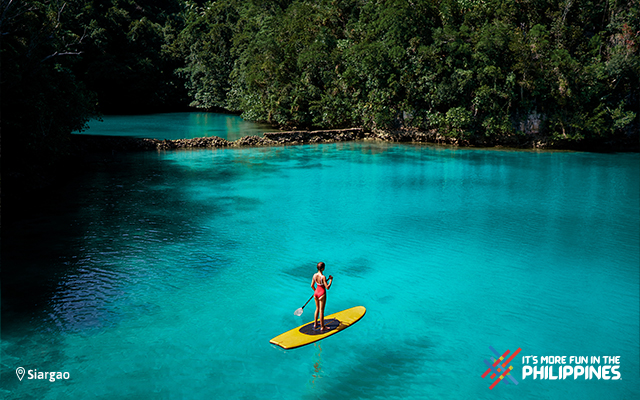
With 7,641 islands, there’s more to the Philippines than just some of the world’s best islands and beaches with the likes of Boracay, Palawan and Siargao consistently topping lists of major travel publications. Its tropical climate, for one, makes it a top destination to visit all year-round.
Add to that the many incredible diving spots, budget-friendly tourist sites, unique cuisine, interesting mix of different cultures and friendly locals, it’s no wonder visitors keep exploring this tropical Southeast Asian getaway.
When travel safely resumes, seeking new adventures in the Philippines is definitely going to be more fun with you. In the meantime, plan your itinerary with this guide to all the best places the country has to offer.
From spin-cations to man-cations, Singapore hotels innovate to drive staycation demand
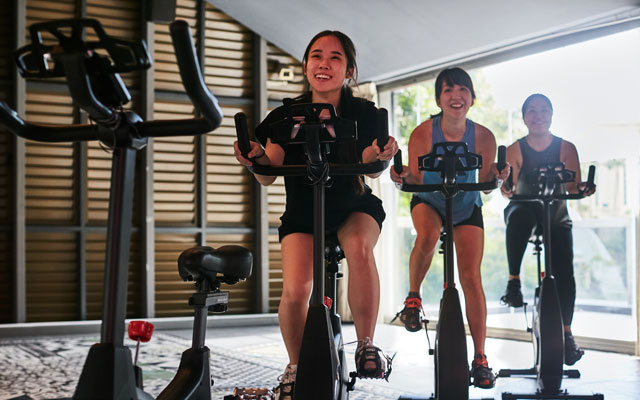
While waiting for border restrictions to ease, hotels in Singapore are putting a creative spin on room packages to attract staycationers seeking more than a change of scenery.
From fitness classes that cater to active holidaymakers to eco-centric stays big on sustainability, local hotels have something for every kind of staycationer.
Villa Samadhi Singapore launched in May the Green Fingers Experience staycation package, where eco-warrior guests can enjoy a first-hand gardening experience by planting a baby fruit tree within the grounds of the villa, and naming the tree.
“The initiative follows our ethos of conservation and it’s aimed at families to educate parents and children on the importance of preserving the environment,” said June Rashid, group director revenue & strategy at Samadhi Retreats.
“Our approach is steeped in the belief that we can create a sustained value for our guests and our communities, while creating a positive impact and giving back to the environment that we live in.”
Local families make up the majority of the 35 bookings to date, with the rest being expat couples, Rashid said, adding that bookings took a hit during Singapore’s Phase 2 Heightened Alert restrictions.
She added that it’s the first time the hotel has launched a package like this as the management wanted to do something “different and unique”, and launching a green staycation package seemed natural and fitting as the property is nestled in the greenery of Labrador Nature Reserve.

Meanwhile, local pet owners looking for an island escape with their fur-kid has the choice of a luxury option in Capella Singapore. For S$1,450 (US$1,080) per night, pet owners can treat their fur babies to the ultimate pampering experience with the hotel’s Pet Spa-cation package that includes a spa session for feline and canine pals at upscale pet grooming salon Petpawroni.
The package also comes with a welcome basket containing premium treats and toys from Addiction Pet Foods, alongside amenities such as a pet bed and drinking water.
The hotel decided to launch the Pet Spa-cation package as it “saw overwhelming interest in (its) pet-related packages, with up to 30 per cent in products mix attributed to locals who want their pets to join them for staycations”, said Fernando Gibaja, general manager. Since its July launch, the hotel receives on average four to five bookings per month for its Pet Spa-cation package, favoured by couples and families.
According to Gibaja, the pet package has encouraged longer stays at the property. “On average, our guests would stay for a minimum of two nights for ample time to enjoy their island getaway and spa session for their fur-kid,” he said.

When it comes to capturing staycation demand, Millennium Hotels and Resorts leaves no stone unturned, with a diverse collection of curated offerings at its M Social Singapore property.
Guests can learn how to be mixologists with the Mix & Stay package or create their own aromas with the Bottled Up Happiness deal. The Art Jamming offer brings out the artistic side of guests with an art jamming class at MySpace, the hotel’s event space overlooking the Singapore River.
In July, the hotel soft launched the Spin-cation package, the first-of-its-kind in Singapore, where fitness enthusiasts can partake in an intense, full-body cardio workout on a bike. Despite “good interest” in the spin session, it has since been put on hold due to tightened measures around indoor sports and exercise activities, said Paul Er, vice president (sales, Asia).
Since the launch of these unique staycation options, M Social Singapore has seen an approximately 20 per cent increase in bookings, which has also helped generated spend at the hotel’s F&B outlet Beast & Butterflies, according to Er.
“We have also received more long-stay enquiries coming from returning foreign students pursuing their studies and corporate guests working on projects in Singapore,” he added.
Similarly, Fairmont Singapore has released different packages targeting diverse segments of staycationers. For instance, mothers looking for a respite can recharge with an aromatherapy massage at the Willow Stream Spa and afternoon tea at Anti:dote when they book the Mumcation package.
“When staycations opened up again in Phase 2 (in July 2020), we expected competition will be stiff. We knew we had to create a compelling difference and to sell experiences rather than just bed and breakfast,” shared Vivian Tung, spokesperson for Fairmont Singapore.
Starting with its Mumcation package launched last September, the hotel stepped up “to create product differentiation through strategic segmentation and targeted profiling by customer groups”, said Tung.
She added that the Mumcation package “fast became a competitive edge for us (to differentiate ourselves) from run-of-the-mill hotel staycations that were already flooding our small domestic market” and “continues to be one of our best-selling packages to date”.
Since then, Fairmont Singapore has rolled out other tailored packages such as Spa-cation, Glamp-cation, Paw-cation, Miffy Staycation, and Sustainable Staycation which comes with eco-friendly bathroom amenities and a guided tour of the hotel’s rooftop Aquaponics Farm.
The newest addition to the hotel’s staycation offers is the Mancation, where men and their mates can bond over a bespoke whisky tasting session courtesy of Glenmorangie and Ardbeg at Anti:dote, a shave or haircut at Truefitt & Hill, and a four-course dinner with craft beer pairings at SKAI.







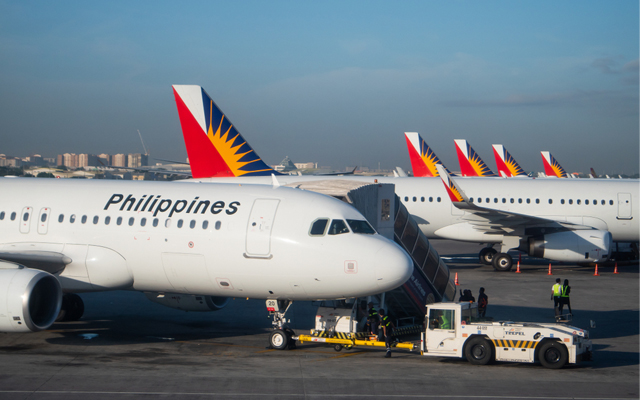
Philippine Airlines (PAL) has filed for Chapter 11 bankruptcy in the US to pursue a lender-backed restructuring plan aimed at helping the country’s national carrier recover from the pandemic-induced travel slump.
The company said that its proposed restructuring, which is subject to court approval, will allow it to reduce its debt payments by US$2 billion and downsize its fleet size by 25 per cent.
PAL will also get US$505 million in equity and debt financing from its majority shareholder, as well as US$150 million of debt financing from new investors.
The Chapter 11 filing, which allows a company to continue operations while it restructures, came after months-long discussions between the airline and its key shareholders.
Billionaire Lucio Tan, company president and CEO, said: “We welcome this major breakthrough, an overall agreement that enables PAL to remain the flag carrier of the Philippines and the premier global airline of the country.”
The carrier said that the plan will not affect passengers and employees. It added that it will gradually increase domestic and international flights in accordance with market demand.
PAL will also complete a parallel filing for recognition in the Philippines under the Financial Insolvency and Rehabilitation Act of 2010.