

Malaysia’s extended lockdown puts eco-tourism attractions in precarious state

The ongoing Movement Control Order (MCO) 3.0 in Malaysia, enforced since June 1, has put eco-tourism operators in distress, as their main source of income, the collection of entrance fees, continues to be disrupted by extended closures. Most are digging into their own coffers for maintenance.
With the closure of Farm in the City in Seri Kembangan Selangor, KL Tower Mini Zoo and The Bentong Farm in Pahang, the three parks are now largely dependent on the company’s savings to care for over 200 species of animals in residence.
Y Rajagopal, general manager (business development and marketing), who represents the parks, said help had also streamed in from well-wishers who contributed food for the animals.
To ensure self-sustenance, The Bentong Farm has started to grow fruits and vegetables, mainly to feed the animals in all three parks, but is also selling mangosteens and rambutans to cover operational costs.
A month ago, Farm in the City started selling online tours. While these helped with income, earnings are not big, shared Rajagopal.
Rajagopal told TTG Asia: “The uncertainty of not knowing when the parks will be able to reopen hampers the planning of manpower needs and marketing efforts.”
The Habitat Penang Hill has been relying on generous shareholders for survival. According to managing director, Allen Tan, the upkeep of the 7.3-hectare park costs hundreds of thousands of ringgit monthly.
He described the uncertainty of not knowing when the MCO would end as “crippling”.
Since the start of the pandemic, The Habitat Penang Hill has initiated cost cutting measures, including right sizing its staff. Said Tan: “We are now working on half the size we used to have. Moving forward, everyone will be expected to do more multi-tasking.”
The company is also looking at alternative revenue streams away from the usual park activities. This includes building an e-commerce and lifestyle platform to sell The Habitat products, while at the same time promoting sustainability through the sales of sustainably-sourced products.
Another revenue stream is to offer nature activities and tours under The Habitat brand where The Habitat Foundation has projects. Said Tan: “We hope to inspire people to reconnect with nature while at the same time promoting sustainable tourism, education and research.”
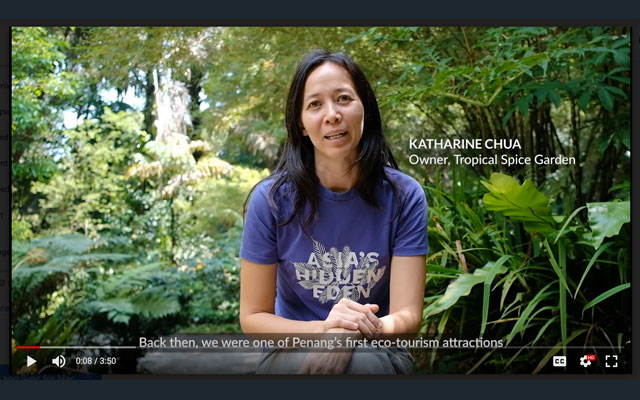
Penang’s other popular eco-tourism attraction, the Tropical Spice Garden (TSG), is also in dire straits. It launched on August 1 a crowdfunding campaign, Join the Family, Save the Garden, to raise the vital funds it needs to remain operational. Funds would primarily come through subscription to its community-powered garden membership programme, Spice Fam, although donations from the public are also accepted.
The membership is priced at RM25 (US$5.90) per month.
Katharine Chua, owner and managing director of TSG, said: “Because of Covid, our doors have been open and shut for the last 16 months, and our existence is hanging by a thread.
“Although we’ve always prided ourselves on running a sustainable business, one that is environmentally-conscious and places people at its heart, nothing could have prepared us for this challenge. So, we urgently need the community’s support to help keep this garden open for future generations to come.”
Chua emphasised that the Spice Fam subscription is TSG’s “lifeline to stay open” and to allow it to reopen once the lockdown is over.
“We want to be able to continue to share this unique and special place which does so much for bringing the community together, nurturing a love for nature and educating young and old alike. And in this new normal, now more than ever, we need green, healing spaces. Every cent raised will go into maintaining the Garden and growing the Spice Fam community,” Chua said.
New hotels: The St. Regis Qingdao; dusitD2 Hua Hin; Holiday Inn Werribee
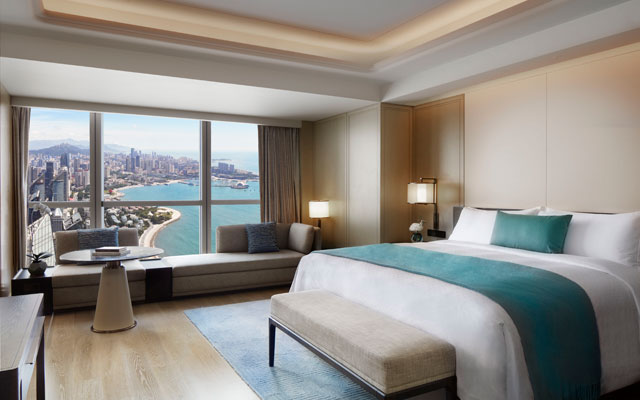
The St. Regis Qingdao, China
Strategically located within the landmark Haitian Center in the heart of historic Qingdao, the 233-key The St. Regis Qingdao is the first Marriott International luxury brand to open in China’s north-eastern Shandong.
Occupying the 58th to 78th floors of the 369-meter-tall Haitian Center, the hotel treats guests to panoramic vistas of the Yellow Sea and picturesque coastal scenes.
Drawing inspiration from the brand’s rich heritage, renowned Singapore-based interior design firm, LTW Designworks, subtly infused local Qingdao influences with St. Regis’ avant-garde aesthetic. This includes a crystal chandelier inspired by a legendary dress of golden thorns that Caroline Astor, mother of St. Regis founder John Jacob Astor IV and doyenne of New York high society in the Gilded Age, wore to one of her famed Midnight Suppers. A brilliantly-lit grand staircase offers the perfect venue for the celebrated St. Regis tradition of sabering a bottle of champagne to mark the transition from day to night. The backdrop of the grand staircase is a 74m-high atrium art wall that reflects the delicate traces left on the beach by the ebb and flow of the Yellow Sea.
Facilities within the hotel include The Drawing Room where afternoon teas are served, Yan Ting Cantonese restaurant, all-day dining Social, The Carvery steakhouse, and The St. Regis Bar. There are also more than 2,000m2 of events space on offer.
dusitD2 Hua Hin, Thailand
Dusit International has launched dusitD2 Hua Hin, an upscale pet-friendly retreat that is designed with families and groups in mind.
Alongside 152 contemporary guestrooms and suites ranging in size from 30m2 to 92m2, including selected rooms equipped with pet-friendly amenities for up to two pets, the bright and airy property offers a wide range of facilities for work, rest and play.
Dining facilities include all-day dining restaurant Cafe Soi; Som Bar, a vibrant rooftop bar inspired by Hollywood party pads; and Dusit Gourmet bakery and coffee shop.
Alongside a rooftop infinity pool, a large garden, and a fully equipped gym, the hotel also offers an extensive kids club that comprises a children’s swimming pool, a play area with a sandbox and a treehouse, and a wide range of activities for children aged three to 15.
Guests seeking to stay on top of work during their travels will find plenty of quiet, thoughtfully designed corners to focus on their important tasks. There is also a selection of function rooms.
Holiday Inn Werribee, Australia
Opened on July 30, Holiday Inn Werribee in Melbourne features 150 contemporary and modern rooms, an open lobby, onsite bar and restaurant and versatile meeting spaces.
Encompassing the top four floors of 22 Synnot Street, Werribee, the hotel offers striking, unparalleled views over Werribee and towards Melbourne’s city skyline.
The Open Lobby concept is new to the Holiday Inn brand within Australasia. The Open Lobby is built on the understanding of how people use space at home to give guests the most flexibility, to eat, relax, work, or socialise in one space.
Designed with the needs of the modern traveller in mind, public spaces feature a contemporary lounge area and an e-Bar for those who need to catch up on the day’s news or work, while still being part of the social vibe of that space.
F&B service is offered at Rosana Bistro & Bar, which serves up modern Australian cuisine with a menu full of fresh local produce, sourced from within the Werribee region.
The hotel offers easy access to attractions such as the Werribee Open Range Zoo, Werribee Mansion, Victorian State Rose Garden, and the National Equestrian Centre. It is also located within easy walking distance of the burgeoning foodie hub of Watton Street and is a short drive away from Werribee Mercy Hospital.
Trip.com Group donates oxygen concentrators to Indonesia
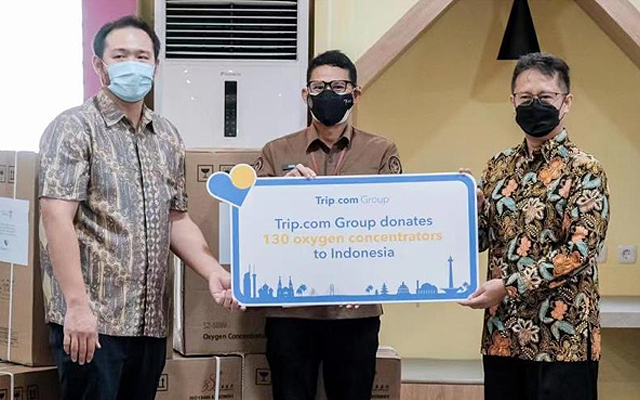
Some 130 oxygen concentrators have made their way to Indonesia, courtesy of Trip.com Group, to help the country battle a surge in Covid-19 infections.
The equipment arrived at Soekarno-Hatta International Airport on Wednesday morning, and were received by tourism and creative economy minister Sandiaga Uno and health minister Budi Gunadi Sadikin.
Sandiaga said the oxygen concentrators would be distributed by the Health Crisis Centre, Ministry of Health, to support patients with respiratory conditions.
Trip.com Group had earlier donated 100,000 surgical masks to Indonesia.
Jane Sun, CEO of Trip.com Group, said: “We have been deeply concerned about the effect of the pandemic in Indonesia, and the safety and well-being of the local communities amid the lack of oxygen supplies. I would like to extend my gratitude to the Indonesian authorities for their support in ensuring the smooth delivery of the oxygen concentrators.”
Sun added that the company would continue its work to “support various communities to overcome the shared challenges of Covid-19”.
Between the outbreak in 2020 and August 1 this year, Trip.com Group has donated three million medical masks and 680 oxygen concentrators to more than 25 countries and regions around the world.
The Standard picks Singapore for its next Asian venture
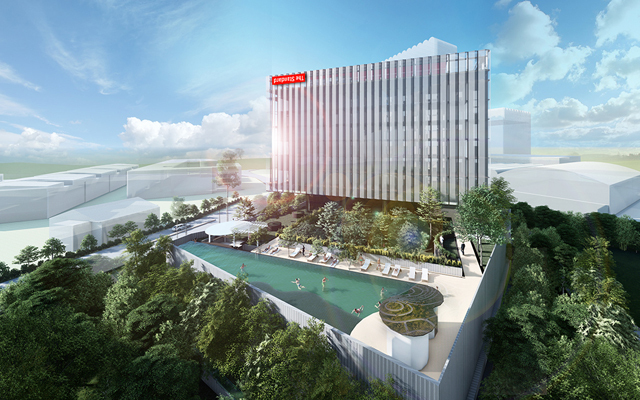
Standard International will bring The Standard hotel brand to Singapore come 2023, furthering its Asian expansion which includes two upcoming properties in Thailand’s Hua Hin and Bangkok and one in Australia’s Melbourne.
The Standard, Singapore, to be built on Orange Grove Road, will feature 143 guestrooms. It will be one of the few ground-up hotels to be built in proximity to Orchard Road, Singapore’s premier shopping destination.
The location will grant hotel guests easy walking access to the Singapore Botanical Gardens, a UNESCO World Heritage Centre, through the picturesque Nassim neighbourhood.
The hotel will feature The Standard’s signature restaurant and nightlife vibrancy, and arts and cultural programming along with an infinity pool and pool bar set within a lush botanical courtyard.
“Singapore is a culturally rich and dynamic city that is ready to embrace the creativity and personality of The Standard,” said Standard International CEO, Amar Lalvani.
“New hotel licenses in the city are rare and highly coveted and we feel very fortunate to partner with Invictus Developments to bring this project to life. Although the global travel dynamics remain challenging at the moment, we continue to build landmark projects around the world in anticipation of a brighter future,” added Lalvani.
The Standard, Hua Hin is set to open in November 2021 while The Standard, Bangkok Mahanakhon will open in 2022. The Standard, Fitzroy in Melbourne is expected to be ready in 2023.
Visit Maldives gets Qatar Airways’ support for destination promotion
Visit Maldives has kicked off a year-long marketing campaign with Qatar Airways to promote the destination as a safe-haven for travellers from Europe, the Middle East and the Americas.
Scheduled to run from July 2021 until June 2022, the campaign will consist of a combination of digital and offline activities.
Qatar Airways support in the new campaign reflects its faith in the destination. It was the first airline to land when the Maldives reopened borders to international travellers on July 15 last year, and has increased flight frequency to the Maldives since July 1 this year.
To promote the Maldives, the airline will feature the destination in tactical campaigns, newsletters and on its homepage. It will also target industry members and promote the Maldives through destination newsletters, destination push-through sales, joint advertising with trade partners, trade webinars, trade workshops and so on.
Familiarisation trips are also on the cards.
Since restarting international tourism in 2020, Visit Maldives has launched major global campaigns with organisations such as SkyScanner, TripAdvisor, Expedia and TripZilla to target key and emerging markets. As of July 7, 2021, the Maldives has welcomed over 528,157 travellers.
Visit Maldives believes that welcoming over half a million travellers ensures that the destination is on the path to achieving pre-pandemic arrival figures.
An appetite for luxury
Australia
Australians are satisfying their luxury travel needs with domestic getaways that were traditionally glossed over in favour of overseas experiences.
They are also getting used to a different kind of luxury than they were accustomed to – one that is more rustic and often defined by the remoteness of the location.

“Luxury in Australia is different to staying in a magnificent hotel in the centre of Paris, for example,” said Claudia Rossi Hudson, owner of Mary Rossi Travel.
“This is because the experience or the definition of luxury that we can give in Australia includes the tyranny of distance. So, you might be staying in Lizard Island where the lodges are very comfortable but they are not gilt taps and marble floors.”
“(Instead) they are luxury on a lodge that is on an island, an hour and a half’s flight in a private aircraft from the nearest international airport. There are no local food sources and it’s expensive to stay there. And when you’re there, you realise that the luxury element is its uniqueness and remoteness, and the fact that you had that entire beach practically all to yourself and that portion of the Great Barrier Reef,” she explained.
Luxury travel agents are also finding that Australian preferences are quite different to those of the international visitor, desiring locations with dramatic landscapes over local wildlife and city experiences.
“The Kimberley in Western Australia is incredibly popular,” said Kirsty Siekmann, CEO at The Tailor. “International clients would come to Australia with a lot of boxes to tick but Australian clients are doing two weeks just exploring that region.”
“Demand is very strong as they have the dry and warmer season so along with Queensland and much of the Top End, their bookings are completely full this year,” she continued.
Also popular are five-day safari trips in the north, food and wine region visits, treks in the Flinders Ranges, and a breathtaking journey and dining experience on The Ghan.
However, the trend is expected to turn at the end of the year when the summer heat pushes domestic tourists to Australia’s cooler southern parts. Seikmann projects that travel bookings for Margaret River, Tasmania, and Victoria will skyrocket, following patterns from last year. – Adelaine Ng
India
While India’s wealthy were able to explore the world inlate-2020 and early part of 2021, their travel freedom was curtailed when a second wave of Covid-19 infections swept across the country this April.
Indian travel consultants dealt with numerous cancellations, triggered by international destinations slapping entry bans on travellers from India.

Summer 2021 was supposed to be a good travel season but with infections still raging in India, outbound travel possibilities and demand continue to be suppressed.
Prior to the latest cancellations, Luxe Escape had clients who booked a month-long stay in London and private jets to Dubai, shared founder Aditya Tyagi.
Demand for summer breaks in the Maldives hit its peak for Tour Passion, said founder Naveen Manchanda, before Covid-19 returned to wreck bookings.
“We also had good enqueries for Europe for high-end cruises and experiences like spa and (dining). However, the second pandemic wave changed the entire scenario,” said Manchanda.
Hopes are now pinned on 2022.
Tyagi said: “Most of our clients are now desperate to travel out of India. We already have a small VVIP group request to Saint Tropez, and demand for destinations like Greece, Italy, France, Spain and Nordic countries (are back).”
When outbound travel is once again possible, Tyagi said clients would be drawn to small luxury boutique hotels where mingling with other people could be avoided.
Wellness tourism would also be top of mind amond India’s well-heeled.
“Wellness retreats in Europe and South-east Asia will be high in demand in 2022. Luxury travellers will opt for longer stays in an absolutely safe environment,” said Ajay Jaipuria, founder, Travel Oyster India.
Echoing the prediction, Tyagi has crafted a week-long yoga cruise in Croatia, led by a yoga master who will also conduct other wellness programme onboard.
In fact, Tyagi is so confident in the potential of post-pandemic wellness tourism that he has launched a new brand, Well Escapes. – Rohit Kaul
Japan
Japan’s wealthy consumers are likely to spend on domestic jaunts rather than overseas trips in the coming months amid a slow Covid-19 vaccine roll-out and government advice to avoid “unnecessary and non-urgent” travel abroad.
Luxury travel providers are expecting an uptick in sales for the rest of 2021 based on consumer sentiment and behaviour since the outbreak.
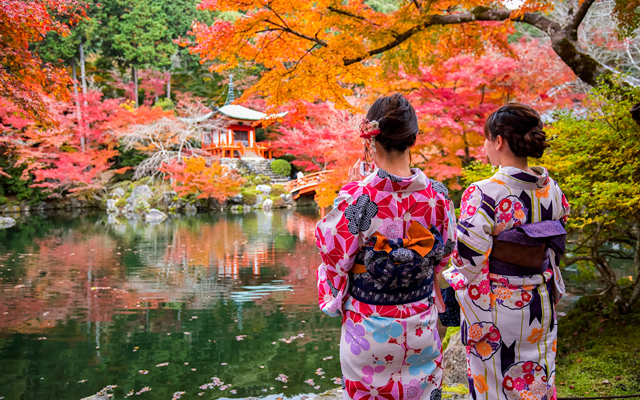
Makarim Salman, founder and lead guide of high-end private tour company Maction Planet, anticipates further growth in domestic travel “from autumn 2021, once the Olympics is over and more people have been vaccinated”.His high-end hotel partners in Kyoto are already reporting full bookings for autumn.
Private suites or remote locations that can accommodate greater social distancing are likely to be a hit.
Hoshino Resorts is also anticipating growth in micro-tourism, which involves travel within an hour’s drive from home. In 2020, the luxury hotelier enjoyed 90 per cent occupancy at its Kai Enshu in Shizuoka Prefecture, where 60 per cent of guests were locals keen to experience the renowned tea baths and tea fields.
According to credit card company Luxury Card, suite room occupancy in Japan in 2020 was more than five times higher than in 2019.
In anticipation of more business, hotels are being bullish with openings and renovations. Hotel the Mitsui Kyoto, adjacent to Nijo Castle, opened in late-2020 with a Presidential Suite costing 1.3 million yen (US$ 11,723) per pax per night. Shiroyama Hotel Kagoshima opened its 200m2 Imperial Suite, which offers stunning views of active volcano Mount Sakurajima and costs 1.1 million yen per night.
Private jet bookings are expected to soar too, as luxury domestic travel demand improves. In June 2021, Matsuzakaya Nagoya Travel Center and ANA Business Jet began offering trips from Nagoya International Airport to Niseko, Hokkaido, and Nagasaki, Kyushu, for two million yen per person for a booking for four passengers.
Takayuki Suzuki, representative of Matsuzakaya Nagoya Travel Center, told TTG Asia that “sales are strong among the wealthy at the moment” while ANA Business Jet’s president Jun Katagiri said wealthy travellers are choosing private flights because of their low infection risk.
Due to limited travel since the outbreak of the pandemic, Salman also predicts splurges by middle and upper-middle class consumers on luxury travel products, giving a further boost to Japan’s high-end sector. – Kathryn Wortley
Singapore
Bespoke itineraries and exclusive destinations that allow for privacy and space, slow travel and are family-oriented constitute luxury travel trends in 2021 and 2022 for the Singapore market, according to four specialist travel operators.
Nico Heath, co-founder and director of Lightfoot Travel, explained: “The first is a desire for private islands and private island resorts. The Maldives, where each resort is on its own island and you are whisked from airport to resort immediately after landing, has been exceptionally popular. Once airlines start running routes more regularly, there has also been an upswing in interest in more far-flung destinations such as Fiji and French Polynesia.”

An uptick in private jet holidays also arose due to the desire to reduce risk by avoiding commercial air travel.
“There’s a shift to slower travel options and more in-depth travel instead of hopping around to see as much as possible within a certain amount of time,” observed Mike Harlow, general manager for Scott Dunn Asia.
Think single destination country, or keeping inter-country travel to a minimum, according to co-founder and managing director of Quotient TravelPlanner, Javiny Lim.
Harlow noticed that East Asia remains top choice as it is still closer to home while offering a wide variety of experiences which can be done in a single location.
Heath observed the desire for road trips as they give travellers greater freedom, the ability to slow the pace of their journey, and with a lot less risk.
Rugged landscapes and the freedom to go on long driving journeys in expansive destinations, such as New Zealand and Ireland, are of interest to luxury travellers in Singapore, Lim added.
“Travellers are more willing to explore deeper at a destination and want to be wowed by extraordinary experiences on their holiday, from astounding nature to award-winning architecture to exclusive interactions with esteemed custodians.”
Locations like Antarctica and the Galapagos Islands with unsurpassed natural beauty and native wildlife continue to be a draw in 2021 and beyond.
Besides, there is also robust demand for family holidays and private villas to house the extended family in destinations such as Sri Lanka, Thailand, Italy and Greece in 2022. African safaris are popular with families with older children.
It comes as no surprise that affluent travellers are prioritising safety, and are willing to pay more for hygiene reassurances and preferring the flexibility to amend their travel plans with zero or minimum penalty.
Founder and director of Intriq Journey, Jess Yap, said: “Guests are starting to enquire and book for luxury travel for last quarter of this year and into 2022. For instance, we have a small group journey that is departing to Saudi Arabia in December 2021. We also have some bookings to Antarctica for the year-end.” – Serene Foo
Thailand
An unusual luxury travel trend is emerging in Thailand, where – despite having more complex post-pandemic travel procedures to grapple with – billionaires are choosing to skip assistance from travel agencies to achieve utmost privacy for their holidays.
Anake Srishevachart, president of UniThai Trip, said an increasing number of high net worth customers are choosing to book their own private jet and charter resorts on their own. For those who have continued to rely on travel agents to customise travel packages for family or friends, resorts that are exclusive to members are favoured.

Anake said: “The pandemic has taught well-heeled people to change their lifestyle and leisure activities. Many now value even more true exclusivity and privacy during their trips.”
However, a complete departure from travel agencies is not possible when special interest trips need to be made, such as vaccination tours.
Outbound travel specialists in Thailand that are still retaining luxury accounts say destinations close by are in favour, such as places within Thailand or Singapore and Hong Kong in South-east Asia.
Industry veteran Pornthip Hirankate said Thailand’s own Phuket and Phi Phi islands are attracting many Thai residents with spending power.
Den Mahavansanandana, managing director of Inspirit Holidays, said exclusive tours to Singapore, Laos, Cambodia and Bali are selling well, while there is also demand for parts of Europe. He believes that governments will be watching how Thailand conducts her Phuket Sandbox tourism reopening. If done well, governments will gain confidence to welcome Thai residents into their own country. – Suchat Sritama
Hong Kong tourism starts to make a comeback, but recovery still far off
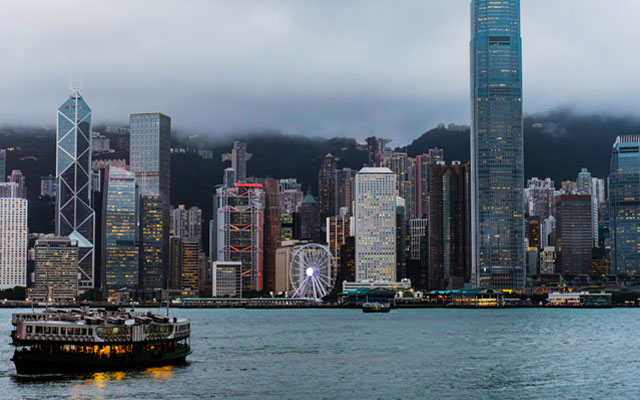
Hong Kong’s tourism industry is showing tentative signs of revival, with the country’s successful containment of the Covid-19 pandemic and the national vaccine rollout gaining steam.
As of August 3, Hong Kong has seen a 57-day streak of zero locally transmitted Covid-19 cases. Meanwhile, nearly 50 per cent of the city’s population has received their first vaccine dose.
Cruise operations in Hong Kong have restarted with more than 1,000 passengers joining Genting Dream’s inaugural voyage on July 30. Meanwhile, the EU has put the city in a safe list with some states allowing quarantine-free travel for vaccinated Hong Kong visitors.
Nearly 18 months after the pandemic halted inbound and outbound travel, homegrown agency Miramar Travel has resumed its outbound business by sending its first small private group tour to Germany on a 10-day trip last month, shared general manager Alex Lee.
Members of the group had their quarantine period shorten from 14 to seven days, with the presentation of a positive serology antibody test, he added.
Lee shared that people love travelling to longhaul destinations, especially to quarantine-free places. “We have received enquiries on itineraries longer than 20 days – most of them are from retired civil servants who used to travel several times a year but got stuck (in Hong Kong) for the last 1.5 years so the demand is there. It’s a sort of ‘revenge travel’,” he said.
“This segment will be our target from the outset as they have money and time to spend. As long as we sort out routes and prices, they are ready to go.”
Small group travel and mono-destination trips are also gaining popularity among travellers, observed Lee. “Our clients prefer not to travel with someone whom they don’t know in a tour group,” he said.
As well, more travellers are seeking out boutique hotels and countryside itineraries over city breaks and five-star properties, according to Lee. He also noted that these new preferences mean clients would have to fork out 30 per cent more than the usual tour prices.
“Thankfully, our suppliers in Europe could deploy a smaller, 15-19-seater coach to accommodate (smaller tour groups),” he said, adding that this vehicle type was not utilised for group tours in Europe until growing demand surfaced among mainland Chinese travellers for private group travel in the continent a few years ago.
Predictions on travel recovery were mixed among outbound operators in Hong Kong.
Regina Mak, general manager of Jointwell Holidays which specialises in European itineraries for small groups, told TTG Asia: “The pent-up demand will drive the rebound and consumers accept the fact that new travel patterns mean higher costs in terms of airfare, hotels, tour guide and coaches.”
However, Hong Kong Outbound Tour Operators’ Association chairman, Johnny So, opined that Hong Kongers would be deterred from travelling unless they were exempted from quarantine upon their return home.
“What’s more, international flight connection is still limited and some destinations are no longer covered,” he said, adding that people may also shun travel due to the spread of the highly contagious Delta variant.
So further said that the only hope for the revival of tourism in Hong Kong is for the city to reopen its borders to China as mainland Chinese travellers are the “bread and butter of inbound and outbound travel business”.
Inbound-wise, there is no light at the end of the tunnel yet, especially with the government announcing that it will tighten border control measures for inbound travellers from August 9, in view of recent imported Delta variant cases.
Hong Kong Association of Travel Agents consultant, Richard Willis, pointed out that within the sector, inbound business has been the most severely impacted, with several roadblocks laying in its path to recovery.
He elaborated: “As most recent Covid-19 cases are imported, the government remains very cautiously (about border controls). We have a strict quarantine rule so if we want to reactivate inbound traffic in future, there is a need to recognise some vaccine passports.”
He also noted that a lot of longhaul visitors to Hong Kong opt to travel to multiple destinations within the region, so travel restrictions in other parts of Asia will impact inbound demand. For short-haul, the main deterrent to travel to Hong Kong is that travellers have to serve quarantine upon return to their home countries. Hence, the key to stimulate tourism will depend on the loosening of quarantine rules imposed by governments.
Willis said: “The pent-up demand is there and I see that Asians in particular want to travel. However, there is still too much uncertainty at this point in time and people generally want to travel in their own region for now. We hope that borders will reopen soon – not just Hong Kong’s but also those within the region, as lots of people take multi-destination trips.”
Thailand on track to reopen Krabi and Phang Nga to vaccinated foreign tourists from mid-August
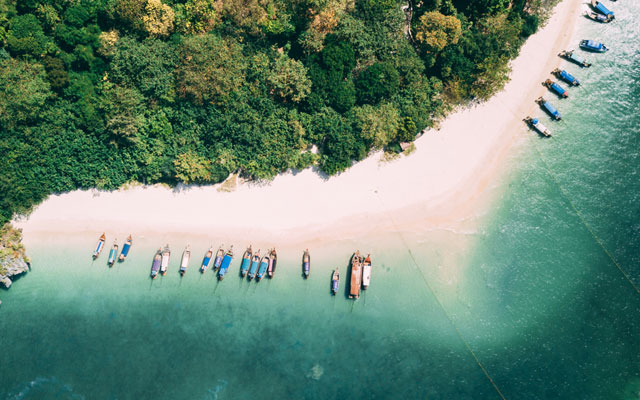
The Tourism Authority of Thailand (TAT) has confirmed plans to reopen Krabi and Phang Nga to fully vaccinated international tourists are set to start within this month.
Krabi and Phang Nga are scheduled to reopen selected areas under a 7+7 model. This will allow foreign tourists under the Sandbox programme to reduce the mandatory stay in Phuket from 14 to seven days, after which another seven nights can be spent in Krabi (Ko Phi Phi, Ko Ngai, and Railay Beach), and Phang Nga (Khao Lak and Ko Yao).
The 7+7 model aims to provide international tourists with more options to visit multiple destinations during their trip to Thailand. Krabi and Phang Nga are ideal for this given their proximity to and ease of access from Phuket.
At the same time, TAT also reiterated that both the Phuket Sandbox and Samui Plus programmes are going ahead as usual.
Thanakorn Wangboonkongchana, spokesperson of the Centre for Economic Situation Administration, said Thailand’s prime minister Prayut Chan-o-cha had been keeping a close watch on the Phuket Sandbox and Samui Plus programmes, and voiced confidence that the country’s reopening plan could proceed in a way that ensures the health and safety of both the tourists and local people.
TAT said that the new Covid-19 cases in Phuket were mostly detected among locals, construction camp workers and domestic travellers; with only a small number of cases found among international arrivals.
From July 1 until August 1, Phuket recorded 14,910 international arrivals under the Sandbox programme. Of these, 34 tested positive for Covid-19 and had been sent for medical treatment. To contain local transmission, Phuket has stepped up screening measures on domestic travellers, effective from August 3-16.
Phuket, Krabi, and Phang Nga are declared among the 11 Controlled Areas or orange zone provinces in Thailand’s expansion of the Covid-19 restrictions from August 3-31.
Meanwhile, the recently-reported 54 new cases on Koh Samui from a restaurant cluster has been brought under control, TAT said, adding that none of the infections were related to foreign tourists under the Samui Plus scheme or those who continued their journey from the Phuket Sandbox programme.
From July 15 to August 1, Surat Thani recorded 137 international arrivals under the Samui Plus programme, with one person testing positive for Covid-19. In addition, there were 211 tourists from the Phuket Sandbox programme. Surat Thani has since stepped up virus control measures.
IHG signs Holiday Inn & Suites in Ballarat
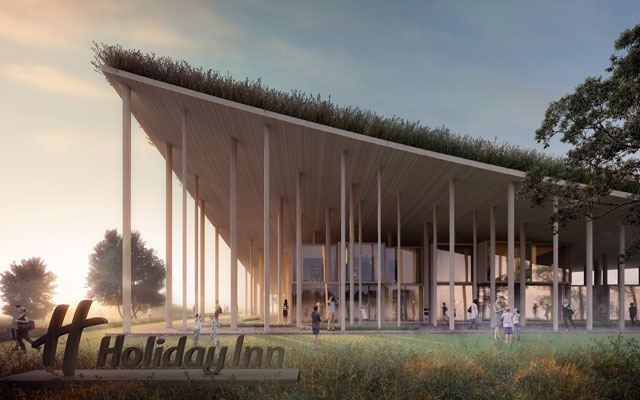
A 110-key Holiday Inn & Suites branded property is coming to Ballarat, heralding a new chapter in IHG Hotels & Resorts’ expansion into regional Victoria and a new partnership with hotel owners, Forte Group.
Expected to open in 2024, Holiday Inn & Suites Ballarat Goldfields will offer 400m² of flexible meeting space including a large ballroom with rural views, alongside a 90-seat restaurant and bar, day spa, gym and outdoor pool.
IHG’s Holiday Inn brand has undergone a global transformation over the last 18 months and its next-generation design includes open lobbies, as well as F&B and suite offerings. Holiday Inn Werribee, which just opened last week, boasts Holiday Inn’s next-generation brand hallmarks.






Travellers entering Singapore from Taiwan will not need to serve a 14-day stay-home notice (SHN) period from 23.59 on August 7, if they test negative for Covid-19 upon arrival.
In a statement Thursday, the Ministry of Health (MOH) said all travellers entering Singapore with travel history to Taiwan within the last 21 days prior to departure will undergo a Covid-19 polymerase chain reaction (PCR) test upon arrival, and will be allowed to go about their activities in Singapore if they test negative.
The same rule applies to short-term visitors with travel history to Taiwan within the last 21 days before departure for Singapore. They can now apply for an air travel pass for entry into Singapore on or after August 12.
The easing of border measures for Taiwan travellers comes as the Covid-19 situation in Taiwan has improved, MOH said.
Currently, travellers from Taiwan are subjected to an on-arrival Covid-19 PCR test, a 14-day SHN at a dedicated facility or place of residence, and another PCR test before the end of the SHN period.
MOH also said that travellers who are already serving their 14-day SHN at their place of residence as of 23.59 on August 7 will still be required to complete their 14-day SHN and exit swab.