

IHG brings Holiday Inn Resort to Halong Bay
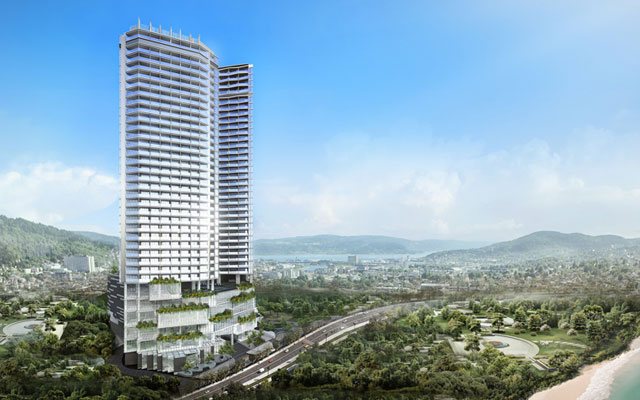
IHG Hotels & Resorts has partnered with Ha Long Bay Hotel Joint Stock Company to develop its flagship Holiday Inn Resort in Vietnam, set to open in Halong Bay come 2023.
Holiday Inn Resort Halong Bay will be the second Holiday Inn Resort to open in Vietnam, after Holiday Inn Resort Ho Tram Beach.
The 208-key property will be situated at the heart of a mixed-use development project also featuring resort apartments and a retail podium.
Facilities at Holiday Inn Resort Halong Bay will include three restaurants and bars, over 1,300m² of meeting space including a banquet hall, an adult-only infinity pool, an indoor kids’ adventure pool, a fitness centre and spa.
A 50-minute drive from Haiphong Cat Bi International Airport, Holiday Inn Resort Halong Bay will be located along Bai Chay Road and within walking distance of Sun World theme park and a public beach.
Tourism job losses in North Queensland expected to escalate
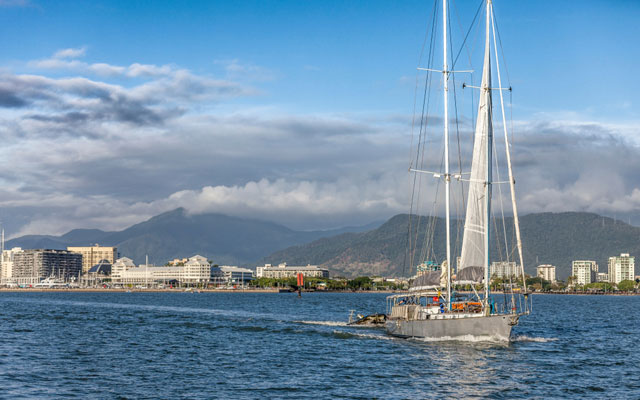
Tourism stakeholders in North Queensland expect thousands more jobs losses by the end of this year amid ongoing lockdowns across Australia.
According to new research from the Tourism and Transport Forum, another 3,150 Tropical North Queensland tourism jobs will be lost by Christmas, shrinking the tourism workforce to half its pre-pandemic size.
Tourism Tropical North Queensland (TTNQ) CEO Mark Olsen said tourism had employed 15,750 full and part-time staff and, with indirect tourism spend, supported a total of 25,500 jobs before the pandemic in the Cairns region.
“By July 2021, we had lost 3,600 permanent staff, even with the support of JobKeeper and a returning domestic market,” Olsen said.
“The region grew its workforce across the entire supply chain ready for a busy winter, but now these new recruits, including more than 200 from the tourism industry who have been in training for months, are being told to find other work.
“Government needs to understand how significant this impact will be on our community where one in five jobs have depended on tourism.”
Advance Cairns CEO Paul Sparshott said the ability for the regional economy to recover would be greatly reduced if skilled staff were lost to the tourism and hospitality sector.
“There will be far-reaching ramifications. When tourism markets are severely impacted, it flows through to other industries, affecting the whole regional economy,” he said.
Olsen said Tropical North Queensland is, and will remain, one of the most impacted regions in Australia and that the outlook for the tourism industry was grim. “Our region has had just 27 days straight without the impacts of a lockdown in key domestic markets in the past 18 months,” he said.
“That period in May was the busiest the Cairns and Great Barrier Reef region had been since before the pandemic as we are the most Googled regional destination for Australian holidaymakers.
“However, the stop/start impact of southern lockdowns shutting the destination out of key markets is difficult for businesses to manage, particularly with staffing levels.”
Olsen noted that the region is in its sixth week of free-falling visitors with more than 15 million Australians in lockdown. “Most businesses are running at less than five per cent of their normal revenues, and the forward bookings are slowing with hotels down to 15-25 per cent occupancy and more than A$20 million (US$14.4 million) in postponed events for July and August,” he said.
Olsen also cited new data from the Queensland Tourism Industry Council which revealed that consumers have lost confidence in booking travel interstate and far from home, with nearly 60 per cent of Australian travellers unlikely to cross their State border.
He said: “With half of our domestic travel coming from interstate before lockdown, the closing of borders will continue to have a dramatic impact on our region.”
PATA unveils 8-point tourism recovery plan

To support Asia-Pacific’s tourism industry in rebounding from the Covid-19 crisis, PATA has announced its 8-Point Industry Recovery Plan to address both the immediate and strategic needs of its members and the broader industry.
1. PATA Crisis Resource Center
Launched in May 2020, this resource centre is available to all travel sector members and provides various playbooks for various industries ranging from aviation to hospitality, covering several topics including communications resources and sector resource kits.
2. Government members-only roundtable
Earlier this month, PATA launched a roundtable series to share insights and exchange ideas across destinations on restarting travel. The first session of this series featured presentations by select destinations, including Hawaii, the Maldives, and Thailand. The second session just held on August 17 featured COVAX/UNICEF with a briefing on vaccine equity, deployment measures and community acceptance strategies.
In the coming weeks and months, PATA will continue to support its destination members by sourcing subject matter experts and supporting a pan-regional and global dialogue to support the industry recovery.
3. Innovation Workshop Series and Innovation Hub for members
PATA has just launched an Innovation Series of workshop-style webinars designed to deliver practical information to members. Upcoming topics will range from digital marketing, Covid-19 safety best practices, leadership and resiliency skills, destination development, and more.
PATA’s website now also features the Travel Innovations Hub, comprising crowd-sourced travel innovation ideas from around the globe, designed to engage and inspire its members.
4. Ongoing industry trends and forecasts for members
With the ever-changing status of multiple elements influencing tourism recovery, PATA recognises the need for frequent and diverse expert-advised trends and forecast reporting. Through live webinars and research reports supported by its vast network of industry experts, PATA will continue to regularly deliver expert-sourced intelligence reporting to keep members informed.
5. Vaccine equity initiative supporting COVAX/UNICEF
A foundational element to tourism recovery is vaccine equity, deployment, and acceptance across the region and beyond. As such, PATA is supporting the COVAX/UNICEF initiative in the form of advocacy, industry education, fundraising and, if required, logistics sourcing.
6. PATA global community connection
Like the rest of the world, PATA has pivoted from offline/real-life interactions at physical events to online webinars. The association has started hosting hybrid events and will continue to deliver in-destination physical events wherever possible; and complement it by leveraging technology platforms and content to bring its members together globally and in smaller forums to support their business development.
7. Knowledge share and collaboration with global organisations
PATA is in regular collaboration with World Bank, ADB, GIZ and other development organisations and consulting firms on industry leading topics to support the recovery. The association regularly engages with the global tourism and travel task force meetings along with leaders from WTTC, IATA, ACI, WEF, ICAO and others.
8. PATA’s destination resilience initiative
In conjunction with GIZ, the programme initiated development in June with PATA project managing an expert team of 20 subject matter experts. This framework addresses the pillars for resilience including: environment, economy, community, visitors and health & safety. The pilot will be launched in four PATA member destinations.
Asian Trails steps up collaboration with Vox City Walks
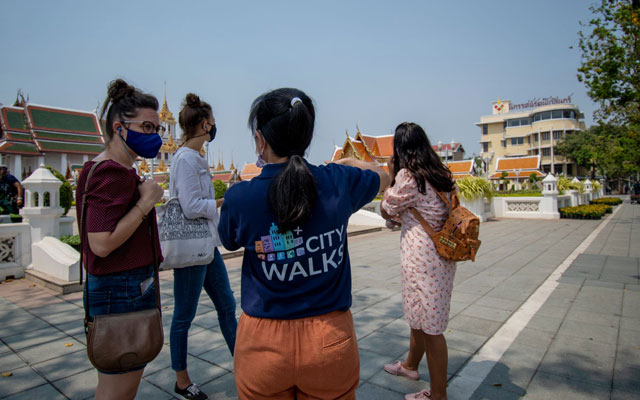
Asian Trails’ Thailand office has signed a deal with Vox City Walks to develop new environmentally-friendly tours.
The walking tours, including self-guided walks, are designed to reveal another side to the capital Bangkok by taking visitors off established tourist trails. They target those keen on experiencing a destination and its people at their own pace.
Vox City Walks will also be expanding its partnership with Asian Trails in Malaysia, starting with Kuala Lumpur, and Vietnam.
JLL sets up office in Seoul
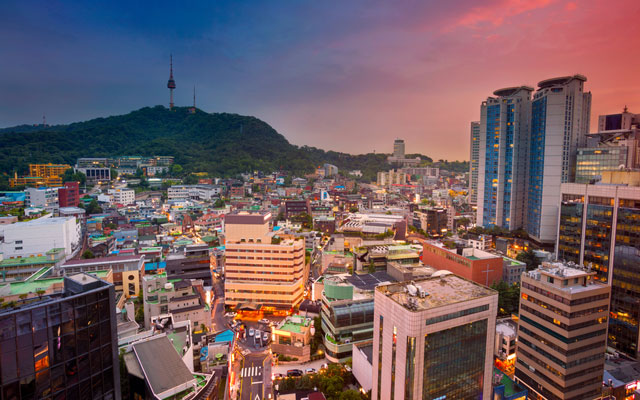
JLL Hotels & Hospitality Group has launched its dedicated South Korea advisory and investment services office in Seoul, becoming the first international advisor to offer a dedicated hospitality real estate practice in the country.
Min Joon Kim, vice president, will lead the South Korea Hotels & Hospitality practice, delivering advisory, asset management, and investment sales services for the hospitality sector. He will also assist in directing Korean outbound capital as Korean institutional capital becomes increasingly important globally.
He will report to Xander Nijnens, managing director, head of advisory & asset management, Asia Pacific, JLL Hotels & Hospitality Group; and Corey Hamabata, senior vice president, investment sales, Asia Pacific, JLL Hotels & Hospitality Group.
According to JLL, the decision to establish a dedicated presence was driven by heightened activity in the South Korea market and interest from domestic and international investors.
South Korea is ranked fourth in terms of hotel transaction volume in Asia-Pacific, with US$1.4 billion transacted in 2019 and US$770 million in 2020. JLL analysis also shows that investment volumes in South Korea reached US$849 million in 1H2021, a year-on-year increase of over 55 per cent.
In establishing a local presence, JLL will look to advise clients deploying capital into hotel development projects and help facilitate increasing investment into the hotel sector through advising on all stages of the capital cycle, from acquisition to optimisation and disposition.
Sri Lanka placed on lockdown as Covid-19 cases spike
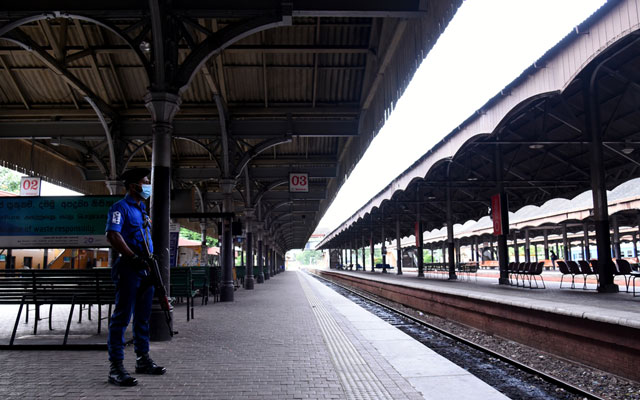
Sri Lanka has imposed a 10-day lockdown allowing only essential services to operate as authorities battle to contain a wave of Delta variant cases.
During the lockdown, which kicked in at 22.00 on Friday (August 20) and will last until 04.00 on August 30, all public and private sector establishments are closed, with only essential and emergency services allowed to remain open.
Sri Lankan authorities has since last Monday imposed an indefinite nationwide night curfew from 22.00 to 04.00 daily, along with a ban on social gatherings, public events and seminars.
The latest lockdown follows appeals from the medical profession, trade unions, civil society groups and Buddhist religious dignitaries for tighter mobility restrictions in the face of worsening Covid-19 case numbers.
On Friday (August 20), Sri Lanka reported a record daily rise in Covid-19 cases for the third consecutive day, reporting 3,839 new cases, up from 3,435 a day on August 15; with 195 deaths. The new infections bring the total tally to 381,812 and 6,985 deaths.
Opposition parties and trade unions in the country have accused the government of under-reporting the number of Covid-19 cases.
Meanwhile, Sri Lanka Tourism (SLT) officials said only fully vaccinated Indians would be allowed entry into Sri Lanka, in effect since August 19. India is Sri Lanka’s biggest source market but the rising number of Covid-19 cases in India has led to this cautious approach.
In a statement, SLT said that Sri Lanka will continue welcoming international travellers during the lockdown with majority of the tourist attractions to remain open. Since reopening to tourism in January this year up to July 31, the country has received a mere 19,337 arrivals, a sharp drop from last year.
In another circular, SLT said nationals of South American countries and South African countries – South Africa, Angola, Botswana, Lesotho, Mozambique, Namibia, Swaziland, Zambia and Zimbabwe – are not allowed entry into Sri Lanka.
Phuket readies to welcome Russian tourists with nod for Sputnik vaccine

Tourism stakeholders in Phuket are anticipating the return of Russian tourists to the southern Thai island, following the approval of the Sputnik vaccine by the Thailand’s Centre for Covid-19 Situation Administration.
Phuket has for years been a very popular destination with Russian travellers, peaking in 2019 with more than 700,000 arrivals over a short five-month period, all arriving on direct flights from Russia. A total of 1.4 million Russians visited Phuket in 2019.

The traditional snowbird period from November to March is when temperatures drop severely in Russia and also in many parts of northern Europe, signalling travelers to take flight for the tropical chimes and clear blue skies of Phuket.
“This is great news for Phuket. It’s time to go beyond the Sandbox and build a foundation for a broader tourism initiative,” said Phuket Tourist Association president, Bhummikitti Ruktaengam. “The industry can now get back to basics and focus on the northern European winter season. This is a big opportunity for Phuket. These are our legacy markets.”
Laguna Phuket, an integrated destination in the popular Bangtao Beach area, consisting of seven hotels and a Bangkok Hospital-operated PCR test centre, has already been a beneficiary of the Phuket Sandbox, but this is a major step up, according to its managing director, Ravi Chandran.
“The acceptance of the Sputnik vaccine is a game-changer for Phuket,” he said. “The outbound Russian market is the biggest one in the world outside of China and the timing is perfect with the high season starting in November this year. Phuket Sandbox has proven to be a success and this will now take these achievements to greater heights still for all hotels, tourism stakeholders and the local community on the island.”
Since July 1, more than 300,000 hotel rooms have been booked up until the end of August by international visitors arriving via the Phuket Sandbox initiative. The number of foreign tourists is expected to rapidly rise as the high season approaches, with scheduled and chartered Russian carriers set to arrive in Phuket from October 2021.

Talking about ‘ready-made’ market potential, C9 Hotelworks managing director, Bill Barnett, said that “coming into the 2021 winter wonderland, and changing marketplace, the Russians, who typically have a 11-12-night average length of stay, are a perfect fit for the Sandbox.”
Singapore-Hong Kong travel bubble bursts
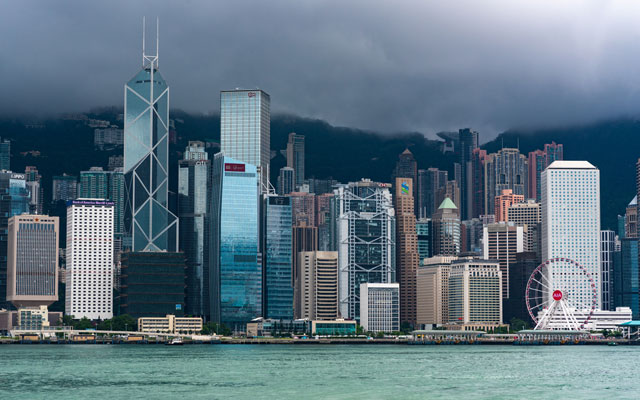
Singapore and Hong Kong have shelved plans to launch the twice-delayed travel bubble that would have allowed quarantine-free travel between the two cities.
The decision was reached following a discussion between Singapore’s transport minister S Iswaran and Hong Kong’s secretary for commerce and economic development Edward Yau, Singapore’s Ministry of Transport (MOT) said in a statement. Both sides agreed not to pursue further discussions on the air travel bubble (ATB) at this point, it added.
“In Singapore, a substantial proportion of our population is fully vaccinated. Hong Kong too is progressively vaccinating its population. Both sides are focused on keeping our populations safe and preventing the risk of imported cases,” MOT said.
“But our strategies differ, with Singapore now taking steps towards becoming a Covid-resilient nation. Against this backdrop, both parties agreed that it would not be possible to launch or sustain the ATB in its present form.”
Both Singapore and Hong Kong reaffirmed the importance of maintaining connectivity between the two cities, given that both are major aviation hubs.
Singapore announced last week that all travellers from Hong Kong and Macau will be able to enter the city-state without having to serve quarantine if they test negative for Covid-19 upon arrival.
However, Hong Kong has tightened its border control measures, with vaccinated travellers from Singapore now having to serve a 14-day quarantine, up from seven days.
MOT said that Singapore and Hong Kong will continue to explore new ways of strengthening connectivity and links with each other, and revive the air travel between the two cities.
Varying Covid-19 restrictions nationwide hamper Indonesia’s tourism recovery
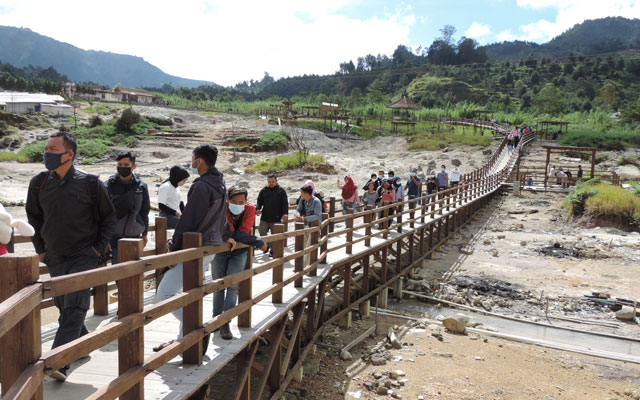
The Indonesian government’s ever-changing pandemic rules, coupled with restrictions of varying levels nationwide, have stirred up confusion among industry players, and sparked concerns that it could serve as a major deterrent to travel.
In North Sumatra, for example, the government has imposed public mobility restrictions or PPKM level 4 – the highest level of restrictions – in Medan and Pematangsiantar cities, while other cities in the province are in level 3 category, due to different infection rates.
Under the regulation, cities categorised as level 4 areas must close tourist attractions while those under level 3 restrictions may remain open with a limited number of visitors.
However, there are inconsistencies with regulation implementation, according to tour manager of Horas Tours, Christine Kowandi. She noted, for instance, that tourist attractions in Samosir are closed, despite the city being in the level 3 category.
Furthermore, Samosir Tourism Agency has announced that only travellers with proof of vaccination plus a negative Covid-19 antigen test result would be allowed entry when the attractions reopen.
Christine questioned the need for vaccinated travellers to present an additional negative Covid-19 test result, given that the tests, and in particular PCR tests, are expensive and have short validities.
She also pointed out a lack of standardisation in Covid measures applied to areas under the same category of level restriction. For instance, while Medan and Bali are both classified as level 4, travellers are required to show a negative PCR test result to visit Medan, while those looking to enter Bali can present a negative result of a rapid antigen test, which costs less.
In addition, although Bali and Jakarta are both under level 4 curbs, travellers checking into Jakarta hotels will need to show their vaccination certificate, while Bali hotels do not require that as only vaccinated travellers are allowed to enter the resort island.
That lack of a common regulatory framework, alongside costly Covid-19 tests, would quash travel appetite, opined Christine.
Agreeing, Fransiska Handoko, vice chairman of the Bali Hotels Association (BHA), said: “When antigen test was replaced with (the costlier) PCR test as a travel requirement during the early period of PPKM, hotels in Bali faced a wave of cancellations from domestic travellers.”
To help travellers to Bali track regulation changes, BHA has launched the welcomebacktobali.com platform which contains the latest updates and information on entry requirements for the island.








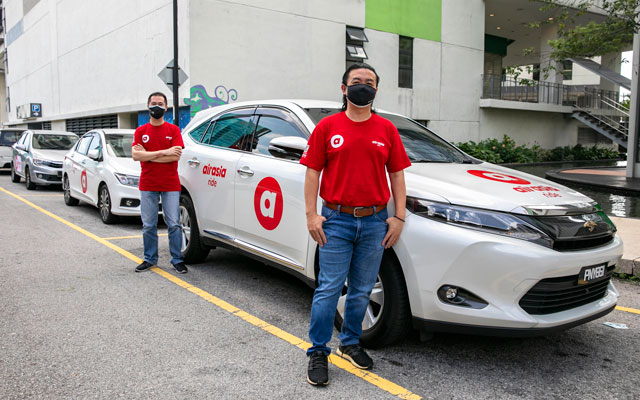
AirAsia has expanded into the ride-hailing market in Malaysia with the launch of AirAsia Ride, the group’s newest offering under its super app.
Services are currently available in the Klang Valley, with expansion to more cities in Malaysia planned throughout the year. The AirAsia Ride e-hailing service can be booked by clicking on the ‘Ride’ icon on the AirAsia Super App, or via the website airasia.com/ride.
Amanda Woo, CEO of AirAsia Super App, said: “AirAsia Ride inherits the DNA of running a low-cost model which enables savings to be passed on to guests and strives to offer the lowest fares on the road, introducing great value to the highly competitive e-hailing ecosystem.”
Lim Chiew Shan, CEO of AirAsia Ride Malaysia, commented: “What sets AirAsia Ride apart from others in the market would be the unique insights and data that we have due to our position as a super app that owns an airline, and have strong vertical products on e-commerce, fintech, logistics, and now e-hailing.
“This enables us to leverage on AirAsia Group’s rich and vast data and algorithm to provide a seamless and connected journey experience for our passengers where they will be able to perform in-path booking for both their flights and pre-book their ride to the airport and even for their return journey at the same time, all within the convenience of one single itinerary and without having to leave the AirAsia Super App.”
Lim added that passengers will soon be able to use their BIG Points to pay for their rides, and can also choose their preferred vehicle type and even drivers. AirAsia Ride boasts a 100 per cent fully-vaccinated driver fleet.
Currently, AirAsia Ride has about 1,500 registered drivers, and with its nationwide expansion, another 5,000 are expected to come onboard in the next six months, said Lim. Drivers take 85 per cent of the net fares, higher than other ride-hailing providers in the market, according to a release.
Fares on AirAsia Ride are set at an average of RM1 (US$0.24) per kilometre, and passengers are able to book on-demand rides, or even pre-book their rides in advance. A special feature allows passengers to book an ‘Allstar Ride’ and be chauffeur driven by AirAsia pilots and cabin crew.