


Grand Park Kodhipparu beckons holiday-makers this Easter
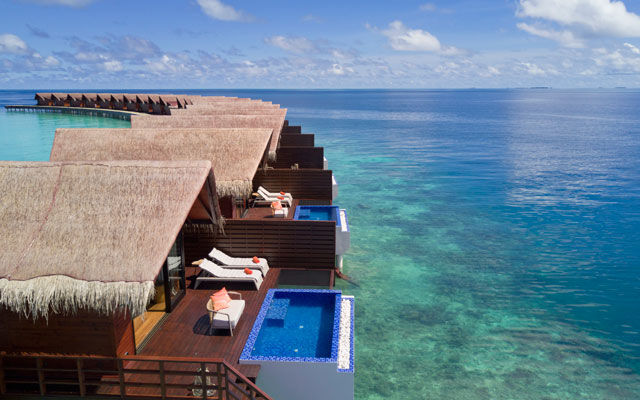
Grand Park Kodhipparu, Maldives is offering an Easter Getaway package for families, which comes with free bed and breakfasts for children under nine and festive amenities.
Available for a stay period from March 15 to April 30, 2021, the package includes 20 per cent off on speedboat transfers, daily breakfast and dinner for two adults at all-day dining restaurant The Edge; a bottle of house wine upon arrival; an Easter Chocolate amenity; couples mixology class; and one-time four-course set dinner with a complimentary bottle of wine for two people at the award-winning, Firedoor restaurant.
The resort promises six exclusive benefits for direct bookings – best rate guarantee, exclusive member’s rate for Park Rewards members, flexibility, pre-arrival requests assistance, free Wi-Fi during stay, and a tree planted under the hotel group’s Room for Trees programme with every booking made through its website.
Myanmar’s tourism players call for solidarity after military coup
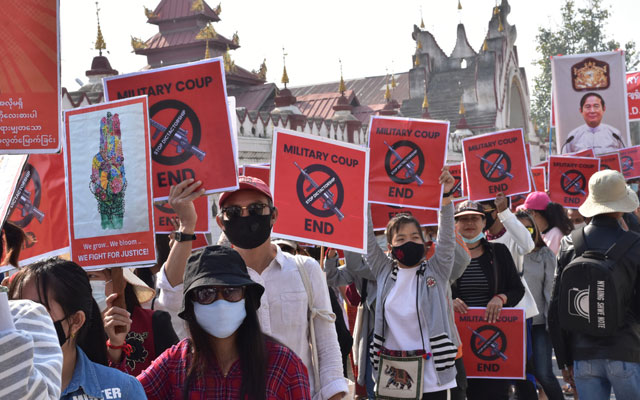
Tourism operators in Myanmar are calling on the international industry to shun military-owned operations as the nationwide civil disobedience movement against the coup continues.
In the midst of the Covid-19 pandemic, Myanmar’s tourism was dealt another devastating blow when the country awoke to a military coup at the start of February. Since then, resistance has been gathering across the country as peaceful protestors take to the streets.
DMCs in the destination fear that the military take-over will have a devastating long-term impact on the tourism industry. They are urging international players not to boycott the country as a whole, but to join the nationwide civil disobedience movement and sanction military-owned and backed businesses.
The local general manager of a leading cruise operator said: “International tour operators should blacklist all these businesses and not support them. This is very sad because we will have to work very hard to rebuild the image of the country; tourism is always relative to politics.”
Sammy Samuels, founder of Myanmar Shalom Travels, added: “One of the biggest concerns for anyone travelling to Myanmar is whether their money is in any way funding the military operation.”
He said the hundreds of thousands of locals who rely on tourism to survive have already been badly hit by Covid-19. “Being a responsible traveller (or) responsible tour operator can be part of a strategy to reassure visitors their visit will support the local economy and its people,” he added.
Activist organisation Justice for Myanmar recently published a list of military-owned businesses and is calling for sanctions against them.
The managing director of an international tour operator said that once travel resumes, it is key that overseas operators carry out “due diligence”. He noted: “It’s good for tour operators to be very careful and look into businesses and who their shareholders are.”
While international borders remain firmly closed, Myanmar’s domestic tourism was starting to take off as Covid restrictions were eased across the country. However, this has halted in the wake of the coup.
Said the cruise operator: “If the military remains in power, I don’t think we will be able to do business for another six months, and even then, will it be enough to sustain business?”
Hotels on sale in Indonesia belie optimistic outlook for sector
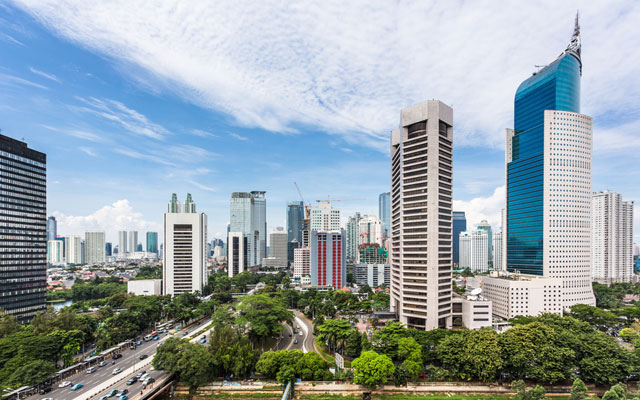
The prospects for Indonesia’s hospitality sector may be less grim than painted in recent media reports on more hotels closing or going up for sale amid the pandemic, with major property consultants saying that they are not seeing an uptick in hotel sales within the country.
On the contrary, a flurry of new hotel openings across the country proves that demand remains strong.
Aldi Garibaldi, senior associate director of capital markets & investment services at Colliers International Indonesia, said selling property assets would usually occur when lenders were putting significant pressure on borrowers.
“There are steps to take to sell a property and (hotel owners) will usually hire a consultant to manage the process – which we are not seeing happening,” he said.
Corey Hamabata, senior vice president for Asia Pacific investment sales at JLL Hotels and Hospitality Group, said: “I would counter (news reports that many hotels in Indonesia are up for sale) with the question: ‘How many properties have we actually seen being transacted in this environment?’ As far as we are aware, (there have) been very few.”
Historically, in times of crisis, sales activity of real estate businesses slows down significantly because there is a lot of uncertainty among buyers and sellers. “We saw this last year when Asia-Pacific transaction volumes were down by nearly 60 per cent year-on-year,” Hamabata said.
Unlike the global economic crisis 12 years ago where lenders were forcing borrowers to sell their assets, Hamabata was not seeing that same storyline unfold amid the pandemic so far.
He also saw that hotels in Indonesia were not performing too badly – thanks to its huge domestic market – such that it would trigger hotel owners to sell their properties.
As such, the move by a handful of hotel owners to sell their properties in Indonesia was more likely due to strategic reasons, such as finding better opportunities to invest elsewhere, he said.
As well, the occurrence of new hotel openings in Indonesia indicates that there are opportunities in the market, said Satria Wei, managing partner at Hotelivate. “In fact, I am handling a couple of hotels which are preparing to open this month. Investors would not dare do so unless they see an opportunity,” he added.
Satria also noted that Indonesia’s hotel industry had started to recover last October-November. “It slowed down again (due to activity restrictions), but this proves that demand and opportunity are still there,” he said.
RedDoorz provides temporary housing for underprivileged women under CSR initiative
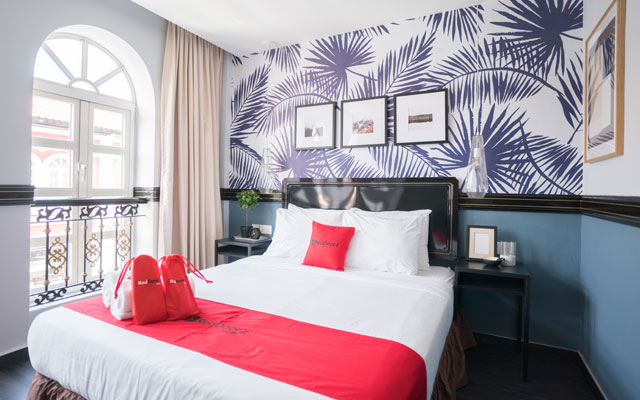
RedDoorz has partnered with Singapore-based charity organisation Daughters Of Tomorrow (DOT) to launch a CSR campaign where Singaporeans can donate their unused SingapoRediscovers Vouchers (SRVs) to help DOT beneficiaries redeem temporary accommodations at the group’s hotels.
As part of the initiative, RedDoorz will also match every room night donated by the public during the campaign.
Established in 2014, DOT aims to facilitate livelihood opportunities for underprivileged women and support them in achieving financial independence and enable social mobility for their families. DOT beneficiaries are women aged 20-60 from low-income families, most of whom reside in government-subsidised flats and face multiple internal and external stressors that affect their job prospects and ability to break out of poverty.
The initiative is part of Trip.com’s Pay It Forward campaign, which calls on Singaporeans to donate their SRVs to selected charities and organisations via their platform. Singaporeans may make their donations through Trip.com’s website here.
Adil Mubarak, vice president of operations, RedDoorz, said: “RedDoorz strongly believes in the importance of supporting our communities and we hope that through this initiative, we can provide much needed help for people who might be more vulnerable during these tough times.”
DOT fundraising and events manager, Cheryl Chen, added: “In the past year, we have seen an increase in the number of women seeking emergency housing due to less-than-ideal situations at home. The Pay It Forward campaign will help provide these women with interim housing while they find alternative permanent housing solutions.”
Balanced approach needed to tackle Covid-19, says tourism minister
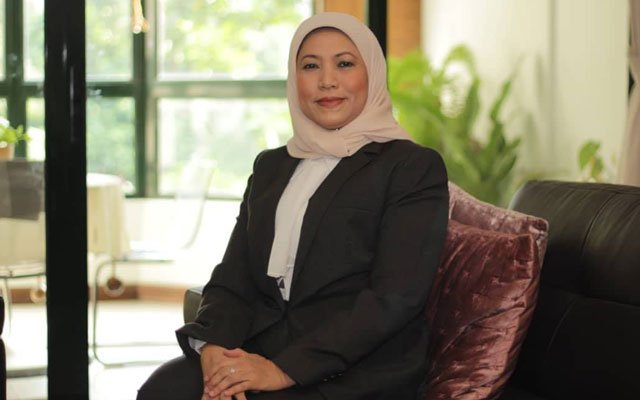
Malaysia’s tourism minister has raised concerns over the recent announcement by the health director-general that the ongoing ban on interstate and inter-district travel, put in place since January 13, will likely continue until 70 to 80 per cent of the population has been vaccinated.
In a statement, Nancy Shukri said that she was worried that Noor Hisham Abdullah’s announcement would result in a worsening impact on the local tourism industry which has been severely affected for a year now.
She elaborated: “The tourism industry is closely related to the movement of people from one location to another. When there is no movement, it means there is no tourism and there is no economic activity, which in turn means, no jobs and no income for those working in this industry chain. Therefore, I hope to find a meeting point that can balance the health and economic wellbeing of the people.”
Stressing that a new approach is necessary in controlling the spread of Covid-19 apart from continuing the ban on cross-state travel, she said the ministry was willing to work with all parties to find the best way forward.
Sabah woos Thai tourists back

Sabah Tourism Board has launched a new online campaign in Thailand promoting book-now-travel-later deals, for travel through year-end.
Dubbed SABAHDeeKhrap, the ongoing campaign runs from February 22, 2021 till May 22, 2021, targeting Thailand residents, and in particular, the expatriates and millennials.
Accessible via hellosabah.my/sabah-dee-khrap, the campaign site features a wide range of products and packages in Sabah which include nature, adventure, wildlife, culture, diving, community-based tourism, beaches, as well as hotels and resorts.
In 2019, Sabah welcomed 4,738 Thais, representing an increase of 19.4 per cent from the previous year. Thai travellers to Sabah typically seek adventure activities and diving. Pre-Covid, Kota Kinabalu – the state capital of Sabah – was connected to Bangkok with a direct, thrice-weekly flight serviced by AirAsia Thailand.
Pandemic shrinks Japan’s travel surplus by a fifth in 2020

Japan’s travel surplus in 2020 shrank by almost one fifth year-on-year as a result of international travel bans implemented to stop the Covid-19 spread, marking the first year of decline since 2015.
The travel balance, which reflects the amount of money spent by international visitors to Japan versus Japanese spending abroad, dropped from a record ¥2.7 trillion (US$24.5 billion) in 2019 to ¥562 billion (US$5.3 billion) last year, according to government data. It did, however, remain in the black, escaping a return to deficit that Japan’s travel balance has experienced since data compilation began in 1996 until 2014.
A mere 4.1 million tourists visited Japan in 2020, the lowest level since 1998, as the country tightened up its borders in response to the pandemic. It marked a 87 per cent decline in arrivals from 31.9 million in 2019, which was a record high and the seventh consecutive year of growth, according to the Japan Tourism Agency.
The Japanese government had aimed to welcome 40 million tourists in 2020, a goal that had seemed within grasp as the number of arrivals had increased year-on-year up till 2019. Visitors from east Asian nations comprised more than 70 per cent of arrivals to Japan that year, with particularly high numbers from China (9.6 million), South Korea (5.6 million), Taiwan (4.9 million) and Hong Kong (2.3 million).
The hosting of the 2020 Olympic and Paralympic Games was expected to inject a further US$300 billion in income from tourism. Postponement of the event to 2021 has given Japan hope to recoup some of the benefits of hosting, but with the ability to welcome international spectators still unclear, the travel trade remains subdued about the prospects for Japan’s international tourism in 2021.
Hotels today must do more to deliver destination experiences: Far East chief

The pandemic has reinforced the need for destinations and tourism products to provide compelling reasons for consumers to brave tedious pre-trip procedures, opined Arthur Kiong, CEO of Far East Hospitality Management, whose company will open its latest luxury hotel in Singapore on March 1.
Speaking at a press conference on February 26, Kiong said tourism products today must offer a unique proposition and an experience that travellers cannot have at home.

He believes that his company’s soon-to-open The Clan Hotel Singapore satisfies these needs, adding that it as “not your typical hotel”.
Located within the Far East Square and Telok Ayer heritage precinct, the 324-key property offers guest touchpoints and services that tell the stories of the vicinity and local culture, all crafted by hotel associates with a passionate understanding of local history and with the support and contribution of local subject experts.
A prominent example of this arrangement is The Clan Collective, a network of local craftsmen, artists and influential figures who are widely regarded as keepers of culture and heritage in Singapore. Programme profiles currently include local hawker cuisine expert, Leslie Tay, who has curated the hotel’s The Clan Daily Special in-room dining menu; artist Grace Tan who is behind the lobby’s art installation, which comprises 150 painted aluminium panels suspended from the ceiling; and Ivan Yeo, whose family-run The 1925 Brewing Co. has crafted a white chrysanthemum lager just for the hotel.
Hotel guests also gain access to The Inner Circle Guide, a collection of recommendations across services, dining, nightlife and entertainment options. Their identity as guests of The Clan Hotel Singapore will earn them surprise perks and attention at participating merchants.

As a hotel located in the business district, Kiong noted that there are expectations that it has to be “an exclusive property with an international brand, it has to be functional, it has to be state-of-the-art, and it has to be exclusive”.
“But we decided we didn’t want another business hotel that is like every other. We wanted this hotel to serve an unmet need of the market (and that led us) to turn the product on its head. Instead of producing an exclusive hotel, we made this an inclusive product. Instead of having a state-of-the-art hotel, we made this nostalgic. Instead of an international hotel, we gave this hotel a very local flavour. Instead of a very functional hotel, we made this very experiential.”
“The pandemic has reinforced the ideas that we have for the hotel are down the right path,” Kiong stated.
While the hotel concept feeds the greater traveller desire for tailored, destination-specific experiences, some changes to the product had to be made to accommodate new health and safety considerations, he told TTG Asia.
Such changes included redesigning the hotel’s all-day dining restaurant to ensure greater space for social distancing as well as ditching a proposed cigar bar concept where patrons would have to “huddle” together. Technology has also been brought in to provide guests an option for self-check-ins, and sterilisation equipment for smart devices in guestrooms.
When asked about Singapore residents’ appetite for staycations – an alternative source of business in the absence of international tourist arrivals, Kiong revealed that a limited pre-opening offer that was “secretly” published on the hotel’s website on February 15 had garnered immense interest, with 200 bookings sold out swiftly.
“We are seeing a distinct demand from residents who want new hotels that are not a Stay Home Notice property (government appointed quarantine hotels). As long as border restrictions remain, there will always be an appetite for staycations. There are over 1,000 people taking staycations every day in Singapore, and we only need to capture a portion of that,” he replied.
However, he also acknowledged that the domestic staycation market will never be a replacement for international tourism business.
Indonesia unveils Covid-19 screening tool to support safe travels
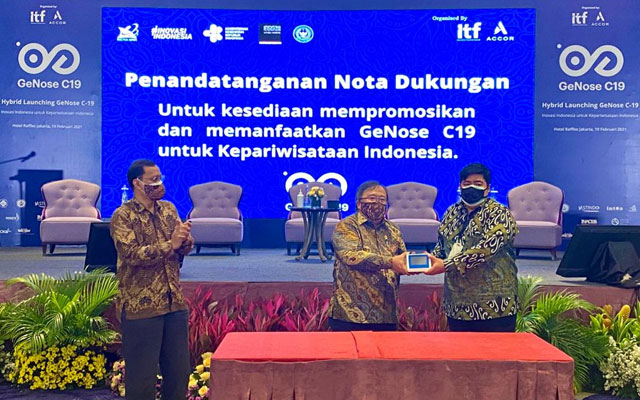
Indonesian tourism stakeholders have welcomed the launch of GeNose (Gadjah Mada Electronic Nose) C19, a Covid-19 detection tool, which will help facilitate safe travel.
The rapid test can analyse breath samples using artificial technology and detect the Covid-19 infection within two minutes. GeNose C19 was invented by science researchers at the Gadjah Mada University in Yogyakarta, who began the research in 2008 with the initial aim of developing a tool that can detect tuberculosis.
The tool was first launched and deployed at major railway stations in Jakarta on February 2, and the Ministry of Transportation has announced that Covid-19 screening for airline passengers using the device will be available by April.
Speaking at the launch of the tool for the travel-related industries in Jakarta last week, Bambang Brodjonegoro, minister of research and technology/head of National Research and Innovation Agency, said that GeNose C19 has an accuracy of between 93 and 95 per cent, and is a more comfortable and less invasive way of testing for Covid-19 compared to throat and nasal swabs.
Additionally, the tool is portable so it can be used at any public spaces. Costs for doing the GeNose C19 test is also relatively affordable at between 15,000 rupiah (US$1.07) and 20,000 rupiah per test. In comparison, an antigen and a PCR test – a current requirement to travel – costs 250,000 rupiah and one million rupiah, respectively.
“This device is not only suitable for tourist attractions, but also places where people meet like offices, markets and factories,” Bambang said.
At the launch event, a host of travel-related associations from airlines to retail signed a letter of support committing to the usage and promotion of the GeNose C19 in their respective sectors.
On the occasion, Accor Asia Pacific (AAPC) Indonesia also signed an MOU with the Ministry of Research and Technology not only for the use of GeNose 19, but also the promotion of research and innovation products, to support the national economic recovery.
AAPC Indonesia has ordered 100 pieces of GeNose 19, and Adi Satria, senior vice president operations and government relations, Accor Indonesia and Malaysia, said the tool would be made available at Accor hotels in Indonesia, to benefit both guests and the hotel staff alike.
As regular testing for all its employees are part of the new norm, Adi said that using GeNose C19, a more cost-effective mode of testing for Covid-19, will help the company “save operational costs”.
Angela Tanoesoedibjo, vice minister of Tourism and Creative Economy, said that her office will make its best efforts to implement GeNose 19 screening on a large-scale basis in tourist destinations and attractions, to support the safe resumption of tourism activities.
Meanwhile, Salman Anwar, chairman of the Jakarta Tourism Forum, expects that the Ministry of Tourism and Creative Economy will set aside a budget to help industry stakeholders invest in the device. He also hopes that the regional and city governments will ease regulations for venues which implement such screenings to organise events.

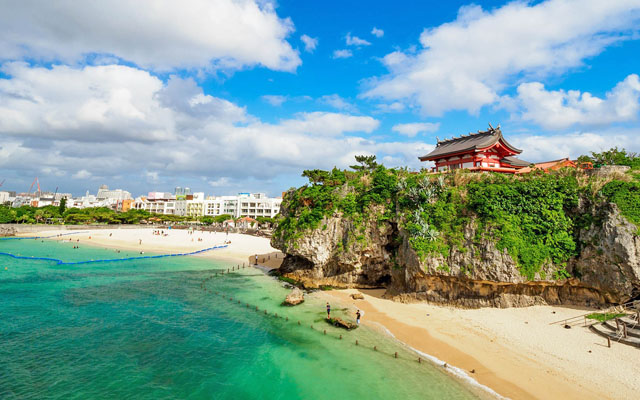






The first of three properties under Oakwood’s new brand, The Unlimited Collection by Oakwood, opened on Monday, with the second following in mid-March.
Wanderlust and the soon-to-launch KēSa House are heritage landmarks that retain their unique identity and architectural charm while delivering guest experiences in line with Oakwood’s expertise in hospitality management and service initiatives, supported by its global distribution.
Guest experiences at both hotels are designed to reflect Singapore’s unique multiracial and multicultural identity. The Culinary exploration of Little India and Chinatown, curated by award-winning Singabites, for instance, comprises five stops that will introduce guests to significant cultural attractions and culinary highlights in each neighbourhood.
An interactive leathercraft workshop, conducted by Crafune, a homegrown Singaporean brand, allows guests to acquire basic knowledge of leather, types of leather crafting tools, scoring and cutting of leather, edge finishing and burnishing as well as cleaning and caring for leather. In doing so, guests craft their own leather souvenir.
There is also a locally-inspired Kombucha workshop that uses ingredients sourced in Singapore.
Commenting on the openings, Dean Schreiber, chief executive officer of Oakwood, said The Unlimited Collection by Oakwood “supports the growth strategy in an emerging market segment, especially in key gateway cities where multiple Oakwood brands are already in operation”.
The company aims to double its portfolio of managed properties by 2025.