TTG Asia
Asia/Singapore Tuesday, 23rd December 2025
Page 852

Vaccination for Bali tourism workers gets underway

0

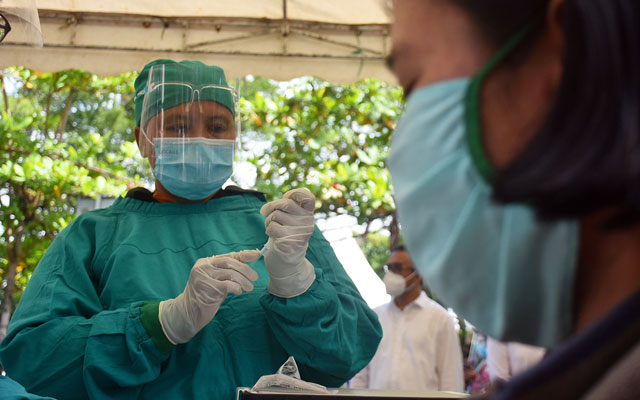
Indonesia has started its Covid-19 vaccine rollout for tourism workers, with those in Bali the first to be inoculated last weekend.

A total of 5,000 people in Bali are targeted to be vaccinated this month, of which half are tourism workers.
Vaccination for tourism workers in Bali will boost travel confidence among domestic travellers

Sandiaga Uno, minister of tourism and creative economy, said that the vaccination programme is the central government’s ‘fast move’ to get the travel industry, particularly in Bali, back on its feet.

The vaccination for tourism workers is part of the second phase of the government-run inoculation programme which kick-started with the inoculation of medical workers in February. Sandiaga expects that the programme would continue to other destinations in the country soon.

Indonesia’s travel trade is bullish that the country is on the right track to recovery, as the vaccination programme for the industry follows the government’s launch of the GeNose C19, a Covid-19 detection tool.

At the same time, the Ministry of Health has also green-lit private vaccination programmes, allowing companies to buy their own vaccines for their employees – a policy that is expected to speed up herd immunity.

Jongki Adiyasa, deputy chairman of ASITA 71 Jakarta chapter, said the government’s move would make both travellers and hosts feel more secure with each other, and boost travel confidence among domestic travellers.

He recalled that when the number of Covid-19 infections trended downwards in November last year, people’s confidence to travel rose and many had embarked on trips.

“However, because health protocols were neglected, the number of Covid-19 infections increased again in December and January, and the confidence of domestic travellers dropped again,” he said.

Daniel Nugraha, director of Exotic Java Trails, hoped that the vaccination programme implemented by Indonesia and some neighbouring countries would lead to intra-ASEAN travel movement this year.

He said: “International travellers will see that Indonesia is more ready to welcome them back as compared to (some) other countries, although they are not able to visit yet right now due to the border closure.”
Uniform travel protocols bode well for Philippine tourism revival

0

The approval of uniform travel protocols for all local government units (LGUs) in the Philippines by the government’s Covid-19 task force is expected to spur domestic tourism, which remains weak despite the reopening of major destinations since late last year.

Under the new rules, Covid-19 testing is no longer mandatory for travellers unless required by the LGU prior to travel, with testing to be limited to RT-PCR or swab test. As well, quarantine is not required unless the traveller exhibits symptoms upon arrival at the destination, as are health certificates and travel authorities issued by the Joint Task Force Covid Shield.

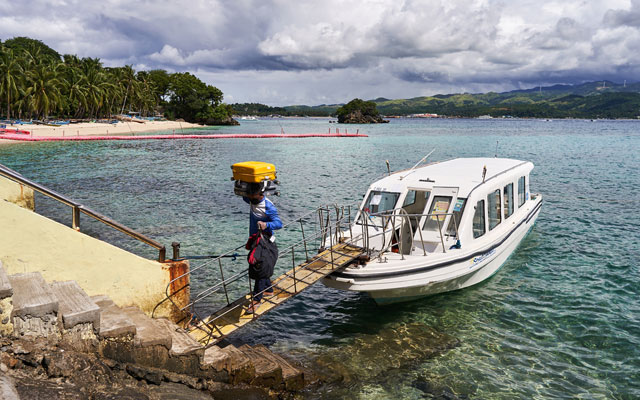
Unified travel rules implemented across the whole of Philippines will boost domestic tourism in destinations like Boracay Island (above), which has seen low arrivals since reopening last October

Tourism players in the Philippines have lauded the move, which is seen to pave the way for domestic tourism to bounce back.

“This should resolve the confusion and resolve the mobility issue. People didn’t want to travel because of the inconsistencies and the need to monitor the different protocols,” said Rajah Travel Corporation’s chair and president Aileen Clemente.

She cited the case of Greece as an exemplar of mitigating Covid-19 risks while causing the least possible hassle to all. “It recognised that zero-risk is never going to happen, but the mitigation of risks to an acceptable level worked very well. They are also more or less a group of islands (like the Philippines), but the implementation of protocols were done on a national level, and not localised,” Clemente said.

Kasel Travel Solutions president and CEO, Eric Papa, is positive that “tourism starts now” with the uniform travel protocols, which apply to domestic travel in all areas, including metro Manila and nine other areas that remain under general community quarantine (GCQ) until the end of March. All other areas in the country are under the less strict modified GCQ.

In a statement, the Department of Tourism (DoT) said the simplification of the travel requirements is “vital in encouraging domestic travel and helping in the speedy recovery of Philippine tourism”.

The DoT defers to the decision of LGUs to require travel tests before travel, saying that the subsidised programme for RT-PCR tests in partnership with the University of the Philippines-Philippine General Hospital and the Philippine Children’s Medical Center will help reduce costs and encourage travel.

Hoping that “all LGUs will comply” with the new rules, Clemente said that what needs to be done is to ensure the implementation of testing and other protocols and promote talk that what propagates the pandemic is not travel, but rather, the lack of implementation or compliance to the protocols.

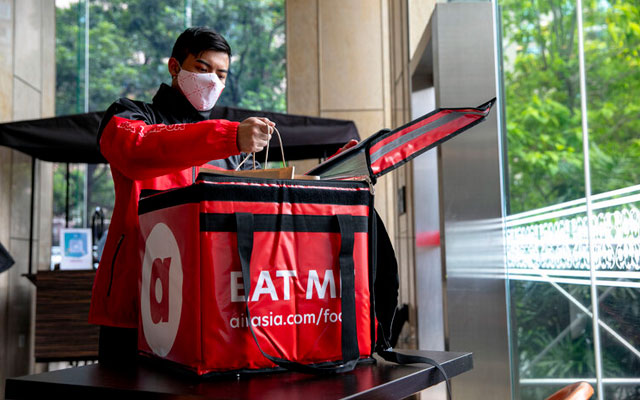
AirAsia rides into Singapore’s food delivery scene

0

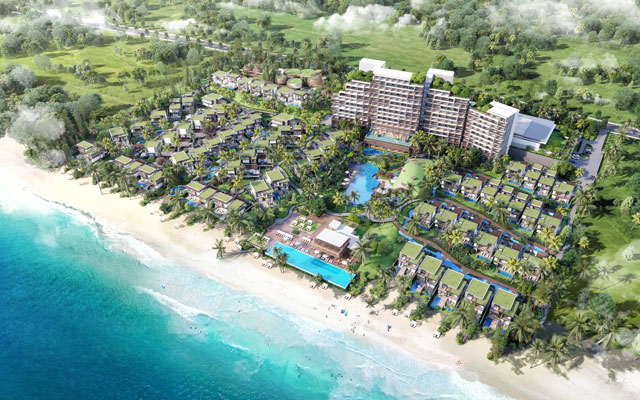
Hyatt Regency headed for Vietnam

0

Japan travel campaign to remain halted even after emergency lifts

0
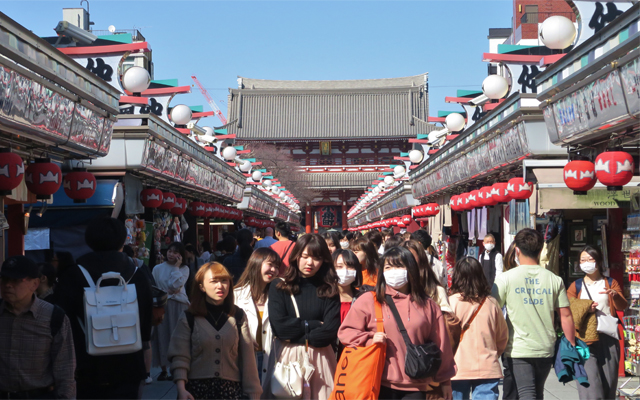
Nakamise Shopping street at Sensoji Temple with some people with masks during the outbreak of the coronavirus (COVID-19).

Japan will continue the suspension of its domestic travel subsidy programme, introduced to support its ailing tourism industry, even after the state of emergency covering numerous prefectures is fully lifted.

The country has been grappling with a third wave of Covid-19 infections since last December that prompted the national government to issue stay-at-home requests for residents in Tokyo and nine other heavily-populated areas. The government’s Go To Travel scheme, which may have facilitated the spread of Covid-19 in Japan according to several academic studies, was also postponed on December 28.

Several studies have linked Japan’s domestic travel campaign to the rise of Covid infections across the country

In recent days, however, Japan has shown signs of exiting the third wave, generating optimism for the hard-hit hospitality and travel sectors. The number of new Covid-19 cases has declined to about 1,200 per day, down from more than 7,000 new cases a day for consecutive days in mid-February.

In a further positive move, the state of emergency was lifted in Fukuoka, Osaka, Kyoto, Hyogo, Gifu and Aichi prefectures on March 1, one week before scheduled. Tokyo and its neighbours (Chiba, Kanagawa and Saitma), meanwhile, are slated to exit the emergency declaration status on March 7 if all Covid-19 risk assessment criteria are met.

Assessment of the Covid-19 spread in each prefecture is expected to be an important consideration as the government mulls the return of the Go To Travel programme. On February 28, government officials announced that the infection situation in each region would be analysed and through infection prevention measures taken before the programme is reinstated.

Still, with or without the domestic subsidy initiative in place, tourism attractions are hopeful that positive consumer sentiment resulting from the lifting of the state of emergency will entice visitors back. Moreover, local tourism is likely to revive first.

Alex Bradshaw, head of overseas business at traditional garden and stately home Sengan-en in Kagoshima City, said that its “immediate priority” is engaging its local market in Kagoshima Prefecture.

“We are cautiously expecting a slow and steady return of visitors with the lifting of the state of emergency and have, of course, kept strict measures for the prevention of Covid in place,” he said. “As a primarily outdoor attraction, we are in a good position to attract visitors looking to reconnect with nature and relax, (and) expect this to be a strength going forward.”

Sunway Resort undergoes US$60 million refurbishment

0
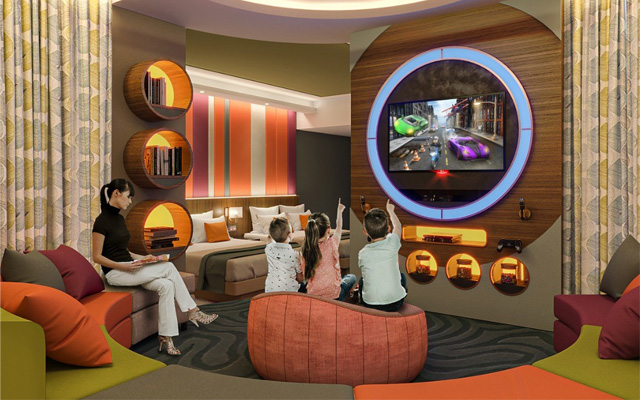
A rendering of the new Family Fun Suite with its multiplayer game console and big screens

Sunway Resort (previously known as Sunway Resort Hotel & Spa), the flagship five-star property at Sunway City Kuala Lumpur, has embarked on a US$60 million transformation.

This will be the most extensive upgrade in its 25-year history, and when complete will sport redesigned and environmentally-friendly lodgings, an international celebrity chef restaurant, and a wide range of facilities.

A rendering of the new Family Fun Suite with its multiplayer game console and big screens

This project has been conceived and created by Nelson Yong, the chief principal designer of Sunway Design.

Throughout the property, every aspect of the guest experience will be enhanced by the latest technological solutions. This starts at reception, where contactless check-in and keyless room entry will streamline the arrival process. In every room and suite, travellers can stay connected with IPTV, IP telephones and complimentary high-speed Wi-Fi, along with motion sensor night lights.

The hotel will also introduce trained “Tech Butlers” who will be on hand to set up devices, offer demonstrations and deliver gadgets like the Harman Kardon headphones and nail dryer straight to the room. The high-tech environment extends to the bathrooms, which will feature a walk-in chromotherapy shower.

Many of the hotel’s technological upgrades will include advanced air-conditioning systems, smart curtains, solar panels, motion-sensor LED lighting and new water technologies to improve the property’s efficiency and sustainability ethos. Other sustainability efforts include abolishing plastic bags, and an onsite hydroponic farm that will supply produce to the resort’s restaurants.

There will also be room categories tailored to certain types of guest, such as business travellers, families and wellness seekers.

For example, the Business Suite features a fully-connected office area with amenities such as a printer, scanner, wireless chargers, USB ports and international sockets, while the Wellness Suite is equipped with in-room exercise equipment by Technogym, live online fitness coaching by Fitscovery, ambient lighting and a sound machine to assist sleeping. The Family Fun Suite meanwhile, boasts a multiplayer game console, big screens, and even a karaoke machine.

There will also be dedicated lounge spaces for guests. Business travellers will be able to head to the 20th Club Executive, while the Premium Leisure Club is dedicated to parents, who can relax with afternoon tea while their children play in the Wonderland Kids Club, which is located directly below and offers an array of educational activities.

Sunway Resort forms the centrepiece of Sunway City Kuala Lumpur, an integrated destination with entertainment zones including the Sunway Pyramid shopping mall, Sunway Lagoon theme park and Sunway Pyramid Convention Centre. Sunway Clio Hotel and Sunway Pyramid Hotel – Sunway Resort’s sister hotels were refurbished in 2016 and 2017 respectively, and the convention centre was upgraded in 2018.

Andaz Singapore gets new GM

0

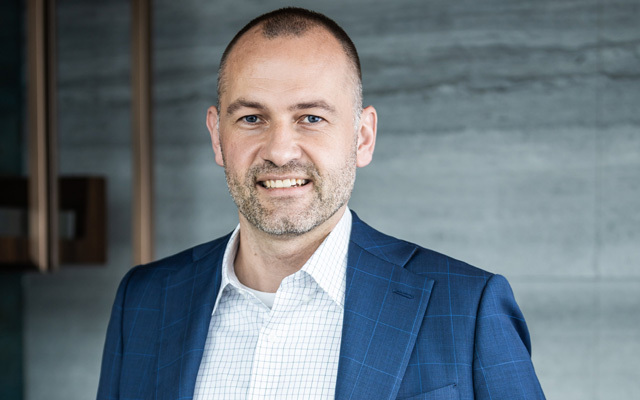
Andaz Singapore has welcomed German hotelier Stephan Karl as its newly-appointed general manager.

With a career spanning over 24 years, Karl first started at Hotel Bayerischer Hof in Lindau as an apprentice. Over the next decade, he rose through rooms, F&B and banqueting roles at Carlton Hotel St. Moritz, Sheraton Suites Galleria-Atlanta and Castle Hospitality & Catering in Heidelberg, south-west Germany.

In 2006, his Hyatt journey began at Hyatt Regency Mainz followed by other luxury properties such as Park Hyatt Dubai, Grand Hyatt Beijing and Park Hyatt Sydney. In 2018, he received the Hyatt Leadership Award for Americas as a testament to his broad-based experiences, and for playing a pivotal role in the opening of Andaz Mayakoba Resort Riviera Maya Mexico in 2016.

His tenure in the luxury hotel scene then led him to Vietnam. For close to two years, he was part of the pre-opening team for Hyatt Regency Nha Trang as general manager, before moving on to Andaz Singapore in the same capacity.

Tourists trickle into Sri Lanka after 10-month closure

0
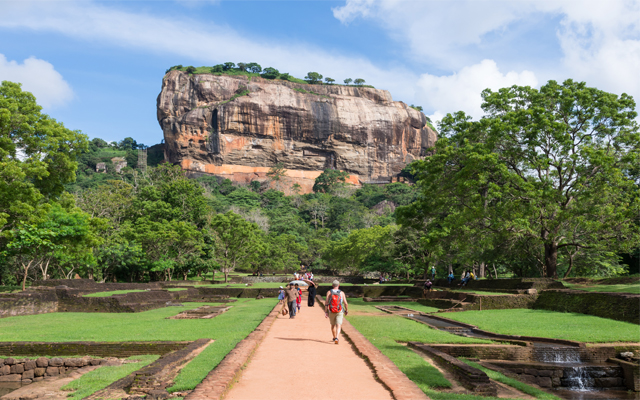
Tourism players fear that visa fee and stringent health protocols may deter foreign visitors to Sri Lanka

Sri Lanka is slowly picking up the pieces of tourism devastation as airport operations resume after a 10-month lockdown, with arrivals for January 2021 numbering just 1,682.

In January 2020, Sri Lanka welcomed 228,434 arrivals.

Arrivals climbed the following month, with 2,700 visitors between February 1 and 25, according to official data.

Scheduled flights from Kazakhstan and Ukraine are helping to lift tourism arrivals to Sri Lanka

Madhubani Perera, director at Sri Lanka Tourism Promotion Bureau, said tourism recovery is boosted by twice weekly scheduled flights from Kazakhstan and Ukraine to Sri Lanka’s second international airport in southern Hambantota.

Both services carry 200 passengers each every week.

In January 2021, Ukraine, Belarus, China, Russia and Germany were Sri Lanka’s top five international tourist source markets, with Ukraine accounting for 86.8 per cent of the total traffic largely due to an experimental month-long travel bubble involving 1,700 visitors prior to the airport’s reopening to foreign visitors.

Meanwhile, domestic tourism continues to keep hotels busy, especially during weekends.

“Our hotels are full on weekends, particularly during long weekends, with local guests. This is paying for our staff salaries and electricity bills,” said Hiran Cooray, chairman of Jetwing Symphony Hotels.

He hoped that foreign arrivals would pick up in summer (May/June), particularly from the UK as citizens would have been vaccinated by then. The UK was once Sri Lanka’s biggest source market.

He also suggested that Sri Lanka relax arrival guidelines to allow vaccinated tourists into the destination without PCR tests and other regulations.

While Sri Lanka does not enforce a mandatory quarantine on arrival, all visitors must get visas online with confirmed hotel bookings, pre-purchased PCR tests and a mandatory Covid-19 insurance cover providing US$50,000 worth of hospitalisation or medical bills for a month. All arrivals must present a valid PCR test taken 96 hours before arrival.

Locals are not allowed to mingle with tourists while there are 20 locations to visit by tourists travelling in a bubble.

A hotel manager from Kandy, a city famed for a sacred Buddhist temple and an annual street pageant featuring dozens of elephants that is popular with tourists, said this was the time for the industry to bring in fresh thinking and new tourist locations.

“This is a near-50 year-old product which hasn’t changed, where tourists are taken on the same routes to see the same places,” he remarked.

Discova Asia gets ChildSafe certification

0

Global destination management specialist Discova has obtained the ChildSafe certification for its Asian teams and destinations, signifying the company’s commitment to protecting the well-being of children through responsible travel initiatives.

In an interview with TTG Asia, Michaela Connor, regional peopleworks leader for Discova, noted that there are many instances where child abuse could happen within tourism.

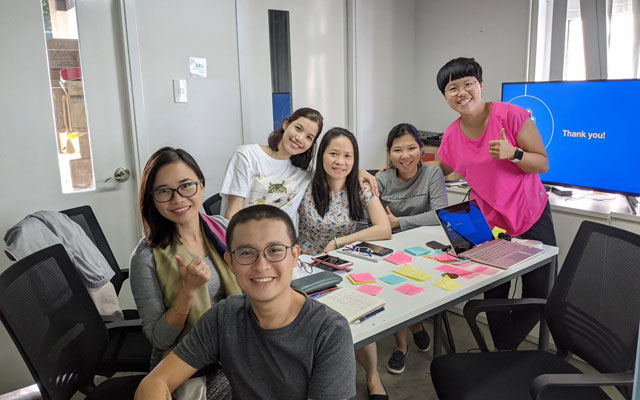
Discova’s team in Saigon has been ChildSafe certified along with other colleagues across Asia

“Largely, the abuse is a result of exploitation. One of the most common scenarios is found in orphanage tourism. Here, the children themselves become a tourist attraction as their disadvantage is exploited for the financial gain of others. Another shocking example, which gained significant media coverage, involves several cases where tourists have been targeted by locals using ill-looking children as emotional leverage. The claim being that the adult in this scenario wants some money to buy powdered milk formula for their child,” shared Connor.

“These are just two examples where tourists unwittingly support the exploitation of children. By thoroughly training all our staff, specifically our guides, we can give the best advice to our passengers and take the appropriate action to ensure exploitation and abuse is reported in the correct way,” she added.

Connor reflected that being able to influence customers towards child-safe behaviour may be the most difficult to enforce as part of upholding ChildSafe guidelines. “If, for example, we advise customers not to take photographs of local children, by law we cannot enforce this or take the camera off them. We can do our best to educate and influence a change in behaviour and that is always challenging no matter where you are in the world or industry you are in,” she explained.

Discova’s existing relationship with the ChildSafe Movement in Asia made training and certification a natural progression.

“Rolling out training across all our destinations in Asia was always going to be a big job so having some history with the organisation’s practises helped a lot,” said Connor.

Prior to certification, 12 Discova employees volunteered as ambassadors to represent ChildSafe within and outside of Discova. They undertook four assignments that expanded their subject matter knowledge prior to a virtual training course.

The virtual training course, led by Marie Duong, ChildSafe international coordinator, detailed seven ChildSafe tips for travellers and case studies the ambassadors could work on together. Post training, Discova employees sat for an exam and had three weeks to prepare to deliver parts of the same training and be assessed by Duong.

Upon passing the virtual training, exam and live assessment, these Discova employees were granted approval to train the rest of the Discova team.

In response to a question about tracking adherence to the programme, Conner said strategies are in place to raise awareness among partners, suppliers and local communities and to ensure staff are aware of guidelines.

“There will be monthly communications to all employees of what we have achieved that month related to ChildSafe and yearly refreshers and exams to test knowledge,” she added.

There are plans to take training to the Americas and the programme will be tailored to each destination.

Emirates puts inflight privacy up for sale

0