TTG Asia
Asia/Singapore Thursday, 9th April 2026
Page 846

How the pandemic has changed the face of tourism in Siem Reap

0
  • Prolonged pandemic restrictions have left Siem Reap tourism in tatters
  • Drying up of domestic tourism amid Covid surge this year has led to mass hotel closures, talent haemorrhage
  • But pandemic downtime has provided opportunity for a sustainable recovery of Siem Reap tourism

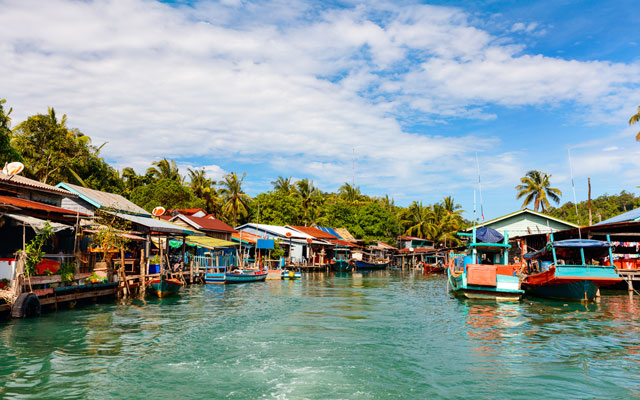
It’s been almost 18 months since Cambodia closed its doors on international tourists, leaving its dominant tourism economy in tatters. Nowhere in the nation has felt it harder than Siem Reap, a city whose economy is heavily reliant on tourism.

While international arrivals to the town had already started to slow pre-pandemic, in 2019, Siem Reap welcomed 2.2 million international visitors to explore Angkor Wat alone. In April 2020, Cambodia closed to tourists in a bid to control the spread of Covid. Last year, it recorded zero deaths and less than 400 cases, mostly imported and caught at the border.

Angkor Wat temple in Siem Reap devoid of its usual throng of tourists amid the pandemic 

This threw one small lifeline in the form of domestic tourism. While volumes were far from enough to keep the tourist-centric town afloat, locals and expats flocked to Siem Reap on weekends and public holidays to experience the temples without tourists.

Pandemic’s long-term toll
However, this year has dealt additional blows. In February, coronavirus started spreading countrywide, triggering ongoing restrictions, including lockdowns, curfews and alcohol bans. It has also virtually brought domestic travel to a standstill.

According to David-Jaya Piot, president of the Cambodia Hotel Association in Siem Reap, only 10 per cent of 2019’s hotel rooms are available today, with rates hitting an all-time low. He said: “In the hotel business, this is quite difficult to come back from, especially after a crisis like this… Bankruptcies have harmed product diversity and there has been a drain in human capital as jobs have become scarce.”

In addition, the US$149 million 38 Roads project, which has seen all of the centre’s major roads torn up, has hammered another nail in the town’s coffin as surviving businesses struggle to stay afloat amid further uncertainty over when tourists will return.

Adam Rodwell, co-founder of Little Red Fox Espresso café, said: “The pandemic has changed the face of tourism in Siem Reap forever. With such a sudden and prolonged cut of income, we’ve lost so many incredible businesses. With that, we’ve also lost many incredibly skilled people. The long-term effects of that absence of skill can’t be understated.”

Hospitality staff returning to families to farm is common. Elsewhere, tour guides are delivering food and a hotel operations manager is working at a concrete factory. Nick Ray, product director at Hanuman Travel, noted: “Rescaling and rebuilding staff will be a major challenge. They’ve been in hibernation from tourism for 18 months now.”

Many hospitality businesses that have not closed have relocated to the capital in a bid to survive. Award-winning Wat Damnak shuttered its Siem Reap operations in April and relocated to Phnom Penh after reducing operations from five- to two-days a week proved economically unviable.

Co-owner and director, Nguon Vengchhay, said: “With the domestic market, two days a week wasn’t healthy for us in the long run. The plans to improve infrastructure also made it hard to keep open. At one point, we couldn’t access the restaurant for days.”

An opportunity to build back better
In spite of the unprecedented challenges the town faces along with other heavily tourism-reliant destinations worldwide, hopes remain high that Siem Reap has the strength to bounce back – how that will look, no one knows.

The 38 Roads project is slated to finish by December, and industry players hope borders will reopen by then. David Stirling, Little Red Fox Espresso co-owner, said the works are essential and being carried out when the city is void of visitors.

He added: “Siem Reap’s population growth before Covid-19 was absolutely insane. As a bustling tourist destination where the population could double or triple during peak holiday periods, it struggled with infrastructure pressure. This slowdown has given the time and opportunity to update infrastructure, which is long overdue.”

Ray also believes there is an opportunity to be had. Pre-pandemic, Siem Reap was suffering from an oversaturation in accommodation, a 15 per cent visitor downturn and strong seasonality. During peak months, hotels were regularly fully-booked while the rest of the year was a struggle.

He remarked: “We need to look at how to spread the load and transform Siem Reap into a year-round destination. It’s either that or become a destination that closes for six months of the year, like many across the globe.”

Rodwell added it will be tourists who dictate how Siem Reap emerges. He said: “It all depends on what kind of tourists come first and in what numbers. Will it be planeloads of tourists shuffled around on buses or a gentle flow reminiscent of Siem Reap at the turn of the century? The demands of the first few waves will essentially dictate which of us businesses survive.”

Piot added Siem Reap’s successful reopening will be dependent on consumer confidence and a fast vaccination rollout. On July 1, Cambodia remained the second most vaccinated South-east Asian country with 25.5 per cent of the population having received at least one dose. He added: “It’s certain demand exists. It’s all about how people can feel comfortable coming to Cambodia and returning home.”

Chhay, meanwhile, has not given up hope on reopening Wat Damnak’s Siem Reap operations. “We 100 per cent plan to reopen, when the time is right,” she said.

Bali pitches vaccine vacations to boost visitation

0

Indonesia places Bali and Java under two-week lockdown

0

The Indonesian government will tighten restrictions across parts of Java and Bali islands for two weeks starting July 3, to curb a surge in cases driven by the Delta variant.

In an address to the nation, president Joko Widodo said: “The Covid-19 pandemic has been growing rapidly in the last few days because of the new variant, which has also been causing problems in many countries. The situation requires us to take more assertive measures in order to stem the spread of Covid-19.”

Bali’s reopening will be delayed as the island goes under lockdown; local authorities in Denpasar, Bali spraying disinfectant across the city to combat Covid-19 pictured

Under the new restrictions which will last until July 20, all shopping malls, trading centres, places of worships, public spaces, and sports facilities will have to remain closed.

Restaurants and eateries are only allowed to serve takeaways, while markets and supermarkets must close by 20.00, and operate at 50 per cent capacity.

Public transport will operate at up to 70 per cent capacity, while passengers on intercity buses, trains and airlines must show a negative PCR test result or non-reactive antigen test result, carried out at most 48 hours and 24 hours respectively before boarding.

Offices are required to have 100 per cent of their staff working from home with the exceptions of essential sectors including banking, finance, stock exchange and the export industry which will be allowed to have 50 per cent of their staff in the workplace. Critical sectors like energy, health, transportation and industries related to people’s basic needs are allowed to operate fully, with strict implementation of health protocols.

In the last few days, the number of new daily Covid-19 infections has surpassed more than 20,000. The latest data showed that the number reached 21,807 in a single day, the highest since the start of the pandemic.

On June 30, a total of 239,368 active cases were recorded across the country, with 467 deaths.

Covid-19 impact on tourism could cause US$4 trillion loss to global economy: UN report

0

Pandemic shutters KL’s Hotel Istana

0

Phuket Sandbox kicks off, sparks hope of tourism recovery

0

Thailand’s traditional low travel season this July and the next two months will take a different turn for Phuket, which kicks off the Phuket Sandbox tourism resumption arrangement today.

In anticipation of the post-pandemic milestone, several hotels in Phuket have rolled out attractive deals to entice guests.

Hotel Indigo Phuket Patong, along with three other IHG sister properties, is dishing out extra benefits for IHG Rewards members who holiday in Phuket between July and December

Banyan Tree Group, for one, has aligned its Phuket Is Open Campaign with the Phuket Sandbox programme, with a number of experiential offerings at its Banyan Tree Phuket, Angsana Laguna Phuket and Cassia Phuket resorts.

The Group’s Laguna Phuket integrated resort also joined up with Bangkok Hospital to launch the first hotel-based PCR test centre for Phuket Sandbox arrivals, allowing guests to access and clear their compulsory tests quickly and conveniently.

All Phuket Sandbox arrivals are required to take a PCR test upon arrival at Phuket International Airport, and again on the sixth and 12th day of their stay.

Banyan Tree Group’s Ravi Chandran (left) with a staff of Bangkok Hospital Phuket ready the first hotel-based PCR test centre for Phuket Sandbox arrivals

IHG Hotels and Resorts has also rolled out a warm welcome to its IHG Rewards members, who will earn 5,000 bonus points for every stay at a participating Phuket hotel (InterContinental Phuket Resort, Hotel Indigo Phuket Patong, Holiday Inn Resort Phuket and Holiday Inn Express Phuket Patong Beach Central) along with perks such as daily breakfast, guaranteed room upgrade, F&B discounts and early check-in and late check-out, when they book a five-night stay by July 25 for fulfilment between July 4 and December 23 December, 2021.

Group CEO of Dusit Thani, Suphajee Suthumpun, said Dusit Thani Laguna Phuket was one of the first tourism players to support the scheme. Today, the property welcomed the first batch of Phuket Sandbox arrivals, made up of Dutch and Thai residents flying in from Singapore.

In the lead up to July 1, the Dusit Thani team had inspected Phuket to ensure all sectors were ready for the reopening.

“The hotel can learn and prepare for the high season that comes the end of the year. (The Phuket Sandbox) is a model to expand to other areas as well,” Suphajee said.

Presently, Phuket province has 1,389 business establishments awarded with the Amazing Thailand Safety and Health Administration (SHA) Plus Certificate. These include 882 hotels, and some will welcome about 350 to 400 tourists coming to the island under the Phuket Sandbox programme.

Rajit Sukumaran, managing director for South East Asia and Korea at IHG Hotels and Resorts, said the reopening of Phuket to vaccinated travellers marks a positive step not just for Thailand, but for Asia too.

He said in a press statement: “We are making more meaningful progress towards global recovery, with vaccine rollouts, ease of restrictions and an acceleration in economic activity. We are confident that Thailand’s booming tourism industry will return – history has shown us this before as we know there’s pent up demand for travel when people can do so again.”

Access to Phuket over the next four days of reopening will be facilitated by major airlines linking Phuket with important cities such as London, Frankfurt, Dubai, Abu Dhabi, and Singapore. – Additional reporting by Karen Yue

KKday offers cruise perks for vaccinated Singapore residents

0

Online travel platform KKday is giving away cruise discounts of up to S$250 (US$185.71) to Singapore residents who have been vaccinated, in a bid to support the national Covid-19 vaccination programme.

Royal Caribbean’s Quantum of the Seas

Available for Dream Cruise or Royal Caribbean Getaway sailings, 600 promo codes will offer customers savings in denominations of S$50, S$100, S$150 and S$250 for the World Dream or Quantum of the Seas Ocean Getaway Cruise.

To qualify, the customer must have received one Covid-19 vaccination jab at the point of booking and show proof by way of a Trace Together app screenshot.

New hotels: Far East Village Hotel Yokohama; Park Inn by Radisson Clark; J Hotel, Shanghai Tower

0
A Deluxe Room product offered by Far East Village Hotel Yokohama

Far East Village Hotel Yokohama, Japan
Far East Hospitality has taken its second property into Japan with the opening of Far East Village Hotel Yokohama. Located a five-minute walk from Sakuragicho Station on JR Line and Yokohama Municipal Subway or Bashamichi Station on Minatomirai Line, the hotel offers easy access to both tourist attractions and business destinations.

A blend of Singaporean and Japanese cultures runs throughout the hotel, from Singapore’s tea-ware and toys to Yokohama’s famous confectionery and Singaporean snacks.

The hotel provides guests with a Village Passport which details unique experiences that guests can enjoy within the vicinity of the hotel and which are also loved by the locals.

Complimentary drinks and snacks are available all day and night at the lobby lounge, while Wi-fi is available at all areas in the hotel.

Each floor from levels 11 to 14 has a Village Lounge exclusive for guests in higher room categories (Superior Plus, Superior Plus MM21 View, Deluxe Plus). The lounge provides free alcohol for adult guests over 20 years old as well as soft drinks and snacks.

Far East Village Hotel Yokohama is offering complimentary breakfast for three months until the end of August. As a preventive measure against Covid-19, the hotel is suspending the buffet and providing breakfast boxes instead. After September, the hotel will offer a variety of food options in a buffet style, including Japanese, western, Asian as well as Singaporean dishes such as laksa and kaya jam.

Park Inn by Radisson Clark, the Philippines
Park Inn by Radisson has opened its all-new South Wing, adding more accommodation options for domestic and international guests in an up-and-coming destination.

The new wing offers 95 Superior Rooms and five suites. All Superior Rooms feature comfortable bedding, working desks, mini-bars, sensor-activated air-conditioning, in-room technology such as IPTVs, bedside USB ports and complimentary Wi-Fi, and modern bathrooms with standalone rain showers. The Suites offers Nespresso machines and separate living areas.

Guests of the new South Wing can enjoy the hotel’s outdoor pool, fitness centre, HUES all-day restaurant, lobby lounge and “grab & go” snack zone.

J Hotel, Shanghai Tower, China
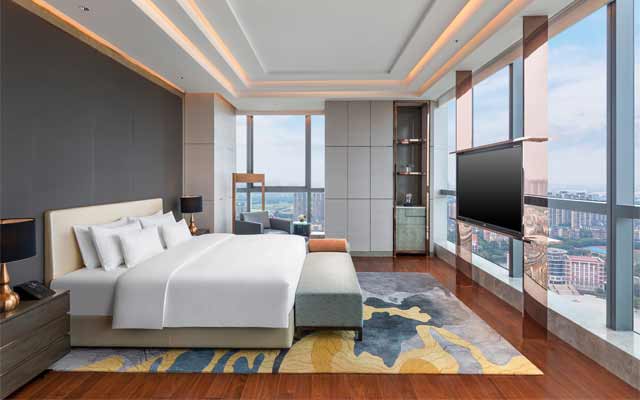
The new 165-key J Hotel Shanghai Tower sits atop the iconic Shanghai Tower, the tallest skyscraper in China and second-tallest in the world, offering guests some of the most breath-taking views alongside luxurious hospitality.

Guestrooms are located from levels 86 to 98, and vary from 62m2 to 380m2, making them some of the highest and most spacious options in Shanghai.

Nestled into the Shanghai Tower’s spiral, every stateroom has unique views. Beginning at the Huangpu River and cutting through the heart of the city below, guests have access to Shanghai’s diverse and spectacular urban scenery, from the Bund and the Oriental Pearl Tower to the expanses across Puxi and Pudong.

Flexible payment options will boost 2021 travel: Amadeus study

0
Asia-Pacific is set to be the biggest driver of the demand for air travel

Periods of high cancellation during the pandemic have led to problems refunding travellers, with some refunds taking many months to process. To preserve vital cashflow, travel companies have offered vouchers for future travel, but limited clarity on the lifting of government restrictions has resulted in uncertainty for those travellers seeking to redeem them.

A new study by Amadeus, conducted in May 2021 with 5,000 travellers across the world, highlights the impact that refund uncertainty is having on traveller confidence and bookings during 2021, as the industry begins its recovery.

An Amadeus study finds that travel and booking confidence improves with a Pay When You Fly option

Eighty-one per cent of travellers confirmed that the increased risk of cancellations due to the pandemic is a barrier to booking travel this year, with refund uncertainty (46 per cent) and the inconvenience of the refund process (38 per cent) topping concerns when a flight is cancelled.

Several airlines are taking proactive steps to overcome refund uncertainty through innovative new payment options. A major European carrier has taken the lead with a Pay When You Fly (PWYF) option, allowing travellers to make a flight reservation – which also includes a hotel or car hire – by paying a small deposit in the region of 15 per cent and then settling the balance a few weeks before travel.

Nicolas Ortiz, head of payment product incubation, Amadeus Payments, said: “We’re entering a critical phase for travel’s recovery, and our industry needs to build confidence at every opportunity. We believe PWYF will drive traveller confidence, encouraging travel planning and booking even in an uncertain environment with changing government restrictions.

“The new approach may also result in higher value bookings because travellers only need to make the balance of the payment when it’s clear the flight will depart as planned.”

According to the Amadeus study, PWYF is the most appealing payment option (39 per cent) compared to traditional pay at booking (36 per cent) and Buy Now Pay Later schemes that require the traveller to enter a credit agreement for the entire balance (24 per cent).

As well as building confidence by overcoming refund uncertainty, PWYF could boost industry revenues with travellers willing to spend 36 per cent more per trip on average, and 49 per cent of travelers more likely to add additional services like meals and bags, if PWYF is offered by the airline.

Minor, Funyard China expansion agreement comes into force

0