 As more of the world reopens, travel is getting its oxygen back.
Friends in Singapore, where I ended my 14-day quarantine on September 30, ask me what it is like. They want to travel overseas, for leisure or business, and face quarantine upon return. International friends who want to visit Singapore also wonder if they can, and what returning home is like for me.
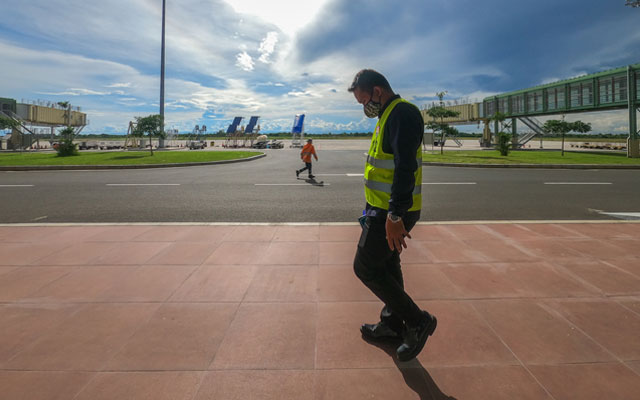
Well, it is like having arrived at your destination yet for the first time in modern travel history, you enter a twilight zone, a fuzzy area where health and travel meet. Instead of cheerful airport staff pointing the way to immigration or transit, you are met by people in full personal protective gear (PPE). The airport was eerily-empty. At immigration, there were more people in PPE than passengers.
But I am getting ahead of the story, which should begin with the administration work before flying.
The key
Travellers planning to return to or visit Singapore will need this key.
This nifty tool, created by the Immigration & Checkpoints Authority (ICA), lets you find out if you can enter Singapore, and under which travel lane. It is easy to use. It leads you to other useful links and offers a checklist of what you need to do based on your travel history.
Singapore groups countries into four categories, Category 1 being places with the lowest risk of Covid-19 transmission and Category 4 the highest, where the strictest requirements will apply.
As I am a Singaporean, I do not need entry approval. Since I am fully-vaccinated, and had remained in Switzerland (Category 3) for 21 days before arriving in Singapore, my quarantine duration was 14 days (Note: this was recently reduced to 10 days.)
To my huge relief, I could opt out of Singapore’s default quarantine, where travellers pay a fixed sum of S$2,000 (US$1,474) for 14 days but will only know where they are staying when a coach that takes them there arrives at the hotel or serviced apartment.
This means they could end up at a five-star, or in a modest room with carpark for a view. It creates unnecessary anxiety for travellers, but more about this later.
Instead, I was able to quarantine at home, provided I was alone (i.e., no domestic helpers, or only with household members sharing the same travel history), or book my own hotel based on my needs and budget. I opted for the latter as I was not eligible for the former.
Acronyms galore
Singapore is trigger-happy with acronyms and Covid-19 has produced a galore. The acronym for quarantine is SHN (Stay-Home Notice – even when it is not at home). The default quarantine, the one where you cannot choose your hotel, is SHN at SDF (SHN-Dedicated Facilities).
You must submit an SGAC (SG Arrival Card) three days before arriving. This is simply an electronic health declaration.
You must do a PDT (Pre-Departure Test) before boarding, i.e., a PCR test. There are two other PCR tests, on arrival (done at the airport) and on Day 13 (the government will message you where to go). If you are in the default quarantine, you must also do ART three times. That’s the rapid antigen test. I guess it is better to acronymise it as ART (Antigen Rapid Test) than RAT.
Why Singapore needs to reinvent new words for quarantine, rapid test and health declaration beats me. There is a whole guide to Covid-19 acronyms in Singapore.
The two PCR tests in Singapore cost me S$285. As I was staying at a hotel of my choice, I could use only the designated transport provider Strides, a subsidiary of SMRT, which is owned by Singapore’s Temasek Holdings. That’s another S$200, comprising a pick-up from airport to hotel, and a return trip from hotel to venue for the final PCR test. I heard a passenger saying to another that $200 was excessive. I agreed silently, until my driver shared that he had to bring the van to a hospital and disinfect it before fetching me. (Note: since October 7, transport options have been widened to include own private vehicle and several other transport operators)
The journey
I went to Zurich airport at least three hours before departure. I noted that passengers ahead of me at all three Singapore Airlines (SIA) counters, including Business, took 20-30 minutes to be checked in. I saw staff re-checking with their manager whether the passenger was valid for boarding. They were not sure and I do not blame them, as Singapore has too many different rules for different lanes.
It is a huge contrast to traveling within the EU, where check-in is now back to normal. Upon arriving at your destination, you only need to show your vaccine certificate or the EU Digital Covid Certificate. A quick scan by the immigration officer and off you go, no PCR tests, no quarantine required.
On board SIA, everything was normal, except for the conspicuous absence of passengers. SIA’s service, in fact, was ever more caring.
The airport experience, on the other hand, was inefficient. I was stopped at random by two airport staff; turned out they were getting my data for Raffles Medical Hospital. I was mad, as they were not forthcoming about why I was stopped. The woman said, “I’m only doing my duty” and continued to input my data into her mobile; the man apologised, adding, “Many people also scolded us.”
It took three hours from landing to be out of Changi Airport into my vehicle, despite few passengers arriving from Zurich that morning.
A lot of it was due to one counter handling one task. First, two staff at a counter just to check passport, vaccine certificate and do a face scan. When they finished, they called a colleague to take my passport and lead me to another counter. There, the wait was even longer – another two staff just to check the passport again and hand me an electronic monitoring device with long explanations on quarantine and how to install the device.
Sadly, it is either a lack of trust in travellers, or an abundance of fear in government, that visitors must wear an electronic wristband (even in shower or bath), so that authorities can detect any foul play should they dare leave their room during quarantine. This is taken so seriously that ICA officers will call or visit you at random to check on the device.
This, despite the fact that you will not be given a room key. If you ever stepped out, you would never be able to get in. There are also security cameras across hotel floors.
In-room experience
During my quarantine, I met nobody except for the duty manager who checked me in and brought me to my room, and two visits by ICA officers, all in PPE of course.
My food was placed on a chair outside the room. The doorbell would ring to indicate delivery.
My room was equipped with hot-water kettle, Nespresso coffee machine and tea bags/coffee capsules for two weeks. A set of crockery and cutlery was heaven-sent since I hate plastic ones.
In the bathroom, in addition to the usual amenities such as shampoo and body wash, there were housekeeping stuff such as dishwashing liquid and toilet bowl cleaning brush.
You have to do your own housekeeping. That includes making your own bed, washing dirty plates, putting rubbish and dirty linen in plastic bags and leaving them outside your door for collection. At my hotel, fresh linen and towels were delivered to my chair every Thursday.
Communication with Front Office was round-the-clock through WhatsApp. When I needed more toothpaste, rubbish bags or drinking water, supplies were sent up immediately.
Living with the virus?
Having been away for 18 months, a few uncomfortable truths about my beloved country hit home. Singapore is admired globally for her success, which is built on many strengths such as transparency, rule of law, and so on. But her long-standing weaknesses show up too glaringly in the pandemic, and stand in her way of trying to live with Covid-19, announced in June.
The worst crisis has brought out one of Singapore’s worst cultural traits known as kiasu or kiasi. It means taking extreme, risk-avoidant measures to achieve success.
Related to this is the fear of losing control, hence the micro-management. You see it in the default quarantine. The government buys the quarantine rooms from hotels at a fixed rate for each class, so hotels are assured of some fixed income whether or not the rooms are occupied. But save the magnanimity; the bigger motive is to get a firm grip on quarantine visitors.
You see it in the electronic monitoring device; in ferrying visitors in dedicated transport; in the requirement for three PCR tests – before boarding, on arrival and at the end of quarantine – even for fully-vaccinated visitors who are holed up in their rooms with no contact with anyone.
The default is as if all us are diseased, which is over-the-top as facts show. As of February 2021, less than one per cent of total arrivals into Singapore since April last year have tested positive for Covid-19.
Imagine locals living in Singapore who are bombarded with a daily update of Covid case numbers. Yet, the government said it is no longer focusing on headline numbers, but on people who are seriously ill and healthcare availability for them.
As of October 2, this segment is about 0.2 per cent. Most are unvaccinated folks and the elderly with underlying conditions. Yet, this minority caused another round of tightened living rules (e.g., only two fully-vaccinated people in a group are allowed to dine at F&B outlets). It shows a government that is still uncomfortable with a non-zero approach, and uneasy about letting its record 82 per cent fully-vaccinated locals get on with life and help the city reach an endemic state.
The effect of constantly-changing rules and complex protocols has drained locals. Singapore’s health minister Ong Ye Kung admitted as much, telling the media that it contributes to “an overall apprehension that Covid-19 is a very serious disease when actually for vaccinated people it has become a mild disease”.
Mirror
A fearful and anxious government creates fearful and anxious citizens. It makes Singapore a closed island. It’s a vicious circle: When you’re hunkering down in a bomb shelter, you don’t know how the world has reopened successfully. You become more inward-looking for survival.
Singaporeans need to travel and see for themselves what an endemic state is. Yet, I have friends who say they’d rather not, for fear of catching the virus overseas. This is what it has come to.
Quarantine practices and travel requirements are a mirror of a country’s pandemic approach. Many countries are now going forth with confidence, and it’s not just the major states such as the US, Canada, European states, but Asian countries. Thailand has much less fully-vaccinated locals than Singapore, yet, since October 1, quarantine has been halved to seven days for fully-vaccinated travellers. In sandbox destinations such as Phuket and Samui, it isn’t really a quarantine as you can move freely throughout the islands during the seven days.
If you think about it, the whole of Singapore, which is roughly the size of Phuket, is a sandbox.
Thailand’s next goal is to do away with quarantine altogether for vaccinated travellers by November or December.
Australia, a country with one of, if not the world’s strictest lockdowns, is also thawing. By mid-November it will allow international travel, with home quarantine for vaccinated travelers in states that have achieved 80 per cent vaccination.
To think that Singapore achieved that level back in August. Many Asian countries had pinned hopes on the Lion City as the model for reaching an endemic state, reopening economies and resuscitating travel.
Alas, it’s choking and needs air to breathe.


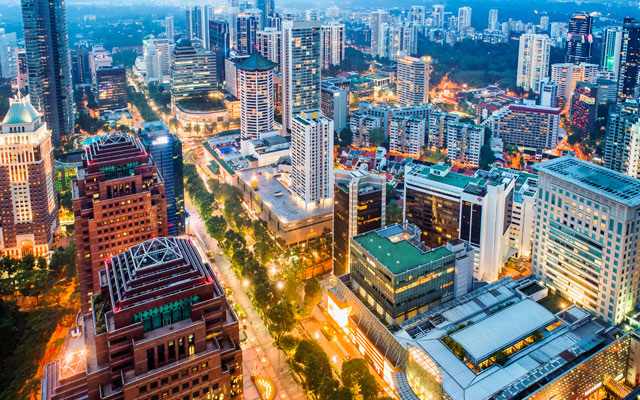










Accor will bring its Pullman brand into the heart of Singapore’s Orchard Road, rebranding the former Grand Park Orchard as the Pullman Singapore Orchard.
Set to reopen in early 2022 following a stylish refurbishment, the hotel will be part of a mixed-use development, which will feature commercial and retail outlets including the flagship Apple store.
Launched in partnership with New Park Property, Pullman Singapore Orchard will be located a short walk from some of the city’s most famous shopping malls including Paragon, Takashimaya, Wisma Atria and ION Orchard.
With its striking herringbone façade and chic poolside bar, the property’s 308 rooms will be stylishly refurbished with Pullman’s contemporary design standards in mind. Pullman’s bold dining concepts will be introduced to the hotel, which will also feature a fitness club and outdoor pool.