

Indonesia forms tourism holding company to boost sector revival
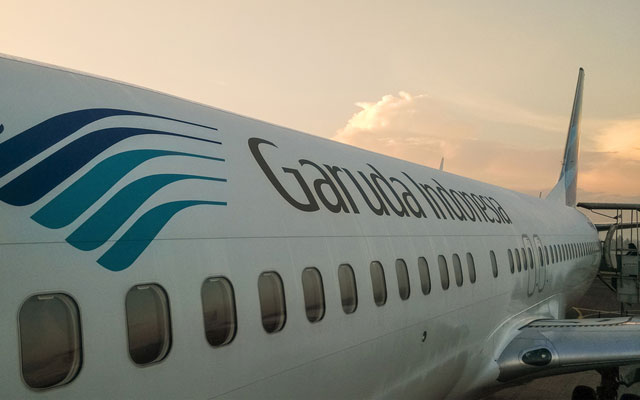
The Ministry of State-Owned Enterprises (BUMN) in Indonesia has officially formed a state-owned holding company for aviation and tourism-related enterprises, in a bid to revive those pandemic-ravaged sectors.
Aviasi Wisata Indonesia (Aviata), the holding company, in this initial stage, consists of Angkasa Pura I and II airport authorities, Hotel Indonesia Natour, department store Sarinah, tourist attraction Taman Wisata Candi Borobudur, as well as Prambanan and Ratu Boko temple parks.
According to BUMN secretary Susyanto, the Indonesia Tourism Development Corporation is set to become a holding member by the end of this year, while national airline Garuda Indonesia is expected to become a member in 2023, pending its restructuring process. “As such, the whole process (is expected) to be finalised in 2023,” he said.
Triawan Munaf and Dony Oskaria, two former Garuda Indonesia top brass, will serve as Aviata’s president commissioner and president director, respectively.
With the formation of Aviata, Endra Gunawan, acting assistant deputy for tourism and supporting services at the BUMN, expressed hope that the holding company could benefit tourism-related businesses.
“(Aviata) is an ecosystem to integrate various functions (to become) a driving force that will (create a) positive impact on the tourism industry,” he said in a written statement.
Aviata is mandated to carry out investment and management consulting activities in the transportation, tourism, retail and other sectors related to business activities. In the long-term, the holding company is expected to develop an integrated tourism strategy to boost international arrivals and make Indonesia a world-class tourism destination.
Endra explained that the mechanism for establishing a holding company was carried out through the transfer of state-owned Series B shares in five state-owned companies as an additional state equity participation to the share capital of Aviata.
Commenting on the formation of Aviata, Budijanto Ardiansjah, director of My Duta Tour, believed that the holding company will encourage tourism development and benefit the community, consumers, and other businesses.
“This establishment can make the development of tourism destinations and marketing more focused and integrated,” he said. “However, the government, through the state-owned holding company, needs to continue to collaborate with associations and other industry players, especially in terms of marketing, (to foster growth).”
Singapore adds Australia and Switzerland to vaccinated travel lane scheme
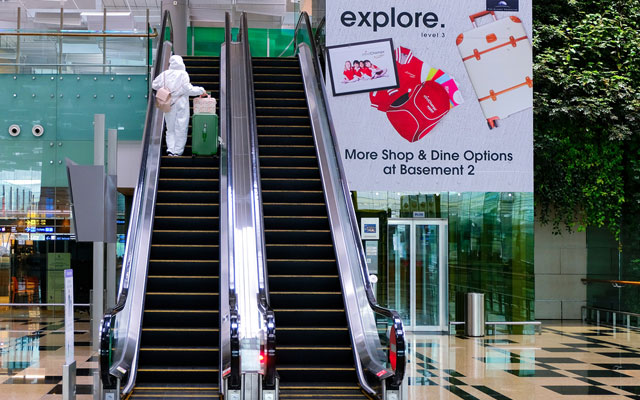
Fully vaccinated travellers from Australia and Switzerland will be able to enter Singapore without quarantine from November 8, under the latest expansion of the city-state’s vaccinated travel lane (VTL) scheme.
For Australia, the VTL will facilitate two-way quarantine-free travel between the two countries for fully vaccinated Australian citizens, permanent residents and their immediate families, said the Civil Aviation Authority of Singapore (CAAS).
CAAS said it expects student and business pass holders from Singapore to be able to enter Australia, after Australia has finalised the arrangement for their entry. “Other travellers from Singapore would not be able to travel to Australia until a later stage,” it added.
Australian prime minister Scott Morrison last week said that the country was in the final stages of concluding an arrangement which will see Australia opening up to more visa-class holders from Singapore, with details to be announced later.
CAAS noted that both Australia and Switzerland are in Category II of the Ministry of Health’s country/region classification for border measures, with similar or lower Covid-19 incidence rates than Singapore.
With the commencement of the VTLs for Australia and Switzerland, the current quota for the scheme will be increased from 3,000 to 4,000 travellers daily, said CAAS. “We will monitor the progress of the scheme closely before deciding on any further increases in capacity,” it added.
Under the VTL, fully vaccinated travellers from these countries may enter Singapore without quarantine and just need to undergo two Covid-19 PCR tests – one within 48 hours before departure and another upon arrival at Changi Airport. Children aged 12 years and below who are not vaccinated will be allowed to travel under the VTL into Singapore if they are accompanied by a traveller who meets all the requirements.
The VTL was launched on September 8 for Brunei and Germany, and was later extended to nine other countries – Canada, Denmark, France, Italy, the Netherlands, Spain, the UK, the US, and South Korea.
CAAS said that the “successful implementation of the VTL scheme” has given it “the experience and confidence to extend it to more countries”. It added that it will continue to do so “in a cautious and step-by-step manner without compromising public health”.
Domestic tourism restart brings cheer to Philippine agents

Domestic tourism in the Philippines has reopened – and looks like it can be sustained to meet the pent-up demand after a long pandemic hiatus.
At least 16 local destinations including Boracay, Baguio, Bohol, Cebu City, Mandaue City and Roxas are foregoing PCR swab tests and quarantine for fully vaccinated tourists, as the number of infections decrease drastically and more residents and tourism frontliners are vaccinated.
“More local government units (LGUs) are simplifying their travel requirements as we see more of the country open up… and we look forward to more destinations applying a risk-based approach to travel, as we work together to instil safe and convenient travel within the Philippines,” said Candice Iyog, Cebu Pacific vice president for marketing and customer experience.
Residents are starting to travel again in time for the long All Saints’ Day holiday weekend and in the run up to the Christmas holidays. “I have movements already to the beach destinations of Siargao and Boracay and to the cooler clime of Baguio,” said Kasel Travel Solutions president, Eric George Papa.
“There has definitely been an uptick in domestic travel, but still a long way to go from where we were pre-pandemic. As more destinations ease access and continue to offer affordable rates, we might be able to sustain it,” said Tourism Congress of the Philippines president, Jojo Clemente.
“The only issue we anticipate is whether the VaxVertPh website is up to date as this will be the Covid-19 vaccination certification that will be accepted by LGUs,” Clemente shared.
The 40 staycation hotels in metro Manila are fully opened, tourism secretary Bernadette Romulo-Puyat said at the launch last Sunday of It’s More Fun With You video, part of the domestic tourism campaign Have A Safe Trip, Philippines.
Under the alert level system of the granular lockdown which places the metro on Alert Level 3, staycation hotels can only open if all of their staff are fully vaccinated, said Romulo-Puyat.
Ritchie Tuano, immediate past president of the Philippine Travel Agencies Association, said: “Some of the agents are really happy with these developments and are keeping fingers crossed that this really is the start of the reopening. Safety is still of paramount consideration.”
Tourist attractions including museums and amusement parks have reopened with due consideration for carrying capacity and other safety guidelines while interzonal travel is now also allowed for kids and fully vaccinated seniors, allowing families to travel together safely and encouraging more Filipinos to secure their vaccination jabs, said Romulo-Puyat.
She expects more destinations to open in the run up to the holidays, and said that “as restrictions are lifted, more tourism workers and stakeholders will get back the jobs and livelihoods they lost due to the pandemic”.
Digitalisation, agility key for building resilience, say travel experts

The ability to be agile and adapt to evolving travel demands is crucial for the thrivability of tourism businesses in a post-vaccine era, as countries reopen to international tourists and domestic travel picks up steam.
That was the common refrain from the speakers at this morning’s ITB Asia’s C-Suite talks.
John Brown, Agoda CEO, shared that the pandemic has led to many travel companies having to become more agile and be swift to adapt to new market demands and trends in order to survive.
He opined that the requirement for quarantine while travelling in Asia is going to stay “for quite some time” and OTAs and hotels that are quick to respond to government requirements will stay ahead of the curve.
He believed that eventually, it will come to a point where quarantine requirements will only be overnight, and tourism players that have lined up innovative tour packages that meet new consumer demands will be well poised to tap that pent-up thirst for travel.
The digitisation of booking processes will also help accelerate the sector’s recovery. Brown shared that Agoda has seen an increase in the use of mobile devices to book travel accommodation in Asia amid the pandemic, contributing to more than half the number of bookings on the platform. He expects that figure to rise further, especially among Gen Y and Gen X who are eager to travel again as border restrictions ease across Asia.
He advised tourism players to invest in good mobile apps that can give customers a great experience, as that would help with brand loyalty.
While the pandemic has accelerated digital transformation, DMCs have been slow to adopt and have remained largely offline, with interactions with travel agents and tour operators largely executed over email and bookings managed in separate unconnected systems, shared Hamish Keith, CEO of Exo Travel Group, in a separate presentation.
He said: “This is not surprising as the DMC business is all about people and human interaction, and each programme contains multiple moving parts that are very difficult to automate.”
Customisation of the travel programme to suit the varying needs of clients makes it difficult to digitalise the booking process, he added.
However, Keith stressed on the importance for DMCs to have a digital interface that will enable agents to select and book specific customised products online in real-time. He also shared that Exo Travel Group is currently working on creating a system that can cater to fully digitised dynamic pricing for complex tailor-made tour itineraries.
Based on the company’s digitalisation experience, Keith shared that DMCs embarking on their digitalisation journey should only automate what makes sense to them, and their IT system should incorporate an option for taking a booking offline.
Carlos Muñoz, Hotelbeds CCO, shared that with the foreseeable expansion of international travel as destinations reopen and allow their citizens to travel abroad, the company is in a good position to provide value to hoteliers who want access to difficult-to-reach customer segments such as travel agencies and airline loyalty schemes.
He added: “We have invested a lot in terms of technology and processes as well as partnerships. We also provide access to non-competing distribution channels, so we do not compete with hoteliers for the end consumer.”
Quest puts localisation at the centre of new multi-million dollar campaign

Quest Apartment Hotels’ local business owners will take centre stage in its new brand platform being brought to market with a multi-million dollar omni-channel campaign.
Named As Local As You Like It and responding to consumer appetite for authentic local experiences, Quest will invite guests to check in and check out the heart of the local scene, with local insider tips from the company’s network of owners who live and work in the communities they operate.
CMO Jeff Baars said the new brand platform is the outcome of over 12 months of work involving extensive brand health and market research, which revealed white space within the sector in line with shifting consumer desires.
“What we know from our research is that guests value the effortless guest experience and consistency that big box hotel brands typically provide but relish the charisma and charm of boutique and independent operations where they feel like they’re able to authentically connect with the local soul. With that insight, we could see the opportunity within reach, and direction we ought to take to cultivate stronger brand preference,” he said.
“Under the new campaign, we will connect our guests with the ‘never-would-have-knowns’; the esoteric gems that every destination has, if you just know where to look.”
“Our local business owners with skin in the game are our greatest asset. The new platform is about highlighting and building upon the personable, customer-centric approach we have always had, and making it the brand’s focal point.”
While the Quest logo will remain, the new platform developed by The Core Agency will see Quest refresh its brand identity and make several enhancements to the guest experience.
The brand platform will be launched to market with a campaign developed by The Core Agency, which includes a television commercial shot on the Gold Coast by production house The Producers.
Full service global media agency, Initiative, which was awarded the Quest retainer in July 2021, devised the campaign’s media launch strategy in market from October 24.
The campaign will run across metropolitan and regional free to air, subscription and catch-up television, outdoor ads, catch-up TV, TrueView, paid social media, press, digital display and via content partnerships.
Accor adds two more hotels to Japan portfolio
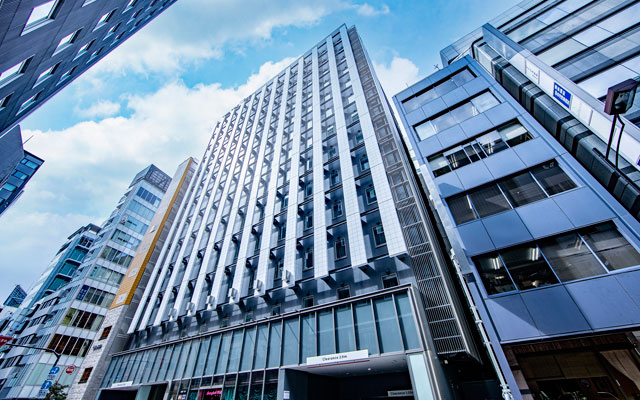
Accor is expanding its presence in Japan with the signing of two ibis Styles hotels in Tokyo and Kyoto, both slated to welcome guests from 4Q2021.
Centrally situated in Tokyo’s premier shopping and entertainment districts, the 224-key ibis Styles Tokyo Ginza is located within a five-minute walk from Ginza Station and seven-minute walk from Shimbashi JR Station.
In Kyoto, the 281-room ibis Styles Kyoto Shijo is located within a five-minute walk from Karasuma Station and Shijo Station and a 10-minute drive from Kyoto JR station.
With this expansion, the hospitality group will operate 21 hotels and resorts across eight cities in Japan by the beginning of 2022.
SIA unveils global campaign to coax nervous flyers back
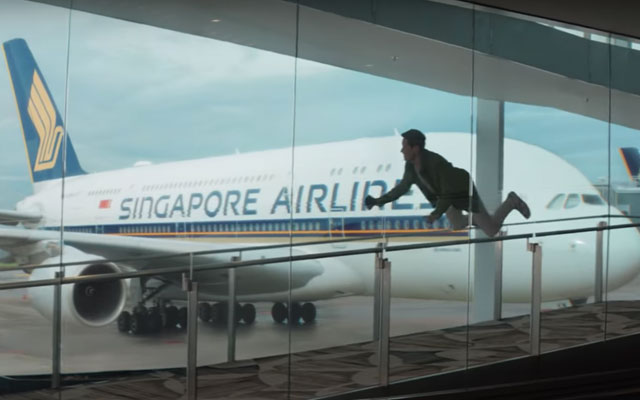
Singapore Airlines (SIA) has launched its new brand campaign titled We Look Forward to Seeing You in the Air Again, as it gears up to welcome customers back to the skies.
The campaign kicks off with a 30-second video, which follows a group of travellers at various stages of the trip from their home to the aircraft.
The video is designed to assure customers that they can expect to continue enjoying an “enhanced travel experience” with the airline, “despite the myriad changes brought about by Covid-19”.
It highlights the suite of health and safety initiatives introduced by the airline to give passengers the confidence and peace of mind as they fly again, as well as efforts to provide a seamless traveller experience in the new normal.
The video was unveiled on SIA’s website, as well as its Facebook, Instagram and YouTube pages. It also debuted to a global audience via online and international broadcast channels. The campaign will also be extended to print advertisements and out-of-home media.
Lau Hui Ling, general manager brand and marketing, SIA, said: “There is understandable excitement about the long-awaited reopening of international borders, and many of our customers have eagerly begun to make travel plans once again.
“We understand that during this time, some may still be concerned about the inflight and on-ground experience. With this video, we hope to reassure our customers that their well-being is our utmost priority, and that we significantly enhanced the travel journey with their comfort in mind.”
China’s Greenland pursues APAC expansion with new regional hub in Singapore
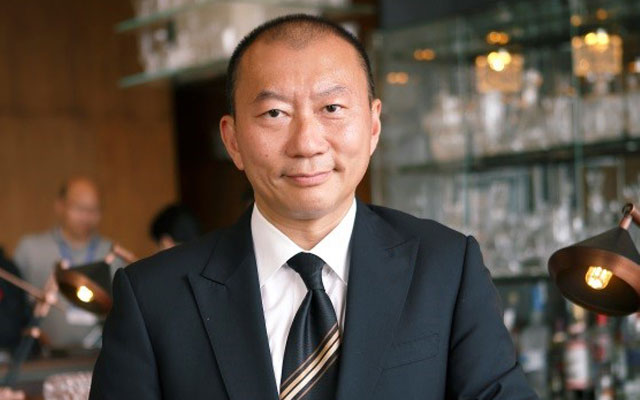
Greenland Hotel and Tourism Group (GHTG), the hotel and tourism arm of China-based Greenland Group, has picked Singapore as its springboard for regional expansion with the launch of its overseas operations centre (OOC) in the city-state earlier this month.
The centre will serve as the group’s Asia-Pacific hub for providing hotel advisory and management services to real estate entities in the hospitality segment.
“Singapore is known to be a regional hub with connectivity to the rest of the world that appeals to many multinational companies; it offers a complete range of financial and legal services and has sophisticated infrastructure that will certainly facilitate regional and international travel,” said William Lau, general manager of the OOC, on the reason for choosing to set up base in Singapore.
He cited the Republic’s close proximity to the company’s three priority markets of Indonesia, Thailand and Vietnam, as well as the presence of many major asset owners, developers and potential partners in Singapore as other key factors.
Lau said that as vaccination rates accelerate and restrictions ease, now is an “opportune time to pursue new hospitality and tourism opportunities in the region”.
He noted that pipeline data from Tophotelprojects showed that in South-east Asia alone, both 2021 and 2022 will see 121 new hotels open; with another 88 properties lined up for 2023, and 238 projects already on the books for 2024 and beyond.
This significant expected growth of hotel assets will lead to an oversupply, resulting in a highly competitive market and increased demand for hotel management services like GHTG, explained Lau.
He said that property owners and developers can not only tap into the group’s expertise in full life-cycle asset management, but also its “one core, two wings” developmental model, where its core hotel business is supported by its tourism and exhibition wings.
This will enable them to gear up for quicker recovery, and to optimise real estate yield and value by driving tourists and exhibition traffic to properties, he added.
The group, which operates more than 50 hotels in 60 cities across the world, aims to grow its regional footprint by launching its three signature brands – the luxury-focused Primus, upscale business brand Qube, and lifestyle brand Q-Box.
Lau said the company’s growth pipeline focuses on key gateway cities with an initial focus on its priority markets, and an aim to expand to 15 gateway cities by 2024. The group is also set to open two properties in the region come 1Q2022 – the Q-Box Hotel Johor Bahru in Malaysia and Qube Hotel Tasmania in Australia.
In addition, the group also specialises in advising on the integration of hotel assets into “Hotel+” destination concepts, and managing such micro-destinations, given its experience operating hotels within integrated complexes in various cities across China.
With the pandemic causing long-lasting shifts to travel patterns, Lau stressed that hospitality and tourism businesses will need to innovate and rethink their offerings, such as creating micro-leisure/holiday destinations.
“As demand for domestic travel increases, both for leisure and for work, demand for ‘Hotel+’ experiences will also intensify,” said Lau. “Businesses will need to pivot towards creating ‘Hotel+’ micro-destinations to cater to evolving demands.” He cited examples such as the integration of business events offerings or a leisure park with hotel assets.
Lau added that the group’s advisory services on managing such micro-destinations “will enable businesses to tap into the anticipated rebound of tourism, maximising the value of their land and emerging stronger from the pandemic”.
New WTTC report provides recommendations to drive tourism recovery

The World Travel & Tourism Council (WTTC) has launched a new report that highlights the pain points to restore international mobility, and recommendations to drive the recovery of the travel and tourism sector, while enhancing its resilience.
With the pandemic bringing international travel to an almost complete standstill due to border closures and severe travel restrictions, travel and tourism suffered more than any other sector over the past 18 months.
The sector’s contribution to global GDP fell from nearly US$9.2 trillion in 2019, to just US$4.7 trillion in 2020, representing a loss of almost US$4.5 trillion. Furthermore, some 62 million travel and tourism jobs were lost.
The report, in partnership with the Ministry of Tourism of Saudi Arabia, highlights WTTC’s latest economic projections which reveal the sector’s recovery is set to be slower than expected this year, largely linked to continued border closures and challenges linked to international mobility.
The sector’s contribution to GDP is expected to rise by a modest 30.7 per cent year-on-year in 2021, representing only US$1.4 trillion increase, and at the current rate of recovery, travel and tourism’s contribution to GDP could see a similar year-on-year rise of 31.7 per cent in 2022.
Meanwhile, the sector’s jobs are set to rise by a mere 0.7 per cent this year, representing only two million jobs, followed by 18 per cent increase next year.
The report reveals pain points that focus on the urgent challenge to restore international mobility, framed by the need to address the weaknesses of the sector shown during the pandemic by redesigning a more sustainable, inclusive, and resilient future.
It demonstrates how international border closures, uncertainty due to changing rules, the prohibitive cost of testing, and the lack of reciprocity and uneven vaccination rollout have hindered the recovery of the travel and tourism sector during the past 18 months.
Julia Simpson, president & CEO, WTTC, said: “The travel and tourism sector is key for many livelihoods which continue to be affected by the failure to harmonise and standardise Covid-19 regulations worldwide. There is no excuse for a patchwork of regulations; countries need to join forces and harmonise the rules. Many developing countries rely on international travel for their economy and have been left devastated.
“As it stands, only 34 per cent of the global population have been fully vaccinated, showing that there are still large vaccine rollout inequalities globally. A swift and equitable immunisation plan, alongside worldwide reciprocal recognition of all WHO approved vaccines, is needed to safely reopen international travel and promptly resume the economic activity.”
The report outlines recommendations to achieve a swift recovery of the travel and tourism sector, including a focus based on international coordination to reopen borders, fair testing conditions, digitalisation for travel facilitation, as well as sustainability and social impact at the core of the sector.








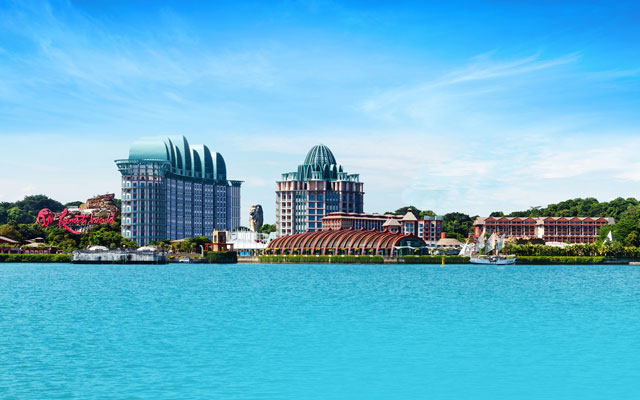
Trip.com Group has launched the Resorts World Sentosa (RWS) Star Hub Flagship Store on its Ctrip platform to serve as a one-stop online portal for users to make bookings with the travel guidance, food recommendations, and business travel and conference information available on the same platform at their fingertips.
The portal allows RWS to “better meet increasing demand from China’s emerging mass affluent segment and new millennials for more customised and personalised experiences”, said Trip.com Group in a release.
The Star Hub travel marketing hub was unveiled by the group earlier this year to allow its partners to expand and enhance marketing activities on its Ctrip platform.
Bo Sun, CMO of Trip.com Group, said: “Since the introduction of the Star Hub channel earlier this year, we have seen active participation from hundreds of valuable partners as they seek to adapt to new and unique ways of connecting with their target customers. We will continuously seek to work with our partners to innovate and tackle new frontiers as we strive towards the recovery of the travel industry.”
As Asia’s leading lifestyle integrated resort situated at the gateway of Sentosa Island, RWS is one of the most popular travel destinations for Chinese tourists and business travellers. It is home to several attractions including Universal Studios Singapore and the S.E.A. Aquarium, six luxury hotels, the Resorts World Convention Centre, as well as a plethora of restaurants and boutique brands.
This latest partnership with Trip.com Group enables RWS to further enhance its destination marketing campaign in anticipation of greater demand when global tourism returns. Leveraging Trip.com Group’s rich marketing solutions, RWS can showcase its full suite of diverse product offerings, strengthen customer loyalty and improve the convenience of making online bookings.
In future, the two brands will also deepen partnership in international marketing to increase RWS’s social media presence across South-east Asia and global destination markets.