Fully vaccinated travellers from any country can now book holidays in Phuket and other provinces taking part in the quarantine-free Sandbox scheme, as the Thai government looks to further bolster its tourism-reliant economy.
The move comes after authorities reduced the mandatory quarantine period from 14 days to seven days for fully vaccinated foreign visitors.
More than 38,000 visitors have visited Phuket under the quarantine-free Sandbox programme
Under the Sandbox scheme launched on July 1, fully vaccinated travellers from destinations considered low-to-medium risk are allowed to visit Phuket for a fortnight, before travelling to the mainland sans quarantine.
The Tourism Authority of Thailand announced on Friday (October 1) that from October 1, the scheme will no longer be limited to the current list of around 80 eligible countries, based on Covid-19 transmission risk.
“This means Thailand is now welcoming travellers from any country in the world to the Sandbox programme,” it said.
The Foreign Ministry spokesman Tanee Sangrat said unvaccinated children would be able to travel with their vaccinated parents.
The shortened quarantine time applies to those visiting Phuket, Surat Thani (Ko Samui, Ko Pha-ngan, and Ko Tao), Phang-Nga (Khao Lak and Ko Yao), and Krabi (Ko Phi Phi, Ko Ngai and Railay Beach).
Fully vaccinated tourists can now also travel straight to the designated areas of Phang-Nga and Krabi upon landing in Phuket, and stay there for seven days.
To date, the Sandbox programme has attracted more than 38,000 visitors to Phuket, generating an estimated 2.3 billion baht (US$68 million) in revenue.
International tourism enjoyed signs of rebound in June and July 2021 as some destinations eased travel restrictions and the global vaccination rollout advanced in many parts of the world.
According to the latest edition of the UNWTO World Tourism Barometer, an estimated 54 million tourists crossed international borders in July 2021, down 67 per cent from the same month in 2019, but the strongest results since April 2020.
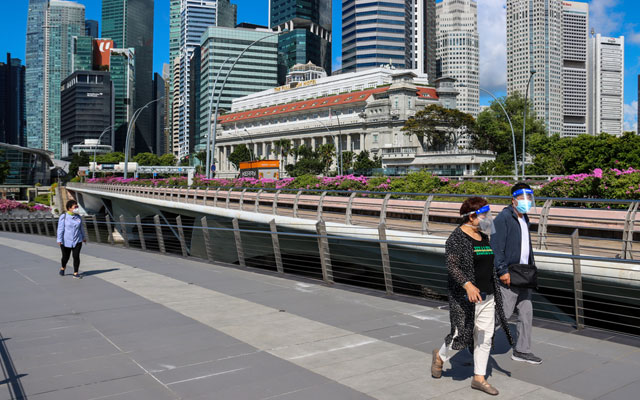
The Asia-Pacific region recorded a 95 per cent drop in international arrivals in the period January-July compared to 2019, people wearing face shields and masks walking on the Jubilee Bridge in Singapore pictured
This compares to an estimated 34 million international arrivals recorded in July 2020, though well below the 164 million figure recorded in 2019.
Most destinations reporting data for June and July 2021 saw a moderate rebound in international arrivals compared to 2020.
Nevertheless, 2021 continues to be a challenging year for global tourism, with international arrivals down 80 per cent in January-July compared to 2019.
Asia and the Pacific continued to suffer the weakest results in the period January to July, with a 95 per cent drop in international arrivals compared to 2019. The Middle East (-82 per cent) recorded the second largest decline, followed by Europe and Africa (both -77 per cent).
The Americas (-68 per cent) saw a comparatively smaller decrease, with the Caribbean showing the best performance among world subregions.
Meanwhile, some small islands in the Caribbean, Africa, and Asia and the Pacific, together with a few small European destinations recorded the best performance in June and July, with arrivals close to, or sometimes exceeding pre-pandemic levels.
This improvement was underpinned by the reopening of many destinations to international travel, mostly in Europe and the Americas. The relaxation of travel restrictions for vaccinated travellers, coupled with progress made in the rollout of Covid-19 vaccines, contributed to lifting consumer confidence and gradually restoring safe mobility in Europe and other parts of the world. In contrast, most destinations in Asia remain closed to non-essential travel.
UNWTO secretary-general Zurab Pololikashvili said: “There is clearly a strong demand for international tourism, and many destinations have started welcoming visitors back safely and responsibly. However, the true restart of tourism and the benefits it brings remain on hold as inconsistent rules and regulations and uneven vaccination rates continue to affect confidence in travel.”
Prospects for September-December 2021 remain mixed, according to the latest UNWTO Panel of Experts survey, with 53 per cent of respondents believing the period will be worse than expected. Only 31 per cent of experts expect better results towards the end of the year.
The survey also showed that most tourism professionals continue to expect a rebound driven by unleashed pent-up demand for international travel in 2022, mostly during the second and third quarters.
Almost half of all experts (45 per cent) continue to see international tourism returning to 2019 levels in 2024 or later, while 43 per cent point to a recovery in 2023.
By regions, the largest share of experts pointing to a return to 2019 levels in 2024 or later are in Asia and the Pacific (58 per cent). In Europe, half of respondents indicate this could happen in 2023. The Middle East is the most optimistic, with a full recovery expected by 2022.
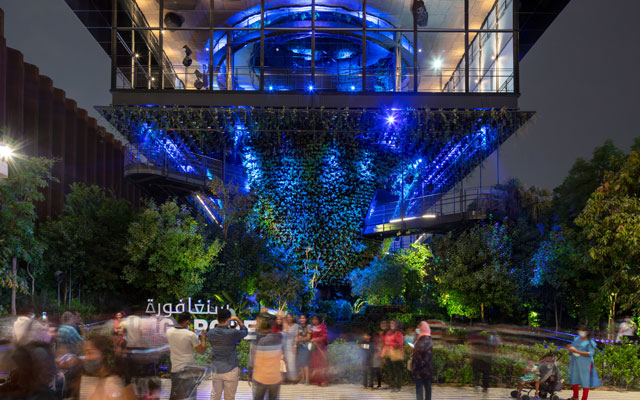
The Singapore Pavilion at Expo 2020 Dubai attracted more than 8,000 visitors over the opening weekend of the event, who braved queues to experience a verdant journey in this green, living, self-sufficient ecosystem.
Themed Nature. Nurture. Future., the Singapore Pavilion features a lush tropical urban landscape, complete with immersive exhibits and programmes, reflecting the city-state’s vision of becoming a City in Nature.
The nightly Biomorphosis light show features a soundscape composed by Singaporean musician Don Richmond (Photo Credit: Singapore Pavilion Expo 2020 Dubai)
It is considered one of the greenest pavilions at the Expo with over 80,000 plants of more than 170 plant varieties, a prototype of what it means to be a sustainable, liveable and resilient city of the future.
The lighting design, by Singapore-based practice Light Collab, illuminates and accentuates the Pavilion’s tropical landscape, presenting different effects and experiences through the day.
Across the 1,550m² site, the hanging garden and surrounding beams are aglow with grow lights to support plant growth across various surfaces of the Pavilion. These lights double up as an atmospheric layer of special colours to create an immersive biophilic environment.
In the Flower Cone, four terrariums are set against a wall of more than 50 native orchid varieties. The terrariums contain native orchid varieties with propagation apparatus and a pool of glistening plant gels.
The venue plays host to the nightly Biomorphosis light show, a pulsating performance that plays on different spectrums of light, with a soundscape composed by Singaporean musician Don Richmond. At 19.30, 20.30 and 21.30 every evening, visitors will be treated to an enthralling display of lights, shadows and sounds at the Pavilion.
Qantas will bring forward the restart of its international flights to November 14, 2021, following the federal government’s announcement that Australia’s borders will open in November.
The national carrier will operate three-weekly return flights between Sydney and London and three-weekly return flights between Sydney and Los Angeles with its Boeing 787-9 Dreamliners.
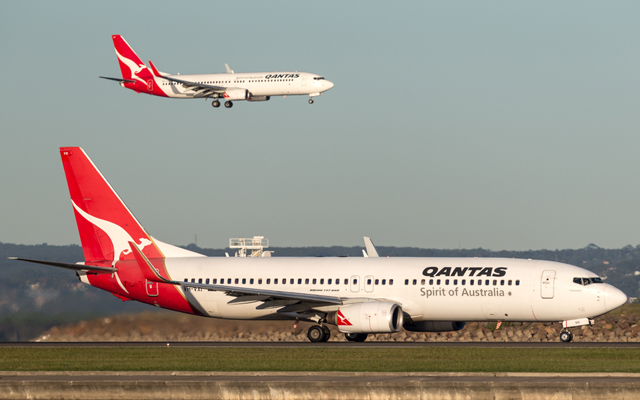
Qantas has grounded its international fleet since March 2020, operating only freight and repatriation flights
Qantas said in a release that London and Los Angeles were the two most searched destinations on its website in recent weeks, and that more flights may be added to meet demand.
Fares have gone on sale for Australian citizens, permanent residents and their immediate families and some visa-holders, starting from A$1662 (US$1,207) return for Sydney-Los Angeles and A$1869 return for Sydney-London.
The airline said that once the federal government announces the exact date that Australia’s international borders will reopen next month, the commencement dates for these two routes may need to be updated.
All passengers on Qantas’ international flights will be required to be fully vaccinated with a TGA-approved or recognised vaccine, with some exemptions for medical reasons and children. They will also be required to present a negative Covid-19 PCR test result 72 hours prior to departure.
Customers on these flights will also be required to home quarantine for seven days on arrival into Australia.
All other international routes that were scheduled to resume from December 18, 2021 will continue as planned, subject to government and regulatory approvals, said the airline.
It added that it may add additional routes if other states and territories decide to open their borders earlier and reduce quarantine requirements to seven days at home, or less.
Qantas Group CEO Alan Joyce lauded the government’s move to reopen Australia’s international borders earlier, on the back of a quicker vaccine rollout.
“We welcome the federal government’s decision and the work by the New South Wales government to facilitate the home quarantine approach that makes this feasible. We look forward to other states and territories getting on board,” he said.
He further shared that Qantas will be making more seats available to be booked with points alone as many of the airline’s frequent flyers have been stockpiling their points over the past 18 months to use on an overseas flight.
He added: “Beyond the initial rush, the ongoing demand for international flights will hinge largely on what the quarantine requirements are. The shift to seven-day home quarantine for fully vaccinated Australians with a negative test is a great step towards reducing this closer to what is becoming standard in many countries overseas, which is a test and release programme.”
Wyndham Hotels & Resorts plans to open 20 new Microtel by Wyndham hotels in key cities and emerging destinations across China by the end of 2022.
Since making its debut in China in late 2019 as a midscale brand, Microtel by Wyndham has grown to a collection of six hotels, including locations in Hangzhou, Hefei, Guiyang, Kunming, Lijiang and Tianjin.
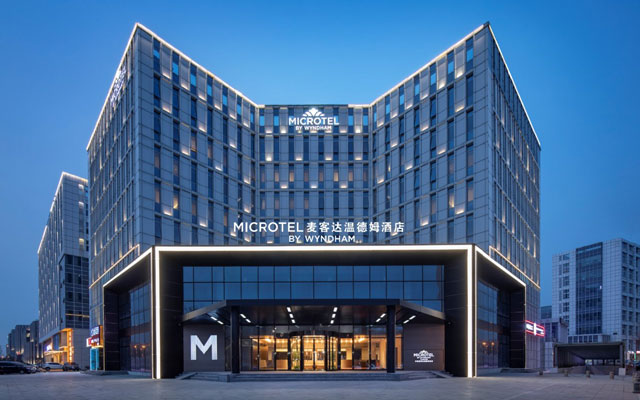
New properties in Tianjin and Kunming contribute to the nationwide expansion of Microtel
The most recent additions to this nationwide portfolio were Microtel by Wyndham Tianjin and Microtel by Wyndham Kunming City Center, which made its debut last month.
Looking ahead, the brand will further extend its presence with new openings in destinations including Huangshan, Changsha, Qingdao, Fuzhou and more.
Scheduled to open in 3Q2021, Microtel by Wyndham Huangshan Tangkou will be a 110-room new-build hotel situated close to the Mount Huangshan Scenic Area in Anhui province, a UNESCO World Heritage site and one of the most popular tourist attractions in China.
Opening in 1Q2022 is the 135-key Microtel by Wyndham Changsha West that will feature contemporary rooms and meeting space for up to 80 guests. The property will offer access to local attractions in Hunan province, such as Orange Island, Yuelu Mountain and Hunan Provincial Museum.
European destinations are hoping to lure Asia-Pacific’s elite travellers seeking wellness tourism once travel resumes.
While the wellness movement was taking off pre-pandemic, it is predicted to soar once borders reopen and travel-starved tourists seek holidays to balance the body and mind after many months of confinement. Readying for that rebound, destinations across Europe are lining up carefully-curated wellness agendas targeted at Asia-Pacific markets.
Wellness tourism expected to see healthy growth post-Covid
Encouragingly, a recent study by ILTM and Barton revealed Asia-Pacific travellers are not only searching for wellness-orientated trips in the region, but everywhere they go.
According to the research, Asia-Pacific high-net worth (HNW) travellers spend US$2.4 billion on wellness activities on their trips, compared to US$9.6 billion among global HNW travellers. Asia-Pacific’s overall spend on the same is US$5.1 billion compared with US$23.7 billion globally.
Chinese international travellers were found to spend about US$1.7 billion annually on wellness activities – 33 per cent of Asia-Pacific’s total spend. The nation’s HNW outbound spend is US$799 million.
Jessica Rideout, spokesperson of VisitScotland’s China and emerging markets department, said prior to the pandemic, Scotland was enjoying an annual increase in visitors from China that positioned it as Scotland’s leading developing market.
The destination is currently getting ‘China-ready’ in anticipation of the market reopening borders. Rideout said: “China will be driving our marketing and we are looking to rebuild what we already had pre-pandemic with China.”
She added India, South Korea, Japan and Australia are also strong markets from Asia-Pacific. More efforts will be ploughed into promoting Scotland to the emerging markets of Indonesia, Malaysia and Thailand, with the wellness agenda featuring heavily in promotional campaigns. Once possible, VisitScotland will join forces with VisitBritain to jointly host familiarisation trips with key Asia-Pacific source markets.
In 2019, VisitScotland launched a general wellness campaign in response to rising global demand. Realising its ever-growing potential in the wake of Covid-19, in June, it launched a water wellness campaign to push activities that take place on its thousands of kilometres of coastline, lochs and rivers.
Rideout remarked: “In response to the pandemic, there have been new realms created in terms of wellness and this will be very important going forward. With Scotland’s open spaces, fresh air and plentiful water, wellness is very popular for us.”
As a playground for the rich and famous, Monaco on the luxurious French Riviera has pledged to continue to tap into Asia-Pacific’s swelling number of elite travellers seeking restorative getaways.
Benoit Badufle, who represents the Monaco Government Tourist and Convention Authority in Asia, said: “Monaco has positioned itself as a global leading medical and wellness tourism destination. Demand for this type of tourism is expected to grow once people are again able to travel, and we are promoting Monaco’s range of offerings.”
In July, hotels in Monaco recorded 70 per cent occupancy compared with 39 per cent in 2020. Visitors were mainly domestic, Belgian and Swiss, with American and Middle Eastern clients also flying in. Badufle predicts that once borders in Asia-Pacific reopen, the destination will welcome arrivals from the Asia-Pacific region, especially China.
Asia-Pacific is also of importance to Spain. Australia and New Zealand have traditionally been strong performers, with Thailand and Indonesia showing signs of growth pre-pandemic. Future promotion will also target Vietnam and Brunei.
The destination is pushing its wellness agenda too, boasting 112 spa areas countrywide. The northwest region of Galicia is famed for its upmarket spa experiences, southern Spain is renowned for its facials, while Valencia in the south-east recently started promoting its variety of health and wellness offerings.
Vien Cortes, regional market analyst for Turespaña, said: “We are very strong on wellness tourism and offer some unique experiences. The spa concept in Spain is very different to what we see in South-east Asia and is more focused on the therapeutic side, which is interesting for Asia-Pac ific visitors.”
Switzerland Tourism is also ramping up its wellness focus, and has its sights set on the Asia-Pacific market. Batiste Pilet, Switzerland Tourism’s director for South-east Asia, said: “As consumers become more and more aware of their health, tourism is also impacted by this change. As a result, we have launched a health tourism campaign spanning from spa and wellness all the way to medical travel.”
He added that as a longhaul market, the Asia-Pacific region is one of Switzerland’s most important source markets for wellness and medical tourism. China is the main focus, where outbound wellness and medical travel will be a “booming trend” post-Covid.
In 2020, Switzerland Tourism launched a campaign in China, based on feedback from medical and hospitality institutions that noted rising demand. Pilet noted that there had also been growing demand out of South-east Asia for programmes that Switzerland is strong in, such as detox and addiction rehabilitation.
Said Pilet: “We except this segment to boom (post-lockdown) as consumers have never been that health-conscious and Switzerland’s cleanliness, reliability and natural beauty are more attractive values than ever before.”
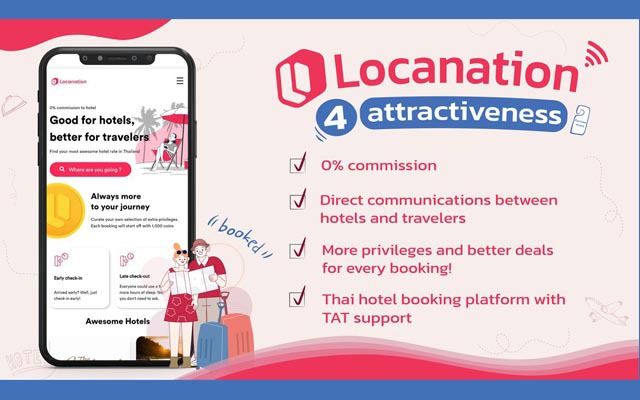
A Bangkok-based start-up has launched what is said to be a first ever social travel marketplace that intends to give OTA giants a run for their money and which will not charge merchants a commission for transactions.
Locanation features hotel partners that offer their own attractive promotions to win over travellers, with the platform open for bookings today on October 1. It will also be the world’s first hotel booking platform that enables travellers across the world to communicate in Thai, English and Mandarin directly with hoteliers as well as representatives of restaurants, cafes, and entertainment venues, according to CEO and founder, Pepe Arunanondchai.
Locanation enables travellers across the world to communicate in Thai, English and Mandarin directly with tourism merchants
Pepe told TTG Asia that the platform draws on the lessons acquired from his Alternative State Quarantine (ASQ) and Phuket Sandbox booking platform.
He pointed out the OTAs typically require hotel partners to pay commission fees of as high as 30 per cent of transaction, and have limited means for hotels to directly inform travellers of promotions.
While hotels are increasingly avoiding these issues by going direct to the customer, Pepe said more than 70 per cent of hotels in Thailand, namely the local boutiques and non-chain hotels, still lack online reservation capability.
Locanation has the support of the Tourism Authority of Thailand (TAT), being one of the winning teams in the TAT Travel Tech Startup Season 2.
Pepe hopes that Locanation can drive recovery for Thailand’s tourism industry, and aims to have 20,000 hotels signed onto its platform by 2022.
In the first launch phase, Locanation will prioritise the domestic travel market. When Thailand is fully reopened to international travel, Locanation will begin its focus on foreign markets.
Locanation’s domestic tourism direction in the beginning will come in handy as TAT works to kick off phase three of its domestic travel campaign, We Travel Together. Through this scheme, the government offers Thai residents a range of travel subsidies on hotel accommodation, domestic flights and tour packages.
Vaccinated Australian citizens and permanent residents will be able to travel abroad from November, as the government puts an end to its tough Covid-19 travel restrictions which have been in place since March 2020.
Reopening of Australia’s international borders is dependent on the establishment of home quarantine in Australia’s eight states and territories, said prime minister Scott Morrison on October 1. As the timeline of establishing home quarantine systems will be set by state and territory authorities, some parts of the country will reopen sooner than others, he added.
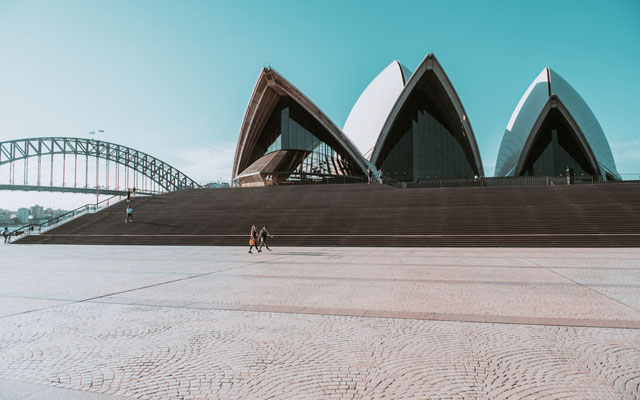
Fully vaccinated Australians will soon be able to travel inter-state and serve a shorter seven-day quarantine at home; Sydney, the capital of New South Wales, is one of the regions with the highest vaccination rate
The home quarantine programme will allow vaccinated residents to be isolated at home for seven days upon their return, instead of completing the requirement in a hotel. However, hotel quarantines lasting 14 days remain for returning Australian residents who are not vaccinated.
The exact timing of the border reopenings will also depend on when Australian states reach their 80 per cent vaccination targets, and crucially on local political approval.
According to news reports, New South Wales has achieved a 64 per cent fully vaccinated population aged over 16. The number is expected to grow to 80 per cent by end-October.
In the next stage, Australia will look into permitting foreign arrivals as well as establishing quarantine-free travel with countries such as New Zealand when it is safe to do so.
Inbound tourism players in Malaysia have expressed support for a cautious tourism reopening for the country, as authorities decide to indefinitely suspend a travel bubble for Tioman Island and Genting Highlands that was meant to set in on October 1.
The postponement was announced by Kamaruddin Ibrahim, general manager of Tourism Pahang, which oversees the region where Tioman Island and Genting Highlands are located, on September 28. Kamaruddin said the decision was based on a statement by prime minister Ismail Sabri Yaakob on September 22 that specified a need for a 90 per cent vaccination rate of the adult population before tourism destinations can reopen and interstate travel can resume.
Tioman Island (pictured) and Genting Highlands are supposed to reopen to inter-state travel on October 1
Malaysia is likely to hit this target in mid-October.
Malaysian Inbound Tourism Association president, Uzaidi Udanis, said that while the trade wanted Tioman Island and Genting Highlands to reopen as soon as possible, they recognised that reopening must take place in safe and responsible ways.
“The (Covid-19) virus is very dynamic and I believe the government knows what is best,” remarked Uzaidi, adding that Kamaruddin’s decision was only a “temporary setback” for tourism stakeholders.
Adam Kamal, general manager, head of contracting & domestic market, ICE Holidays, told TTG Asia: “We have already waited for 18 months, so another few more weeks will not make a big difference. In fact, we are preparing for the whole country to reopen for domestic tourism and we believe this will be soon.”
In view of changing decisions, Nigel Wong, secretary-general, Malaysian Association of Tour and Travel agents, urged “proper planning and communication (as well as) a clear roadmap” for the industry, in order to avoid confusion over tourism reopening decisions made by different authorities.
Earlier on September 21, minister of tourism, arts and culture Malaysia, Nancy Shukri had announced that her ministry had proposed to the Special Committee on Covid-19 Pandemic Management that Melaka, Tioman Island and Genting Highlands should be allowed to reopen on October 1, and that her ministry was fine-tuning the SOPs on reopening tourist destinations on the mainland.
However, two days later, Melaka’s chief minister, Sulaiman Md Ali, overwrote the plan with a decision to not reopen Melaka to interstate travellers until 90 per cent of the adult population in Malaysia had been fully vaccinated.
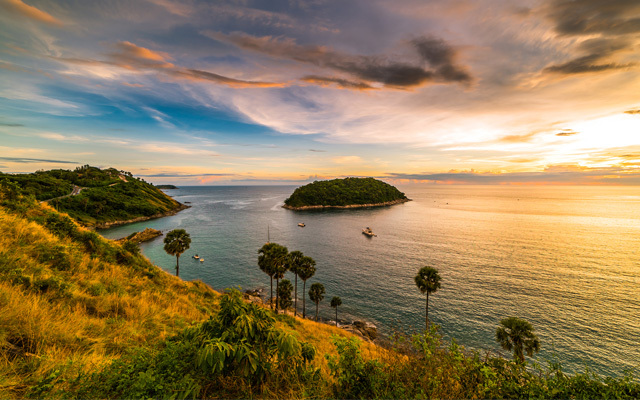
Phuket’s beaches are more pristine and beautiful than ever; Promthep Cape pictured
Thailand’s launch of the Phuket Sandbox programme on July 1, 2021, and the Phuket Sandbox 7+7 Extension on August 16, 2021, gave the world the highly-anticipated signal that the destination are once again ready to amaze visitors – this time with all the necessary health and safety measures in place.
Explore the Phuket Old Town for vibrantly presented and well preserved Sino-Portuguese townhouses
Phuket’s beaches are more pristine and beautiful than ever, each one offering its own individual vibe and atmosphere, from the energetic buzz of Patong and its restaurants, shops and souvenir stalls to the relaxing settings of Kata, Karon, Nai Harn and Mai Khao with their silky-soft sands and glistening waters gently caressing the shoreline.
Away from the glorious beaches, visitors can as always discover much in the way of culture and heritage, soft adventure and family-friendly tropical fun. Whether it is visiting the island’s glittering temples and shrines, thrill-seeking on zipline rides and 4WD excursions through lush jungles, or discovering the picturesque beauty of landmark locations like Promthep Cape, Krathing Cape, and Karon Viewpoint to make that perfect photograph, Phuket does not disappoint.
Phuket is a wellness haven, with many world-class spas within hotels and resorts offering rejuvenating treatments
Health and wellness opportunities abound for those seeking the chance to rejuvenate and recharge in the tropical surroundings of dedicated spa resorts and world-class spas at many a hotel and resort. Delicious cuisine created with the freshest seafood and tantalising, exotic ingredients can be found the island over, positioning Phuket as a gastronomical destination of international renown and earning its place in UNESCO Creative City listing. Community-based tourism experiences provide the opportunity to appreciate a unique and fascinating local way of life.
Khao Lak on Phang-Nga’s coastline provides a serene escape from the city’s hustle and bustle
Directly north of Phuket on the mainland, Phang-Nga’s stunning landscape vistas must not be missed. This natural beauty is best appreciated from famous Samet Nangshe Viewpoint, with spectacular 180-degree views across Phang Nga Bay and its many limestone formations and small islands. Among the area’s islands is Ko Yao Noi, featured in the James Bond movie The Man With The Golden Gun. And when the sun sets, the Milky Way comes into view.
On the Phang-Nga coastline, the 20km stretch of beaches in Khao Lak make for a serene, welcoming and idyllic sun, sea and sand experience to remember. Here, the days are quiet and unrushed, and one could be excused for thinking they had discovered an untouched tropical hideaway – from an enchanting shoreline to jungle-clad mountain backdrops.
There is no better time than now to visit Phuket and Phang-Nga, two delightful jewels in the ever-dazzling crown that is the tropical paradise of southern Thailand, where shimmering seas, beautiful beaches and countless off-shore islands await travellers.









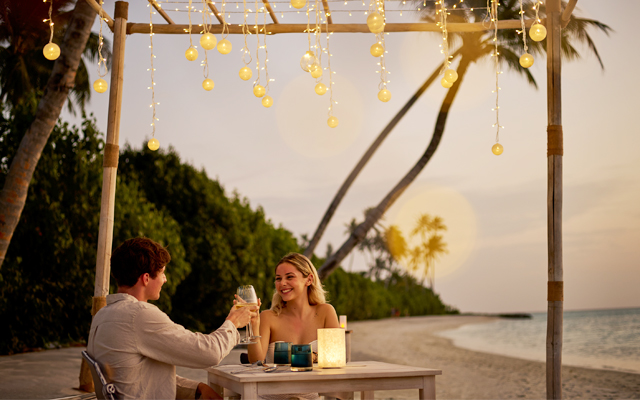






International tourism enjoyed signs of rebound in June and July 2021 as some destinations eased travel restrictions and the global vaccination rollout advanced in many parts of the world.
According to the latest edition of the UNWTO World Tourism Barometer, an estimated 54 million tourists crossed international borders in July 2021, down 67 per cent from the same month in 2019, but the strongest results since April 2020.
This compares to an estimated 34 million international arrivals recorded in July 2020, though well below the 164 million figure recorded in 2019.
Most destinations reporting data for June and July 2021 saw a moderate rebound in international arrivals compared to 2020.
Nevertheless, 2021 continues to be a challenging year for global tourism, with international arrivals down 80 per cent in January-July compared to 2019.
Asia and the Pacific continued to suffer the weakest results in the period January to July, with a 95 per cent drop in international arrivals compared to 2019. The Middle East (-82 per cent) recorded the second largest decline, followed by Europe and Africa (both -77 per cent).
The Americas (-68 per cent) saw a comparatively smaller decrease, with the Caribbean showing the best performance among world subregions.
Meanwhile, some small islands in the Caribbean, Africa, and Asia and the Pacific, together with a few small European destinations recorded the best performance in June and July, with arrivals close to, or sometimes exceeding pre-pandemic levels.
This improvement was underpinned by the reopening of many destinations to international travel, mostly in Europe and the Americas. The relaxation of travel restrictions for vaccinated travellers, coupled with progress made in the rollout of Covid-19 vaccines, contributed to lifting consumer confidence and gradually restoring safe mobility in Europe and other parts of the world. In contrast, most destinations in Asia remain closed to non-essential travel.
UNWTO secretary-general Zurab Pololikashvili said: “There is clearly a strong demand for international tourism, and many destinations have started welcoming visitors back safely and responsibly. However, the true restart of tourism and the benefits it brings remain on hold as inconsistent rules and regulations and uneven vaccination rates continue to affect confidence in travel.”
Prospects for September-December 2021 remain mixed, according to the latest UNWTO Panel of Experts survey, with 53 per cent of respondents believing the period will be worse than expected. Only 31 per cent of experts expect better results towards the end of the year.
The survey also showed that most tourism professionals continue to expect a rebound driven by unleashed pent-up demand for international travel in 2022, mostly during the second and third quarters.
Almost half of all experts (45 per cent) continue to see international tourism returning to 2019 levels in 2024 or later, while 43 per cent point to a recovery in 2023.
By regions, the largest share of experts pointing to a return to 2019 levels in 2024 or later are in Asia and the Pacific (58 per cent). In Europe, half of respondents indicate this could happen in 2023. The Middle East is the most optimistic, with a full recovery expected by 2022.