

Meet Changi Pay, Changi Airport’s new digital wallet

Changi Airport Group (CAG) has launched its own digital wallet, Changi Pay, as part of CAG’s digitalisation roadmap.
Developed jointly with Liquid Group, Changi Pay enables users to make contactless QR payments at Changi Airport and Jewel Changi Airport (Jewel) stores, redeem discount vouchers upon check-out, and earn Changi Rewards and CapitaStar points (for Jewel stores) all at one go with just one scan. Changi Pay can also be used while shopping on iShopChangi, Changi’s online duty-free retail platform.
Housed within the iChangi app, Changi Pay is currently accepted at close to 260 stores across Changi’s terminals and Jewel, and will be progressively rolled out to more stores.
More new Changi Pay functions will be introduced in the near future, including the use of Changi Pay on Changi Eats, Changi’s food delivery platform; integration with Changi Car Pass, which automatically credits complimentary parking coupons into users’ Car Pass accounts; and integration with Changi Play Pass which allows users to book a play session at Changi’s thematic events.
In a statement, CAG said that it will continue to develop and improve user experience through partnerships with other digital wallets, banks and merchants outside of Changi.
Through Changi Pay, brands can leverage the marketing of events and promotions at Changi and enhance engagement with users by rewarding them with digital discount vouchers and exclusive perks.
Starting Friday (October 29), up to S$720 (US$535) worth of vouchers from brands such as Burger & Lobster, Paris Baguette, Eu Yan Sang and Shilla Duty Free, will be rolled out to Changi Pay users. These vouchers will be released over 12 weeks, available for users’ download on a first-come-first-served basis.
Teo Chew Hoon, CAG’s managing director of airside concessions, said that Changi Pay “brings greater convenience and rewards to our shoppers and diners” and that “when more travel resumes, CAG also plans to allow users to exchange and pay in foreign currencies through Changi Pay while overseas”.
IHCL to rebrand heritage hotel in Jaisalmer
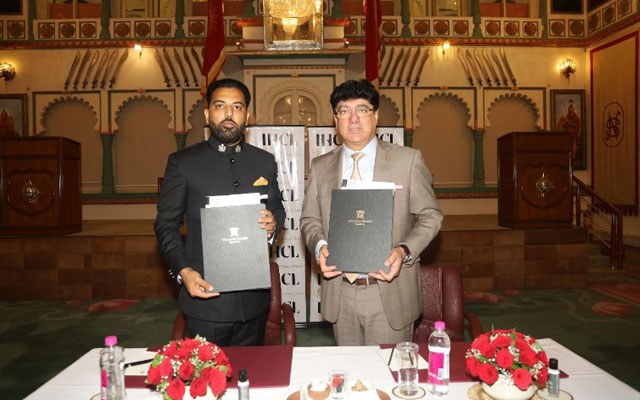
Indian Hotels Company (IHCL) has signed a deal with Historic Resort Hotels (HRH) to manage Gorbandh Palace in Jaisalmer, which will relaunch as a SeleQtions branded property in 2Q2023 after a comprehensive renovation.
Located in the heart of Jaisalmer, the 83-key yellow sandstone heritage hotel will have an all-day diner, bar, recreational facilities including a spa, as well as a banquet hall and gardens for social and business gatherings.
This marks the third hotel in IHCL’s 50-year partnership with HRH, following Taj Lake Palace, Udaipur in 1971 and Taj Fateh Prakash Palace, Udaipur.
With the addition of this hotel, IHCL will have 21 hotels across brands in Rajasthan, including eight under development.
Refurbishment of Grand Hyatt Singapore to include waterfall feature, wellness spaces
Grand Hyatt Singapore is embarking on a phased renovation project that will take approximately two years to complete, with infrastructural and design upgrades.
Remodelling of the hotel’s guestrooms, select restaurants, Damai Spa & Fitness Centre and wellness areas are included as part of the project. Grand Hyatt Singapore declined to reveal the costs of the project.
Commencing this month, Phase 1 of the hotel’s upgrading project will kick off at The Terrace Wing – a complete separate wing from the main hotel – as well as the facilities and outlets that it houses such as Damai Spa & Fitness Centre and the swimming pool.
The Terrace Wing will be relaunched as The Wellness Wing in 1Q2023, with brand new spaces designed by NAO Taniyama Associates and Strickland, in addition to urban landscaping designed by Grant Associates.
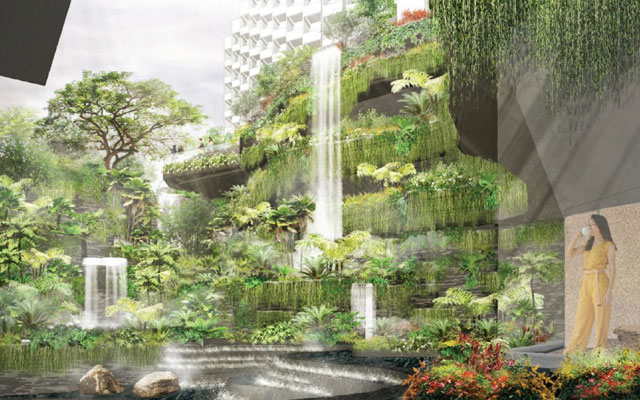
With its renovation project, Grand Hyatt Singapore will create physical spaces and experiences with wellness at the core. These include a five-storey cascading garden and waterfall feature, lounging daybeds in the guestrooms, plus additional outdoor options such as event venues, and an outdoor fitness area extension to the new Damai Spa & Fitness Centre.
Driving social change
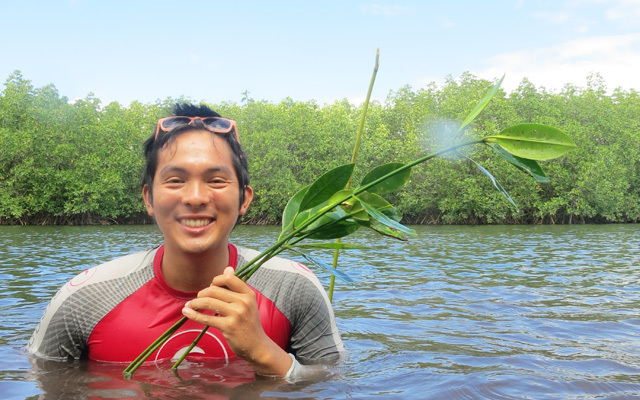
Your social enterprise Make A Difference Travel, along with The Circle Hostel, run alternative tours that support both the environment and the marginalised communities in the Philippines. In less than a decade, your team and clients have reforested thousands of acres of barren land by planting trees and seedlings, collected and repurposed plastic that would have trashed land and oceans, and gave livelihood to indigenous communities. What steered you towards the path of social tourism?
There are two reasons why I’m so into it. On the internal level, all the science shows it is for our human survival. If we don’t empower people to take care of our planet that takes care of all of us, then we’re (done for).
The other is connected to caring. I enjoy surfing, scuba diving, mountain climbing, trekking, swimming – and because I love these activities and the environment that allows these activities to happen, I care for the environment. At one point in Zambales, seeing the degradation caused by thousands of weekend tourists who didn’t care about the beach and threw trash into the sea, it was very painful for me to even go to the beach.
The rest of (my life) will be dedicated to creating a world that is more inclusive and more balanced with the ecology and our environment.
Is social tourism a profitable endeavour?
Of course. Just because we are trying to do good for people and the planet does not mean we are a non-profit. We are not. Neither are we a charity; we want to create profit for everyone. Profit is a reflection of value generated – for people and planet.
That’s the mindset we want to (instil). If your business is not good for people and planet, then you should not be in business. If your business just makes money off the backs of poor people and you are not making them move up and you destroy the environment, you are not creating value.
The premise of the social tourism and social enterprise movement is to create inclusive and holistic value. And the value chain is no longer just customers and owner of the business; it is now the customers and the communities affected by the business and the environment as we have seen.
Boracay is the best example of that. Clearly, not enough attention was given to (preserving Boracay). One can say that in general, businesses and the government did not care or know about the environment – or not enough, at least – (to take care of it,) therefore Boracay was destroyed, and with that, the loss of hundreds of millions of pesos in revenue. Hopefully, Boracay’s rehabilitation is a strong story that people can learn from.
What are your personal observations on the progress of tourism sustainability in the Philippines?
It’s very slow. Our tourism sector is not sustainable at all, but it can be.
Many players are pushing for sustainability, but you have to get the right people on board with the right tools and the right perspective. There has to be a way to really empower the local government units to implement the law and sustainability programmes. Put some teeth into existing environmental laws, or implement new laws as needed.
We need an education programme for tourism practitioners, including agencies, operators, accommodation providers, etc. If they are not empowered, how can we change?
While we try our best to protect the environment, it’s an uphill battle because of the convenience mindset that people have and a lack of facilities to responsibly manage the waste. But more people are now becoming aware of the need to protect the environment, and they want environmental (policies) from their political and corporate leaders.
The travel world has always been about glitz and glamour and what’s beautiful, but this generation is also looking for five-star experiences, which are more important than five-star hotels.
However, the divide is very big between the haves and the have nots and we feel it is our duty to show that you can connect up and down or left and right of the social classes. It is the disconnection of people from each other, and from the environment, that drives the destruction and exclusion.
I was very disconnected when I first started out, but I became friends with people in the countryside and they helped me understand the different parts of Philippine culture, and our environment.
What can be done to hasten sustainability?
I think the basic principle is that people need to see the numbers behind it. The poverty of the environment is the poverty of the people and the richness of the environment is the wealth of the people. If the beach is clean, no matter what you put there – be it a nipa hut or a hotel, it will make money. But if the beach is dirty, the money you lose could be billions of pesos, like in the case of Boracay. The world is more fun when it is cleaner.
(Philippine) tourism is 70 per cent water-based. We sell islands. We have to make even better efforts to save the ocean, especially with the advent of take-home delivery. Six out of 10 fishermen catch plastic. There is no vaccine for dirty oceans. The tourism industry can do something about it by teaching people how to love oceans so they protect it.
What advice do you have for aspiring tourism social entrepreneurs?
There is a body of knowledge, a mindset, and relationships that can be adopted by operators, agents, accommodation providers, etc. Take time to know the community. Take out their biases. They cannot walk in with a superiority complex, which I see happens a lot. The society in the Philippines raises us to have superiority complex (and look down on) farmers and fishermen and indigenous people, but we shouldn’t. Our perspective should be that we can learn from them in the same way that they can learn from us.
I once offered help to one of the elders from the indigenous community of Aetas in Bataan. The elder asked, “What kind of help?” And I said, “For you to earn money.” The elder replied that the kind of help she wanted was one where we both stood to benefit. If only she were to benefit, I would probably end up leaving her, so that (kind of help is) not sustainable.
What the elder wanted was for me to tell her how we can help each other so we are in a relationship of equals. That’s sustainability. Basically, she was saying, “Treat my community like a legitimate business partner, then we can create value together.”
Learn more about Dionisio’s social enterprise here.
Hell’s Museum opens its fiery gates at Haw Par Villa
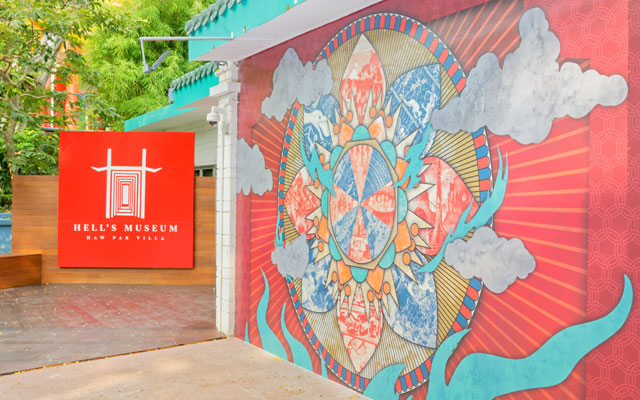
Haw Par Villa, a cultural theme park in Singapore, has relaunched with a brand new first-of-its-kind attraction dubbed Hell’s Museum that is dedicated to death and the afterlife.
The Museum will be open to the public from Friday (October 29). The opening weekend, October 29-31, will be packed with a series of events and activities, ranging from Chinese ink-painting workshops and yoga under the stars, to guided park tours and Halloween-themed picnics.
Hell’s Museum provides unique comparative insights on how death and the afterlife are viewed and interpreted across religions, cultures, and the ages.
The immersive exhibition features specially commissioned videos and multimedia elements that will offer visitors a better understanding of the commonalities across the world’s major belief systems – and how different communities around the world, as well as in Singapore, draw meaning from death and dying.
Stretching over 3,800m², the Hell’s Museum also serves as a prelude to Haw Par Villa’s Ten Courts of Hell, based on Taoist and Buddhist teachings of punishments in the afterlife.
“We aim to revitalise this 84-year-old attraction in a three-phased programme, starting with the introduction of the world’s first Hell’s Museum,” said Jeya Ayadurai, chairman of Journeys, which currently manages Haw Par Villa.
“Our goal is for Haw Par Villa to be reinvigorated as the heritage gem it truly is, by incorporating new, compelling content to complement the folklore and philosophy behind the Park’s array of over 1,000 statues and 150 dioramas. In doing so, we hope to spark in local and international visitors a keener sense of curiosity and an exploration of Asian art, culture, literature, and religion. The result is a richer appreciation of what our communities share in common.”
As part of the reimagining of Haw Par Villa, a line-up of activities will be rolled out in the next few months, including vintage cars display and rides, experiential art performances and the launch of a shipping container hotel at the park.
Starting January 2022, the calendar of activities for the public to take part in will include theatrical tours, art walks, pottery and art jamming classes, escape room games and Amazing Races, as well as DIY Tour: Trails of Life.
Tickets to the Hell’s Museum are priced at S$18 (US$13) for adults (13 years and above) and S$10 for children (7-12 years only). Due to the subject matter, children under the age of nine are not encouraged to visit the Museum.
For the opening weekend, the Park will be open from 09.00 – 12 midnight (last entry: 23.30), while the Hell’s Museum will be open from 10.00 – 20.00 (last entry: 19.00). In conjunction with Halloween, Hell’s Museum will also offer a special limited-edition souvenir to all who visit the museum dressed in Halloween costume.
Regular operating hours for the Park are from 09.00 – 22.00 daily, while the Hell’s Museum will be open Tuesdays to Sundays, from 10.00 – 18.00 (last entry: 17.00).
Hotelbeds extends Asia portfolio with Zuzu partnership

Hotelbeds has sealed a partnership with hotel revenue and distribution management platform Zuzu to further expand the bedbank’s hotel offering in Asia.
The new partnership will give Hotelbeds access to the more than 2,700 independent properties in South-east Asia working with Zuzu, while securing special rates and exclusive offers for its clients across Singapore, Indonesia, Thailand, Malaysia, the Philippines and Vietnam.
In return, properties partnering with Zuzu will extend their global reach by gaining access to Hotelbeds’ 60,000 travel buyers based in more than 140 source markets around the world.
Zuzu provides independent hotels with an all-in-one hotel operating system supported with their revenue management and distribution services. This technology plus service solution allows hotels with limited resources and time to get both the technology and expertise of larger hotel chains with none of their associated costs and restrictions.
New hotels: Mamaka by Ovolo, Jumeirah Maldives, and more
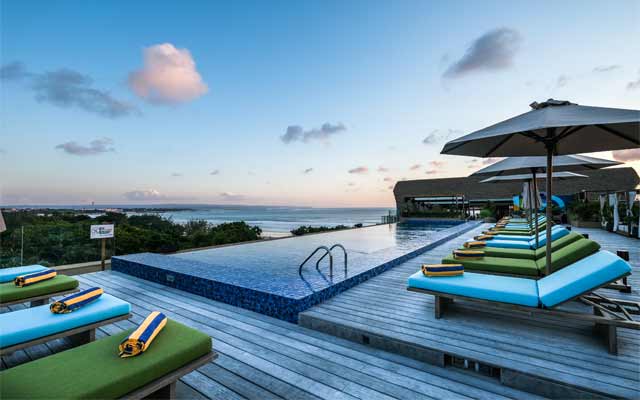
Mamaka by Ovolo, Indonesia
Ovolo Hotels has launched its first Indonesian property, Mamaka by Ovolo in Bali; which is also the group’s first property outside of Hong Kong and Australia. Located in the Kuta-Legian neighbourhood, on the Kuta beachfront, the eclectically designed urban resort features 191 rooms and suites. Mamaka’s signature Swagger and Top Gun suites offer a private mini-bar with a shaker, jigger, strainer, long bar spoon and more, inviting guests to be creative and concoct their own in-room cocktails. Facilities include a 24/7 Wellness Zone featuring a fitness centre with TRX gym equipment, boxing gear and a balancing surfboard activity. The facility is also open to non-guests who purchase a membership package.
Guests can relish Pan-Asian street food-inspired fare along with handcrafted cocktails and beverages at Street 32 Cocktail Bar & Eatery. Set within a corner of Street 32, One Pink Goat, also known as OPG coffee, brings the best locally sourced coffee beans and blends to the Kuta-Legian strip. Elsewhere, a rooftop bar and recreational space overlooking the Indian Ocean allows guests to soak up stunning sunset views while savouring cocktails. The hotel also offers a variety of meeting and event spaces for hosting conferences, business meetings and social gatherings.
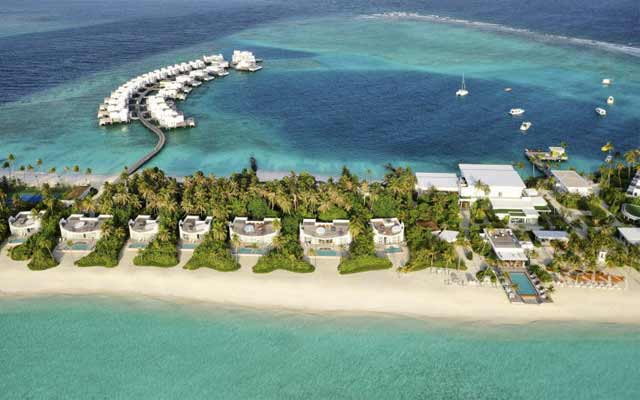
Jumeirah Maldives, the Maldives
Adding to Jumeirah Group’s growing portfolio of hotels, guests can now discover Jumeirah Maldives, an all-villa luxury resort tucked away in the North Malé Atoll, easily reachable by speedboat or seaplane from Malé Airport. Jumeirah Maldives offers 67 beach and over-water villas in one-, two- and three-bedroom configurations, all assuring panoramic views of the Indian Ocean. Each villa features a private infinity pool and rooftop terrace with a dedicated dining area, while the three-bedroom villas also boast their own gym.
The group’s two signature restaurants, Shimmers and Kayto, showcase Mediterranean and Nikkei flavours. Delivering casual alfresco dining, Shimmers will feature chef Roberto Rispoli’s cuisine set against a backdrop of sunrises, ocean views and chilled vibes thanks to a resident DJ and regular live music performances. Kayto, meanwhile, will captivate guests over dinner, with an open kitchen concept. Other facilities include a spa, splash waterpark and indoor play area for kids, and an outdoor cinema.
Guests can enjoy an array of activities including water sports, beach volleyball, billiards and tennis at the resort’s court location, or partake in experiences such as underwater photography, planting coconut trees and making coconut oil. A highlight is the submarine tour transporting guests through the marine habitat. Daily yoga classes are also held at this tropical paradise.

The Botanica Sanctuary, Indonesia
Situated in the Puncak area in Bogor regency, West Java, The Botanica Sanctuary, an Agung Sedayu Group property, is home to 166 rooms in eight different categories including 38 suites. Managed by Tauzia Hotels, a member of The Ascott Limited, the luxury resort boasts mountain views and pine forests. Two F&B facilities are on offer – all-day dining restaurant The Garden Brasserie and the Gyu Steak House, a specialty restaurant which serves grilled meats. Other amenities include a rooftop infinity pool with separate Jacuzzi, outdoor fitness centre, air balloon and giant swing. A ballroom and breakout rooms are also available for events.
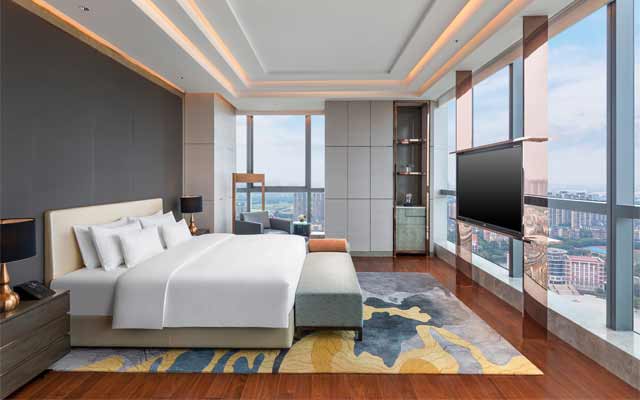
Radisson Collection Hotel, Wuxi; China
Radisson Collection Hotel, Wuxi is nestled in the city’s Xishan district, just a 20-minute drive from Sunan Shuofang International Airport and 15 minutes from Wuxi Railway Station. Guests can stay in a choice of 318 rooms or suites, ranging from the 40m2 Collection Superior Rooms to the 258m2 Presidential Suite, all featuring sleep-inducing beds, working areas, Nespresso coffee machines, fast Wi-Fi and smart bathroom fixtures.
The property will be the first to offer the brand’s new wellness concept, The Spa at Radisson Collection, which comprises massage and yoga spaces, a sauna and an indoor swimming pool. There are five F&B offerings, including all-day dining venue Maillard 69, Chinese restaurant Lan Ting Ge, Japanese restaurant Ji Bai Qiu, and whisky bar Elaresanse. Meeting planners can host events in 2,400m2 of flexible function venue space, including an 800-guest Grand Ballroom.
Dusit sets up gastronomy academy in Thailand to drive innovation

Thailand-based Dusit International is set to expand its hospitality education business in the kingdom with a unique joint venture offering experiential training in Italian, Japanese, and Thai cuisines – plus exclusive incubation services for F&B startups – in a facility in Bangkok.
Called The Food School, the project occupies 3,200m² of space set over three floors at the new Creative & Startup Village in the city’s Sam Yan district, just a five-minute walk from Sam Yan MRT underground station.

Equity partners in the 336 million baht (US$10 million) development slated to launch in 1Q2022 include Dusit International; Glowfish Co-Working Space (under privately owned real estate investment company, Heritage Estates Co.); Allied Metals, a supplier of professional kitchens and kitchen infrastructure; and La Scuola Internazionale di Cucina Italiana (ALMA), an education and training centre for Italian cuisine.
Designed to provide an experiential learning environment, and targeted at young professionals, keen amateurs, career-switchers, and entrepreneurs seeking to get the best possible start for their F&B businesses, The Food School will bring together three institutions – including Dusit’s own Dusit Thani College; Japan’s Tsuji Culinary Institute; and ALMA. Each will offer long-course modules in Thai cuisine, Japanese cuisine, and Italian cuisine and bakery, respectively.
Students will also have access to The Food School’s entrepreneurial incubator platform, The Test Kitchen, which will offer facilities for product testing and experimentation, business planning services, professional coaching and mentorship from local chefs, and exclusive opportunities to get financial support from investors during pitching sessions.
Regular events will showcase innovations and new F&B business trends. A community dining room, meanwhile, will serve as a venue for students, instructors, locals, visitors, mentors and mentees to exchange ideas and evaluate new concepts.
“The Food School aims to create a vibrant, dynamic and collaborative ecosystem that brings together Thailand’s food community to drive positive social, environmental, and economic developments in the food and beverage industry at large,” said Suphajee Suthumpun, group CEO, Dusit International.
Suthumpun added that no other facility offers such comprehensive services for culinary startups and young professionals in Bangkok.
She said: “By responding to the professional needs of the market in the new normal, fully leveraging Dusit’s rich experience in providing hospitality education for more than 20 years… we look forward to helping The Food School’s students, entrepreneurial associates, and community supporters to fulfil their potential with services, facilities and hands-on learning specially created to equip them for success in the brighter post Covid-19 days ahead.”
UNWTO, ICAO partner for aviation and tourism recovery

UNWTO and the International Civil Aviation Organization (ICAO) have agreed to strengthen their partnership with the aim of supporting the safe restart of travel and tourism and accelerating the two sectors’ shift towards greater resilience and sustainability.
In the immediate term, UNWTO and ICAO will work to support aviation and tourism to bounce back from the impacts of the Covid-19 pandemic.
Under the agreement, both organisations also commit to enhancing coordination at every level, from policy research and management areas, to border management and facilitation of safe and seamless travel.
The MoU also recognises the importance of securing relevant finance mechanisms to accelerate the shift towards greener travel and tourism, with a commitment to joint advocacy and fundraising efforts.
UNWTO secretary-general Zurab Pololikashvili said: “Tourism and air travel are essential pillars of growth and opportunity, most notably for developing countries and communities. As air travel resumes and tourism restarts, both sectors must collaborate to support the livelihoods of today and to build a more resilient and sustainable future. The partnership between UNWTO and ICAO will allow exactly this.”
ICAO council president Salvatore Sciacchitano added: “This agreement is an important step to help our organisations address joint data and research initiatives, the modernisation and financing of aviation infrastructure, and the alleviation of economic regulatory constraints to enhance air connectivity and seamless travel.”







Qantas has unveiled a range of new experiences, including a customised digital travel guide to help passengers navigate travel requirements, as the airline prepares to resume scheduled international flights next week for the first time in 20 months.
The airline has developed technology across its website and app and will roll out a revamped digital booking and pre-departure experience that will be tailored to each customer’s journey.
The new digital experience will guide customers through what they need to do when travelling to international destinations based on government requirements at their time of travel. This will include destination specific travel requirements available on the airline’s website.
Upon booking, travel requirements will be emailed to customers, alongside a link to upcoming interactive Travel Ready section on qantas.com. Emails and text messages with customised checklists, reminders and links to relevant information will also be sent to customers ahead of departure.
Over the coming weeks, the digital experience will include a seamless integration with the IATA Travel Pass to enable customers to upload their vaccine and testing documents and be cleared to fly before they get to the airport. Airport check-in for international flights will also open an hour earlier than pre-Covid to allow extra time.
Starting next month, Qantas will roll out a new menu across its international flights and in the lounges including a number of new plant-based options. Iconic Australian ice-creams such as Paddle Pops and Splices will also be added to the inflight menu. A new signature cocktail, Qantas Sky Spritz, featuring Australian botanicals including Davidson Plum and Finger Lime, has also been developed by SOFI.
Qantas will use Darwin International Airport’s Catalina Lounge as a pop-up International Transit lounge for eligible customers transiting through Darwin on their way to and from London. Other international lounges will reopen to align with the return of further international routes.