


Kempinski CEO looks east for inspiration to thrive in changing hotel landscape
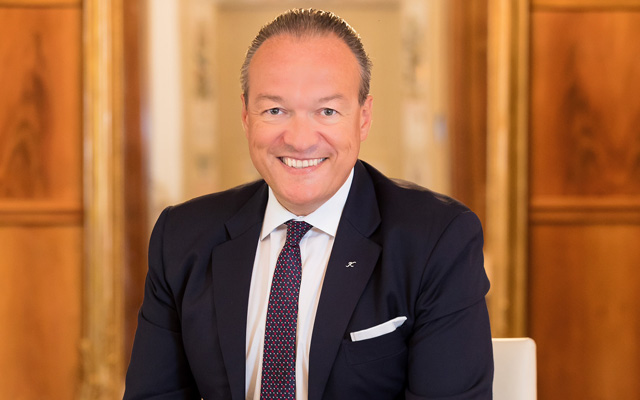
Putting behind him a tough 2021, Kempinski group CEO Bernold Schroeder said the company is ready for an industry that has been reshaped by the pandemic.
The big changes are in human capital and owner-operator relationships, he said, in an interview in Singapore at the The Capitol Kempinski Hotel Singapore. But tackled right, these issues could also be the biggest opportunities.
For Schroeder, human capital is the bigger priority than expansion currently.
“The biggest problem we are facing in the industry or as a company, apart from the ups and downs of Covid and the Omicron uncertainty, is human capital, at least in Europe, which is 60 per cent of our group’s contribution.
“The industry lost so many good people through the European short-time work schemes, as employees – especially in the lower salary brackets – earned less at the end of the month and left. They joined retail, call centres, warehouses and other sectors that boomed during the pandemic. As it is, the hotel industry has always struggled to get good people,” said Schroeder.
He is more optimistic about Asia’s labour shortage, arguing the industry has a better reputation in Asia than in the West, where it is seen as “low pay, unionised, work during weekends”.
“The hotel industry has raised entire villages and families in Asia to middle-class level and given global careers to people. This is what’s great about it. To work for an investment bank or a law firm, I’d probably have to be from the right university. But in the hotel industry, I can come from a small province in Thailand, move to Bangkok, then to the Middle East and keep growing my career. People realise this and they will come back,” he opined.
Luxury hotels are worst-hit by the labour shortage, as they are more labour-intensive and less able to outsource functions such as housekeeping or F&B than mid-scale hotels. Like the rest of the industry, Kempinski has enlarged job scopes and clustered functions, such as centralising reservations.
“A lot of the team members are going the extra mile,” said Schroeder. “The workforce has grown closer together this year; there’s a strong team spirit.”
Kempinski is ahead of chains Marriott, Hyatt, Radisson, Accor, Best Western, IHG, Hard Rock, MGM, Six Flags, Four Seasons, Las Vegas Sands and Minor in Forbes World’s Best Employers 2021. Its score on employee satisfaction and engagement, done by Gallup in October, is also the highest in the company’s history, according to Schroeder.
Another crisis this year involved a defamation campaign against Kempinski and senior officials that started in January, shortly after Kempinski changed management, and criminal complaints were filed against several senior Kempinski representatives. All complaints were found to be entirely baseless by the authorities.
Lessons from Asia
Schroeder believes that lessons learnt from a string of Asian crises helped him get through a gruelling 2021. Before joining Kempinski, he spent much of his career in Asia with Banyan Tree Holdings, Jin Jiang International and Pan Pacific Hotel Group.
“I’ve gone through the Asian tsunami, SARS, Asian financial crisis, bird flu, swine flu and so on. Asia is good in managing crises. In a crisis, you have to be clear and honest in communications. Share bad news with the family. Think clearly of the problem, solution and implementation. KP (Ho Kwon Ping, chairman, Banyan Tree Holdings) is really good with this. In the West, you talk, but nothing gets implemented.
“Show progress as you go along, to give people hope. As they say in Asia, you can’t break five or six chopsticks, but you can break one or two. I try to bring into the company these simple values.”
Another lesson from Asia is keeping the team intact. “In the Far East, whenever there is a crisis, everyone chips in. We did something similar with voluntary paycuts and, as a result, only less than 10 per cent of the corporate office workforce globally was laid off,” he shared, adding that the company now has 150 corporate staff.
The chain has 79 hotels in operation. The newest, Kempinski Palace Engelberg, Switzerland, opened in June. The next opening will be The David Kempinski Tel Aviv, Israel, in February 2022.
The big litmus test
The pandemic is a big litmus test of owner-operator relationships. According to Schroeder, there are more conversion opportunities for smaller, bespoke luxury chains such as Kempinski, as some owners are no longer happy to be with big groups that have too many hotels under different flags in the same destination.
“I spend enormous time with owners. I speak every single day with them to see how we can help. We are 80 hotels with around 55 owners – it’s difficult to do that if you have 5,000 hotels and thousands of owners,” he said.
“Secondly, the hotel business has changed. If today you as a hotel general manager don’t understand that it’s a real estate business and an operating business, which are two different components, then it’s difficult to be a successful general manager. You have to be able to think from both sides of the table, especially in this crisis. We spend a lot of time training our general managers on asset management,” he added.
Overall, the group continues to invest five per cent of payroll on training.
Kempinski, he said, is like a small private bank. “People come to us to invest their money. We must offer different solutions tailored to their needs, but the financial returns must be better than the bank next door,” said Schroeder.
He is looking to add 30 to 40 hotels in the next five years and believes Asia is still where future growth is, despite the pandemic wiping out international travel in the region. Other growth regions are Africa and the Middle East.
One reason is the wealth in Asia, which propels the domestic travel market as the pandemic has shown. China, Bali and Dubai were among markets that did well for Kempinski in the crisis. “We had so many Indian families who based themselves in our residences in Dubai for several months, at average rates of more than 1,000 euros (US$1,136) per night. In Bali, the domestic travellers stayed longer – there is so much wealth in Indonesia,” he elaborated.
But like all chains, Kempinski had some losses this year. On October 13, Kempinski Hotel Nay Pyi Taw, in Myanmar’s capital city, was closed for good after seven years of operation. Kempinski wasn’t alone; Myanmar’s political instability also saw Banyan Tree Holdings pause its joint venture with Myanmar’s Htoo Group, signed just before Covid in March 2020, to jointly develop luxury hotels in the country. Banyan Tree is monitoring and evaluating the future of the partnership.
On the other hand, Kempinski gained the management of a one-of-a-kind hotel in Dubai. The 156-room Kempinski Floating Palace has 12 villas that can sail to other anchorages at times, according to a press release. Built by Seagate Shipyard, a pioneer in floating facilities in the region, the hotel is slated to open in 2023.
Buoyant is how Schroeder feels about Kempinski’s future even though the pandemic isn’t quite over.
SkyHelix Sentosa
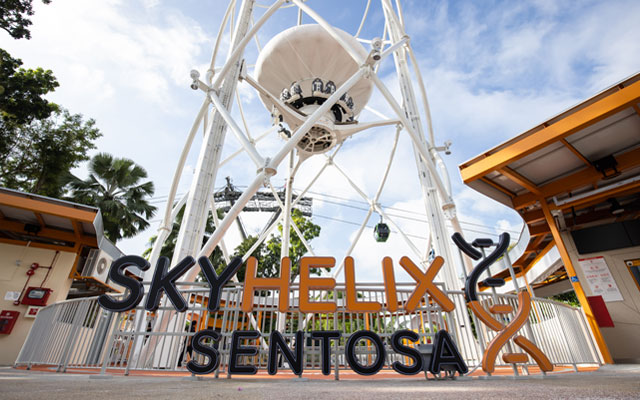
Strapped to a gently rotating 16-seater open-air gondola, towering 35 meters above ground, with our feet dangling in the air, we feel like we are floating above Sentosa.
On this Tuesday afternoon, we are trying out Singapore’s highest open-air panoramic ride at SkyHelix Sentosa, the latest 40m-tall addition to the collection of attractions at Imbiah Lookout. Just a short stroll from the Singapore Cable Car’s Sentosa station, the ride promises scenic 360-degree views of the holiday island as it rotates at the apex along a vertical helix-like structure.
Why
Touted as Sentosa’s first carbon-neutral attraction, SkyHelix’s energy-efficient design utilises minimal electricity for its operations. With the launch of this attraction, Mount Faber Leisure Group said it seeks to contribute to Singapore’s vision of becoming a top sustainable urban destination by developing unique, engaging and sustainable leisure experiences around the city-state’s stunning views and beautiful nature.
Jean Ng, executive director, attractions, entertainment and tourism concept development, Singapore Tourism Board, said: “As international travel gradually resumes, new attractions like SkyHelix Sentosa will enhance our attractiveness and signal to international travellers that Singapore is ready to welcome them. At the same time, it adds to the wide variety of family-friendly offerings that locals can enjoy.”
What
For each “flight”, guests will be seated in an open-air gondola for a 12-minute ride, which includes 10 minutes at the peak, during which the gondola will slowly rotate.
The ride offers scenic 360-degree sights stretching from Sentosa to the Keppel Bay area and the developing Greater Southern Waterfront.
Day and night afford different experiences. After sundown, energy-efficient LED lights illuminate the attraction, and riders can take in stellar views of the twinkling city lights dotting the urban landscape.
The gondola is completely powered by three electrical winches that are managed on-ground. Safety measures in place include an electronic safety mechanism to ensure guests are properly secured, emergency brakes, and power supply systems.
Visitors can grab a bite and drinks at the open-air snack bar before boarding and enjoy them on the ride. Food and beverage options range from juices and slushies, to cut fruits, soft serves, and pastries.
The snack bar also serves exclusive, ready-to-drink cocktails created by the team at Dusk Restaurant & Bar located at Mount Faber Peak. These include the Helix Sky Party, a refreshing tropical concoction; Helix Xpresso Martini, a rich and creamy blend of caffeine and alcohol; and The Helix Singapore Sling, an iconic Singaporean classic.
According to a PR spokesperson, there may be plans to introduce extended dining experiences to the attraction in the future. We imagine it would be a nice alternative to cable car sky dining for adrenaline junkies or those who prefer alfresco dining – with an exhilarating twist.
Verdict
The attraction combines a gentle round ride with the chance to soak in unparalleled vistas of Sentosa and its surrounding area, making for a fun and thrilling activity for the whole family. And yes, it makes a nice selfie backdrop too.
However, being perched 75 metres above sea level, with the breeze fluttering one’s hair and feet dangling free can be a tad unnerving for those with acrophobia.
We had pictured ourselves leisurely sipping on The Helix Singapore Sling while soaking in the ever-evolving vistas, but instead, found ourselves holding onto our companion, with our heart in our mouth and drink sorely neglected.
So if you are like us, with a fear of heights, remember: don’t look down.
Rate: S$18 (US$13) for adults and S$15 for children between the ages of four and 12. Each ticket will be bundled with a choice of one standard non-alcoholic beverage or an exclusive SkyHelix Sentosa souvenir.
Dates: 10.00 to 21.30 daily (last admission at 21.00)
Website: www.mountfaberleisure.com/skyhelix-sentosa
Collaboration, product innovation continue to be key to Singapore’s hospitality industry recovery: opinion leaders

Tales of collaboration with government agencies, travel, tourism and hospitality trade associations, organisations from other sectors and even competitors have dominated panel discussions throughout the two-day SG Tourism United Forum online event on December 8 and 9.
The event, presented by PATA Singapore Chapter with event partner, TTG Asia Media, featured top level executives representing the country’s most important trade associations in the industry: Singapore Hotel Association, National Association of Travel Agents Singapore, Singapore Association of Convention & Exhibition Organisers & Suppliers, Singapore Retailers Association, Restaurant Association of Singapore, Orchard Road Business Association, Association of Singapore Attractions, and Singapore River One.
They were joined by representatives of Singapore Tourism Board who detailed trade support efforts; Changi Airport Group, Singapore Airlines and Dream Cruises who presented a snapshot of how their organisations reimagined operations to remain sustainable and to continue to deliver quality customer support and experiences throughout the unusual circumstances presented by the Covid-19 pandemic.
Tough issues facing the industry were also discussed. Panellist inputs and audience polls conducted during the discussion identified that Singapore’s Vaccinated Travel Lanes, while critical for travel recovery, have not resulted in equal impact for the various sectors of the travel, tourism and hospitality industry, and that sustained recovery hinges on many factors such as a coordinated reopening across Asia, certainty in governments’ border restrictions, and relaxation of social restrictions. At the same time, rising operating costs and loss of industry talents are causing concern among industry players
However, organisations such as the Singapore Hotel Association, Changi Airport Group and Singapore Airlines are seeing an improved hiring landscape in the destination, with recruitment activities intensifying over the past few months.
The recordings can be reviewed now on TTG Asia Media’s YouTube channel.
Artotel inks Dafam Hotel takeover deal
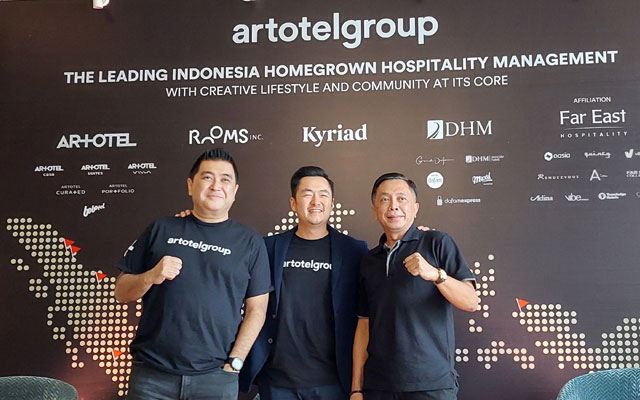
Artotel Group has acquired a majority stake in Dafam Hotel Management (DHM), which owns and operates 24 hotels in Indonesia with a total of 2,507 rooms.
With the acquisition, Artotel Group now manages 50 hotels with a total inventory of 5,000 rooms in 24 cities across Indonesia.
The announcement made in Jakarta on Tuesday (December 7) came barely three months after the group took over the Indonesia franchise of Kyriad, a hospitality brand created by France-based Louvre Hotels Group, which manages 11 hotels across Indonesia.
The feasibility of the acquisitions has been realised through the completion of an undisclosed Series B round financing by Indies Capital Partners, a leading South-east Asian alternative asset manager.
The group has also obtained Series B funding by Benson Capital, an angel investor focused on creative industries.
Prior to the rounding of Series B, Artotel Group managed to get the investment injected from Series A by Intudo Ventures, an independent venture company.
Erastus Radjimin, founder and CEO of Artotel Group, said: “The global pandemic has unfavourably impacted the hospitality industry’s performance across the world but we believe that every pandemic opens new opportunities.
“We did not want to passively wait for the pandemic to end, so we took the initiative to acquire properties from Dafam Hotel Management and Kyriad Hotel Indonesia to further our dream of creating a unified hospitality ecosystem in Indonesia that can help hotels support one another in maintaining high standards of service as well as to broaden our market range, be it domestic or overseas.”
Erastus added that Artotel is probably the first Indonesian hospitality company whose growth rate is similar to that of tech companies.
Looking ahead, he projected a brighter 2022 for the tourism industry in Indonesia. “We have seen people starting to travel again for both leisure and business,” he said, adding that the group’s performance numbers in 2H2021 have returned to near 2019 levels.
As part of its expansion plan, Artotel Group aims to become a “house of brands” providing a variety of hotels with different positioning and flavours to cater to the different markets.
“We picked DHM because their positioning is different from Artotel to enable us to be in the areas where Artotel cannot fit in, and vice versa,” said Erastus.
The hospitality industry in Indonesia may not be able to compete in selling prices with Singapore or Japan, Erastus said, citing the example of how a 20m2 room in Singapore or Japan can sell up to US$600, while a five-star property in Indonesia goes for US$300-US$400.
“However, size is Indonesia’s competitive advantage. It has huge population, abundance of islands, maritime potentials and resources. All (create) travel (movements). New traffic appears where a new mining site or a new plantation opens. Therefore, we need to have many properties (in different locations),” he said, adding that each location needed different types of hotels.
“Therefore, Kyriad will operate as Kyriad and we will not Artotel-ise Dafam Hotels or Dafam-ise Artotel,” he opined.
Different brand identities are also necessary to cater to different customer preferences, in terms of budget, location, room size and facilities, said Erastus. However, he added, all hotel brands will share the same service technology, loyalty programme and infrastructure that Artotel Group will develop going forward.
JAL, Tencent Cloud partner on smart transportation solutions
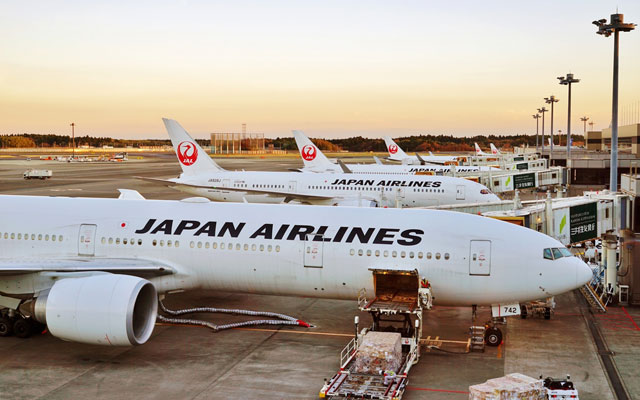
Japan’s flag carrier Japan Airlines (JAL) has forged a partnership with Tencent Cloud that will provide the airline with smart transportation solutions in order to capitalise on post-pandemic inbound tourism demand.
Leveraging Tencent’s cloud technology and network to reach a wide audience of travellers, the JAL Weixin Mini Program developed on Tencent Cloud will provide smart travel options for Chinese tourists and more efficient and intelligent services for governments and businesses.
With the JAL Weixin Mini Program, Chinese tourists and those who currently reside in Japan can reserve and purchase flight tickets as well as search flight information directly on Weixin, one of the most widely used communications and social services in China with more than 1.2 billion monthly active users.
Meanwhile, JAL can also leverage Tencent Cloud’s Smart Transportation Solutions including Weixin Official Accounts and social ads to maximise promotional activities targeting Chinese travellers, further expanding its presence in the Chinese tourism market.
Philippines pushes medical and wellness tour offerings
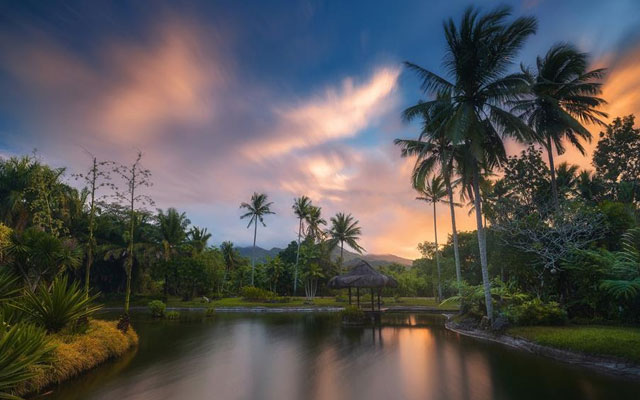
Medical and wellness tour packages targeted at foreign travellers have been rolled out in metro Manila and nearby provinces, as part of the Philippine Health and Care Programme launched this week.
Tourism undersecretary Roberto Alabado III said the programme, a collaboration between government agencies and the private sector, is an industry-first that aims “to develop the Philippines into a prime medical travel and wellness tourism destination”.
While the tour packages are initially limited to Central Luzon, Alabado expected similar packages to be rolled out in Boracay, Mindanao and other parts of Luzon as they continue to market and promote the Filipino brand of caring and nurturing in the domestic and international markets. The packages will be made available until December 21 next year.
The Philippine Health and Wellness Coalition has curated several packages combining tours around Manila with dental procedures and medical services, ranging from heart ailment procedure and kidney operation to cancer treatment and diabetes prevention, among others.
The coalition – composed of carefully screened travel agencies, hotels, hospitals, clinics, and health and wellness providers – underscored the competitive pricing of their packages that already include all taxes, confirmation of appointments and advance submission of medical records.
Cathy Brillantes-Turvill, president of Coalition member Nurture Wellness Village in Tagaytay, said one of their offerings, a workation package combining nature and Zoom, addresses the physical and mental effects caused by the pandemic and that the sector is “all about prevention”.
Another Coalition member, The Farm at San Benito in Lipa, Batangas, has invested more in science-based, evidence-guided and medically-supervised health programmes by highly trained medical doctors and licensed health professionals, said director of sales and marketing Jennifer Sanvictores.
Tourism regional director for Region 3, Caroline Uy, shared that medical tour packages including eye care combined with culinary, heritage, history and adventure tours are on offer in Pampanga, Clark and Subic.
UNWTO denounces blanket travel bans
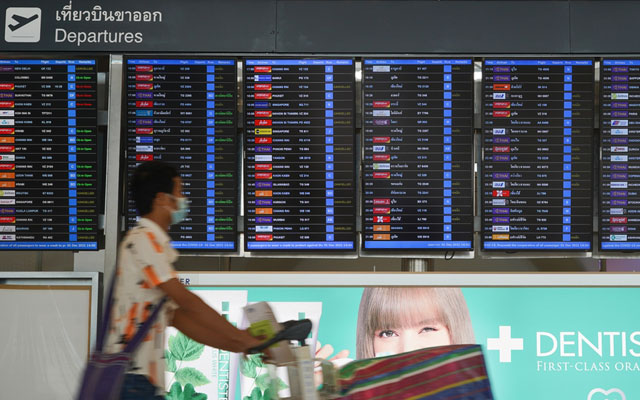
The World Tourism Organization (UNWTO) of the United Nations has spoken out against new blanket restrictions on travel imposed by governments around the world in response to the Omicron variant.
The call echoes the concerns raised by UNWTO members during the recent 24th UNWTO General Assembly, where countries from all global regions expressed their solidarity with Southern African states by calling for the immediate lifting of travel bans imposed on specific countries and for freedom of international travel to be upheld.
UNWTO noted the recent declarations of the United Nations secretary-general and the director general of the World Health Organization (WHO) regarding the unfairness and ineffectiveness of blanket travel bans in respect to the countries of Southern Africa.
In light of recent developments, UNWTO has once again reminded countries that the imposition of blanket restrictions on travel is discriminatory, ineffective and contrary to WHO recommendations. Blanket restrictions may also stigmatise countries or whole regions, it said.
During the UNWTO General Assembly, member states and partners, including voices from international organisations and across the private sector, echoed WHO’s advice that travel restrictions should only be imposed as a very last resort in response to changing circumstances.
Furthermore, it was stressed that if restrictions are introduced, they must be proportionate, transparent, and scientifically-based. They must also only be introduced with a full appreciation of what halting international travel would mean for the most vulnerable, including those developing countries and individuals who depend on tourism for their economies and livelihoods.
Cross Hotels & Resorts signs Vietnamese mega-deal
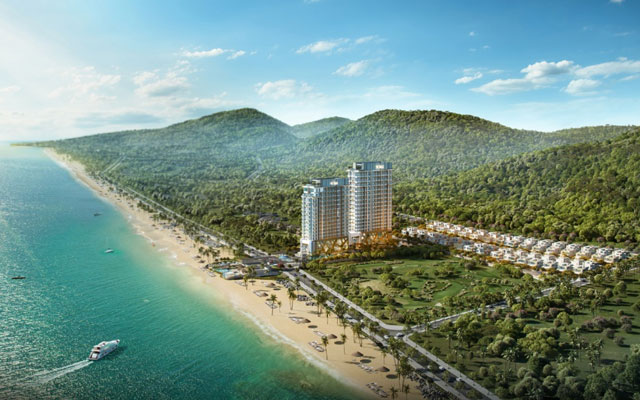
Cross Hotels & Resorts has signed an agreement with Tan Thanh Trading & Tourism JSC to develop a mega-project that will see the opening of two new hotels in Vietnam with a combined room count of 716 keys.
In a statement, the hotel group called the signing “one of the biggest greenfield deals in Asia since the start of the global pandemic two years ago”.
Scheduled to open in 4Q2022, Cross Long Hai and Cross Vibe Long Hai will be located in the coastal province of Vung Tau, a two-hour drive from Ho Chi Minh City.
Cross Long Hai will be an all-villa resort; while the twin-tower Cross Vibe Long Hai will be a modern Condotel offering 658 guestrooms, event and meeting facilities, spa, swimming pool and fitness centre.
Across South-east Asia and the Pacific, Cross Hotels & Resorts currently operates a property portfolio that includes more than 21 hotels under five brands, namely, Cross, Cross Vibe, Away, Lumen and Cross Collection.
TTG Asia news bulletin goes on festive break

TTG Asia news bulletin will be taking a break from December 10.
We will be back on January 3, 2022, when we will continue to deliver the hottest headlines to your inbox.

Meanwhile, TTG Asia Media wishes all readers Happy Holidays and a Happy New Year!








Malaysia Airports has upgraded the passenger experience at Kuala Lumpur International Airport (KLIA) to now feature SITA biometric-enabled self-service touchpoints, following a significant technology upgrade.
The extensive technology deployment at KLIA and KLIA2 terminals features a hardware and software overhaul, including introducing more than 100 SITA biometric-enabled self-service Smart Path kiosks – the TS6, SITA Smart Path Bag Drop, and an IT infrastructure refresh.
Featuring wireless connectivity, SITA’s slimline TS6 kiosks are enabled for SITA Flex and the next generation of common-use API-based services that facilitate a low-touch, fully mobile passenger experience.
As part of the software updates, Malaysia Airports has migrated to Windows 10 and upgraded its CORE servers, network equipment, and Baggage Reconciliation System to deliver enhanced speed and secured data communications.
The upgrades are part of a broader transition from Airport 3.0 to Airport 4.0, which requires a fully integrated digital ecosystem that provides a seamless passenger journey with the use of business intelligence and the collection of big data. Besides improving passenger experience, goals such as optimising terminal use, increasing operational efficiency, and growing revenue are part of the Airport 4.0 project.
Sumesh Patel, president, Asia Pacific, SITA, said: “Ensuring fluid passenger experiences while balancing operational efficiency is a high priority for airports globally. With this deployment, we’ve delivered on both elements, future-proofing the airport for a touchless journey via enhanced biometric capability while also driving down operational costs and increasing the resilience and agility of IT infrastructure.”