The month of September has brought Asia’s travel and tourism industry some improved developments – mostly stemming from governments deciding to take a positive step towards reopening their borders for tourism.
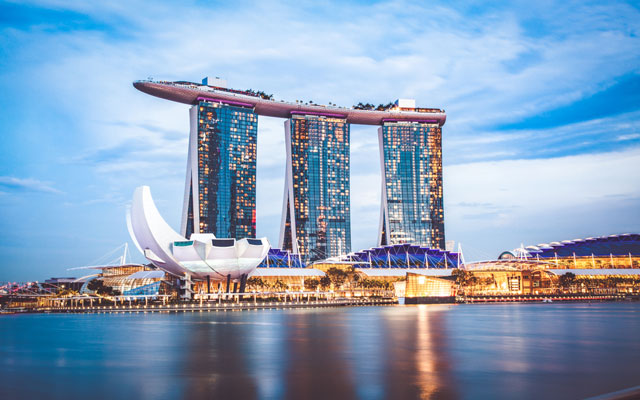
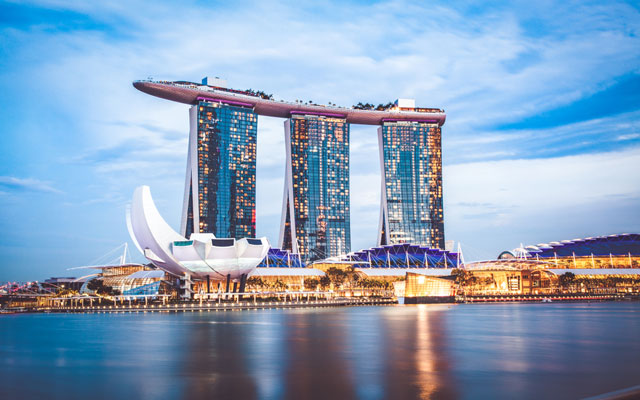
Singapore’s all-purpose Vaccinated Travel Lanes (VTL) with Germany and Brunei kicked off on September 8. The first day of applications on September 1 attracted 735 applications from Germany and 20 from Brunei – a mix of short- and long-term pass holders. More encouragingly, the VTL announcement spurred a lively revival of outbound travel plans, with leisure travel and incentive programme specialists welcoming a spike in enquiries for travel as early as 4Q2021.
Malaysia finally gets the green light for domestic tourism resumption, with Langkawi leading the way. Some 2,500 fully vaccinated tourists from Kuala Lumpur arrived on the island when it reopened on September 16.
Thailand already has Phuket and Khao Lak reopened to fully vaccinated international travellers, with Bangkok, Chiang Mai and Pattaya lined up and ready to do the same.
Indonesia and Cambodia have plans to reopen some regions to fully vaccinated international travellers before the year is over – Bali and Bintan are on the cards for Indonesia while Cambodia has yet to unveil official plans. Still, hopes are up because Cambodia will host the ASEAN Tourism Forum in January 2022, with an in-person show component, which means tourism reopening will have to begin somehow and soon.
Vietnam will pilot a vaccine passport programme for international visitors to Phu Quoc island towards the end of 2021.
As Asia inches towards tourism resumption, destination promotions are picking up. The Philippine Tourism Promotions Board, Tourism Authority of Thailand and the Japan National Tourism Organization are among the most active in the region, driving renewed communications aimed at the travelling public as well as trade buyers.
However, it is clear that the region is reopening far slower compared to other major tourism regions such as Europe and the US. This is despite Asia being the first region in the world to take Covid-19 seriously and to respond with practical and strict containment measures.
Many obstacles remain: differing pace of national vaccination, which impacts the extent of activity resumption; differing list of recognised vaccines; differing travel restrictions that continue to change with every new wave of infection and add to travellers’ confusion; and differing political stance on pandemic management, which has ruined potential travel green lanes.
Asia is one region but every nation is different in many ways, which makes a mutually agreed upon travel restart strategy challenging to achieve. In November 2020, South-east Asian leaders said they would establish an ASEAN travel corridor to facilitate essential travel within the region. Months on, that bubble is still in discussion.
While intra-Asia travel was once a critical economic driver, Asia’s slow reopening may force tourism recovery to lean towards intra-region travel instead, changing how destinations determine their post-lockdown source markets and impacting the success of many trade events here that rely heavily on the presence of Asian buyers.
Karen Yue is group editor of TTG Asia Media. She sets the editorial direction for the company’s stable of travel trade titles and platforms, and produces content for them as well.
The Travel Corporation (TTC)’s Trafalgar and sister brand Costsaver plan to increase their sustainable tourism products to support the post-Covid travel rebound, by offering a minimum of one conscious travel experience on every land tour by 2023.
Dubbed Make Travel Matter Experiences, these tour offerings launched in 2020 aim to advance the United Nations Sustainable Development Goals by offering guests rich, meaningful travel opportunities that have a positive impact on the communities they visit.
TCC brands, Trafalgar and Costsaver, to support the rebuild of tourism through sustainable product development
Using a proprietary assessment tool endorsed by industry experts and developed exclusively for Trafalgar and TTC’s family of brands, Make Travel Matter Experiences are assessed against a set of criteria directly tied to these UN Global Goals.
Already available on 100 per cent of trips through Asia and with a total of 98 experiences across the globe, the brands are committing to extend the offering to one on every tour.
These experiences can be identified by the Make Travel Matter Experience seal on the brands’ websites.
Gavin Tollman, CEO of Trafalgar, said: “As a company with sustainable and responsible travel ingrained in our DNA, we are taking every step possible to secure the future for our industry. In the wake of the pandemic, every travel organisation should be reviewing and assessing their operations in line with the UN Global Goals and this is just one way we are securing a more inclusive future for the people and places we visit and our guests”.
The brands’ sustainability officer Gemma Myhill added: “With this change, not only will our guests continue to have incredibly rich experiences when they tour with us, but they will also know their travels will meaningfully give back to local communities, wildlife and the planet, no matter the destination they choose”.
Radisson Hotel Group is inviting Chinese domestic travellers to create meaningful, memorable moments in Shanghai with a new campaign promoting perks for stays at the group’s hotels across the city.
As part of its Memorable Shanghai campaign, the group’s China Autumn Offer promotion includes a guaranteed room upgrade, daily breakfast for two, and free cancellation up until 24 hours before check-in. Radisson Rewards and Jin Jiang Club members will also enjoy 20 per cent off their chosen hotel’s Autumn promotion rate.
Radisson offering guaranteed room upgrade, daily breakfast for two at its Shanghai properties
Additionally, guests will receive two freshly baked butterfly cookies in a special gift box. The promotion is valid for bookings made at participating hotels between now and October 31, for stays before October 31, 2021.
The offer is available at the group’s collection of seven hotels across Shanghai, including Radisson Collection Hotel, Hyland Shanghai; Radisson Blu Hotel Shanghai New World; Radisson Collection Hotel, Yangtze Shanghai; Radisson Blu Shanghai Pudong Jinqiao; and Radisson Exhibition Center Shanghai.
Airbus scraps A380 superjumbo jet as sales slump, the last straw being Emirates pullout
Emirates has become the first airline to implement the International Air Transport Association’s (IATA) Travel Pass on six continents as it rolls out the digital health pass to customers at all its destinations.
The IATA Travel Pass app allows passengers to manage their Covid-19 travel documentation digitally – from receiving test results and vaccination certificates directly from authorised labs and test centres, to securely sharing these documents with authorities and airlines to facilitate travel.
Following pilot trails in April, Emirates has implemented the IATA Travel Pass across its global network
Following successful trials in April on select routes from its Dubai hub, Emirates gradually expanded the IATA Travel Pass pilot to customers on 12 routes in June and the airline has now signed a contract with IATA to implement the solution across its global network.
Currently available to Emirates customers travelling from 50 cities, the rollout across all 120+ Emirates destinations is expected to be completed by October.
Carnival Corporation expects that more than 50 per cent of its total fleet capacity will return to operations by the end of October.
To date, eight of the company’s nine brands – Carnival Cruise Line, Princess Cruises, Holland America Line, Seabourn, Costa Cruises, AIDA Cruises, P&O Cruises (UK) and Cunard – have resumed guest sailings.
Carnival Cruise Line plans to have 13 ships sailing in October
By the end of October, those eight brands will be operating 42 ships, marking the return of over 50 per cent of the company’s global fleet capacity.
Collectively, the corporation’s brands are resuming operations using a gradual, phased approach, with sailings from major global ports in regions including the US, Mexico, Caribbean, the UK, Western Europe and the Mediterranean.
The cruise line is also planning for additional ship restarts as part of its overall goal to return nearly 65 per cent of capacity by year-end.
Carnival Cruise Line plans to have 13 ships sailing in October and a total of 17 ships by year-end; while Princess Cruises plans to have six ships sailing in October, with eight ships in operation by the end of the year.
Holland America Line plans to have four ships in operation in October, with a total of six ships in operation by year-end. Additionally, the brand has announced plans for all 11 ships in its fleet to be in service by spring 2022.
Seabourn plans to operate its full fleet by spring 2022, including a new expedition ship with its first sailing in April 2022, totalling six ships in service next year.
Meanwhile, Costa Cruises plans to have five ships in operation in October, with a total of six ships in operation by the end of the year; while AIDA Cruises plans to have eight ships in operation in October, with a total of 10 ships in operation by year-end.
P&O Cruises (UK) plans to have three ships in operation in October, with a total of four ships in operation by the end of the year. Additionally, the brand has announced plans to operate its full fleet by spring 2022.
Cunard plans to have two of the three ships in its fleet in operation by year-end. Additionally, the brand has announced plans to resume operations with its remaining ship in spring 2022.
Roger Frizzell, chief communications officer for Carnival Corporation, said that based on the company’s initial restart of cruise operations across eight brands, guests have shown “tremendous confidence” in the brands.
He added: “As the restart of cruising continues to gain momentum and create positive economic activity for people who depend on our industry to make a living, we look forward to serving our guests with more than half our fleet capacity returning in October, while delivering a great guest experience and serving the best interests of public health.”
As part of efforts to tackle the climate crisis, the World Travel & Tourism Council (WTTC) has launched a Net Zero Roadmap for the travel and tourism sector during its virtual climate week event.
During the event, it also unveiled social and environmental research data, which builds on the council’s annual Economic Impact Report. Along with the roadmap, the data is designed to support the sector’s drive towards net zero by 2050.
WTTC launches Net Zero Roadmap alongside new social and environmental indicators for travel and tourism
The initiative is being run in collaboration with the United Nations Environment Programme (UNEP) and professional services and consulting experts, Accenture. It was announced at WTTC’s virtual Net Zero Travel & Tourism – From Ambition to Action event, during annual Climate Week NYC.
Julia Simpson, WTTC president & CEO, said: “The launch of our Net Zero Roadmap for the travel and tourism sector and development of sector wide data to measure our success are major steps to show how travel and tourism is playing its part in addressing climate change.
“WTTC, alongside our partners and sponsors, looks forward to offering tangible and meaningful solutions to meet the climate change challenge.”
Simpson added that the Net Zero Roadmap for the travel and tourism sector will be launched at COP26 in Glasgow next month.
The Roadmap will include a status quo overview of climate actions in travel and tourism, direct lessons learned from the past 18 months, as well as action frameworks for specific industries to help accelerate climate commitments and emissions reduction.
This climate action inventory research will be regularly monitored and updated by the WTTC until the sector’s targets are achieved.
During the virtual event, which was sponsored by IHG, participants discussed the sustainability challenges faced by the travel and tourism sector, along with the creation of the way forward in the sector’s quest to become net zero.
More Chinese are looking forward to travelling as a means to escape daily frustrations and pandemic anxiety
More than half welcome international spectators at the 2022 Winter Olympics in Beijing, provided they are fully vaccinated and have a negative Covid test result
Local infection rates are most influential in shaping Chinese travellers’ perception of safe destinations
The number of Chinese consumers against the idea of travelling amid a pandemic has fallen, and a majority welcomes destination promotion content, noted Dragon Trail International’s fourth semi-annual China Traveler Sentiment Report.
The study fielded in mid-August found that while willingness to travel remains the same as in March 2021 at 20 per cent of respondents, the number of people who had said they would not travel has decreased by 32 per cent, replaced by people who said they would travel but would do so cautiously – up 43 per cent.
More Chinese consumers see travel as a way to escape from pandemic anxieties, and favour destinations that are secluded and relaxing, such as beaches and islands
Mengfan Wang, manager of research, Dragon Trail International, in presenting the latest findings on September 24, said: “This means, more Chinese are thinking of taking protective measures, avoiding crowds and monitoring the local pandemic situation at the desired destination before they go.”
Wang said the study has also picked up an encouraging “new sentiment” – many respondents are now looking forward to travelling again as a means to relax.
“This signals that there is a growing frustration and longing for a chance to ease pandemic anxiety (through travels),” she explained, adding that China’s recent domestic outbreaks had led to rising levels of anxiety among people to avoid crowds and to have their mask on at all times.
“Despite that, the willingness to travel has remained the same. That is good news for us,” Wang said.
The latest China Traveler Sentiment Report has also picked up stronger intentions among Chinese consumers to travel farther than they said they would in the last study six months ago.
Cross-provincial travel plans for the Golden Week holidays from October 1 to 7 are heating up. Twenty-seven per cent now said they would travel cross-provincially compared to 17 per cent in March; 44 per cent would travel locally versus 48 per cent in March; and the remaining 28 per cent would remain home or have no travel plans at all, compared to 36 per cent in March.
However, travel desires have outstripped actual plans for the long holidays. Fifty-eight per cent said they would travel cross-provincially if they could, and only four per cent maintained no travel plans at all.
Wang said the study identified stronger preferences for nature trips, visits to islands and beaches, as well as rural tourism that satiated Chinese travellers’ desire for seclusion and relaxation.
“However, traditionally crowded attractions like themed parks and museums will still have a place in the new normal,” she added.
While roadtrips fell out of favour in the March analysis, this form of travel regained interest now, prompting researchers to believe that such trips are seasonal – more popular for summer holidays and less for winter.
“There is also a drop in interest in outdoor and sports activities. This could remain niche, and the Winter Olympics (in Beijing next February) could inspire some growth in the near future,” remarked Wang.
A welcoming Chinese community
With the 2022 Winter Olympics scheduled to take place in Beijing from February 4 to 20, Dragon Trail International also took the chance to gauge Chinese consumers’ thoughts on inbound tourism for the first time.
“More than half said the games should be open to visitors from anywhere as long as they are fully vaccinated and have a negative Covid test result to show,” said Sienna Parulis-Cook, director of marketing and communications with the company.
Of the remaining respondents, 23 per cent said the games should open to only domestic spectators, and 25 per cent said it should follow the Tokyo Olympics and play to no spectators at all.
Parulis-Cook said: “Realistically speaking, the games will likely be held under extremely strict safety protocols that would go above and beyond what Tokyo had. But what stands out in our findings is the welcome that the Chinese have for game spectators and international visitors to join in the games festivity.”
“However, openness to inbound travellers does not necessarily means the people want to change China’s very strict quarantine requirements,” she added. “These requirements continue to be at least 14 days in a centralised facility, and in some cases, followed by additional quarantine at home or a period of health monitoring with restricted movements in public.”
When asked for their opinion on quarantine requirements on arrival in China, 30 per cent of respondents said the measures should be relaxed for travellers who are fully vaccinated and have a negative Covid test result; 28 per cent said requirements should remain the same; and 36 per cent said measures should be stricter. Only five per cent wanted the measures to be relaxed for everyone, and an even smaller one per cent wanted exemptions for Chinese citizens.
Parulis-Cook believes that in the short term, or until the Olympic Games is over, travellers arriving in China should expect to have to go through extensive quarantine.
Outbound confidence
China’s strict outbound travel restrictions have locked Chinese consumers away from the outside world, limiting their exposures to online means, such as livestreams, videos, photos or written content.
A majority 81 per cent of respondents said they felt positive when they saw content on outbound travel destinations. According to Parulis-Cook, these respondents said such content fascinated them, inspired them to travel outbound, or helped them to escape from daily anxieties.
“In tracking neutral keywords most associated with outbound travel information, we saw a lot of sentiments around wanting to travel internationally. Words were usually involving gastronomy, lovely scenery, beaches, nature and cravings for novel experiences and relaxation – in line with Mengfan’s analysis that the Chinese are wanting to travel to relax,” reflected Parulis-Cook.
However, she warned that outbound travel information could trigger some negative emotions still, especially as frustrations mount over continued travel restrictions. Indeed, 13 per cent of respondents felt that outbound travel was still dangerous, and outbound travel information at such time was unsuitable and insincere.
Parulis-Cook recommended that destination marketers approach messaging carefully, and to apply content that addresses concerns about safety, such as declining cases of new infections and improving rate of national vaccination.
“When we asked respondents about the prerequisites to travel internationally again, we found that travel advisories have the strongest impact,” she said, adding that zero confirmed cases in the destination as well as absence of quarantine on arrival and upon their return are seen as travel motivators.
Other prerequisites for one to return to international travel included the destination’s high vaccination rate of more than 80 per cent and personal vaccination.
“China has already achieved a high national vaccination rate, with a billion residents – about 75 per cent of China’s population – having been fully vaccinated (as of week of September 13). Vaccination rates are particularly high in big cities like Beijing, where outbound travel is most likely to come from,” said Parulis-Cook.
“However, zero confirmed cases in destinations would have to wait a little longer to be achieved,” she said.
In tracking Chinese consumers’ perception of destinations, more ‘unsafe’ and ‘unsure’ sentiments had surfaced in the new study.
Parulis-Cook said that could have happened due to a new rating scale being used. The March scale used a seven-point rating that went from ‘extremely safe’ to ‘extremely unsafe’, while the August scale provided only three options – ‘relatively safe’, ‘unsure’ and ‘relatively unsafe’.
“Because of the new scale, some respondents who previously marked a destination as ‘somewhat safe’ had now moved that opinion to the ‘unsure’ category,” she said.
“One of things that lead us to believe in this is that, with the exception of Japan, the order of the other countries have remained the same between March and September. For example, Singapore is still regarded as one of the safest destination to visit, while the US is the least safe,” she elaborated.
Japan was an exception in the destination perception ranking. Once regarded as among the safest destinations to visit in March, Japan is now rated ‘unsafe’ by 70 per cent of respondents. Parulis-Cook suggested that this might be due to Japan’s rising case numbers and extensive media coverage on Japan’s Covid-19 conditions throughout the 2020 Summer Games in Tokyo.
Dragon Trail International researchers also concluded that rising local infections in many destinations as well as their strategy to live with Covid have impacted destination perceptions, particularly as the latter goes against China’s own stance.
Parulis-Cook concluded that the latest findings have painted an encouraging picture for destination marketers looking at the China market.
“People’s appetite for travel might actually be stronger than their sentiments around safety, and they are happy to receive outbound travel info even though they may feel it is unsafe to travel right now.
“Even if the rating of your destination does not look too good right now, you have time to remedy that,” she said.
In fact, according to ForwardKeys’ China market expert, Nan Dai, a full recovery of Chinese outbound travel could only happen in 2025, and outbound traffic would remain at a standstill until mid-2022.
Her expectation is shaped by China’s zero-case approach and intention to ensure that China remains safe for Olympic athletes. She expects the government to maintain strict travel restrictions until mid-2022 and employ a gradual reopening to international travel after.
Dai also shared that ForwardKeys has downgraded its recovery prediction for 2021, following worsening Covid-19 infections across Asia as new variants emerged. Chinese outbound travel is expected to only recover 12 per cent of 2019’s volume this year. In March, ForwardKeys predicted a 25 per cent recovery by end-2021.
The Philippine Tour Operators Association (Philtoa) has created 32 new land travel packages in the island of Luzon, including destinations near metro Manila, as domestic air travel is rendered complicated by the ever-changing lockdown levels and restrictions across the country.
Having been cooped up at home for the past 18 months, it is “a relief” for Filipinos “just to get out of their houses”, even if it’s just a trip to a nearby destination, Philtoa president Cesar Cruz said during the press conference of the hybrid Philippine Travel Exchange (PHITEX) 2021.
Philtoa promotes land tours in the island of Luzon; Batad Rice Terraces in Ifugao Province, Luzon Island pictured
He said the island of Luzon has attractions that appeal to domestic tourists, in various combinations of beaches, farm-based, nature-based, gastronomic, natural landscapes and other outdoor activities.
The new overland tours that the locals are interested in, and are easier to travel to with many road networks, include the nearby areas of metro Manila like Rizal, Cavite, Laguna and Batangas as well as the Bicol and Quezon province circuit.
In Visayas and Mindanao, Cruz said the complications on domestic air travel can be avoided as ferries are available to transport tourists from one island to another.
While some quarters have commented that people will have no budget left for travelling once tourism restarts, Cruz suggested otherwise, citing the case of Boracay’s reopening to tourists from metro Manila last June. The island’s visitor profile showed that the tourists were from the low and middle market segments, not high-end.
From his observations, travellers have already embraced the safety protocols in place while travelling in the post-Covid era, including getting their QR code registrations and submitting negative RT-PCR test results.
Cruz is “very optimistic” that before the year ends, domestic travel will be ready to take off, subject to the easing of travel restrictions in the respective destinations.
“We are ready” is the message from Cambodia’s tourism players during an urgent call for a clear roadmap to reopening as they face another high season with no business.
At a press conference hosted by Cambodia Airports, CEO Alain Brun said: “Today, the travel industry is ready to welcome tourists and passengers… Today, we are desperate as the pandemic has had a huge impact on activity.”
Phnom Penh is the most vaccinated capital in the world; Royal Palace in Phnom Penh pictured
Across the country’s three international airports, business has plummeted to three per cent of what it was in 2019. In spite of this, all airports have remained open throughout the pandemic.
Brun added Cambodia has the chance to capitalise on its vaccination success. It currently sits in the world’s top 20 most vaccinated countries. Phnom Penh holds the title of the most vaccinated capital.
“Thanks to the amazing work of the government, travel in Cambodia is safe and we are ready (for reopening),” said Brun. “The travel industry has been actively working on SOPs for months. We were the first sector to be hit by Covid-19 and we were the first to design and implement health and safety measures.”
Last week, prime minister Hun Sen announced the urgency for borders to reopen to tourists, and recommended reducing quarantine from 14 days to seven. However, no official announcement has been made.
Support from the nation’s premier has been welcomed as a first step to recovery, however, the industry is lobbying for zero quarantine for fully vaccinated travellers.
Nick Ray, a consultant for CamDMC, said: “Quarantine and tourism don’t co-exist. Vaccinated tourists have choice now. They can go and see the pyramids at Egypt with no quarantine or Costa Rica.”
Pre-pandemic, the average length of stay in Cambodia was 4.5 days as an add-on destination to neighbours. Sivlin Chhay, president of the Cambodia Association of Travel Agents, said there is a “unique opportunity” for Cambodia to position itself as a standalone.
Chhay added members have drawn up packages that extend to more than 10 days and showcase Cambodia beyond Angkor Wat.
During the prime minister’s speech, he also mooted the idea of a free quarantine, whereby visitors’ movements are not restricted to their hotel room.
Ray noted the tourism industry can play a key role in facilitating safe travel for visitors. He said: “We have their itineraries. We know which hotels they’re staying at, and the mobile number of their tour guide and driver. This can be very low-risk when travelling with a licensed agent or operator.”
However, he said now is the time to lay out a clear vision. “If we don’t open, we miss another six months to a year of business. Do we want to be here talking about 2.5 years of no tourists?”
Since the launch of the Samui Plus programme on July 15 that allows fully vaccinated international travellers to enter Samui without quarantine, the number of arrivals to the Thai island through September 20 totalled 786.
This has resulted in 9,823 room nights and 58.9 million baht (US$1.76 million) in revenue, reported the Tourism Authority of Thailand (TAT).
To date, majority of arrivals to Samui under the Samui Plus programme have been from Europe: TAT
The bulk of arrivals were from European countries with the top three source markets being France with 136 arrivals, Germany with 119 arrivals, and the UK with 105 arrivals. Other markets included the Netherlands, the US, Switzerland, Italy, Poland, Hong Kong, and Japan.
Bangkok Airways’ 132 sealed route flights between Samui and Bangkok has helped facilitate the transport of transit/transfer passengers under the Samui Plus programme.
In addition, since the launch of the Phuket Sandbox 7+7 Extension programme on August 16, international travellers have been able to continue their trip to Samui after first staying seven nights in Phuket.
Up till September 20, 232 visitors have extended their trip via Bangkok Airways’ 16 sealed route flights between Samui and Phuket, resulting in an additional 1,245 room nights and 7.46 million baht in revenue.
Between July 15 and September 20, Samui also welcomed 575 international travellers who had completed the 14-night mandatory stay in Phuket under the Sandbox programme.
Samui Plus has recorded 11,062 room nights on the books from 855 visitors up until December 10. Separately, there are advance bookings for 3,141 room nights from 490 visitors under the Phuket Sandbox 7+7 Extension up until November 27.
The Travel Corporation (TTC)’s Trafalgar and sister brand Costsaver plan to increase their sustainable tourism products to support the post-Covid travel rebound, by offering a minimum of one conscious travel experience on every land tour by 2023.
Dubbed Make Travel Matter Experiences, these tour offerings launched in 2020 aim to advance the United Nations Sustainable Development Goals by offering guests rich, meaningful travel opportunities that have a positive impact on the communities they visit.
Using a proprietary assessment tool endorsed by industry experts and developed exclusively for Trafalgar and TTC’s family of brands, Make Travel Matter Experiences are assessed against a set of criteria directly tied to these UN Global Goals.
Already available on 100 per cent of trips through Asia and with a total of 98 experiences across the globe, the brands are committing to extend the offering to one on every tour.
These experiences can be identified by the Make Travel Matter Experience seal on the brands’ websites.
Gavin Tollman, CEO of Trafalgar, said: “As a company with sustainable and responsible travel ingrained in our DNA, we are taking every step possible to secure the future for our industry. In the wake of the pandemic, every travel organisation should be reviewing and assessing their operations in line with the UN Global Goals and this is just one way we are securing a more inclusive future for the people and places we visit and our guests”.
The brands’ sustainability officer Gemma Myhill added: “With this change, not only will our guests continue to have incredibly rich experiences when they tour with us, but they will also know their travels will meaningfully give back to local communities, wildlife and the planet, no matter the destination they choose”.