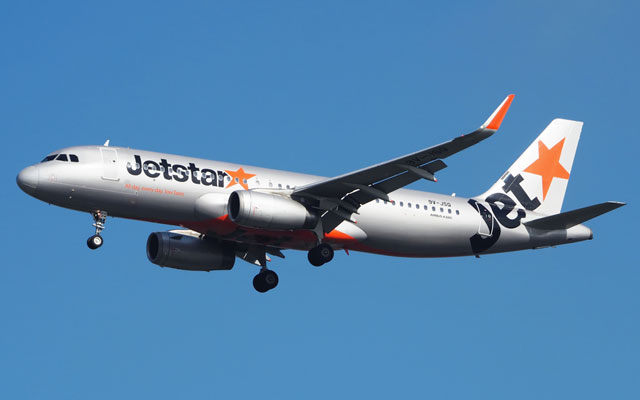
Jetstar Asia has secured approval to operate Vaccinated Travel Lane (VTL) flights to Singapore from Penang, Da Nang, Ho Chi Minh City, and Denpasar, expanding the airline’s existing VTL services to 13 destinations.
These additional services are mounted in response to Singapore’s expanded VTL scheme as well as Vietnam, Malaysia and Bali moving to allow quarantine-free entry for vaccinated travellers.
Jetstar Asia will now fly to Singapore from Penang, Da Nang, Ho Chi Minh City, and Denpasar
Jetstar Asia’s CEO, Bara Pasupathi, said: “With the gradual and safe easing of quarantine requirements, combined with replacing PCR tests with the less-costly ART, we are slowly removing the barriers to international travel, which in turn is helping restore consumer confidence.”
Acknowledging that many have missed travelling and are looking forward to reconnect with family and friends, he said: “We’re confident the safe relaxation of border measures, combined with our incredible low fares, will ensure international travel will once again be back on our customers’ radars.”
Sales for the new VTL services have opened since March 18.
Taka Anugrah Perkasa has appointed Artotel Group to operate its Batuangus 369 tourist site, a resort complex now under construction in North Sulawesi’s Batu Angus Nature Tourist Park.
Set to open in early 2023, the Batuangus 369 tourist site is designed for ecological tourism and will comprise two main areas – Colosseum and Resort – across 13.2 hectares of land.
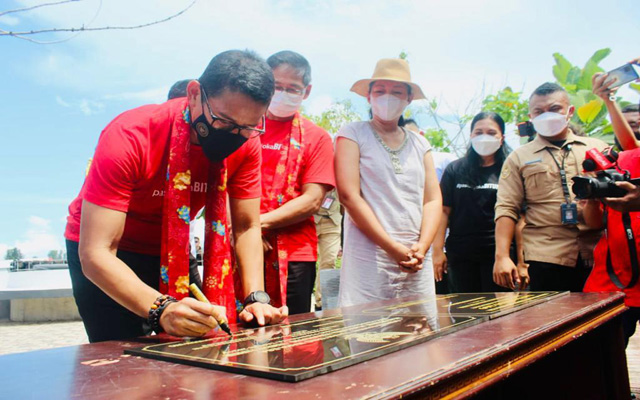
Indonesian minister of tourism and creative economy Sandiaga Uno at Batuangus 369’s sod-turning ceremony
The name Batuangus 369 is a combination of numbers 360 and 9, named for its 360-degree view of surrounding mountains, forests, oceans and hills, while reflecting the identity of nine sub-ethnic groups recognised among the Minahasa through the architectural concept of the property and cultural arts displayed in the Colosseum.
The Colosseum will take in a hotel, villas, restaurants, ballroom and 2,000-seat amphitheatre, while the Resort will feature villas, cabins, a camping ground, restaurants and four meeting rooms for 300 people.
Minahasa’s rich and vibrant culture will be evident throughout the tourist site – from the Minahasa stilt house-inspired architecture to the heritage exhibitions and contemporary performing arts that will be staged at the amphitheatre. In collaboration with Micro, Small and Medium Enterprises and locals, a special food hall will also be created inside the complex to offer a wide variety of local dishes.
Artotel Group will implement its four pillars of Stay, Dine, Play and Shop in developing cultural events with a modern approach to attract its core target of younger generation travellers.
Eduard R Pangkerego, COO of Artotel Group, said efforts would be made to “support local players and collaborate with them through exhibitions, performances and workshops”, and to involve the locals in Bitung City by ensuring that the majority of resort staff would be hired from the local labour pool.
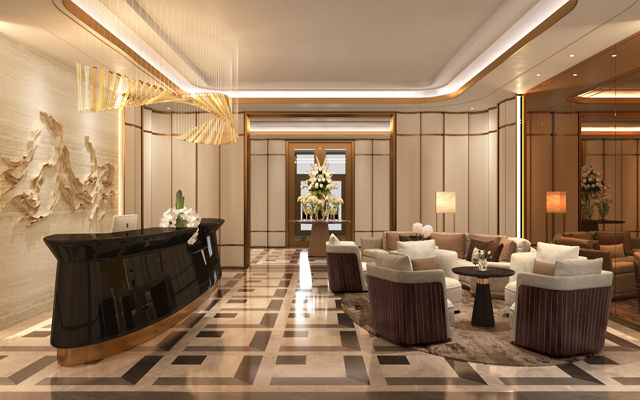
WorldHotels has launched its Elite Collection hotel MW Luxury Halong, in partnership with Vietnamese developer My Way Halong Investment & Hotel.
This is the first WorldHotels Elite Collection property to open in Halong.
MW Luxury Halong is the first WorldHotels Elite Collection property in Halong
Slated to open its doors in 1Q2023, MW Luxury Halong will be a lifestyle hotel offering views of Halong Bay. The property will feature a range of gastronomic experiences, and five-star facilities such as a sky garden, lounges, infinity pool with panoramic bay views, and spa and fitness centre.
MW Luxury Halong is located in the centre of Halong nearby to Vincom Center and Halong Park. MW Luxury Halong will also provide guests with Maybach transport services to help them get around the UNESCO World Heritage site.
Following the signing, Olivier Berrivin, managing director of WorldHotels Asia Pacific, said: “It is an honour to enter this partnership with MW Luxury Halong and My Way Halong Investment & Hotel. It is also a great opportunity for WorldHotels and the BWH Hotel Group to increase our footprint in Halong Bay, a UNESCO World Heritage site and a very popular destination both domestically & internationally.”
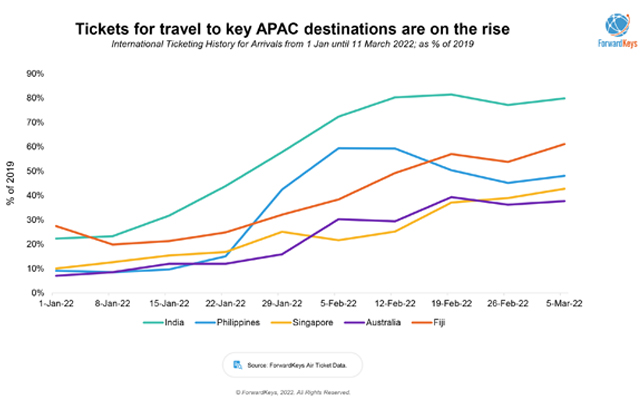
Travel intelligence company ForwardKeys is seeing a growing number of flight tickets issued for travel to key Asia-Pacific destinations as more nations in the region reopen for travel and scrap challenging travel barriers such as quarantines and the number of PCR tests.
India is leading the way forward in terms of inbound issued tickets, with numbers rising to 80 per cent of 2019’s level in the week of March 5, 2022.
Fiji takes second spot, having recovered 61 per cent of pre-pandemic levels, followed by the Philippines with 48 per cent. Singapore and Australia are back to 43 per cent and 38 per cent of pre-pandemic issued tickets respectively.
“The success behind India’s reactivation is the fact that India had announced in advance her reopening plan for this year, generating awareness and interest. Fiji is a leisure island destination and I think that is her main advantage during this recovery phase, as people may feel safer to travel to less crowded places (compared to cities) with a variety of outdoor activities,” said Nan Dai, market analyst at ForwardKeys.
In observing returning source markets to key destinations in the Asia-Pacific region, ForwardKeys analysts noted the importance of Australian outbound travellers.
For example, travel from Australia to India has improved 16 per cent against 2019. Pick-up in tickets from Australia to India started to emerge at the beginning of February when India removed the requirement for quarantine, facilitated travel by adding more countries to its Category A country list, which Australia was part of, and allowed entry with proof of vaccination.
Fiji is also seeing an uplift in future bookings from Australia, peaking and performing above 2019 levels in April, June and September.
However, Dai stressed the need to avoid relying on typical travellers of the past. “Our data shows that this Southern Hemisphere summer, it’s couples and groups of more than six who are most likely to travel to Fiji, not families or solo travellers.”
In concluding her Asia-Pacific analysis, Dai urged government bodies and destinations to rely on real-time trends and data to guide their reopening strategy. She stated that Mexico, Greece and the UK have shown that restarting travel “safely and healthily” is possible when decisions are led by data and when “clear travel rules that don’t get changed frequently”.
“For example, in Singapore, the leisure market is showing more resilience than in 2019 and there have been (improvement) in issued tickets from Thailand (12 per cent) and Denmark (9 per cent) to Singapore – these are new and exciting opportunities worth exploiting via new flight frequencies or marketing campaigns for the tourism boards,” she added.
In the instance of Australia, while total inbound traveller numbers may be low for now, ForwardKeys data reveals a 14 percentage point growth in premium cabin class arrivals in 2022 versus 2019. According to Dai, this signals an opportunity for Australia to target affluent travellers.
Banyan Tree Group: reigniting romance
Despite keeping a majority of properties in operation throughout 2021, Banyan Tree Group’s hotels and resorts – which have traditionally conveyed a ‘sense of romance’ and come with wedding specialists to support customers – saw a significant decline in destination weddings due to Covid-induced travel restrictions, vast reduction in airlift capacity, and regulatory limitations on social gatherings.
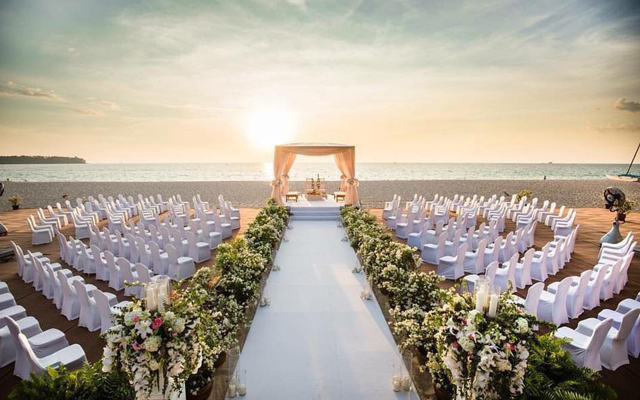
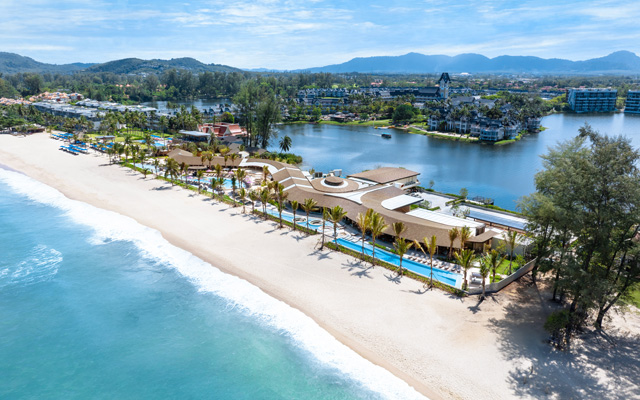
Beach wedding at Angsana Laguna Phuket
In the Group’s popular resorts in Phuket and Koh Samui, where some celebrations did happen, parties were smaller in scale, with the largest wedding seeing just 70 guests; most were also hosted by local couples.
While honeymoon business in 2021 was nowhere near pre-pandemic levels, this segment of the business of romance turned out to be less impacted by the pandemic, shared Michal Zitek, area general manager for Angsana Laguna Phuket.
The Group’s properties located in the Maldives – specifically Banyan Tree Vabbinfaru, Angsana Ihuru and Angsana Velavaru – were able to enjoy healthy honeymoon travel and occupancies throughout the year.
According to Zitek, honeymoon occupancies at the Maldives properties “were only marginally down as compared to other locations”. They benefitted from the destination’s early resumption of international travel with minimal restrictions.
Honeymooners streamed into both resorts and city hotels, and most were from domestic markets. These customers’ preference for privacy and distancing from large groups and crowds was intensified during the height of the pandemic, shared Zitek, and that resulted in “an increased appetite for private dining, intimate destination dining and in-villa culinary experiences”.
To cater to these expectations, properties have rolled out innovations such as in-villa romantic afternoon tea service, celebration ‘floating breakfast’ at the villa or suite private pools, as well as private dinner arrangements on the beach, in the garden or other unique locations.
As 2022 unfolds along with further easing of international travel restrictions, Zitek expects demand for destination weddings to return.
“Where there are weddings, there are usually honeymoons. So, by virtue of the current pace, we are expecting to see an uptake of honeymoon business as the year progresses and airlift continues to (return),” he projected.
Zitek sees pent-up demand for larger destination weddings emerging from the UK, the UAE, India and Australia. Riding on Thailand’s simplified entry requirements, the Group’s properties in the Kingdom are reporting a “sizeable increase in enquiries”.
Banyan Tree Samui delivered one wedding buy-out in late-January, while properties in Phuket and Bangkok have confirmed bookings for destinations weddings beginning from 2Q2022.
“Honeymooners are known to (favour) new or emerging destinations with new brand offerings, so we anticipate this trend to (benefit) our existing portfolio and new additions to our Group,” he added.
The Group welcomed eight new openings last year, such as Banyan Tree Veya Phuket that soft-opened in December. In the next 12 months, the Group expects to open nine more across China, Indonesia, Thailand and Saudi Arabia – where a new flag will be planted in the latter country.
Looking ahead, Zitek said destination weddings and honeymoons would return with an even greater expectation for customisation – and the Group is ready for it. Customised packages and itineraries are taking over prescribed ones, and every property has an army of specialty chefs and service experts to support couples in love.
“(We’re also creating) a myriad of unique and interesting destinations for wedding groups and honeymooners to explore,” he said.
Alma, Cam Ranh: another chance at love
Sprawled across more than 30 hectares on the beachfront of scenic Cam Ranh peninsular in Vietnam, Alma was designed to be a resort big on romance and even bigger on social gatherings.
But with its opening set on December 2019, just months before the pandemic came and swept the world into a travel freeze, Alma was unable to see its forte put to good use.
Alma’s director of sales, Son Hoang Le, told TTG Asia: “We temporarily closed our resort for eight months in 2021 due to a major flare-up of Covid-19 in Vietnam. As weddings usually need a long lead-time, many of these celebrations in 2021 in Vietnam were cancelled due to the many restrictions in place to combat Covid-19.”
The closure had an impact on honeymoons too.
Alma Cam Ranh is designed for destination weddings and other social events
Despite the disruption, Alma managed to welcome some couples in search of romantic local sojourns last year. It presented the perfect opportunity for the resort to show off its romantic and recreation potential.
At the same time, Alma was able to play host to some 77 corporate retreats and events in between local infection waves, revealed Son, which further demonstrated the resort’s ability to deliver on gatherings of various sizes. These business events utilised a range of facilities, such as the Alma Convention Center, which takes in a 300-pax ballroom that can be partitioned into three smaller rooms, a collection of meeting rooms, a lobby bar and reception areas. Corporate groups also enjoyed Alma’s 14 F&B destinations, long stretch of beach, vast lawn areas and even the 6,000m² water park.
“The wedding segment is an important one to our resort,” Son said.
And now with Vietnam reopening her border to international travellers from March 15, Son is in a celebratory mood.
“We are very much looking forward to welcoming international guests, including those who would like to choose Alma and Cam Ranh as their idyllic wedding and honeymoon destination,” he said.
As at late-February, Alma has five weddings on the books.
“We are also planning to host a wedding fair in May this year to attract local wedding organisers and couples,” said Son.
He expects honeymoons to see a stronger and faster recovery than weddings, as they are less complicated to arrange.
To charm couples in love, Alma will dangle new wedding packages and honeymoon experiences this year and beyond, alongside health and safety assurance for all guests. On offer for 2022 is a wedding package priced from 32,410,000++ dong (US$1,418), which includes a night’s stay in the one-bedroom Ocean Front Pavilion with pool, a romantic set-up with Tiffany chairs for up to 50 attendees, floral arrangement for the wedding arch, aisle and couple, a wedding cake, champagne and more.
Accompanying family and friends enjoy 25 per cent off accommodation as part of the wedding.
Honeymooners can take up the Romantic Affair package, which comes with a night’s stay in the one-bedroom Ocean View Suite or Ocean View Pool Pavilion, surprise in-room decoration, 60-minute body massage, a romantic private dining experience, and more.
Son said weddings in the new normal could benefit from the Alma’s variety of event spaces by “mixing and matching venues simultaneously”.
“One of our favorite aspects of events planning is utilising various spaces to create a one-of-a-kind experience. For example, we’ve set up events whereby something in the ballroom is projected to other venues across our resort, including our tranquil lawn and garden areas that offer great vistas of Long Beach,” he said.
The Singapore Hotel Association (SHA) and Singapore Tourism Board (STB) took a big step yesterday towards the country’s aspiration of becoming one of the world’s most sustainable urban destinations, with the launch of the Hotel Sustainability Roadmap at the inaugural Hotel Sustainability Conference and Marketplace, an in-person business matching of sustainability solution vendors with hoteliers.
The event at Sands Expo and Convention Centre was officiated by guest of honour, minister of state, Alvin Tan, for the ministry of trade and industry & ministry of culture, community and youth.
Minister of state, Alvin Tan, for the ministry of trade and industry & ministry of culture, community and youth officiated the Hotel Sustainability Conference and Marketplace
In line with the Singapore Green Plan 2030, the Hotel Sustainability Roadmap sets out clear targets and strategies for hotels to adopt in their sustainability journey.
This enables the industry to contribute to sustainable development goals, seize new opportunities, strengthen enterprise resilience, and tap new visitor segments.
The vision is to create a hotel industry in Singapore that integrates sustainability as a core value across the ecosystem; is established as a living lab and uses sustainability to drive business competitiveness and growth; and is recognised as a regional leader in environmental sustainability.
The roadmap has set out two targets – one is for 60 per cent of hotel room stock in Singapore to attain internationally-recognised hotel sustainability certification by 2025, and another for Singapore hotels to start tracking emissions by 2023 and reduce emissions by 2030, with a view to achieve net-zero emissions by 2050.
The four focus areas identified to green hotel operations are water conservation; waste management, recycling and circular economy; sustainable sourcing and procurement; and energy conservation.
Some strategies include test-bed and adopt innovative sustainable solutions, and raise awareness of the industry’s sustainability efforts and promote sustainable consumption habits among hotel guests.
Kwee Wei-Lin, president, SHA, said: “Enlightened hospitality organisations adopt sustainable business strategies because it makes commercial sense. Sustainable solutions can improve efficiency and reduce our energy requirement and waste, and therefore bottom lines. In addition, our customers are also looking for socially responsible products and services.”
The roadmap is endorsed by the Hotel Sustainability Committee, which will also be producing a Hotel Sustainability Playbook to support it, targeted for completion by year-end.
Call for nominations will also start this year for a new sustainability award. The Singapore Hotel Environmental Sustainability Excellence Award will replace the SHA-NEA 3R Award and the Singapore Green Hotel Award, shared Kwee.
Gino Tan, country general manager of The Fullerton Hotels and Resorts, told TTG Asia: “In alignment with this roadmap, we will also actively track our hotels’ carbon footprint, with the aim of achieving net-zero emissions by 2050. At our hotels in Singapore, we currently monitor our electricity and water consumption on a daily basis.”
The hospitality player’s key green initiatives include utilising water-efficient fittings, Green Mark certified water-cooled chillers, LED lighting system, replacing single-use plastic items in guestrooms, dining outlets and meeting venues with alternative materials, and recycling used soap bars.
Keith Tan, CEO, STB, urged all hotels in Singapore to adopt the roadmap quickly and to integrate it into their current and future plans. “Through these efforts, I am confident that Singapore’s hotel industry will emerge stronger, and greener, which will help us achieve our ambition of becoming one of the world’s most sustainable urban destinations.”
Hong Kong’s decision yesterday to pry open her borders from April 1 is met with relief from the destination’s travel and tourism players, but most do not expect business to return soon as travel facilitation is restricted to residents for now.
The initial phase of reopening will include the lifting of a flight ban on nine countries and revised inbound control arrangements to allow only fully-vaccinated Hong Kong residents to board flights to Hong Kong; a reduction of the existing 14-day Quarantine Order to just seven days; as well as the administration of daily ART/RATs and a PCR test on the fifth day of isolation. Should the isolation extend beyond seven days, another PCR will be administered on the 12th day.
Hong Kong’s reopening from April 1 is a step towards recovery for the travel industry
Travel Industry Council’s chairman Gianna Hsu told TTG Asia that the move was a good step towards recovery but with travel permitted for only Hong Kong residents, especially those who have been stranded overseas, inbound travel agents would unlikely yield any benefit.
“These travellers tend to book their flights and quarantine hotels directly, so travel agents would not benefit much from their trip,” Hsu explained.
“However, flight resumption and a shorter hotel quarantine would trigger outbound travel demand (from Hong Kong residents). Travel agents are starting to receive enquiries for outbound VFR travel, business travel and holidays. People miss traveling,” she added.
Wing Wong, managing director of W Travel, does not expect international traffic to return this year, as there is still uncertainty around permitted flight capacity and hotel room inventory. He ventured that business travellers might be the “next tier” to be allowed entry into Hong Kong, followed by leisure travellers.
As a result, international inbound business would likely return only in early 2023, he stated.
“That said, it is vital to restart local tour activities now to keep our business going for the rest of the year,” Wong added.
Tours across Hong Kong have been suspended for the past three months due to the Omicron flare up. TIC has been fighting to reverse the suspension so as to allow domestic tourism to prop up flailing hospitality businesses.
Offering another pragmatic view is Timothy Chui, One Bus Holiday general manager and Hong Kong Tourism Association executive director, who said a proper travel and tourism recovery for Hong Kong would require traffic flow between Hong Kong and China as well as Macau.
“Reopening borders with China and Macau should be the priority for the government, otherwise the situation will remain difficult for us,” he said.
In line with Hong Kong’s decision to facilitate travel from April 1, Cathay Pacific is working on bringing back more service. In a statement, the airline’s spokesperson said one scheduled flight per route every 14 days was only possible, due to the possibility of the government’s 14-day flight-specific suspension mechanism being enacted, which could cause “unplanned disruptions to our customers that would affect quarantine hotel and other travel arrangements”.
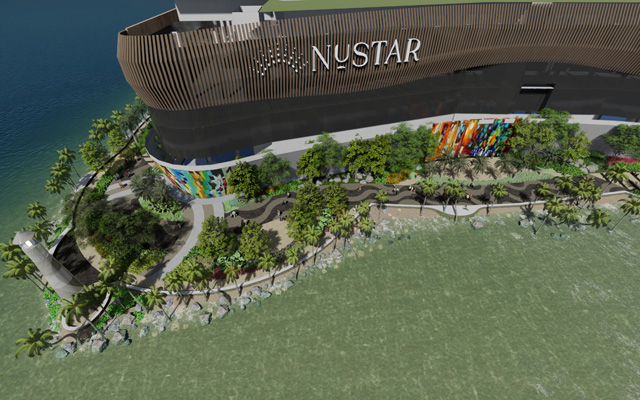
Cebu will welcome her first integrated resort, the NUSTAR Resort and Casino, in December, with facilities set to open in phases.
Situated in Kawit Island along the east coast minutes away from Cebu’s international airport, NUSTAR’s facilities will include three hotels, a 2,000-pax convention centre, and its own wharf to ferry guests from the main Mactan Island.
The NUSTAR Resort and Casino – Cebu’s first integrated resort
The five-star Fili Hotel will be the first to open in 1H2022.
Other attractions on site include the viewing deck that rises 116m from the ground; a high-tech Performing Arts Theatre; a water theme park; and various F&B outlets and retail outlets.
Fili Hotel general manager Paul Rene Lee told TTG Asia that NUSTAR will bring more hotel rooms online in the coming months.
Lee said: “Retail partners, other F&B locators, event spaces are also expected to be completed before we grand-launch in December. The rest of the components like the Premier Cinemas, the Performing Arts Theatre, and the theme park, will all be opening sometime after the soft opening.”
Owned by the Gokongwei Group, which also owns Cebu Pacific and various hotels including the Go Hotels brand, NUSTAR will target locals as well as travellers from South Korea, Japan and the rest of Asia.
two cute little sisters wearing bunny ears playing egg hunt on easter. adorable children celebrate easter at home. Teenage asian girl painting and decorating Easter eggs.
Anantara Chiang Mai Resort has launched fun festive treats for the whole family this Songkran and Easter holidays.
The Songkran Ice Cream Pool Party on April 15 will be hosted on the rooftop of Anantara Chiang Mai Serviced Suites, offering three hours of all-you-can-eat ice cream, including a variety of flavours and toppings to satisfy the sweetest tooth, as well as fun games and activities in and out of the pool.
Anantara Chiang Mai Resort launches celebrations for Songkran and Easter holidays
The fun continues with Easter Egg-stravaganza April 17, where parents can enjoy a relaxing riverside feast while the young ones get busy with activities such as a bouncy castle, face painting, egg painting, and an Easter egg hunt.
Songkran Ice Cream Pool Party is priced at 799 baht (US$24) for adults; 400 baht for kids aged eight to 13. Children under eight goes free.
Easter Egg-stravaganza is priced at 1,190 baht for adults; 450 baht for kids aged eight to 13. Children under eight goes free.
Bookings made over the festive season from April 13 to 16 will receive a free khao chae – rice soaked in cool water, which is Thailand’s favourite summertime dish.
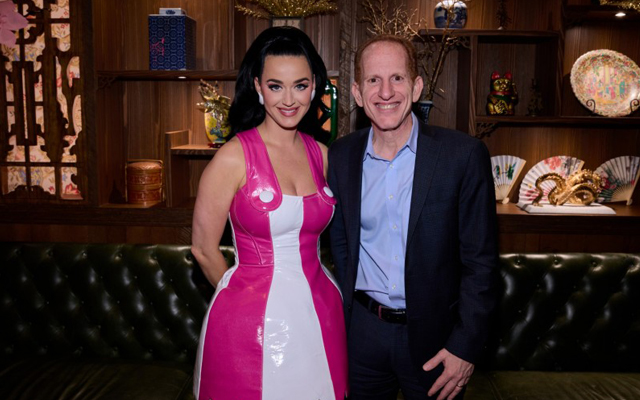
Norwegian Cruise Line (NCL) has made Katy Perry godmother to its newest ship, Norwegian Prima, debuting this August.
The global pop icon will fulfil the maritime tradition of blessing and officially naming Norwegian Prima, the first of six vessels in the Prima Class.
Katy Perry and NCL president and CEO Harry Sommer (Photo credit: Dimitrije Curcic)
Perry will perform during the christening ceremony before Norwegian Prima sets sail on its inaugural voyages from Reykjavík, Iceland, where the vessel will be the first major cruise ship christened in the Icelandic capital.
The tradition of appointing a ship’s godmother is a nautical custom where the individual officiates a ceremonial breaking of a champagne bottle on the ship’s bow to bid the vessel and its travellers good fortune.
Perry said: “My most favourite way to vacation with my family is on the water. Every morning that you wake up, you get to experience an incredible new view.
“I love that I get to christen her with my good vibrations, and I’m so excited for this new, beautiful, high-end, high-tech ship to take the seas, and provide once-in-a-lifetime vacations for so many families.”
To commemorate the partnership, NCL has curated a celebratory Spotify playlist featuring Perry’s hits as well as songs by various artists.


 Fiji takes second spot, having recovered 61 per cent of pre-pandemic levels, followed by the Philippines with 48 per cent. Singapore and Australia are back to 43 per cent and 38 per cent of pre-pandemic issued tickets respectively.