The Hong Kong Tourism Board (HKTB) has unveiled new developments and experiences that are aimed at generating a positive ambience when international travel resumes.
Sharing these recovery plans as well as tourism trends at the Tourism Update 2022 on May 6, HKTB chairman Y K Pang emphasised that the destination has “never stopped building and upgrading its tourism infrastructure”.
From left: HKTB’s Y K Pang and Dane Cheng share revival plans for the destination
He noted that the fifth wave of the pandemic is subsiding, and that “daily life and economic activities are now gradually returning to normal, allowing us to stage large-scale events and prepare to welcome back visitors”.
“With these new infrastructure elements and the support of the central and Hong Kong SAR governments, Hong Kong’s competitive edge has held firm and we can head towards new horizons with confidence,” Pang remarked.
HKTB executive director Dane Cheng said that for the coming year, the destination will focus on generating a positive ambience in the city, stimulating consumption, and maintaining Hong Kong’s profile globally by launching Hong Kong Summer Treats.
The campaign will provide a wide range of discounts and promotional offerings, beginning with Arts in Hong Kong – an initiative that supports international art and cultural events, such as Art Basel, which will return in a physical format.
HKTB will bring back more world-class events, including the Hong Kong Wine & Dine Festival and Hong Kong WinterFest, as safety measures are gradually relaxed.
Cheng shared: “These promotions will generate a positive ambience in Hong Kong and demonstrate how we have returned to normal. HKTB will then launch extensive promotions, including the tactical Open House Hong Kong campaign, to welcome back visitors when the time is right. To better respond to market needs, we will also strive to enhance the visitor journey into a seamless experience through a comprehensive digital transformation.”
Research by HKTB found that travellers are keen to visit Hong Kong for her cleanliness, local culture, in-depth experiences, unique cuisine, accessibility, and ease of communications. Her position at the heart of the dynamic Greater Bay Area, and wealth of new tourism assets and infrastructure shows potential for Hong Kong’s tourism future.
Other new developments to further enhance Hong Kong’s world-class tourism infrastructure include contemporary art museum M+, Hong Kong Palace Museum, Kai Tak Sports Park, and the third runway at Hong Kong International Airport, which is expected to go into service within the next couple of years.
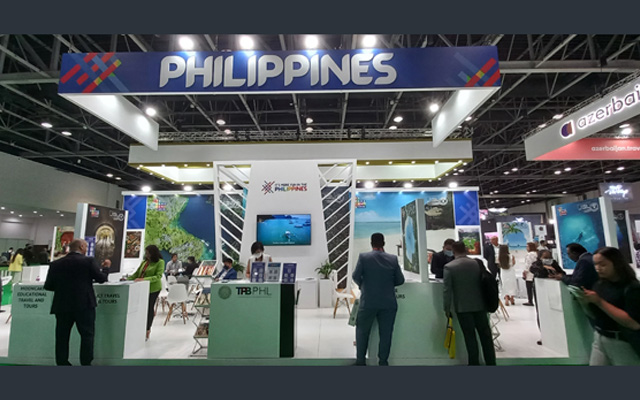
The Philippines is eyeing new source markets, and those in the Middle Eastern are firmly on her radar, with India also emerging as a front runner.
At this week’s Arabian Travel Market (ATM), Ramon Julian S De Veyra Jr, head of the Tourism Promotion Board Philippines’ international promotions department, noted that the Middle East market is a “very, very important market for the future”.
The Philippines hopes to attract the Middle East and India markets at this year’s Arabian Travel Market
He shared that during the pandemic, tour operators were developing halal itineraries, and updating programmes and promotional activities aimed at Muslim visitors from the region.
“We wanted to make sure once borders opened, these countries start sending people to the Philippines,” he said. “Programmes for these markets have been developed and we have been working with properties and resorts to update their offerings as the pandemic has caused a lot of changes, such as hotel and resort closures.”
He added that due to the large population of Filipinos working in the service industry across the UAE, many direct flights already exist, operated by airlines such as Emirates, Cebu Pacific, Philippines Airlines and Etihad, which makes it easier for tourism courtship.
“For the few years prior to the pandemic, we have seen a considerable increase in people from the Middle East – Saudi Arabia and the Emirates – visiting the Philippines, especially Boracay and Bohol. We now have dedicated officers who are pushing this region,” said De Veyra.
He added: “There is a lot of interest in the Middle East from the private sector in the Philippines. They were also really pushing us to attend ATM as they know the potential, and were keen for us to update our promotional activity in the region.”
India is another source market the destination is focusing on, landing in 11th spot on the Philippines’ ranking of top markets recently, even without direct flights. Work is ongoing to secure a direct air access to further grow arrivals.
“Indians have been saturated with the usual places and are looking for something new. The Philippines is an excellent destination with an English (language) capacity,” he opined.
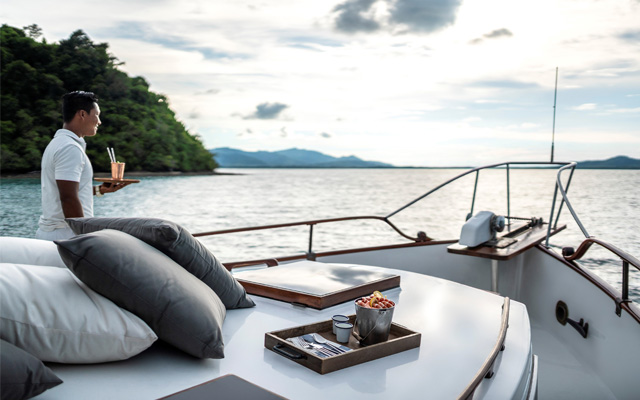
Phuket Hotels Association (PHA) is inviting members of the public to take part in its Absolutely Fabulous Online Travel Sale – an online silent auction with prizes that will fund scholarships for young talents in Phuket.
This forms part of the Phuket Hotels Association Benefit (PHAB) 2022 campaign, a fundraising initiative which also includes PHAB 4 Dance Fever, a charity gala dinner at Angsana Laguna Phuket on May 28, 2022.
Bidders can help fund scholarships for young talents in Phuket by bidding on travel experiences and activities
Participants can bid for five-star stays and experiences donated by sponsors in Dubai, Sydney and the Maldives, as well as Bangkok, Chiang Mai, Krabi and Koh Samui – all potentially available with big discounts for the highest bidder. In addition to hotel stays, the auction includes a range of activities such as yacht charters, golf, tennis, surfing classes and gym memberships.
Bidding in the online auction is open until midnight (Thailand time, UTC+7 hrs) on May 28.
Proceeds from the auction will fund at least 20 hospitality scholarships and internships, exclusively for the benefit of young Phuket residents who would be otherwise unable to fund their education. To date, the association has successfully sponsored over 30 students studying hospitality and tourism in Phuket.
The PHAB 4 silent auction is being continually updated with new prizes. Bidders can check back on their progress, make new offers and see what other prizes are coming up.
Meanwhile, the PHAB 4 Dance Fever at Angsana Convention & Exhibition Space will be an upbeat fundraising event. The evening will commence with welcome cocktails and live music, followed by an international buffet dinner prepared by some of the top chefs from Phuket’s best hotels, and drinks crafted by the island’s most creative mixologists.
The event is supported by the Tourism Authority of Thailand. Tickets are priced at 3,900 baht (US$113) for premium or 4,900 baht for VIP, with proceeds also going towards hospitality scholarships.
Absolute Asia Travel, a Vietnamese tour operator specialising in inbound travel to Vietnam and the Greater Mekong Subregion, welcomed the first group of Mongolian tourists to enter Vietnam since the pandemic.
With a traveller base predominantly from North America and Europe, the tour operator was hit hard by the onset of Covid-19 – the borders had closed and there were no indications as to when visitors would be allowed to return.
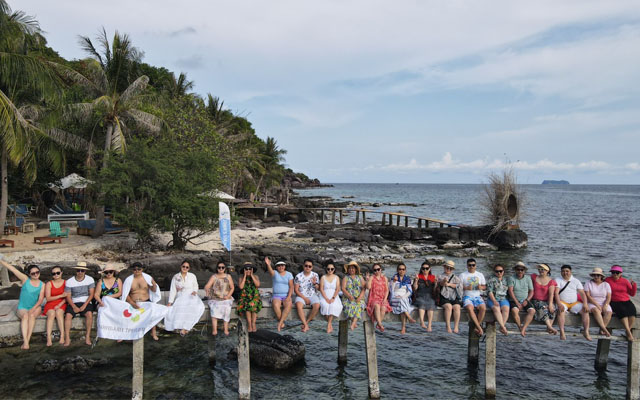
The first group of Mongolian tourists to enter Vietnam after borders opened
Venturing into alternative source markets, Absolute Asia Travel partnered sales representative for South-east Asia, Pear Anderson, in 2020, believing that Asian markets would be faster to rebound than longer-haul ones – the strategy paid off.
When Vietnam started to reopen this year, Absolute Asia Travel found an unexpected lead in a Mongolian travel agency, Cruise Tour Mongolia. What began as an initial quote led to more serious discussions, and resulted in the tour operator handling the ground arrangements for the first group of Mongolian tourists to enter Vietnam just nine days after the country reopened.
On March 24, 2022, 130 Mongolian passengers flew in and travelled on an eight-day trip to Hanoi and Phu Quoc. Cruise Tour Mongolia is now planning 15 back-to-back direct flights to Hanoi with Absolute Asia Travel handling all the arrangements Vietnam-side.
Dong Minh Tuan, director of sales and marketing, Absolute Asia Travel, said: “The Mongolian market is one that Absolute Asia Travel had never even considered before the pandemic, and goes to show that our strategy of looking at new sources of inbound visitors is starting to pay off, now that Vietnam is open. With South-east and East Asia also reopening, we are keen to start working together with new Asian partners to showcase all Vietnam has to offer.”
Amar Munkhbat, international affairs manager, Cruise Tour Mongolia, shared: “We discovered Phu Quoc Island in January through internet research and wrote to many tour operators in Vietnam looking for a company to support us.
“Luckily, we came across Absolute Asia Travel, who were so professional in their communications – and their quote was one of the most competitive. The tours have been selling very well and seen a great deal of interest from Mongolian travellers. From March 24 until now, we have sold 780 seats.”
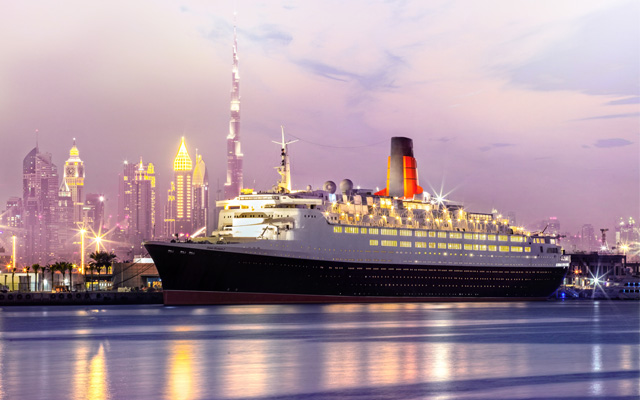
World-renowned cruise ship Queen Elizabeth 2 (QE2) joins Accor’s portfolio this month, and will be rebranded under the MGallery Hotel Collection. It will also undergo further upgrades and renovations.
The group is collaborating with the Ports, Customs and Free Zone Corporation (PCFC) Investments, a Dubai government organisation, in the project.
Accor adds Queen Elizabeth 2 to its portfolio in Dubai
“The Queen Elizabeth 2 as we know her, has made history and we are confident that Accor will keep her legacy alive while her strong heritage and notoriety will remain a destination in itself, where guests and visitors alike can enjoy a unique experience,” said Saeed Al-Bannai, CEO of PCFC Investments.
The QE2 is located at Dubai’s Port Rashid and is in close proximity to Sheikh Zayed Road, providing easy connection to the city’s main attractions. Dubai International Airport, Dubai Mall, Burj Khalifa and La Mer Beach are all located less than 20 minutes away, while the Palm Jumeirah and Mall of the Emirates are about a half-hour away.
Mark Willis, CEO of Accor India, Middle East, Africa and Turkey, said: “This is a great opportunity for Accor to expand its footprint in the UAE with the introduction of a unique project which brings diversity to the portfolio, while expanding the MGallery brand presence in the city.
“Not only are we in charge of the only floating hotel in Dubai, but we are also contributing to the Dubai Urban Master plan 2049, with the aim to map out the path for a sustainable urban development while increasing the city attractiveness as a global destination.”
Once the renovation is completed, the new MGallery Queen Elizabeth 2 will feature 447 hotel rooms, nine F&B outlets, 10 meeting rooms, 5,620m² of outdoor events spaces, six retail outlets, a swimming pool and gym.
Hyatt Centric Victoria Harbour Hong Kong has relaunched the series Tour the World in Hong Kong to take guests on a holiday experience to Thailand.
The We Miss Thailand room package includes accommodation for one-night, breakfast for two, a choice of a Thai-themed lunch or dinner buffet for two, as well as other sweet treats.
Engage in the “Songkran Water Fight” at the infinity pool
The highlight is the exciting session of “Songkran Water Fight” where guests can experience a fun time with water guns at the hotel’s infinity pool.
There are also optional activities such as an electrifying Muay Thai class or a relaxing Thai massage session at additional cost.
Location
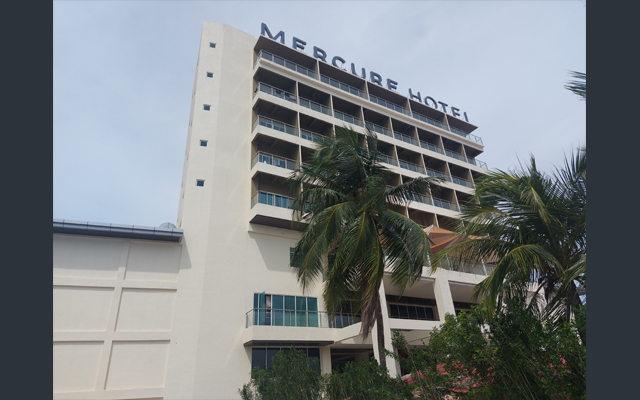
Mercure Langkawi Pantai Cenang sits on the buzzing Pantai Cenang beach, affording guests easy access on foot to numerous duty-free shops, restaurants and bars, spas, souvenir shops as well as tourist attractions such as the Laman Padi Langkawi Museum and Underwater World Langkawi.
The hotel is also a mere 10-minute drive from Langkawi International Airport.
While the hotel boasts a superb location, it is tucked away from the main hub, sparing guests from street noises.
1 of 3
Mercure Langkawi Pantai Cenang Hotel
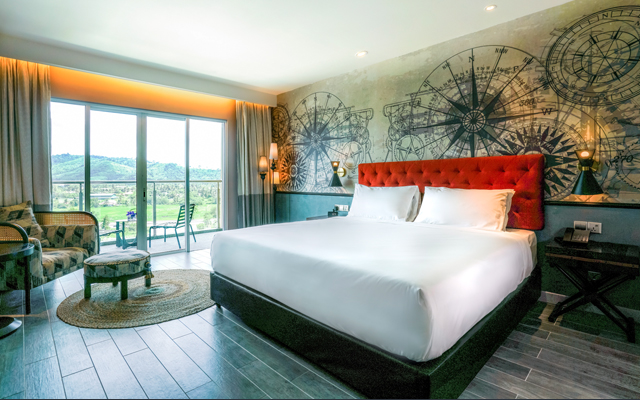
Superior room
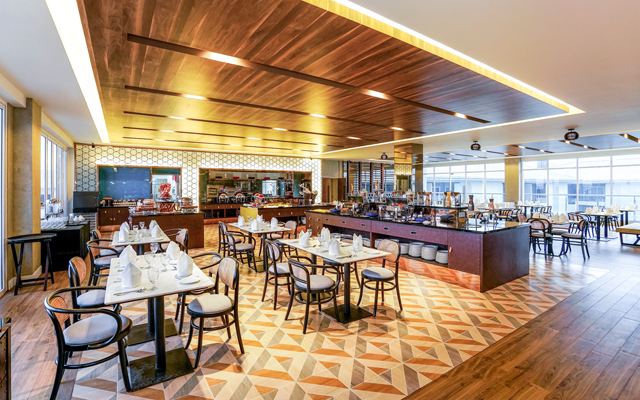
Rice Garden
Rooms
The hotel packs in 164 large rooms, with sizes ranging from 35m² to 38m².
I spent my stay in a superior king ocean view room on the fourth floor, which allowed me enjoyable views of the Andaman Sea.
My room was very comfortable, with a firm mattress and pillows that felt just right as well as a minibar that offered complimentary soft drinks.
While there was plenty to do around the hotel, I found lazing on the plush bed and surfing through 20 international TV channels just my cup of tea for the moment.
I was also impressed by the stability of the hotel’s complimentary high-speed Wi-Fi.
F&B
The all-day dining Rice Garden restaurant is the only F&B venue in the hotel, and it serves local and continental breakfast as well as Malaysian favourites for lunch and dinner.
I had a thoroughly enjoyable meal there, gobbling down some unique dishes such as Malaysian spice lamb flat bread and the Cenang 4 Seasons Special, which was a delicious salad comprising mango, Thai fish cake, mini spring roll and chicken in screw pine leaf.
Guests can choose to dine indoors in an air-conditioned setting, or sit on the terrace to enjoy the ocean view and breeze.
One will never be short on gourmet options, as beyond the hotel lies numerous eateries, from hawker centres and fast food chains to casual and contemporary restaurants – all of which are within walking distance.
Facilities
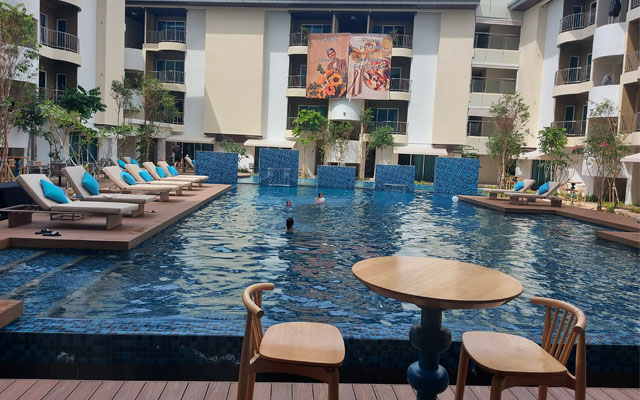
Located in the hotel lobby is the 99 Islands Lounge and Bar that overlooks the open-air swimming pools for adults and children, as well as the poolside terrace.
There is also a 24-hour fully equipped gym and a Kid’s Club stocked with board games and reading materials.
The hotel caters to small events through a theatre-style ballroom on the third level. This can seat 200 guests, or be partitioned into two smaller spaces. In addition to the ballroom are three small meeting rooms on level two. All venues are fitted with state-of-the-art audiovisual facilities, and feature natural daylight and floor-to-ceiling windows.
There is also a dedicated banqueting team to support event planners.
Service
Excellent! I loved the hassle-free check-in and the efficient service at the restaurant where my plates were cleared from the table each time I got up for second helpings at the buffet line.
Verdict
Fantastic hospitality, with attentive and friendly staff who made me feel right at home.
Number of rooms: 164 Contact details
Tel: +604 9525888
Email: HA3M7@accor.com
Covid safety concerns are powering private air charter business as Asia opens up, observed travel players.
Air 7 Asia, the regional division of US-based Air 7, has had to expand its fleet of three aircraft based in Singapore to six in recent months in order to cope with bookings that have “gone through the roof”, revealed executive director Stefan Wood.
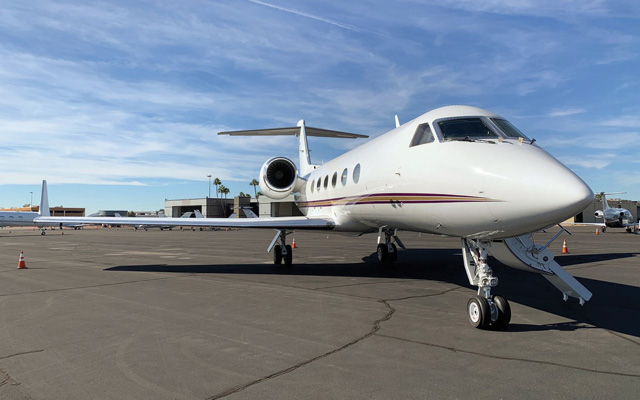
Air 7 Asia needs to expand its fleet of private jets to cater to rising demand; Gulfstream pictured
The current fleet comprises a Beechcraft Premier, Lear 60, Falcon 2000, Gulfstream 150 and two Gulfstream 450s.
“To cater to our current demand, we realistically need another three aircraft in Singapore,” remarked Wood, who expects demand to only rise further as more Asian governments ease their travel requirements.
While the early days of the pandemic and travel disruption brought a wave of corporate bookings, driven largely by repatriation and urgent business travel needs, Wood said recent and forward charters were mostly for leisure and family travel.
“There are families that have not seen each other for quite some time, and they are flying from around South-east Asia to reunite,” he said.
Between scheduled commercial flights and private air charters, Wood said the second option was winning travellers over with safe distancing assurance and the promise of travel convenience.
“Travellers feel assured that they are with their family or people they know. With post-lockdown travel recovery, big airport hubs are very busy at check-in and airplanes are packed with 100 to 300 people. For private air charters, travellers only need to turn up to us at Seletar Airport, if in Singapore, and 10 minutes later they are on their aircraft and ready to take-off to their desired destination. They will land in a private jet terminal and a short moment later be in their limousine to take them wherever they want to go next,” he said.
Over in India, private jet charter operators have reported the same spike in demand, fuelled by wealthy Indians wanting to skip busy commercial flights amid the pandemic.
According to a news report by Asia Financial back in December 2021, demand for both the charter and purchase of private jets have soared. It reported that India’s fleet of 515 private aircraft has expanded by 25 per cent since October 2021.
While Mike Harlow, general manager of bespoke travel operator Scott Dunn, agrees with the advantages of private jet travel, he told TTG Asia that demand among his customers has remained consistent since the pandemic started.
Wood: people that choose to fly to Singapore and use it as a gateway to Asia can easily transfer onto a private jet to get to places where airlines do not fly
Furthermore, with Asia transitioning to live with Covid, Harlow said “80 to 90 per cent of our guests are less worried, and are generally comfortable enough to travel via scheduled flights”.
Scott Dunn customers typically travel in business class or better, which provide a much higher level of privacy and distancing between passengers compared to economy class.
According to Harlow, customers who favour private jet charters now are those travelling in a family group, especially when they are with vulnerable younger children, or those who have traditionally used private jets pre-pandemic.
In Singapore, where there are limited numbers of private jets available for charter, wealthier travellers are choosing the convenience of scheduled services, which are building up capacity, observed Amy Lai, vice president, head of sales, UOB Travel.
“Singapore-based clients wanting to activate a charter may have to request for the jet to come to Singapore first, sometimes all the way from the US, and that pushes costs up,” Lai explained.
“For this reason, we see stronger demand for private air charters coming into Singapore than going out.”
Greater accessibility
Indeed, international and regional airlines have been scaling up scheduled services into and within Asia in recent weeks to cater to growing travel demand.
According to OAG, global airline capacity for the week of April 18, 2022 sits at 85.7 million seats, which is 22 per cent behind the same week in 2019. Its report for the week identified South-east Asia as the region with the strongest air capacity growth, rising by 4.3 per cent on the previous week with 44,000 more seats.
Wood is unfazed. In fact, he welcomes the expansion of scheduled services in the region.
“Singapore Changi Airport has been no-go for private jets throughout Covid. It was only in March that the Civil Aviation Authority of Singapore reopened the airport to private jets, and that is fantastic. A lot of people that choose to fly to Singapore and use it as a gateway to Asia can now easily transfer onto a private jet to get to places where airlines do not fly,” he explained.
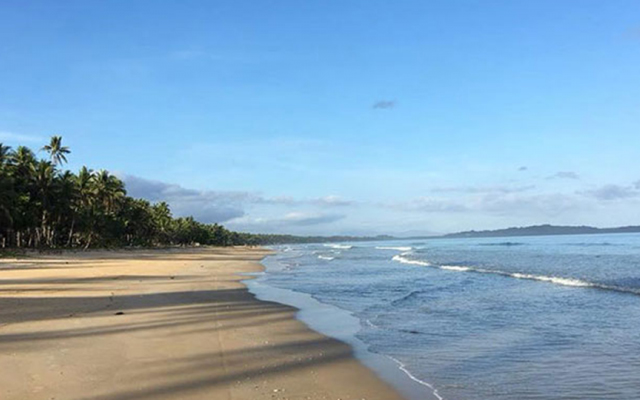
Private jet access is a boon to many private island resorts across Asia, which are gaining popularity among holidaymakers who want to rest and relax with loved ones in safe isolation. Banwa Private Island in the Philippines’ Palawan region works with Ascent Flights Global to offer guests direct flights from Manila via seaplanes and helicopters.
Furthermore, as airlines are not immediately returning services to pre-Covid levels, Wood is certain that private air charters will remain hot.
“For example, Phuket used to have 12 direct flights a day from Singapore to Phuket. At the moment, there is just a handful. If people want to go from Singapore to Phuket on a Friday afternoon after work, and return on Sunday night, there won’t be an easy option (with scheduled services). Private jets are the only way,” he said.
Not just for the rich and famous
Wood is hopeful that as more travellers come to appreciate the value of private air charters, they will also realise that such services are not just “toys for the rich and famous”.
He said a private air charter that is shared among friends would cost the same as a business class seat for each, but with elevated privacy, social distancing and travel ease.
“We have a group of seven friends chartering us in May – departing Friday afternoon to Phuket where they will spend a night, head over to Koh Samui for brunch and a great night out on Saturday, and onwards to a luxury boat trip on Sunday before flying home. We will touchdown in Singapore at 22.00. Now, that is a rockstar weekend!” he said.
Cash-strapped Tourism Infrastructure and Enterprise Zone Authority (TIEZA) of the Department of Tourism (DoT) is hopeful that the relaxed rules on foreign ownership will accelerate the much-needed funds from foreign investors.
TIEZA chief operating officer, Mark Lapid, said it joined Dubai Expo 2020, which ended in March, to encourage foreign investments in tourism – this follows recent amendments to the Foreign Investment Act (FIA) which allows foreigners, for the first time, to set up and fully own domestic enterprises in the Philippines.
TIEZA hopes the revised Foreign Investment Act will attract foreign investors
Previously limiting foreigners to 40 per cent business ownership, Lapid said the change in the FIA is a good start. There are certain exceptions to 100 per cent foreign ownership, whereby foreigners can manage hotels and related properties, but cannot own land.
He disclosed that the DoT’s investment and infrastructure arm is badly hit by the tourism lockdown since it depleted its main source of funds – the US$38.78 (1,620 pesos) outbound passenger travel tax – forcing TIEZA to discontinue all of its projects.
While 50 per cent of outbound travel tax collection goes to TIEZA, the rest are divided between two other government agencies.
Despite having no travel tax collection and income from its projects, TIEZA remitted US$227.7 million to the Bureau of Treasury to support purchase of medical facilities and equipment in response to Covid-19, helped fund the Philippines’ hosting of the WTTC 21st Global Summit, and bankrolled the construction of the new Cloud 9 view deck in Siargao, which was ruined by the super typhoon in December.
Its operating entities Gardens of Malasag Eco Tourism Village in Cagayan de Oro, Banaue Hotel and Youth Hostel in Banaue, and San Fabian Beach in Pangasinan were used as temporary quarantine facilities during the pandemic.
TIEZA is also encouraging more private sector investments in tourism projects, and Lapid mentioned there are a few corporations showing interest.
Prior to the pandemic, TIEZA had approved joint venture guidelines for private sector participation in developing, operating, managing and disposing of its properties and facilities.
Barring any more lockdown, Lapid calculated that TIEZA will be able to hit US$19 million in travel tax collection by the end of the year. Its collection had already hit US$2.5 million in April since the Philippines opened its international borders earlier in February.
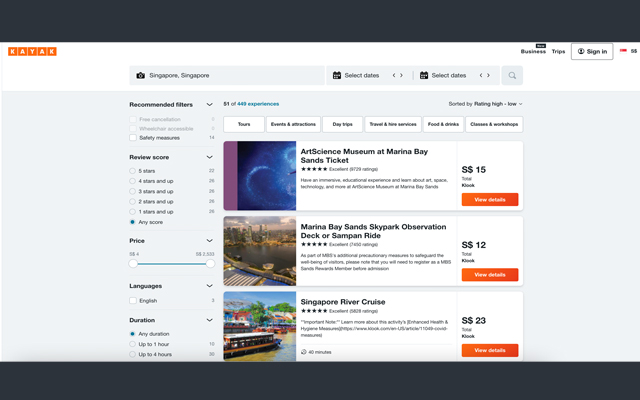
Klook and KAYAK have expanded their integration to enable KAYAK users access to one of the largest inventories of Things-to-Do across the Asia-Pacific region.
This integration follows that of Klook and KAYAK’s car rental coverage last year, giving KAYAK users access to 500 vendors across 9,000 destinations – one of the largest inventories in the region.
Klook and KAYAK enable KAYAK users to have greater access to more activities
“We’re excited to be expanding our integration with Klook which will enable KAYAK users to have greater access to an extended variety of attractions and experiences,” said Elia San Martin, vice president and general manager of APAC, KAYAK.
“As travel continues to rebound in the APAC region, we are helping travellers access more travel options than ever before.”
Marcus Yong, vice president, global marketing, Klook, said: “The enhanced API-connectivity between the two companies will enable the post-pandemic traveller to have seamless access to the best things-to-do and car rentals globally. Borders in APAC are gradually opening up as measures ease. This is an opportune time for us to be at the forefront of travel recovery in the region and build on that momentum with KAYAK – especially as it brings more travellers over from the US and Europe to experience joy in Asia.”
Both companies may also look to explore a series of co-marketing initiatives showcasing travel deals and opportunities for users in the region.