Anantara Kihavah Maldives Villas presents the Best of Maldives package to bring the best of the island’s experiences to its guests.
The package includes accommodation at a beach pool villa or over water pool villa, and serviced by a personal host 24 hours a day.
Indulge in a gourmet lunch underwater with panoramic views of marine life
For stays between four and seven nights, guests can savour a gourmet four-course lunch while marvelling at the panoramic views of marine life six metres beneath the water at SEA, the resort’s underwater restaurant.
Stays of eight nights or more will include an additional experience of snorkelling with manta rays at Hanifaru Bay or a dolphin watching cruise, depending on the season.
What made you give five decades of loyalty to a single employer?
This is my love story. I was schooled at St Joseph Institution down the road from Raffles Singapore, and I’d walk past the hotel every day. The colonial architecture attracted me and I would always wonder what’s inside.
I had my first beer in this hotel after I completed school. It was then that I finally saw the interior, which was nothing like what I had seen. I decided there and then that I would work here.
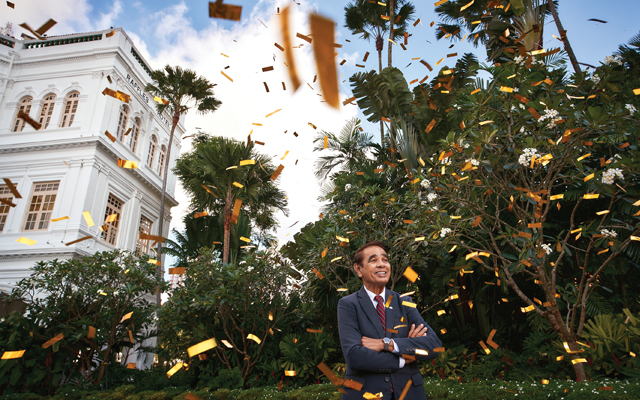
Danker’s work at Raffles Singapore is never a job, but a passion that he is able to live out most days a week
On March 15, 1972 I joined the hotel as a maintenance supervisor. It was a good thing, as the job allowed me to explore every corner of the hotel and brought me close to the interior and architecture.
The more time I spent at the hotel, the more I wanted to know about it. I spent a lot of time in the library researching. Did you know that the hotel started off as a 10-room bungalow, and in 1915 it created the Singapore Sling that put the hotel on the world map? Later, during the Japanese Occupation (1942-1945), Japanese officers stayed here.
There were many happy and sad moments for this hotel, but it persevered through time.
There are many stunning hotels in Singapore now. Have you never felt compelled to leave and explore work elsewhere?
Whatever the other glamorous new hotels have, we have it too at Raffles. But they do not have the rich history that we do. The hotel had so many significant events that were attended by famous personalities like Rudyard Kipling, Somerset Maugham, Elizabeth Taylor, and the Queen of England. Noel Coward even wrote a song for the hotel.
The Sarkies Brothers (founders of the hotel as well as many other luxury hotels throughout South-east Asia) once said of this hotel: we are not better than the best, but better than the rest.
So, if I have the best, why would I move on to the rest?
Raffles is special, and is now a part of me.
Did you play other roles at the hotel?
I was in F&B, HR and front office (at different stages). At the front office, I often had to answer guests who were curious about the hotel’s history and architecture.
After the hotel has designated a National Monument on March 4, 1987, a new company bought it over and ordered a complete restoration (in 1989) to bring back the hotel’s early grandeur. At that time, many staff were retrenched and it made me very sad to have to leave.
Quite fortunately for me, I was asked to take the new CEO around to show him the history and architecture of the building. At the end of it, he invited me to stay and contribute my knowledge to the new owners and management.
I was hired as site supervisor, and worked closely with engineers, architects and interior designers during the restoration. I learnt even more about the history of the hotel during the restoration because there were media reports about its beginnings and milestones. I bought a black notebook for all those clippings. This book is now on show in the hotel’s museum.
After the restoration, I was appointed information officer, guest relations manager and later, training manager. Eventually, they put me back in front of guests and soon after, the general manager made me the resident historian so I could keep telling my stories.
Since then, I have been conducting history tours for guests, taking on media interviews on the hotel’s heritage, and history training for new staff on orientation.
I’ve not stopped learning, and continue to do a lot of research to uncover facts about the hotel and its surroundings.
Today, it is common for hotel staff to call me throughout the day to ask about things like, how big the hotel is or how high the ceiling is.
My colleagues say I am a walking hotel history archive.
Which of these roles did you love most?
The resident historian, of course! When I interact with our guests on the hotel’s past, my stories make their stay come alive! Many came to stay because of the hotel’s architecture, but did not know much about the wonderful stories.
What is your one favourite story about the hotel to tell?
I am the only staff who has been here before the first restoration (in 1989), and had the privilege of working on the project.
When I joined in the 70s, there was a ballroom on the current iconic driveway. The Sarkies Brothers added it to gain more revenue. When the ballroom was demolished to allow for the restoration of the grand entrance, we discovered gravel underneath. Horses were the primary transport back then, and gravel was used in driveways (for better grip).
(Throughout the restoration works), we found broken porcelain with SB initials for Sarkies Brothers, original tiles from the past, original ceiling, and even the skeleton of a horse!
I was privileged to witness the transformation of the hotel back to the grand days of 1915.
Transport ministers from seven South-east Asian countries have pledged to rebuild and restore air travel through various measures including mutual recognition of Covid-19 health certificates and the development of a single ASEAN aviation market.
Transport ministers of Singapore, Malaysia, Indonesia, Thailand, the Philippines, Cambodia and Brunei will commit to a range of efforts that will rebuild the region’s aviation sector
The commitment is shared by the ministers of Singapore, Malaysia, Indonesia, Thailand, the Philippines, Cambodia and Brunei.
According to Singapore broadsheet The Straits Times, a joint statement by the ministers also pointed to efforts such as harmonised aviation-related public health and safety measures, aligned sustainable practices, and improved air connectivity between South-east Asia and other regions.
Training and capacity building will also be promoted to support recovery and growth of the civil aviation sector and the well-being of its workers.
Singapore Changi Airport’s Terminal 5 project will resume after a two-year hiatus induced by the pandemic, announced transport minister S Iswaran today at the Changi Aviation Summit.
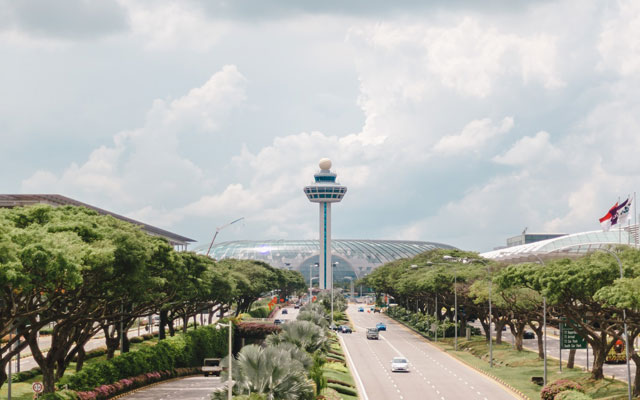
Singapore Changi Airport’s Terminal 5 is expected to be ready around mid-2030s
The decision is supported by “current and projected recovery in air travel demand”, he noted, adding that the terminal’s design would be reviewed “to make it more modular and flexible, and enhance its resilience and sustainability”.
Iswaran said construction could commence in two to three years, subject to the pace of travel recovery.
The facility is targetted for operations around mid-2030s.
The Lebaran holiday, Indonesia’s biggest holiday season, has brought a breath of fresh air for the local hotel industry, thanks to heightened traffic.
Although the official holiday period runs from April 29 to May 6, domestic travel has been riding high since a week before.
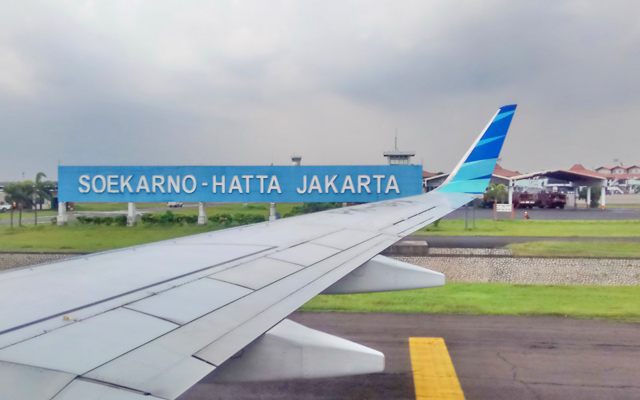
Soekarno-Hatta International Airport recorded 10,899 flights during this year’s Lebaran
Maulana Yusran, secretary-general of the Indonesian Hotels & Restaurants Association (IHRA), who observed an increase in hotel occupancy, said it was due to several things – a long collective leave issued by the government; removal of Covid testing, especially for those who have had the booster vaccine; and a greater enthusiasm in going home for the festive season.
IHRA estimated an average increase of 30 to 40 per cent in occupancy nationwide during the holiday period, as compared to normal days, and 30 to 40 per cent higher than the Lebaran holiday last year.
Popular destinations such as Bali and Yogyakarta saw a notable spike in occupancy rate.
Owner of Santrian Group Bali, Ida Bagus Agung Partha Adnyana, said his properties experienced an occupancy increase of 55 to 70 per cent during the Lebaran holiday as compared to the same period last year.
Fransiska Handoko, general manager of Risata Bali Resort and Spa, said business came from a mix of foreign and domestic guests, with local travellers making up 60 per cent of bookings.
This was a 50 per cent increase from the same period last year, when high-level movement restrictions were in place, she added.
Similarly, SenS Hotels & Resorts in Ubud enjoyed 90 per cent occupancy during the same period, as both domestic and international holidaymakers returned to Bali.
IHRA Yogyakarta Chapter chairman, Deddy Pranowo, reported that occupancy in 2020 and 2021 was under 30 per cent but peaked at 90.8 per cent this Lebaran.
Data from toll road operator Jasa Marga showed over 1,700 vehicles leaving Jakarta and the surrounding areas to cities across Java, Sumatra and Bali between April 22 and May 2.
Soekarno-Hatta International Airport recorded 1.36 million passenger movements during that period, with 10,899 flights.
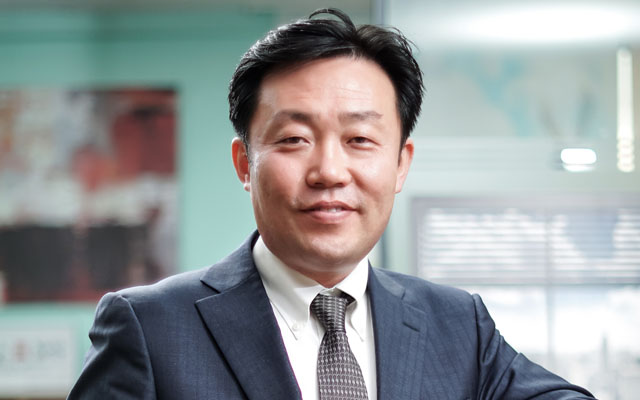
IHG Hotels & Resorts announced Danny Ha as development representative for Korea, where Ha will support the strategic growth of IHG brands in the country and focus on building long and trusted relationships with owners.
Ha brings 25 years of experience in hospitality strategy and planning, brand development, contract negotiation and conversions, pre-opening and project management in Korea, having ran his own hotel consulting practice where he represented owners in various capacities. He was also an owner’s representative for high profile projects of brands such as JW Marriott and IHG InterContinental and Holiday Inn & Suites.
Ha is excited to join the IHG team at such an opportune time as travel and hospitality rallies with the reopening of borders and looks forward to developing win-win strategic partnerships with owners, as well as unlocking the potential of IHG’s brands in Korea.
Japan’s tourism industry is buoyant after seeing a dramatic travel rebound during the country’s peak holiday period, leaving hopes high for summer.
The population enjoyed their first Golden Week without stay-at-home requests since the outbreak of Covid-19, resulting in an estimated 16 million people traveling, according to JTB Corporation.
Japan’s tourism industry saw a dramatic travel rebound during the country’s peak holiday period
Transport providers were among the first to show positive performance during the holiday period from April 29 to May 8, 2022 – domestic departures of Japan Airlines (JAL) and All Nippon Airways were almost fully booked on April 29, according to the airlines.
The number of passengers on Shinkansen and limited express trains over the period increased 2.45 times compared to 2021, according to the JR Group, but equates to only 56 per cent of the number over Golden Week 2019.
Japan’s domestic airlines reported 1.7 times more reservations that the previous year for domestic flights and 4.7 times more for international flights during the holiday period.
According to JAL, its total number of domestic passengers was 231 per cent year-on-year. In a statement, the company said: “All destinations are (performing) significantly higher than the previous year but, in particular, the total number of passengers in the Tohoku/Hokuriku, Kansai and Chugoku/Shikoku regions tripled from the previous year.”
Demand for such rural destinations reflects the growing interest among Japanese customers for rural areas, a trend also reported in JTB’s survey about Golden Week travel intentions. The study showed 31 per cent of respondents wanted to enjoy natural scenery while 21 per cent wanted to enjoy mountain climbing, camping and other outdoor activities.
In Kusatsu, a town in Gunma Prefecture known for its hot springs, 70 to 80 per cent of its 122-member ryokan inns were fully booked for Golden Week, according to the Kusatsu Onsen Tourism Association.
“Recovery is good and our campsites are seeing customers coming back,” said Taisuke Yokota, managing director of Camping with Soul Japan, which reported occupancy during Golden Week at 80 per cent of its 2019 occupancy over the same period.
He added: “This gives us high expectations for summer visitors.”
Tourism Malaysia has continued its pursuit of Middle Eastern travellers following the conclusion of Arabian Travel Market, with a series of roadshows in Iran, Oman and Qatar from May 13 to 21.
Travellers from the region have traditionally been long-staying and among the top five spenders in terms of per capita expenditure, making them an important source for Malaysia.
Zainuddin: thrilled to welcome international travellers worldwide to experience Malaysia again
Led by Tourism Malaysia’s director-general Zainuddin Abdul Wahab, the roadshows in the capital cities of Tehran, Muscat and Doha bring together Malaysia’s tourism fraternity comprising travel agents, hoteliers, product owners, state tourism bodies and medical tourism industry players.
Zainuddin said in a press statement: “As we welcome more West Asia travellers back to Malaysia, it is a timely occasion to strengthen our partnership with international airlines such as Qatar Airways, Oman Air and Mahan Air, which offer direct flights to Kuala Lumpur.
”With an exciting line-up of new attractions to be explored, including the newly opened Genting Skyworlds Theme Park, the world’s second tallest skyscraper, Merdeka 118, and the Sunway Resort in Kuala Lumpur that had just reopened after a once-in-a-generation transformation, we are thrilled to welcome international travellers worldwide to experience our country again.”
Apart from formal briefings and presentations on Malaysia’s tourism industry, travel trade partners are also invited to travel mart sessions and networking dinners.
Uzaidi Udanis, president of Malaysia Inbound Tourism Association, said: “It is important to build on this market and for Tourism Malaysia to collaborate with Middle Eastern airlines on promotional activities as tourists from the Middle East are mostly high-yield and (stay for) more than five days. It is also important to showcase new attractions, so outbound agents from there know we have not been stagnant in the last two years.”
TUI BLUE Hotels & Resorts has revealed plans to develop 70 to 90 hotels in Asia-Pacific, soon after establishing its new development team in Hong Kong.
The hotel subsidiary of TUI Group has an overall ambition to grow to more than 300 hotels worldwide, enabling it to become the leading leisure hotel brand. It currently has 97 hotels in 20 countries, and has its eyes on expansion opportunities across South-east Asia, China, Africa and the Middle East.
TUI BLUE Hotels & Resorts plans to grow to more than 300 hotels worldwide
Speaking to TTG Asia, Artur Gerber, managing director, TUI BLUE Hotels & Resorts, said that to drive the growth roadmap for the region, the Asia development team across Hong Kong, Singapore, Thailand – and soon in Vietnam and Indonesia – will reach out to local partners and amplify the advantages of TUI BLUE’s new management and franchise model for collaboration.
Gerber said: “We have a lot of operational expertise, and on the other side we are also a hotel owner with a lot of assets ourselves.”
TUI Blue’s partners are assured of the parent group’s support in terms of sales and hotel occupancy, he added.
Germany headquartered TUI Group posseses the sales power of 27 million customers per year.
To push demand to its global properties, Gerber believes that the brand’s unique selling points are critical. The novel Tui BLUE concept includes BLUE Guides, competent local contacts to assist guests; BLUEf!t, a fitness and relaxation programme; and BLUE App, a state-of-the-art digital service assistant to allow guests to customise their holidays.
As testimony that the new team is on the right track, new project leads have been on the rise, according to Gerber.
The team in Asia has also successfully inked management contracts for the first few TUI BLUE hotels in China near the Hainan region, as well as in the city of Taicang, 45 minutes away from Shanghai.
The Malaysia Budget & Business Hotel Association (MyBHA) called on the government to temporarily suspend the enforcement of the new minimum wage of RM1,500.00 (US$341) enforced since May 1, until survival challenges faced by budget hotel players are resolved.
National deputy president, Sri Ganesh Michiel, said the association had been repeatedly requesting the government to resolve the threats facing the industry since 2017, but pleas have fallen on deaf ears.
Sri Ganesh: resolving these threats will help budget hotels survive and improve on their services and offerings
Speaking at a press conference on May 12, Sri Ganesh said short-term residential accommodation is unregulated and flourishing nationwide.
He said: “This is a major threat towards budget hotels nationwide as they are doing business illegally with lower operating costs and they do not need to pay government tax or even have any licensing. Are the policy makers involved in having this illegal business which makes them reluctant to act?”
MyBHA called on the government to immediately enforce the guidelines on short-term residential accommodation, and also proposed that the electricity tariff that budget hotels pay be changed from commercial tariff to industrial tariff, which has a lower rate. It is also proposed that the government could set a special tariff to assist tourism and hotel industry entrepreneurs.
MyBHA also urged the government to immediately enact an act to regulate all types of OTAs.
Sri Ganesh explained: “OTAs set high commissions and this has caused the hotel industry to suffer losses or low income. They have to follow the selling prices and promotions that have been set by the OTAs for the sake of survival.
“In this post pandemic period, budget hoteliers in Malaysia are now even more dependent on OTAs for survival as bookings come mainly through OTAs. Furthermore, the service tax on digital services has placed a burden on hotel operators where OTAs have imposed the tax on hotel operators.”
In his opinion, resolving these threats will help budget hotels survive and improve on their services and offerings, allowing them to compete regionally.
He said: “We are not against the decision to look after the welfare of our employees but it must be implemented with a win-win mechanism for all parties – this was not the case at all.
“If the government does not assist us, we will have no choice but to increase our rates by as much as 60 to 70 per cent, thus making Malaysia less competitive than our neighbours, Thailand and Indonesia.”





 Ha is excited to join the IHG team at such an opportune time as travel and hospitality rallies with the reopening of borders and looks forward to developing win-win strategic partnerships with owners, as well as unlocking the potential of IHG’s brands in Korea.







Singapore Changi Airport’s Terminal 5 project will resume after a two-year hiatus induced by the pandemic, announced transport minister S Iswaran today at the Changi Aviation Summit.
The decision is supported by “current and projected recovery in air travel demand”, he noted, adding that the terminal’s design would be reviewed “to make it more modular and flexible, and enhance its resilience and sustainability”.
Iswaran said construction could commence in two to three years, subject to the pace of travel recovery.
The facility is targetted for operations around mid-2030s.