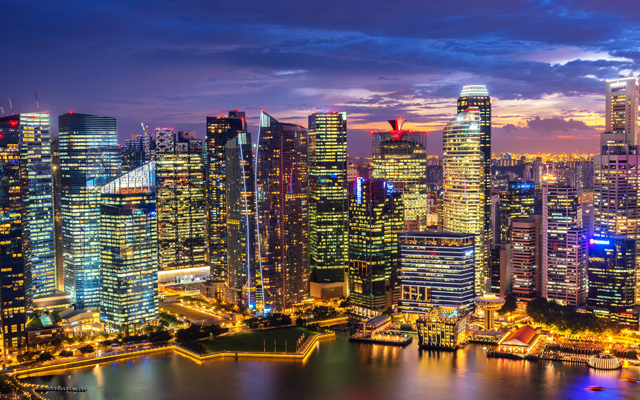
In what is the biggest move by the city-state to ease her Covid-19 safe management measures, Singapore will reopen her borders to all fully vaccinated travellers from April 1, with no tests on arrival, restricted lanes and daily arrival quotas.
Shares of tourism and hospitality companies soared on the strength of the latest announcement. Singapore Airlines shares surged 22 cents, or 4.3 per cent, to close at S$5.40; CDL Hospitality Trusts gained seven cents, or six per cent, to S$1.24; Far East Hospitality Trust rose two cents, or 3.3 per cent, to 62.5 cents; Frasers Hospitality Trust rose two cents, or 4.3 per cent, to 48.5 cents.
Industry stakeholders welcomed the determined move to accelerate the sector’s recovery trajectory.
Steven Ler, president, National Association of Travel Agents Singapore, told TTG Asia that the move is a “game-changer”, where Singapore can “finally usher the return of travel business in a more significant way”.
The Association of Singapore Attractions (ASA) reckons that the streamlined measures will simplify protocols, align the pre-entry processes with other countries, and reduce the added cost of visiting Singapore – all of which are key traveller considerations for holidaymakers.
“This consistency in travel and movement protocols is essential to keep Singapore attractive and competitive as a destination, ‘’ an ASA spokesperson noted.
In a statement, Kwee Wei-Lin, president, Singapore Hotel Association (SHA), also hailed the recent announcement as a major milestone that will help to boost visitor traffic exponentially.
“By fully reopening our borders to all vaccinated travellers, we are now in a strong position to promote Singapore as Asia’s preferred travel destination,” said Kwee, adding that SHA member hotels “have been relentless in our effort to prepare for tourism recovery since 2020”.
“From hygiene and health protocols to digital transformation of the hotel experience, we are now proficient in living with Covid-19,“ she added.
Kwee hopes to welcome up to 50 per cent of travellers by the end of this year.
Singapore’s latest move is also an additional boost to outbound travel, which saw a spike in business when some restrictions were eased last year.
Marcus Yong, vice president, global marketing, Klook, told TTG Asia that weekly sales and traffic are hitting triple-digit growth figures as border measures increasingly ease. Heightened interest and bookings are seen for shorthaul locations like Bangkok and Bali and longhaul destinations like the US, Switzerland and Australia.
Klook has begun accelerating efforts to stimulate international travel in markets with significantly-eased travel restrictions, and conversations with NTOs and merchant partners “have yielded strong interest in targeting cross-border travellers both on supply and demand creation”.
Yong pointed out: “In March alone, we’ve observed an almost threefold increase in bookings, indicating that travel is undoubtedly back on the agenda and on the much-anticipated road to recovery.”
Ler said: “After missing the freedom and excitement of travel for over two years, our domestic market will lean towards outbound travel since restrictions are largely lifted for vaccinated travellers. It is time for our travel agents to flex their travel expertise and help customers rediscover that dream vacation in a safe and reassuring manner.”
With safety and wellness being top of mind as customers learn to cope with the Covid-19 endemic phase, Ler suggested that for a start, travel agents should offer easy-to-follow itineraries, coupled with comprehensive travel insurance, and continue to put in place contingency plans to minimise inconvenience in the event of travel disruptions.
Wong Soon Hwa, chairman of both PATA and PATA Singapore Chapter, expects Singapore’s latest move to “catalyse a bigger reopening wave across the region”.
“Destination competition will spur other governments to want to make a move and facilitate travel and tourism once more, in order to positively impact their economic recovery,” he said.
Rajeev Menon, president, Asia Pacific (excluding Greater China), Marriott International, too, expects the rest of the region to “see stronger travel recovery in the coming months as countries across the region announce clear plans to reopen borders and streamline testing requirements”.
Looking forward, Wong said it is imperative that various hospitality and tourism associations in the country “come together to share best practices, collaborate, and harness the ‘Power of One’ to rebuild the industry” as Singapore marks a “significant turning point” from April 1. – Additional reporting by Karen Yue




 Why
Why