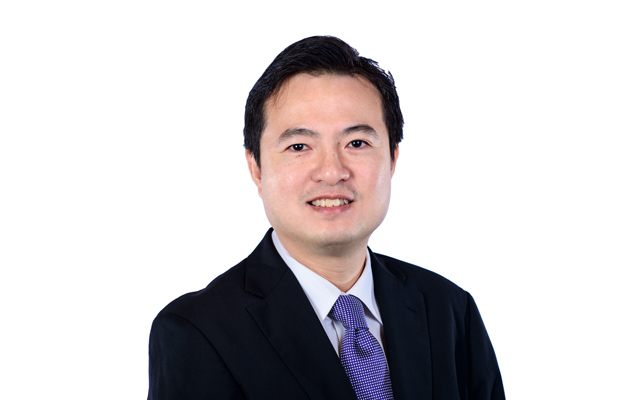
Singapore Airlines (SIA) announced Leslie Thng as the new CEO of Scoot, replacing Campbell Wilson effective June 16, 2022.
Currently the senior vice president sales and marketing, Thng has been with the SIA Group for 23 years. Prior to this role, Thng was CEO of Vistara, SIA’s Indian joint venture with Tata Sons, between October 2017 and December 2021.
Thng has also served as chief commercial officer of Scoot from May 2016 to October 2017, and chief executive of SIA’s regional carrier SilkAir between August 2012 and May 2016.
Wilson was the founding CEO of Scoot between 2011 to 2016, in his first stint with the airline when it was a longhaul LCC, prior to its merger with Tigerair. Having joined SIA since 1996, Wilson has also run SIA’s overseas operations in Canada, Hong Kong, and Japan. He will join Air India as its new CEO.
There is one thing on the mind of Tourism Malaysia and the country’s travel trade right now, and it is to rebuild the tourism industry that had suffered two tough years.
The Malaysian Association of Tour and Travel Agents (MATTA) is working closely with Tourism Malaysia on this critical task. The immediate plan after the reopening of the country’s borders on April 1 was to jointly organise a sales mission to India, from April 18 to 29 covering six cities, namely New Delhi, Mumbai, Ahmedabad, Hyderabad, Bengaluru and Chennai.
India is Malaysia’s second largest medium-haul market, after China; Batu Caves pictured
MATTA’s vice president inbound and domestic, Ganneesh Ramaa, told TTG Asia: “Our first physical sales mission (post-lockdown) was an important one, as the Indian market has traditionally been our second largest medium-haul market after China. We wish to make Malaysia the top-of-mind destination for Indian travellers and regain market share post pandemic; to rebuild the momentum and look forward to the Indian summer peak travel season from mid-May to the first week of June.”
Throughout the sales mission, Malaysia representatives highlighted the health and hygiene measures taken by hotels, food establishments, convention centres, as well as tours and transportation operators.
“As a member of Travel Safe Alliance Malaysia, MATTA’s operations has been certified by Bureau Veritas to meet stringent health and safety protocols, so (Indian partners) can be assured that their clients’ stay in Malaysia will be safe, pleasant and enjoyable,” said Ganneesh.
Besides India, Europe is also on the radar. Both agencies are working on marketing and sales strategies to attract more Europeans to Malaysia. This includes participating in B2B travel tradeshows such as IFTM Top Resa in Paris in September, The Luxury Travel Fair in London this November, and FITUR 2023 in Madrid.
Ganneesh revealed that MATTA was planning to go on sales missions to Eastern Europe this year, covering Hungary, Poland, Czech Republic and Romania.
“Our aim is to regain market share by showcasing our varied and diverse attractions, such as islands and beaches, gastronomy, culture and lifestyle. Attending the B2B travel shows and organising sales missions to Eastern Europe is an opportunity to enhance awareness of Malaysia’s diverse attractions, forge relationships with travel trade partners, and make Malaysia a top-of-mind destination.”
The Finance Ministry has allocated a special RM5 million (US$1.2 million) tourism fund for this year, channelled through the Ministry of Tourism, Arts and Culture with Tourism Malaysia appointed as executor.
The fund, named Gamelan Malaysia, is a matching grant that works on the basis of reimbursable financial assistance whereby eligible companies may claim 50 per cent of the actual cost of their promotional project, up to a ceiling of RM200,000.
Meanwhile, national carrier, Malaysia Airlines, aims to gradually increase its frequencies and network to achieve around 70 per cent of its pre-Covid 19 capacity by end of this year.
A source said the carrier is currently seeing higher demand from India, which is its signature route, as well as from the UK and Australia into Malaysia.
It has, so far, increased frequencies on its flagship Kuala Lumpur-London route to 11 times weekly, and will return to double daily services from July 1.
For 2022, Malaysia is targeting two million international tourists and total receipts exceeding RM6.8 billion.
Malaysia is eyeing the Middle Eastern market and has launched a string of products to lure the younger generation.
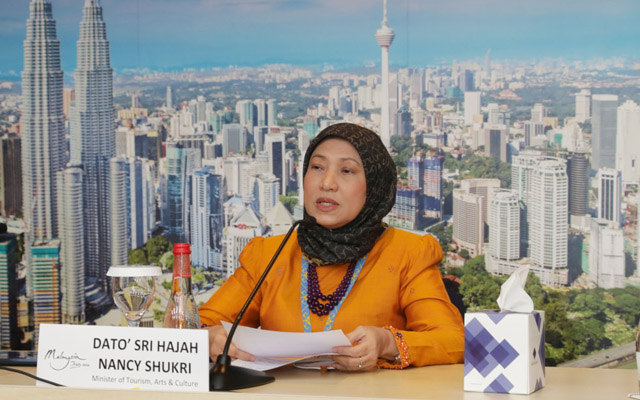
At the Arabian Travel Market (ATM), Malaysian minister of tourism and arts, Nancy Shukri, said: “The last three years have given us plenty of time to think about what we want to do and this region is very important to us. We have come up with new itineraries and offerings to cater to this market.”
Nancy: it’s also time for us to promote more and entice a new target group – the younger generation
Pre-pandemic, in 2019, Malaysia welcomed 397,726 visitors from the Middle East and North Africa region – Saudi Arabia was the top source market with 121,444 tourists.
Nancy said traditionally Malaysia was a popular destination for families from the Gulf Cooperation Council, especially during the summer holidays, where they mainly visited the island of Langkawi. However, campaigns now are urging the region’s younger generation to explore other parts of the country.
She said: “We’re now trying to get tourists closer to our nature. It’s also time for us to promote more and entice a new target group – the younger generation. We have lots of exciting new offerings for them.”
In addition to promoting halal spas and accommodation, Tourism Malaysia is developing a series of cross-country motorhome and caravan tours. A series of glamping activities are also being rolled out, such as staying amid Malaysia’s orchards which bloom during the summer months.
To help stimulate arrivals from the region, Tourism Malaysia plans to lure more airlines from the Middle East to its airports this year. During ATM, Tourism Malaysia signed a Memorandum of Collaboration (MoC) with Emirates to promote tourism and boost traffic to Malaysia from key markets across the airline’s network.
Emirates also plans to organise familiarisation trips with major tourism and media to come and experience Malaysia.
Adnan Kazim, Emirates’ chief commercial officer, said: “The MoC builds on the successful relationship we have with Malaysia, and underscores its significance as a key market in Emirates’ global network.”
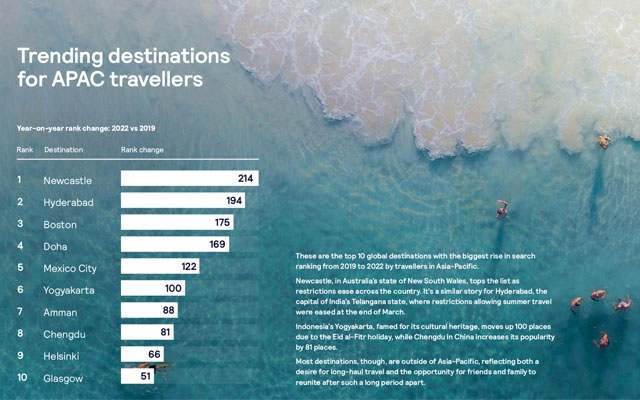
Skyscanner’s new report explored the latest trends in global travel, and combined consumer polling with extensive flight search and booking data from each region – APAC, the Americas and EMEA – to provide a comprehensive view of 2022 travel demand.
Unique and in-depth analysis of key indicators such as travel spend, booking horizons, haul type, trip length, trending destinations and how they compare to pre-pandemic provides unrivalled insights for the sector.
Top three destinations travellers are searching for are Newcastle, Hyderabad and Boston (Photo: Skyscanner)
The report also featured expert commentary on these trends shaping recovery from industry thought leaders such as Hugh Aitken, Skyscanner VP of flights; Nick Hall, CEO of Digital Tourism Think Tank; Marco Navarria, global content and marketing director, CAPA; and John Strickland, director of JLS Consulting.
Key APAC findings showed the following: a longer booking horizons surge in Q1, specifically segments 90+ days, 60 to 89 days, and 30 to 59 days; Q1 2022 domestic travel significantly higher than in 2019 – both long haul and short haul seeing strong growth over the quarter following rising demand after the ease of travel restrictions in many APAC countries; and longer trip lengths peak in July and December (trips of two weeks to a month and longer than a month).
As restrictions ease across the region, travellers are searching for trending destinations such as Newcastle in Australia, Hyderabad in India, and Boston in the US. With a clear demand for domestic and short-haul travel, airlines are relaunching pre-pandemic routes and announcing new destinations.
Aitken commented: “Despite challenging headwinds, the aviation industry continues to prove its resilience, driven by considerable traveller demand across all regions.
“Our latest report crunches three months of data to provide unrivalled insight into the latest traveller behaviours and patterns – and how they compare to pre-pandemic. We’re seeing positive signals that seasonality is returning in both booking horizons and trip lengths, providing a degree of certainty going forward.”
Having expanded its offerings to China in 2014, the Mauritius-born luxury hotel management brand, The Lux Collective, is furthering its ambitious Asia growth with more properties to come this year.
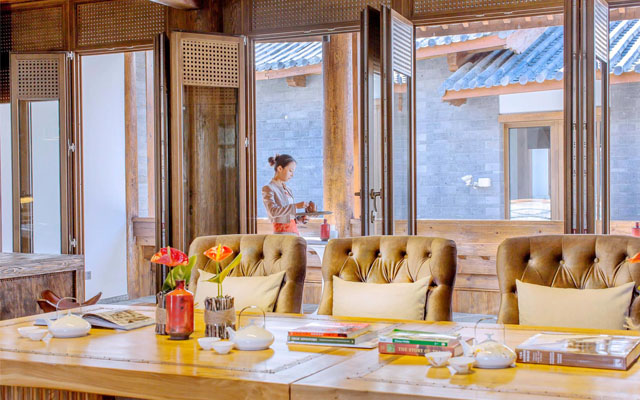
Once China reopens her borders, the brand plans to launch the Lux Tea Horse Road journey. With sponsorship by Audi, visitors can embark on a four- to 10-night experience that takes in all of the hotels, which sit between six and 30 keys.
The Lux Collective furthers its ambitious Asia growth with more properties
Julian Hagger, executive vice president, told TTG Asia at the Arabian Travel Market: “This is a totally unique product that explores some of the most beautiful and secluded parts of Yunnan and makes us one of the largest operators in the province.”
In addition, the collective is developing a Lux property in Phu Quoc, Vietnam. Slated to open at the end of 2023 in the north of the island, the 120-key exclusive project will be built entirely over water – the first-of-its-kind overwater luxury resort in Phu Quoc.
Hagger said: “This will bring Lux to South-east Asia and really cement us regionally. We’d love to expand further.”
He noted that having saturated the Indian Ocean, Asia is a “natural progression”; and with borders across the region starting to open, further development is on the horizon.
“It hasn’t been easy in the last two years as Asia has been under door lock. However, we’ve got our eyes wide open on the whole of South-east Asia and want more presence there. The Lux brand is very powerful and we feel it’s perfect for Asia.”
Prior to the pandemic, the collective had launched the award-winning brand, SALT Resorts, in Mauritius, to which Hagger shared: “This screams for expansion in Asia. I can see it in Laos, Myanmar and Cambodia; destinations with very strong unique local cultural experiences.”
He added that the collective is currently seeking partners and investors for expansion.
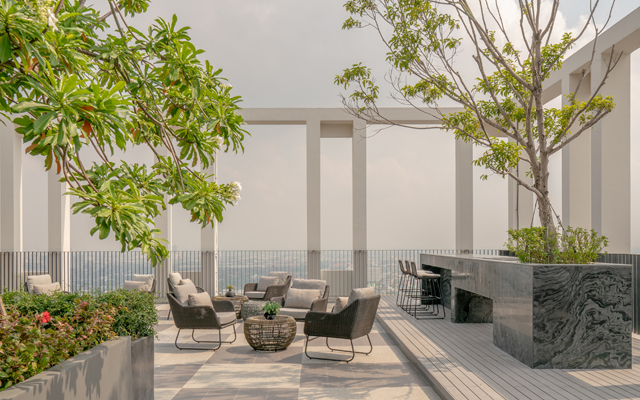
Ramada by Wyndham Bangkok Sukhumvit 87, Thailand
Located in the heart of Sukhumvit, Ramada by Wyndham Bangkok Sukhumvit 87 offers 200 rooms and suites, a stunning rooftop garden bar, an outdoor swimming pool, and views over the Chao Phraya river.
For dining, there is an onsite restaurant serving continental breakfast and favourite Italian dishes for lunch and dinner.
The hotel is within walking distance from Century Plaza mall, as well as the BTS Skytrain On Nut station, allowing guests to easily connect to the rest of the bustling city, including the nearby Klaynamthai and Bangna Hospitals.
voco Melbourne Central
voco Melbourne Central, Australia
The 252-room voco Melbourne Central, part of the new 380 Melbourne skyscraper, appeals to sustainability-focused travellers. Environment awareness runs throughout the guest experience from the use of bedding made from recycled materials, inclusion of locally sourced ingredients on the menu, and application of a lighting system that responds to the natural cycle of light.
voco’s Blacksmith Brasserie offers à la carte dining where guests can have a breakfast made to order, or enjoy a full buffet.
Located at the hotel’s doorstep are popular retail hubs including Emporium, Bourke Street Mall and Melbourne Central.
AC Hotel Seoul Gangnam
AC Hotel Seoul Gangnam, South Korea
AC Hotel Seoul Gangnam features 274 guestrooms and one-of-a-kind private pool suites.
The hotel’s facilities include an all-day dining restaurant, lounge, gym, sauna, kids lounge, and rooftop terrace and bar.
Boasting a great location in the Yeoksam-dong area of Gangnam district, home to upscale shopping, dining and entertainment venues, AC Hotel Seoul Gangnam also puts business travellers close to the corporate headquarters of multinational companies. It is 60 minutes by car from Incheon International Airport.
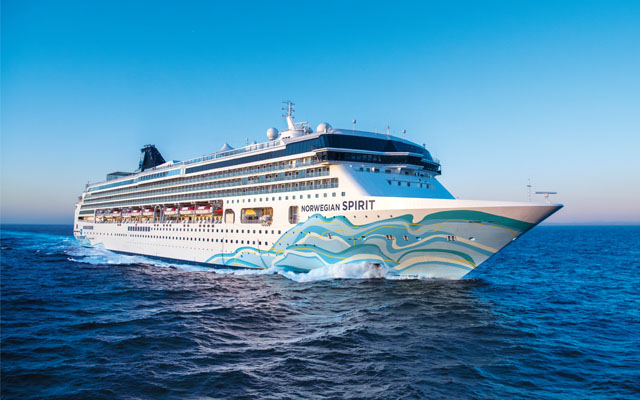
Norwegian Cruise Line (NCL) has completed its Great Cruise Comeback with the sailing of Norwegian Spirit, the 17th and final ship in its fleet to return to service.
NCL’s return to service after a 500-day pause began with Norwegian Jade sailing from Athens (Piraeus), Greece on July 25, 2021, with the other ships being systematically relaunched around the world.
Norwegian Spirit returns to the waters
Harry Sommer, president and CEO of NCL, said: “We are moving full speed ahead, having already welcomed more than half a million guests for an exceptional vacation at sea.”
Having undergone a revitalisation costing over US$100 million, Norwegian Spirit departed from Tahiti on May 7, and will be sailing through the South Pacific and visiting eight ports in 12 days. Itinerary highlights include Bora Bora, Raiatea, and Nāwiliwili, Kaua’i, before disembarking on May 19 in Honolulu, Oahu.
Norwegian Spirit will also debut in Australian waters for the very first time on December 22 this year. This will mark NCL’s return Down Under after an almost three-year interval.
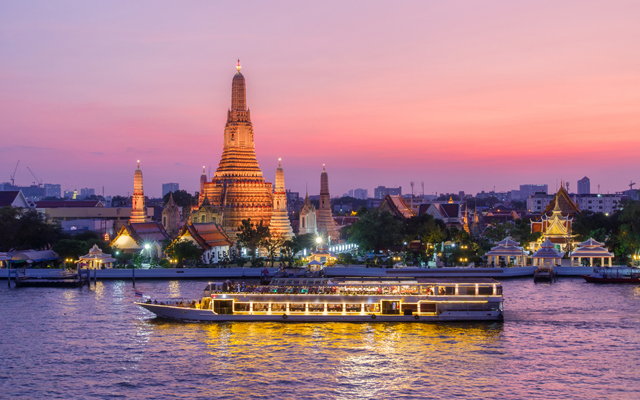
Following a spike in Thailand Pass registrations over the last few weeks, new data from the Tourism Authority of Thailand (TAT) indicates that the country is on target to welcome 20 million arrivals in 2023.
The uptick in arrivals comes in response to the relaxation of entry rules in April, the full removal of Test and Go PCR requirements, and the minimum Covid insurance coverage halved to US$10,000 on May 1.
Tourism Authority of Thailand is confident of achieving 2023 target of 20 million arrivals
As of May 3, TAT’s figures totalled 853,165 international visitors to Thailand – 74,414 from the UK, 63,342 from Germany, 55,995 from Russia, 51,783 from India and 49,792 from the US. This marked an increase of 139,982 in arrivals announced on April 25.
According to TAT governor Yuthasak Supasorn, the impact of the new guidelines will fare even better if China – which made up the lion’s share of arrivals in happier times – eases her travel restrictions as well.
“The industry next year is poised to strengthen from this year, making the goal of attracting 20 million tourists, half the total in 2019, achievable. This is particularly the case if China, which previously contributed one-third of arrivals, lifts border controls by that time.”
The predicted boost in arrivals should translate to approximately 80 per cent of 2019 levels – or about 2.4 trillion baht (US$69.6 billion) in predicted revenue for 2023.
The governor added that the immediate future of the low-season longhaul market is also looking up, and could mean that Thailand will receive as many as 500,000 tourists by the end of this month.
To maximise the opportunities presented by the surge in arrivals and encourage more tourists to return to Thailand, TAT is planning to submit an application to the Center for Economic Situation Administration for a campaign designed to promote the city’s culture, attractions and famous nightlife.
Thailand’s tourism industry is poised for a major boost with the opening of Andamanda Phuket, a multi-million-dollar entertainment and leisure park located between the main tourism hubs of Phuket Town and Patong Beach.
Set to soft-open on May 21, Andamanda Phuket occupies 9.3 hectares of land and packs in a wide range of recreational components, including a Thai heritage-themed water park with five separate zones – Coral World, The Pearl Palace, Emerald Forest, Great Andaman Bay and Naga Jungle – plus entertainment spaces, retail outlets and a 300-key internationally-branded hotel.
New water park, Andamanda Phuket, will soft-open on May 21
A collection of more than 12 slides and 36 activities will be available, plus a FlowRider Double surf simulator and a toddler splash zone.
The 550m long lazy river will be the longest in Asia and the 10,000m² wave pool will be able to generate waves up to three metres high while also catering for up to 25,000 people for concerts.
A cluster of cosy cabanas and private VIP pavilions, plus a tropical beachfront restaurant and a series of swim-up bars – including one nestled in a near life-size replica of Koh Tapu, Thailand’s famous James Bond Island – will allow visitors to chill out in style.
Guests can immerse in Thai culture and mythology through classical nang talung southern Thai puppet theatre performances, a floating market featuring traditionally-designed ruer koh lae boats to promote local community crafts, authentic FF&B outlets, and other regular performances.
The hefty attraction development is led by Proud Group, one of Thailand’s leading developers of high-end real estate, hospitality, retail and leisure attractions.
“Andamanda Phuket is blazing a new trail for waterparks in Thailand. It will become an iconic entertainment landmark for the destination,” said Proudputh Liptapanlop, executive director of the Proud Group.
“Most importantly, it will reflect the true spirit of southern Thailand. As the planet recovers from the global pandemic and people start to travel again, I am confident that Andamanda will help to boost Phuket’s economy, create employment for local people, and contribute to the long-term prosperity of this amazing destination.”
Beyond its tourism appeal, Andamanda Phuket bears sustainability at its core by adopting a circular approach to water management, with a continuous loop of water being reused and recycled. Single-use plastic will be banned; while over 100,000 trees have been planted and solar power used extensively to ensure that energy levels are minimised. Staffed by a team of fully-trained local professionals, including 200 qualified lifeguards, the park will drive employment and empower communities in Phuket.
The Hong Kong Tourism Board (HKTB) has unveiled new developments and experiences that are aimed at generating a positive ambience when international travel resumes.
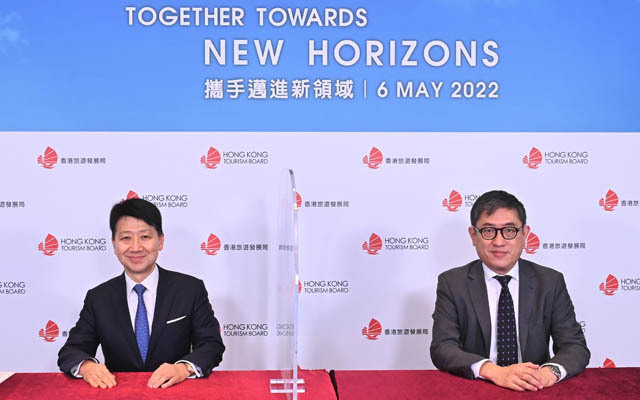
Sharing these recovery plans as well as tourism trends at the Tourism Update 2022 on May 6, HKTB chairman Y K Pang emphasised that the destination has “never stopped building and upgrading its tourism infrastructure”.
From left: HKTB’s Y K Pang and Dane Cheng share revival plans for the destination
He noted that the fifth wave of the pandemic is subsiding, and that “daily life and economic activities are now gradually returning to normal, allowing us to stage large-scale events and prepare to welcome back visitors”.
“With these new infrastructure elements and the support of the central and Hong Kong SAR governments, Hong Kong’s competitive edge has held firm and we can head towards new horizons with confidence,” Pang remarked.
HKTB executive director Dane Cheng said that for the coming year, the destination will focus on generating a positive ambience in the city, stimulating consumption, and maintaining Hong Kong’s profile globally by launching Hong Kong Summer Treats.
The campaign will provide a wide range of discounts and promotional offerings, beginning with Arts in Hong Kong – an initiative that supports international art and cultural events, such as Art Basel, which will return in a physical format.
HKTB will bring back more world-class events, including the Hong Kong Wine & Dine Festival and Hong Kong WinterFest, as safety measures are gradually relaxed.
Cheng shared: “These promotions will generate a positive ambience in Hong Kong and demonstrate how we have returned to normal. HKTB will then launch extensive promotions, including the tactical Open House Hong Kong campaign, to welcome back visitors when the time is right. To better respond to market needs, we will also strive to enhance the visitor journey into a seamless experience through a comprehensive digital transformation.”
Research by HKTB found that travellers are keen to visit Hong Kong for her cleanliness, local culture, in-depth experiences, unique cuisine, accessibility, and ease of communications. Her position at the heart of the dynamic Greater Bay Area, and wealth of new tourism assets and infrastructure shows potential for Hong Kong’s tourism future.
Other new developments to further enhance Hong Kong’s world-class tourism infrastructure include contemporary art museum M+, Hong Kong Palace Museum, Kai Tak Sports Park, and the third runway at Hong Kong International Airport, which is expected to go into service within the next couple of years.


 Thng has also served as chief commercial officer of Scoot from May 2016 to October 2017, and chief executive of SIA’s regional carrier SilkAir between August 2012 and May 2016.












Following a spike in Thailand Pass registrations over the last few weeks, new data from the Tourism Authority of Thailand (TAT) indicates that the country is on target to welcome 20 million arrivals in 2023.
The uptick in arrivals comes in response to the relaxation of entry rules in April, the full removal of Test and Go PCR requirements, and the minimum Covid insurance coverage halved to US$10,000 on May 1.
As of May 3, TAT’s figures totalled 853,165 international visitors to Thailand – 74,414 from the UK, 63,342 from Germany, 55,995 from Russia, 51,783 from India and 49,792 from the US. This marked an increase of 139,982 in arrivals announced on April 25.
According to TAT governor Yuthasak Supasorn, the impact of the new guidelines will fare even better if China – which made up the lion’s share of arrivals in happier times – eases her travel restrictions as well.
“The industry next year is poised to strengthen from this year, making the goal of attracting 20 million tourists, half the total in 2019, achievable. This is particularly the case if China, which previously contributed one-third of arrivals, lifts border controls by that time.”
The predicted boost in arrivals should translate to approximately 80 per cent of 2019 levels – or about 2.4 trillion baht (US$69.6 billion) in predicted revenue for 2023.
The governor added that the immediate future of the low-season longhaul market is also looking up, and could mean that Thailand will receive as many as 500,000 tourists by the end of this month.
To maximise the opportunities presented by the surge in arrivals and encourage more tourists to return to Thailand, TAT is planning to submit an application to the Center for Economic Situation Administration for a campaign designed to promote the city’s culture, attractions and famous nightlife.