UN report underscores tourism’s key role in global economic recovery
Tourism’s critical role as a source of employment and economic development will determine growth for the global economy, notes the 2022 edition of the World Economic Situation and Prospects by the United Nations.
Drawing on data from the World Tourism Organization (UNWTO), the report underlines the sector’s particular economic importance for developing economies, including Small Island Developing States (SIDS).

After a global contraction of 3.4 per cent in 2020 and a rebound of 5.5 per cent in 2021, the world economy is projected to grow by four per cent this year and 3.5 per cent in 2023.
UNWTO secretary-general Zurab Pololikashvili said in a statement: “The sudden halt in international tourism caused by the pandemic has emphasised the sector’s importance to both national economies and individual livelihoods. The flagship UN report makes use of UNWTO data and analysis to assess the cost of declining tourism and illustrates just how important restarting tourism will be in 2022 and beyond.”
The report notes the pandemic and tourism crisis’ devastating impact on employment, including in hospitality, travel services and retail trade, causing disproportionate effects on vulnerable groups, including youth and migrant workers, as well as workers with lower educational attainment and skills. Exacerbation of the gender divide is evident, especially in developing countries, with women seeing greater declines in employment and labour force participation than men.
Further analysing the sector’s role in economic recovery, the report notes that many destinations, in particular tourism-dependent countries, will need to diversify their tourism throughout 2022 and beyond. Many destinations are already developing domestic and rural tourism to help local economies in rural and depressed areas to boost job creation and protect natural resources and cultural heritage, while at the same time empowering women, youth and indigenous peoples.
Additionally, the report notes how SIDS can take steps to ensure local businesses and workers retain more of the economic benefits that international tourism brings.
Profiling the traveller of 2022
As the old year draws to an end, travel and tourism organisations have pulled up booking data and scrutinised consumer intentions to make out how the world might return to travel and tourism in the new year.
It is no surprise that two years of travel limitations, social isolation and blurred work/leisure boundaries have left many people restless and eager to take a proper break.

Latest studies conducted by World Travel & Tourism Council (WTTC), Trip.com Group and Booking.com are able to break down travel intentions further.
Raring to go
As more international border restrictions ease, people are happy to take on any opportunity to travel. According to Booking.com’s Travel Predictions 2022 report, 61 per cent of travellers are now more open to different types of vacations.
The number of people who feel that they need to make up for lost vacation time has ballooned from 42 per cent to 63 per cent.
With any and all travel plans being put on hold due to the pandemic, 2022 will be the year of simply saying yes, projected Booking.com, with 72 per cent agreeing they will say “yes” to any vacation, as long as their budget allowed.
Underscoring how much travel has been missed, respondents regard anticipation for the journey to be as exciting as the destination itself. Seventy-five per cent of respondents find that the journey to a destination is more enjoyable when it feels like part of the trip. They say navigating new and unfamiliar transportation systems (58 per cent) and feeling the sun on their skin (77 per cent) are some simple travel pleasures they cannot wait to savour.
Home base comes first
However, continued travel limitations are forcing travellers to turn to experiences at home, found a joint study by WTTC and Trip.com Group.
The Trending in Travel: Emerging Consumer Trends in Travel & Tourism in 2021 and Beyond report identified that domestic travel will continue to lead travel and tourism recovery, especially in the short to medium-term. More than half of global travellers plan to travel for a domestic holiday in the next 12 months.
In particular, the concept of staycations may continue to be in demand and more so for countries with prolonged restrictions on outbound travel. The report observed a sustained increase in demand for local staycations across Asia-Pacific, especially in Singapore where the government has been encouraging domestic tourism through the issuance of vouchers for hotel stays, tours and attractions.
While domestic travel may slow proportionally as global travel returns, the report stated that the trend in rediscovering domestic destinations is likely to linger in the long-term.
Social remedies
Not only are people eager to make up for lost vacation time in 2022, they are also keen to reconnect with friends and family, and expand their social network.
Booking.com found that 40 per cent of respondents hope to spend time with friends and family on their next trip, while 60 per cent are determined to meet new people while on vacation. Fifty per cent of single respondents are hopeful of finding love on their next trip.
Out of office for real… or not
Working from home – and anywhere, really – has become normalised in the past two years, expediting burnout rates everywhere. Come 2022, more people want to firmly re-establish a healthy work-life balance, with 73 per cent telling Booking.com that vacation time will be strictly work-free.
Fifty-two per cent want their next trip to help them break out of the monotony of routines at work and at home.
In fact, a majority – 79 per cent – regard travel as an essential form of self-care that is especially critical for mental and emotional well-being.
Sixty per cent plan to use their next trip to explore new cultures and enjoy new places and experiences.
Once out on a trip, people want to make the most out of their time, found the WTTC and Trip.com Group study, with one in four global travellers desiring longer stays of over 10 nights.
Contrasting Booking.com’s findings, respondents in the WTTC and Trip.com Group study are happy to let work and play go hand in hand. For them, remote work during quarantine and travel will encourage them to stay longer during their trips. This sentiment is the strongest among respondents in Thailand (69 per cent), Vietnam (57 per cent) and China (54 per cent).
Meaningful community connection
Opportunities to be more engaged with their communities at home by supporting local businesses throughout the pandemic have translated to a burning desire to do the same when they are on vacation.
Fifty-eight per cent of respondents told Booking.com that it is important that their trip is beneficial to the local community, while 29 per cent will do more research into how their tourism expenditure will impact or improve local communities.
Sixty-six per cent of respondents will factor over-tourism into their travel decision-making, and 68 per cent will choose an alternative destination just to avoid peak season crowds.
According to Ctrip data for Asia-Pacific, there has been a rise in nature-related attraction bookings – a 264.5 per cent spike in 1H2021 compared to 1H2020. Respondents have also expressed a preference for less crowded and even unfamiliar destinations, with an increased interest in exploring secondary destinations and nature.
Sustainable and wellness-driven options are gaining preference among travellers, noted the same study. There is an increase in travellers, notably 94 per cent of travellers in Thailand, who plan to reduce and recycle waste when visiting a destination.
Technology, flexible policies
to ease worries
The pandemic has added layers of unpredictability to travel, but post-pandemic travellers believe that technology can help them navigate the unknown.
According to Booking.com, 63 per cent of respondents believe technology is important for controlling health risks when travelling, with 62 per cent agreeing that technology helps to alleviate travel anxiety.
Most (69 per cent) are interested in an innovative service that can predict which countries will be safe to visit even months in advance, or can automatically suggest destinations that are easy to travel to now based on their country’s and the destination’s current Covid-19 requirements (67 per cent).
The Trending in Travel: Emerging Consumer Trends in Travel & Tourism in 2021 and Beyond study also highlighted travellers’ emphasis on flexible booking policies in a post-pandemic landscape. This has led to the need for the industry, including airlines, hotels and travel providers, to adapt and review cancellation policies to accommodate changes that may affect traveller itineraries.
Editor’s note: The headline has been amended from its original, Profiling the travellers of the post-pandemic future, to more accurately reflect current circumstances, where the pandemic is still present and tourism resumption does not equate the end of the pandemic.
Oakwood woos Singapore couples for romantic getaway
A romantic rendezvous awaits this Valentine’s Day with Oakwood Premier AMTD Singapore’s Romance in the Kitchen and A Romantic Getaway packages, along with specially curated dining offers.

Romance in the Kitchen
Guests can whip up a feast within the privacy of their own fully-equipped kitchen with the hotel’s three-course meal kit for two persons by SE7ENTH restaurant, inclusive of homemade sauces, meats and pre-prepared desserts complete with a step-by-step cooking guide.
The meal comprises of tiger prawns with tomato salsa relish and garden greens with balsamic vinaigrette; Australian ribeye steak with truffle mash potato, broccolini and red wine sauce; salmon steak with truffle mash potato, broccolini and mushroom cream sauce; and a banana chocolate mousse with eclairons and berries.
Guests have a choice of One-Bedroom Deluxe, Executive or Premier apartment.
The package is available for bookings until February 1, for stays between February 6 to 19. Rates start from S$480++ (US$355) per night and is inclusive of a bottle of red or white wine or a jug of mocktail, and breakfast for two persons.
A Romantic Getaway
Couples can cosy up in one of the hotel’s Studio Deluxe apartments, and enjoy facilities like the infinity pool overlooking the CBD. The offer also includes breakfast for two persons, and a bottle of wine or jug of mocktail.
The package is available for bookings until February 1, for stays between February 6 to 19. Rates start from S$400++ per night.
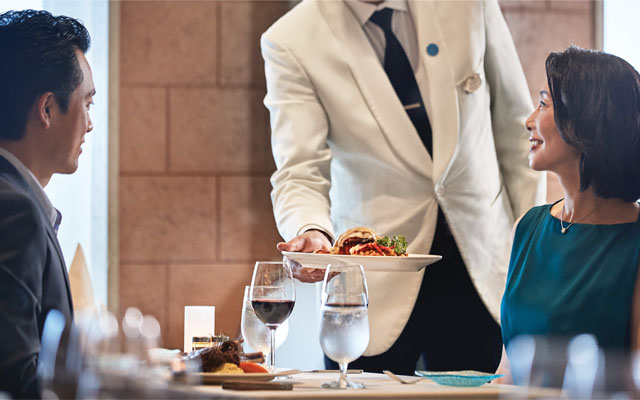
Valentine’s Day 3 Course Set Menu at SE7ENTH
This Valentine’s Day exclusive features a three-course dinner menu with an option for beverage pairing at S$30++ per person inclusive of a glass of cocktail or mocktail, a glass of white and red wine and a choice of coffee or tea. The three-course menu (without beverage pairing) is priced at S$188++ per couple and is only available for dinner on February 14.
Couples looking to celebrate over the weekend may opt for the Valentine’s Day 3 Course Set Menu at SE7ENTH Lounge, available for dinners on February 13 and 14. Priced at S$266++ per couple, the set includes food and wine pairing with two glasses of cocktails or mocktails, two glasses of white wine and two glasses of red wine as well as the choice of coffee or tea.
Prior reservations are required.

Candlelit Valentine’s Day Dinner by the Poolside at The Executive Club
This three-course candlelit dining experience by the poolside is limited to eight couples for dinner on February 14 and comes with two glasses of cocktails or mocktails, two glasses of sparkling wine, choice of two glasses of red or white wine, a box of chocolate praline and rose stalk as well as a choice of coffee or tea.
The exclusive experience is priced at S$363++ per couple and prior reservations must be made.
Be My Valentine
This package comes with the exclusive use of The Boardroom for a private candlelit three-course dinner affair from 18.00 to 22.30 which includes two glasses of cocktails or mocktails, two glasses of sparkling wine, a choice of either two red or white wine, a choice of coffee or tea, and a box of chocolate praline and rose stalk.
Priced at S$650++ for two persons, the package is available on February 13 and 14 and includes complimentary use of The Boardroom between 16.30 to 18.00 for decoration purposes. Use of the accompanying AV systems in The Boardroom such as television and video conferencing calls are also included.
For those planning a proposal, five additional guests may be invited to witness the occasion at the adjoining bar with a complimentary glass of juice each. Limousine services are also available at additional cost.
Vietjet to restart flights between Vietnam and Thailand
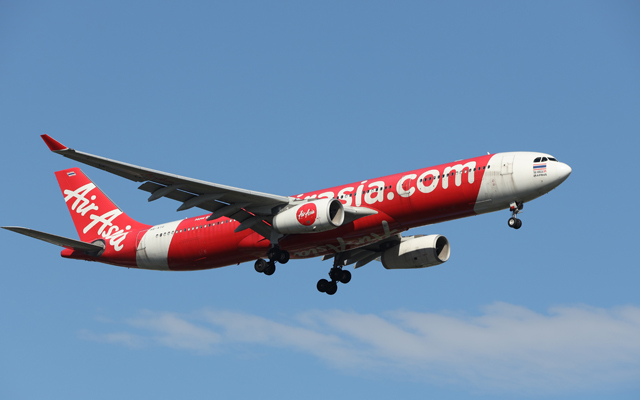
Vietjet will resume services between Vietnam’s Ho Chi Minh City and Thailand’s capital city of Bangkok starting January 21, as the airline works to rebuild its international network following the pandemic.
The airline will operate two-weekly round trips on every Friday and Saturday between Tan Son Nhat International Airport and Suvarnabhumi International Airport, Thailand’s largest aviation hub.

Vietjet has also resumed a series of international routes connecting Hanoi/Ho Chi Minh City with Tokyo, Taipei, Seoul and Singapore with one round trip per week each since early January 2022. In the next phase, it will reopen its entire international flight network and look to open new routes to India, Russia, and more.
In Thailand, the carrier currently operates an expansive domestic flight network including the services from Bangkok to destinations such as Chiang Mai, Phuket and Krabi, in addition to other cross-regional routes.
ASEAN tourism community meets in “a small country with a big heart”
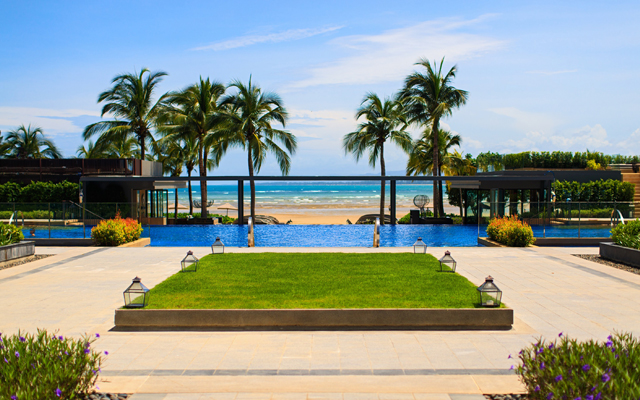
The 40th ASEAN Tourism Forum (ATF) convenes this week at Sokha Beach Resort in Sihanoukville, where the city’s largest meeting venue is.
This year’s meeting, which bears the theme, ASEAN – A Community of Peace and Shared Future, welcomes 350 delegates from across 27 countries and regions. These include tourism leaders and officials, international trade buyers, exhibitors, media as well as trade visitors and passionate travellers.

The hosting of ATF 2022 coincides with Cambodia’s 2020-2025 national tourism roadmap, which was announced on April 1, 2020 by prime minister Samdech Akka Moha Sena Padei Techo Hun Sen to rebuild the industry post-pandemic.
In line with the country’s tourism restart, Cambodia reopened her borders to fully vaccinated international tourists on November 15 last year, under a Safe and Clean tourism campaign.
ATF 2022 will not only promote international and regional travel across South-east Asia, it will also showcase Cambodia’s unique tourism products and latest developments in Sihanoukville.
In a welcome statement to ATF 2022 delegates, Cambodia’s minister of tourism, Thong Khon, emphasised the country’s commitment to delivering a safe ATF 2022. Stringent hygiene standards are in abidance, including regular sanitisation and disinfection of the venue.
The art of reimagination and reinvention
The Covid-19 pandemic may have dealt Singapore’s tourism industry a tough hand, with tight travel curbs over the past two years, but one silver lining has emerged from the crisis that may yield long-lasting benefits.
In a bid to increase local patronage to tide through the travel slump, great strides have been made by travel and hospitality players towards innovation of their tourism products.

Tour operators have churned out creative offerings that provide unique, immersive and culturally-rich experiences. Think zipping around the city in a vintage Vespa sidecar to explore filming locations of the Crazy Rich Asians movie or visiting a traditional coffee roasting factory and watching craft masters work on paper making.
Local agency Tribe Tours gamified the tour experience in what it touts is the first-of-its-kind product in the local market with Chinatown Murders. The outdoor escape room game tour requires players to solve puzzles around the heritage district – an innovative tour format that has since been imitated by other operators.
Domestic response to the game tour has been “unexpectedly good”, according to founder Jason Loe, who attributed the warm reception likely to the SingapoRediscovers Vouchers scheme launched by the Singapore Tourism Board in December 2020 to stimulate domestic tourism in the absence of international travel.
The agency also hosts livestream tours, which pulls back the curtain on everything from food factories to disappearing trades in Singapore.
Loe told TTG Asia that they have been mulling over hybrid concepts and livestreaming tours even before the pandemic struck, but Covid-19 accelerated that pivot as “there was time to properly curate meaningful experiences and tap into new fields”.
Paranormal tours offered by Oriental Travel and Tours have also proved to be a hit among locals, which has led the operator to come up with more of such after-dark offerings, shared founder Stanley Foo.
The agency’s guided Creepy Tales of Singapore outing takes participants to spine-chilling locations such as the Bukit Brown Cemetery with over 100,000 tombs and a World War 2 battlefield to educate them on Singapore’s urban legends and history.
Meanwhile, hotels are also dialling up the novelty factor by offering experiential stay packages that allow guests to experience Singapore in unusual ways.
Raffles Hotel Singapore debuted its first-of-its-kind virtual interactive play, The Curious Case of the Missing Peranakan Treasure, set against the backdrop of the iconic grand dame. According to managing director, Christian Westbeld, the detective whodunit tale “exceeded expectations” and was “very well-received”, with guests “pleasantly surprised by this unexpected experience from a hotel”.
“We wanted to give guests the flexibility to enjoy this from the comfort of their homes wherever they are in the world or for local guests to experience the play in real life at the property itself – where the theatrical experience transcended the virtual realm in the form of a treasure hunt through exclusive daycation and staycation packages,” Westbeld explained.
Elsewhere, The Fullerton Hotel Singapore and The Fullerton Bay Hotel Singapore are luring guests with an array of unique experiences, including guided cultural tours around The Fullerton Heritage precinct, sustainability-themed tours at the Fullerton Farm where an array of fresh ingredients are grown, as well as culinary and cocktail-making workshops.
Singapore’s recent move to ease border controls with Vaccinated Travel Lanes (VTLs) forged with several countries signal a positive sign towards tourism recovery. As of end-December, the VTL scheme, which kicked off in September, allows quarantine-free travel for vaccinated travellers from 24 countries including the UK and the US.
Since news of the VTLs broke, The Fullerton Hotel Singapore and The Fullerton Bay Hotel Singapore have received enquiries and bookings from a mix of international travellers and Singaporeans who are returning primarily from the UK, the US and Australia, according to a spokesperson.
To cater to VTL travellers, both properties have rolled out the Experience Fullerton Hospitality package which includes daily breakfast for two, S$50 (US$37) dining credit and one-way limousine transfer for a minimum stay of three nights.
The package has seen “strong demand”, said the spokesperson, adding: “We expect many of these bookings to materialise in the first quarter of 2022, and we anticipate an uptick in bookings from VTL travellers as more VTLs are opened over the coming months.”
While the current spread of the new Omicron variant threatens to derail the muted inbound improvements, industry stakeholders remain cautiously optimistic on the country’s tourism outlook.
Loe reckoned: “We have built and cultivated a strong relationship with our local fans, so much so that they now look forward to our new tour launches. They have also become the ‘evangelists’ and word-of-mouth for Tribe’s experiences when their friends come back to Singapore.”
Association of Singapore Attractions’ chairman, Kevin Cheong, expressed hope that the creative, innovative and entrepreneurial spirit displayed by tourism businesses will prevail beyond this current period. “We must keep this spirit alive to continually reinvent ourselves, refresh our experiential offerings and most of all, rejuvenate our products,” he said.
Sarah Wan, general manager, Singapore, Klook observed that travellers worldwide are increasingly seeking more hyper-local and authentic experiences.
She said: “The efforts to innovate and deepen offerings will start to bear fruit once cross-border travel resumes, paving the way for a wider range of offerings for overseas travellers when they return. This is a perfect opportunity for Singapore to showcase a different side, beyond the urban environment.”
Liz Ortiguera
Right from the start of the pandemic, PATA stepped up to help the industry with crisis management. How are these efforts paying off two years on?
This crisis is longer-running and more complex than anticipated. Last year, we created the Crisis Resource Center to assist destinations as they looked to recover, with toolkits focusing on Destination Marketing and Crisis Communications. This had been well-received by our members, particularly from the public sector with destinations like the Maldives using these tools to help welcome back tourists.

In July 2021, we launched an 8 Point Plan to support industry recovery. Our programmes now range from government-only Destination Recovery Forums in partnership with World Bank, to PATA Innovation Workshops for members, to the launch of a Global Travel Sector Vaccine Coalition in partnership with WHO Foundation, Virgin Atlantic and Collinson. We’ve also run an Informal Workers Project in Thailand, to support the needs of the most impacted segment in our industry. Our goal is to deliver tangible learnings and projects that are effective and can be replicated in the region and globally.
During this unprecedented crisis, PATA is working hard to support our members and the industry in multiple ways.
How are PATA’s support programmes evolving now that travel is resuming in many tourist regions?
We have more strategic initiatives launched, including the Tourism Destination Resilience (TDR) project, Destination Marketing and the Net Zero Methodology for Hotels.
The Crisis Resource Center focused on providing frameworks dealing with the pandemic. The pandemic has highlighted and given the opportunity to proactively address other vulnerabilities and capability building needs for our industry. With the support of GIZ, we launched TDR to look beyond Covid-19 and help destinations and organisations prepare well for expanded capacity and future crises. Destination resilience is foundational to achieving sustainability.
In addition, we’re using all our industry communication channels, such as virtual events, webinars, social media and industry eDMs, to support the destination marketing efforts of all our member destinations. We hosted our first Wellness and Luxury Conference and Mart in October (2021) and we’re continuing our Destination Insights Series in partnership with the BBC.
These forums are critical to support the reopening of travel since destination marketing is more multi-level and complex than ever.
We are seeing governments in Asia-Pacific easing their steel hold on travel restrictions in the later months of 2021. Where are we in terms of recovery?
The easing of travel restrictions in the Asia-Pacific region is a good step forward, but with the new variant emerging, the world and therefore the travel industry is not out of the woods. The next few months will be critical, particularly as we head into the holiday season.
Fortunately, destinations across Asia-Pacific have been vigilant in addressing health and safety protocols with many destinations such as Singapore, Malaysia and Cambodia achieving greater than 75 per cent vaccination rates.
From incorporating the right health and hygiene protocols to evolving products and services for the needs of the post-pandemic consumer, the industry here will be in a strong position to recover in line with the global battle to address this pandemic.
In your conversations with tourism leaders in the western world, where travel and tourism have resumed earlier than in Asia-Pacific, what lessons could our region learn from them to better our recovery efforts?
It’s interesting to observe the differences in approach taken by various nations. The underlying, ever-evolving medical information and statistics may be similar but there are interesting cultural, economic and political elements at play that influence policies and practices.
There are a couple of key elements differentiating the East from the West currently.
First, in many cases, Asian destinations have taken a more conservative, community-oriented approach to ensuring health and safety protocols are in place before marketing for tourism. Second, many parts of Asia have not had the access to vaccines that the wealthy Western nations have had. Deployment of vaccines in Asia has been more limited by supply than acceptance. Equitable access to vaccines is critical for a global recovery, which is why we co-launched the Global Travel Sector Vaccine Coalition.
Perhaps, the bigger lesson to be learnt is more for the Western affluent nations and the pharmaceutical companies. The lesson for Asia would be to continue marketing their preparedness and travel offerings – keeping their destinations top of mind for consumers.
What are some opportunities or trends in travel and tourism that organisations and destinations should pay greater attention to as they rebuild business?
Globally, consumer interest in human connections, travel, nature, and for wellness experiences is high after more than a year of social distancing, quarantining, and staying at home.
Prior to the pandemic, wellness tourism expenditure was growing between eight and 11 per cent in North America, Europe and Asia –with Asia seeing the highest growth rate. International wellness tourists spend 35 per cent more than the average international tourist (according to Global Wellness Institute, based on tourism data from Euromonitor). Interest in wellness and nature-based tourism will only be heightened emerging from the pandemic.
The current health and economic crisis caused by Covid-19 has been an accelerator of many existing trends, including the rise of conscious capitalism. According to a study by Accenture, 60 per cent of consumers are now making more environmentally friendly, sustainable or ethical purchases. This should influence how companies are managed, properties are developed, and products and services are designed and delivered.
Hong Kong tourism hangs in the balance as Omicron surges
An unexpected fifth Covid-19 wave has cast a shadow over hopes of a recovery for Hong Kong’s tourism sector as authorities tighten anti-virus curbs and shelve long-awaited plans for quarantine-free travel between Hong Kong and China.
Hong Kong on Friday (January 14) announced that passengers from more than 150 countries and territories will be banned from transiting through the city for a month to control the spread of Omicron. The city has one of the world’s strictest Covid-19 policies, requiring a mandatory hotel quarantine of up to 21 days for incoming travellers from most countries.

This follows the city’s authorities move on January 7 to impose fresh curbs for two weeks, including banning dining in eateries after 18.00, and shutting of fifteen types of venues, including bars, cinemas and gyms.
The government is expected to announce later on Friday that the restrictions will be extended through the Lunar New Year holiday at the start of February, according to a Reuters report.
Gray Line Tours managing director, Michael Wu, predicts that the earliest inbound traffic would return is in October. “It will take time and we are not alone as similar practices are being implemented around the world,” he said, adding that hopefully, the country’s vaccination rate will continue to climb.
One Bus Holiday general manager and Hong Kong Tourism Association executive director, Timothy Chui, is not hopeful that any kind of resumption of local tourism activities, apart from hotel staycations which are currently allowed under strict rules, will take place before the Lunar New Year holiday given the worsening outbreak situation.
He noted that prior to the latest Omicron-fuelled wave, the city was making good progress on exploring the resumption of quarantine-free travel with visitors from mainland China, subject to a limited quota.
“It would have been an impetus and paved the way for the mid- to long-term recovery of the sector,” he said.
Chui added that more than 90 per cent of travel agencies in the city are SMEs, which have government funding as a lifeline to tide through this challenging period, but this is not the case for other stakeholders like hotels and transportation companies that have been left out in the cold.
Outbound travel operators are currently staying afloat by pivoting to domestic travel, including hosting tours that are subsidised by the government, as well as selling hotel staycations and cruise packages.
General manager of ePlay.hk, Thomas Chan, said: “Except for staycations, all tourism activities are currently suspended and we are busy refunding our clients now. With no definite date for resumption, our path to recovery will be very long.”
In a statement, Federation of Hong Kong Hotel Owners said the latest round of curbs would mean huge financial losses for hotels and restaurants, especially during the Lunar New Year season. It warned that if the situation persists, many restaurants will go bust, resulting in mass unemployment.


Genting Hong Kong is preparing to file for provisional liquidation after failing to secure US$88 million in funding to help it stay afloat, following an insolvency at its German shipbuilding subsidiary.
The filing may happen as soon as Tuesday (January 18), according to a report by The Straits Times. The move comes after a German court rejected an application that would have provided Genting Hong Kong’s shipbuilding subsidiary, MV Werften, with access to a US$88 million lifeline, said the report.
In a statement, Genting Hong Kong said “it has exhausted all reasonable efforts to negotiate with the relevant counterparties under its financing arrangements”.
“The Board believes that the appointment of provisional liquidators is essential and in the interests of the company, its shareholders and its creditors in order to maximise the chance of success of the financial restructuring and to provide a moratorium on claims and to seek to avoid a disorderly liquidation of the company by any of its creditors,” it added.
“Following the appointment of the provisional liquidators, the company, together with its professional advisers, will continue to work towards implementation of a consensual and inter-conditional restructuring of the group to preserve value for all creditors and other stakeholders.”
MV Werften filed for insolvency last week after Genting failed to reach a resolution with the German authorities over a dispute involving MV Werften’s collapse, said the report. Genting warned investors that cross defaults amounting to US$2.78 billion may follow, it added.
Trading in the company’s shares has been suspended.
Malaysian-listed Genting – partially owned by Malaysian tycoon Lim Kok Thay, who holds 75.5 per cent of Genting Hong Kong – has stated that Genting Hong Kong’s borrowings have no cross-default provisions, guarantees or structures that may affect the group.