

STB, Klook to drive travel recovery in South-east Asia
Klook and Singapore Tourism Board (STB) have joined forces to drive travel recovery across South-east Asia and promote Singapore as a choice destination.
The partnership builds on the collaboration agreement signed in 2020 and includes an integrated marketing campaign targeting travellers from key South-east Asian markets including Indonesia, Malaysia, Thailand, Vietnam, and the Philippines.
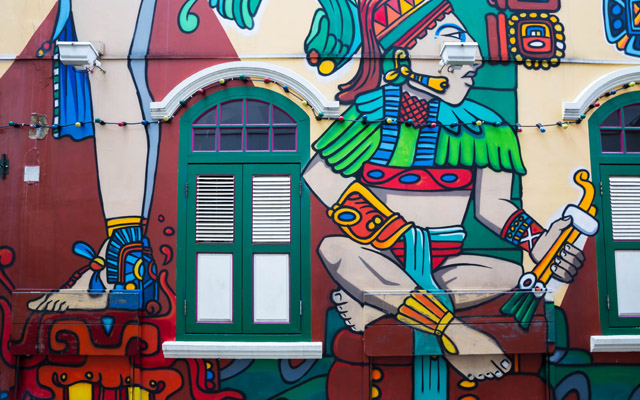
Singapore, with specially curated experiences centred around Singapore’s cultural precincts; Haji Lane pictured
Klook has planned a series of content produced with in-market Influencers, giveaways, special deals, and five unique landing pages to enable visitors to discover and book their trip seamlessly.
Visitors will be able to select from more than five Klook-exclusive Multi-Passes that centre around the themes of Attractions, Wildlife, Playgrounds, Adventure, and Wellness.
Marcus Yong, vice president marketing, APAC, Klook, said: “As travel roars back, we want to continue to enable travellers in South-east Asia to experience a sense of joy and wanderlust when they visit Singapore. As Asia-Pacific’s leading travel and leisure e-commerce platform, we are uniquely placed to help drive demand back to Singapore and lead travel recovery.”
John Gregory Conceicao, executive director, South-east Asia, STB, said: “We have seen strong demand for travel to Singapore from South-east Asia since we opened our borders to fully-vaccinated travellers without testing or quarantine.
“Visitors from South-east Asia accounted for nearly half of all international visitor arrivals in Singapore for the first six months of 2022 and continue to drive Singapore’s tourism recovery efforts. STB will continue to work with leading platforms like Klook to tap on new trends as we invite travellers to reimagine what Singapore has to offer.”
Klook has been supporting local merchants since the start of the pandemic, by increasing the number of Singapore experiences, events and accommodation options available. Today, the number stands at 1,200.
Bookings on the platform from South-east Asian markets in 1H2022 have grown month-on-month by an average of two to three times.
OR to invest in Traveloka

PTT Oil and Retail Business Public Company (OR) will invest in Traveloka through its subsidiary PTTOR International Holdings (Singapore), providing additional lifestyle solutions to OR customers and growth opportunities to both companies in domestic and international markets.
OR and Traveloka will seek new investment opportunities together with partners to provide more solutions to address customers’ needs.
According to Jiraphon Kawswat, president and CEO of OR, the company has chosen to focus on the travel sector as tourism is one of the major economic contributors to the Thai economy.
Kawswat said: “OR foresees many opportunities and possibilities that we can realise from this collaboration. Not only can this partnership provide new opportunities to OR in the travel sector, it can also provide additional venues for OR’s existing partners and business alliances to grow together with OR and to deliver greater offerings and experiences to OR customers.
“Given Traveloka’s position as a leading online platform for travel and lifestyle services in South-east Asia, as well as its strong technology capabilities, I believe there is a range of areas OR can explore together with Traveloka, to further enhance our tech capabilities.”
Ferry Unardi, co-founder and CEO of Traveloka, added: “We see immense value from the collaboration as we see the region growing at a rapid pace, leading to greater opportunities in the industry. We are excited to work with OR, with its expertise in creating great businesses with a customer-focused approach, to capture the demand and provide enhanced solutions to our customers, while also creating new opportunities for our merchant-partners in Thailand and the region.”
Crowne Plaza grows into Penang and Rajasthan
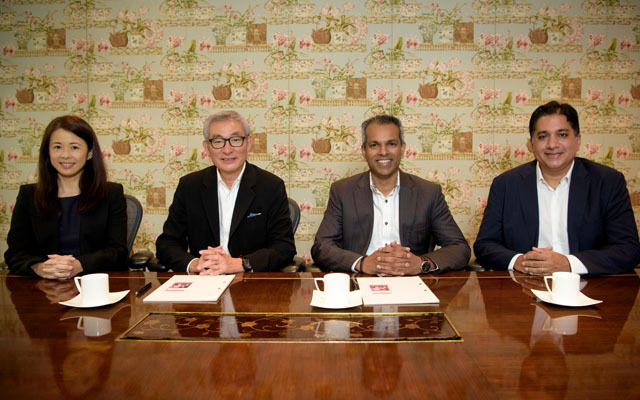
IHG Hotels & Resorts signs off two management contracts this week that will see it bring the first Crowne Plaza brand to Penang, Malaysia and a fifth hotel to Rajasthan, India.
In Malaysia, the partnership between IHG and STC Property Management will result in the 343-room Crowne Plaza Penang Butterworth Straits City, set within a sustainable high-end mixed-use development on the waterfront.
Rajit Sukumaran, managing director, South East Asia and Korea, IHG said: “This signing underscores IHG’s commitment to further expand its footprint across Malaysia and grow its portfolio in strategic destinations.”
Crowne Plaza Penang Butterworth Straits City adds to an already impressive list of IHG properties scheduled to open in Malaysia in the next few years, most notably, Crowne Plaza Kota Kinabalu, Crowne Plaza Kuala Lumpur City Centre, Hotel Indigo Kuala Lumpur on the Park, and Kimpton Kuala Lumpur.
Over in India, Crowne Plaza Resort Pushkar will join four other IHG properties – two in operation and two under development – in Rajasthan.
Crowne Plaza Resort Pushkar will be a new-built property featuring 125 rooms and is expected to be operational by early 2026.
Located on the outskirts of Pushkar, the hotel will be well-connected to one of the most significant highways in India passing through Delhi, Mumbai and Jaipur. Set in a serene locale, the hotel will be an ideal choice for leisure travel and destination weddings.
Sudeep Jain, managing director, South West Asia, IHG Hotels & Resorts said: “We are thrilled to announce the signing of a new Crowne Plaza Resort in Pushkar which has become a hotspot for leisure and spiritual tourists visiting Rajasthan. The city’s growing popularity as a weekend and wedding destination also presents a great opportunity for us, and bringing our premium brand, Crowne Plaza to the city will help us cater to this increasing demand.”
He added that there is growing tourism potential in secondary Indian destinations, and the company is committed to “fill the need gap for quality branded accommodation in these cities”.
New hotels: Fullerton Ocean Park Hotel Hong Kong, Selina Serenity Rawai Phuket and more
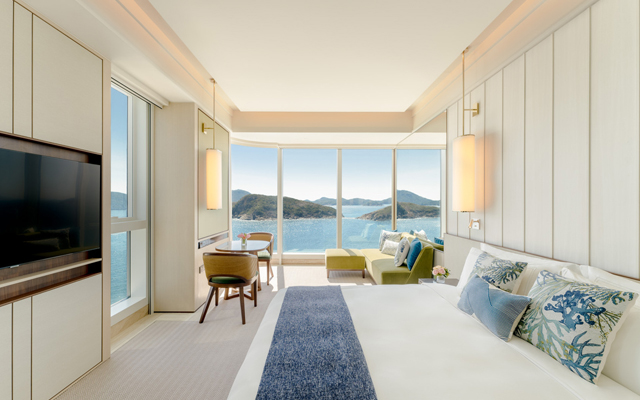
Fullerton Ocean Park Hotel Hong Kong, Hong Kong
The 425-key Fullerton Ocean Park Hotel Hong Kong sits adjacent to Water World Ocean Park, offering rooms with sea views, nine kids-themed rooms for families, and two top-level signature suites with a private pool and expansive outdoor terrace.
There are five dining concepts within the property – signature Chinese restaurant Jade, Lighthouse Lounge, Lighthouse Café, Satay Inn; Giardino, an oceanfront Italian restaurant, will open later this year.
Facilities include a gym, spa, infinity pool, indoor kids zone, kids lagoon, and event spaces.
Upon request, the hotel’s F.U.N. Desk will curate a range of Fun, Unique, Neigbourhood and Nature-immersive programmes for all guests. There are opportunities for children to learn about marine life and sustainability.

Selina Serenity Rawai Phuket, Thailand
Located on the coastline of Rawai, a village in south-east Phuket, Selina Serenity Rawai Phuket offers guests direct beach access and views of the Andaman Sea.
The 52-key hotel features a 24-hour waterfront coworking facility with a private pool, stunning rooftop yoga and wellness centre, beach club, and café HOWM Beach Bar and Kitchen that serves a Latin Thai fusion concept.
Accommodation choices range from ocean view suites to one- and two-bedroom apartments, as well as private cabanas with outdoor seating.

Admiral Hotel Manila – MGallery, the Philippines
Admiral Hotel Manila – MGallery is set along Roxas Boulevard and is a portal to the city’s golden era of the early 1940s.
A 20-minute drive from Ninoy Aquino International Airport, the hotel features 123 rooms, including seven suites. Leisure facilities include a spa, rooftop pool, gym, and meeting venues. Pets are also welcomed at the hotel.
There are four dining options: Admiral Club Manila Bay rooftop restaurant; Coconut Grove rooftop bar; El Atrio for high tea with freshly baked pastries and beverages; and Ruby Wong’s Godown, a hand-pulled noodle joint.
Guests can explore places in the city as well as attractions like the Manila Cathedral, San Agustin Church, Ruins of San Ignacio church, Barrio San Luis, and the historic walled city, Intramuros.

Ace Hotel Sydney, Australia
The 257-room Ace Hotel Sydney is situated in the inner city neighbourhood of Surry Hills in New South Wales.
Rooms range from 22m² to 78 m², and feature double and king beds.
The hotel offers dining options from cocktails and wines at The Lobby, to daily meals at Loam restaurant. A café will open at a later date.
Ace Hotel Sydney also offers event spaces and private suites.
The Clan Hotel Singapore boosts experience offerings
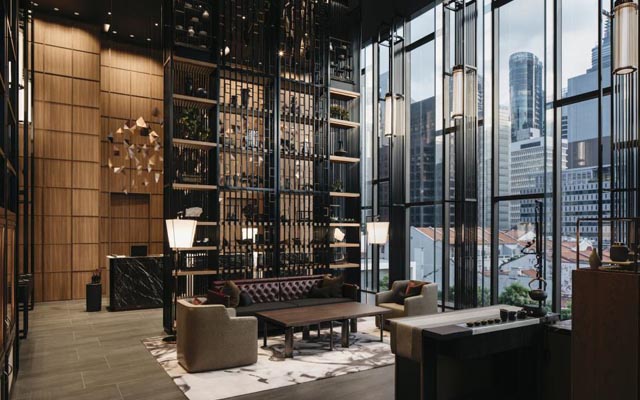
The Clan Hotel Singapore has created a new experiential stay package – The Clan Uncovers: Heritage & Craft – to engage guests as they learn about the city-state’s rich heritage and history.
The package includes a curated itinerary and a two-night stay in the hotel’s signature Master Series Premier Room, as well as daily breakfast for two, limousine transfer upon departure, late check-out, choice of one experiential activity for two, four-course dinner, and a complimentary local precinct tour (available on Wednesday or Saturday).
Experiential activities include a choice of a trishaw and bumboat ride by Uncle Trishaw or a Supermama Bento Workshop Experience.
Priced at S$995 (US$717), bookings are open from now till December 21 for stays between June 18 to December 30.
For more information, visit The Clan Hotel Singapore.
Airport tax to rise across Indonesia
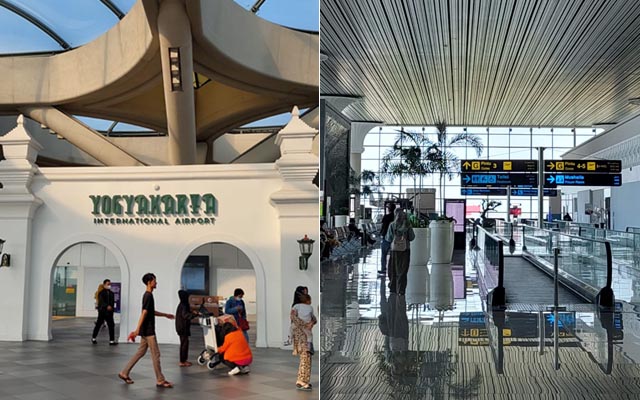
Indonesia airport authorities are increasing the passenger service charge (PSC) at 19 airports in the country to keep up services amid rising operational costs.
While PSC adjustments have been enforced in some airports like Kupang in East Nusa Tenggara and Pattimura in Ambon since June, other airports will roll this out between July and August.
Higher PSC will impact airfares. The increment ranges between 11 to 78 per cent for domestic passengers and between zero to 34 per cent for international travellers.
At Lombok International Airport NTB Airport, domestic PSC rose from 60,000 rupiah (US$4) to 106,560 rupiah as of July 16, while international PSC was adjusted from 200,000 rupiah to 250,860 rupiah.
From August 1, PSC at Soekarno-Hatta International Airport Terminal 2 will increase from 85,000 rupiah to 119,880 rupiah for domestic passengers and from 150,000 rupiah to 177,600 rupiah for international passengers.
At Terminal 3, however, domestic passengers will have to pay 168,720 rupiah instead of the current 130,000 rupiah from August 1, while international passengers will now be charged 266,400 rupiah instead of 230,000 rupiah.
For Juanda International Airport in Surabaya, domestic PSC has increased from 101,000 rupiah to 119,000 rupiah since July 16, while international PSC remains at 230,000 rupiah.
PSC at Ngurah Rai International Airport, Bali remains unchanged.
Sandiaga Uno, Indonesia’s minister of tourism and creative economy, said the higher airport tax will help airports remain in line with environmental sustainability.
He shared that the decision was made after discussions between Angkasa Pura I and II airport authorities and related parties, including the Ministry of Transportation.
Yulhendry, director of Ravelino Tours & Travel, told TTG Asia that the move has come at a bad time. “We are facing the problem of expensive airfares due to the lack of flights while demand is high, and the higher airport tax will only make airfares even more costly.”
He also expressed concerns about unclear terms and conditions for the new tariff, as there was no official circular on the PSC changes.
Awan Aswinabawa, chairman of A&T Holidays, opined that while the increase in PSC may seem small, the new charges will impact travellers.
“The fundamental question then is what improvements in services and facilities travellers will get with the increase,” he said.
Hong Kong’s SkyCity serves up new immersive experiences
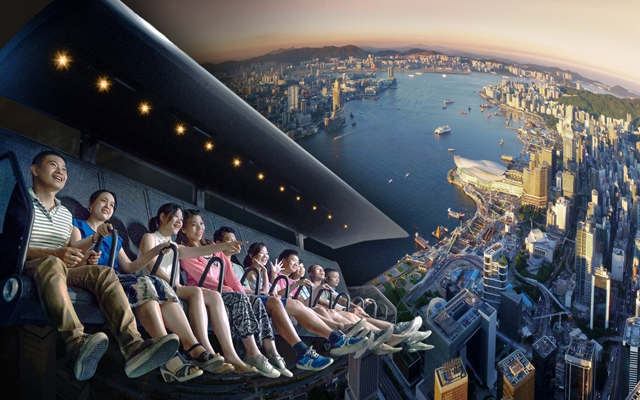
Situated in SkyCity of the Hong Kong International Airport, 11 SKIES is set to be the largest ‘retailtainment’ landmark in Hong Kong, providing one-stop entertainment, retail and commerce offerings, and a variety of experiences for visitors.
A HK$20 billion (US$2.5 billion) development by New World Development, and operated by K11, 11 SKIES spans over a total gross floor area of 35.3 hectares and is home to the largest indoor entertainment hub at 5.23 hectares. It will host eight world-class, all-weather entertainment attractions for all ages.
The first phase of entertainment attractions will feature the city’s first 4D motion flying theatre, Timeless Flight Hong Kong, which offers a fresh and unique perspective of Hong Kong’s skyline as audiences ‘fly over’ the city within the 13m-high borderless spherical screen.
Coming up next is South Korea’s largest immersive media art exhibition ARTE MUSEUM, which presents a collection of body-immersive artwork enabled by advanced digital media projection technology, showcasing surreal nature-themed art experiences as well as bespoke Hong Kong-themed artwork.
From the end of 2023 to early 2024, young ones will get to have fun with the Paddington Play Experience as well as Greater China’s first KidZania theme park.
11 SKIES will also house more than 800 shops, including over 120 dining concepts.
Making up for lost time
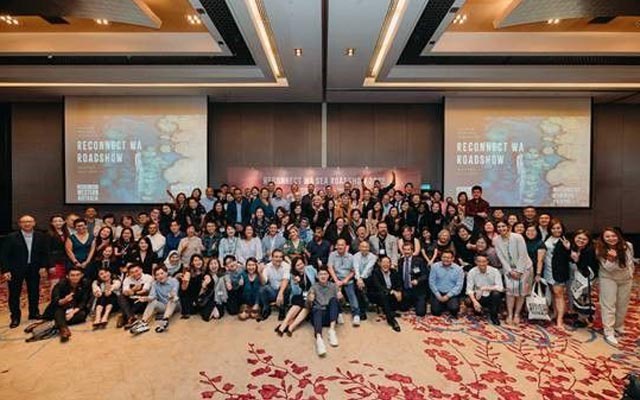
Despite being the last Australian state to reopen its borders, Western Australia (WA) is the first state to bring over 26 diverse operators from the region back into South-east Asia to reconnect with critical leisure and business event partners.
An intense three-day Reconnect WA roadshow in Kuala Lumpur and Singapore last week allowed Tourism Western Australia, Business Events Perth and WA operators to meet with more than 306 airlines, travel trade, and media partners from Singapore, Malaysia and Indonesia.
Singapore, Malaysia and Indonesia are WA’s second, third and seventh top-performing international source markets.
The Reconnect WA mission is made possible by the WA state government’s Reconnect WA funding package.
Powerful earthquake strikes Luzon

A 7.1-magnitude earthquake struck the Philippine island of Luzon today, sending strong tremors through the capital, Manila.
According to news reports, a hospital in Abra province was evacuated after the building partially collapsed following the quake, and houses have been damaged. Strong aftershocks are expected to follow.
Tremors in Manila have halted the city’s metro rail systems.







Philippine president Ferdinand Marcos, Jr has directed regional offices of the Department of Tourism (DOT) to work with their respective local government units to determine the extent of damage, and extend assistance to tourism-related establishments (TREs) affected by Wednesday’s earthquake.
The DOT’s infrastructure arm, the Tourism Infrastructure Enterprise Zone Authority (TIEZA), has also been tasked to explore support specifically for cultural and heritage sites impacted by the earthquake.
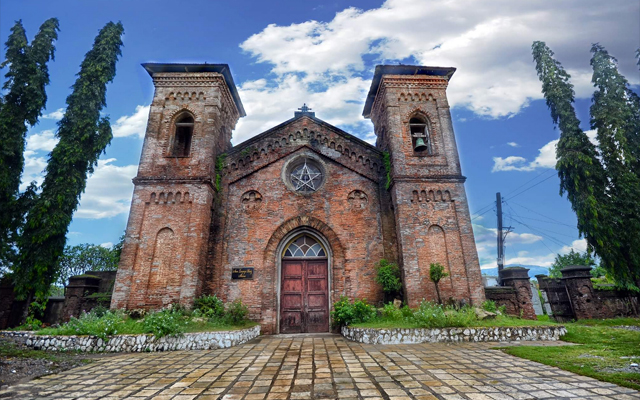
Initial reports note that at least two churches, declared National Cultural Treasure by the National Museum of the Philippines, are affected while several heritage and ancestral houses also sustained notable damage.
Other impacted tourism sites include the Vigan Cathedral in the Heritage City of Vigan in Ilocos Sur; multiple ground faulting in the popular Santa Ana Beach Area; and Lafaayette Luxury Suites Hotel and Crown Legacy in Baguio City.
Two properties managed and owned by TIEZA sustained damage as well. The riprap and ceiling of the Banaue Hotel and Youth Hostel in Ifugao partially collapsed, according to an initial report by the agency.
The quake also brought down the ceiling in the fireplace and lobby area of Mt Data Hotel in Bauko, while several hotel decorations were also damaged.
According to TIEZA, bookings for both impacted properties will be cancelled until a thorough assessment has been made.
DOT secretary Christina Garcia Frasco said in a press statement: “My concern and sympathy are one with those who have been affected by the recent earthquake in Northern Luzon. The Department will extend whatever help it can to tourism stakeholders and establishments that have been directly affected by this incident.
“Our resilience as a nation has already been tried and tested in the past. I am certain that this can be strengthened by the essential collaboration between our national agencies, local governments, and crucial stakeholders as we conquer our challenges.”