Singapore’s international visitor arrivals (IVA) and tourism receipts (TR) for 2021 may be a mere fraction of pre-pandemic performance, but the Singapore Tourism Board (STB) said signs of recovery over the last three quarters of the year had been encouraging.
Sharing the city-state’s performance report at this morning’s Year-in-Review media conference, STB noted that Singapore welcomed 330,000 IVA and and made S$1.9 billion (US$1.4 billion) in TR.
International arrivals and tourism receipts are up in 2021 over 2020, with China, India and Indonesia leading as top source markets
IVA rose 221 per cent in the last three quarters of 2021 over a low base of 2020, while TR improved 92 per cent in the second and third quarter over the same period in 2020.
STB attributed the invigorated return of overseas travellers to Singapore’s Vaccinated Travel Lanes (VTLs), with healthy demand arising from Australia, the UK, Malaysia, Indonesia and India – markets that contributed the most number of VTL applications.
In 2021, the top three visitor source markets for Singapore were China (88,000), India (54,000) and Indonesia (33,000). Between January and September 2021, visitors from China, Indonesia and India contributed S$432 million, S$127 million and S$58 million in TR (excluding sightseeing, entertainment and gaming) respectively.
Despite pandemic challenges, STB acknowledged that Singapore’s tourism sector has been resilient, working with STB to pivot decisively to the local market, preserve jobs, and experiment with innovative ways to reopen safely to international visitors.
On the accommodation front, the country’s hotel industry registered an Average Occupancy Rate of 56.2 per cent. Average Room Rate increased by 2.7 per cent to S$158, while Revenue per Available Room held steady at S$89. The year also saw several new hotel openings that presented unique lifestyle concepts, such as The Clan, Duxton Reserve and Oasia Resort Sentosa.
Business events picked up pace too, with more than 200 gatherings hosted in Singapore last year. These events were attended by almost 50,000 local and international attendees.
The cruise industry put forth a healthy rebound on the back of cruise-to-nowhere sailings. Both Dream Cruises and Royal Caribbean International welcomed over 400,000 domestic passengers on close to 300 cruise sailings in 2021.
The local tours industry also reported good performance, with close to 320,000 local participants and strong month-on-month growth for most of the year.
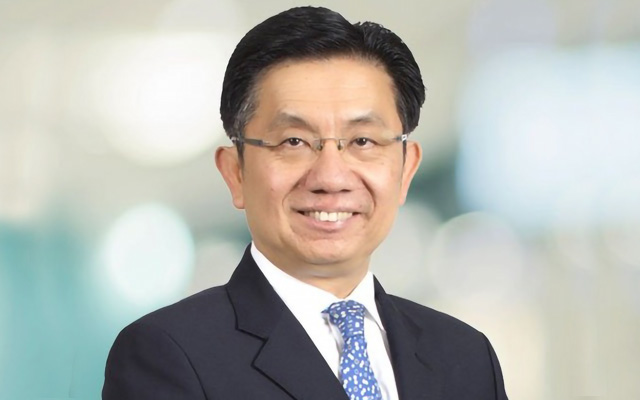
STB’s chief executive Keith Tan said: “We must anticipate setbacks and challenges even as the tourism industry recovers slowly. But I am confident that the tourism industry has learnt from its experiences and is poised to recapture demand when it returns.”
New tours, experiences, promotions and milestone events have been lined up for 2022 as Singapore’s Sentosa celebrates 50 years of tourism establishment through the formation of Sentosa Development Corporation (SDC) in September 1972.
Under the theme Discovery Neverending, Sentosa’s Golden Jubilee will celebrate the diverse facets of the island, including lesser-known and new leisure experiences, while showcasing Sentosa’s evolution as a leisure destination.
Sentosa’s Golden Jubilee presents new experiences for island visitors, including new sustainability- and heritage-themed tours crafted under the SentoSights banner
Celebratory programmes will be rolled out progressively throughout the year. For now, the first batch of offerings will include SentoSights, a new series of sustainability- and heritage-themed tours curated by SDC and travel partners. SentoSights features more than 10 unique guided tours aligned with Sustainable Sentosa strategic roadmap. Guests can immerse in rich history and natural wonders while exploring gems such as Fort Siloso, Fort Serapong, Tanjong Rimau, and the Imbiah and Coastal Trails. Unique elements such as game-based exploration, magic demonstrations, and night-time forest walks will be incorporated into relevant tours.
SentoSights tours will also offer opportunities to appreciate the nearby Southern Islands, such as through a sunset cruise with a sustainable fishing experience in the waters around St John’s and Lazarus islands.
Four tours have been launched for now, and more will be rolled out from February.
Also part of the initial programme is Silvers Deals, exclusively available to Singapore citizens and permanent residents aged 60 and above. From January 21, these visitors can enjoy discounts and deals at participating business establishments in Sentosa on weekdays.
Set for launch on February 7 is the Stories of Discovery, SDC’s social media contest to crowd-source guests’ memories of Sentosa. Selected entries will stand to win a curated Sentosa experience package which includes a three-day/two-night staycation.
Following on in March is the Sentosa Passport and Golden Jubilee Grand Draw, where visitors can collect stamps that translate into lucky draw chances as well as redeemable prizes.
The celebratory pipeline also packs in a revamped Sentosa Islander membership programme, collaborations with homegrown F&B brands to create unique retail products, public festivals themed around wellness and food, the Sentosa Golden Jubilee Charity Golf in support of President’s Challenge and Community Chest, and the commemorative Golden Jubilee E-book.
SDC and Sentosa will continue with infrastructural developments, which have so far resulted in newly-launched attractions such as SkyHelix Sentosa.
As part of sustainability advocacy and education efforts under the Sustainable Sentosa strategic roadmap, SDC will launch new low-carbon leisure experiences in the Southern Islands, which will extend the Sentosa getaway and help guests better appreciate the islands’ rich flora and fauna. Bicycle rentals and sustainable accommodation will soon be made available, while a new public ferry jetty has opened at Sentosa Cove Village to connect Sentosa to the Southern Islands from Fridays to Sundays and on public holidays.
In the coming months, SDC will be conducting a series of feasibility studies to look into the potential for new and sustainable tourism opportunities that may arise from the pandemic, as part of the development of the Sentosa-Brani Master Plan.
Russia outbound volume remains in the millions during the pandemic
Sri Lanka’s ease of entry has earned her much love from Russia
Thailand’s recovery of Russian favour hinges on success of Test & Go
Russia outbound travel has splintered into different directions, resulting in destinations such as Thailand losing a chunk of share while others, such as Sri Lanka, gaining big time.
The worry of some Thai industry members is whether the new patterns drawn by Covid-19 will stay if Russians find attachments to alternative places, or whether they will return to old playgrounds in the long term.
In the short term, tourism businesses are jostling for whatever markets they can get their hands on. Russia is prized because of its volume, long average length of stay, and determination to travel.
According to Sri Lanka Tourism, 12 million Russians travelled abroad in 2020, down from 2019’s 20 million – but in the first year of Covid, that is resilient.
Omicron has failed to stop Russians from travelling. “What I see is day-by-day growth in international flight bookings since the first reported case of Omicron in South Africa on November 26,” said Janis Dzenis, spokesperson for Aviasales. The company generates almost 20 per cent of all Russian air ticket sales.
Fresh fights
Old favourites may be taken aback by who they are up against. Take Thailand for example, the number one Asian destination for Russians with around 1.5 million arrivals in 2019, according to data from Tourism Authority of Thailand. Its biggest Asian competitor then was Vietnam, with nearly 650,000 Russian arrivals that year, Vietnam National Administration of Tourism data shows.
However, since the peak season started in October 2021, with Vietnam still locked away, Sri Lanka has been giving Thailand a good run for the rouble.
Russian arrivals to Sri Lanka is catching up with Thailand’s: Aviasales
In the first 11 days of this year, Sri Lanka Tourism Development Authority said Russia topped with close to 6,000 arrivals, outpacing even India. Russia was also the top market for Thailand in the first four days of 2022, but with just around 2,500 arrivals. Sri Lanka has narrowed a wide gap; its volume of Russian visitors was 17 times less than Thailand’s in pre-pandemic 2019.
Data from ForwardKeys shows the big Russian reshuffle this peak season. Bookings to traditional destinations such as Thailand and Turkey dropped; the Maldives, Egypt, Sri Lanka and the UAE are popular, the latter seeing only a slight decrease of two per cent in bookings compared with 2019.
ForwardKeys flight booking data reflects strong demand for the Maldives and Sri Lanka – destinations that have reopened earlier for tourism and made entry requirements simple for arriving travellers
Nan Dai, ForwardKeys’ market analyst, reasoned: “Thailand reopened later than the other Asian destinations such as the Maldives and Sri Lanka. The Sandbox started in July 2021 and Test & Go, November 1, 2021. Sri Lanka reopened in January 2021 – although this was choppy and international opening only really started from October 1 – and the Maldives in July 2020.”
Russia was also not on the list of approved countries for Thailand’s Test & Go when the scheme was first launched.
However, these are not the only reasons for Thailand to lose market share. Sri Lanka, for instance, had other things going for her. For one, resumption of direct flights, which offers more affordable fares.
“SriLankan Airlines restarted Moscow to Colombo service on July 31 (after a break of six years). Aeroflot resumed services to Colombo on September 2. There are also countless options with layovers in Middle Eastern airports,” said Aviasales’ Dzenis. “Tickets to Sri Lanka are relative cheaper, on average US$178.”
Sri Lanka Tourism also stepped up promotions ahead of the peak season. It hosted 11 influential travel writers from Russia, and Ukraine, from November 21 to December 8 last year.
But above all, Sri Lanka is hassle-free, remarked Hiran Cooray, chairman, Jetwing Symphony and The Lighthouse Hotel, Sri Lanka.
“Many guests have told me that the arrival process is a lot better than they expected. So, this is the number one reason,” said Cooray.
“All vaccinated travellers with a negative PCR can obtain an online visa or on arrival. They can travel without any restrictions anywhere in the country and stay at a hotel of their choice. All tourism sights and attractions are open to both nationals and international travellers,” he added.
“Our government is focused on welcoming international travellers so it’s likely the arrival process will be further simplified in time. As it is, it’s one of the easiest countries to enter in this part of the world,” Cooray said.
Cooray is grateful for rising numbers from Russia, describing the market and a few other Eastern European sources as “our saviour in the past few months”. Official figures show Russians stay an average of 10.4 nights in Sri Lanka.
“Up until now, we’ve had mainly low spenders, but now we see high net worth travellers from these destinations. This is what we at Jetwing and destination Sri Lanka are aiming to attract,” said Cooray.
Recovering regulars
Over in Thailand, it is uncertain if the government’s decision to lift the suspension of Test & Go from February 1 – this time with no source country restrictions – will be enough to bring back Russian travellers. Travellers are required to do two PCR tests instead of one previously, on day one and day five, and prepay for overnight accommodations on those days while they wait for results.
According to Bill Barnett, managing director, C9 Hotelworks based in Phuket, it may be too late.
“This high season wraps up in March/April so with booking lead time, it’s too late to cry over spilled milk,” he said. “Russians are the most sought-after market in Phuket hotels right now but, frankly-speaking, that boat has sailed.”
Dzenis: despite Omicron’s spread, international flight bookings out of Russia continue to climb daily
Aviasales’ Dzenis believes this moment could be “a big win” for destinations like Sri Lanka. “Given a destination with lots of conditions to enter and another that is more open, no one can be certain if Russians will go back to the old resorts, having experienced new horizons,” he said.
Barnett admits Russians might move locations in 2022/2023 peak season, likely to Vietnam, where places like Nha Trang/Cam Ranh and Phu Quoc are already familiar.
He believes Vietnam will attempt recovery with price undercutting. Expect next winter to be a “brand new ball game”, he warned.
Devan Bhaskaran, general manager of The Racha, Phuket, is heartened that the Sandbox has brought Russians back to Phuket from Pattaya. Russia was Phuket’s main market until China mass tourism overtook it and resulted in Russians shifting attention to Pattaya.
Concerns remain for the long term, shared Bhaskaran, who is doubtful of returning to 2018 occupancy levels without the Chinese. For now, he is banking his hopes on the Indian market, which is “getting stronger and we hope to see them for the whole year”.
“Besides that, the local government will continue with phase four of domestic travel and hopefully phase five till October,” he said.
Thailand’s fight for the Russians and other source markets will depend on whether Test & Go’s resumption will open the floodgates, as other destinations are ready to fight tooth-and-nail for travellers.
Raffles Hotels & Resorts has appointed Dennis de Groot as acting general manager of both Raffles Hotel Le Royal in Phnom Penh and its sister hotel Raffles Grand Hotel d’Angkor in Siem Reap.
With more than 15 years of experience in the hospitality industry, de Groot previously held hotel management positions in the Maldives, Azerbaijan and South Africa, including nearly three years at a private game lodge.
De Groot was recruited by the Accor Group in 2016 to oversee the rebranding of the Jumeirah Dhevanafushi as it transformed into the Raffles Maldives Meradhoo.
He then moved to Cambodia in 2018 as hotel manager at Raffles Hotel Le Royal and was appointed the acting general manager in January 2021.
Tax reforms and an improved climate for hotel investments are among the items on the wish list of India’s tourism and hospitality players, who are on the edge of their seat as they await the country’s Union Budget 2022-2023 presentation on February 1, 2022.
India’s tourism and hospitality stakeholders hope for supportive policy reforms this year; Parliament House in New Delhi pictured
Many industry stakeholders regard the new spending policy and direction as critical to their survival, and are expecting the government to announce policy reforms that will benefit the beleaguered but economically-crucial tourism and hospitality industry.
Naveen Kundu, managing director, EbixCash Travel Services – India, South East Asia & Middle East, told TTG Asia: “The forthcoming budget offers an opportunity for the Indian government to address long-standing demands of the tourism and hospitality (industry). The government should declare tourism as a priority sector for the next two years. We expect the government to provide tax concession to hotels and resorts in India to boost demand for domestic tourism and inbound tourism.”
The Hotel Association of India (HAI) has requested that the government confer status of ‘Infrastructure’ to the hospitality sector, which will encourage greater investments.
“Access to softer funding, longer repayment periods and resultant shortening of the gestation period will make hotel investments more attractive and sustainable,” said HAI vice president KB Kachru, who is also chairman emeritus and principal advisor, South Asia to Radisson Hotel Group.
“The road to recovery can also be aided by measures such as an extended moratorium, rationalisation of taxes, and ease of doing business,” he added.
Vishal Suri, managing director, SOTC Travel, called for government backing in structural transformation that is needed “to build a stronger, more sustainable and resilient tourism industry”, as well as the removal of a 50 million rupee (US$659,960) cap on the Service Export from India Scheme (SEIS) benefit. The latter would fuel tourism recovery and promote employment generation, he explained.
Under SEIS, exporters of selected services are entitled to an incentive on the net foreign exchange earned in the form of duty credit scrips, which can be used to pay import duty or encashed by selling it to an importer.
Best Western Hotels & Resorts has rolled out a Welcome 2022 Sale, a promotion that offers discounts of up to 40 per cent at its hotels and resorts in destinations across Asia.
Guests who book directly with Best Western between now and February 15, 2022, for stays taken any time through June 30, 2022, will obtain a 30 per cent discount on the hotel’s Best Rate. An additional 10 per cent will be extended to Best Western Rewards members. Full prepayment is required at the time of booking.
Participating properties are:
Thailand (Best Western Plus Wanda Grand Hotel, Best Western Royal Buriram Hotel, Best Western Premier Bayphere Pattaya, and Vīb Best Western Sanam Pao)
Indonesia (Best Western Kuta Villa, Best Western Plus Makassar Beach, and Best Western Premier Agung Resort Ubud)
Philippines (Best Western Plus The Ivywall Resort, Panglao)
Vietnam (Best Western Premier Sapphire Ha Long)
Japan (The Hotel Kyoto Palace, BW Signature Collection)
In place at all properties is Best Western’s We Care CleanSM programme, allowing guests to have peace of mind thanks to the comprehensive series of hygiene protocols and best practices, from check-in to check-out.
LA-based LEDR, a deep technology company which harnesses the power of collective intelligence to aid decision-making, is planning to set up the company’s headquarters in Singapore and use the city-state as a springboard for its next development phase.
LEDR was founded to commercialise cutting-edge technology that first originated from US national intelligence agencies.
Lau: LEDR has signed a multi-year engagement with a hotel chain to digitally transform its operations
The company creates an up-to-date digital representation of the organisation that gives companies full control of their knowledge assets when collaborating around analytics. This allows companies to generate insights for decision-making without having to centralise or exchange any data.
Last year, LEDR participated in the fourth cohort of the Singapore Tourism Accelerator (STA) programme, partnering with SATS to develop a deep tech system that promotes data sharing and collaboration among businesses in the aviation sector.
The company’s participation in the programme was “to enable the transition from building up our general capabilities to applying those capabilities to solve business needs in different industries, for example, hospitality,” shared Edwin Lau, CEO, LEDR.
“The programme also served as a launchpad for us to meet with multiple hotels and F&B companies.”
Since then, the company has signed a multi-year engagement with a hotel chain to digitally transform its operations, and is currently in similar talks with other global hotel chains and F&B businesses, said Lau.
The company has also held several discussions with other prospective stakeholders to apply its technology in smart buildings, cyber security, supply chain, financial services, and healthcare.
“Our expertise and innovative solution are brought into the spotlight in cases where there are disparate sources of information,” said Lau, adding that the company’s approach “makes insight and intelligence a lot more accessible”.
He explained that with growing demand for personalised services and instant gratification among consumers, companies like aviation businesses can harness technology to enhance guest experience and automate mundane and repetitive tasks, freeing staff to focus on customer relations and value-added activities.
“Companies need technologies that not only help them understand macro trends and patterns, but also, the micro details about each of their customer. All that insight needs to be utilised at every customer touchpoint – whether it is an automated chatbot or when flight attendants serve passengers on board flights,” he said.
In explaining why data sharing and collaboration among aviation and hospitality companies is vital for the future of the industries, Lau said that “the power of analytics is driven by the diversity of information sources you have access to”.
He noted that Gartner predicted that by 2025, 70 per cent of organisations will shift their focus from big to small and wide data, providing more context for analytics and making artificial intelligence (AI) less data hungry.
“No individual company will be able to have all the information they need. A diversity of perspectives matter in our increasingly connected world,” said Lau.
“Deloitte has found that organisations with diverse ecosystems are significantly more likely to have a transformative vision for AI, enterprise-wide AI strategies, and use AI as a strategic differentiator.”
Thus, collaboration and the sharing of information are important if industries such as aviation and hospitality want to maximise the value of their data assets, said Lau, but he pointed out that the process can be “difficult, expensive and risky if a company utilises conventional approaches”.
“A key problem is that conventionally, collaboration means that one party must give up control over their data. As one of the most valuable assets to any company, why would anyone willingly give it up?” he said. “In addition, having to extract and replicate data makes it hard to keep things synchronised, and out-of-date data can often be more misleading than having no data at all.”
This is where LEDR comes into play. Unlike solutions that require businesses to centralise data or information – for example, in data warehouses, data lakes or data exchanges – LEDR’s approach minimises the movement or replication of data, while enabling ecosystems to collaborate on insights and knowledge without the need to exchange data.
LEDR has created new capabilities that conventional approaches are unable to provide customers with, particularly pertaining to intelligent systems, said Lau.
Following its participation in the STA programme, which acted as the company’s platform for a market test, Lau said it has been getting “good reception” from almost every company that it has approached across a variety of industries. With that traction, Lau is building a team and establishing the company’s headquarters in Singapore.
“We believe our technology is transformational, and we plan to use Singapore as a springboard for the next phase of our journey,” he said, adding that the company’s efforts are in alignment with Singapore’s national technology agenda.
Indonesia has launched a Safe Travel Bubble Arrangement between Singapore and two Riau islands – Batam and Bintan – on January 24 in a bid to restart the once-thriving tourism industry in the two resort destinations.
The two islands have been approved for reopening as they are rated Community Activity Restrictions (PPKM) Level One, which indicates low local infection and hospitalisation incidences. At the same time, hotels and facilities in Bintan’s Lagoi and Batam’s Nongsa areas are certified under the country’s Clean, Health, Safety, and Environment (CHSE) certification programme.
Bintan’s Lagoi (pictured) and Batam’s Nongsa qualify for Indonesia’s Safe Travel Bubble programme, and are allowed to welcome fully vaccinated travellers from Singapore
Announcing the move on Monday, Sandiaga Uno, minister of tourism and creative economy, said: “The Safe Travel Bubble for Riau Islands has been prepared for more than a year, and we can declare now that Lagoi and Nongsa are more than ready to become the travel bubble zones for travellers from Singapore.”
He expressed hopes that the decision to reopen the islands for tourism would stimulate economic recovery, create job opportunities and send “positive signals that we have handled the pandemic well”.
Travellers using the Safe Travel Bubble must enter Batam via the Nongsapura ferry terminal and Bintan via the Bentan Telani ferry terminal, stated a circular issued by Indonesia’s Covid-19 Task Force.
They must also make an advanced reservation at one of the hotels in Lagoi or Nongsa, and restrict their stay and activities within these areas.
To qualify for the Safe Travel Bubble, travellers must have completed two vaccinations, show a negative polymerase chain reaction (PCR) test result taken within 72 hours to arrival, hold a travel insurance with S$30,000 (US$21,951) of coverage, as well as download and use the Peduli Lindungi and Blue Pass applications.
Sandiaga said ferry services at Bentan Telani will be gradually increased to support the Safe Travel Bubble. For a start, the terminal will offer one trip per day, taking in 50 to 100 passengers. Operations will be intensified to eight trips per day, with up to 500 travellers in total daily capacity.
Luhut Binsar Pandjaitan, coordinating minister of maritime affairs and investment, said the implementation of the programme would be monitored weekly, and reversed should Covid-19 cases rise.
Malaysia has relaxed her entry procedures for boosted travellers and will soon do away with temperature checks when entering premises as the country prepares to move into the endemic stage of Covid-19.
From January 24, 2022, the quarantine period for travellers that have received vaccination booster shots will be five days instead of seven. They will need to undergo Covid-19 polymerase-chain reaction (PCR) test two days prior to departure to Malaysia, upon arrival and on the fourth day of quarantine. They can opt for a rapid test kit (RTK) on the fifth day, with supervision by health officers, should they choose to forego the PCR test on the fourth day of quarantine. A negative result on either the final PCR or RTK test will allow the traveller to exit isolation.
Malaysia has cut-short quarantine-on-arrival requirements for vaccinated and boosted travellers
Vaccinated travellers who have yet to receive a booster shot will need to serve a seven-day quarantine, while those who are unvaccinated or partially vaccinated will need to serve 10 days.
Arrivals from abroad will be given a digital Home Surveillance Order and will not need to wear the usual surveillance bracelets. However, travellers from high-risk countries will need to have their surveillance bracelets on.
Health minister Khairy Jamaluddin said that the ministry has accepted a proposal to remove temperature checks from the Covid-19 standard operating procedures. He added that soon, individuals will only need to check in via MySejahtera app upon entering public premises. However, they will still be required to show their vaccination certificates before entering shops and restaurants.
Hong Kong’s Society of IATA Passenger Agents (SIPA) is seeking “formal notice” and clarification from Air India following a call from the airlines on January 11 that only the American Express (Amex) credit card will be accepted as the Form of Payment (FOP) with immediate effect.
According to SIPA, Air India’s “abrupt policy change with little or no notice” has raised a number of concerns for members and IATA Accredited Agents.
Air India alters FOP in Hong Kong and accepts payment made only with American Express credit cards
In his letter to Air India, SIPA chairman Tommy Tam wrote: “The change of your policy to accept credit card only will greatly limit an agent’s performance if customers are going to settle their payment by means other than credit card, not to mention the popularity of American Express Card in Hong Kong compared with many other card issuers.
“Clearly, such a policy places consumers who rely on far larger card issuers such as Visa, Mastercard, UnionPay etc at a significant disadvantage and discourages them from booking Air India.”
Citing IATA Resolution 890, paragraph 3, Sub-paragraph 3.4, one SIPA member writing directly to Air India stressed the airline’s “unprecedented directive conflicts with the IATA Resolution”.
The member noted: “Air India’s abrupt policy to suddenly change the Form of Payment has significant ramifications and has the effect of ‘withdrawing’ from BSP and ‘suspending’ sales from travel agencies as no travel agents can pay them and instead must ask passengers to provide a credit card, and that too is limited to Amex.”
In Singapore, a travel agent official told TTG Asia that Air India’s FOP had been “cash only” for a number of months and this had created “a lot of confusion and had also added to the administration process”.
He commented the airline, which has a low-key presence in the city-state, had been “in and out of the GDS system and where only international flights could be booked”.
Meanwhile in India, a corporate travel manager (CTM) in the IT sector said travel on Air India was low due to Covid-19. His travel management agency has clarified that his company was not affected by the new FOP as in Hong Kong’s case. Booking and payment were per normal.
A January 11 report in Simple Flying said a court case in Canada – over a failed satellite deal from a decade ago – could see the seizure of assets belonging to both Air India and the Airports Authority of India, specifically related to funds held by IATA belonging to the parties.
LA-based LEDR, a deep technology company which harnesses the power of collective intelligence to aid decision-making, is planning to set up the company’s headquarters in Singapore and use the city-state as a springboard for its next development phase.
LEDR was founded to commercialise cutting-edge technology that first originated from US national intelligence agencies.
The company creates an up-to-date digital representation of the organisation that gives companies full control of their knowledge assets when collaborating around analytics. This allows companies to generate insights for decision-making without having to centralise or exchange any data.
Last year, LEDR participated in the fourth cohort of the Singapore Tourism Accelerator (STA) programme, partnering with SATS to develop a deep tech system that promotes data sharing and collaboration among businesses in the aviation sector.
The company’s participation in the programme was “to enable the transition from building up our general capabilities to applying those capabilities to solve business needs in different industries, for example, hospitality,” shared Edwin Lau, CEO, LEDR.
“The programme also served as a launchpad for us to meet with multiple hotels and F&B companies.”
Since then, the company has signed a multi-year engagement with a hotel chain to digitally transform its operations, and is currently in similar talks with other global hotel chains and F&B businesses, said Lau.
The company has also held several discussions with other prospective stakeholders to apply its technology in smart buildings, cyber security, supply chain, financial services, and healthcare.
“Our expertise and innovative solution are brought into the spotlight in cases where there are disparate sources of information,” said Lau, adding that the company’s approach “makes insight and intelligence a lot more accessible”.
He explained that with growing demand for personalised services and instant gratification among consumers, companies like aviation businesses can harness technology to enhance guest experience and automate mundane and repetitive tasks, freeing staff to focus on customer relations and value-added activities.
“Companies need technologies that not only help them understand macro trends and patterns, but also, the micro details about each of their customer. All that insight needs to be utilised at every customer touchpoint – whether it is an automated chatbot or when flight attendants serve passengers on board flights,” he said.
In explaining why data sharing and collaboration among aviation and hospitality companies is vital for the future of the industries, Lau said that “the power of analytics is driven by the diversity of information sources you have access to”.
He noted that Gartner predicted that by 2025, 70 per cent of organisations will shift their focus from big to small and wide data, providing more context for analytics and making artificial intelligence (AI) less data hungry.
“No individual company will be able to have all the information they need. A diversity of perspectives matter in our increasingly connected world,” said Lau.
“Deloitte has found that organisations with diverse ecosystems are significantly more likely to have a transformative vision for AI, enterprise-wide AI strategies, and use AI as a strategic differentiator.”
Thus, collaboration and the sharing of information are important if industries such as aviation and hospitality want to maximise the value of their data assets, said Lau, but he pointed out that the process can be “difficult, expensive and risky if a company utilises conventional approaches”.
“A key problem is that conventionally, collaboration means that one party must give up control over their data. As one of the most valuable assets to any company, why would anyone willingly give it up?” he said. “In addition, having to extract and replicate data makes it hard to keep things synchronised, and out-of-date data can often be more misleading than having no data at all.”
This is where LEDR comes into play. Unlike solutions that require businesses to centralise data or information – for example, in data warehouses, data lakes or data exchanges – LEDR’s approach minimises the movement or replication of data, while enabling ecosystems to collaborate on insights and knowledge without the need to exchange data.
LEDR has created new capabilities that conventional approaches are unable to provide customers with, particularly pertaining to intelligent systems, said Lau.
Following its participation in the STA programme, which acted as the company’s platform for a market test, Lau said it has been getting “good reception” from almost every company that it has approached across a variety of industries. With that traction, Lau is building a team and establishing the company’s headquarters in Singapore.
“We believe our technology is transformational, and we plan to use Singapore as a springboard for the next phase of our journey,” he said, adding that the company’s efforts are in alignment with Singapore’s national technology agenda.