TTG Asia
Asia/Singapore Friday, 3rd April 2026
Page 702

Mastercard data shows strong resurgence of travel in Asia-Pacific

0

After two turbulent years, new research from the Mastercard Economics Institute reveals that for the first time since the pandemic, global leisure and business flight bookings surpassed pre-pandemic levels, while spending on cruise lines, buses and trains saw sharp improvements this year, signalling a key milestone in the global travel recovery.

Spanning 37 markets across the globe and nine markets in Asia Pacific, the Travel 2022: Trends and Transitions report delivers critical insights about the global state of travel in a less restricted, post-vaccine chapter of the Covid-19 pandemic era. The report compares the current state of global travel to two key inflection points: the pre-pandemic levels of 2019, and trends from the period when border restrictions began to ease and international travel resumed across most geographies.

Trends reveal that people favour destinations that are less complex to navigate amid entry and quarantine requirements

Drawing on a unique analysis of publicly available travel data, as well as aggregated and anonymised sales activity in the Mastercard network, the third annual travel report from the Mastercard Economics Institute dives into key elements of the traveller journey. This includes the tailwinds propelling travel recovery, consumer considerations when making travel-related purchasing decisions, and macroeconomic trends such as inflation, hybrid work, healthcare risks, and geopolitical disruptions that could influence the travel recovery.

Key findings through April 2022 for Asia-Pacific include:

Reopening of borders puts Asia back on the tourist map
According to the Mastercard Economics Institute analysis, if flight booking trends continue at the current pace, an estimated 430 million more passengers will fly in Asia-Pacific compared to last year. The travel outlook for the region is optimistic, even with markets across North Asia and mainland China yet to relax border measures.

Pent-up demand is expected to fuel the travel recovery
Following two years of little to no travel for Asia-Pacific in 2022, the loosening of travel restrictions and reopening of borders has sparked a surge in demand for both inbound and outbound travel. A trend observed in markets across the region is consumers’ release of excess savings on travel. In 2022, borders opened in Australia, resulting in a sudden ability to travel. Flight bookings from Australia to Indonesia, for example, spiked nearly 200% in 2022, and flights to the US more than doubled.

Travel spending swings towards experiences
Globally, for the majority of the year, international tourists were seen spending more on experiences rather than things when in destination. This trend was also witnessed in Asia, where Singapore recorded one of the highest international tourist spending on experiences in destination globally, with a 60% increase in spending from pre-pandemic levels through March 2022. Other markets across the region, however, revealed a more mixed picture, with low levels of inbound tourism seen in Indonesia and South Korea, whose borders opened in April 2022. This will be an important trend to watch for the rest of the year as ongoing travel restrictions across the region are gradually lifted, and Asia Pacific tourists begin to shop and spend abroad.

Choice of travel destinations influenced by mobility restrictions
Since the onset of the pandemic, trends reveal that people have been favouring travel destinations that are less complex to navigate amid confusing entry and quarantine requirements, travel restrictions, and testing procedures. As such, the US remained the most popular choice for Asia-Pacific travellers, followed by Australia, Singapore, the UK, and Canada. In the months to come, however, this trend is likely to shift in favour of intra-regional travel as restrictions are relaxed and domestic travel picks up once again.

Cost of travel remains elevated due to supply chain disruption and higher operating costs
Travel deficits triggered by the pandemic have expanded the operating expense burden for airlines and the broader transportation industry, resulting in higher fares for travellers in Asia-Pacific compared to their global counterparts. The average airfares in Asia-Pacific remain elevated – roughly 11% and 27% above 2019 levels in Australia and Singapore respectively – due to supply-side constraints such as air transportation employment, which continues to remain below pre-pandemic levels across the region.

Domestic spending picks up momentum across hard-hit transportation industries
With people increasingly relying on domestic modes of transportation, particularly cars, for mobility during the pandemic, the spending on auto rentals and tolls consistently exceeded 2019 levels throughout the past two years. Domestic ground travel has seen a robust demand in many Asia-Pacific markets where road trips have retained their appeal. Fuel spending has steadily increased in Singapore, Hong Kong, Australia and the Philippines, while public transportation and cruise lines have also firmly stepped back onto the road to recovery, after an initial slow start due to restrictions surrounding group travel.

“Despite a delayed recovery, and numerous risks such as inflation impacting discretionary spending, travellers in Asia-Pacific have demonstrated a strong desire to return to travel,” said David Mann, chief economist, Asia-Pacific and Middle East Africa of the Mastercard Economics Institute.

“2022 will prove to be a significant year for the travel industry in Asia-Pacific. As border restrictions relax, we have witnessed an accelerated return to travel that indicates cause for optimism, with the region poised to swiftly catch up with the rest of the world.”

Ovolo Hotels names new Hong Kong director of operations

0

Maël Vastine is the new director of operations in Hong Kong for Ovolo Hotels.

He brings with him over 16 years of experience in hospitality, and will take on the responsibility for Hong Kong operations and provide strategic direction for shared services in Hong Kong.

Worried tourists give Sri Lanka a wide berth

0

Advisories against travel to Sri Lanka and media coverage of the country’s food and resource shortage and political unrest have frightened scores of travellers into cancelling their holidays to the destination.

M Shanthikumar, president of the Tourists Hotels Association of Sri Lanka, said there have been 80 per cent of booking cancellations even though members “have tried to persuade visitors that it is safe to holiday in Sri Lanka”.

Shanthikumar: we won’t allow any inconveniences to tourists

The surge in cancellations was triggered by countries such as Germany, France, Australia and New Zealand urging against non-essential travel to Sri Lanka due to widespread fuel and food shortages and possible violence.

The latest government to issue such a travel advisory is the UK. It resulted in tour operator TUI UK cancelling all its programmes to Sri Lanka earlier this week.

Tourism stakeholders said the Sri Lankan government has provided special facilities for fuel and cooking gas to hotels and resorts since tourism is a key foreign exchange earner. Hence, the industry has been spared the brunt of the resource shortages.

“We won’t allow any inconveniences to tourists, so they can come and spend their holidays here and go home peacefully,” assured Shanthikumar.

Despite assurances, the damage by travel advisories is done. Mahen Kariyawasam, past president of the Sri Lanka Association of Inbound Travel Agents said advisories against non-essential travel have a direct impact on holiday travel.

Furthermore, travel advisories lead to a sharp hike in travel insurance, stated Chandra Wickremasinghe, an industry veteran and chairman/managing director at Connaissance De Ceylan. “That is a deterrent to travel,” he said.

Trevor Rajaratnam, vice president of the Universal Federation of Travel Agents, also blamed the negative publicity abroad about the situation in the country for anxious cancellations.

Amid the current crisis, Sri Lanka is ever more dependent on travel and tourism’s recovery. The industry is the country’s key foreign exchange revenue generator. In 2018, tourism generated US$4 billion but that plunged during the pandemic and airport closures.

Expectations for tourism to raise US$2 billion this year have been stymied by the ongoing crisis. From January to April 2022, tourism generated US$626 million while arrivals in April have dropped to just 62,980 from 106,500 in March.

Malaysia considers motorhome tourism development

0

The Ministry of Tourism, Arts and Culture Malaysia is working with the local government and relevant ministries to develop motor homes as a new tourism product.

This new venture came about after getting feedback at the recent Arabian Travel Market that the availability of self-drive motorhomes will attract young families from West Asia to go beyond traditional destinations of Kuala Lumpur, Langkawi and Genting.

Nancy: (Malaysia) continues to be a preferred destination as the government has made entry requirements simple

Its minister, Nancy Shukri, shared that her ministry will work closely with the Transport Ministry and local councils of every state to develop the required infrastructure before promoting motor homes as a new tourism product.

A pilot project will be initiated in Johor before it is rolled out to other states in the country.

Tourism Malaysia had also received positive feedback from overseas travel trade at the recently concluded Arabian Travel Market. Nancy said the country continues to be a preferred destination as the government has made entry requirements simple by removing Covid-19 testing and quarantine requirements.

Agents from the Middle East had also highlighted the need for additional direct flights and frequencies from West Asia to Kuala Lumpur, she added.

Towards this end, Tourism Malaysia had signed a memorandum of understanding with Emirates Airline to increase air connectivity to Malaysia, and to promote Malaysia as a unique travel destination. There will also be joint activities to drive tourism recovery.

Nancy was speaking at a press conference after launching the Domestic Tourism Recovery Plan 2022 and the revamped version of the Cuti-Cuti Malaysia (Holiday in Malaysia) song in an effort to boost domestic tourism, which local industry players are banking on this year while waiting for international tourism to return to normalcy.

To date, more than 500,000 foreign tourists have visited Malaysia since the borders reopened on April 1 and Nancy was confident that the target of 2 million foreign tourists set by the government and RM8.6 billion (US$1.9 billion) in tourism receipts would be achieved by end of this year.

Powering up fun in Phuket

0

The launch of the Andamanda Phuket mega entertainment project is an exciting addition to the destination. How do you see it contributing to the island’s economy?

Phuket is a unique destination but I think the island is pretty much focused on natural attractions. There haven’t been many man-made attractions or water parks of this kind in Phuket yet, and I think such facilities are an important part of the tourism infrastructure for all countries. Andamanda Phuket will help the island to compete with international destinations.

If you look at other destinations, you will see that they all have great water parks. In Bali there’s Waterbom; in Dubai there’s Aquaventure. You’ll see great examples of how water parks can attract more tourists.

Can the existing infrastructure in Phuket’s Kathu district support Andamanda Phuket? Or would you expect Kathu to develop further as a result of your project?

If terms of transportation, Phuket already has all the right ingredients. The airport recently expanded with a new terminal for international arrivals. There is also a tunnel coming from Patong to Kathu that will help a lot with accessibility.

I think what’s more interesting is perhaps the development of the new district. Kathu has always been a district that is overlooked in Phuket, but now there is our opening as well as Central Phuket 700m away and King Power (duty-free mall). There are plans to open a Tiffany (cabaret show) next to our park.

All in all, I think Kathu has the right ingredients to become the new entertainment centre or the new downtown Phuket.

There has been much criticism from stakeholders about the reopening of Thailand to international tourism, with many believing the government has been too cautious in its efforts. What more do you think could be done?

There is a need to balance… business and public safety. Thailand at the beginning did so well in controlling Covid-19, so much so a lot of us were used to the concept of zero cases. Honestly, that is not going to be sustainable in the long run and business needs to resume.

I think we did very well at the beginning with Phuket Sandbox and we were one of the first countries to open up for tourism. Since then, we’ve been a little slow in opening up the country completely.

As Thailand opens up, operators in Phuket must not overlook the Thai market. The domestic market has been our bread and butter for the past two years. It has been holding up the travel industry. In the first year (of reopening), the domestic market will remain a priority, contributing about 70 per cent of our visitors.

As for other markets, we are seeing increasing returns. India is fast-growing, and Australia is a very big market. In April alone, there were 10,000 Australian arrivals. If you look at the figures for 1Q2022, year-on-year growth is about 200 per cent.

I believe recovery will be rapid, but it will take another year for us to return to 2019 levels.

What should the private or public sectors do to get Thailand tourism back on track and achieve pre-pandemic levels of arrivals?

Tourism Authority of Thailand has plans but what’s more important is that we used the past two years to pivot to a more sustainable tourism approach, instead of focusing on numbers.

We are talking about 40 million visitors coming to Thailand, but let’s focus more on the value each tourist brings and what they will spend in the country.

Phuket and Phi Phi island have never been more beautiful over the last two years. Underwater life is coming back. So, how do we keep that going while generating enough value? I think it’s going to be important to find that balance.

Tripadvisor launches improved self-service advertising tool

0

Tripadvisor has launched Tripadvisor Ad Express, rebranding and adding new features to its popular self-service tool, previously named Tripadvisor Media Manager.

Tripadvisor Ad Express was developed as an intuitive and automated tool that gives businesses of any size total control over their cross-platform advertising on Tripadvisor, enabling them to attract and engage with users looking for exciting new places to eat and stay.

Tripadvisor Ad Express is an intuitive and automated tool that gives businesses of any size total control over their cross-platform advertising

Available to travel, hospitality and non-endemic advertisers around the globe, it allows them to define the audience, budget and advertising formats that best suit their business and upload their own creative assets, helping them create, manage and optimise campaigns with ease. It supports more than 20 currencies.

Tripadvisor Ad Express now comes with new features and product enhancements, some of which include a simplified interface; tailored user experiences for specific advertiser categories; improved real time dashboards; an easy-to-understand overview of the campaign’s performance; a creative library for archiving previously accepted creatives; and multi-user enabled accounts for better collaboration.

Christine Maguire, vice president and general manager, media, Tripadvisor, said: “The improvements we’ve introduced with the launch of Tripadvisor Ad Express will enable businesses – many of whom became self-service customers for the first time during Covid – to develop and upload campaigns on Tripadvisor more quickly and easily than ever before.”

Australian Tourism Exchange to convene on the Gold Coast in 2023

0

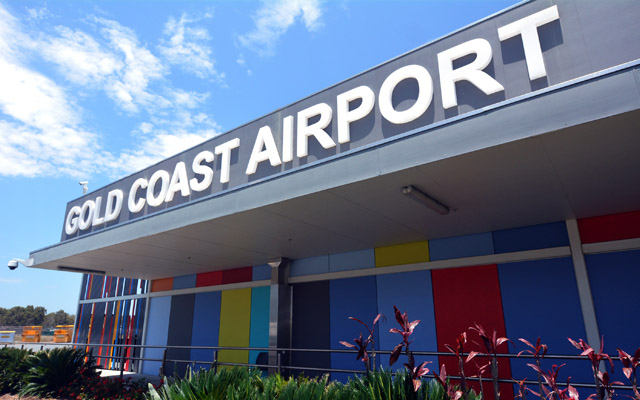
Destination Gold Coast, in partnership with Tourism Australia, Tourism and Events Queensland and the City of Gold Coast, announced that Australian Tourism Exchange (ATE) will be held on the Gold Coast from April 30 to May 4, 2023.

Some 2,000 delegates from all corners of the globe are set to meet at the event, which is said to be the biggest-ever in ATE’s history.

Gold Coast is the host destination for ATE23 at Gold Coast Convention and Exhibition Centre

The first full programme event held since the pandemic, ATE 2023 will attract a host of leading travel decision makers and agents, airline executives, and over 70 international media representatives.

Destination Gold Coast CEO Patricia O’Callaghan said: “Securing Australia’s largest annual travel and tourism business-to-business event is an enormous coup for the city that will showcase the breadth and depth of Gold Coast’s venues, products and experiences.

“A key learning from Covid-19 is that it has radically disrupted the travel conversation and diversified the experiences people are looking to have.”

The five-day event is expected to inject A$9 million (US$6.3 million) into the local economy.

O’Callaghan added: “Hosting an event of this scale is not only important to supercharging Gold Coast’s international recovery, but the flow-on benefit through to our 10,000 tourism operators and small businesses from hoteliers to restaurants and cafés, and right through to retailers, experiences and transit providers.”

Minister for tourism, innovation and sport Stirling Hinchliffe stated that ATE is an important event for international tourism in Australia, and that the Gold Coast was the ideal destination to remind international buyers about Queensland’s world-class tourism experiences.

Gold Coast mayor Tom Tate said that for the city to once again host ATE is “a shot in the arm for our tourism industry and local economy”.

The Gold Coast last hosted ATE in 2016.

Anantara Golden Triangle Elephant Camp & Resort

0

Location
Just a 75-minute drive from Chiang Rai International Airport, the resort is situated in a jungle in northernmost Thailand. Brimming with nature, wildlife and culture, it is in the district Chiang Sean, previously capital of Thailand’s ancient Lanna kingdom.

Room
The suite was an expansive space of 64m² with high ceilings, where relaxing on the ultra-long balcony is an experience in itself. The greenery of the pool area, the grassland beyond it, and the meandering Ruak and Mekong rivers are calming. Across the rivers are Myanmar and Laos.

The room is well-maintained, ultra-comfortable and authentic to Lanna design and decor. With lots of teakwood used in the hotel, it is strong as an elephant and very much loved.

F&B
At the time of visit in late April, only the main restaurant, Sala Mae Nam, and the Elephant Bar and Opium Terrace were open for business. The thin-crust quattro formaggi pizza and a Thai dish called ngob talay (mussels, prawns and seabass grilled in banana leaf) were the most delicious, having had them for dinner two nights in a row. The third dinner was butler service at the five-star Jungle Bubble.

That’s the beauty of an all-inclusive plan – the food, and each signature experience that is included for every night’s stay, has to be exemplary.

Facilities
Land is not a problem here. The fitness centre has a Muay Thai boxing ring of its own. With a huge garden blossoming with herbs, plants and fruits, and even a mushroom hut, these are all part of the resort’s sustainability drive.

The experiences had their own facilities. The Jungle Bubble was a sight to behold – the transparent domes were finely equipped like any plush bedroom and living room, on a raised wooden platform in the jungle. On deck were a jacuzzi, outdoor dining table and a lounge area. Talk about glamping reaching new heights!

It was sheer luxury to watch two elephants grazing on grass a stone’s throw from the living room or bedroom of the bubble.

But the most exciting part for me was the Walk with Giants experience that brought me close to the elephants. Camp manager, Ooh, gave interesting insights on elephant biology and behaviour during the one-hour walk. Swimming in the river, one of the two jumbos was playful, while the younger elephant climbed on the back of her older best friend – what a photo opportunity.

My third experience was the Royal Enfield Sidecars, an amusing twist to elephant riding. Riding in a Royal Enfield, the oldest motorcycle brand in the world, I was taken to tour the village and paddy fields.

Service
When I arrived, a staff beat the Lanna gong at the entrance, which was a rousing welcome but also a neat way to alert the house about an arrival – within minutes the general manager came to greet me and the staff were ready for my check-in.

While all the staff I met made me feel very welcomed, I must say that Fon was the most cheerful, helpful receptionist I had ever met.

Verdict
Rare that a hotel is not just an accommodation, but the attraction.

Number of rooms 55

Contact details
Tel: +66 053 784 084
Email: goldentriangle@anantara.com
Website: https://www.anantara.com/en/golden-triangle-chiang-rai

Summertime at The Ritz-Carlton, Nikko

0

Head to The Ritz-Carlton, Nikko for an unforgettable summer retreat in tranquillity.

Overlooking the scenic Lake Chuzenji and Mount Nantai, the hotel features traditional Japanese elements such as engawas (porches), Zen rock gardens, and a private onsen exclusive to this Ritz-Carlton location in Asia.

Go on a family hike at The Ritz-Carlton, Nikko

Family activities are available from cultural to natural, including a traditional Fire Ceremony, Kagura Shrine Dance, temple walks, and guided nature hikes. Kids also get to enjoy special Ritz Kids amenities and playful offerings such as the Monkey Treasure Hunt and Ritz Kids Safari mini tents and toys.

Visit The Ritz-Carlton, Nikko for more information.

Anantara Chiang Mai Resort gets new general manager

0

Anantara has appointed experienced hotelier, Pitak Norathepkitti as general manager of Anantara Chiang Mai Resort.

Pitak joins Anantara Chiang Mai from Siem Reap in Cambodia where he oversaw Anantara Angkor Resort for the last two years.

His extensive knowledge and experience of the local and international market equips him with a holistic approach to hotel-keeping as he oversees the upcoming resort refurbishment and implementation of new dining and spa concepts.