


Travel demand surges as Japan opens up
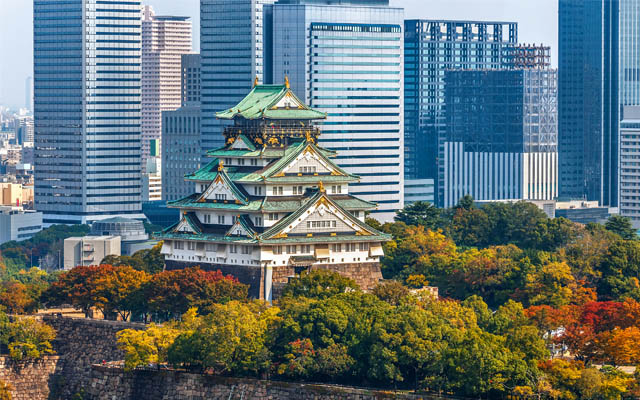
Eased entry conditions and a weaker yen are pulling travellers from Malaysia, Singapore and Indonesia back to Japan, noted outbound travel specialists in these South-east Asian markets.
Since October 11, Japan has abolished its daily arrival cap and visa sponsorship requirement, and permitted individual travel and visa-free entry for foreign tourists.
The removal of the daily arrival cap has presented airlines with the opportunity to mount new services and boost frequencies of existing services to Japan. Airlines that have been quick to respond include Singapore Airlines, which will resume flights to Osaka from October 30 with twice daily services, increase its frequency to Fukuoka to thrice-weekly, and add a second daily service to Tokyo’s Haneda Airport; AirAsia X, which will commence weekly Kuala Lumpur-Sapporo flights from November 7 and bump that up to four times weekly from December 1; and Thai AirAsia, which now flies weekly between Bangkok and Fukuoka.
Scoot will mount seasonal four weekly flights from Singapore to Sapporo from November 2 to February 27, 2023.
Apple Vacations and Conventions’ group managing director, Koh Yock Heng, who is based in Kuala Lumpur, said the vastly improved airlift is instrumental in speeding up inbound recovery for Japan. It also allows travel companies to introduce more flight-and-tour packages via key South-east Asian gateways like Bangkok and Singapore.
He has observed an uptick in demand among his Malaysian customers as soon as the Japanese government announced the easing of visa requirements. Visa applications were a major barrier for Malaysians looking to travel to Japan, as the process could take up to two weeks.
Apple’s six charter flights to Hokkaido in December are fully booked at press time, and demand is strong for both FIT and GIT travel this winter and the coming spring.
Koh expects demand to pick up further into 2023, aided by improvements in air connectivity and fresh rounds of promotions by airlines and Japan National Tourism Organization.
Seeing a similar spike in travel interest to Japan is Hellen Xu, CEO of Panorama JTB Indonesia, who told TTG Asia that the Land of the Rising Sun typically jostles with Europe for the top destination position among Indonesian travellers pre-Covid.
However, for Indonesians, access to Japan remains challenging, largely due to pricey airfares and limited flights.
“Before the pandemic, you could get a (flight to Japan) for 10 million rupiah (US$600); now it is around 20 million rupiah. As such, the total package price could reach around 38 million rupiah,” Xu detailed.
Furthermore, flights between Indonesia and Japan are now mostly operated by full-service carriers.
“LCC flights have not returned,” said Edhi Sutadharma, tour director of Golden Rama Tours and Travel in Indonesia. “Therefore, it is only the premium segment that can (afford to) travel now.”
Over in Singapore, another major tourism source market for Japan, a study by consumer research and analytics firm Milieu Insight found that the East Asian destination reigns supreme among 2,000 respondents. Thirty-four per cent of respondents ranked Japan as the top destination to visit in the next one year, followed by Malaysia (28 per cent) and Thailand (22 per cent).
Chan Brothers Travel, one of the city-state’s strongest outbound players, has seen customers booked on group tours extending their stay for free-and-easy days. These bookings were made before Japan’s latest border relaxation notice.
Jeremiah Wong, spokesperson for the travel agency, told TTG Asia that interest in Japan did not wane even when reopening plans were still hazy earlier in 2022. Customers were willing to book ahead for tours in winter “while waiting for happy news” on Japan’s reopening.
Chan Brothers Travel offers a policy – Book in Advance With Confidence – allowing customers to secure their seats on tours with a minimal deposit and flexibility to make changes to departure dates.
Meanwhile, travel agents agree that with the cost of travel rising, not just to Japan, it is advisable for travellers to plan and book ahead.
“Early planning is the best way to get good rates,” opined Koh. – Additional reporting by Mimi Hudoyo and Karen Yue
New World Hoiana Hotel
 Location
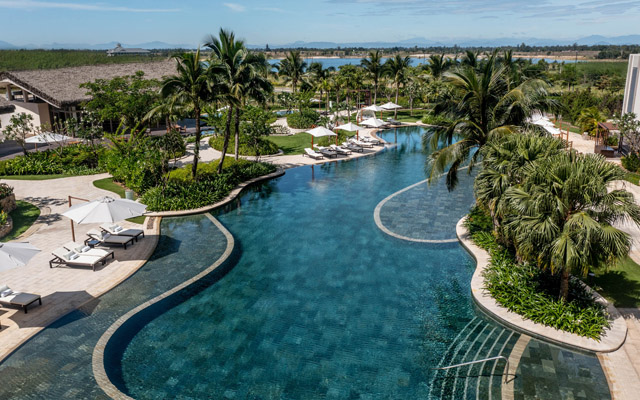
The five-star hotel sits on an isolated four-kilometre stretch of beach that flanks the East Sea, about a 15-minute drive south from Hoi An centre. It is less than an hour’s drive from Danang International Airport.
Accommodation
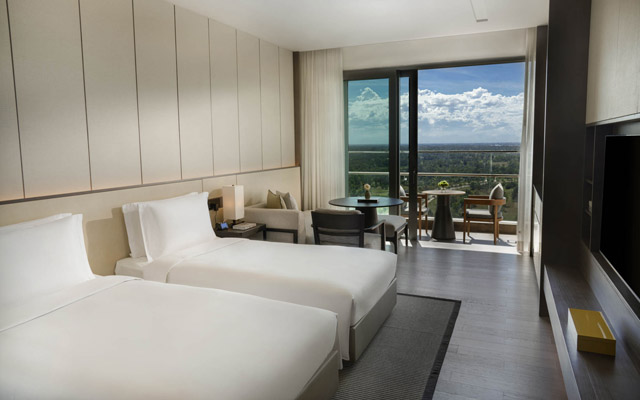
I stayed in a comfortably spacious deluxe twin suite. Decked out in neutral tones, the décor has an unfussy, contemporary feel. It came with all the expected amenities, including a 55-inch TV, coffee and tea-making facilities, and corner workspace. A small but adequately-sized balcony overlooked the adjacent 18-hole golf course. The bathroom comprised separate shower and toilet units. In addition to the deluxe, the 426-key hotel’s rooms include superior, deluxe ocean view and superior ocean view.

F&B
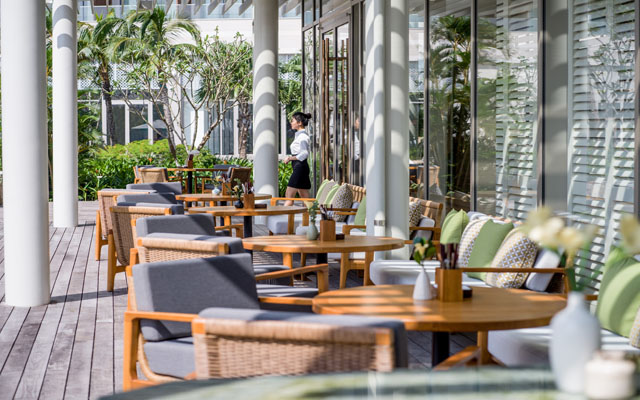
Aroma is a spacious ground-floor eatery that overlooks the pool and can cater up to 324 guests. It was lively every morning, serving a breakfast buffet that featured food from across the globe. The restaurant also offers food throughout the day. Charred is a casual poolside eatery for 124 diners. It serves snacks, steaks and seafood.
Facilities
Inside New World, guests have 24-hour access to the gym, a large swimming pool and sundeck sit on the ground floor, while the beach is on the doorstep. The hotel also forms part of the wider Hoiana Resort & Golf complex as one of the four luxury hotels managed by Rosewood Hotel Group, which comprises a casino, 10 over restaurants, event spaces, and an 18-hole golf course with free shuttle carts to transport between venues.
Service
Service was always delivered with a smile and staff were happy to help, especially when I arrived to check-in weary and hungry at 00:15.
Verdict
Hoiana ticks all the boxes when it comes to integrated resorts. While it sits in a secluded location, the plethora of onsite amenities ensure this is never an issue.
Contact details
Tel: +84 235 858 6666
Email: reservations.hoiana@newworldhotels.com
FIFA Fever at Avani hotels in Dubai
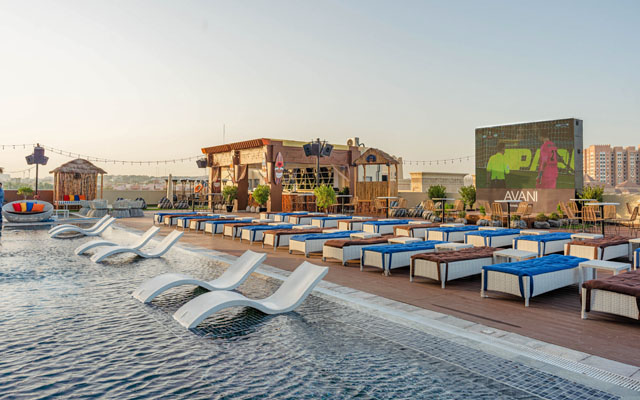
Avani Palm View and Avani Ibn Battuta in Dubai have unveiled activities and stay packages as the countdown begins for FIFA World Cup in Qatar on November 20.
Avani Palm View will start the celebrations early with screenings of the Premier League matches throughout October at dedicated sports viewing venue Seven Seeds. The hotel has also partnered with Budweiser and African & Eastern to raffle off a trip to Qatar to watch the FIFA World Cup final among guests who purchase a bucket or four pints of Budweiser. There will be other prizes up for grabs too.
During the daily screenings at Seven Seeds, there will a Football Kit menu offering pub favourites like beer-battered Cajun chicken strips, German beef bratwurst, Guinness beef and mushroom pie, fish and chips, and more.
Avani Ibn Battuta will kick off the Festival of Football with The Match Is On stay package, which includes accommodation, welcome gift, daily breakfast for two, restaurant and bar credits, complimentary airport transfer and shuttle to Expo City Fanbase.
The package is priced from AED$999 (US$271) per room per night, and available from November 21 to December 18.
Guests can also enjoy every minute of the action on the giant outdoor screen at Pele Pool Bar with the Festival of Football family package. Priced at AED$399 for two (children under 12 eat for free), the package comprises unlimited poolside appetiser buffet, three-hour unlimited house pouring beverages, and access to a supervised kids’ play area with PlayStation 5 and EA Sports FIFA games.
There is also a Match at the Pool package, priced at AED$100 per person, which includes match viewing at Pele Pool Bar and an AED$100 F&B credit. Advanced booking is required.
For more information, visit Avani Palm View and Avani Ibn Battuta.
Penang plays up rural draws to charm visitors
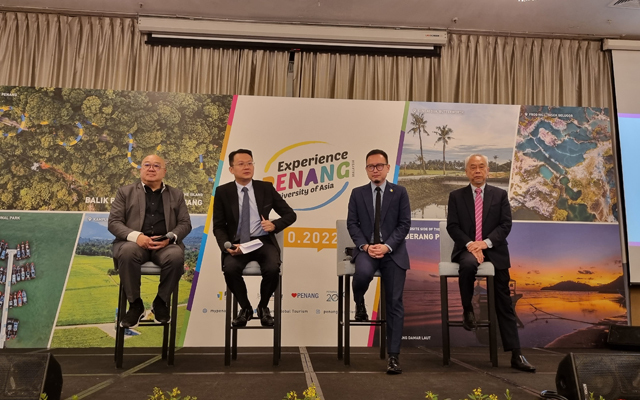
As Penang Global Tourism scales up destination marketing to spur travellers into action, it has chosen to spotlight lesser-known but accessible areas that are big on nature and exude laidback charms.
The Opposite Side of the Island campaign highlights Seberang Perai while The Other Side of the Island showcases Balik Pulau and Teluk Bahang. These were presented to the travel trade and media in Singapore on Tuesday, ahead of ITB Asia 2022.
These destinations promise experiences that are different from what Penang is typically known for.
Yeoh Soon Hin, head of Penang State Exco Office for Tourism and Creative Economy, said: “Most travellers to Penang tend to focus on George Town UNESCO World Heritage Site, drawn to the area’s historical architecture, artistic graffiti and street food. We initiated The Opposite Side of the Island and The Other Side of the Island to give urban visitors different discoveries.”
Visitors to Seberang Perai, Balik Pulau and Teluk Bahang can experience homestays with local residents, explore fruit farms particularly those specialising in prized durians, and take in a slower pace of life amid sounds and sights of nature.
He believes that these lesser-known destinations will “expand tourism options” in the state and lead to longer stays and higher spends.
Spotlighting these “hidden gems” will also raise interest in Penang, a destination already familiar to many regional travel trade partners and travellers.
Seberang Perai, Balik Pulau and Teluk Bahang can satisfy the strong desire among travellers to “escape from stressful daily city routine”, opined Yeoh.
Echoing Yeoh’s observations, Ooi Chok Yan, CEO of Penang Global Tourism, said: “We see travellers preferring more outdoor attractions post-lockdown, perhaps due to the belief that air flow is better and fresher. That is one of the reasons why we created the two new campaigns to promote Penang’s natural sceneries.”
Equally important, Penang’s latest move will drive tourism income deeper into the local community.
“(The new campaigns have) increased the exposure of community tourism in these areas. Local businesses like food stalls, restaurants and handicraft (shops) have received significant visits from tourists, and (traffic) will gradually and definitely increase earnings for these residents,” Ooi told TTG Asia.
The tourism authorities have been guiding residents in Seberang Perai, Balik Pulau and Teluk Bahang on homestay operations and tourist reception. All homestays are certified by the tourism ministry, “so they meet international standards for hygiene and comfort”, shared Yeoh.
Expressing confidence in the tourism potential of the three destinations, Khoo Boo Lim, vice president of the Malaysian Association of Hotels, said “there are many interesting and creative developments” that would interest travellers.
“For example, in Balik Pulau, there are durian estates with cafes and that offer visitors a peek into the life of a durian farmer. If you were to visit during the durian season, you can even see ripe durians falling from the trees!” Khoo said.
Rajeev Paul helms The Residence Bintan
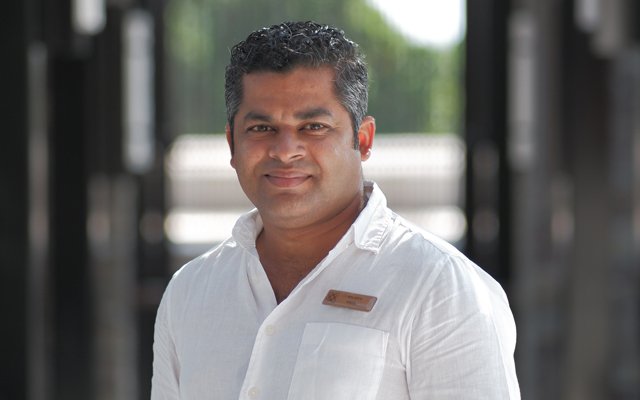
Cenizaro Hotels & Resorts has appointed Rajeev Paul as general manager of The Residence Bintan.
Paul has over a decade of experience in the hospitality industry, and his career has spanned all of Asia from Bhutan to Bintan including the Middle East across some of the world’s leading hotel brands with Oberoi, Six Senses, Alila and Aman.
 A part of the pre-opening team, Paul joined Cenizaro Hotels and Resorts in 2017 as The Residence Bintan’s hotel operations manager. He was soon appointed acting general manager in 2021.
Indonesia ramps up Muslim-friendly travel offerings

Indonesia Halal Tourism Association (PPHI), in cooperation with CrescentRating, has launched strategic initiatives to accelerate the revival of Indonesia’s tourism industry by capitalising on Muslim travel.
The initiatives include transformation towards resilience and post-lockdown industry competitiveness, improvement of the Muslim-friendly tourism ecosystem in Indonesia, marketing development, and big data usage.
Various programmes are in place to achieve the objectives, such as rating and accreditation services for the industry and Muslim-friendly businesses, destination ranking, awards, industry training, as well as roundtable discussions.
Speaking at a signing ceremony in Jakarta last weekend, Riyanto Sofyan, chairman of PPHI said: “We are planning to organise a global Muslim-friendly tourism summit (in) 2023, which will comprise of B2B and B2C travel mart, international conference and the Muslim-Lifestyle Indonesia Award.”
He added that the Indonesia Muslim Travel Index will be relaunching in 2023 – the first was released in 2018, and the year after in 2019.
Mastercard-CrescentRating Global Muslim Travel Index (GMTI) 2022 reported that global Muslim travel numbers peaked in 2019 with 160 million travellers. The post-lockdown figure is projected to reach 140 million in 2023, returning to pre-pandemic levels in 2024. By 2026, global traffic is expected to reach 230 million with a total spending of US$225 billion.
According to Riyanto, Indonesia experienced a steady growth of Muslim arrivals before the pandemic. CrescentRating estimated the numbers to be 2.9 million or around 18 per cent of total arrivals to the country.
Riyanto opined that the time was right to develop and promote to the Muslim travel market again as travellers are seeking family-friendly, environmentally-conscious and quality trips.
With Indonesia ranked second in the GMTI 2022, Andi Maipa Dewandaru, minister’s staff, Ministry of Tourism and Creative Economy stated that Muslim travel was one of the development focus as an extended tourism service in the country, with the goal of ranking first in the future GMTI.
Commenting that Indonesia had all the ingredients to attract Muslim travellers and the potential to move the economy, Fazal Bahardeen, CEO, CrescentRating said: “With this cooperation, we are committed to put sustainable growth of the market forward while embracing various community elements.”
Asia-Pacific NTOs rank high on online readiness for Muslim travellers

Asia-Pacific tourism boards have dominated the top 10 rankings of the report How Online Ready are NTOs for Muslim Travellers in 2022? for the third consecutive edition – comprising of 62% of the top spots, and widening the gap between themselves and their European peers.
The 2022 report was a result of a first-time research collaboration between the Islamic Tourism Centre (ITC), an entity under the Malaysian Ministry of Tourism, Arts and Culture tasked to develop the Islamic tourism segment, and Pear Anderson, a consultancy specialising in the South-east Asian tourism industry and the Muslim-friendly travel market.
The report was launched in conjunction with the 3rd World Islamic Tourism Conference (WITC) held at World Trade Centre from October 17-19, an annual conference organised by ITC to share insights on the Muslim tourist market and its impact on the socio-economy.
It examines the online resources that NTOs from the top 50 most visited non-Muslim destinations worldwide have created to support Muslim-friendly travel, including information about Muslim-friendly food, prayer spaces and hotels. Through analysing the top 50, the overall importance on which NTOs are placing Muslim-friendly travel can be gauged.
Out of the 50 destinations studied, 54% of them now have some level of Muslim-friendly travel information, compared to just 36% in 2019’s inaugural report, and up from 46% in 2020, a signal of the continued importance destinations are placing on Muslim travellers to boost tourism recovery.
In the 2022 edition, South Korea and Taiwan came in tied at first place, with Japan and Hong Kong jointly in second place, and Singapore in third place.
Mohmed Razip Hasan, director general, ITC said: “It’s clear that there’s a big move among destinations to attract Muslim tourists. Online information, clear communication and branding are important in gaining the attention and interest of this market. We hope that this report will provide insights to help destinations make the right decisions and action plans.”
Hannah Pearson, director, Pear Anderson stated: “Asia-Pacific destinations are keeping up their impressive lead when it comes to creating online Muslim-friendly travel resources. (South) Korea and Taiwan are world leaders in innovative Muslim-friendly traveller formats and content which, at the heart of it, ensure that Muslim travellers feel welcomed and included in their destinations.”
The report also features a case study from the Taiwan Tourism Bureau, as well as industry best practices for online Muslim-friendly tourism resources.
Muslim travel spend is a significant and fast-growing sector, set to grow to US$189 billion by 2025, according to the State of the Global Islamic Economy Report 2022.
Click here for more insights into the report.
SLH, La Vie drive luxury hotel expansion in Asia-Pacific
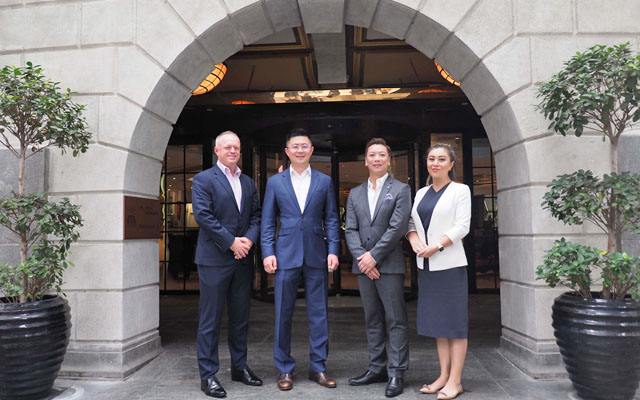
Small Luxury Hotels of the World (SLH) has partnered with La Vie Hotels and Resorts (La Vie) to provide bespoke tailor-made hotel management services for independent luxury hotels across the Asia-Pacific region.
This partnership will see La Vie’s bespoke management solutions and operational services, together with SLH’s global sales, marketing and distribution network, create an end-to-end solution for independent hotels to become competitive in a global travel marketplace.
The qualified hotels will also gain recognition and affiliation as members of SLH’s exclusive brand portfolio.
The first luxury hotel to join the SLH brand will be the award-winning Islington Hotel Hobart in Tasmania, Australia. La Vie acquired this historic 11-room hotel earlier this year and will be bringing it back to its former ‘stately’ charm. Another project includes a new build in Sydney’s Surry Hills district due to open in December.
Mark Wong, senior vice president Asia Pacific, SLH said: “Our winning combination of ‘Act Local. Think Global.’ will offer entrepreneurial management and distribution solutions that are relevant and effective for independently spirited hotels.”
Jerry Xu, CEO and founder of La Vie, said: “The Islington Hobart lends itself perfectly to SLH’s clientele and we look forward to adding a few more properties to SLH’s portfolio over the coming months.”
Accor signs two new hotels at Yogyakarta International Airport

Accor will launch two hotels at the new Yogyakarta International Airport – Novotel New Yogyakarta International Airport Kulon Progo and ibis New Yogyakarta International Airport Kulon Progo. Both hotels will debut in 4Q2023, with a combined total of 413 keys.
Owned by Lentera Prosper Indo and managed by Accor, this dual-branded project is just a five minutes’ drive from the airport and about 45 minutes from Yogyakarta city centre. Each property will have its own unique design and facilities, while sharing back-of-house areas to enhance efficiency.
Novotel New Yogyakarta International Airport Kulon Progo will provide guests with 189 rooms, along with a pool, children’s pool, kids’ area, spa, fitness centre, and all-day restaurant and bar. There is also a 700m² ballroom and nine meeting rooms.
The 224-key ibis New Yogyakarta International Airport Kulon Progo will comprise a lobby lounge, gym, kids’ room, nursery, an all-day restaurant and event spaces.
Garth Simmons, CEO, Accor, Southeast Asia, Japan and South Korea said: “As the gateway to one of Indonesia’s largest and most enchanting cities, Yogyakarta International Airport is a key destination that has the scope to expand significantly in the coming years.”
He added that the two properties will “cater to the rising number of domestic and international travellers, as well as event organisers” while complementing Accor’s existing locations in downtown Yogyakarta.








The first Policy Address by Hong Kong chief executive John Lee today underlines the government’s commitment to tourism and business events development, with fresh funding and improved hardware to come.
HK$600 million (US$76.4 million) will be set aside for the three-year Cultural and Heritage Sites Local Tour Incentive Scheme, which encourages Hong Kong’s tourism industry players to develop suitable products.
In addition, the Hong Kong Tourism Board will launch a new round of Spend-to-Redeem Local Tours and Staycation Delights, with increased quotas to enhance domestic consumption.
Building towards a stronger tourism future, a newly-appointed secretary for culture, sports and tourism will chair the Culture Commission, which comprises industry leaders tasked to map out the Blueprint for Arts and Culture and Creative Industries Development. This document will include plans to increase the number of museums in Hong Kong to 19 and the number of seats at performance venues by about 50 per cent.
One of the first outcomes is the East Kowloon Cultural Centre, which will proceed in phases starting next year.
Further infrastructure investments will materialise in 2024 with the completion of the Three Runway System, which will strengthen Hong Kong’s status as an international aviation hub and enhance connectivity between Hong Kong International Airport and the Greater Bay Area (GBA) cities. The SkyPier Terminal, part of the system, will be commissioned next year to provide direct transfer facilities for passengers from the GBA and streamline immigration formalities.
On the business events front, the existing Convention and Exhibition Industry Subsidy Scheme will be extended to June 30, 2023 to enable more SMEs to secure overseas events, while a new HK$1.4 billion scheme will be launched thereafter to subsidise more than 200 exhibitions planned for Hong Kong over three years.
To support Hong Kong’s ambition for more large-scale international conventions and exhibitions, the AsiaWorld-Expo Phase 2 project will proceed to result in the creation of Hong Kong’s largest indoor multipurpose performance arena with over 20,000 seats. At the same time, the Wan Chai North redevelopment project near the Hong Kong Convention and Exhibition Centre will substantially increase large-scale spaces for such trade gatherings.