The Pacific Asia Travel Association (PATA) has appointed Megan Epler Wood as its special advisor on sustainable tourism development for destinations, business, and civil society.
Wood’s knowledge and expertise will be invaluable to driving progress towards a more resilient and sustainable Asia-Pacific travel ecosystem. She has dedicated over 30 years towards the creation of professional guidelines, tools, policies, and educational resources focusing on sustainable tourism development. In 1990, she founded the first sustainable tourism NGO, The International Ecotourism Society.
She is currently the managing director of the Sustainable Tourism Asset Management Program (STAMP) at Cornell University’s Center for Sustainable Global Enterprise and the SC Johnson College of Business, a role she has held since 2017.
Pan Pacific Hotels Group is offering a special stay and teatime package at five of its Singapore properties.
Guests will be rewarded with an afternoon tea for two when booking a two-nights’ stay. The Tea-cation Relaxation package also includes daily breakfast for two guests, late check-out, 20 per cent savings on spa treatments, and more.
Enjoy a complimentary afternoon tea for two when booking a two-nights’ stay at participating Pan Pacific hotels
Pan Pacific Discovery members also enjoy an additional 10 per cent savings on room rates.
Participating hotels include Pan Pacific Singapore, Parkroyal Collection Marina Bay, Parkroyal Collection Pickering, Parkroyal on Beach Road, and Parkroyal on Kitchener Road.
Valid for bookings and stays from October 20, 2022 to June 30, 2023.
One redemption of Afternoon Tea experience per stay – reservation of afternoon tea is required upon check-in.
Even when China rebounds in the long term, the market will be less robust
Inflation from the energy crisis and the supply shock will affect travel intentions
More challenging economic conditions ahead
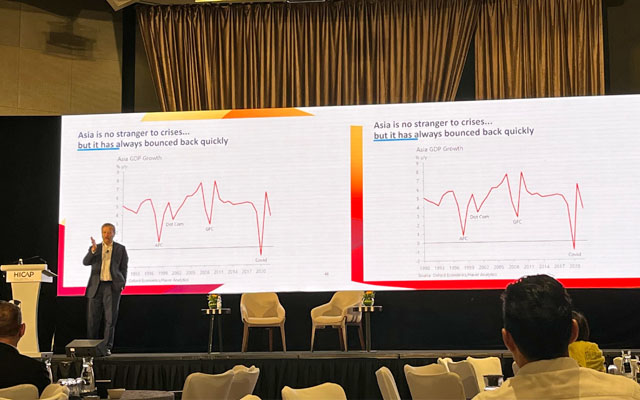
Arup Raha at the Hotel Investment Conference Asia-Pacific 2022 held in Singapore
While Asia is no stranger to crises and has always bounced back quickly, “this time is different”, warns Arup Raha, chief economist Asia of Oxford Economics, at the Hotel Investment Conference Asia-Pacific (HICAP) 2022 in Singapore last week.
Raha said in previous crises – the two largest being the Asian and global financial meltdowns – the region had two solid factors behind it, which were steady interest rates, and China.
“The US Fed (Federal Reserve System) kept interest rates steady, but typically during these times they were reducing interest rates, which then gave Asian countries the freedom to be able to reduce rates,” said Raha.
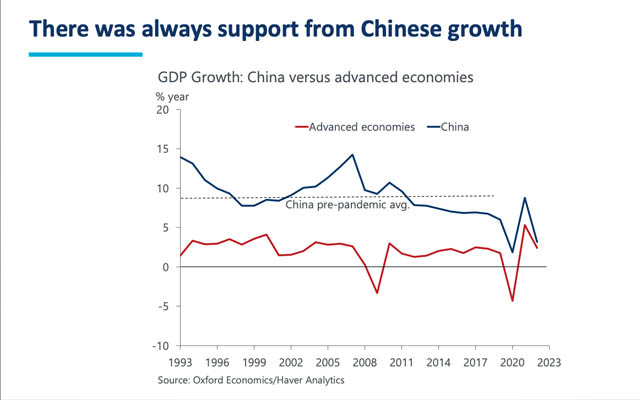
“The second big thing is, there was always support from China. But China’s GDP was 0.4 per cent in 2Q202 (over the same period in 2021), the worst growth rate in 40 years.”
Slow recovery for China
China’s slowdown is not today’s story; it has been going on for a decade (see blue line in chart), said Raha. Covid and the policies China implemented during the period exacerbated its downturn. Even if China rebounds in the long term, due to its demographics, productivity growth and shift from an export to service economy, Raha stated that “China isn’t going to be the China we are used to”.
What also matters to the tourism industry is the price of energy, which has never been this high or this prolonged, and the difficulty of predicting where it would go.
A consequence of the energy crisis and the “severe” supply shock is inflation. Apart from higher costs of operation, although mitigated by higher rates and efficiencies wrought through Covid, inflation will also affect travel intentions. Raha said: “Tourism is a bit of a luxury good. If I have to tighten my belt, foreign travel is the first thing to go out of my budget.”
The right response
The one bright spot from this crisis is that governments have learnt to deal with a fiscal response. Singapore, for example, responded with two packages that amounted to nearly 20 per cent of its GDP.
“You can claim that the problems of inflation we see today are (because) governments over-responded, that there was too much fiscal stimulus. But I think that’s the right policy. Given the uncertainty related to the pandemic, the right way was to over-respond than under-respond – because you could get institutional damage if it went on too long,” he opined.
“We are much stronger institutionally. We had the ability to deal with a fiscal response.”
China’s slowdown has been going on for a decade
As well, with rising inflation, governments have not rushed to tighten policy, said Raha, citing Indonesia, which raised interest rates only a few months ago.
Institutional ability aside, the environment is “not nice”.
“Our forecast for Asia is that you see the initial bounce take place and now, the slowdown is coming. China will pick up but (will not be as) robust as in the past. Thailand is going to do much better – they should get half the number of tourists (40 million in 2019) in a year or a couple of years. Russians and Chinese face institutional constraints to travel, it has nothing to do with economics and it is almost impossible to predict when they are going to open up.
“Secondly, we don’t know how much structural damage has been done to the hospitality sector. In Phuket, a lot of restaurants and hotels have shut down.”
Challenging times ahead
Another economist, Jennifer Kusuma, titled her presentation Economic outlook: Brace for a hard landing.
In the post-pandemic environment, demand has rebounded quickly, but supply is slow to respond. Russia’s invasion of Ukraine triggered upheaval in the commodities market, where investments in traditional energy have been low, said the senior rates strategist at ANZ Bank.
Currently, the dollar is “king”, as Europe and the UK are grappling with a cost of living crisis, and China is facing “the risk of inflation”. Asia, excluding China, is caught deep in this global crossfire, said Kusuma.
On China, she said: “It’s hard to rebound when you are forced into lockdowns. Property buyers did not react positively to interest rates cuts.”
ANZ Bank does not expect China to reopen in 2023.
Said Kusuma: “Even if we see a path to a soft landing, we should prepare for more challenging economic conditions ahead of us and recognise where the opportunities are.
“Some of this will be temporary but geopolitical tensions, as well as de-globalisation, will suggest that some of the supply constraints will stay with us for longer.”
The annual ASEAN Tourism Forum (ATF), which includes the Travel Exchange (Travex), has been postponed from January to February 2-5, 2023, with Yogyakarta remaining as the host city.
Eddy Soemawilaga, president of the ASEAN Tourism Association (ASEANTA), mentioned the new dates in his travel association presentation at ITB Asia in Singapore on October 20. ASEANTA oversees the rotational ATF.
ATF 2023 has been pushed to February 2-5, 2023 instead; Prambanan Temple pictured
Bearing the theme Empower Talents, Embrace Technology, Recover Tourism, ATF 2023 will be held at the Jogja Expo Center (JEC) Yogyakarta, the biggest business events venue in Central Java, while NTO and government meetings will be at Yogyakarta Marriott Hotel.
The opening ceremony will be held at Prambanan Temple, while the farewell dinner will be at the Kraton (Royal Palace).
Speaking to TTG Asia on the sidelines of ITB Asia, Soemawilaga said: “I am excited since this will be the first fully in-person ATF event (post-lockdown) where many stakeholders including NTOs, industry members and media will gather in the beautiful city of Yogyakarta to reap the potential of tourism and travel within the ASEAN region.”
Yogyakarta is the gateway to two UNESCO World Heritage Sites, Borobudur and Prambanan Temple. The city is serviced by two airports – Adisutjipto Airport and the new Yogyakarta International Airport.
Preparations are underway with the event microsite/webpages recently uploaded.
Vietnam’s Ho Chi Minh City (HCMC) is banking on its bleisure (business and leisure) and gastronomic appeals to rebuild tourism demand post-lockdown.
Speaking to TTG Asia, Nguyen Cam Tu, director, HCMC Tourism Promotion Center, also spotlighted the creation of many new and improved tourism products and experiences throughout the years of disrupted travel.
Ho Chi Minh City is developing its inner districts to offer unique tourism experiences
Today, HCMC boasts 366 unique tourism attractions, mainly related to “natural, cultural and destination” draws.
To attract both domestic and international visitors, the city is also developing its inner districts and having them offer unique tourism experiences.
This December, HCMC will also host a Tourism Week, during which visitors can participate in music festivals, an international marathon, and hot-air balloon rides.
Nguyen said numerous forms of support are available to convert travel dreams into eventual trips. For instance, corporate groups are provided with welcome souvenirs, local experiences, and sightseeing discounts. HCMC Tourism Promotion Center also has an ongoing collaboration with airlines on promotional packages with direct flights.
According to Nguyen, key source markets for the city are South-east Asia, South Korea, Japan and Taiwan, as well as Germany, UK, Italy and France farther afield.
With these targets in mind, HCMC Tourism Promotion Center will return to overseas roadshows and international trade events, like the 2022 World Travel Market in London, to promote the destination.
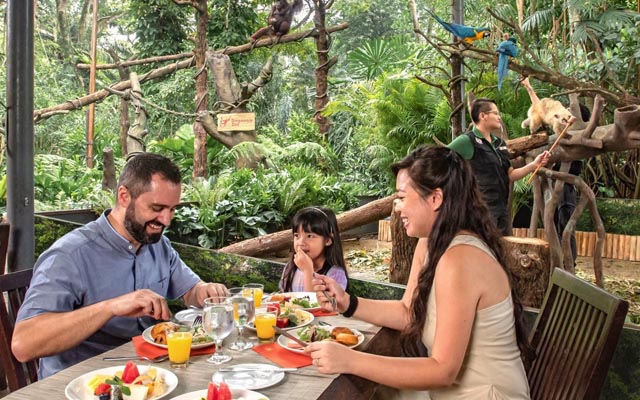
Singapore Zoo’s signature breakfast programme is back with a new name: Breakfast in the Wild.
Promising a ‘wilder’ experience, Breakfast in the Wild includes a 30-minute presentation featuring animals including orangutans, macaws, tamandua, coatimundis and reptiles. Guests can capture snapshots with the animals and their care team at the free-and-easy interaction area and photo points.
Tuck into a delectable buffet spread and interact with different animal species and their keepers (Photo: Mandai Wildlife Group)
Enjoy a scrumptious feast, thoughtfully created with ingredients that are friendly to wildlife and the planet, paired with the taste of wildlife-friendly OWA coffee.
Available from 09.00 to 10.30 on weekends and public holidays, tickets are priced at S$45 (US$31) for adults and S$35 for children aged six to 12. Children below the age of six will need to be accompanied by one adult each.
A separate Singapore Zoo admission ticket is required to enjoy the breakfast experience – Friends of Wildlife, Friends of Wildlife Plus and Friends of the Zoo enjoy a 20 per cent discount. Advanced bookings of at least three days are encouraged.
Japan is eyeing greater spending by international travellers to revive its ailing tourism and hospitality sectors following the relaxation of the country’s border rules.
Inbound tourism was a key growth driver of Japan’s economy pre-pandemic, and now the Japanese government is hoping it can offer some economic solutions post-Covid as well.
The weakened yen could encourage greater spending by tourists and help Japan revive its tourism and hospitality sectors
Prime minister Fumio Kishida has pledged to increase total spending by inbound tourists to five trillion yen (US$35 billion) annually, a target higher than the pre-pandemic spending by overseas visitors in Japan in 2019, which totalled a record 4.8 trillion yen.
Kishida said the government will “maximise the advantage of the weak yen” to reinvigorate the Japanese economy, noting that it could inspire greater spending by inbound visitors. A Japan Hotel Association spokesperson agreed that “with the weak yen, travelling to Japan is much more affordable”.
Kishida has asked ministers to draw up a policy package for a quick recovery by the end of October, and revise the country’s basic plan for tourism promotion by March 31, the end of Japan’s fiscal year.
Interest in Japan among international travellers has been strong throughout the pandemic, even when entry restrictions were in place. Indeed, Japan was ranked the most desired destination to visit in a survey of 6,300 people in 12 countries, carried out by the Development Bank of Japan in October 2021.
Now that border restrictions have been eased, the travel trade is optimistic that Japan will see an uptick in spending by inbound travellers.
Still, concerns remain that China’s zero-Covid policy, which continues to restrict international departures from the country, will hamper Japan from reaching its new financial goal.
In 2019, Chinese visitors totalled almost 10 million, accounting for 34 per cent of all tourism arrivals in Japan, while their spending amounted to 1.8 trillion yen, equating to 36.8 per cent of all inbound visitor spending.
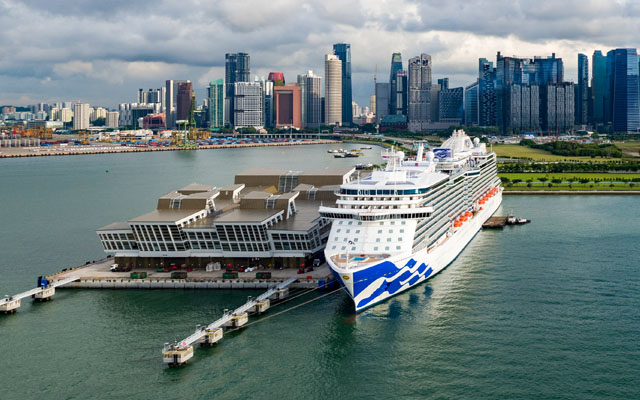
Princess Cruises has removed its Covid-19 vaccination and testing requirements on most voyages from October 21. Guests sailing with Princess Cruises will no longer have to provide a negative test result, regardless of their vaccination status.
The cruise line had previously removed the need for test results for those vaccinated on September 6, and has now been updated to include unvaccinated guests. Children under five do not require pre-travel testing.
Guests sailing with Princess Cruises will no longer have to provide a negative test result
The change applies to all itineraries sailing from the US and European homeports except destinations where government regulations, such as Australia and New Zealand, may still have their own requirements.
A small number of sailings that the cruise line calls “enhanced guidelines voyages” also continue to have their own vaccination and testing requirements.
Transport Canada has lifted its Covid-19 requirements for cruise guests to enter the country effective from October 1. Visitors are also no longer required to upload their information into the ArriveCAN app.
For Australia and New Zealand cruises, guests 12 to 17 years old must be fully vaccinated (no booster), while those 18 and above are required to have received primary series of Covid-19 vaccines including one booster dose, if eligible, received any time before embarkation.
Guests not meeting the above conditions will require a medical exemption and have different testing requirements.
Ovolo Hotels will further commit to building a better world with the launch of its sustainability initiative, Do Good, Feel Good.
Ovolo Group CEO, Dave Baswal, shared how the effects of the pandemic deepened his desire to be a force for good: “At Ovolo, sustainability has for a long time been part of our DNA, and we want to encourage our guests, teams, suppliers, and investors to Do Good, Feel Good. Our commitments go beyond environmental indicators and include issues such as celebrating diversity and inclusion, supporting children and schools, sourcing locally and building hotels that give back to their communities in a meaningful way.
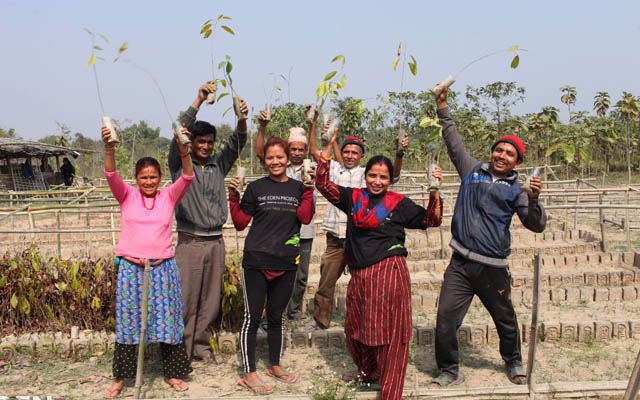
Ovolo will partner Eden Reforestation Projects to plant trees in Nepal to reduce the impact of soil erosion, floods, and landslides
“We want to make better choices for ourselves and the planet and play our part in ensuring a better future for all.”
Ovolo’s commitment comprises two key pillars – planet and people. Planet’s highlights include the new Green Perk where a tree will be planted for every direct booking at any Ovolo or By Ovolo Hotels; working with EarthCheck to ensure all actions are science-backed, strategic and sustainable; the Plant’d Pledge which promotes vegetarian and plant-based cuisine across Ovolo Hotels restaurants and bars; reducing food waste by by 2030 to 50 per cent; eliminating single-use plastics by 2023; and managing carbon emissions, water, waste, and energy consumption.
For people, Ovolo aims to protect the mental and physical well-being of employees and increasing development and learning opportunities for all; provide education, nutrition, and healthcare for disadvantaged children in Indonesia and Hong Kong; help thousands of children complete school, find employment, and improve their lives and the life of their community by partnering with Bali Children’s Foundation; ensuring 50/50 women and men are in management positions by 2025; and promoting local art, culture, and history to support local communities.
From November 1, Ovolo will partner Eden Reforestation Projects, an NGO that works with local communities to restore their environment and economy, by planting sustainable trees that provide food, income, and shelter, while mitigating the impacts of climate change and carbon emissions. Ovolo will plant trees in Nepal to reduce the impact of soil erosion, floods, and landslides, which have a detrimental effect on farmlands and homes.
Whenever guests book directly with Ovolo, they will receive a message after their stay to show them where their tree has been planted and information on the impact on the environment planting this tree has, so that they can continue to feel a connection to the land, long after they have gone home.
“Transparency and alignment with initiatives and sustainability development goals is key for us – we don’t just want to talk the talk, but we want to be held accountable to walk the walk too,” Baswal concluded.
Tripadvisor has appointed Mike Noonan as chief financial officer and senior vice president, effective October 31.
He succeeds the current chief financial officer, Ernst Teunissen, who is entering retirement.
Noonan has a deep knowledge of the travel industry, and brings a dynamic set of experiences across consumer brands and digital business models. His background includes over 30 years of experience in various corporate finance and capital markets roles.
He joins Tripadvisor from Noom, a consumer-focused digital health company, where he served as chief financial officer since October 2020.



 She is currently the managing director of the Sustainable Tourism Asset Management Program (STAMP) at Cornell University’s Center for Sustainable Global Enterprise and the SC Johnson College of Business, a role she has held since 2017.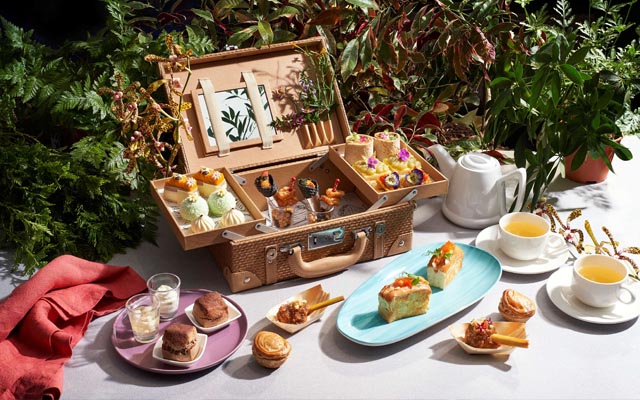




 Noonan has a deep knowledge of the travel industry, and brings a dynamic set of experiences across consumer brands and digital business models. His background includes over 30 years of experience in various corporate finance and capital markets roles.